

Partner, Clement & Murphy, PLLC
Paul served as the 43rd Solicitor General of the United States from June 2005 until June 2008. Before his confirmation as Solicitor General, he served as Acting Solicitor General for nearly a year and as Principal Deputy Solicitor General for over three years.
Paul has argued over 100 cases before the United States Supreme Court, including McConnell v. FEC, Tennessee v. Lane, United States v. Booker, MGM v. Grokster, Hobby Lobby v. Burwell, Epic Systems Corp. v. Lewis, Rucho v. Common Cause, Facebook v. Duguid, and TransUnion v. Ramirez. Paul has argued more Supreme Court cases since 2000 than any lawyer in or out of government. He has also argued many important cases in the lower courts, including Walker v. Cheney, United States v. Moussaoui and NFL v. Brady.
Paul’s practice focuses on appellate matters, constitutional litigation and strategic counseling. He represents a broad array of clients in the Supreme Court and in federal and state appellate courts. Last year, for example, he successfully argued Supreme Court cases involving significant issues of energy regulation, statutory interpretation, state sovereign immunity and Article III standing, and successfully argued a trademark appeal in the Fourth Circuit, and a constitutional appeal before the en banc Eleventh Circuit.
Paul focuses on high-stakes appeals. In recent years, he successfully defended a $1.2 billion jury verdict for clients in a Tenth Circuit case, while securing the reversal of an over $2 billion jury verdict for another client in the Seventh Circuit and the approval of a nearly $1 billion dollar class action settlement in the Third Circuit. He has initiated major administrative law challenges and constitutional litigation against the federal government, such as the successful challenge to the HHS drug-pricing rule and threatened challenges that led to the withdrawal of the Treasury Department’s proposed cryptocurrency regulations. He also counsels clients on a variety of strategic legal questions, whether arising from pending legislation, government inquiries or ongoing litigation.
Paul has undertaken substantial pro bono engagements in the Supreme Court, such as twice successfully representing the defendant in Bond v. United States and successfully representing the Omaha Tribe in Nebraska v. Parker, the guardian ad litem in Adoptive Couple v. Baby Girl, the defendant in Sekhar v. United States, a high school football coach in Kennedy v. Bremerton, and the Little Sisters of the Poor. Paul’s pro bono representation also precipitated the federal government’s confession of error in United States v. Rojas.
Following law school, Paul clerked for Judge Laurence H. Silberman of the U.S. Court of Appeals for the D.C. Circuit and for Associate Justice Antonin Scalia of the U.S. Supreme Court. After his clerkships, he went on to serve as Chief Counsel of the U.S. Senate Subcommittee on the Constitution, Federalism and Property Rights.
Paul is a Distinguished Lecturer in Law at the Georgetown University Law Center, where he has taught in various capacities since 1998. He also serves as a Senior Fellow of the Law Center’s Supreme Court Institute. He is the Justice Joseph Story Distinguished Practitioner in Residence at the Gray Center at Scalia Law School.

Chief Judge, United States Court of Appeals, Fifth Circuit
Jennifer Walker Elrod is the Chief Judge of the United States Court of Appeals for the Fifth Circuit. She was nominated to the Fifth Circuit in 2007, and she served as a Circuit Judge on the court until assuming the role of Chief Judge in October 2024. Prior to serving as a Circuit Judge, Chief Judge Elrod was appointed and then twice elected Judge of the 190th District Court of Harris County, Texas, where she spent over five years presiding over more than 200 jury and non-jury trials.
Chief Judge Elrod graduated cum laude from Harvard Law School, where she was an active member of the Harvard Federalist Society, an Ames Moot Court finalist, and a Senior Editor of the Harvard Journal of Law & Public Policy. She clerked for the Honorable Sim Lake in the Southern District of Texas. Before serving as a judge, Chief Judge Elrod worked in private practice, focusing on civil litigation, antitrust, and employment matters.
She has been repeatedly recognized for her work as a jurist, as well as for her pro bono work and contributions to the community. She has been named the 2022 Texas Review of Law & Politics’ Jurist of the Year, the 2018 Harvard Federalist Society’s Alumni of the Year, the 2016–17 Texas Association of Civil Trial and Appellate Specialists’ Appellate Judge of the Year, and the 2008 Mexican-American Bar Association of Texas’s Judge of the Year.
Chief Judge Elrod is actively engaged in the academic and legal communities. Chief Judge Elrod currently serves on the Board of Directors and as the Jurist-in-Residence at the South Texas College of Law, where she teaches civil procedure and First Amendment law. She is also a member of the American Law Institute and of the Board of Advisors for the Harvard Journal of Law & Public Policy, and she is a former member of the Board of Regents of her alma mater, Baylor University, and the Board of Visitors at Brigham Young University Law School. She previously served as the Chair of the Codes of Conduct Committee for the Judicial Conference of the United States. She has also served as the M.D. Anderson Visiting Public Service Professor at the Texas Tech University School of Law and as Jurist-in-Residence at Brigham Young University Law School, and she has taught legal writing at the University of Houston Law Center. She presented the Lewis F. Powell, Jr. Distinguished Lecture at the Washington and Lee University School of Law and is a frequent speaker on the topics of trial and appellate procedure, ethics, employment law, and constitutional law. Chief Judge Elrod also serves on the board of the Garland R. Walker Inn of Court, and co-produces an annual musical CLE, for which her pupilage group has won multiple national awards.
Chief Judge Elrod’s publications include: Trial by Siri: AI Comes to the Courtroom; Don’t Mess with Texas Judges: In Praise of the State Judiciary; For Good: Enriching Your Practice and Your Life Through Pro Bono and Community Service; Is the Jury Still Out?: A Case for the Continued Viability of the American Jury; and W(h)ither the Jury? The Diminishing Role of the Jury Trial in our Legal System.

William T. Comfort, III Professor of Law, New York University School of Law
Roderick Hills teaches and writes in public law areas, including constitutional law, local government law, land-use regulation, administrative law, and statutory interpretation. His focus in each area is on the rules and policies governing division of powers between central and subcentral governments. He holds bachelor’s and law degrees from Yale University. Following law school, he served as a law clerk for Judge Patrick Higginbotham of the US Court of Appeals for the Fifth Circuit and practiced law in Colorado. Hills previously taught at the University of Michigan Law School from 1994 to 2006. He is a member of the state bar of New York and the U.S. Supreme Court.
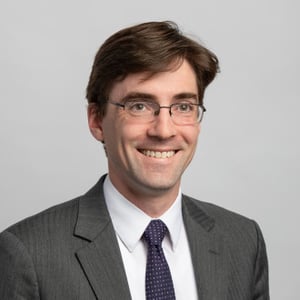
Deputy Litigation Director, Institute for Justice
Robert McNamara serves as Deputy Litigation Director with the Institute for Justice. He joined the Institute in August 2006 and litigates cutting-edge constitutional cases protecting free speech, property rights, economic liberty and other individual liberties in both federal and state courts.
Robert’s work has resulted in court victories for property owners fighting eminent domain abuse, tour guides fighting unconstitutional restrictions on their speech, taxi drivers seeking the right to own their own business, and many others. Robert also litigates in defense of innovation and entrepreneurship in medical care and was co-counsel in Flynn v. Holder, IJ’s landmark challenge to the federal prohibition on compensating bone marrow donors.
Robert’s writing has been published by outlets including The New York Times, The Wall Street Journal, The Washington Post and dozens more nationwide. His opinions and views on legal issues have been featured in radio and television programs ranging from National Public Radio’s All Things Considered to Fox News Channel’s Hannity & Colmes.
Robert is a graduate of Boston University and the New York University School of Law, where he was a founding member and eventual editor-in-chief of the NYU Journal of Law & Liberty. He currently lives in Virginia with his wife and children.
Robert McNamara is a member of the Virginia bar.
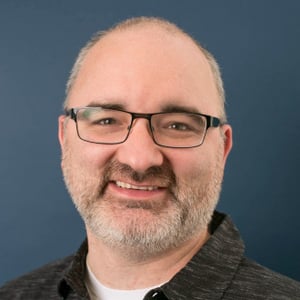
Director of Equality and Opportunity Litigation, Pacific Legal Foundation
Joshua directs the litigation for PLF’s Equality and Opportunity Program, where he fights to dismantle unconstitutional barriers to opportunity, freeing individuals to rise based on their choices, character, and ability.
Joshua joined PLF as an attorney in 2007. His litigation practice has covered all PLF subject areas with a particular focus on equality and opportunity. Joshua argued PLF’s 13th case before the United States Supreme Court, Cedar Point Nursery v. Hassid, where the court ruled that a California regulation that allowed union organizers onto private property violated the Fifth Amendment’s Takings Clause. Other litigation highlights of his include ending a decades-long racial quota in Hartford, Connecticut, lifting a ban on boys’ dancing in Minnesota, and vindicating an entrepreneur’s right to start a moving business in Kentucky.
Joshua’s writings have been published by the USA Today, Wall Street Journal, and Washington Post. And his research has been published in journals such as Texas Review of Law & Politics, Alabama Civil Rights & Civil Liberties Law Review, Journal of Civil Rights & Economic Development, and Northern Illinois University Law Review. He has appeared on national television and radio, including PBS Newshour, NPR’s All things Considered, Stossel, and Univision.
Joshua earned his BA with distinction from the University of Wisconsin-Madison with a triple major in political science, international relations, and German. He earned his JD cum laude from Michigan State College of Law where he was on the law review and trial practice institute. Joshua lives in Sacramento, California with his wife and three children. He loves playing chess and rooting for Wisconsin sports teams.
Joshua is a member of the bar only in the state of California.
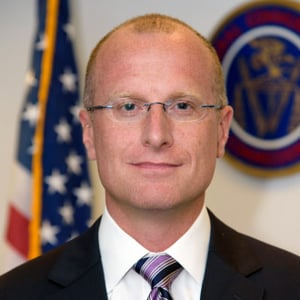
Chairman, Federal Communications Commission
Brendan Carr is the Chairman of the Federal Communications Commission. He previously served as the senior Republican Commissioner and as the FCC’s General Counsel. Nominated by both President Trump and President Biden, Carr has been confirmed unanimously by the Senate three times.
Described by Axios as “the FCC’s 5G crusader,” Carr has led the FCC’s work to modernize its infrastructure rules and accelerate the buildout of high-speed networks. His reforms cut billions of dollars in red tape, enabled the private sector to construct high-speed networks in communities across the country, and extended America’s global leadership in 5G.
Chairman Carr is also focused on expanding America’s skilled workforce—the tower climbers and construction crews needed to build next-gen networks. His jobs initiative promotes community colleges and apprenticeships as a pipeline for good-paying 5G jobs. He is recognizing America’s talented tower crews through a series of “5G Ready” Hard Hat presentations.
Chairman Carr leads a groundbreaking telehealth initiative at the FCC. The Connected Care Pilot Program supports the delivery of high-quality care to low-income Americans and veterans.
Chairman Carr’s time outside of Washington helps inform his approach to the job. He regularly hits the road to hear directly from community members and learn how changes in federal policies could help improve their lives.
Chairman Carr brings nearly 20 years of private and public sector experience in communications and tech policy to his position. Before joining the FCC as a staffer back in 2012, he worked as an attorney at Wiley Rein LLP in the firm’s appellate, litigation, and telecom practices. Previously, Chairman Carr clerked on the U.S. Court of Appeals for the Fourth Circuit for Judge Dennis Shedd. After attending Georgetown University for his undergrad, Chairman Carr earned his J.D. magna cum laude from the Catholic University of America’s Columbus School of Law where he served as an editor of the Catholic University Law Review.
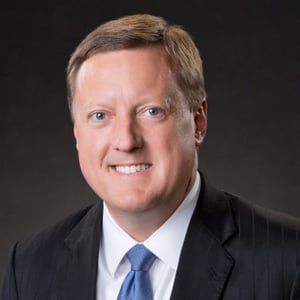
Senator and Chairman, Indiana Senate Utilities Committee, Indiana State Senate
An 8th generation Hoosier, Eric grew up on a grain and livestock farm, where he learned the value of hard work and experienced the risk and rewards of the commodity markets.
He earned a Bachelor’s Degree from Georgetown University and worked on President Ronald Reagan’s re-election campaign in the Office of Political Affairs at the Reagan-Bush ’84 Committee.
While earning his Juris Doctorate at the Indiana University School of Law, he clerked at the Bloomington law firm of McDonald, Barrett & Dakich.
He has been engaged in the private practice of law with offices in Bloomington since 1989 and Bedford since 2003. He is a member of the Monroe and Lawrence County Bar Associations, the Indiana State Bar Association, the Million Dollar Advocates Forum, the Multi-Million Dollar Advocates Forum, and founded and served as the first President of the Indiana Creditors Bar Association.
In 2002, he was elected to the Indiana House of Representatives, where he served until being elected to the Indiana State Senate in 2016. His legislative service has been recognized by, among others, the Indiana Judges Association (Champion of Justice Award), the Indiana Trial Lawyers Association (Legislator of the Year 2008 and 2015), the Indiana Pro Bono Commission (Randall T. Shepard Award), Kentucky Governor Ernie Fletcher (Kentucky Colonel), and Indiana Governor Mike Pence (Sagamore of the Wabash).
He currently serves as Chairman of the Senate Utilities Committee, Ranking Member of the Senate Judiciary and Commerce & Technology Committees, and as a member of the Senate Corrections & Criminal Law, Elections, and Family & Children Committees.
A nationally-recognized leader in energy policy, he serves as co-chairman of the Energy Supply Task Force of the National Conference of State Legislatures, as a member of the Executive Committee of the National Council on Electricity Policy, and holds a graduate certificate in Energy Policy Planning from the University of Idaho. He also serves as a member of the Federal Communication Commission Consumer Advisory Committee. He focuses on energy, telecommunications, and water policy interactions in Indiana and nationally.
He has served as a member of the Indiana Commission on Courts (2007—2011), the Indiana Probate Code Study Commission (2005—2007, 2013—2014, 2019—present), the Indiana Military Base Planning Council (2005—2019), the Board of Trustees of the Indiana Criminal Justice Institute (2006—2011), and the Indiana Public Defender Commission (2017—present). He represents Indiana as a Commissioner on The National Conference of Commissioners on Uniform State Laws (2018—present). As a member of the Indiana Supreme Court's Commercial Courts Committee (2019—present), he provides guidance to Indiana's Commercial Courts. He was appointed by the Indiana Supreme Court to serve on its Innovation Initiative (2019—present) to advise the Supreme Court on opportunities to increase efficiency and accessibility through innovative technology and case management, analysis of court reform, and development and testing of pilot programs related to court reform.
Eric frequently serves as a faculty member teaching continuing legal education courses, including for the Indiana State Bar Association and the Indiana Continuing Legal Education Forum. He enjoys teaching lawyers about new developments in the law and sharing his insights into the legislative process.
He is a registered civil mediator, having earned a civil mediation certificate from the Indiana University McKinney School of Law, studying under ADR expert John Krauss. Eric enjoys using the combination of his mediation skills and litigation experience to help parties settle cases and resolve disputes.
Eric is frequently appointed by judges to serve as a court-appointed fiduciary with responsibilities such as a trustee, federal multidistrict litigation plaintiffs’ steering committee member, special administrator, and personal representative.
A licensed Indiana title insurance producer, he founded Indiana Title Insurance Company in 2015 and serves as its President. His business experience also includes real estate, as President of White River Properties, Inc.; agriculture, as a partner in Koch Farms; and healthcare, as a former board member and Chairman of the Board of Dunn Memorial Hospital and St. Vincent Dunn Hospital.
He is a member of the Boards of Directors of Mid-Southern Savings Bank, FSB and its holding company Mid-Southern Bancorp, Inc. (NASDAQ: MSVB).
His leadership in the non-profit sector has included service as a member of the Board of Governors of the Society of Indiana Pioneers, as a member of the Executive Board of the Hoosier Trails Council of the Boy Scouts of America, as a member of the Mitchell Urban Enterprise Association Board, and as a member of the Georgetown University Alumni Admissions Committee.

Senior Vice President, Strand Consult
Roslyn Layton, PhD is a leading international expert on technology policy. She is Senior Vice President of Strand Consult, an independent consultancy serving the global mobile telecom industry. She is also a Visiting Researcher at Aalborg University Copenhagen where she earned a doctoral thesis on network neutrality by measuring the outcome of the policy across 53 countries over 5 years. She served on the Presidential Transition Team for the Federal Communications Commission (FCC), and her work was critical to the FCC’s defense for the Restoring Internet Freedom Order. She has testified to the United States Senate and House on multiple topics including spectrum, broadband, mobile mergers, competition, and privacy. She founded the think tank China Tech Threat to study the problems of technology produced by the People’s Republic of China. She serves as the Program Chair for the Telecom Policy Research Conference, the leading interdisciplinary academic gathering. Her recent paper on rural broadband describes the empirical case for policy reform to recover network infrastructure costs from streaming video entertainment providers. She is a Senior Contributor to Forbes.

Judge, United States Court of Appeals, Second Circuit
Judge Menashi was appointed to the U.S. Court of Appeals for the Second Circuit on November 14, 2019. Previously, he served as special assistant and associate counsel to the President in the White House and as acting general counsel at the U.S. Department of Education. He was assistant professor of law at Scalia Law School, George Mason University, where he taught administrative law and civil procedure, and a research fellow at New York University School of Law and Georgetown University Law Center. He was also a partner at Kirkland & Ellis LLP in New York, where he practiced appellate and commercial litigation, and served as a law clerk to Justice Samuel Alito on the Supreme Court of the United States and to Judge Douglas Ginsburg on the U.S. Court of Appeals for the District of Columbia Circuit. He graduated from Stanford Law School, where he was elected to Order of the Coif and served as senior articles editor of the Stanford Law Review, and from Dartmouth College, where he was elected to Phi Beta Kappa.
Denver Managing Partner, Wilkinson Barker Knauer LLP
Raymond L. Gifford counsels communications, electric and gas utilities, and information technology companies on state and federal aspects of regulation, administrative law, and competition policy. He is an expert in public utilities law, and the law and economics of regulation of network industries. Mr. Gifford’s law and policy work focuses on the convergence of broadband communications and energy, as well as environmental policy as it applies to the electric industry. He represents clients in state and federal courts and agencies, and serves as an expert witness on utility regulation and its history. He is also a Senior Adjunct Fellow at the Silicon Flatirons Center for Law, Technology and Entrepreneurship, and Co-Directs the Institute for Regulatory Law & Economics at University of Colorado Law School.
Mr. Gifford served as Chairman of the Colorado Public Utilities Commission from 1999-2003. Following that, he served as President of The Progress & Freedom Foundation, a Washington DC-based think-tank that studied the digital revolution as it relates to regulation of network industries. He entered the regulatory law world as First Assistant Attorney General in the Colorado Attorney General’s Office. He clerked for the Honorable Richard P. Matsch of the United States District Court for the District of Colorado. Mr. Gifford has authored a number of articles on communications law, public utility regulation and competition policy in network industries. He is a graduate of University of Chicago Law School and St. John’s College in Annapolis, Maryland. He is an elected member of the American Law Institute
Barry Smitherman is principle of BARRY SMITHERMAN, P.C. and a former partner at Vinson & Elkins LLP. He served on the Texas Railroad Commission from 2011 through 2014, and was Chairman of the Commission from March 2012 through August 2014. Prior to joining the TX RRC, Barry was Chairman of the Public Utility Commission of Texas, a position he held from November 2007 through July 2011. His service as a PUCT Commissioner began in April 2004. Over this time period, Barry served two terms on the U.S. Department of Energy Electricity Advisory Committee, on the Board of Directors of the National Association of Regulatory Utility Commissioners (NARUC), Chairman of the NARUC Gas Committee, on the Electric Reliability Council of Texas (ERCOT) Board of Directors, and on the Regional State Committee of the Southwest Power Pool (SPP).
Barry presently serves on the Board of Directors of Centerpoint Energy, and of Centric Infrastructure Group. He previously served on the Board of NRG Energy, Inc. Barry is also the Chairman of BIG (Brookwood in Georgetown), a non profit which provides work, artistic, and housing opportunities for special needs adults.
Prior to beginning public service, Barry spent 16 years as a public finance investment banker with several prominent 'Wall Street' firms, including J.P. Morgan Securities, The First Boston Corporation (now part of Credit Suisse), Lazard, and Banc One Capital Markets (now part of JP MorganChase). At Banc One, he was a Managing Director and National Head of the Tax-Exempt Origination Group.
Barry received his J.D. from The University of Texas School of Law, his M.P.A. from Harvard University, and his B.B.A. summa cum laude from Texas A&M University.
Roberto is a 2018 graduate of the University of Chicago Law School.
Consultant in Media Policy and Law
Jane Mago began her communications law career in 1978 as a staff attorney at the Federal Communications Commission. She stayed at the FCC for more than 26 years, serving in many high level roles, including General Counsel, Chief of Strategic Planning and Policy Analysis, Deputy Chief of the Enforcement Bureau, Chief of Staff for Commissioners Rachelle Chong and Michael Powell, and Legal Advisor to Commissioner Anne Jones. During her FCC career, she also worked as an appellate litigator defending the FCC’s decisions in such matters as Radio and TV Deregulation, Broadcast Indecency and Must-Carry Rules.
Jane joined the National Association of Broadcasters in 2004 where she stayed until retiring in October 2014 as the Executive Vice President and General Counsel. She led the NAB legal team during many significant shifts in the regulatory landscape, including two rounds of review of the broadcast ownership rules.
Jane is a member of the New York Bar. She has an extensive background in appellate litigation and expertise in Constitutional issues (particularly First Amendment matters), FCC ownership rules, political broadcasting, EEO, administrative law, enforcement and licensing matters.
Jane holds BA, MA and JD degrees from the State University of New York at Buffalo.
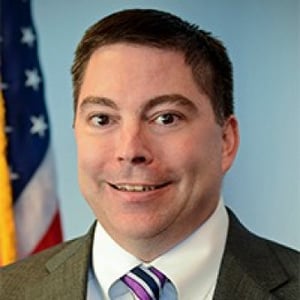
Visiting Fellow, Hudson Institute
Michael O’Rielly is a visiting fellow with Hudson Institute’s Center for the Economics of the Internet.
Comm. O'Rielly was nominated for a seat on the Federal Communications Commission by President Barack Obama on August 1, 2013 and was confirmed unanimously by the United States Senate on October 29, 2013. He was sworn into office on November 4, 2013. On January 29, 2015, he was sworn into office for a new term, following his re-nomination by the President and confirmation by the United States Senate and served through December 11, 2020.
Prior to joining the agency Commissioner O’Rielly served as a Policy Advisor in the Office of the Senate Republican Whip, led by U.S. Senator John Cornyn, since January 2013. He worked in the Republican Whip’s Office since 2010, as an Advisor from 2010 to 2012 and Deputy Chief of Staff and Policy Director from 2012 to 2013 for U.S. Senator Jon Kyl.
He previously worked for the Republican Policy Committee in the U.S. Senate as a Policy Analyst for Banking, Technology, Transportation, Trade, and Commerce issues from 2009 to 2010. Prior to this, Commissioner O’Rielly worked in the Office of U.S. Senator John Sununu, as Legislative Director from 2007 to 2009, and Senior Legislative Assistant from 2003 to 2007. Before his tenure as a Senate staffer, he served as a Professional Staff Member on the Committee on Energy and Commerce in the United States House of Representatives from 1998 to 2003, and Telecommunications Policy Analyst from 1995 to 1998.
He began his career as a Legislative Assistant to U.S. Congressman Tom Bliley from 1994 to 1995.
Commissioner O’Rielly received his B.A. from the University of Rochester.
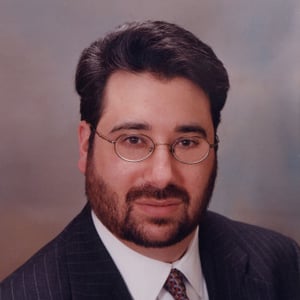
President, Phoenix Center for Advanced Legal and Economic Public Policy Studies
Lawrence J. Spiwak is President of the Phoenix Center for Advanced Legal & Economic Public Policy Studies, a non-profit 501(c)(3) organization that studies broad public-policy issues related to governance, social and economic conditions, with a particular emphasis on the law and economics of the digital age. Mr. Spiwak is a prolific scholar whose work is frequently cited by policymakers, major news media and academic journals around the world, and is in the top 1.3%of authors downloaded on the Social Science Research Network. Mr. Spiwak currently serves as the co-chair of the Federal Communications Bar Association’s (FCBA) committee responsible for overseeing the FEDERAL COMMUNICATIONS LAW JOURNAL and is a member of the program committee of the Telecommunications Policy Research Conference (“TPRC”). Mr. Spiwak is also the recipient of the FCBA’s Distinguished Service Award. Prior to joining the Phoenix Center, Mr. Spiwak was a Senior Attorney with the Competition Division in the FCC’s Office of General Counsel from 1994-1998. While in college, Mr. Spiwak was accepted into the Presidential Stay-In School program where he was responsible for delivering classified and confidential material among senior White House and Reagan Administration officials and received a full FBI security clearance. Mr. Spiwak received his B.A. with Special Honors from the George Washington University and his J.D. from the Benjamin N. Cardozo School of Law. Mr. Spiwak is a member in good standing of the bars of New York, Massachusetts, the District of Columbia, and the U.S. Court of Appeals for the D.C. Circuit.
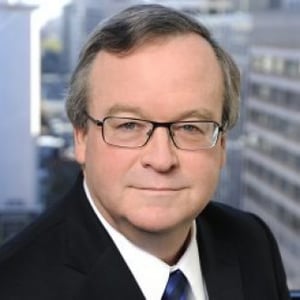
Partner, Harris, Wiltshire & Grannis LLP
Christopher Wright has been the head of the appellate group at Harris, Wiltshire & Grannis LLP since 2001. He has represented clients in a wide variety of appellate cases, with an emphasis on cases involving complex technical issues and cutting-edge constitutional law and administrative law issues.
Prior to joining the firm, Mr. Wright served as General Counsel of the Federal Communications Commission, in the Office of the Solicitor General of the United States, and as a law clerk to Chief Justice Warren E. Burger and Ninth Circuit Judge Joseph T. Sneed. Mr. Wright is one of very few lawyers who has argued more than 25 cases in both the Supreme Court and the D.C. Circuit, and he has argued in many of the other federal circuits as well.
Mr. Wright is a former President of the Edward Coke Appellate Inn of Court, the nation’s preeminent association of appellate lawyers, and a former President of the Federal Communications Bar Association, the nation’s preeminent association of communications lawyers. Mr. Wright has taught the D.C. Bar CLE courses on oral advocacy and judicial review of agency decisions on multiple occasions. He is ranked as an outstanding appellate lawyer and/or communications lawyer by numerous publications. Mr. Wright was elected to the Order of the Coif at Stanford Law School and Phi Beta Kappa at Harvard College.

Professor of the Practice of Economics, Duke University
Michelle P. Connolly is Professor of the Practice in the Economics Department at Duke University. She was the Economics Director of Duke in New York: Financial Markets and Institutions Program for 2007-2009 and the Director of EcoTeach for several years. She currently serves as the Director of the Honors Program in Economics and a member of the Duke Alumni Association Board.
In 2011, Professor Connolly won the Howard D. Johnson Trinity College Teaching Prize and was named among the top five percent of Duke University Undergraduate Instructors in 2009, 2010 and 2011.
Professor Connolly previously served as Chief Economist of the Federal Communications Commission in 2006-2007 and 2008-2009, and as an Economist for the International Research Function for the Federal Reserve Bank of New York from 1996 to 1997. She graduated Phi Beta Kappa and Summa Cum Laude from Yale University in 1990, and went on to earn her M.A. and M.Phil in economics. Professor Connolly received her Ph.D. in economics from Yale University in 1996.
Professor Connolly’s research and teaching focus specifically on international trade, telecommunications policy, media policy, education, growth, and development. She has received funding for her research from the National Science Foundation, the Duke Arts and Sciences Research Council Grants, the Spencer Grant, and the Teagle Grant.
Professor Connolly has published in numerous journals, including the American Economic Review, the American Economic Journal: Macroeconomics, the Journal of Development Economics, the Journal of Economic History, the Journal of Economic Growth, the Review of Industrial Organization, and Current Issues in Economics and Finance.
In 2011, Professor Connolly testified before Congress and participated in a White House panel on Spectrum Issues. She has been presenting her work at university seminars and international conferences since 1996. Some of her appearances were at the ACLP Advanced Communications 2009 Summit, where she was a panelist and moderator, at the conference on “Wireless Technologies: Enabling Innovation and Economic Growth”, where she served as a keynote panelist, and at the Martin H. Crego Lecture in Economics, an all college Lecture at Vassar College. In 2013 Professor Connolly was awarded a National Science Foundation Secure and Trustworthy Cyberspace Grant, “Dollars for Hertz: Making Trustworthy Spectrum Sharing Technically and Economically Viable.”
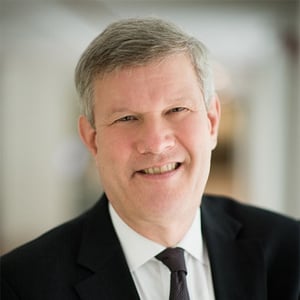
Senior Fellow and Director, Center for the Economics of the Internet, Hudson Institute
Harold Furchtgott-Roth is a senior fellow and director of the Center for the Economics of the Internet at Hudson Institute.
Mr. Furchtgott-Roth founded Furchtgott-Roth Economic Enterprises in 2003. He frequently comments on issues related to the communications sector of the economy. From 2001 to 2003, he was a visiting fellow at the American Enterprise Institute where he published A Tough Act to Follow, chronicling the difficulties implementing the Telecommunications Act of 1996.
From 1997 through 2001, Mr. Furchtgott-Roth served as a commissioner of the Federal Communications Commission. In that capacity, he served on the Joint Board on Universal Service. He is one of the few economists to have served as a federal regulatory commissioner, and the only one to have served on the Federal Communications Commission.
Before his appointment to the FCC, he was chief economist for the House Committee on Commerce and a principal staff member on the Telecommunications Act of 1996. Earlier in his career, he was a senior economist with Economists Incorporated and a research analyst with the Center for Naval Analyses.
Mr. Furchtgott-Roth is a member of the Washington Legal Foundation’s Legal Policy Advisory Board. He is the coauthor of three books: Cable TV: Regulation or Competition, with R.W. Crandall; Economics of A Disaster: The Exxon Valdez Oil Spill, with B.M. Owen et al; and International Trade in Computer Software, with S.E. Siwek.
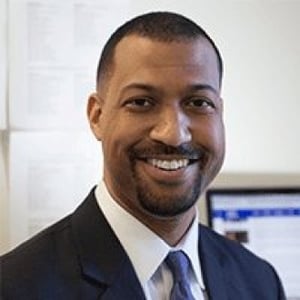
President & CEO, Public Knowledge
Chris Lewis has served as President and CEO at Public Knowledge since July 2019. Prior to being elevated to President and CEO, Chris served seven years as PK’s Vice President for Government Affairs, leading the organization’s day-to-day advocacy and political strategy on Capitol Hill and at government agencies. During that time he also served as a local elected official, serving two terms on the Alexandria City Public School Board in Virginia.
Before joining Public Knowledge, Chris worked in the Federal Communications Commission Office of Legislative Affairs, including as its Deputy Director. He is a former U.S. Senate staffer and an experienced political organizer and advocate in both the nonprofit world and political campaigns from local to the presidential level. Chris graduated from Harvard University with a Bachelors degree in Government and lives in Alexandria, VA where he continues to volunteer and advocate on local civic issues.

President, The Free State Foundation
Randolph J. May is Founder and President of The Free State Foundation. The Free State Foundation is an independent, non-profit free market-oriented think tank founded in 2006.
From October 1999-May 2006, May was a Senior Fellow and Director of Communications Policy Studies at The Progress & Freedom Foundation, a Washington, DC-based think tank. Prior to joining PFF, he practiced communications, administrative, and regulatory law as a partner at major national law firms. From 1978 to 1981, May served as Assistant General Counsel and Associate General Counsel at the Federal Communication Commission.
May has held numerous leadership positions in bar associations. He is a past Chair of the American Bar Association’s Section of Administrative Law and Regulatory Practice. He is a Fellow of the National Academy of Public Administration. Mr. May also has served as a Public Member of the Administrative Conference of the United States and currently is a Senior Fellow at ACUS.
Mr. May has published more than two hundred articles and essays on communications, administrative and constitutional law topics. He is author of A Call for a Radical New Communications Policy: Proposals for Free Market Reform, and co-author of #CommActUpdate: A Communications Law Fit for the Digital Age and The Constitutional Foundations of Intellectual Property. Mr. May is editor of two books, Communications Law and Policy in the Digital Age: The Next Five Years and New Directions in Communications Policy. In addition, he is the co-editor of two other books, Net Neutrality or Net Neutering: Should Broadband Internet Services Be Regulated? and Communications Deregulation and FCC Reform. In the past, Mr. May has written regular columns on legal and regulatory affairs for Legal Times and the National Law Journal, leading national legal periodicals.
He received his A.B. from Duke University and his J.D. from Duke Law School, where he serves as a member of the Board of Visitors.
Consultant in Media Policy and Law
Jane Mago began her communications law career in 1978 as a staff attorney at the Federal Communications Commission. She stayed at the FCC for more than 26 years, serving in many high level roles, including General Counsel, Chief of Strategic Planning and Policy Analysis, Deputy Chief of the Enforcement Bureau, Chief of Staff for Commissioners Rachelle Chong and Michael Powell, and Legal Advisor to Commissioner Anne Jones. During her FCC career, she also worked as an appellate litigator defending the FCC’s decisions in such matters as Radio and TV Deregulation, Broadcast Indecency and Must-Carry Rules.
Jane joined the National Association of Broadcasters in 2004 where she stayed until retiring in October 2014 as the Executive Vice President and General Counsel. She led the NAB legal team during many significant shifts in the regulatory landscape, including two rounds of review of the broadcast ownership rules.
Jane is a member of the New York Bar. She has an extensive background in appellate litigation and expertise in Constitutional issues (particularly First Amendment matters), FCC ownership rules, political broadcasting, EEO, administrative law, enforcement and licensing matters.
Jane holds BA, MA and JD degrees from the State University of New York at Buffalo.
Visiting Fellow, Hudson Institute
Michael O’Rielly is a visiting fellow with Hudson Institute’s Center for the Economics of the Internet.
Comm. O'Rielly was nominated for a seat on the Federal Communications Commission by President Barack Obama on August 1, 2013 and was confirmed unanimously by the United States Senate on October 29, 2013. He was sworn into office on November 4, 2013. On January 29, 2015, he was sworn into office for a new term, following his re-nomination by the President and confirmation by the United States Senate and served through December 11, 2020.
Prior to joining the agency Commissioner O’Rielly served as a Policy Advisor in the Office of the Senate Republican Whip, led by U.S. Senator John Cornyn, since January 2013. He worked in the Republican Whip’s Office since 2010, as an Advisor from 2010 to 2012 and Deputy Chief of Staff and Policy Director from 2012 to 2013 for U.S. Senator Jon Kyl.
He previously worked for the Republican Policy Committee in the U.S. Senate as a Policy Analyst for Banking, Technology, Transportation, Trade, and Commerce issues from 2009 to 2010. Prior to this, Commissioner O’Rielly worked in the Office of U.S. Senator John Sununu, as Legislative Director from 2007 to 2009, and Senior Legislative Assistant from 2003 to 2007. Before his tenure as a Senate staffer, he served as a Professional Staff Member on the Committee on Energy and Commerce in the United States House of Representatives from 1998 to 2003, and Telecommunications Policy Analyst from 1995 to 1998.
He began his career as a Legislative Assistant to U.S. Congressman Tom Bliley from 1994 to 1995.
Commissioner O’Rielly received his B.A. from the University of Rochester.
President, Phoenix Center for Advanced Legal and Economic Public Policy Studies
Lawrence J. Spiwak is President of the Phoenix Center for Advanced Legal & Economic Public Policy Studies, a non-profit 501(c)(3) organization that studies broad public-policy issues related to governance, social and economic conditions, with a particular emphasis on the law and economics of the digital age. Mr. Spiwak is a prolific scholar whose work is frequently cited by policymakers, major news media and academic journals around the world, and is in the top 1.3%of authors downloaded on the Social Science Research Network. Mr. Spiwak currently serves as the co-chair of the Federal Communications Bar Association’s (FCBA) committee responsible for overseeing the FEDERAL COMMUNICATIONS LAW JOURNAL and is a member of the program committee of the Telecommunications Policy Research Conference (“TPRC”). Mr. Spiwak is also the recipient of the FCBA’s Distinguished Service Award. Prior to joining the Phoenix Center, Mr. Spiwak was a Senior Attorney with the Competition Division in the FCC’s Office of General Counsel from 1994-1998. While in college, Mr. Spiwak was accepted into the Presidential Stay-In School program where he was responsible for delivering classified and confidential material among senior White House and Reagan Administration officials and received a full FBI security clearance. Mr. Spiwak received his B.A. with Special Honors from the George Washington University and his J.D. from the Benjamin N. Cardozo School of Law. Mr. Spiwak is a member in good standing of the bars of New York, Massachusetts, the District of Columbia, and the U.S. Court of Appeals for the D.C. Circuit.
Partner, Harris, Wiltshire & Grannis LLP
Christopher Wright has been the head of the appellate group at Harris, Wiltshire & Grannis LLP since 2001. He has represented clients in a wide variety of appellate cases, with an emphasis on cases involving complex technical issues and cutting-edge constitutional law and administrative law issues.
Prior to joining the firm, Mr. Wright served as General Counsel of the Federal Communications Commission, in the Office of the Solicitor General of the United States, and as a law clerk to Chief Justice Warren E. Burger and Ninth Circuit Judge Joseph T. Sneed. Mr. Wright is one of very few lawyers who has argued more than 25 cases in both the Supreme Court and the D.C. Circuit, and he has argued in many of the other federal circuits as well.
Mr. Wright is a former President of the Edward Coke Appellate Inn of Court, the nation’s preeminent association of appellate lawyers, and a former President of the Federal Communications Bar Association, the nation’s preeminent association of communications lawyers. Mr. Wright has taught the D.C. Bar CLE courses on oral advocacy and judicial review of agency decisions on multiple occasions. He is ranked as an outstanding appellate lawyer and/or communications lawyer by numerous publications. Mr. Wright was elected to the Order of the Coif at Stanford Law School and Phi Beta Kappa at Harvard College.

Director, GW Regulatory Studies Center & Distinguished Professor of Practice, Trachtenberg School of Public Policy & Public Administration, The George Washington University
Susan Dudley is the Founder and Director of the George Washington University Regulatory Studies Center, established in 2009 to raise awareness of regulations’ effects and improve regulatory policy through research, education, and outreach. She is also a distinguished professor of practice in the Trachtenberg School of Public Policy and Public Administration. She is past-president of the Society for Benefit Cost Analysis, a senior fellow of the Administrative Conference of the United States, and on the Regulatory Transparency Project Regulatory Practice Working Group. Her book, Regulation: A Primer, with Jerry Brito, is available on Amazon.com.
From April 2007 through January 2009, Professor Dudley served as the Presidentially-appointed Administrator of the Office of Information and Regulatory Affairs in the U.S. Office of Management and Budget and was responsible for the review of draft executive branch regulations under Executive Order 12866, the collection of federal-government-wide information under the Paperwork Reduction Act, the development and implementation of government-wide policies in the areas of information policy, privacy, and statistical policy, and international regulatory cooperation efforts.
Prior to OIRA, she directed the Regulatory Studies Program at the Mercatus Center at George Mason University, and taught courses on regulation at the George Mason University School of Law. Earlier in her career, Professor Dudley served as an economist at OIRA, as well as the Environmental Protection Agency and the Commodity Futures Trading Commission. She was also a consultant to government and private clients at Economists Incorporated. She holds a Master of Science degree from the Sloan School of Management at MIT and a Bachelor of Science degree (summa cum laude) in Resource Economics from the University of Massachusetts, Amherst.
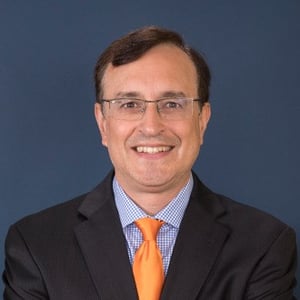
President, Center for Individual Rights
Todd Gaziano is the President of the Center for Individual Rights. Mr. Gaziano received his J.D. in 1988 from the University of Chicago Law School, where he was a John M. Olin Fellow in Law and Economics. He received his B.A. from West Virginia University, summa cum laude in 1985. He was selected as a Truman Scholar from West Virginia while an undergraduate.
Mr. Gaziano’s previous legal work includes service as a law clerk for U.S. Court of Appeals for the Fifth Circuit Judge Edith Jones, as an attorney in the U.S. Department of Justice Office of Legal Counsel, as a chief subcommittee counsel in the U.S. House of Representatives, as a Houston trial attorney, and as a chief corporate legal officer. He also served a six-year term as commissioner on the U.S. Commission on Civil Rights (2008-2013), where he helped conduct oversight and investigations of civil rights agencies.
For most of the last 25 years, Mr. Gaziano was a legal scholar and public interest law leader, promoting individual liberty in the Supreme Court and Congress. From 1997 to 2013, he was the founding director of the Edwin Meese Center for Legal and Judicial Studies at The Heritage Foundation. From 2014 until he joined CIR, he was the Chief of Legal Policy and Strategic Research, and Director of the Center for the Separation of Powers, at Pacific Legal Foundation.
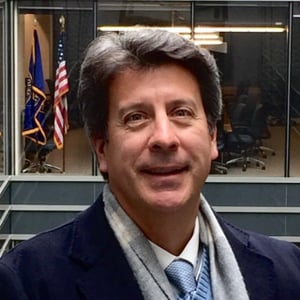
Senior Counsel, Committee on Oversight and Government Reform, U.S. House of Representatives
Daniel Flores is a Senior Counsel on the Republican staff of the Committee on Oversight and Government Reform, U.S. House of Representatives. Prior to his current position, he served in the House as Chief Counsel for the House Judiciary Committee's Subcommittee on Regulatory Reform, Commercial and Antitrust Law. Before coming to the House, he served as an Acting Associate Deputy General Counsel for the U.S. Environmental Protection Agency and in other roles in EPA's Office of General Counsel, as a Senior Trial Attorney for the U.S. Department of Justice, Environment and Natural Resources Division, and as an attorney in private practice in Washington, D.C. He serves as a House liaison to the Administrative Conference of the United States and has served on the Council of the American Bar Association’s Section on Administrative Law & Regulatory Practice.

President, Harned Strategies LLC
Karen Harned is President at Harned Strategies LLC. Previously, she served as Executive Director of the National Federation of Independent Business Small Business Legal Center, a post she held from 2002-2022. Prior to joining the Legal Center, Ms. Harned was an attorney at a Washington, D.C. law firm specializing in food and drug law, where she represented several small and large businesses and their respective trade associations before Congress and federal agencies. She also served as Assistant Press Secretary to U.S. Senator Don Nickles of Oklahoma from August of 1989 to March of 1993. Ms. Harned received her B.A. from the University of Oklahoma in 1989 and her J.D. from The George Washington University National Law Center in 1995. She is admitted to practice in the District of Columbia.
As Executive Director of the NFIB Small Business Legal Center, Ms. Harned commented regularly on small business cases before federal and state courts, as well as the U.S. Supreme Court. She has appeared on Fox News, Fox Business, NBC Nightly News, CNN, CNBC and MSNBC, as well as National Public Radio, CBS Radio, and radio outlets across the country. Her opinion editorials and articles regarding healthcare, lawsuit abuse, regulation, and other issues important to small business have been published in newspapers and other publications nationwide.
Ms. Harned has testified before Congress on the small business impact of regulation and the civil justice system. Additionally, she has conducted numerous webinars and legal compliance seminars for small business owners across the country on issues relating to employment law, including unionization and immigration.
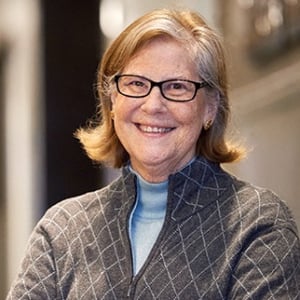
Professor of Practice and Distinguished Scholar in Residence; Co-Director of the Legislative and Regulatory Process Clinic, New York University School of Law
Sally Katzen served in the Clinton administration as administrator of the Office of Information and Regulatory Affairs in the Office of Management and Budget (OMB), as deputy assistant to the president for economic policy and deputy director of the National Economic Council in the White House, and then as the deputy director for management at OMB. She served as the head of the Agency Review Group for the Obama/Biden transition with responsibility for the Executive Office of the President and all government-wide agencies. She has taught both undergraduates and at various law schools. She is a member of the American Law Institute and the National Academy of Public Administration, has served on multiple panels for the National Academy of Sciences, testified frequently before Congress, and is on the board of several non-profit organizations. Before joining the Clinton administration, Katzen was a partner in the Washington, DC, law firm of Wilmer, Cutler & Pickering, specializing in regulatory and legislative matters, while serving in leadership roles in the American Bar Association (including chair of the Section on Administrative Law and Regulatory Practice and as DC delegate to the ABA’s House of Delegates), as president of the Federal Communications Bar Association and as president of the Women’s Legal Defense Fund. She graduated from Smith College and the University of Michigan Law School, where she was the first woman editor-in-chief of the Law Review. She clerked for Judge J. Skelly Wright of the United States Court of Appeals for the District of Columbia Circuit and served in the Carter administration as the general counsel of the Council on Wage and Price Stability in the Executive Office of the President.
President, The Free State Foundation
Randolph J. May is Founder and President of The Free State Foundation. The Free State Foundation is an independent, non-profit free market-oriented think tank founded in 2006.
From October 1999-May 2006, May was a Senior Fellow and Director of Communications Policy Studies at The Progress & Freedom Foundation, a Washington, DC-based think tank. Prior to joining PFF, he practiced communications, administrative, and regulatory law as a partner at major national law firms. From 1978 to 1981, May served as Assistant General Counsel and Associate General Counsel at the Federal Communication Commission.
May has held numerous leadership positions in bar associations. He is a past Chair of the American Bar Association’s Section of Administrative Law and Regulatory Practice. He is a Fellow of the National Academy of Public Administration. Mr. May also has served as a Public Member of the Administrative Conference of the United States and currently is a Senior Fellow at ACUS.
Mr. May has published more than two hundred articles and essays on communications, administrative and constitutional law topics. He is author of A Call for a Radical New Communications Policy: Proposals for Free Market Reform, and co-author of #CommActUpdate: A Communications Law Fit for the Digital Age and The Constitutional Foundations of Intellectual Property. Mr. May is editor of two books, Communications Law and Policy in the Digital Age: The Next Five Years and New Directions in Communications Policy. In addition, he is the co-editor of two other books, Net Neutrality or Net Neutering: Should Broadband Internet Services Be Regulated? and Communications Deregulation and FCC Reform. In the past, Mr. May has written regular columns on legal and regulatory affairs for Legal Times and the National Law Journal, leading national legal periodicals.
He received his A.B. from Duke University and his J.D. from Duke Law School, where he serves as a member of the Board of Visitors.
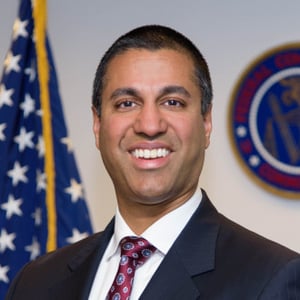
Nonresident Fellow, American Enterprise Institute
Ajit Pai, a former chairman of the Federal Communications Commission (FCC), is a nonresident fellow at the American Enterprise Institute, where he focuses on issues pertaining to technology and innovation, telecommunications regulatory policy, and market-based incentives for investment in broadband deployment. Concurrently, he is a partner at Searchlight Capital Partners, a global investment firm.
Mr. Pai’s distinguished career at the FCC includes two leadership roles following presidential appointments. He was appointed commissioner by President Barack Obama in 2012, designated chairman by President Donald Trump in 2017, and twice confirmed by the US Senate. While at the helm of the FCC, Mr. Pai had a transformative impact on the future of US technology and communications policy, implementing major initiatives to help close the digital divide; advance US leadership in 5G and other wireless technologies; promote innovation; protect consumers, public safety, and national security; and make the agency itself more open, transparent, and data-driven.
Earlier in his career, Mr. Pai served in various public-sector positions in the FCC’s Office of General Counsel, the US Department of Justice, the US Senate Judiciary Committee, and the US District Court for the Eastern District of Louisiana. He also worked as a partner at Jenner & Block and associate general counsel at Verizon Communications.
Mr. Pai graduated with honors from Harvard University, where he received a bachelor’s degree, and from the University of Chicago Law School, where he received a law degree and was an editor on the University of Chicago Law Review.

Partner, HWG LLP
Patricia Paoletta is a partner with the law firm of HWG LLP, where she specializes in telecommunications, trade and technology policy. Ms. Paoletta provides advice on regulatory, trade and legislative policy to clients before the FCC, Congress and the Administration. Her clients include providers of content, cloud, mobile broadband, VoIP, international telecommunications, small cells, cognitive radio, public safety and homeland security solutions. She serves on Advisory Boards for several entities engaged in information services, communications and technology.
Ms. Paoletta has accrued considerable experience with telecommunications trade and policy in the public sector. From 1990 to 1995, she was senior advisor to the International Bureau Chief and Office Director at the Federal Communications Commission. In the mid 1990s, Ms. Paoletta served as Director of Telecommunications Trade Policy in the Office of the U.S. Trade Representative, Executive Office of the President, where she worked on the WTO Information Technology Agreement (ITA) and the Basic Telecommunications Agreement. After USTR, Ms. Paoletta served as Majority Counsel to the House Energy and Commerce Committee. She then moved to Level 3 Communications, as Vice President, Government Relations.
Ms. Paoletta is on the Steering Committee of the Transatlantic Roundtable on Telecommunications and Information Technology of the European Institute. She is a member of the USTR Alumni Association, Washington International Trade Association, the Federal Communications Bar Association (FCBA), and Women in Technology. Ms. Paoletta has served on the Board of Advisors for the Inter-American Dialogue's Latin America Telecom Advisor, Co-Chairman of the American Bar Association International Communications Committee, and as a member of the U.S. Chamber of Commerce's Technology Policy Committee.
Ms. Paoletta served as a delegate in 2012 to the ITU-R's Study Group 6 Working Party 6A Meeting and in 2009 and 2010 to the ITU-R's Study Group I Working Party IB Meetings; the 2009 meetings of CITEL (the Committee on International Telecommunications at the Organization of American States) PCC-II; the International Telecommunication Union (ITU) World Telecommunications Standards Assembly (2000); the ITU Internet Protocol Telephony Experts Group and the ITU World Telecommunications Policy Forum in 2001; as Chairman of the National Reliability and Interoperability Council (NRIC) Steering Committee (2000-2001); as Board Member for the Voice on the Net Coalition (2001); as Co-Chairman of the FCBA's Annual Seminar Committee (2009-2011); as a member of the FCBA's Ad Hoc Speakers Committee (2006-2007); as Co-Chairman for the FCBA International Practice Committee (2001-2002 and 2005-2006); and as a Co-Chairman of the FCBA Legislative Practice Committee (1999-2000).

Managing Partner, Wilkinson Barker Knauer LLP
Bryan Tramont, the firm’s managing partner, offers strategic counsel to Fortune 100 companies and trade associations, as well as small and mid-sized telecommunications and media companies, on all aspects of communications law and regulation. He is regularly called on to advise companies as they develop and evaluate new business opportunities in the technology, media, and telecommunications sectors. Mr. Tramont also designs and leads the execution of the firm’s strategic plan and directs client management and development. Mr. Tramont has been recognized by leading publications like Legal 500, Chambers USA, and Washingtonian as one of the nation’s top communications lawyers. In 2017, he was named to the inaugural Legal 500 Hall of Fame List, which highlights individuals who have received constant praise by their clients and who have been recognized by the Legal 500 as an elite leading lawyer for six consecutive years. He has been awarded The Best Lawyers in America © 2017 “Lawyer of the Year” for Media Law and “Lawyer of the Year" in Communications Law in 2016. In 2016, he was also named one of the Top 10 Washington, DC Super Lawyers.
Mr. Tramont serves on the Commerce Spectrum Management Advisory Committee (CSMAC), advising the Assistant Secretary of Commerce for Communications and Information at NTIA. Appointed under the Bush and Obama Administrations, he also served as the committee’s Co-Chairman from 2008-2010. In addition, Mr. Tramont is active in the Federal Communications Bar Association, where he served in a variety of leadership roles, including as President from 2010-11 and has been awarded the organization’s Distinguished Service Award. Mr. Tramont chairs the Federalist Society’s Telecommunications Practice Group Executive Committee, serves on the International Institute of Communications Canada Board of Directors, and previously served on the Governing Committee of the ABA Forum on Communications Law. Mr. Tramont currently is an adjunct law professor at The Catholic University of America as part of the Communications Law Institute, is a senior adjunct fellow at the University of Colorado, Boulder, has served as the Syracuse University Law School’s Practitioner in Residence, and is on the Board of Trustees at William Woods University. Mr. Tramont is the author of numerous articles on communications policy and is a frequent speaker and lecturer at academic and industry events. Prior to joining Wilkinson Barker Knauer, Mr. Tramont served as Chief of Staff of the Federal Communications Commission under Chairman Michael Powell. As Chief of Staff, Mr. Tramont managed all aspects of the agency’s operations and directed FCC staff in implementing all components of the agency’s policy portfolio including media, broadband, mobility, and traditional telephone services. Before being elevated to Chief of Staff, Mr. Tramont was Chairman Powell’s Senior Legal Advisor, advising him on strategic policy matters and on wireless, international, technology, satellite, and consumer issues. Mr. Tramont also served as Senior Legal Advisor to Commissioner Kathleen Abernathy and, before that, to Commissioner Harold Furchtgott-Roth. He also served as a law clerk for the Honorable Duane Benton on the Supreme Court for his home state of Missouri. In addition, Mr. Tramont has served as an expert witness in a number of communications-related litigation matters.
Bryan Tramont graduated summa cum laude from The George Washington University with a degree in political science. He earned his law degree from Yale Law School, where he served as editor of the Yale Law & Policy Review.

Private Power and Eminent Domain
Paul D. Clement, Jennifer Walker Elrod, Roderick M. Hills, Robert J. McNamara, Joshua Paul Thompson
The 2021 National Lawyers Convention took place November 11-13, 2021 at the Mayflower Hotel in...
Federalism and Broadband Spending: Finding the Right Approach
Brendan Carr, Eric Allan Koch, Roslyn Layton, Steven J. Menashi
The 2021 National Lawyers Convention took place November 11-13, 2021 at the Mayflower Hotel in...
What Happened with the Texas Energy Grid
Raymond L. Gifford, Barry T. Smitherman
When the Texas electric grid failed over Valentine’s Day weekend in February 2021, the recriminations...
Negative Legislation
Roberto J. Borgert
Modern commentators have spilled much ink on the undemocratic nature of congressional delegations to executive...
Courthouse Steps Decision Webinar: FCC v. Prometheus Radio Project
Jane Mago, Michael O'Rielly, Lawrence J. Spiwak, Christopher J. Wright
On April 1, 2021, the U.S. Supreme Court decided Federal Communications Commission v. Prometheus Radio...
The Telecommunications Act at 25 Years: A Panel Discussion
Michelle P. Connolly, Harold W. Furchtgott-Roth, Chris Lewis, Randolph May
On February 8, 1996, President Bill Clinton signed into law the landmark Telecommunications Act of...
Courthouse Steps Oral Argument Webinar: FCC v. Prometheus Radio Project
Jane Mago, Michael O'Rielly, Lawrence J. Spiwak, Christopher J. Wright
On January 19, 2021, the U.S. Supreme Court heard oral arguments in Federal Communications Commission...
The Congressional Review Act: First Branch Gets the Last Word
Susan E. Dudley, Todd F. Gaziano
After living in relative obscurity since its passage in 1996, the Congressional Review Act caught...
Deep Dive Episode 152 – COVID-19 Regulatory Waivers and Suspensions: What Will the Biden Administration Do?
Daniel M. Flores, Karen Harned, Sally Katzen
Following the onset of the COVID-19 pandemic, the Trump administration waived or suspended enforcement of...
Chairman Ajit Pai's Tenure at the FCC: Fireside Chat and Panel Discussion
Randolph May, Ajit V. Pai, Patricia J. Paoletta, Bryan N. Tramont
As 2020 draws to a close, Federal Communications Commission Chairman Ajit Pai joins Bryan Tramont,...