
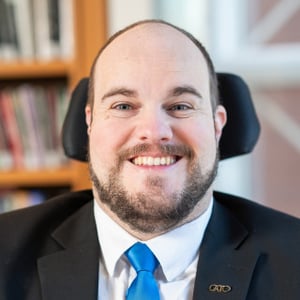
Director, Project on Criminal Justice, Cato Institute
Matthew Cavedon is the Director of the Cato Institute’s Project on Criminal Justice. He focuses on reforming plea-driven mass adjudication, ensuring police accountability, and defending constitutional criminal originalism. Cavedon’s scholarship has been published (or is forthcoming in) publications including the Arizona State Law Journal, Cato Supreme Court Review, Seattle University Law Review, and Georgetown Journal of Law and Public Policy. Formerly a Georgia public defender and fellow at the Institute for Justice, Cavedon has taught law school courses on criminal law and procedure, as well as the First Amendment. Cavedon clerked for a U.S. district court and the Supreme Court of Georgia. He came to Cato following a fellowship at the Emory University Center for the Study of Law and Religion.
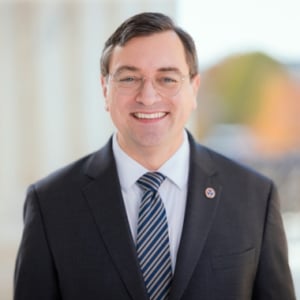
Attorney General of Tennessee
Jonathan Skrmetti was sworn in to an eight-year term as Tennessee’s Attorney General and Reporter on September 1, 2022.
Prior to his current role, General Skrmetti served as Chief Counsel to Governor Bill Lee and as Chief Deputy Attorney General to his predecessor, Tennessee Attorney General Herbert Slatery.
Before working for the State of Tennessee, General Skrmetti was a partner at Butler Snow LLP in Memphis. His legal career began with nearly a decade as a federal prosecutor. He worked at the Civil Rights Division at Main Justice and then at the Memphis U.S. Attorney’s Office and prosecuted sex traffickers, corrupt government officials, and violent white supremacists. In addition, General Skrmetti taught cyberlaw as an adjunct professor at the University of Memphis.
General Skrmetti earned honors degrees from George Washington University, the University of Oxford, and Harvard Law School, where he was editor-in-chief of the Harvard Journal of Law & Public Policy. Following law school, Jonathan clerked for Judge Steven Colloton on the U.S. Court of Appeals for the Eighth Circuit. He lives in Franklin, Tennessee, with his wife and four children.
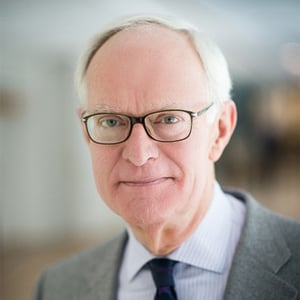
Distinguished Fellow, Hudson Institute
Christopher DeMuth is a distinguished fellow at Hudson Institute. He was president of the American Enterprise Institute for Public Policy Research (AEI) from 1986 to 2008 and was the D.C. Searle Senior Fellow at AEI from 2008 to 2011.
Mr. DeMuth was raised in Kenilworth, Illinois, and attended the Lawrenceville School (1964), Harvard College (A.B. 1968), and the University of Chicago Law School (J.D. 1973). He served as staff assistant to President Richard M. Nixon from 1969 to 1970, working first for Daniel P. Moynihan (then assistant to the President for Urban Affairs) on urban policy matters and then as chairman of the White House Task Force on Environmental Policy. Following law school, he practiced regulatory, antitrust, and general corporate law with Sidley & Austin in Chicago (1973-1976) and was associate general counsel of the Consolidated Rail Corporation (Conrail) in Philadelphia (1976-1977).
From 1977 to 1981, Mr. DeMuth was lecturer in public policy at the Kennedy School of Government at Harvard University, and director of the Harvard Faculty Project on Regulation. There he taught courses on law, economics, and regulatory policy and conducted and sponsored research on health, safety, environmental, and economic regulation.
Returning to Washington in 1981, Mr. DeMuth served as administrator for information and regulatory affairs in the U.S. Office of Management and Budget, and as executive director of the Presidential Task Force on Regulatory Relief during President Ronald Reagan’s first term of office. From 1984 to 1986, he was managing director of Lexecon Inc., a law-and-economics consulting firm; in 1986, he was also publisher and editor-in-chief of Regulation magazine. He was elected president of the American Enterprise Institute in December 1986.
Many of Mr. DeMuth’s articles, lectures, and occasional talks are posted on his website (https://www.ccdemuth.com).

Assistant Professor of Law, Emory University School of Law
Alexander "Sasha" Volokh is an assistant professor of law, joining the Emory Law faculty in Fall 2009.
Professor Volokh earned his B.S. from UCLA and his J.D. and Ph.D. in economics from Harvard University. He clerked for Judge Alex Kozinski of the Ninth Circuit and for Supreme Court Justices Sandra Day O'Connor and Samuel Alito. Before coming to Emory, he was a visiting associate professor at Georgetown University Law Center and a visiting assistant professor at University of Houston Law Center.
His interests include law and economics, administrative law and the regulatory process, environmental law and policy, and legal history. His current research topics include the private management of government services, medieval law, judicial decisionmaking and statutory interpretation.
Assistant Professor of Law, Emory University School of Law
Alexander "Sasha" Volokh is an assistant professor of law, joining the Emory Law faculty in Fall 2009.
Professor Volokh earned his B.S. from UCLA and his J.D. and Ph.D. in economics from Harvard University. He clerked for Judge Alex Kozinski of the Ninth Circuit and for Supreme Court Justices Sandra Day O'Connor and Samuel Alito. Before coming to Emory, he was a visiting associate professor at Georgetown University Law Center and a visiting assistant professor at University of Houston Law Center.
His interests include law and economics, administrative law and the regulatory process, environmental law and policy, and legal history. His current research topics include the private management of government services, medieval law, judicial decisionmaking and statutory interpretation.

President, Cass & Associates, PC
Ronald A. Cass is Dean Emeritus of Boston University School of Law (where he was Dean from 1990-2004), President of Cass & Associates, PC, former Vice-Chairman and Commissioner of the U.S. International Trade Commission, former faculty member at Boston University School of Law and the University of Virginia Law School, and Distinguished Senior Fellow at the C. Boyden Gray Center for the Study of the Administrative State. Dean Cass also sits as an arbitrator for commercial, international, and intellectual property rights disputes, and is a former United States member of the Panel of Conciliators of the International Centre for Settlement of Investment Disputes. He is a member of the Council of the Administrative Conference of the United States and has received seven presidential appointments, spanning Presidents Ronald Reagan to Donald J. Trump.
As a law professor, lecturer, and scholar, Dean Cass has been teaching and writing about a wide array of legal issues on topics such as administrative law and regulation, antitrust, constitutional law, communications, intellectual property, international trade, separation of powers, and legal process. He has published more than 160 scholarly books, chapters, articles, and papers, including a leading casebook on administrative law. Dean Cass has taught judges as well as students in schools of law, economics, business, and public policy and has held academic appointments in the United States, Europe, and Latin America.
In addition to his academic work, Dean Cass has participated in numerous important legal cases as an amicus, consultant, or expert, and has advised businesses, law firms, investment funds, and government agencies on a range of trade, antitrust, intellectual property, and regulatory issues. He has a broad range of affiliations with professional groups, and has received numerous honors, fellowships and awards.
Dean Cass is a graduate of the University of Virginia and the University of Chicago Law School.

Arthur Kaplan Professor of Law, Co-Director, Floersheimer Center, Benjamin N. Cardozo School of Law
Professor Michael E. Herz joined the faculty of the Benjamin N. Cardozo School of LAw from the Environmental Defense Fund, where he was a staff attorney for three years. Previously, he clerked for Associate Justice Byron R. White of the U.S. Supreme Court and for Chief Judge Levin H. Campbell of the U.S. Court of Appeals for the First Circuit. Professor Herz was Cardozo's Vice Dean from 2006 to 2009 and served as Senior Associate Dean from 1996 to 2000; he is currently the co-director of Cardozo's Floersheimer Center for Constitutional Democracy. He was a visiting professor at New York University School of Law from 2000 to 2001 and 2005 to 2006, has taught at Columbia and Princeton, and spent a year as a Fellow in Princeton's Program in Law and Public Affairs. Professor Herz is a former Chair of the ABA's Section of Administrative Law and Regulatory Practice and serves as a public member of the Administrative Conference of the United States.

Associate, King & Spalding
Brian Callanan is an associate in the national appellate practice at King & Spalding. He has participated in cases before the Supreme Court, federal courts of appeals, and state and federal trial courts.
Mr. Callanan has drafted appellate briefs and critical motions in matters involving a broad range of complex legal issues. He has considerable experience litigating against federal agencies and advising clients on administrative law matters. He has represented clients before, or in litigation against, agencies including the Department of Transportation, National Labor Relations Board, Securities & Exchange Commission, Commodity Futures Trading Commission, Federal Reserve, Department of Health & Human Services, and Food & Drug Administration. Among other successes, he participated in an Administrative Procedure Act challenge that prompted a federal agency to withdraw the costliest regulatory mandate in the history of the U.S. railroad industry. He co-chairs the Rulemaking Committee of the American Bar Association’s administrative law section and is a member of the Executive Committee of the Federalist Society’s administrative law section.
Before joining King & Spalding, Mr. Callanan was general counsel to U.S. Senator Rob Portman. In that position, he served as principal adviser on tax policy, regulatory policy, and legal issues cutting across all substantive areas. He developed and drafted bipartisan legislation on a range of issues, including bipartisan bills to reform the rulemaking process, to strengthen economic analysis by independent regulatory agencies, to reform the federal permitting process for major infrastructure projects, and to expedite the sale of excess federal property. He advised Senator Portman in connection with his work on the Finance Committee and the Homeland Security & Governmental Affairs Committee. During the same period, he served as staff director of a Senate oversight subcommittee with jurisdiction over all aspects of federal contracting.
Previously, Mr. Callanan was a litigation associate at another major law firm in Washington, D.C.
Mr. Callanan served as a law clerk to Judge A. Raymond Randolph of the U.S. Court of Appeals for the District of Columbia Circuit. He received his J.D., cum laude, from Harvard Law School in 2008. At Harvard, Mr. Callanan served as Articles Editor of the Harvard Journal of Law & Public Policy. Before law school, he served as a speechwriter in the U.S. Senate. Mr. Callanan earned his undergraduate degree, magna cum laude, from Claremont McKenna College, where he was elected to Phi Beta Kappa.
Associate, King & Spalding
Brian Callanan is an associate in the national appellate practice at King & Spalding. He has participated in cases before the Supreme Court, federal courts of appeals, and state and federal trial courts.
Mr. Callanan has drafted appellate briefs and critical motions in matters involving a broad range of complex legal issues. He has considerable experience litigating against federal agencies and advising clients on administrative law matters. He has represented clients before, or in litigation against, agencies including the Department of Transportation, National Labor Relations Board, Securities & Exchange Commission, Commodity Futures Trading Commission, Federal Reserve, Department of Health & Human Services, and Food & Drug Administration. Among other successes, he participated in an Administrative Procedure Act challenge that prompted a federal agency to withdraw the costliest regulatory mandate in the history of the U.S. railroad industry. He co-chairs the Rulemaking Committee of the American Bar Association’s administrative law section and is a member of the Executive Committee of the Federalist Society’s administrative law section.
Before joining King & Spalding, Mr. Callanan was general counsel to U.S. Senator Rob Portman. In that position, he served as principal adviser on tax policy, regulatory policy, and legal issues cutting across all substantive areas. He developed and drafted bipartisan legislation on a range of issues, including bipartisan bills to reform the rulemaking process, to strengthen economic analysis by independent regulatory agencies, to reform the federal permitting process for major infrastructure projects, and to expedite the sale of excess federal property. He advised Senator Portman in connection with his work on the Finance Committee and the Homeland Security & Governmental Affairs Committee. During the same period, he served as staff director of a Senate oversight subcommittee with jurisdiction over all aspects of federal contracting.
Previously, Mr. Callanan was a litigation associate at another major law firm in Washington, D.C.
Mr. Callanan served as a law clerk to Judge A. Raymond Randolph of the U.S. Court of Appeals for the District of Columbia Circuit. He received his J.D., cum laude, from Harvard Law School in 2008. At Harvard, Mr. Callanan served as Articles Editor of the Harvard Journal of Law & Public Policy. Before law school, he served as a speechwriter in the U.S. Senate. Mr. Callanan earned his undergraduate degree, magna cum laude, from Claremont McKenna College, where he was elected to Phi Beta Kappa.
President, Cass & Associates, PC
Ronald A. Cass is Dean Emeritus of Boston University School of Law (where he was Dean from 1990-2004), President of Cass & Associates, PC, former Vice-Chairman and Commissioner of the U.S. International Trade Commission, former faculty member at Boston University School of Law and the University of Virginia Law School, and Distinguished Senior Fellow at the C. Boyden Gray Center for the Study of the Administrative State. Dean Cass also sits as an arbitrator for commercial, international, and intellectual property rights disputes, and is a former United States member of the Panel of Conciliators of the International Centre for Settlement of Investment Disputes. He is a member of the Council of the Administrative Conference of the United States and has received seven presidential appointments, spanning Presidents Ronald Reagan to Donald J. Trump.
As a law professor, lecturer, and scholar, Dean Cass has been teaching and writing about a wide array of legal issues on topics such as administrative law and regulation, antitrust, constitutional law, communications, intellectual property, international trade, separation of powers, and legal process. He has published more than 160 scholarly books, chapters, articles, and papers, including a leading casebook on administrative law. Dean Cass has taught judges as well as students in schools of law, economics, business, and public policy and has held academic appointments in the United States, Europe, and Latin America.
In addition to his academic work, Dean Cass has participated in numerous important legal cases as an amicus, consultant, or expert, and has advised businesses, law firms, investment funds, and government agencies on a range of trade, antitrust, intellectual property, and regulatory issues. He has a broad range of affiliations with professional groups, and has received numerous honors, fellowships and awards.
Dean Cass is a graduate of the University of Virginia and the University of Chicago Law School.
Arthur Kaplan Professor of Law, Co-Director, Floersheimer Center, Benjamin N. Cardozo School of Law
Professor Michael E. Herz joined the faculty of the Benjamin N. Cardozo School of LAw from the Environmental Defense Fund, where he was a staff attorney for three years. Previously, he clerked for Associate Justice Byron R. White of the U.S. Supreme Court and for Chief Judge Levin H. Campbell of the U.S. Court of Appeals for the First Circuit. Professor Herz was Cardozo's Vice Dean from 2006 to 2009 and served as Senior Associate Dean from 1996 to 2000; he is currently the co-director of Cardozo's Floersheimer Center for Constitutional Democracy. He was a visiting professor at New York University School of Law from 2000 to 2001 and 2005 to 2006, has taught at Columbia and Princeton, and spent a year as a Fellow in Princeton's Program in Law and Public Affairs. Professor Herz is a former Chair of the ABA's Section of Administrative Law and Regulatory Practice and serves as a public member of the Administrative Conference of the United States.

Party Like It’s 1935?: Gundy v. United States and the Future of the Non-Delegation Doctrine
Matthew P. Cavedon, Jonathan Skrmetti
Note from the Editor: This article discusses Gundy v. United States, a case involving the...
Topics
Liberty Month Revisited: Out of Control: Separation of Powers and Encroaching Delegations
This month we are sharing a selection of paired pieces from The Federalist Society's Liberty...
Topics
Out of Control
Separation of powers as a tool for limiting discretionary official power is the foundation stone...
Agency Taxation
Christopher C. DeMuth
In recent years Congress has delegated its taxing and appropriating powers to regulatory agencies under...
Department of Transportation v. Association of American Railroads - Post-Decision SCOTUScast
Alexander Volokh
On March 9, 2015, the Supreme Court decided Department of Transportation v. Association of American...
Department of Transportation v. Association of American Railroads - Post-Argument SCOTUScast
Alexander Volokh
On December 8, 2014, the Supreme Court heard oral argument in Department of Transportation v....
Amtrak and the Resurgence of the Non-Delegation Doctrine? - Podcast
Ronald A. Cass, Michael E. Herz, Brian Richard Callanan
Congress passed the Passenger Rail Investment and Improvement Act (PRIIA) in 2008. Section 207 of...
Amtrak and the Resurgence of the Non-Delegation Doctrine?
Teleforum