
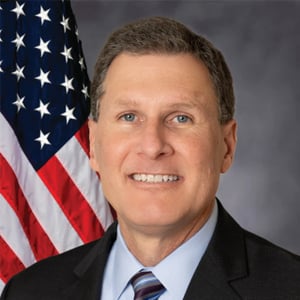
United States Attorney, Eastern District of California
Mr. Grant was appointed by Attorney General Pam Bondi to serve as the United States Attorney for the Eastern District of California beginning on August 11, 2025. Pursuant to 28 U.S.C. § 546(d), he was further appointed by the district court effective December 9, 2025.
Mr. Grant is a veteran of the Department of Justice, having served twice in Washington, D.C.: from 1991 to 1993 as an Attorney-Adviser in the Office of Legal Counsel, and from 2017 to 2021 as a Deputy Assistant Attorney General in the Environment and Natural Resources Division (ENRD). During his tenure at ENRD, he supervised more than a hundred Department litigators advancing the interests of the United States and its agencies in both enforcement and defensive matters, both civil and criminal.
In addition to his service in the Department, Mr. Grant has decades of experience in private practice in Washington, D.C. and Sacramento. That experience includes arguments in the U.S. Supreme Court, the California Supreme Court, and numerous other federal and state courts.
Mr. Grant served as a law clerk to Chief Justice Warren E. Burger (retired) and Associate Justice Clarence Thomas during the Supreme Court’s October 1994 Term. Earlier he served as a law clerk to Judge Edith H. Jones of the U.S. Court of Appeals for the Fifth Circuit in Houston, Texas.
Mr. Grant grew up in Modesto, California and raised his family in Sacramento County. He attended the University of California, Berkeley, from which he earned a bachelor’s degree in economics (1986) and a law degree (1990).
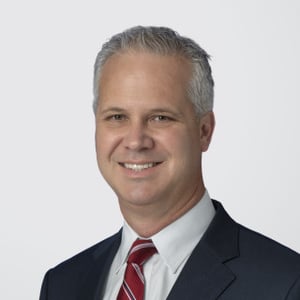
Partner, Hunton Andrews Kurth
Mr. Leopold is a Partner with the law firm of Hunton Andrews Kurth in Washington, DC. He is the former Senate-confirmed general counsel of the U.S. EPA from 2018-2020, and he previously was a litigator at the U.S. Department of Justice, Environment and Natural Resources Division form 2007-2013. As EPA General Counsel, he counseled on the development and defense of EPA’s most significant rulemakings, including the Affordable Clean Energy Rule, the Navigable Waters Protection Rule, and the Safe Affordable Fuel‐Efficient (SAFE) Vehicles Rule, as well as several pesticide actions. He was personally involved in defending EPA in litigation, including the County of Maui v. Hawaii Wildlife Fund in the U.S. Supreme Court. Mr. Leopold’s prior government service also includes working in Florida as general counsel of the Florida Department of Environmental Protection. He now represents clients in regulatory advocacy before federal agencies, litigates federal environmental actions, and defends clients with EPA enforcement issues.
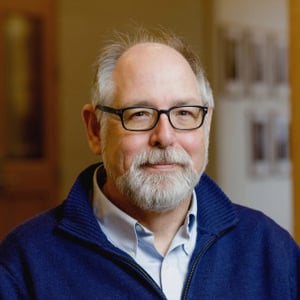
Emmett Visiting Assistant Clinical Professor of Law in Environmental Law, Harvard Law School
Andrew Mergen is a Visiting Assistant Clinical Professor of Law and Faculty Director of the Emmett Environmental Law & Policy Clinic. Prior to joining the Harvard Law School faculty, Andrew Mergen served in the Appellate Section of the Environment & Natural Resources Division (ENRD) at the United States Department of Justice. Professor Mergen began his career at the Justice Department in the Honors Program and concluded his career as Chief of ENRD’s Appellate Section. He has presented oral arguments in all 13 federal courts of appeals, including two en banc courts, and before several state intermediate and supreme courts. He has also worked on over a dozen merits cases in the Supreme Court of the United States. In addition, in 2009, Professor Mergen assisted the Office of White House Counsel on the confirmation of the Honorable Sonia Sotomayor as Associate Justice of the Supreme Court. During his career at the Justice Department, Professor Mergen received the Attorney General’s Award for Distinguished Service three times. He also received ENRD’s Muskee-Chafee Award, honoring his work’s significant contribution to protecting the environment.
Before entering clinical teaching, Professor Mergen taught at several law schools including, Harvard Law School (Advanced Environmental Law), the University of Michigan Law School (Natural Resources Law) and the William S. Richardson School of Law, University of Hawaii-Manoa (Administrative Law). Professor Mergen has written about federal water rights in “A Misplaced Sensitivity: The Draft Opinions in Wyoming v. United States” (68 Colo. L. Rev. 683 (1997), with Sylvia F. Liu); energy development on public lands in “Surface Tension: The Problem of Federal Private Split Estates” (33 Land & Water L. Rev. 419 (1998)); climate change and the Endangered Species Act in “The Role of Climate Change in ESA Listing Decisions” (53 Rocky Mt. Min. L. Fdn. 67 (2016), with Murray Feldman) and the accommodation of Native American sacred sites on federal land in “Finding the Path Forward for Indigenous Sacred and Cultural Spaces on Federal Public Land,” 68 Nat. Resources & Energy L. Inst. 32-1 (2022). Professor Mergen is a graduate of the University of Wisconsin—Madison and the George Washington University Law School.
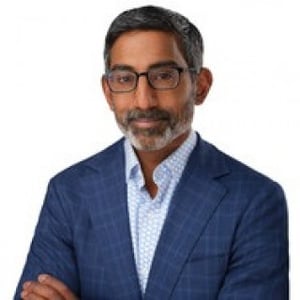
Senior Vice President of Programs, Earthjustice
Sam Sankar is Earthjustice’s Senior Vice President for Programs. Sam leads our Program Leadership Team, which develops Earthjustice’s strategy for carrying out our mission through litigation, lobbying and regulatory advocacy, and communications.
Sam has been working on environmental issues throughout his career, which has included service as a line attorney at the Justice Department’s Environment and Natural Resources Division, as a senior executive at General Electric, and as deputy chief counsel of a presidential commission formed to investigate the 2010 Deepwater Horizon oil spill. He has also worked as a boat captain, machinist, and senior advisor to The Nature Conservancy.
Sam received his B.S. in civil engineering from Cornell University, an M.S. in environmental engineering from Stanford University, and his law degree from the University of California, Berkeley. After law school, he clerked for Judge William Fletcher of the Ninth Circuit, Judge Louis Pollak of the Eastern District of Pennsylvania, and Justice Sandra Day O’Connor of the U.S. Supreme Court.
Sam lives in Washington, D.C., with his wife and two children.
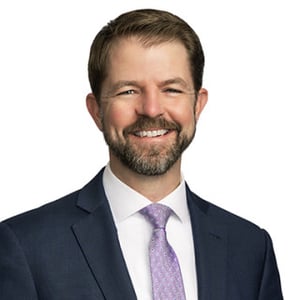
Partner, Baker Botts LLP
Drawing from two decades of experience in senior government, in-house corporate, and private law firm roles, Jeff Wood helps clients with federal enforcement, compliance, litigation, permitting, and policy challenges primarily in the energy and environmental fields.
Prior to joining Baker Botts, Mr. Wood served for almost two years as the Acting Assistant Attorney General (AAG) for the Justice Department's Environment and Natural Resources Division (ENRD). In that capacity, Mr. Wood led ENRD and its more than 600 attorneys and staff representing EPA, Departments of the Interior, Energy, and Defense, and other agencies in civil and criminal enforcement and defensive environmental, energy, and natural resources litigation.
As the top official in ENRD, Mr. Wood managed a complex organization with an annual budget exceeding $200 million and a docket of more than 6,000 cases and matters. E&E News noted that “Wood maintains a strong relationship with ENRD's career staff” (Greenwire, Oct. 31, 2018). He previously served on the staff of the United States Senate Committee on Environment and Public Works.
At the Justice Department, Mr. Wood oversaw the Division's civil and criminal enforcement programs and was responsible for developing legal strategies and approving briefs in key cases including filings before the Supreme Court and Courts of Appeals in coordination with the Office of Solicitor General. In this role, Mr. Wood held the highest level security clearance and worked closely with top leadership at DOJ, EPA, the Interior Department, USDA, the Energy Department, Transportation Department, FERC, NRC and across the Executive Branch, including the White House.
With many years of both private law firm and in-house legal experience, Mr. Wood has handled complex environmental enforcement, regulatory, policy, and litigation matters for electric utilities, energy companies, maritime companies, mining companies, real estate developers, financial institutions, industrial companies and manufacturers, business coalitions, associations, small businesses, and individual property owners. Drawing from his experiences in-house, Mr. Wood brings a common-sense, cost-effective, client-focused approach to his work every day.
With a strong national reputation, Mr. Wood is a frequent speaker on environmental law and policy matters, with recent speeches and presentations at the Environmental Law Institute, Harvard Law School, Vanderbilt Law School, American University Law School, American Bar Association Environmental Law Conferences, the Texas Environmental SuperConference, Air Force Judge Advocate General School's Advanced Environmental Law Course, Baker Institute's Center for Energy Studies (Rice University), and many other venues. He frequently appears in national news to share insights on significant environmental law and policy issues, including recent quotes in the New York Times, Washington Post, Wall Street Journal, Bloomberg, Law360, and E&E News, among others.
Professor of Law, Georgetown Law
William W. Buzbee is a professor of law at Georgetown University Law Center. In his teaching and scholarship, he specializes in environmental law, legislation and regulation, and administrative law. Recent publications focus on climate regulation, deregulation and law governing agency policy change, and federalism. He also offers seminars on advanced environmental, regulatory, and constitutional law subjects, with his most recent seminar focused on “The Art of Regulatory War.”
Professor Buzbee’s books include the recently published Fighting Westway: Environmental Law, Citizen Activism, and the Regulatory War that Transformed New York City (Cornell University Press 2014) and Preemption Choice: The Theory, Law and Reality of Federalism’s Core Question(Cambridge University Press, hardcover 2009, paperback 2011) (William W. Buzbee editor and contributor). He has been a co-author of the 5th , 6th, 7th and forthcoming 8th editions of Environmental Protection: Law and Policy (Aspen/Wolters Kluwer). Law review scholarship includes publications in New York University Law Review, University of Pennsylvania Law Review, Michigan Law Review, Stanford Law Review (co-authored), Cornell Law Review (co-authored), Duke Law Journal (forthcoming), George Washington Law Review, Iowa Law Review, The Journal of Law and Politics and in an array of other journals, books, news outlets, and blogs. Three of his articles have been named among the 10 best environmental or land use law articles of that year and republished in the Land Use and Environment Law Review. He regularly assists with appellate and Supreme Court environmental, federalism, and regulatory litigation, and also has testified before congressional committees on environmental and regulatory matters. He has published op-eds on regulatory and environmental issues with The New York Times, The Hill, CNN, and been quoted and interviewed by numerous press and media outlets.
Professor Buzbee joined Georgetown from Emory Law School, where he was a professor of law and directed its Environmental and Natural Resources Law Program. He also co-directed Emory’s Center on Federalism and Intersystemic Governance. He has been a visiting professor of law at Columbia, Cornell and Illinois law schools. He has also served as a professor for the Leiden-Amsterdam-Columbia Law School Summer Program in American Law. Professor Buzbee is a founding Member Scholar of the Center for Progressive Reform, a Washington D.C.-based regulatory think tank. Professor Buzbee was awarded the 2007-2008 Emory Williams Teaching Award for excellence in teaching. Professor Buzbee clerked for United States Judge Jose A. Cabranes, and before becoming a professor was an attorney-fellow at the Natural Resources Defense Council, and did environmental, land use and litigation work for the New York City law firm, Patterson, Belknap, Webb & Tyler. JD, Columbia Law School, 1986; BA, Amherst College, magna cum laude, 1983.
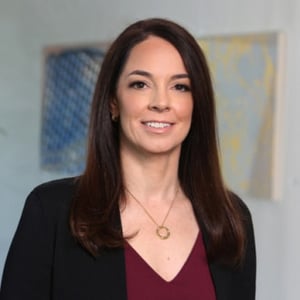
Partner, Hunton Andrews Kurth
A co-leader of Hunton Andrews Kurth’s environmental practice, Deidre is lauded in Chambers USA, 2016 as “extremely capable,” “very familiar with the regulations and agencies,” and excels at giving clients “good insight into getting an expeditious outcome.” Her practice focuses exclusively on environmental, energy and administrative law.
Deidre represents clients on permitting, compliance and litigation relating to the Clean Water Act (CWA), the Endangered Species Act (ESA), the National Environmental Policy Act (NEPA) and other environmental statutes. She frequently counsels clients on administrative rulemaking and policy, providing regulatory clarifications when necessary, and drafting federal and state legislation on myriad intricate issues. She is also well known for negotiating and obtaining permits for complicated energy and development projects. Her clients include development companies, oil and natural gas pipelines, electric utilities, agricultural interests, state and local agencies, and various trade associations.
Prior to entering private practice, Deidre served as assistant general counsel of the Army at the Pentagon, advising the secretary of the Army on environmental and land use issues involving the Corps of Engineers’ Civil Works and section 404 Regulatory program, as well as the Base Realignment and Closure (BRAC) program. Deidre has extensive experience with federal regulatory agencies, military departments and the US Department of Justice.
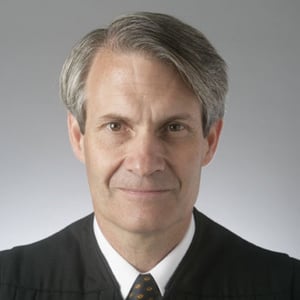
Special Counsel, Hunton Andrews Kurth
After serving on the United State Court of Appeals for the D. C. Circuit from 2005, Judge Griffith stepped down from the bench in 2020. Currently he is a Lecturer on Law at Harvard Law School, a Fellow at the Wheatley Institute at Brigham Young University, and Special Counsel in the Washington, DC office of the law firm of Hunton Andrews Kurth. Most recently, he was a member of President Biden's Commission on the Supreme Court. He is the author of Civic Charity and the Constitution , and the co-author, along with former judges Michael Luttig and Michael McConnell, of Lost, Not Stolen: The Conservative Case that Trump Lost and Biden Won the 2020 Presidential Election. https://lostnotstolen.org/ . Before being appointed to the D. C. Circuit, Judge Griffith was the General Counsel at BYU; Senate Legal Counsel, the non-partisan chief legal officer of the U. S. Senate; and a partner at Wiley, Rein & Fielding. Long active in rule-of-law programs in former communist nations, Judge Griffith is a member of the international advisory board of the CEELI Institute in Prague. He is a graduate of BYU and the University of Virginia School of Law and is a member of the American Law Institute.
Senior Vice President of Programs, Earthjustice
Sam Sankar is Earthjustice’s Senior Vice President for Programs. Sam leads our Program Leadership Team, which develops Earthjustice’s strategy for carrying out our mission through litigation, lobbying and regulatory advocacy, and communications.
Sam has been working on environmental issues throughout his career, which has included service as a line attorney at the Justice Department’s Environment and Natural Resources Division, as a senior executive at General Electric, and as deputy chief counsel of a presidential commission formed to investigate the 2010 Deepwater Horizon oil spill. He has also worked as a boat captain, machinist, and senior advisor to The Nature Conservancy.
Sam received his B.S. in civil engineering from Cornell University, an M.S. in environmental engineering from Stanford University, and his law degree from the University of California, Berkeley. After law school, he clerked for Judge William Fletcher of the Ninth Circuit, Judge Louis Pollak of the Eastern District of Pennsylvania, and Justice Sandra Day O’Connor of the U.S. Supreme Court.
Sam lives in Washington, D.C., with his wife and two children.
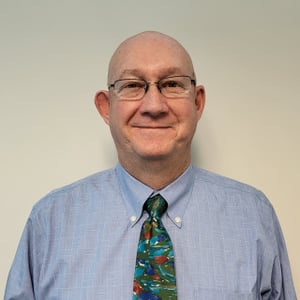
Vice President, Legal Advocacy, Office of General Counsel, National Association of Home Builders
Tom obtained his undergraduate degree in Mechanical Engineering from the University of Delaware and graduated from Widener University School of Law in 1994.
Tom joined NAHB’s Litigation Department in the fall of 1999. Currently he oversees NAHB’s litigation efforts where he develops NAHB’s legal strategies and provides litigation support to local home builders associations. He also supports NAHB’s lobbyists, and coordinates with NAHB’s regulatory staff to identify government activities (i.e. regulations or guidance documents) that may require involvement by the Litigation Department. One of the first cases Tom worked on for NAHB was United States v. Deaton where NAHB argued that the Deaton wetland was not a “water of the United States.” 20 years later we were proven right.
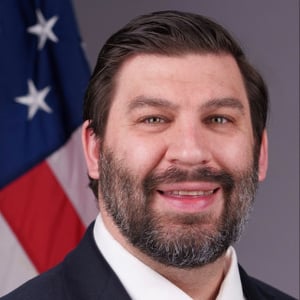
Deputy Counsel, the President
Gary currently is the Deputy Counsel to the President. He was previously a partner at the Dhillon Law Group and worked at the Department of the Interior and Federal Election Commission. He is a native of Virginia, and earned his B.A. and J.D. from the University of Virginia.

Professor Emeritus, Paul M. Hebert Law Center, Louisiana State University
In memoriam
Dr. John Baker is Professor Emeritus of Law, and previously the Dale E. Bennett Professor of Law, at Louisiana State University Law School. He is currently Visiting Professor at Peking University School of Transnational Law (via Zoom) and has been Visiting Professor at The Center for the Constitution, Georgetown Law School (2013-2020). He has also been a Visiting Fellow at Oriel College, the University of Oxford (2012-2014) and taught at Blackfriars Hall, Oxford in 2014. Dr. Baker has also been an adjunct Fellow at the Heritage Foundation (Spring, 2008) and a Distinguished Scholar at the Catholic University of America Law School (2011-12). He has taught at Tulane Law School, George Mason Law School, Pepperdine Law School, New York Law School, Hong Kong University, and the University of Dallas, School of Management and also taught and/or lectured in 17 foreign countries. Notable among his foreign visits are the
following: Visiting Professor at the University of Lyon III (France) (1999-2011); Visiting Professor at the Universidad de los Andes, Chile (2012), as a Fulbright Specialist (2006); and a Fulbright Scholar at various universities in the Philippines. Dr. Baker received his J.D., with honors, from the University of Michigan Law School and his B.A., magna cum laude, from the University of Dallas. He also earned a Ph.D. in Political Thought from the University of London. Baker has taught over a dozen different subjects, mostly courses in public law. His main areas of interest are Constitutional Law (particularly federalism and separation of powers), Criminal Law, Anti-Terrorism Law, International Law, Health Care Law, Mediation, and Comparative Law.
In addition to law review articles and book chapters, Dr. Baker’s academic publications include Hall's Criminal Law: Cases and Materials (with Benson, Force and George; 5th ed. Michie, 1993); An Introduction to the Law of the United States (ed. with Levasseur; University Press of America, 1992). He has also published on Forbes.com, FoxNews.com, in The Washington Times, and a number of times in The Wall Street Journal. He argues in federal court, including two oral arguments in the U.S. Supreme Court. For many years, he co-taught courses for the Federalist Society on separation of powers with the late Supreme Court Justice Antonin Scalia. In September 2016, he co-taught a Supreme Court seminar in China with Justice Samuel Alito. Following law school, he served as a law clerk in federal district court and as an assistant district attorney in New Orleans before joining LSU in 1975. While a professor, he has been as a consultant to USAID, USIA (since rolled into the State Department), the Justice Department, the U.S. Senate Judiciary Subcommittee on Separation of Powers, and the Office of Planning in the White House. He served on an ABA Task Force which issued the report, The Federalization of Crime (1998) and later as a consultant to the “Bi-Partisan Task Force on the Over- federalization of Crime” (2012-2014) created by the U.S. House Judiciary Subcommittee on Crime. Dr. Baker was a co-founder of the first iteration (1995) of Stratfor Inc., a global intelligence agency. He co-authored its first book: The Intelligence Edge (with Friedman, Friedman and Chapman; Crown Books/Random House 1997). In 2022, he began a short, weekly video podcast available on YouTube and Rumble, The Baker Brief.
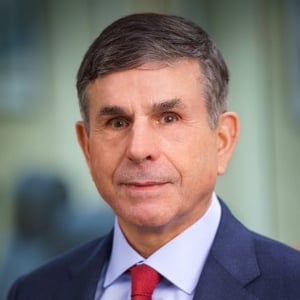
Partner, Marzulla Law
Roger J. Marzulla is one of the nation’s leading environmental, water, and property lawyers. As Assistant Attorney General in charge of the U.S. Justice Department’s Environment and Natural Resources Division, Roger learned first hand the operations and litigation styles of his client agencies: EPA, Interior Department, Bureau of Reclamation, Fish and Wildlife Service, National Marine Fisheries Service, Department of Transportation, Department of Commerce. In 1997, he co-founded Marzulla Law, where he brings to bear more than 35 years of expertise representing companies and individuals in industries as diverse as land and project development, aerospace, chemicals, oil and gas, mining, timber, manufacturing, computers, agriculture and water service.
Roger began his legal career as a trial lawyer in San Jose, California, after graduating magna cum laude from the University of Santa Clara School of Law. As a partner in Matthews & Marzulla he represented developers, title and construction companies, shopping centers, apartment owners and lenders in litigation throughout California. In 1981 he moved to Denver to become President of Mountain States Legal Foundation, litigating environmental and natural resource cases across the West.
In 1983 Roger joined the Justice Department as Special Litigation Counsel. He was subsequently promoted to Deputy Assistant Attorney General and, in 1987, was confirmed by the Senate as Assistant Attorney General in charge of the Environment and Natural Resources Division. At the Justice Department, Roger helped create litigation strategies for government programs as diverse as Superfund, the Clean Air Act, off-shore oil leasing, environmental crimes, federal facility clean-up, wetlands, endangered species and hazardous waste enforcement, as well as Presidential Order EO 12,630 (Government Interference with Private Property Rights).
In 1989 Roger returned to private law practice, successively heading the environmental law practices of the Powell, Goldstein and Akin, Gump law firms.
Since 1997, as a partner in Marzulla Law, Roger has continued to represent corporate and business clients in a wide array of environmental and property issues in courts across the country, frequently in litigation against the United States. He also assists clients in attaining compliance with environmental, health and safety regulation, and in avoiding risks in transactions.
Deputy Secretary, Pennsylvania Department of Environmental Protection
Mr. Perry is the Deputy Secretary in the Department of Environmental Protection’s newly created Office of Oil and Gas Management. Prior to becoming Deputy Secretary, Scott was the Director for the Bureau of Oil and Gas Management for almost two years. Scott was also an Assistant Counsel with DEP's Bureau of Regulatory Counsel where he advised the Department’s Office of Energy and Technology Deployment, Bureau of Oil and Gas Management, Bureau of Radiation Protection, Bureau of Laboratories, Division of Residual Waste, Division of Municipal Financial Assistance and Division of Source Water and Groundwater Protection. He earned his B.A. from Penn State in 1995 and his J.D. from Willamette University, College of Law in Salem, Oregon, in 2000. Mr. Perry lives in Camp Hill, Pennsylvania with his wife June, and son Nickolas.
Partner, Bracewell & Giuliani LLP
Jason Hutt advises energy companies, manufacturers, project developers, investor groups and financial institutions about environmental risks and liabilities associated with regulatory compliance, project development, congressional investigations, internal investigations and corporate transactions. He also assists in the defense of administrative, civil and criminal proceedings involving environmental enforcement agencies at the federal and state levels.
Mr. Hutt counsels clients on current and upcoming regulatory developments at the nexus of environmental and energy policy, with focused attention on natural gas development (including hydraulic fracturing), responses to the Deepwater Horizon incident, and climate change. He is nationally recognized for his work on shale gas issues on behalf of producers, oil field services companies, hedge funds and technology developers.
Mr. Hutt routinely is involved in identifying, evaluating and managing environmental risks and opportunities associated with corporate acquisitions, divestitures and financings, including environmental due diligence, purchase and sale agreement negotiation, and post-closing integration efforts. Within the energy sector, his representative experience includes transactions involving petroleum refineries, liquefied natural gas (LNG) import terminals, renewable energy projects (e.g., wind, biofuels and geothermal), natural gas processing plants, cogeneration facilities, oil and gas wells, pipelines, propane retailers and synfuel facilities.
Representative work in other sectors involves operations and industries such as chemical manufacturers, oil field services, independent tank terminal operators, glass manufacturing, textiles manufacturing, uranium mining, industrial cleaning operations, hazardous waste management facilities, paper and plastic manufacturing facilities, and medical equipment manufacturing facilities.
Mr. Hutt performs environmental risk evaluations and advises on permit strategy and contract negotiation in relation to project development. His most recent work has involved onshore and offshore LNG import terminals, highway expansions, coal-fired power plant siting on tribal lands, utility privatizations at military bases, international undersea pipelines, interstate undersea electric transmission cables and a pump-storage project.

Associate Attorney, Sierra Club Environmental Law Program
Craig Segall started at the Sierra Club in 2008 as an environmental law fellow. Before coming to the Club, Craig was a law clerk to the Honorable Marsha S. Berzon of the U.S. Court of Appeals for the Ninth Circuit. He is a graduate of the University of Chicago and of Stanford Law School, where he spent most of his time in the basement working with Stanford's environmental law clinic. When not practicing law, Craig keeps busy outdoors. In recent years, he has barely beaten a 12-year-old to the top of Mount Whitney, accidentally driven transmission-deep into a salt lake, and, on an ill-advised hike in South Africa, provoked a surprisingly aggressive ostrich.

Laurence H. Silberman Chair in Constitutional Governance, American Enterprise Institute; Executive Director, Antonin Scalia Law School’s C. Boyden Gray Center for the Study of the Administrative State
Adam J. White is the Laurence H. Silberman Chair in Constitutional Governance and senior fellow at the American Enterprise Institute, where he focuses on the Supreme Court and the administrative state. He also directs the Antonin Scalia Law School’s C. Boyden Gray Center for the Study of the Administrative State.
He writes on regulation and constitutional government for a variety of publications. He practiced law in Washington, D.C., after clerking for the D.C. Circuit's Judge David Sentelle. He also has been chairman of the ABA's Administrative Law Section.
In 2021, he served on the Presidential Commission on the Supreme Court of the United States, where he criticized “Court packing” and other efforts to restructure the Supreme Court.
Partner, Baker Botts LLP
Drawing from two decades of experience in senior government, in-house corporate, and private law firm roles, Jeff Wood helps clients with federal enforcement, compliance, litigation, permitting, and policy challenges primarily in the energy and environmental fields.
Prior to joining Baker Botts, Mr. Wood served for almost two years as the Acting Assistant Attorney General (AAG) for the Justice Department's Environment and Natural Resources Division (ENRD). In that capacity, Mr. Wood led ENRD and its more than 600 attorneys and staff representing EPA, Departments of the Interior, Energy, and Defense, and other agencies in civil and criminal enforcement and defensive environmental, energy, and natural resources litigation.
As the top official in ENRD, Mr. Wood managed a complex organization with an annual budget exceeding $200 million and a docket of more than 6,000 cases and matters. E&E News noted that “Wood maintains a strong relationship with ENRD's career staff” (Greenwire, Oct. 31, 2018). He previously served on the staff of the United States Senate Committee on Environment and Public Works.
At the Justice Department, Mr. Wood oversaw the Division's civil and criminal enforcement programs and was responsible for developing legal strategies and approving briefs in key cases including filings before the Supreme Court and Courts of Appeals in coordination with the Office of Solicitor General. In this role, Mr. Wood held the highest level security clearance and worked closely with top leadership at DOJ, EPA, the Interior Department, USDA, the Energy Department, Transportation Department, FERC, NRC and across the Executive Branch, including the White House.
With many years of both private law firm and in-house legal experience, Mr. Wood has handled complex environmental enforcement, regulatory, policy, and litigation matters for electric utilities, energy companies, maritime companies, mining companies, real estate developers, financial institutions, industrial companies and manufacturers, business coalitions, associations, small businesses, and individual property owners. Drawing from his experiences in-house, Mr. Wood brings a common-sense, cost-effective, client-focused approach to his work every day.
With a strong national reputation, Mr. Wood is a frequent speaker on environmental law and policy matters, with recent speeches and presentations at the Environmental Law Institute, Harvard Law School, Vanderbilt Law School, American University Law School, American Bar Association Environmental Law Conferences, the Texas Environmental SuperConference, Air Force Judge Advocate General School's Advanced Environmental Law Course, Baker Institute's Center for Energy Studies (Rice University), and many other venues. He frequently appears in national news to share insights on significant environmental law and policy issues, including recent quotes in the New York Times, Washington Post, Wall Street Journal, Bloomberg, Law360, and E&E News, among others.
Attorney Specializing in Government Relations
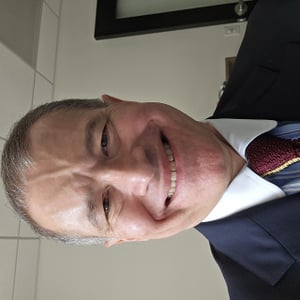
Alec D. Rogers is an attorney specializing in government practice and policy in Washington, DC.
A graduate of James Madison College at Michigan State University and the University of Michigan Law School, he practiced law for several years before spending over a decade on Capitol Hill as a staffer to various Members and Committees.
He has reviewed books for the Washington Times, Hardball Times, The Journal of the American Revolution, and The Weekly Standard, and writes on legal matters in Engage, an online publication of the Federalist Society.

An Environmental Law Revolution: Will DOGE and the Second Trump Administration Achieve Lasting Positive Change?
Eric Grant, Matthew Z. Leopold, Andrew Mergen, Sambhav Sankar, Jeffrey H. Wood
Since Inauguration Day, President Trump and his Cabinet have taken a range of important executive...
Courthouse Steps Decision: Sackett v. Environmental Protection Agency
William W. Buzbee, Deidre G. Duncan, Thomas B. Griffith, Sambhav Sankar, Thomas J. Ward
Sponsors: Environmental Law & Property Rights Practice GroupDC Young Lawyers ChapterHunton Andrews Kurth LLP Where:Hunton...
Deep Dive Episode 19 – Does the Migratory Bird Treaty Act Prohibit Incidental or Accidental Killing?
Gary Lawkowski
Pursuant to a modern interpretation of a 100-year old law, every American who owns a...
The BP Gulf Oil Spill Class Settlement: Redistributive “Justice”?
John S. Baker
This White Paper discusses the litigation and class-action settlement resulting from the 2010 Deepwater Horizon...
Obama Administration Policy on Offshore Oil and Gas Production: Consensus or Contempt?
Roger J. Marzulla
In March 2010, President Obama announced his support for expanded oil and gas production in...
Drilling and Fracking: Who Regulates? - Podcast
Scott R. Perry, Jason B. Hutt, Craig Segall, Joel Burcat
The techniques of directional drilling and hydraulic fracturing for oil and natural gas have been...
Thinking About the "Practically Unthinkable": Energy Infrastructure and the Threat of Low-Probability, High-Impact Events
Adam White
The National Environmental Policy Act1 requires federal agencies to ascertain and evaluate the possible environmental...
American Power Act: Senators Kerry and Lieberman Release “Discussion Draft” of New Climate Change Bill
Jeffrey H. Wood, Alec D. Rogers
Brought to you by the Environmental Law & Property Rights Practice GroupThe Federalist Society takes no...