
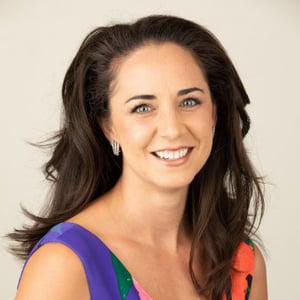
Vice President, Energy & Resources Policy, The National Association of Manufacturers (NAM)
Rachel Jones is vice president of energy and resources policy at the National Association of Manufacturers (NAM). Ms. Jones oversees the NAM’s energy and environmental policy work and has expertise on issues ranging from energy production and use to air and water quality, climate change, energy efficiency and environmental regulation. She is a key voice for manufacturing on Capitol Hill, at federal agencies and across all forms of media.
Before joining the NAM, Jones was the environment and energy counsel for the U.S. House of Representatives Committee on Science, Space, and Technology, where she advised the Committee on EPA, Department of Energy, Department of the Interior, FERC, NASA, NOAA and the White House Office of Science and Technology activities. She served as a legal fellow for the U.S. Senate Committee on Environment and Public Works and as executive student notes and comments editor for the Energy Law Journal.
Ms. Jones’s relentless drive has made her a powerful advocate for our members and a respected voice on the Hill and in the Administration on issues ranging from environmental policy to energy production to infrastructure and regulatory issues.
Ms. Jones has a B.A. from Oklahoma Baptist University and a J.D. from University of Tulsa College of Law.
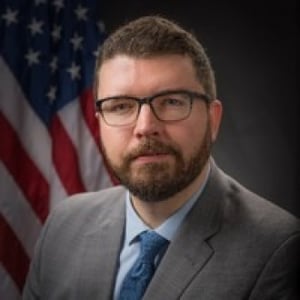
Policy Fellow for Regulations, Americans for Prosperity
Clint Woods is the policy fellow for regulations at Americans for Prosperity. From 2017 to 2019, he served as the deputy assistant administrator for Air and Radiation at the U.S. Environmental Protection Agency, and previously worked as executive director for the Association of Air Pollution Control Agencies, and in positions with the U.S. House Committee on Science, Space, and Technology, American Legislative Exchange Council, and the Recreation Vehicle Industry Association. He has also served on a number of state and national committees, including the U.S. Group on Earth Observations of the National Science and Technology Council and the National Advisory Council on Environmental Policy and Technology. He holds an MA in international commerce and policy from George Mason University and a BA from the University of Mary Washington. Originally from the Pacific Northwest, he now resides in Delaware County, Ohio with his family.

Director of the Center for Energy and Environment and Senior Fellow, Competitive Enterprise Institute
Daren Bakst is Director of the Competitive Enterprise Institute’s Center for Energy and Environment and a Senior Fellow. In this role, he manages, develops, and leads the coalition, advocacy, and research activities of the Center, which is one of the most effective advocates for Free Market Environmentalism.
Before joining CEI as Deputy Director in March, 2023, Daren was a Senior Research Fellow in Environmental Policy and Regulation at the Heritage Foundation, where he played a leading role in the launch of the organization’s new energy and environment center, and created and hosted the Heritage Foundation’s energy and environment podcast the “PowerCast.” During his decade at Heritage, Daren wrote about energy and environmental policy, food and agricultural policy (including editing and co-authoring the book Farms and Free Enterprise), regulation, and trade among other topics.
Daren also worked on environmental policy and regulation at the U.S. Chamber of Commerce, where he was a policy counsel and served as the executive to the association’s Government Oversight, Operations & Consumer Affairs committee, which was responsible for issues such as regulatory process reform. Daren has significant state level experience, working for seven years at the Raleigh, N.C.-based John Locke Foundation, one of the largest state-based, free-market think tanks. As director of legal and regulatory studies, his broad portfolio included energy and environmental policy, regulatory reform, and property rights.
Daren has testified numerous times before Congress, regularly submits comments to federal agencies and has appeared in or been quoted by a wide range of media outlets such as The Wall Street Journal, USA Today, The Washington Times, CNN, Fox Business News, Al-Jazeera America, and U.S. News and World Report. He is a member of the Federalist Society’s Environmental Law and Property Rights Executive Committee and serves on the College Level Advisory Board for Constituting America, an organization that informs and educates about the importance of the U.S. Constitution.
Daren, who hails from Florida, received his bachelor’s and master’s degrees from George Washington University. A licensed attorney, he holds a law degree from the University of Miami and a master of laws degree from American University.
Vice President, Energy & Resources Policy, The National Association of Manufacturers (NAM)
Rachel Jones is vice president of energy and resources policy at the National Association of Manufacturers (NAM). Ms. Jones oversees the NAM’s energy and environmental policy work and has expertise on issues ranging from energy production and use to air and water quality, climate change, energy efficiency and environmental regulation. She is a key voice for manufacturing on Capitol Hill, at federal agencies and across all forms of media.
Before joining the NAM, Jones was the environment and energy counsel for the U.S. House of Representatives Committee on Science, Space, and Technology, where she advised the Committee on EPA, Department of Energy, Department of the Interior, FERC, NASA, NOAA and the White House Office of Science and Technology activities. She served as a legal fellow for the U.S. Senate Committee on Environment and Public Works and as executive student notes and comments editor for the Energy Law Journal.
Ms. Jones’s relentless drive has made her a powerful advocate for our members and a respected voice on the Hill and in the Administration on issues ranging from environmental policy to energy production to infrastructure and regulatory issues.
Ms. Jones has a B.A. from Oklahoma Baptist University and a J.D. from University of Tulsa College of Law.
Policy Fellow for Regulations, Americans for Prosperity
Clint Woods is the policy fellow for regulations at Americans for Prosperity. From 2017 to 2019, he served as the deputy assistant administrator for Air and Radiation at the U.S. Environmental Protection Agency, and previously worked as executive director for the Association of Air Pollution Control Agencies, and in positions with the U.S. House Committee on Science, Space, and Technology, American Legislative Exchange Council, and the Recreation Vehicle Industry Association. He has also served on a number of state and national committees, including the U.S. Group on Earth Observations of the National Science and Technology Council and the National Advisory Council on Environmental Policy and Technology. He holds an MA in international commerce and policy from George Mason University and a BA from the University of Mary Washington. Originally from the Pacific Northwest, he now resides in Delaware County, Ohio with his family.
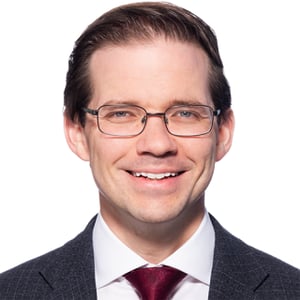
Of Counsel, Covington & Burling LLP
The Honorable Paul J. Ray is currently Of Counsel at Covington & Burling LLP where he advises clients on regulatory opportunities and challenges and helps them formulate and execute advocacy strategies for their regulatory policy priorities before the executive branch and Congress.
During the first Trump Administration, Paul held various senior positions at the Office of Information and Regulatory Affairs (OIRA) within the White House’s Office of Management and Budget, including as acting, and then Senate-confirmed, head of the office. As OIRA Administrator (the "regulations czar"), Paul supervised the review of hundreds of regulations from across the government, drafted numerous executive orders governing the regulatory process, and led the Administration’s regulatory reform effort. As a result of this experience, Paul is well-positioned to help clients understand and achieve regulatory policy priorities in the context of the government’s regulatory agenda and ongoing reform efforts.
Most recently, Paul was also the Director of the Roe Institute for Economic Policy Studies at The Heritage Foundation. In that role, he supervised the formulation of the Foundation’s economic and regulatory policy recommendations and provided technical assistance to congressional committees and staff regarding legislative changes to the regulatory process. In addition to his role at The Heritage Foundation, Paul also served as a Senior Advisor at a strategic advisory firm. Before his time in government, Paul practiced law at a law firm in Washington, specializing in administrative law matters.
Prior to his role at the White House, Paul was Counselor to the Secretary at the U.S. Department of Labor. There he led departmental efforts in high-profile rulemakings and helped formulate the Department’s legal positions and strategy.
Paul served as a law clerk to Supreme Court Justice Samuel Alito and as a law clerk to the Honorable Debra Livingston of the U.S. Court of Appeals for the Second Circuit.
Paul is a thought leader in the conservative legal movement and is a frequent commentator and speaker on regulatory policy and reform matters, including at law schools, professional gatherings, and other venues. He is the Chairman of Innovations in Peacebuilding International and the Regulatory Process Working Group of the Federalist Society’s Regulatory Transparency Project and a public member of the Administrative Conference of the United States. Paul is also an adjunct lecturer at the Hillsdale College School of Government.
Director of the Center for Energy and Environment and Senior Fellow, Competitive Enterprise Institute
Daren Bakst is Director of the Competitive Enterprise Institute’s Center for Energy and Environment and a Senior Fellow. In this role, he manages, develops, and leads the coalition, advocacy, and research activities of the Center, which is one of the most effective advocates for Free Market Environmentalism.
Before joining CEI as Deputy Director in March, 2023, Daren was a Senior Research Fellow in Environmental Policy and Regulation at the Heritage Foundation, where he played a leading role in the launch of the organization’s new energy and environment center, and created and hosted the Heritage Foundation’s energy and environment podcast the “PowerCast.” During his decade at Heritage, Daren wrote about energy and environmental policy, food and agricultural policy (including editing and co-authoring the book Farms and Free Enterprise), regulation, and trade among other topics.
Daren also worked on environmental policy and regulation at the U.S. Chamber of Commerce, where he was a policy counsel and served as the executive to the association’s Government Oversight, Operations & Consumer Affairs committee, which was responsible for issues such as regulatory process reform. Daren has significant state level experience, working for seven years at the Raleigh, N.C.-based John Locke Foundation, one of the largest state-based, free-market think tanks. As director of legal and regulatory studies, his broad portfolio included energy and environmental policy, regulatory reform, and property rights.
Daren has testified numerous times before Congress, regularly submits comments to federal agencies and has appeared in or been quoted by a wide range of media outlets such as The Wall Street Journal, USA Today, The Washington Times, CNN, Fox Business News, Al-Jazeera America, and U.S. News and World Report. He is a member of the Federalist Society’s Environmental Law and Property Rights Executive Committee and serves on the College Level Advisory Board for Constituting America, an organization that informs and educates about the importance of the U.S. Constitution.
Daren, who hails from Florida, received his bachelor’s and master’s degrees from George Washington University. A licensed attorney, he holds a law degree from the University of Miami and a master of laws degree from American University.
Independent Consultant
Since 2001, Dr. Richard Belzer has been an independent consultant in regulation, risk, economics and information quality. Previously he was a visiting professor of public policy at Washington University in St. Louis and economist in the Office of Information and Regulatory Affairs in the Office of Management and Budget. He received his Ph.D. in public policy from Harvard University (1989), Master’s in Public Policy (MPP) from the John F. Kennedy School of Government (now Harvard Kennedy School) (1982), and MS and BS degrees in agricultural economics from the University of California at Davis (1979, 1980). He is a regular contributor to scholarly professions through journal peer review and service to professional societies. He was elected Treasurer of the Society for Risk Analysis (1998, 2000) elected Secretary-Treasurer of the Society for Benefit-Cost Analysis (2008, 2010, 2012). He earned multiple awards for exemplary performance at OMB, the SRA’s Distinguished Service Award (2003), and the SBCA’s Richard O. Zerbe, Jr. Distinguished Service Award (2017). In 1995, he was named a Fellow of the Cecil and Ida Green Center for the Study of Science and Society. In 2017, Dr. Belzer completed a 2-year term as a member of the USEPA Science Advisory Board Panel on Economy-wide Modeling. He serves as a member of the RTP Energy and Environment Working Group.

Laurence H. Silberman Chair in Constitutional Governance, American Enterprise Institute; Executive Director, Antonin Scalia Law School’s C. Boyden Gray Center for the Study of the Administrative State
Adam J. White is the Laurence H. Silberman Chair in Constitutional Governance and senior fellow at the American Enterprise Institute, where he focuses on the Supreme Court and the administrative state. He also directs the Antonin Scalia Law School’s C. Boyden Gray Center for the Study of the Administrative State.
He writes on regulation and constitutional government for a variety of publications. He practiced law in Washington, D.C., after clerking for the D.C. Circuit's Judge David Sentelle. He also has been chairman of the ABA's Administrative Law Section.
In 2021, he served on the Presidential Commission on the Supreme Court of the United States, where he criticized “Court packing” and other efforts to restructure the Supreme Court.

Deputy Secretary of Transportation, US Department of Transportation
Steven G. Bradbury was sworn in as the Deputy Secretary of Transportation on March 13, 2025, following his confirmation by the U.S. Senate on March 11, 2025. In this role, he oversees the Department’s operating administrations and spearheads initiatives to ensure a safe, efficient, and modern transportation system that strengthens economic productivity and global competitiveness. Deputy Secretary Bradbury also assists Secretary Duffy in managing the Department’s activities, including its workforce of over 58,000 employees and an annual budget exceeding $109 billion.
Bradbury previously served as the 23rd General Counsel of the Department of Transportation from 2017 to 2021, as the Acting Deputy Secretary from 2019, and as Acting Secretary of Transportation in 2021. As General Counsel, he was the chief legal officer, advising on all legal matters and ensuring the integrity and compliance of the Department’s policies and programs.
Before rejoining DOT, Bradbury was a Distinguished Fellow at The Heritage Foundation from December 2022 to March 2025. He has extensive experience in the public and private sector, having served as Principal Deputy and Acting Assistant Attorney General at the U.S. Department of Justice and as a partner at Kirkland & Ellis LLP and Dechert LLP. Earlier in his career, he clerked for Justice Clarence Thomas and Judge James L. Buckley.
Bradbury holds a J.D., magna cum laude, from the University of Michigan Law School and a B.A. in English from Stanford University.
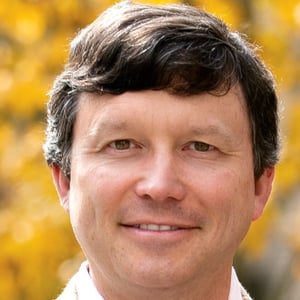
Partner, Baker Botts
George Fibbe represents clients in complex commercial disputes and regulatory matters, focusing on high-stakes matters across the energy sector. Before joining Baker Botts, he served as the Deputy General Counsel for Litigation, Regulation & Enforcement for the U.S. Department of Energy. Mr. Fibbe is a commercial trial attorney who practiced with Yetter Coleman, LLP in Houston for over ten years. He then served as head of litigation for the petroleum division of an international mining corporation. Before joining the Department of Energy, he served as General Counsel for a private solar company.
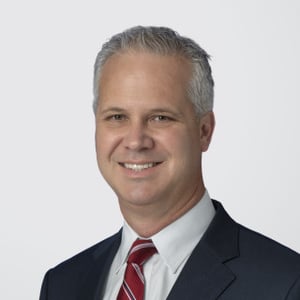
Partner, Hunton Andrews Kurth
Mr. Leopold is a Partner with the law firm of Hunton Andrews Kurth in Washington, DC. He is the former Senate-confirmed general counsel of the U.S. EPA from 2018-2020, and he previously was a litigator at the U.S. Department of Justice, Environment and Natural Resources Division form 2007-2013. As EPA General Counsel, he counseled on the development and defense of EPA’s most significant rulemakings, including the Affordable Clean Energy Rule, the Navigable Waters Protection Rule, and the Safe Affordable Fuel‐Efficient (SAFE) Vehicles Rule, as well as several pesticide actions. He was personally involved in defending EPA in litigation, including the County of Maui v. Hawaii Wildlife Fund in the U.S. Supreme Court. Mr. Leopold’s prior government service also includes working in Florida as general counsel of the Florida Department of Environmental Protection. He now represents clients in regulatory advocacy before federal agencies, litigates federal environmental actions, and defends clients with EPA enforcement issues.
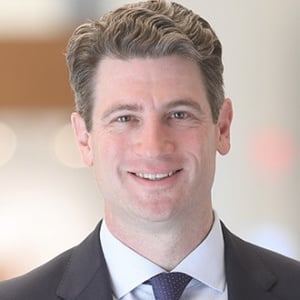
General Counsel and Corporate Secretary, Citigroup
Brent McIntosh joined Citi as General Counsel and Corporate Secretary in October 2021. Brent leads Citi's global legal team, including Citi security and investigative services, and oversees Citi’s independent compliance risk management function.
Brent served as Under Secretary of the Treasury for International Affairs from 2019 to 2021. He led the Treasury Department’s engagement in the G7 and G20, represented the United States on the Financial Stability Board, and managed U.S. participation at the IMF and World Bank. He oversaw Treasury’s international economic and financial policy work, including significant engagements on investment security and regulation of digital currencies. During 2020, he coordinated initiatives to alleviate the COVID-19 pandemic’s economic consequences.
From 2017 to 2019, Brent served as Treasury’s General Counsel, leading the department’s approximately 2,000 lawyers and spearheading its regulatory reform efforts. Prior to that, he was a partner in the law firm of Sullivan & Cromwell, where his practice focused on complex disputes involving financial institutions and multinational corporations.
Brent served in the White House from 2006 until 2009, first as Associate Counsel to the President and then as Deputy Assistant to the President and Deputy Staff Secretary. Before that, he was a Deputy Assistant Attorney General at the Justice Department, where his work focused on national security matters.
A Michigan native, Brent holds an A.B. in economics and political science from the University of Michigan and a J.D. from Yale Law School. Following law school, he was a law clerk to two federal appellate judges, Dennis Jacobs of the Second Circuit and Laurence H. Silberman of the D.C. Circuit. Brent serves on the Board of Directors of the Alexander Hamilton Society, the Board of Advisors for the National Security Institute at George Mason University’s Antonin Scalia Law School, and the Advisory Council of the Official Monetary and Financial Institutions Forum. He is a member of the Council on Foreign Relations, where he previously served as an Adjunct Senior Fellow for International Economics and Finance, as well as the Bretton Woods Committee and the International Institute for Strategic Studies.

Executive Vice President, The Federalist Society
Dean Reuter is Executive Vice President at the Federalist Society for Law and Public Policy Studies. He has served in two federal government agency Offices of the Inspector General, as Counsel to the Inspector General and Deputy Inspector General, responsible for policing the use of federal funds granted and contracted through those agencies. As such, he helped conduct and oversee criminal investigations across the country. He is the principal author of the non-fiction book, The Hidden Nazi: The Untold Story of America's Deal with the Devil, and editor of Liberty’s Nemesis: The Unchecked Expansion of the State and Confronting Terror: 9/11 and the Future of American National Security. He was appointed by the President and served as Vice-Chairman of the Board of Directors of the Corporation for National and Community Service, and recently served as an appointee on the U.S. Commission on Presidential Scholars. He is a graduate of Hood College (BA with Honors) and the University of Maryland School of Law.

Deputy Secretary of Agriculture, U.S. Department of Agriculture
Judge Stephen Alexander Vaden was appointed as the Deputy Secretary of the U.S. Department of Agriculture on July 7, 2025. Alongside Secretary Brooke L. Rollins, Deputy Secretary Vaden leads the Department’s operations and implements policies that support America’s food and farm systems. A native of Union City, Tennessee, Deputy Secretary Vaden brings expertise in agricultural policy, law, and rural development. Previously, he served as a judge on the U.S. Court of International Trade and as General Counsel of USDA. Throughout Deputy Secretary Vaden’s time as General Counsel, he led successful Supreme Court litigation, advanced regulatory reform, and supported the implementation of the 2018 Farm Bill. He is a graduate of Yale Law School and Vanderbilt University. A public servant with strong agricultural roots, Deputy Secretary Vaden is committed to revitalizing rural America and ensuring an abundant, affordable, and safe U.S. food supply.
Laurence H. Silberman Chair in Constitutional Governance, American Enterprise Institute; Executive Director, Antonin Scalia Law School’s C. Boyden Gray Center for the Study of the Administrative State
Adam J. White is the Laurence H. Silberman Chair in Constitutional Governance and senior fellow at the American Enterprise Institute, where he focuses on the Supreme Court and the administrative state. He also directs the Antonin Scalia Law School’s C. Boyden Gray Center for the Study of the Administrative State.
He writes on regulation and constitutional government for a variety of publications. He practiced law in Washington, D.C., after clerking for the D.C. Circuit's Judge David Sentelle. He also has been chairman of the ABA's Administrative Law Section.
In 2021, he served on the Presidential Commission on the Supreme Court of the United States, where he criticized “Court packing” and other efforts to restructure the Supreme Court.
Director of the Center for Energy and Environment and Senior Fellow, Competitive Enterprise Institute
Daren Bakst is Director of the Competitive Enterprise Institute’s Center for Energy and Environment and a Senior Fellow. In this role, he manages, develops, and leads the coalition, advocacy, and research activities of the Center, which is one of the most effective advocates for Free Market Environmentalism.
Before joining CEI as Deputy Director in March, 2023, Daren was a Senior Research Fellow in Environmental Policy and Regulation at the Heritage Foundation, where he played a leading role in the launch of the organization’s new energy and environment center, and created and hosted the Heritage Foundation’s energy and environment podcast the “PowerCast.” During his decade at Heritage, Daren wrote about energy and environmental policy, food and agricultural policy (including editing and co-authoring the book Farms and Free Enterprise), regulation, and trade among other topics.
Daren also worked on environmental policy and regulation at the U.S. Chamber of Commerce, where he was a policy counsel and served as the executive to the association’s Government Oversight, Operations & Consumer Affairs committee, which was responsible for issues such as regulatory process reform. Daren has significant state level experience, working for seven years at the Raleigh, N.C.-based John Locke Foundation, one of the largest state-based, free-market think tanks. As director of legal and regulatory studies, his broad portfolio included energy and environmental policy, regulatory reform, and property rights.
Daren has testified numerous times before Congress, regularly submits comments to federal agencies and has appeared in or been quoted by a wide range of media outlets such as The Wall Street Journal, USA Today, The Washington Times, CNN, Fox Business News, Al-Jazeera America, and U.S. News and World Report. He is a member of the Federalist Society’s Environmental Law and Property Rights Executive Committee and serves on the College Level Advisory Board for Constituting America, an organization that informs and educates about the importance of the U.S. Constitution.
Daren, who hails from Florida, received his bachelor’s and master’s degrees from George Washington University. A licensed attorney, he holds a law degree from the University of Miami and a master of laws degree from American University.
Independent Consultant
Since 2001, Dr. Richard Belzer has been an independent consultant in regulation, risk, economics and information quality. Previously he was a visiting professor of public policy at Washington University in St. Louis and economist in the Office of Information and Regulatory Affairs in the Office of Management and Budget. He received his Ph.D. in public policy from Harvard University (1989), Master’s in Public Policy (MPP) from the John F. Kennedy School of Government (now Harvard Kennedy School) (1982), and MS and BS degrees in agricultural economics from the University of California at Davis (1979, 1980). He is a regular contributor to scholarly professions through journal peer review and service to professional societies. He was elected Treasurer of the Society for Risk Analysis (1998, 2000) elected Secretary-Treasurer of the Society for Benefit-Cost Analysis (2008, 2010, 2012). He earned multiple awards for exemplary performance at OMB, the SRA’s Distinguished Service Award (2003), and the SBCA’s Richard O. Zerbe, Jr. Distinguished Service Award (2017). In 1995, he was named a Fellow of the Cecil and Ida Green Center for the Study of Science and Society. In 2017, Dr. Belzer completed a 2-year term as a member of the USEPA Science Advisory Board Panel on Economy-wide Modeling. He serves as a member of the RTP Energy and Environment Working Group.

Founding Partner, Boyden Gray & Associates
Ambassador C. Boyden Gray is the founding partner of Boyden Gray & Associates, a law and strategy firm in Washington, D.C., focused on constitutional and regulatory issues.
Mr. Gray worked in the White House for twelve years, first as counsel to the Vice President during the Reagan administration and then as White House Counsel to President George H.W. Bush. In the Reagan administration, he was Counsel to the Presidential Task Force on Regulatory Relief, for which he wrote the original Executive Order 12291 requiring cost-benefit analysis and White House review of regulations (later renumbered as current EO 12866). In the George H.W. Bush Administration, Mr. Gray was in charge of judicial selection and was also instrumental in the enactment of the Clean Air Act Amendments of 1990, the Energy Policy Act of 1992, and a cap-and-trade system for acid rain emissions. In 1993, he received the Presidential Citizens Medal. Under President George W. Bush, Mr. Gray was U.S. Ambassador to the European Union and U.S. Special Envoy to Europe for Eurasian Energy.
Mr. Gray practiced law for 25 years at the law firm of Wilmer, Cutler & Pickering and was chairman of the Administrative Law and Regulatory Practice Section of the American Bar Association from 2000 to 2002. Early in his career, Mr. Gray helped to develop the Business Roundtable and served as its first counsel. He is an adjunct professor at Antonin Scalia Law School and a former adjunct professor at NYU Law School (teaching energy and environmental law). Mr. Gray is on the Board of Directors of the Atlantic Council, the Federalist Society, Reason Foundation, and the Trust for the National Mall.
Mr. Gray earned his A.B. magna cum laude from Harvard, where he was an editor of the Crimson, and his J.D. with high honors from the University of North Carolina at Chapel Hill, where he was editor-in-chief of the Law Review. Mr. Gray served in the United States Marine Corps, and after law school, he clerked for Earl Warren, Chief Justice of the United States Supreme Court.
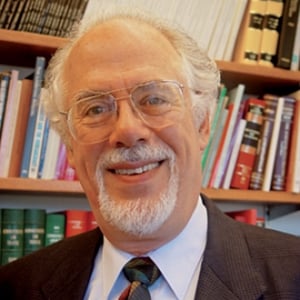
Betts Professor Emeritus of Law, Columbia Law School
Peter L. Strauss is the Betts Professor of Law at Columbia Law School. He teaches courses in administrative law, legal methods, and legislation. He joined the faculty in 1971, and has twice served as vice dean.
He received his LL.B. from Yale Law School in 1964 and his A.B. from Harvard College in 1961. Before joining the Law School, he clerked for David L. Bazelon and William J. Brennan in Washington, D.C.; spent two years lecturing on criminal law in the national university of Ethiopia; and three years as an attorney in the Office of the Solicitor General, briefing and arguing cases before the U.S. Supreme Court. During 1975 to 1977, Strauss was on leave from Columbia as the first general counsel of the United States Nuclear Regulatory Commission.
In 1987, the American Bar Association's section of administrative law and regulatory practice presented Strauss with its third annual award for distinguished scholarship in administrative law. From 1992 to 1993, he served as chair of the section. He has been a reporter for rulemaking on its APA and European Union administrative law projects, and was a member of its E-Rulemaking task force. In 2008, the American Constitution Society awarded him the first Richard Cudahy prize for his essay “Overseer or 'The Decider'? The President in Administrative Law.”
Strauss has been a visitor at the European University Institute, Harvard University, the Max Planck Institute for Comparative Public and International Law, and New York University, and has lectured widely on American administrative law abroad, including programs in Argentina, Australia, Belarus, Brazil, China, Colombia, England, France, Germany, Hong Kong, India, Italy, Japan, the Netherlands, New Zealand, Turkey, and Venezuela. During 2008 to 2009, he was Fernand Braudel Senior Fellow at the European Law Institute and Parsons Fellow at the University of Sydney Law School.
A life member of the American Law Institute, Strauss was elected in 2010 to the American Academy of Arts & Sciences. He has also long been a faculty member on the board of the Law School's Public Interest Law Foundation.

Judge, United States Court of Appeals, Seventh Circuit
Judge Sykes was nominated to the Seventh Circuit by President George W. Bush and confirmed by the Senate in 2004. Prior to her appointment to the federal bench, Judge Sykes served as a justice on the Wisconsin Supreme Court. Governor Tommy G. Thompson appointed her in September 1999 to fill a mid-term vacancy on the state supreme court, and she was elected to a full ten-year term in April 2000. From 1992-1999, Judge Sykes served on the state trial bench in Milwaukee County (elected in 1992 and re-elected in 1998). From 1985-1992, Judge Sykes practiced law with the Milwaukee firm of Whyte & Hirschboeck, S.C., and from 1984-1985, was a law clerk to Federal Judge Terence T. Evans.
Born and raised in the Milwaukee area, Judge Sykes earned a bachelor’s degree in journalism from Northwestern University in 1980 and a law degree from Marquette University Law School in 1984. Between college and law school, Judge Sykes worked as a reporter for The Milwaukee Journal.
Judge Sykes has two sons.

Professor of Law, University of Michigan Law School
Christopher J. Walker is a Professor of Law at the University of Michigan. Prior to joining Michigan law faculty in 2022, he spent a decade teaching at The Ohio State University Moritz College of Law. He previously clerked for Justice Anthony Kennedy of the U.S. Supreme Court, worked on the Civil Appellate Staff at the U.S. Department of Justice, and served on the Senate Judiciary Committee staff for the Gorsuch Supreme Court confirmation. Professor Walker’s research focuses on administrative law, regulation, and law and policy at the agency level. Outside the law school, he chaired the American Bar Association’s Section of Administrative Law and Regulatory Practice in 2020-21 and served as one of forty Public Members of the Administrative Conference of the United States from 2016-2022, and he continues to serve in both organizations in various capacities. He also works of counsel at the U.S. Chamber Litigation Center. In 2022, he received the Federalist Society’s Joseph Story Award.
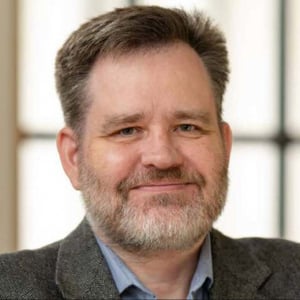
David Boies Professor of Law, Yale Law School
Senior Advisor, Covington & Burling LLP
Congressman Howard Berman advises clients on a wide range of foreign affairs and domestic policy matters, including defense and national security issues, investment, intellectual property, entertainment, technology and immigration. He also serves on the board of trustees of the Asia Foundation, the board of the National Democratic Institute, the Immigration Task Force of the Bipartisan Policy Center, and the Board of Directors of the Pacific Council on International Policy.
First elected to Congress in 1982, Congressman Berman became known as one of Capitol Hill’s preeminent deal-makers. National Journal described him as “one of the most creative members of the House and one of the most clear-sighted operators in American politics.”
As the chairman of the House Foreign Affairs Committee, Congressman Berman was one of Congress’ leading experts on international relations. On the Committee, he repeatedly helped build bipartisan consensus within the House, and between Congress and the Executive Branch. A long-time senior member on the House Judiciary Committee, Congressman Berman chaired the Subcommittee on Courts, the Internet and Intellectual Property, where he successfully led efforts resulting in major changes to intellectual property laws affecting the entertainment and high-tech industries.
Congressman Berman, a senior advisor not practicing law until admitted in the District of Columbia, will provide policy and legislative advice to clients and members of the firm.
Harry F. Byrd Professor of Politics, University of Virginia
James W. Ceaser is Harry F. Byrd Professor of Politics at the University of Virginia, where he has taught since 1976, and a senior fellow at the Hoover Institution. He has written several books on American politics and political thought, including Presidential Selection, Liberal Democracy and Political Science, Reconstructing America, Nature and History in American Political Development, and Designing a Polity. Professor Ceaser has served as the Academic Chairman of the Jack Miller Center since its inception in 2004. He is a regular contributor to the popular press and comments frequently on American politics for La Voix d’Amérique, the French-African outlet for the Voice of America.

U.S. Court of Appeals, Seventh Circuit
Frank H. Easterbrook is a judge of the United States Court of Appeals for the Seventh Circuit and a Senior Lecturer at the Law School of the University of Chicago. He was Chief Judge from 2006–2013. Before joining the court in 1985, he was the Lee andBrena Freeman Professor of Law at the University of Chicago, where he taught and wrote in antitrust, securities, corporate law, jurisprudence, and criminal procedure. He has published The Economic Structure of Corporate Law (with Daniel R. Fischel) and about 100 scholarly articles. He served as Co-Editor of the Journal of Law and Economics from 1982 to 1991 and as a member of the Judicial Conference’s Standing Committee on Rules of Practice and Procedure from 1991 to 1997. Before joining the faculty of the Law School in 1979, Judge Easterbrook was Deputy Solicitor General of the United States. He holds degrees from Swarthmore College (B.A. with high honors, 1970) and the University of Chicago (J.D. cum laude, 1973), and is a member of the American Academy of Arts and Sciences, the American Law Institute, the Mont Pelerin Society, Phi Beta Kappa, and the Order of the Coif.

Professor of Law, Antonin Scalia Law School, George Mason University
Professor of Law Michael S. Greve joined the faculty of the Antonin Scalia Law School, George Mason University in fall 2012 after having served as John G. Searle Scholar at the American Enterprise Institute (AEI), where he specialized in constitutional law, courts, and business regulation and served as chairman of the Competitive Enterprise Institute. Prior to joining AEI, Greve was founder and co-director of the Center for Individual Rights, a public interest law firm specializing in constitutional litigation.
Greve has served previously as an adjunct professor at a number of universities, including Cornell and Johns Hopkins Universities, and has been a visiting professor at Boston College since 2004. He was awarded a PhD and an MA in government by Cornell University. Greve also earned a Diploma from the University of Hamburg in Germany.
A prolific writer, Greve is the author of nine books and a multitude of articles appearing in scholarly publications, as well as numerous editorials, short articles, and book reviews. He is a frequent speaker for professional and scholarly organizations and has made many appearances on radio and television.
In addition Greve has provided congressional and state legislative testimony, has lobbied and consulted in federal agency proceedings, and has provided litigation services and management in over 30 cases, including matters before the U.S. Supreme Court.
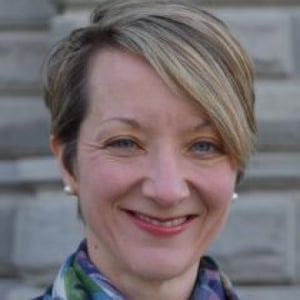
Professor of Politics and Public Affairs, Princeton University
Frances E. Lee is jointly appointed in the Department of Politics and the Woodrow Wilson School of Public and International Affairs where she is Professor of Politics and Public Affairs.
Lee has broad interests in American politics, with a special focus on congressional politics, national policymaking, party politics, and representation. She is author of Insecure Majorities: Congress and the Perpetual Campaign (2016) and Beyond Ideology: Politics, Principles, and Partisanship in the U.S. Senate (2009). She is also coauthor of Sizing Up The Senate: The Unequal Consequences of Equal Representation (1999) and a textbook, Congress and Its Members (Sage / CQ Press). Her research has appeared in the American Political Science Review, American Journal of Political Science, Perspectives on Politics, Journal of Politics, Legislative Studies Quarterly, and other outlets.
Lee is editor of the Cambridge Elements Series in American Politics and a series editor for the Chicago Studies in American Politics. She was co-editor of Legislative Studies Quarterly from 2014 to 2019.
Lee earned her B.A. from the University of Southern Mississippi and her Ph.D. from Vanderbilt University. She is a fellow of the American Academy of Arts and Sciences.

Sudler Family Professor of Constitutional Law, New York University School of Law
Richard H. Pildes is one of the nation’s leading scholars of constitutional law and a specialist in legal issues affecting democracy. He is a Member of the American Academy of Arts and Sciences and the American Law Institute, and has received recognition as a Guggenheim Fellow and a Carnegie Scholar. His acclaimed casebook, The Law of Democracy: Legal Structure of the Political Process (now in its fourth edition), helped create an entirely new field of study in the law schools. The Law of Democracy systematically explores legal and policy issues concerning the structure of democratic elections and institutions, such as the role of money in politics, the design of election districts, the regulation of political parties, the design of voting systems, the representation of minority interests in democratic institutions, and similar issues. He has written extensively on the rise of political polarization in the United States, the Voting Rights Act, the dysfunction of America’s political processes, the role of the Supreme Court in overseeing American democracy, the powers of the American President and Congress, and he has criticized excessively “romantic” understandings of democracy. In addition to his scholarship on these issues, he has written on national-security law, the design of the regulatory state, and American constitutional history and theory.
Respect for his expertise in these areas is reflected in frequent citations of his work in U.S. Supreme Court opinions, the translation of his work into many languages, and his frequent public lectures and appearances around the world, including his nomination with the NBC News Team for an Emmy Award for coverage of the 2000 Presidential election litigation.
His work has been translated and published in Chinese, French, Spanish, and Portuguese. In addition to his scholarship, Professor Pildes plays an active role litigating in these areas. He has won two cases before the United States Supreme Court, including a 2015 victory in Alabama Democratic Conference v. Alabama, a case involving race and redistricting. He served as counsel to a group of former chairmen of the Securities and Exchange Commission in litigation defending the constitutionality of the Sarbanes-Oxley Act; as counsel in election litigation to the Puerto Rico Electoral Commission; as counsel to the government of Puerto Rico; as a federal court-appointed independent expert on voting rights litigation; and as counsel in successful Supreme Court litigation that challenged the way the United States Tax Court operated. He was also a senior legal advisor to the 2008 and 2012 campaigns of President Obama.
Pildes received his A.B. in physical chemistry summa cum laude from Princeton, and his J.D. magna cum laude from Harvard, where he served as Supreme Court Note Editor on the Harvard Law Review. He clerked for Judge Abner J. Mikva of the U.S. Court of Appeals for the District of Columbia Circuit and for Justice Thurgood Marshall of the U.S. Supreme Court. After practicing law in Boston, he began his academic career at the University of Michigan Law School, before joining the NYU School of Law in 2001.
Executive Vice President, The Federalist Society
Dean Reuter is Executive Vice President at the Federalist Society for Law and Public Policy Studies. He has served in two federal government agency Offices of the Inspector General, as Counsel to the Inspector General and Deputy Inspector General, responsible for policing the use of federal funds granted and contracted through those agencies. As such, he helped conduct and oversee criminal investigations across the country. He is the principal author of the non-fiction book, The Hidden Nazi: The Untold Story of America's Deal with the Devil, and editor of Liberty’s Nemesis: The Unchecked Expansion of the State and Confronting Terror: 9/11 and the Future of American National Security. He was appointed by the President and served as Vice-Chairman of the Board of Directors of the Corporation for National and Community Service, and recently served as an appointee on the U.S. Commission on Presidential Scholars. He is a graduate of Hood College (BA with Honors) and the University of Maryland School of Law.
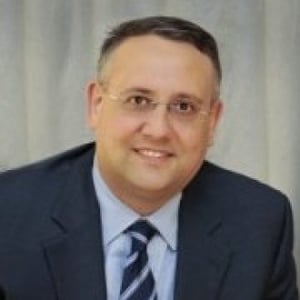
Lecturer in Law, University of Pennsylvania Carey Law School
Matthew Lee Wiener served until recently as the twice-presidentially appointed Acting Chair and Vice Chair of the Administrative Conference of the United States (ACUS), as well as a member of its Council and its Executive Director. (In 2016, President Obama nominated him to be ACUS’s Chairman.)
He is now a special counsel to ACUS, co-chair of its Council on Federal Administrative Adjudication, and a lecturer at the University of Pennsylvania Carey Law School, where he teaches Administrative Law.
Before affiliating with ACUS, Mr. Wiener was general counsel to U.S. Senator Arlen Specter (Senate Committee on the Judiciary), counsel to the U.S. House of Representatives Committee on the Judiciary, a partner at Dechert LLP, and special counsel to Cuneo Gilbert & LaDuca.
He has taught courses on administrative law, administrative practice, regulation remedies, statutory interpretation, and separation of powers at the law schools of the University of Pennsylvania, Rutgers University, and George Mason University.
Mr. Wiener is an elected member of the American Law Institute, a fellow of the American Bar Foundation, and co-chair of the Adjudication Committee of the American Bar Association’s Section of Administrative Law and Regulatory Practice.
Mr. Wiener holds a J.D. from Stanford Law School, where he was Articles Editor of the Stanford Law Review, and an A.B. from William and Mary.

Director, GW Regulatory Studies Center & Distinguished Professor of Practice, Trachtenberg School of Public Policy & Public Administration, The George Washington University
Susan Dudley is the Founder and Director of the George Washington University Regulatory Studies Center, established in 2009 to raise awareness of regulations’ effects and improve regulatory policy through research, education, and outreach. She is also a distinguished professor of practice in the Trachtenberg School of Public Policy and Public Administration. She is past-president of the Society for Benefit Cost Analysis, a senior fellow of the Administrative Conference of the United States, and on the Regulatory Transparency Project Regulatory Practice Working Group. Her book, Regulation: A Primer, with Jerry Brito, is available on Amazon.com.
From April 2007 through January 2009, Professor Dudley served as the Presidentially-appointed Administrator of the Office of Information and Regulatory Affairs in the U.S. Office of Management and Budget and was responsible for the review of draft executive branch regulations under Executive Order 12866, the collection of federal-government-wide information under the Paperwork Reduction Act, the development and implementation of government-wide policies in the areas of information policy, privacy, and statistical policy, and international regulatory cooperation efforts.
Prior to OIRA, she directed the Regulatory Studies Program at the Mercatus Center at George Mason University, and taught courses on regulation at the George Mason University School of Law. Earlier in her career, Professor Dudley served as an economist at OIRA, as well as the Environmental Protection Agency and the Commodity Futures Trading Commission. She was also a consultant to government and private clients at Economists Incorporated. She holds a Master of Science degree from the Sloan School of Management at MIT and a Bachelor of Science degree (summa cum laude) in Resource Economics from the University of Massachusetts, Amherst.
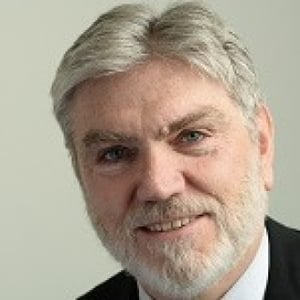
Research Professor, Regulatory Studies Center, The George Washington University
Brian Mannix is a Research Professor at George Washington University’s Regulatory Studies Center. From 2005 – 2009 he was the EPA’s Associate Administrator for Policy, Economics, and Innovation. Earlier he served as the Deputy Secretary of Natural Resources for the Commonwealth of Virginia. Brian was an economist at OIRA from 1981 – 1987, and then served as managing editor of Regulation magazine at the American Enterprise Institute.

Strengthening the Information Quality Act to Improve Transparency and Regulatory Quality
In a recent Food and Drug Law Journal article, the Heritage Foundation’s Daren Bakst discusses...
Deep Dive Episode 160 – The Myths and Facts Regarding the EPA’s Benefit-Cost Analysis and Science Transparency Rules
Rachel Jones, Clint Woods, Daren Bakst
The Environmental Protection Agency recently finalized two new transparency-related rules. The stated purpose of the...
The Myths and Facts Regarding the EPA’s Benefit-Cost Analysis and Science Transparency Rules
Daren Bakst, Rachel Jones, Clint Woods
Over the past month, the Environmental Protection Agency has finalized two new transparency-related rules. The...
Capital Conversations: Hon. Paul J. Ray, OIRA Administrator
Paul J. Ray
Join us as Paul Ray, the Administrator of the Office of Information and Regulatory Affairs at...
Deep Dive Episode 111 – The Truth About the EPA’s Science Transparency Rule
Daren Bakst, Richard B. Belzer, Adam White
In 2018, the Environmental Protection Agency proposed a rule entitled “Strengthening Transparency in Regulatory Science.” ...
Plenary Roundtable: Regulatory Reform Report Card: Agency General Counsel Perspective
Steven Gill Bradbury, George Fibbe, Matthew Z. Leopold, Brent J. McIntosh, Dean Reuter, Stephen Alexander Vaden, Adam White
The seventh annual Executive Branch Review Conference took place on May 8, 2019, at the...
Analyzing how EPA is Addressing “Secret Science”
Daren Bakst, Richard B. Belzer
EPA Administrator Scott Pruitt announced that his agency would no longer allow the use of...
Showcase Panel II: Congress and the Administrative State
C. Boyden Gray, Peter L. Strauss, Diane S. Sykes, Christopher J. Walker, Keith E. Whittington
Despite the Constitution vesting “[a]ll legislative Powers herein granted" in Congress, today lawmaking by administrative...
Showcase Panel III: ROUNDTABLE: Can Changes in Incentives Significantly Address Congressional Dysfunction?
Howard L. Berman, James W. Ceaser, Frank H. Easterbrook, Michael S. Greve, Frances E. Lee, Richard H. Pildes, Dean Reuter, Matthew Lee Wiener
Over the years, and especially recently, it appears as though members of Congress primarily need...
The Social Cost of Carbon
Susan E. Dudley, Brian F. Mannix
In May 2013, the White House released a revised Technical Support Document (TSD) with a...