
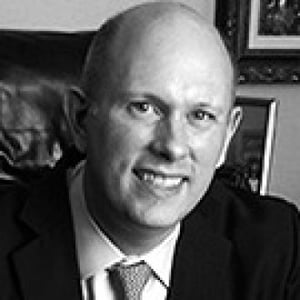
Of Counsel, Spencer Fane LLP
Anthony J. “A.J.” Ferate has built a multi-faceted background in the areas of the law, policy, energy, campaigns and elections, and defense over the last 20 years.
Through recent representation as Vice President of Regulatory Affairs for the Oklahoma Independent Petroleum Association (“OIPA”), A.J. held responsibilities over government efforts outside of the legislative branch on matters as broad as water, electric generation, commodity marketing, land matters, and seismicity. A.J. also maintained responsibility for legal matters at OIPA, including amicus briefing in appellate matters. A.J.’s extensive experience also includes management of public policy strategy for a Fortune 500 company.
For the past eleven years, A.J. has volunteered as General Counsel and spokesman for the Oklahoma Republican Party and has represented a number of elected officials, including U.S. Senator James Lankford, former statewide elected officials, a number of state legislators, and members of Congress.
Additionally, A.J. has assisted elected officials serve their constituents in all branches of government. Early in his career, A.J. held legislative aide duties in the Nebraska Legislature, then went on to work for former Nebraska Treasurer David Heineman. A.J. gained experience in the judiciary while serving Judge Gary L. Lumpkin at the Oklahoma Court of Criminal Appeals, the highest criminal appellate court in Oklahoma. Following this service, A.J. began work with Denise A. Bode of the Oklahoma Corporation Commission, assisting her in her duties regulating 70 percent of Oklahoma’s economy, including oil and gas and electric utilities.
A.J. honorably served ten years as an intelligence analyst for the United States Naval Reserve, including time at the Office of Naval Intelligence in the greater Washington DC area.
Opinion pieces authored or ghostwritten by A.J. have been published in the Seattle Times, Politico, Law360, The Oklahoman, Tulsa World and The Journal Record. A.J. has also been interviewed by national and international newspapers, and has also appeared on national radio programs including NPR’s The Diane Rehm Show and On Point with Tom Ashbrook.
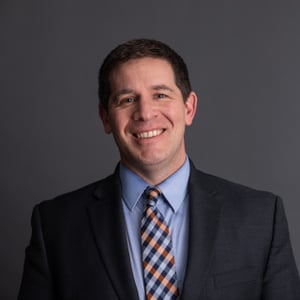
Vice President for Legal Strategy, Stand Together
Casey Mattox is Vice President for Legal Strategy at Stand Together and Senior Advisor at
Americans for Prosperity. In these roles he advocates for and creates strategies and
partnerships to ensure a constitutionally limited government that protects the civil liberties of all
Americans. Prior to joining Stand Together and AFP Casey’s legal career focused on defending
the First Amendment rights of students, faculty, healthcare workers and religious organizations.
Casey has a J.D. from Boston College School of Law and an undergraduate degree from the
University of Virginia. You can find him on Twitter at @CaseyMattox_ and on LinkedIn at
@Casey-Mattox-ST.
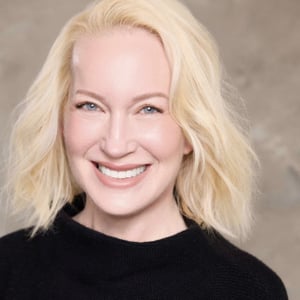
Founder, Ivey Consulting
Anna founded Ivey Consulting to help applicants of all stripes apply to selective colleges and law schools in the United States. She grew up in Germany, attended high school in Massachusetts, and earned her B.A. in History at Columbia University and her law degree at the University of Chicago. In college, she spent a year at Cambridge University, where she was awarded the annual Newnham Prize for distinguished undergraduate work in History. During law school, she served on the board of the University of Chicago Law Review and served as research assistant to Prof. Lawrence Lessig on topics ranging from Constitutional Law to Cyberlaw. After graduating, she worked at two law firms in Los Angeles before returning to the University of Chicago in her admissions role and becoming Dean of Admissions at the Law School. She next worked in development at Stanford University before founding Ivey Consulting. She is the author of The Ivey Guide to Law School Admissions and co-author of How to Prepare a Standout College Application. Anna also co-founded the non-profit Service to School, which mentors transitioning military veterans through the college and graduate school application process.
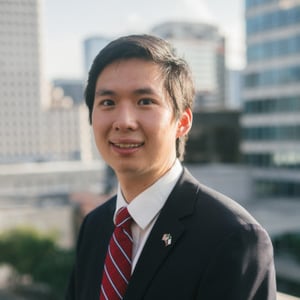
State District Judge, Austin, Texas
Cory Liu is a state district judge in Austin, Texas. He previously served as assistant general counsel to Texas Governor Greg Abbott. Mr. Liu clerked for Judge Andrew Oldham on the U.S. Court of Appeals for the Fifth Circuit and Judge Danny Boggs on the U.S. Court of Appeals for the Sixth Circuit. He was Editor-in-Chief of the Harvard Journal of Law & Public Policy and is a graduate of Harvard Law School and the University of Chicago.
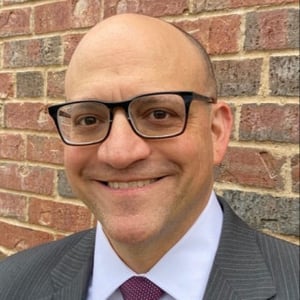
Executive Director & Secretary, American Civil Rights Project
Dan Morenoff is the executive director at the American Civil Rights Project and an adjunct fellow at the Manhattan Institute.
His work focuses on protecting and, where necessary, restoring the primacy of all Americans' shared civil rights against the identitarian alternative.
Before practicing law, Morenoff served on the legislative staff of Sen. Phil Gramm (R-TX). Morenoff holds a B.A. from Columbia College of Columbia University in the City of New York and a J.D. from the University of Chicago Law School. He has also served as an officer or director of several community organizations in Dallas, Texas.
Founder, Ivey Consulting
Anna founded Ivey Consulting to help applicants of all stripes apply to selective colleges and law schools in the United States. She grew up in Germany, attended high school in Massachusetts, and earned her B.A. in History at Columbia University and her law degree at the University of Chicago. In college, she spent a year at Cambridge University, where she was awarded the annual Newnham Prize for distinguished undergraduate work in History. During law school, she served on the board of the University of Chicago Law Review and served as research assistant to Prof. Lawrence Lessig on topics ranging from Constitutional Law to Cyberlaw. After graduating, she worked at two law firms in Los Angeles before returning to the University of Chicago in her admissions role and becoming Dean of Admissions at the Law School. She next worked in development at Stanford University before founding Ivey Consulting. She is the author of The Ivey Guide to Law School Admissions and co-author of How to Prepare a Standout College Application. Anna also co-founded the non-profit Service to School, which mentors transitioning military veterans through the college and graduate school application process.
State District Judge, Austin, Texas
Cory Liu is a state district judge in Austin, Texas. He previously served as assistant general counsel to Texas Governor Greg Abbott. Mr. Liu clerked for Judge Andrew Oldham on the U.S. Court of Appeals for the Fifth Circuit and Judge Danny Boggs on the U.S. Court of Appeals for the Sixth Circuit. He was Editor-in-Chief of the Harvard Journal of Law & Public Policy and is a graduate of Harvard Law School and the University of Chicago.
Executive Director & Secretary, American Civil Rights Project
Dan Morenoff is the executive director at the American Civil Rights Project and an adjunct fellow at the Manhattan Institute.
His work focuses on protecting and, where necessary, restoring the primacy of all Americans' shared civil rights against the identitarian alternative.
Before practicing law, Morenoff served on the legislative staff of Sen. Phil Gramm (R-TX). Morenoff holds a B.A. from Columbia College of Columbia University in the City of New York and a J.D. from the University of Chicago Law School. He has also served as an officer or director of several community organizations in Dallas, Texas.
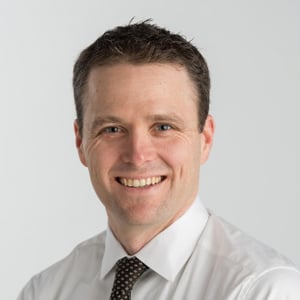
Professor of Law, University of Michigan Law School
Professor Nicholas Bagley teaches and writes in the areas of administrative law, regulatory theory, and health law. Prior to joining the Law School faculty, he was an attorney with the appellate staff in the Civil Division at the U.S. Department of Justice, where he argued a dozen cases before the U.S. Courts of Appeals and acted as lead counsel in many more. Professor Bagley also served as a law clerk to Justice John Paul Stevens of the U.S. Supreme Court and to the Hon. David S. Tatel of the U.S. Court of Appeals, District of Columbia Circuit. Professor Bagley holds a BA in English from Yale University and received his JD, summa cum laude, from New York University School of Law. Before entering law school, he joined Teach For America and taught eighth-grade English at a public school in South Bronx. Professor Bagley's work has appeared in the Harvard Law Review, the Columbia Law Review, the Georgetown Law Journal, the New England Journal of Medicine, and the Journal of Health Politics, Policy, and Law. In 2012, he was the recipient of the Law School's L. Hart Wright Award for Excellence in Teaching. He is a frequent contributor to The Incidental Economist, a prominent health policy blog.

Maurice and Hilda Friedman Professor of Law, Columbia Law School; CEO, New Civil Liberties Alliance
Philip Hamburger is the Maurice and Hilda Friedman Professor of Law at Columbia Law School, and Chief Executive Officer at the New Civil Liberties Alliance. Before coming to Columbia, he was the John P. Wilson Professor at the University of Chicago Law School.
He writes on constitutional law and its history—with particular emphasis on religious liberty, freedom of speech and the press, judicial office, administrative power, and unconstitutional conditions.
His books are Separation of Church and State (Harvard 2002), Law and Judicial Duty (Harvard 2008), Is Administrative Law Unlawful? (Chicago 2014), The Administrative Threat (Encounter 2017), and Liberal Suppression: Section 501(c)(3) and the Taxation of Speech (Chicago 2018). A forthcoming book is Purchasing Submission: Conditions, Power, and Freedom (Harvard 2021).
He is a member of the American Academy of Arts and Sciences, and he has served on the board of directors of the American Society for Legal History. He has twice received the Sutherland Prize for the most significant contribution to English legal history, and has been awarded the Henry Paolucci - Walter Bagehot Book Award, the Hayek Book Prize, and the Bradley Prize.
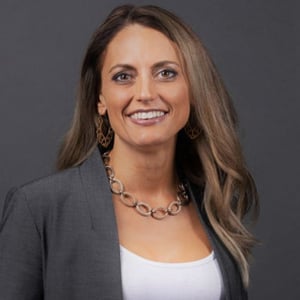
Judge, U.S. Court of Appeals for the Third Circuit
Hon. Jennifer Mascott served as Associate Professor of Law and Director of the Separation of Powers Institute at The Catholic University of America’s Columbus School of Law before her appointment to the federal bench. On July 16, 2025, President Donald J. Trump nominated her to the U.S. Court of Appeals for the Third Circuit (Delaware), and she was confirmed on October 9, 2025.
Prior to her confirmation, Judge Mascott wrote extensively in administrative and constitutional law, statutory interpretation, and the separation of powers. Her scholarship—published in leading journals including the Stanford Law Review, Notre Dame Law Review, and Supreme Court Review—was cited by the U.S. Supreme Court and multiple federal courts. She also contributed Supreme Court commentary for NBC Universal.
Before joining Catholic Law, she was an Assistant Professor and Co-Director of The C. Boyden Gray Center at George Mason University’s Antonin Scalia Law School. In 2022 she became co-author of Beermann, Cass & Diver’s Administrative Law: Cases and Materials (9th ed.). In 2023 she received the Justice Joseph Story Award for excellence in scholarship, teaching, and advancing the rule of law.
Judge Mascott also served as a Council Member of the ABA’s Administrative Law Section and as a Public Member of the Administrative Conference of the United States. She frequently testified before Congress on executive power, regulatory reform, and judicial jurisdiction, and participated in multiple Supreme Court confirmation hearings.
From 2019 to 2021, she took leave from academia to serve as Deputy Assistant Attorney General in the Department of Justice’s Office of Legal Counsel and later as Associate Deputy Attorney General, where she argued federal cases and assisted with Justice Amy Coney Barrett’s confirmation. Earlier in her career, she clerked for Justice Clarence Thomas and for then-Judge Brett M. Kavanaugh on the D.C. Circuit.
Judge Mascott earned her J.D. summa cum laude from the George Washington University Law School and her B.A. from the same institution.
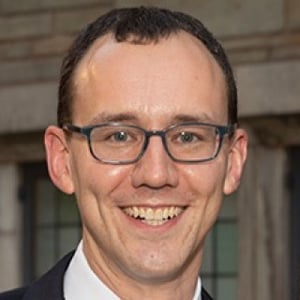
William K. Townsend Professor of Law, Yale Law School
Nicholas R. Parrillo is Townsend Professor of Law at Yale, with a secondary appointment as Professor of History. His research and teaching focus on administrative law and government bureaucracy and extend to legal history, remedies, and legislation. He has received the ABA’s award for the year’s best scholarship in administrative law and the Law and Society Association’s Hurst Prize for the year’s best book in legal history.
Parrillo’s Yale Law Journal article finding new originalist evidence of broad congressional delegations to agencies was discussed in the Solicitor General’s winning brief in the Supreme Court’s latest nondelegation case and in the en banc 5th Circuit opinion in that case. His Harvard Law Review article on how the judiciary handles the federal government’s disobedience to court orders has been discussed in The Washington Post, The Wall Street Journal, and The New York Times. Parrillo also authored a study that provided the empirical basis for best practices adopted by the Administrative Conference of the United States (ACUS) on the federal government’s ubiquitous but controversial use of guidance documents. Peer scholars at Jotwell, in selecting the “best new scholarship” in law, selected each of these three publications (one of them twice). Parrillo’s most recent article, invited for GW’s annual administrative law issue, reveals and analyzes dramatic variation among industries in their willingness to sue their federal health-and-safety regulators.
Parrillo has testified before Congress, been quoted by the Supreme Court, is a senior fellow of ACUS, and has been an instructor at the New York Historical Society’s graduate institute and an invited speaker before the 2nd Circuit Judicial Conference, the U.S. Department of Justice (in 2019 and again in 2024), the ACLU’s national legal staff, and the Federalist Society’s national convention (two times). He is a recipient of the Law School’s annual teaching award.
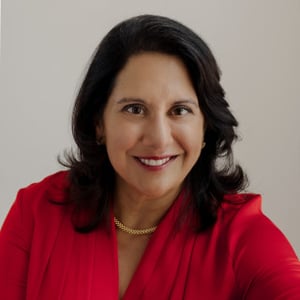
Judge, United States Court of Appeals, District of Columbia Circuit
Judge Rao was appointed to the United States Court of Appeals for the District of Columbia Circuit in March 2019. She graduated from Yale College in 1995 and the University of Chicago Law School in 1999. Following graduation, she served as a law clerk to Judge J. Harvie Wilkinson III of the U.S. Court of Appeals for the Fourth Circuit and, in the 2001 October Term, as law clerk to Justice Clarence Thomas of the U.S. Supreme Court. Between her clerkships, Judge Rao served as counsel for nominations and constitutional law to the U.S. Senate Committee on the Judiciary. In 2002, she joined the international arbitration group of Clifford Chance LLP in London, England. From 2005-2006, she served as Special Assistant and Associate White House Counsel to President George W. Bush. From 2006 to 2017, Judge Rao was a professor at the Antonin Scalia Law School at George Mason University, where she taught constitutional law, legislation and statutory interpretation, and the history and foundations of the administrative state. In 2014, she founded the Center for the Study of the Administrative State, a non-profit Center that promotes academic scholarship and public policy debates about administrative law. In July 2017, she was appointed to serve as the Administrator of the Office of Information and Regulatory Affairs in the Office of Management Budget. She served in this position until her appointment to the D.C. Circuit.
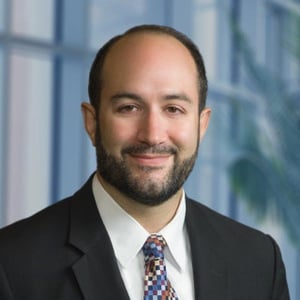
Judge, United States District Court, Northern District of Ohio
Judge J. Philip Calabrese was confirmed to serve on the U.S. District Court for the Northern District of Ohio in December 2020. Previously, he served on the State trial court in the Cuyahoga County Court of Common Pleas. Before taking the bench, he had a complex litigation practice for nearly two decades and was a partner at what is now Squire Patton Boggs and at Porter, Wright, Morris & Arthur, LLP, where he co-chaired the firm’s class action practice. After graduating from Harvard Law School, Judge Calabrese began his legal career as a law clerk to Judge Alice M. Batchelder of the United States Court of Appeals for the Sixth Circuit. He also serves as an adjunct professor at Case Western Reserve University School of Law, where he teaches an advanced course on expert evidence and at the University of Akron School of Law where he teaches the First Amendment’s Speech Clause.
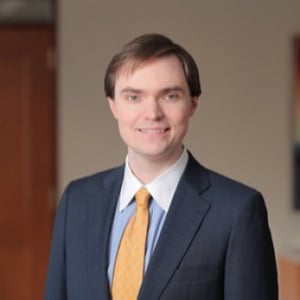
Partner, BakerHostetler
Patrick Lewis represents clients in high-stakes litigation, with emphases on class-action defense, commercial litigation, and election law matters. Patrick defines the issues facing his clients early on and helps them craft a winning litigation strategy and navigate complex legal and discovery challenges. He has experience trying difficult cases in both federal and state court and frequently represents his clients on appeal.
Patrick has in-depth experience with matters affecting the financial services industry, having represented clients in this space for most of his career. He recently completed a four-year secondment to a super-regional bank, where he managed portfolios of consumer and commercial litigation across the bank’s multistate footprint, successfully resolving over a hundred matters. Patrick also leverages his financial services expertise to assist banks and other secured parties in restructuring work, with experience in loan workouts, foreclosure/receivership litigation and bankruptcy proceedings.
Finally, Patrick maintains a national election-law practice, recently trying high-impact redistricting cases in Pennsylvania, North Carolina, Ohio and Virginia. He has represented members of Congress, legislative bodies, candidates, political parties and other stakeholders in litigation involving redistricting, challenges to electoral procedures, and recounts and election contests. He has also represented clients in state and FEC campaign-finance enforcement proceedings under state and federal campaign finance law.
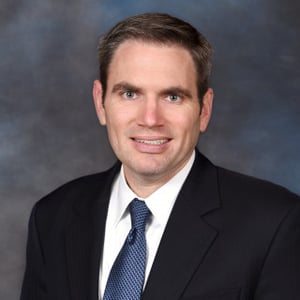
Judge, United States Court of Appeals, Sixth Circuit
Eric Murphy has been a Judge on the United States Court of Appeals for the Sixth Circuit since March 2019. He previously served as the ninth State Solicitor of Ohio. In that role, Eric briefed and argued appellate cases on behalf of Ohio and its state agencies and officers in the U.S. Supreme Court, the U.S. Court of Appeals for the Sixth Circuit, and the Ohio Supreme Court. Before his appointment as State Solicitor, Eric practiced appellate litigation at Jones Day. After graduation from law school, he served as a law clerk for Justice Anthony M. Kennedy of the Supreme Court of the United States, and Judge J. Harvie Wilkinson III of the United States Court of Appeals for the Fourth Circuit. He received his law degree from the University of Chicago and his undergraduate degree from Miami University.
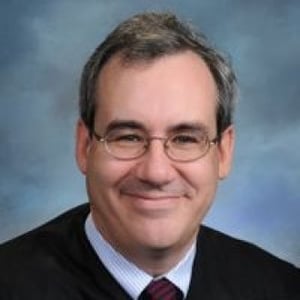
Judge, United States District Court, Southern District of Ohio
Michael J. Newman is an Article III judge on the United States District Court for the Southern District of Ohio. He was nominated by President Donald Trump on March 3, 2020, and confirmed by the U.S. Senate on October 22, 2020.
Newman was a federal magistrate judge for the United States District Court for the Southern District of Ohio from 2011 to 2020.
Vice President for Legal Strategy, Stand Together
Casey Mattox is Vice President for Legal Strategy at Stand Together and Senior Advisor at
Americans for Prosperity. In these roles he advocates for and creates strategies and
partnerships to ensure a constitutionally limited government that protects the civil liberties of all
Americans. Prior to joining Stand Together and AFP Casey’s legal career focused on defending
the First Amendment rights of students, faculty, healthcare workers and religious organizations.
Casey has a J.D. from Boston College School of Law and an undergraduate degree from the
University of Virginia. You can find him on Twitter at @CaseyMattox_ and on LinkedIn at
@Casey-Mattox-ST.
Founder, Ivey Consulting
Anna founded Ivey Consulting to help applicants of all stripes apply to selective colleges and law schools in the United States. She grew up in Germany, attended high school in Massachusetts, and earned her B.A. in History at Columbia University and her law degree at the University of Chicago. In college, she spent a year at Cambridge University, where she was awarded the annual Newnham Prize for distinguished undergraduate work in History. During law school, she served on the board of the University of Chicago Law Review and served as research assistant to Prof. Lawrence Lessig on topics ranging from Constitutional Law to Cyberlaw. After graduating, she worked at two law firms in Los Angeles before returning to the University of Chicago in her admissions role and becoming Dean of Admissions at the Law School. She next worked in development at Stanford University before founding Ivey Consulting. She is the author of The Ivey Guide to Law School Admissions and co-author of How to Prepare a Standout College Application. Anna also co-founded the non-profit Service to School, which mentors transitioning military veterans through the college and graduate school application process.
State District Judge, Austin, Texas
Cory Liu is a state district judge in Austin, Texas. He previously served as assistant general counsel to Texas Governor Greg Abbott. Mr. Liu clerked for Judge Andrew Oldham on the U.S. Court of Appeals for the Fifth Circuit and Judge Danny Boggs on the U.S. Court of Appeals for the Sixth Circuit. He was Editor-in-Chief of the Harvard Journal of Law & Public Policy and is a graduate of Harvard Law School and the University of Chicago.
Executive Director & Secretary, American Civil Rights Project
Dan Morenoff is the executive director at the American Civil Rights Project and an adjunct fellow at the Manhattan Institute.
His work focuses on protecting and, where necessary, restoring the primacy of all Americans' shared civil rights against the identitarian alternative.
Before practicing law, Morenoff served on the legislative staff of Sen. Phil Gramm (R-TX). Morenoff holds a B.A. from Columbia College of Columbia University in the City of New York and a J.D. from the University of Chicago Law School. He has also served as an officer or director of several community organizations in Dallas, Texas.

United States v. Cooley - Post-Decision SCOTUScast
Anthony J. Ferate
On June 1, 2021 the Supreme Court decided United States v. Cooley. The issue was...
Topics
Housekeeping at the High Court: Supreme Court Declines to Expand Community Caretaking Exception to Fourth Amendment Warrant Requirement
Broad exceptions to constitutional rights are antithetical to our constitutional design. In a previous post,...
Litigation Update: Meriwether v. Hartop
Casey Mattox
In a decision issued on March 26, 2021, the Sixth Circuit held Professor Nicholas Meriwether,...
Litigation Update: Meriwether v. Hartop
TeleforumA Discussion: Students for Fair Admissions v. President and Fellows of Harvard College
Anna Ivey, Cory R. Liu, Dan Morenoff
In Students for Fair Admissions v. President and Fellows of Harvard College, petitioning Asian-American students...
A Discussion: Students for Fair Admissions v. President and Fellows of Harvard College
Anna Ivey, Cory R. Liu, Dan Morenoff
In Students for Fair Admissions v. President and Fellows of Harvard College, petitioning Asian-American students...
A Discussion: Students for Fair Admissions v. President and Fellows of Harvard College
TeleforumTopics
Caretaking at the Court: Community-Caretaking Exception Not Applicable to Warrantless Searches of the Home
Supreme Court Justice Clarence Thomas didn’t mince words. His short, four-page opinion in the case...
Necessary & Proper Episode 67: Non-Delegation? Or No Divesting? Art. I, Sec. 1 at the Founding and Today
Nicholas Bagley, Philip A. Hamburger, Jenn L. Mascott, Nicholas R. Parrillo, Neomi Rao
On May 17, as part of their annual Executive Branch Review Conference, the Federalist Society's...
View From The Bench: Newly Confirmed Judges Share Their Perspectives
J. Philip Calabrese, Patrick T. Lewis, Eric E. Murphy, Michael J. Newman
On May 7, 2021, the Federalist Society's Ohio lawyers chapters hosted the 2021 Ohio Chapters...