
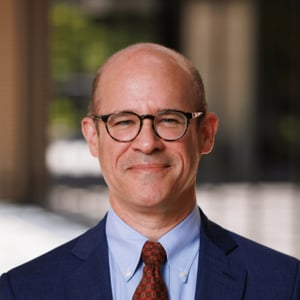
Professor of Law, Stanford Law School
Orin S. Kerr is a Professor of Law at Stanford Law School, where he teaches and writes in the areas of criminal procedure and computer crime law. Kerr earned mechanical engineering degrees from Princeton University and Stanford University before graduating with a J.D. from Harvard Law School. He is a former law clerk to Justice Anthony M. Kennedy at the United States Supreme Court and Judge Leonard I. Garth of the U.S. Court of Appeals for the Third Circuit.
Partner, Stone Pigman Walther Wittmann LLC
Mr. Thomson concentrates his practice in white collar criminal defense, government investigations, and corporate compliance. He has tried over 50 criminal trials to verdict in federal and state courts, and has experience in appellate litigation. His practice also includes civil litigation and information security. Prior to joining Stone Pigman, Mr. Thomson had a 23 year career as a federal prosecutor with the U.S. Department of Justice. He served on special assignment with the National Security Agency, where he worked on matters involving information assurance and intelligence collection.
Prior to private practice, Mr. Thomson was recognized numerous times by government agencies, including a Special Commendation Award given by the U.S. Attorney General for completing the Justice Department's Leadership Excellence and Achievement Program; Special Commendation by FBI Director for outstanding performance for successful corruption prosecution after Hurricane Katrina; Special Award from the U.S. Postal Service for prosecution of corrupt employee; Special Award by New Orleans Police Department, ATF and U.S. Department of Justice for his contributions to Project Exile; and Special Awards for Outstanding Contributions to Drug Law Enforcement from the Drug Enforcement Administration.
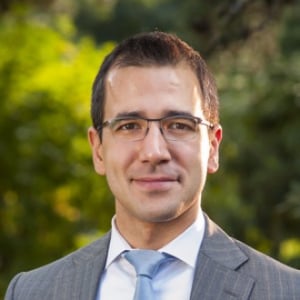
Associate Professor of Law, Lewis & Clark Law School
Ozan Varol is a rocket scientist turned award-winning law professor and author. He teaches in the areas of constitutional law, criminal law and procedure, comparative constitutional law, and Islamic law. His recent scholarship has focused on constitutional transitions and constitutional design. He also lectures and writes about civil-military relations and law and politics in the Middle East.
Professor Varol is the author of two forthcoming books with Oxford University: The Democratic Coup d’État (monograph) and Comparative Constitutional Law: A Global and Interdisciplinary Approach (co-authored textbook).
He has also authored more than a dozen book chapters or law review articles published or forthcoming in the California Law Review, Georgetown Law Journal, UC Davis Law Review, Iowa Law Review (twice), Harvard International Law Journal, Columbia Journal of Transnational Law, Virginia Journal of International Law, American Journal of Comparative Law (peer-reviewed), and the International Journal of Constitutional Law (peer-reviewed), among many other academic journals. His scholarship has been featured in various domestic and foreign media outlets, including BBC, CNN, Washington Post, Slate, and Foreign Policy.
Professor Varol’s articles have received numerous scholarly recognitions. He is the only scholar to twice win the American Society of Comparative Law’s paper competition for younger scholars. His 2014 article, Temporary Constitutions, was selected as one of the best three papers in the AALS Scholarly Papers Competition, which is widely considered the most prestigious in legal education, and awarded Honorable Mention. In 2014 and in 2016, his articles won the Federalist Society’s Young Legal Scholars Paper Competition. In addition, his article, The Democratic Coup d’État, was identified in a review by Professor Mark Tushnet (Harvard Law School) as “one of the best works of recent scholarship relating to constitutional law.”
To access Professor Varol’s personal website and download a free chapter from his forthcoming book, click here.
Louis and Harriet Ancel Professor of Law and Public Policy, Northwestern University School of Law
Martin H. Redish, the Louis and Harriet Ancel Professor of Law and Public Policy at Northwestern University School of Law, teaches and writes on the subjects of federal jurisdiction, civil procedure, freedom of expression and constitutional law. In addition, he is Senior Counsel to the law firm of Sidley Austin LLP.
Professor Redish received his AB with highest honors in political science from the University of Pennsylvania and his JD magna cum laude from Harvard Law School.
Described in a review of his book, The Federal Courts in the Political Order, as "without a doubt the foremost scholar on issues of federal court jurisdiction in this generation," Professor Redish is the author or co-author of more than 80 articles and 15 books. Professor Redish's book entitled, The Logic of Persecution: Free Expression and the McCarthy Era, was published by Stanford University Press in the summer of 2005. His book entitled Wholesale Justice: Constitutional Democracy and the Problem of the Class Action Lawsuit, was published by Stanford University Press in 2009. Professor Redish was recently listed in a study conducted by William S. Hein & Company as the sixteenth most cited legal scholar of all time. He has also been consistently recognized by the Institute for Scientific Information for being among the most highly cited researchers worldwide. As a visiting professor at the University of Michigan Law School he won the L. Hart Wright Outstanding Teacher Award. He has also won the Robert Childress Memorial Award for Teaching Excellence, the Dean's Teaching Award, the First Year Course Professor Award, and the Student Bar Association Faculty Appreciation Award at Northwestern.
Professor Redish has appeared as an expert witness before numerous congressional committees. In addition, he has made frequent appearances in the national media, including the Today Show, ABC and NBC National News, CNN, Court TV, CSPAN and National Public Radio.
Senior Fellow, Center for Energy and Environment, Competitive Enterprise Institute
Marlo Lewis, Jr. is a Senior Fellow at the Competitive Enterprise Institute, where he writes on global warming, energy policy, and other public policy issues. Prior to joining CEI in April 2002, he served as Director of External Relations at the Reason Foundation in Los Angeles, California. During the 106th Congress, Marlo served as Staff Director of the House Government Reform Subcommittee on National Economic Growth, Natural Resources, and Regulatory Affairs.
His interests include the science, economics, and politics of global warming policy; the precautionary principle; environmentalism and religion; and the moral basis of free enterprise. Marlo has been published in The Washington Times, Investors Business Daily, TechCentralStation, National Review, and Interpretation: A Journal of Political Philosophy. He has appeared on various television and radio programs, and his ideas have been featured in radio commentary by Rush Limbaugh and G. Gordon Liddy.
Before joining CEI for his first tenure with the organization in 1993, Marlo served as Research Director for the grassroots organization, Citizens Against Government Waste. Earlier, he was a Staff Consultant to the House Foreign Affairs Subcommittee on International Economic Policy and Trade, a Special Assistant at the State Department Bureau of Inter-American Affairs and Bureau of International Organization Affairs, and a Visiting Assistant Professor of Political Science at Claremont McKenna College. He holds a Ph.D. in Government from Harvard University and a B.A. in Political Science from Claremont McKenna College.
Managing Attorney of the Washington Office, Institute for Justice
William R. Maurer is the Managing Attorney of the Washington state office of the Institute for Justice, which engages in litigation in the areas of economic liberty, private property rights, educational choice, & freedom of speech.
Maurer is an advocate against the criminalization of poverty and the governmental use of the criminal and civil enforcement systems to raise revenue. He was lead counsel in a class action challenging the use of tickets to raise revenue in the city of Pagedale, Missouri. The suit resulted in a federal consent decree that reformed the city’s ticketing and municipal court system. He regularly speaks, teaches, and writes about the abuse of fines and fees in the criminal justice system. He was a participant in summits on taxation by citation put on by the White House and Department of Justice during the Obama Administration. His work on the issue includes serving as an advisory board member of the Fines and Fees Justice Center.
In addition to his work on criminal and civil justice reform, Maurer is a First Amendment litigator. In 2011, he successfully argued before the U.S. Supreme Court that Arizona’s punitive campaign financing regime was unconstitutional. Before the Washington Supreme Court, he successfully argued against efforts to classify radio commentary as a contribution under the state’s campaign finance law.
His cases and advocacy have been covered in the Washington Post, the New York Times, the Economist, the Wall Street Journal, and other major media outlets.
Maurer was named a “Washington Superlawyer” by Washington Law & Politics Magazine for several years. He is a chapter author in numerous legal reference works and has written several articles for law reviews and legal publications across the country.
Prior to joining IJ-WA, Maurer clerked for Washington Supreme Court Justice Richard Sanders and then practiced law at Perkins Coie LLP. Maurer received his law degree in 1994 from the University of Wisconsin – Madison, where he was an editor of the Wisconsin Law Review. He received his BA from Bard College in 1989.
Trustees Professor of Law, Capital University Law School
Professor Mark P. Strasser has been named Trustees Professor of Law at Capital University Law School. This appointment recognizes Professor Strasser's extraordinary and sustained commitment to legal scholarship. Nationally recognized for his scholarship in family law, Professor Strasser is the author of numerous books and articles in the areas of family law, bioethics, and constitutional law. His most recent books include On Same-Sex Marriages, Civil Unions, and the Rule of Law: Constitutional Interpretation at the Crossroads (Praeger Publishers/Greenwood Publishing Group, 2002), Marriage and Same-Sex Unions: A Debate (Praeger Publishers, 2003), co-edited with Lynn Wardle, David Coolidge and William Duncan and Questions and Answers: Family Law (LexisNexis, 2003). Professor Strasser frequently presents papers at conferences across the country and internationally. His recent lectures have taken place at New York University Law School; the International Lesbian and Gay Law Association Conference in Turin, Italy; the Medical College of Wisconsin; Queen's University in Kingston, Canada; the University of Texas at Austin; Brigham Young University Law School; and Albany Law School. He also spoke before the Vermont House Judiciary Committee on interstate implications of Vermont recognizing same-sex marriages or domestic partnerships.
Professor Strasser is a former professor of philosophy and taught at Illinois State University, University of Texas at Arlington, and Washington University in St. Louis. A member of Capital University Law School's faculty since 1993, Professor Strasser teaches Constitutional Law, Torts, Family Law, Jurisprudence, and a seminar on Sexual Diversity and the Law. Professor Strasser was the Visiting Tyler Haynes Chair Professor of Law at the University of Richmond School of Law in 2001 and a Visiting Professor of Law at the University of Maryland School of Law during the 1999-2000 academic year.
Director of the Program in Human Rights, Catholic University of America
William L. Saunders is Chair Emeritus of the Religious Liberties Practice Group of the Federalist Society. He is also a religious liberty and human rights scholar as well as director of the Center for Human rights at The Catholic University of America. He is Law Fellow with the Institute for Human Ecology, Professor and Director of the Program in Human Rights in the School of Arts & Sciences and Co-director of the Center for Religious Liberty at the Columbus School of Law. Before joining The Catholic University of America, Mr. Saunders served as Senior Vice President and Senior Counsel with Americans United for Life for ten years. From 1999 to 2009, he was Senior Fellow in Bioethics and Human Rights Counsel at the Family Research Council.
Mr. Saunders attended the University of North Carolina at Chapel Hill on a Morehead scholarship. He obtained his degree in law from the Harvard Law School.
Mr. Saunders was featured in Harvard’s first Guide to Conservative Public Interest Law in 2003 and again in the 2008 edition. He served on Harvard’s Advisory Committee for its 2008 celebration of public interest law. A member of the Supreme Court bar, he has authored numerous legal briefs in state, federal, foreign, and international courts.
Mr. Saunders’ book, Unborn Human Life and Fundamental Rights: Leading Constitutional Cases Under Scrutiny, was published in 2019. His articles and book chapters have been published by the university presses of Harvard, Villanova, Brigham Young, Fordham, Georgetown, Houston, Scranton, and the Catholic University of America, as well as by the Intercollegiate Studies Institute, Freedom House, Greenhaven Press, Rowan & Littlefield, Praeger, St. Augustine’s, and Intervarsity press. He has given lectures and participated in debates at many colleges, universities, and law schools, including Princeton, Harvard, Georgetown, and Notre Dame. He delivered the annual J. Michael Miller Lecture at the University of St. Thomas (on international law) in February 2007, the annual R. Wayne Kraft Memorial Lecture (on bioethics) at DeSales University in February 2004 and the annual James Moore Lecture (on human rights violations in Sudan) at Millikin University in 1999. He has also lectured, and/or has been published, in many foreign countries, including Italy, Germany, Poland, Austria, Spain, Greece, Slovakia, Mexico, Qatar, Malaysia, Romania, the Philippines, Hong Kong, and the United Kingdom.
In addition to speaking and writing frequently on bioethics topics, Mr. Saunders has submitted testimony to the President’s Council on Bioethics, as well as to UNESCO’s Committee on Bioethics, and has briefed Congressional staff and state legislatures. He is a regular columnist for the National Catholic Bioethics Quarterly.
Mr. Saunders has appeared often in the media, including BBC World News, CNN, Fox News, Vatican Radio, and National Public Radio. His articles on issues have appeared in a variety of journals, such as First Things, Human Events, Human Life Review, The Legal Times, Communio, The Family in America: A Journal of Public Policy, Ethics & Medics, and Touchstone.
Mr. Saunders served on the official United States delegation to the UN Special Session on Children in 2001/02. In 2011, he was a speaker at an official briefing at the UN, addressing the topic, why euthanasia is not a human right.
In 2004, he served on the NGO Working Committee in connection with the Doha Intergovernmental Conference for the Family.
Mr. Saunders is Senior Fellow with the Religious Freedom Institute, and Affiliated Scholar with the Pellegrino Center for Clinical Ethics at the Georgetown University School of Medicine. He is President of the Fellowship of Catholic Scholars and a member of the boards of the International Association of Catholic Bioethicists, the International Right to Life Federation, the Institute on Religion and Democracy, and the Society of Catholic Social Scientists.
In 1999, Mr. Saunders founded Sudan Relief and Rescue, Inc., to aid the persecuted church in Sudan. He has worked for and written on behalf of the persecuted church for many years.
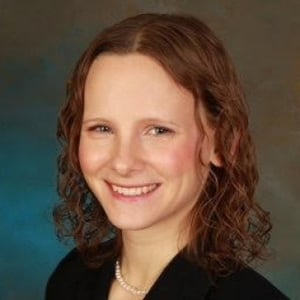
Executive Director, Center for Election Confidence
Lisa L. Dixon serves as the Executive Director of the Center for Election Confidence (formerly known as Lawyers Democracy Fund). Lisa is also a consultant for the Republican National Lawyers Association, serving as their Legal Counsel. Previously, Lisa practiced at Holtzman Vogel, where she specialized in tax-exempt organizations, campaign finance and election law, and lobbying compliance.
During law school, she interned for the Office of Chief Counsel, Procedure and Administration, at the Internal Revenue Service and at the Center for Law and Religious Freedom. Before law school, she served as the Assistant Student Division Director at The Federalist Society for Law and Public Policy Studies and interned at The Heritage Foundation’s Center for Legal and Judicial Studies.
Lisa earned a J.D. from the University of Virginia School of Law, an M.A. in History from the University of Virginia, and a B.A. in History from Hillsdale College. After 18 years on the East Coast, mostly in northern Virginia, she recently returned to her native Michigan, where she lives with her husband and three sons.
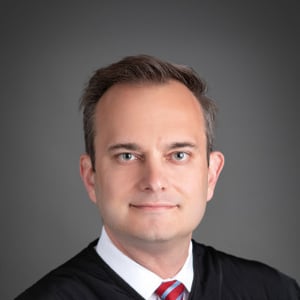
United States Magistrate Judge, Eastern District of North Carolina
Robert T. Numbers, II serves as a United States Magistrate Judge in the United States District Court for the Eastern District of North Carolina.
Judge Numbers received degrees in Political Science and Economics, with honors, from Wake Forest University. After completing his undergraduate work, Judge Numbers obtained his law degree from the University of Notre Dame where he served on the Notre Dame Law Review.
Upon his graduation from law school, Judge Numbers joined the Winston-Salem office of a large, regional law firm. From 2005 until 2010, Judge Numbers’ practice focused on civil rights claims against local municipalities and government contractors. In 2010, Judge Numbers joined the firm’s Raleigh office and concentrated his practice on complex business litigation in state and federal courts.

Judicial Confirmations: Assessing the Current Environment and the Prospects for Change
Irvine, CaliforniaGPS Surveillance and the Supreme Court: U.S. v. Jones
Gonzalez v. Thaler - Post-Decision SCOTUScast
Ozan Varol
On January 10, 2012, the Supreme Court announced its decision in Gonzalez v. Thaler. This...
Pleading, Discovery, and the Federal Rules: Exploring the Foundations of Modern Procedure
Martin Redish
Note from the Editor: In December 2010, the Federalist Society heard from a number of...
EPA Regulation of Fuel Economy: Congressional Intent or Climate Coup?
Marlo Lewis
Note from the Editor:1 This paper assesses EPA’s rule setting standards for motor vehicle greenhouse...
Illuminating Citizens United: What the Decision Really Did
William R. Maurer
In January 2010, the U.S. Supreme Court issued one of its most controversial decisions in...
Perry, Same-Sex Marriage, and Federal Constitutional Guarantees
Mark P. Strasser
Note from the Editor: This article and the article in this issue by George W....
Does Neutrality Equal Secularism? The European Court of Human Rights Decides Lautsi v. Italy
William L. Saunders
Introduction Religion can be an intensely personal activity. However, the idea that religion is only...
A Return to "the Heady Days"? The Supreme Court Addresses Whether the Bivens Doctrine Should Extend to Employees of Government Contractors in Minneci v. Pollard
Lisa L. Dixon, Robert T. Numbers
I. Introduction On November 1, 2011, the Supreme Court heard oral arguments in Minneci v....
The States and the NLRB: A Study in Comparative Sovereignty
Under a system of government that diffuses power and makes institutional “[a]mbition . . ....