
Angela Kopolovich is a former litigator with a large international firm on the east coast. She currently works as a consultant in law practice management and recruiting in California.
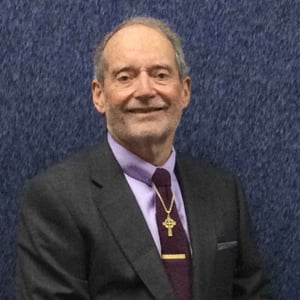
Professor of Law, University of Florida Levin College of Law
Professor Willis joined the UF Law Faculty in 1981, having taught previously in the New York University Graduate Tax Program. He teaches tax courses in both the J.D. and the Graduate Tax Programs plus Family Law Economics and Accounting and Finance for Lawyers. In the fall of 2013, Professor Willis took a sabbatical from teaching in order to lend his expertise in tax law to Hobby Lobby Stores in its religious liberty fight against the PPACA. To this end, he authored the lead article in volume 65 of the South Carolina Law Review titled: Corporations, Taxes, and Religion: The Hobby Lobby and Conestoga Contraceptive Cases. He is also the lead author for the amicus curiae brief on behalf of Freedom X in support of Hobby Lobby and Conestoga.
Professor Willis is licensed to practice law in Florida, a member of the Louisiana Bar, and a CPA (inactive) in Louisiana. He is a faculty advisor for numerous student groups such as the Christian Legal Society and the Law College Republicans. He has also honorably served as the faculty advisor for the student chapter of the UF Federalist Society since its inception.
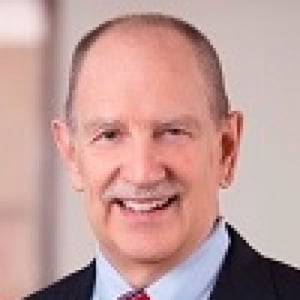
Retired
Tom Gede retired in 2023 as a principal in Morgan Lewis Consulting LLC and of counsel to the firm. He currently consults on a variety of legal and policy matters for both public and private clients. Tom has a national reputation and distinguished background in federal Indian law. Prior to retirement, he represented clients in complex governmental matters in litigation, administrative and regulatory proceedings, including high-profile matters involving state governments. A former senior deputy in the California Attorney General’s office, Tom was amicus coordinator and Supreme Court counsel, and argued cases in the US Supreme Court, the California Supreme Court, and numerous state and federal appellate courts.
Tom also served as executive director of the Conference of Western Attorneys General (CWAG), coordinating activities on key legal and policy issues, such as federal Indian law, energy, environmental, public lands, financial services, and telecommunications, for the attorneys general of 18 western states and territories. In 2016, Tom was elected as a Member of the American Law Institute (ALI), and served as an Adviser on the Restatement of the Law Third - The Law of American Indians. Tom also taught federal Indian law as an adjunct law professor at the University of the Pacific - McGeorge School of Law. He served as an assistant editor for and the author of the Indian gaming chapter in CWAG’s American Indian Law Deskbook (2d & 3d eds.). He has been engaged in Indian gaming and Indian law matters for more than three decades, having focused on the gaming compacts with Indian tribes, as well as complex civil and criminal jurisdiction, land, natural resources, water and law enforcement issues in Indian country. He has testified before Congress on American Indian and Native Alaskan issues. In 2012 he was appointed by Speaker John Boehner to serve on the United States Indian Law and Order Commission, where he examined criminal justice issues in Indian country and Alaska, resulting in the issuance of an important report to the President and Congress.
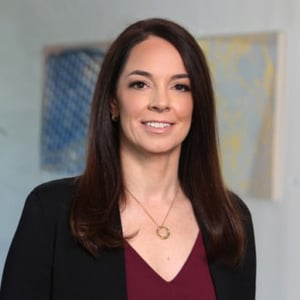
Partner, Hunton Andrews Kurth
A co-leader of Hunton Andrews Kurth’s environmental practice, Deidre is lauded in Chambers USA, 2016 as “extremely capable,” “very familiar with the regulations and agencies,” and excels at giving clients “good insight into getting an expeditious outcome.” Her practice focuses exclusively on environmental, energy and administrative law.
Deidre represents clients on permitting, compliance and litigation relating to the Clean Water Act (CWA), the Endangered Species Act (ESA), the National Environmental Policy Act (NEPA) and other environmental statutes. She frequently counsels clients on administrative rulemaking and policy, providing regulatory clarifications when necessary, and drafting federal and state legislation on myriad intricate issues. She is also well known for negotiating and obtaining permits for complicated energy and development projects. Her clients include development companies, oil and natural gas pipelines, electric utilities, agricultural interests, state and local agencies, and various trade associations.
Prior to entering private practice, Deidre served as assistant general counsel of the Army at the Pentagon, advising the secretary of the Army on environmental and land use issues involving the Corps of Engineers’ Civil Works and section 404 Regulatory program, as well as the Base Realignment and Closure (BRAC) program. Deidre has extensive experience with federal regulatory agencies, military departments and the US Department of Justice.
Associate, Hunton & Williams LLP
Kerry L. McGrath is an associate in the Washington, D.C. office of Hunton & Williams LLP and advises clients on environmental, administrative, and homeland security law.
Brandon Simmons is an attorney in Washington, D.C. He clerked for Chief Judge J.L. Edmondson on the U.S. Court of Appeals for the Eleventh Circuit.
Supervising Deputy Attorney General, California Department of Justice.
Ward Campbell is the Supervising Deputy Attorney General and Sacramento Capital Case Coordinator, as well as the Supervising Deputy Attorney General, at the California Department of Justice.
Mr. Campbell is the recipient of the Attorney General’s Awards for Excellence (1999 and 2006), the William James Award for Distinguished Service from the California District Attorneys Association (2003), the Appellate Award for Outstanding Advocacy in Capital Cases (2005) and the William Schafer Award for Distinguished Service (2011).
Mr. Campbell received his law degree from the University of California at Davis.
Chairman, Cato Institute
Robert A. Levy is chairman of the Cato Institute's board of directors. He joined Cato as senior fellow in constitutional studies in 1997 after 25 years in business. He also sits on boards of the Institute for Justice, the Federalist Society, and the George Mason University School of Law. He founded CDA Investment Technologies, a major provider of financial information and software, and was its CEO until 1991. Levy clerked for Judge Royce C. Lamberth on the U.S. District Court in Washington, D.C., and for Judge Douglas H. Ginsburg on the U.S. Court of Appeals for the D.C. Circuit. From 1997 until 2004, Levy was an adjunct professor of law at Georgetown University. He has written numerous articles on investments, law, and public policy. His writing has appeared in the New York Times, Wall Street Journal, USA Today,Washington Post, National Review, and many other publications. Levy has also discussed public policy on national radio and TV programs, including ABC's Nightline, CNN's Crossfire, Fox's The O'Reilly Factor, MSNBC's Hardball, and NBC's Today Show. His latest book, co-authored with William Mellor, is The Dirty Dozen: How Twelve Supreme Court Cases Radically Expanded Government and Eroded Freedom. Levy received his Ph.D. in business from the American University and his J.D. degree from the George Mason University School of Law.
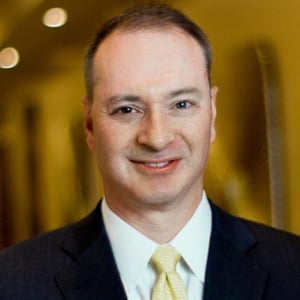
Managing Shareholder, Saltzman Mugan Dushoff, PLLC
Over the course of his twenty-plus years as an attorney in Las Vegas, Mr. Saltzman has developed a corporate law practice focused on financial institution and liquor law. He assists businesses in their formation, licensing and governance matters; he also counsels businesses on corporate mergers and acquisition matters. He assists highly regulated financial institutions and captive insurance companies in corporate and regulatory compliance matters and he has testified before the Nevada legislature as an expert on trust company legislation and drafted portions of Nevada law relating to the chartering and operation of Nevada trust companies. He has counseled trust companies and financial service firms on Blockchain and cryptocurrency related legal compliance matters.
Mr. Saltzman has developed and managed the firm’s liquor law practice into Nevada’s largest alcohol beverage specialty law practice group. He and his team of attorneys and paralegals assist a wide range of liquor retailers, wholesalers and suppliers in licensing and compliance matters in all Nevada jurisdictions. More information on Mr. Saltzman’s liquor law practice can be found at his blog: www.nvliquorlaw.com
Matthew Saltzman received a Bachelor of Arts degree in Economics and Philosophy from University of Wisconsin, Madison in 1987. In 1993, he received his Juris Doctor from University of Pittsburgh School of Law, where he was also Executive Editor of the University of Pittsburgh Law Review and served as teaching assistant for the Legal Research and Writing course.
Chairman, Cato Institute
Robert A. Levy is chairman of the Cato Institute's board of directors. He joined Cato as senior fellow in constitutional studies in 1997 after 25 years in business. He also sits on boards of the Institute for Justice, the Federalist Society, and the George Mason University School of Law. He founded CDA Investment Technologies, a major provider of financial information and software, and was its CEO until 1991. Levy clerked for Judge Royce C. Lamberth on the U.S. District Court in Washington, D.C., and for Judge Douglas H. Ginsburg on the U.S. Court of Appeals for the D.C. Circuit. From 1997 until 2004, Levy was an adjunct professor of law at Georgetown University. He has written numerous articles on investments, law, and public policy. His writing has appeared in the New York Times, Wall Street Journal, USA Today,Washington Post, National Review, and many other publications. Levy has also discussed public policy on national radio and TV programs, including ABC's Nightline, CNN's Crossfire, Fox's The O'Reilly Factor, MSNBC's Hardball, and NBC's Today Show. His latest book, co-authored with William Mellor, is The Dirty Dozen: How Twelve Supreme Court Cases Radically Expanded Government and Eroded Freedom. Levy received his Ph.D. in business from the American University and his J.D. degree from the George Mason University School of Law.
Managing Shareholder, Saltzman Mugan Dushoff, PLLC
Over the course of his twenty-plus years as an attorney in Las Vegas, Mr. Saltzman has developed a corporate law practice focused on financial institution and liquor law. He assists businesses in their formation, licensing and governance matters; he also counsels businesses on corporate mergers and acquisition matters. He assists highly regulated financial institutions and captive insurance companies in corporate and regulatory compliance matters and he has testified before the Nevada legislature as an expert on trust company legislation and drafted portions of Nevada law relating to the chartering and operation of Nevada trust companies. He has counseled trust companies and financial service firms on Blockchain and cryptocurrency related legal compliance matters.
Mr. Saltzman has developed and managed the firm’s liquor law practice into Nevada’s largest alcohol beverage specialty law practice group. He and his team of attorneys and paralegals assist a wide range of liquor retailers, wholesalers and suppliers in licensing and compliance matters in all Nevada jurisdictions. More information on Mr. Saltzman’s liquor law practice can be found at his blog: www.nvliquorlaw.com
Matthew Saltzman received a Bachelor of Arts degree in Economics and Philosophy from University of Wisconsin, Madison in 1987. In 1993, he received his Juris Doctor from University of Pittsburgh School of Law, where he was also Executive Editor of the University of Pittsburgh Law Review and served as teaching assistant for the Legal Research and Writing course.
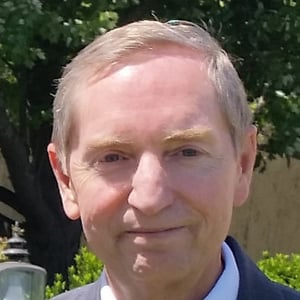
Legal Director & General Counsel, Criminal Justice Legal Foundation
Kent S. Scheidegger has been the Legal Director of the Criminal Justice Legal Foundation since December 1986. He also served as Chairman of the Criminal Law Practice Group of the Federalist Society 2003 to 2005. His articles on criminal and constitutional law have been published in law reviews, national legal publications, and congressional reports. Legal arguments authored by Mr. Scheidegger have been cited and incorporated in several precedent-setting United States Supreme Court decisions.
After receiving a degree in physics with honors from New Mexico State University in 1976, Mr. Scheidegger served for six years in the United States Air Force as a Nuclear Research Officer. He took his law degree with distinction from the University of the Pacific, McGeorge School of Law in 1982 and practiced civil law in Northern California. He was general counsel of California Cooler, Inc. from 1984 until 1986, when he joined the Foundation.

California Supreme Court Upholds Law Dissolving Redevelopment Agencies
Angela Kopolovich
In California Redevelopment Assn. v. Matosantos1 the California Supreme Court upheld a law dissolving the...
Pennsylvania Supreme Court Vacates Trial Court's Denial of a Minor's Application to Obtain an Abortion
Steven J. Willis, Jordan E. Pratt
On December 22, 2011, in a case of first impression,1 the Pennsylvania Supreme Court vacated...
Match-E-Be-Nash-She-Wish Band of Pottawatomi Indians v. Patchak and Salazar v. Patchak - Post-Argument SCOTUScast
Thomas F. Gede
On April 24, 2012, the Supreme Court heard oral argument in Match-E-Be-Nash-She-Wish Band of Pottawatomi Indians...
EPA and U.S. Army Corps Seek to Expand Jurisdiction Under the Clean Water Act
Deidre G. Duncan, Kerry L. McGrath
The U.S. Army Corps of Engineers (“Corps”) and U.S. Environmental Protection Agency (“EPA”) (jointly, the...
Does the Takings Clause Have an Expiration Date?
Michael James Barton, Brandon Simmons
Overview In the last Term, the United States Supreme Court declined to review two property...
Martinez v. Ryan - Post-Decision SCOTUScast
Ward Campbell
On March 20, 2012 the Supreme Court announced its decision in Martinez v. Ryan. The question...
How the Supreme Court Has Subverted the Constitution
Robert A. Levy, Matthew Saltzman
The Supreme Court has endorsed an exponential growth in federal government power, often at the...
How the Supreme Court Has Subverted the Constitution
Robert A. Levy, Matthew Saltzman
The Supreme Court has endorsed an exponential growth in federal government power, often at the...
Lafler v. Cooper and Missouri v. Frye - Post-Decision SCOTUScast
Kent Scheidegger
On March 21, 2012 the Supreme Court announced its decisions in Lafler v. Cooper and Missouri v. Frye....
A Tavern Debate
Chicago, Illinois