

Partner, Jackson Walker
Arthur offers clients a winning combination of trial and appellate experience gained as a federal prosecutor and more than 20 years of experience in handling patent, copyright, trademark, and trade secrets litigation.
While his practice concentrates on intellectual property litigation, Arthur also has significant experience in internal investigations, False Claims Act suits, partnership and breach of fiduciary duty, breach of contract, and employment litigation. Arthur also has represented clients testifying before Congressional committees.
Arthur writes and speaks frequently on topics ranging from the case against Boston bomber Dzhokhar Tsarnaev to patent litigation reform.
Prior to joining Michael Best, Arthur served as an Assistant United States Attorney in the Southern District of New York, where he was the lead prosecutor in criminal trials, including federal intellectual property crimes. He also argued numerous appeals.
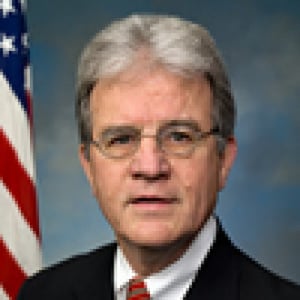
Former United States Senator, Oklahoma
Tom A. Coburn, M.D. was elected to the U.S. Senate on November 2, 2004. Dr. Coburn's priorities in the Senate included reducing wasteful spending, protecting your liberty, balancing the budget, improving health care access and affordability, protecting the sanctity of all human life - including the unborn - and representing traditional, Oklahoma values. As a citizen legislator, Dr. Coburn pledged to serve no more than two terms in the Senate and to continue to care for patients. He was a member of the Senate Judiciary Committee, Homeland Security and Governmental Affairs Committee, and the Committee on Finance.
As a Senator, Dr. Coburn offered more amendments than any of his colleagues. He offered amendments to eliminate funding for the "Bridge to Nowhere," the "Woodstock Museum" in New York and countless other special interests earmarks sponsored by members of both parties. Dr. Coburn also worked to make government more accountable and transparent. In 2006, he teamed up with then-Senator Barack Obama to create http://www.usaspending.gov/, an online database of all federal spending.
Prior to his election to the Senate, Dr. Coburn represented Oklahoma's Second Congressional District in the House of Representatives from 1995 through 2001. He was first elected in 1994, then re-elected in 1996 and 1998, becoming the first Republican to hold the seat for consecutive terms. Dr. Coburn retired from Congress in 2001, fulfilling his pledge to serve no more than three terms in the House.
In 1970, Dr. Coburn graduated with an accounting degree from Oklahoma State University. From 1970 to 1978, Dr. Coburn served as manufacturing manager at the Ophthalmic Division of Coburn Optical Industries in Colonial Heights, Virginia. Under his leadership, the Virginia division of Coburn Optical grew from 13 employees to more than 350 and captured 35 percent of the U.S. market.
After the family business was sold, Dr. Coburn changed the course of his life by returning to school to become a physician at the University of Oklahoma Medical School where he graduated in 1983. He then did his internship in general surgery at St. Anthony's Hospital in Oklahoma City and family practice residency at the University of Arkansas, Fort Smith.
Dr. Coburn returned to Muskogee where he specialized in family medicine, obstetrics and the treatment of allergies. Dr. Coburn personally delivered more than 4,000 babies.
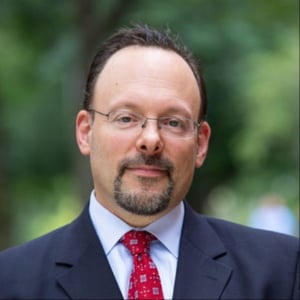
Tazewell Taylor Professor of Law and William H. Cabell Research Professor, William & Mary Law School
Jonathan H. Adler joined the William & Mary law faculty as the Tazwell Taylor Professor of Law and William H. Cabell Research Professor in 2025. Prior to joining the faculty, he was the inaugural Johan Verheij Memorial Professor of Law and the founding Director of the Coleman P. Burke Center for Environmental Law at the Case Western Reserve University School of Law.
Professor Adler is the author or editor of seven books, including Climate Liberalism: Perspectives on Liberty, Property and Pollution (Palgrave, 2023), Marijuana Federalism: Uncle Sam and Mary Jane (Brookings Institution Press, 2020), Business and the Roberts Court (Oxford University Press, 2016) and Rebuilding the Ark: New Perspectives on Endangered Species Act Reform (AEI Press, 2011).
His articles have appeared in publications ranging from the Harvard Environmental Law Review and Yale Journal on Regulation to the Wall Street Journal, New York Times, and Washington Post. He has testified before Congress a dozen times, and his work has been cited in the U.S. Supreme Court. A 2024 study identified Professor Adler as the seventh most cited legal academic in administrative and environmental law from 2019 to 2023.
Professor Adler is a contributing editor to Civitas Outlook and a regular contributor to the popular legal blog, The Volokh Conspiracy. A regular commentator on constitutional and regulatory issues, he has appeared on numerous radio and television programs, ranging from the PBS Newshour and National Public Radio to the Fox News Channel and Entertainment Tonight.
Professor Adler is a senior fellow at the Property & Environment Research Center in Bozeman, Montana. In 2018, Professor Adler was elected to membership in the American Law Institute and helped co-found the organization Checks and Balances. In 2024, Professor Adler was appointed a public member of the Administrative Conference of the United States.
Professor Adler clerked for the Honorable David B. Sentelle on the U.S. Court of Appeals for the District of Columbia Circuit.
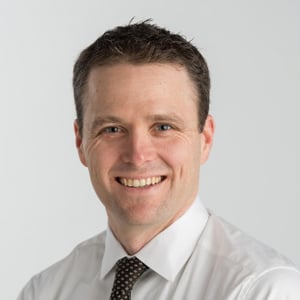
Professor of Law, University of Michigan Law School
Professor Nicholas Bagley teaches and writes in the areas of administrative law, regulatory theory, and health law. Prior to joining the Law School faculty, he was an attorney with the appellate staff in the Civil Division at the U.S. Department of Justice, where he argued a dozen cases before the U.S. Courts of Appeals and acted as lead counsel in many more. Professor Bagley also served as a law clerk to Justice John Paul Stevens of the U.S. Supreme Court and to the Hon. David S. Tatel of the U.S. Court of Appeals, District of Columbia Circuit. Professor Bagley holds a BA in English from Yale University and received his JD, summa cum laude, from New York University School of Law. Before entering law school, he joined Teach For America and taught eighth-grade English at a public school in South Bronx. Professor Bagley's work has appeared in the Harvard Law Review, the Columbia Law Review, the Georgetown Law Journal, the New England Journal of Medicine, and the Journal of Health Politics, Policy, and Law. In 2012, he was the recipient of the Law School's L. Hart Wright Award for Excellence in Teaching. He is a frequent contributor to The Incidental Economist, a prominent health policy blog.
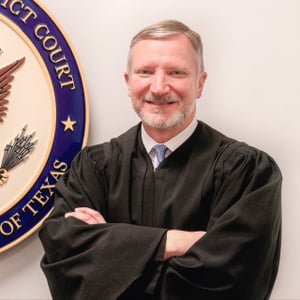
United States District Court, Southern District of Texas
Prior to joining TXSE, Jeff served as acting general counsel of Charles Schwab and led its Office of Legislative and Regulatory Affairs in Washington, D.C. for the past two decades, managing the company's response to public policy initiatives and advocating for policies that aid individual investors. He has over four decades of securities markets experience, starting his career as an options trader at the Philadelphia Stock Exchange, then founding his own trading firm, and later serving on the exchange's Board of Governors. He also served as senior counsel in the Division of Market Regulation at the U.S. Securities and Exchange Commission. Jeff's additional experience in the securities industry includes serving as vice president for regulation and general counsel at the Cincinnati Stock Exchange and as chairman of the Operating Committee of the National Market System Plan governing Nasdaq securities. Jeff holds degrees from the Wharton School of the University of Pennsylvania and Ohio Northern School of Law.
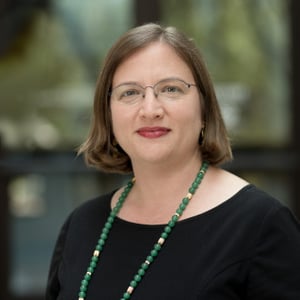
Clinical Professor, Co-Director - Supreme Court Clinic, University of Texas School of Law
Erin Glenn Busby, Co-Director of the Supreme Court Clinic, is an appellate specialist with experience at all levels of the federal and Texas state courts. She has authored briefs in cases involving a wide range of issues, including First Amendment protection of speech, maritime law, class action procedure, contract disputes, administrative law, immigration law, and the federal preemption of state law.
Ms. Busby graduated from Harvard Law School and clerked for Associate Justice Stephen Breyer of the Supreme Court of the United States and Judge Michael Boudin of the Court of Appeals for the First Circuit. Before joining the Supreme Court Clinic, she was an independent appellate specialist and, earlier, an associate at the firms of Sullivan & Cromwell and Bracewell & Giuliani.
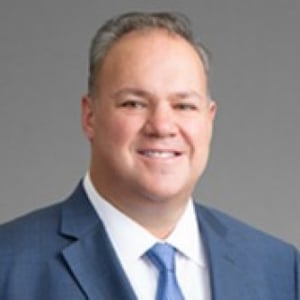
Costa is a partner in Gibson Dunn’s Houston office and co-chair of the firm’s Trials Practice Group. Mr. Costa offers clients a unique perspective as the only former federal trial and appellate judge trying cases and leading investigations. His broad experience—having handled complex civil and criminal matters, at trial and on appeal, as advocate and judge—allows him to offer invaluable skills and strategic insights.
Before joining Gibson Dunn, Mr. Costa served for more than ten years as a federal trial and appellate judge. He served on the U.S. Court of Appeals for the Fifth Circuit from 2014 to 2022. After his nomination by President Obama, the Senate confirmed him by a vote of 97-0. No federal appellate judge nominated since has received more votes. Mr. Costa first served as a district judge for the Southern District of Texas from 2012 to 2014. When appointed to the bench, he was the youngest-sitting federal judge at age 39. Mr. Costa presided over thirty federal trials in four different venues (he continued handling district court matters while serving on the court of appeals). He wrote precedential opinions in almost every area of the law, including antitrust, intellectual property, class actions, international arbitration, securities fraud, bankruptcy, conflicts of law, labor and employment, oil and gas, False Claims Act, administrative law, constitutional law, and criminal law. In press accounts of his tenure, he was described as an “exceptionally gifted jurist” with a “towering intellect” who was “respected by all sides.” The Federal Judicial Center invited Mr. Costa on multiple occasions to teach new federal district judges.
Before taking the bench, Mr. Costa was an Assistant U.S. Attorney in Houston from 2005 to 2012. As a prosecutor, he tried more than 15 jury trials, including serving as a lead prosecutor of Allen Stanford, the head of Stanford Financial Group, for orchestrating a multibillion-dollar international fraud scheme. Mr. Costa is featured in a documentary about the case, The Man Who Bought Cricket. A Reuters article about the trial quotes a victim who said that Mr. Costa’s closing argument “brought her to tears.” For his work on the Stanford case, Mr. Costa received the John Marshall Award for Trial of Litigation and the Assistant Attorney General’s Award for Exceptional Service. He also prosecuted cases involving kickbacks in the energy industry, public corruption, the Foreign Corrupt Practices Act, securities fraud, internet fraud, and counterfeit technology products. During his time as a federal prosecutor, Mr. Costa served as the Southern District of Texas’s Deputy International Affairs Coordinator, during which he assisted with investigations in more than a dozen countries.
Mr. Costa is a frequent speaker and author on legal topis, including writing for the ABA’s Litigation Journal on various trial-related issues. He also taught Federal Jurisdiction at the University of Houston Law Center, where he was named an Honorary Alumnus.
After college, Mr. Costa taught elementary school for two years in the Mississippi Delta through Teach for America. He has remained involved in the Delta and in education, launching a nonprofit in Mississippi, serving on the board of the Houston Urban Debate League, and helping teach Government at a Houston‑area charter school.
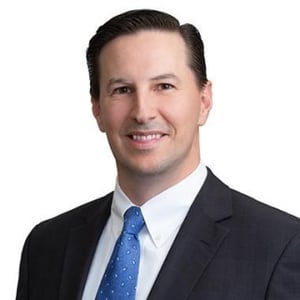
Chairman, Supreme Court and Constitutional Law Practice, Baker Botts LLP
Aaron Streett is the Chairman of Baker Botts’ Supreme Court and Constitutional Law Practice. He has presented oral argument in scores of appeals, covering the U.S. Supreme Court and courts around the country—including over 40 arguments between the Fifth and D.C. Circuits alone. Mr. Streett’s practice involves virtually all substantive areas of the law, including commercial litigation, statutory interpretation, constitutional law, administrative law, securities, and jurisdictional issues. Mr. Streett maintains an active practice in the Supreme Court of the United States, having represented parties in merits cases seven times since 2010, as well as filing numerous amicus and certiorari-stage briefs. Mr. Streett was named one of only six “Appellate MVPs” for 2014 by Law360, which had previously recognized him in 2011 as one of the top five appellate “Rising Stars” under age 40. Mr. Streett has been featured on National Law Journal’s Appellate Hot List three times in recent years and in 2021 was named Houston’s “Lawyer of the Year” for Appellate Practice by Best Lawyers magazine. Mr. Streett is an elected member of the American Law Institute and a fellow of the American Academy of Appellate Lawyers. He serves on the Board of Directors for the Fifth Circuit Bar Association and previously served as President of the Houston Lawyers Chapter of the Federalist Society. Mr. Streett speaks regularly on the Supreme Court and constitutional law to attorneys and law students around the country. Following graduation from Hillsdale College and University of Texas School of Law, Mr. Streett served as a law clerk to the Honorable David B. Sentelle of the United States Court of Appeals for the District of Columbia Circuit and to the Honorable William H. Rehnquist, Chief Justice of the United States.
Instructor, Center for Legal Pedagogy, Texas Southern University

Professor of Law, Southern Illinois University School of Law
Professor Mark F. Schultz joined the faculty in 2003. He teaches and writes primarily in the area of intellectual property.
Professor Schultz is a frequent author and speaker known for his work on the law and economics of the global intellectual property system. In one of his most influential projects, he worked with the Organization for Economic Cooperation and Development (OECD) to construct a groundbreaking global trade secret protection index (the TSPI). The TSPI is influencing policy discussions on this cutting-edge topic in capitals around the world. Other recent projects have included an empirical study that quantified for the first time the backlogs in patent offices worldwide, a report on how patented innovation is meeting global health challenges, and the construction of a new global index of copyright strength.
Professor Schultz is an influential voice in public policy debates regarding intellectual property. He has testified before the U.S. Congress on copyright law at the invitation of the House Judiciary Committee and has briefed the staff of the U.S. Senate Judiciary Committee on trade secret legislation. He speaks frequently around the world about the connection between secure and effective intellectual property rights and flourishing national economies and individual lives, with invitations from the U.S. Patent and Trademark Office, the U.S. Trade Representative, and the U.S. Copyright Office, as well as numerous academic institutions, think tanks, and industry groups. He served as an NGO delegate to the World Intellectual Property Organization (WIPO) for several years during the WIPO Development Agenda talks. He is also one of the organizers of an ongoing multilateral diplomatic dialogue on best practices in national trade secret laws, and is co-founder of the Center for Protection of Intellectual Property (CPIP) at George Mason University in Washington, D.C.
Among the awards and recognition he has received for his scholarship was the School of Law's Outstanding Scholar of the Year award in 2008. He has been a distinguished visiting scholar at the University of Botswana and a visiting professor at DePaul University College of Law.
Professor Schultz graduated with honors from the George Washington University School of Law. Following law school, he was a judicial clerk for the Hon. Daniel M. Friedman of the United States Court of Appeals for the Federal Circuit in Washington, D.C., and the Hon. Eric G. Bruggink of the United States Court of Federal Claims. Prior to joining academia, he practiced law for a decade, serving as outside general counsel to several tech startups and helping technology companies to expand their businesses and commercialize their intellectual property in dozens of countries. He holds a B.A. in International Economics from George Washington University and has done PhD level coursework in development economics at Southern Illinois University.
He is active in leadership roles in local and national organizations. He has served as chair of the Federalist Society's Intellectual Property Practice Group and the AALS Section on Internet and Computer Law. He is an officer of the American Bar Association's International IP Committee of the International Law Section and the American Intellectual Property Law Association’s Trade Secret Law Committee. He currently is chair of the Academic Advisory Board of the Copyright Alliance.
Professor Schultz teaches Copyright Law, Trade Secret Law, Trademark Law, and a senior seminar on Intellectual Property and Global Development. He established and directs both the Specialization in Intellectual Property Law and the IP Semester in Practice Externship Program. He also co-founded a Legal Globalization Class, offered every other year, that takes students to South Africa and Botswana after spending a semester learning about the legal system, culture, history, and politics of southern Africa. The popular course is a once-in-a-lifetime experience that introduces students to leading lawyers, judges, government officials, and human rights advocates, taking them from Cape Town to Johannesburg to Gaborone as well as many popular destinations including game reserves, national parks, the Cape of Good Hope, and the Cradle of Humankind.
Partner, Gladstone Michel Weisberg Willner & Sloane
Arthur Willner is a partner at Gladstone Michel Weisberg Willner & Sloane in Los Angeles. His practice involves the representation of corporate clients in wrongful death, catastrophic injury and business litigation as well as college faculty and students in First Amendment and due process cases.

George C. Dix Professor in Constitutional Law, Northwestern University Pritzker School of Law
John O. McGinnis is a graduate of Harvard College and Harvard Law School where he was an editor of the Harvard Law Review. He also has an MA degree from Balliol College, Oxford, in philosophy and theology. Professor McGinnis clerked on the U.S. Court of Appeals for the District of Columbia. From 1987 to 1991, he was deputy assistant attorney general in the Office of Legal Counsel at the Department of Justice. He is the author of Accelerating Democracy: Transforming Government Through Technology (Princeton 2013) and Originalism and the Good Constitution (Harvard 2013) (with M. Rappaport). He is a past winner of the Paul Bator award given by the Federalist Society to an outstanding academic under 40. He has been listed by the United States on the roster of panelists who may be called upon to decide World Trade Organization Disputes.
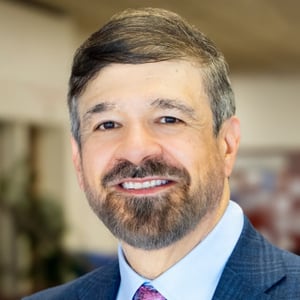
Hugh and Hazel Darling Foundation Professor of Law; Director, Center for the Study of Constitutional Originalism, University of San Diego School of Law
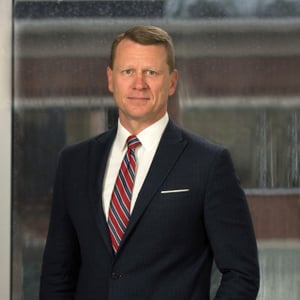
Partner, Phelps Dunbar LLP
Mike Hurst is a partner with Phelps Dunbar LLP where he optimizes his in-depth knowledge of the court system, investigative and prosecutorial agencies, the regulatory arena, and the public policy realm to help clients facing government investigations, enforcement actions, regulatory matters, general litigation and policy issues. Mike currently serves as the General Counsel of the Republican National Committee and as Chairman of the Mississippi Republican Party. He previously served as the U.S. Attorney for the Southern District of Mississippi from 2017-2021, and with over 20 years of experience before judges, juries and policy makers, handling some of the largest and most high-profile cases in Mississippi, he's known for untangling the most complex legal issues.
As U.S. Attorney, Mike was described as a “hard charger,” leading efforts to combat violent crime, human trafficking and public corruption, among many other issues, throughout Mississippi. He almost tripled prosecutions in the U.S. Attorney’s Office over a three-year period, resulting in the most indictments and federal defendants indicted in a one-year period in Mississippi history. He created innovative and national award-winning crime-fighting solutions, like “Project EJECT,” and he established the first statewide, multilevel and multidisciplinary human trafficking body, the Mississippi Human Trafficking Council, to comprehensively and holistically address this criminal scourge.
During his tenure as U.S. Attorney, Mike oversaw some of the biggest cases in Mississippi history: the largest health care fraud scheme (Wade Walters, et. al.), the largest Ponzi scheme (Lamar Adams), the largest False Claims Act health care fraud settlement (Region 8), and the largest nursing home False Claim Act settlement (Hyperion). In addition, as Chief Federal Law Enforcement Officer for the Southern District, Mike coordinated the largest single-state immigration worksite enforcement operation in our nation’s history, involving hundreds of federal law enforcement agents covering seven different locations operated by multiple companies.
Mike’s no show pony – he’s a work horse. Before his tenure as U.S. Attorney, Mike was an Assistant U.S. Attorney for the Southern District of Mississippi for more than eight years. He handled some of the most difficult and complex cases in that office, dealing with white collar crimes, public corruption and financial fraud, including numerous jury trials before almost every federal judge in the Southern District.
He also has experience in the private sector. He has practiced law in Washington, D.C., and has served as a litigator and general counsel for a conservative nonprofit. He also has extensive experience in public policy, having served as the Legislative Director to a U.S. Congressman and as Counsel to the House Judiciary Committee.
Mike has also testified before both the United States Senate and the U.S. House of Representatives on issues ranging from crime to Presidential pardons. He has worked on all sides of the legal, regulatory, investigative, prosecutorial and policy spectrum. The incredible insight gained from this varied experience enables him to find a path forward for clients, no matter how complicated the case.
Professor of Law, Southern Illinois University School of Law
Professor Mark F. Schultz joined the faculty in 2003. He teaches and writes primarily in the area of intellectual property.
Professor Schultz is a frequent author and speaker known for his work on the law and economics of the global intellectual property system. In one of his most influential projects, he worked with the Organization for Economic Cooperation and Development (OECD) to construct a groundbreaking global trade secret protection index (the TSPI). The TSPI is influencing policy discussions on this cutting-edge topic in capitals around the world. Other recent projects have included an empirical study that quantified for the first time the backlogs in patent offices worldwide, a report on how patented innovation is meeting global health challenges, and the construction of a new global index of copyright strength.
Professor Schultz is an influential voice in public policy debates regarding intellectual property. He has testified before the U.S. Congress on copyright law at the invitation of the House Judiciary Committee and has briefed the staff of the U.S. Senate Judiciary Committee on trade secret legislation. He speaks frequently around the world about the connection between secure and effective intellectual property rights and flourishing national economies and individual lives, with invitations from the U.S. Patent and Trademark Office, the U.S. Trade Representative, and the U.S. Copyright Office, as well as numerous academic institutions, think tanks, and industry groups. He served as an NGO delegate to the World Intellectual Property Organization (WIPO) for several years during the WIPO Development Agenda talks. He is also one of the organizers of an ongoing multilateral diplomatic dialogue on best practices in national trade secret laws, and is co-founder of the Center for Protection of Intellectual Property (CPIP) at George Mason University in Washington, D.C.
Among the awards and recognition he has received for his scholarship was the School of Law's Outstanding Scholar of the Year award in 2008. He has been a distinguished visiting scholar at the University of Botswana and a visiting professor at DePaul University College of Law.
Professor Schultz graduated with honors from the George Washington University School of Law. Following law school, he was a judicial clerk for the Hon. Daniel M. Friedman of the United States Court of Appeals for the Federal Circuit in Washington, D.C., and the Hon. Eric G. Bruggink of the United States Court of Federal Claims. Prior to joining academia, he practiced law for a decade, serving as outside general counsel to several tech startups and helping technology companies to expand their businesses and commercialize their intellectual property in dozens of countries. He holds a B.A. in International Economics from George Washington University and has done PhD level coursework in development economics at Southern Illinois University.
He is active in leadership roles in local and national organizations. He has served as chair of the Federalist Society's Intellectual Property Practice Group and the AALS Section on Internet and Computer Law. He is an officer of the American Bar Association's International IP Committee of the International Law Section and the American Intellectual Property Law Association’s Trade Secret Law Committee. He currently is chair of the Academic Advisory Board of the Copyright Alliance.
Professor Schultz teaches Copyright Law, Trade Secret Law, Trademark Law, and a senior seminar on Intellectual Property and Global Development. He established and directs both the Specialization in Intellectual Property Law and the IP Semester in Practice Externship Program. He also co-founded a Legal Globalization Class, offered every other year, that takes students to South Africa and Botswana after spending a semester learning about the legal system, culture, history, and politics of southern Africa. The popular course is a once-in-a-lifetime experience that introduces students to leading lawyers, judges, government officials, and human rights advocates, taking them from Cape Town to Johannesburg to Gaborone as well as many popular destinations including game reserves, national parks, the Cape of Good Hope, and the Cradle of Humankind.

United States Supreme Court 2013 Review and 2014 Preview
Columbus, Ohio2014 Patent Reform in Congress and the Courts
Austin Lawyers Chapter
Austin, TXSenator Coburn and the Judiciary Committee
Tulsa, OklahomaNinth Circuit Upholds Professor’s First Amendment Claim in Demers v. Austin
Arthur Willner
Note from the Editor: This article is about the Ninth Circuit’s decision in Demers v. Austin. ...
An Originalist Future
John O. McGinnis, Michael B. Rappaport
Note from the Editor: This article discusses the originalist method of constitutional interpretation. As always, The...
Chaidez v. United States and the Non-Retroactivity of New Rules in Criminal Law
Mike Hurst
Note from the Editor: This article is about the Supreme Court’s 2013 decision in Chaidez v....
Federal Health Care Exchanges Not Eligible for Subsidies: Halbig v. Burwell
TeleforumUnited States Supreme Court Term in Review
HoustonAereo Shot Down as Copyright Violator: ABC v. Aereo - Podcast
Mark F. Schultz
In a June 25, 2014, decision, the U.S. Supreme Court ruled in ABC v. Aereo...
Aereo Shot Down as Copyright Violator: ABC v. Aereo
Intellectual Property Practice Group Courthouse Steps Teleforum
Teleforum