
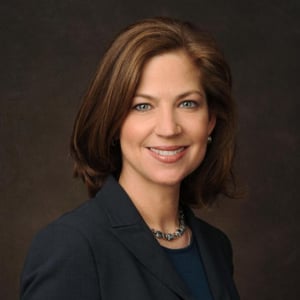
Chief Legal Correspondent, CBS News
Jan Crawford is CBS News' chief legal correspondent and contributes regularly to the "CBS Evening News," "CBS This Morning," and "Face the Nation," as well as CBS News Radio and CBSNews.com.
Crawford joined CBS News in October 2009. She had been a regular contributor to CBS News in 2005 to 2006.
Crawford is a recognized authority on the Supreme Court whose 2007 book, "Supreme Conflict: The Inside Story of the Struggle for the Control of the United States Supreme Court" (Penguin Press), gained critical acclaim and became an instant New York Times Bestseller. She began covering the Court in 1994 for the Chicago Tribune and went on to become a law and political correspondent for all ABC News programs, a Supreme Court analyst for The NewsHour With Jim Lehrer on PBS and a legal analyst for CBS News' "CBS Evening News" and "Face the Nation." She has reported on most of the major judicial appointments and confirmation hearings of the past 15 years and amassed crucial sources in the White House, the Justice Department and Congress along the way.
Chief Justice John Roberts granted his first network television interview to Crawford, just one of the rare interviews she was able to obtain with a total of five of the Court's current members, as well as retired Justice Sandra Day O'Connor. Crawford also sat down with then-86-year-old Justice John Paul Stevens in his first television interview, as well as Justices Clarence Thomas, Antonin Scalia and Stephen Breyer.
Crawford's in-depth reports on the Bush Administration's legal war on terror and her exclusive reports on controversial interrogation techniques used for terror suspects have received wide acclaim and been credited with being a catalyst for congressional hearings. Washingtonian Magazine named her one of Washington's top journalists.
Crawford began her journalistic career at the Tribune in 1987, joining the legal affairs beat in 1993, after her graduation from the University of Chicago Law School. The newspaper awarded Crawford its highest award in 2001, for her role on a team of reporters covering the presidential election of 2000, and the legal battles over the White House. She won the same prize for her 13-part series on the post-civil rights South, a project that brought her back to her native Alabama.
Crawford graduated from the University of Alabama in 1987. She has taught journalism at American University and frequently speaks about the Court to universities, law schools, legal organizations and civic groups across the country. She is a member of the New York Bar. She and her family live in Washington D.C.
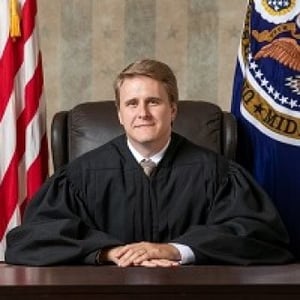
Judge, United States Court of Appeals for the Eleventh Circuit
Andrew Brasher served as a United States District Judge for the Middle District of Alabama. Before taking the bench in May 2019, Judge Brasher was the Solicitor General of the State of Alabama, where he argued cases before the United States Supreme Court, the United States Court of Appeals for the Eleventh Circuit, and the Alabama Supreme Court. He previously served for several years as the Deputy Solicitor General and practiced in the litigation and white-collar criminal defense practice groups in the Birmingham, Alabama office of Bradley Arant Boult Cummings LLP. Upon graduation from law school, Judge Brasher served as a law clerk to Judge William H. Pryor Jr. of the United States Court of Appeals for the Eleventh Circuit. Judge Brasher earned his B.A., summa cum laude, from Samford University and his J.D., cum laude, from Harvard Law School, where he was a member of the Harvard Law Review.
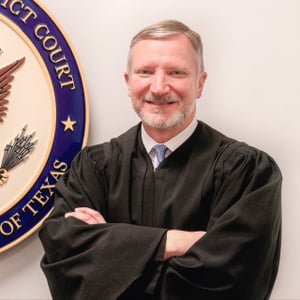
United States District Court, Southern District of Texas
Prior to joining TXSE, Jeff served as acting general counsel of Charles Schwab and led its Office of Legislative and Regulatory Affairs in Washington, D.C. for the past two decades, managing the company's response to public policy initiatives and advocating for policies that aid individual investors. He has over four decades of securities markets experience, starting his career as an options trader at the Philadelphia Stock Exchange, then founding his own trading firm, and later serving on the exchange's Board of Governors. He also served as senior counsel in the Division of Market Regulation at the U.S. Securities and Exchange Commission. Jeff's additional experience in the securities industry includes serving as vice president for regulation and general counsel at the Cincinnati Stock Exchange and as chairman of the Operating Committee of the National Market System Plan governing Nasdaq securities. Jeff holds degrees from the Wharton School of the University of Pennsylvania and Ohio Northern School of Law.
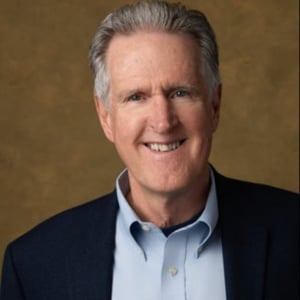
Senior Legal Counsel, Pacific Legal Foundation
Before becoming an attorney, James had been a productive member of society working as an exploration geologist in the late 1970s throughout the southwestern United States. However, after several years of dealing with irrational government bureaucrats and environmental policies untethered from reality, James decided that what the world needs is more lawyers — if they are willing to fight for rationality in regulatory regimes, property rights, and liberty.
James attended the University of Arizona College of Law in Tucson, where he served as an editor for the Law Review and received a J.D. degree in 1983. He had previously received a Masters degree in geological sciences from Brown University and an undergraduate degree from Hamilton College in New York. James received the Professional Achievement Award from the University of Arizona Alumni Association in 2018.
James has worked with Pacific Legal Foundation since 1983, litigating cases from Alaska to Florida. He is a member of the Federalist Society’s Environmental Law and Property Rights Practice Group’s Executive Committee, a member of the American College of Real Estate Lawyers, and an honorary member of Owners Counsel of America, an organization comprised of eminent domain attorneys who represent property owners. The Owners Counsel awarded James its Crystal Eagle award in 2013. In 2022, James was awarded the Brigham-Kanner Property Rights Prize at the William & Mary College of Law. The prize is awarded annually to an individual whose work has advanced the cause of property rights and has contributed to the overall awareness of the important role property rights occupy in the broader scheme of individual liberty.
In 2001, James successfully argued a major property rights case, Palazzolo v. Rhode Island, before the United States Supreme Court, a case which affirmed that rights in regulated property do not disappear when land is bought and sold. He has written extensively on all aspects of property rights and environmental law and frequently speaks on these subjects throughout the nation.
When James is not suing the government he enjoys skiing faster than he should, bicycling, hiking, swimming, and spending quality time with his wife, family, and grandchild.
Mr. Burling’s book Nowhere to Live: The Hidden Story of America’s Housing Crisis is available now on Amazon.
James is a member of the bar only in the states of Alaska and California.
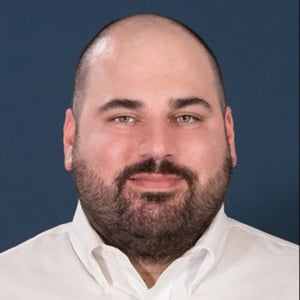
Senior Attorney, Pacific Legal Foundation
Chris Kieser practices in PLF’s property rights and equality before the law practice groups.
His property rights clients include Cedar Point Nursery, which challenged a California regulation requiring them to allow union organizers to invade their private property, as well as Randall and Kimberley Pavlock, who are fighting back against Indiana’s beachfront land grab along Lake Michigan.
Under equality before the law, Chris represents coalitions of Asian-American parents challenging discriminatory admissions policies for selective K-12 schools in New York City; Montgomery County, Maryland; and Fairfax County, Virginia. He also represents a parent organization in Connecticut challenging a racial quota that prevents many Black and Hispanic students from enrolling at the state’s magnet schools.
Chris has published law review articles in the William & Mary Environmental Law Review and the Federalist Society Review. His op-eds have appeared in the New York Daily News, National Review, The Blaze, the Daily Journal, and SCOTUSblog.
Chris clerked for the Honorable Daniel A. Manion of the United States Court of Appeals for the Seventh Circuit and the Honorable Thomas D. Schroeder of the United States District Court for the Middle District of North Carolina. He holds a B.A., cum laude, from the University of Notre Dame, and graduated magna cum laude from Notre Dame Law School in 2013. At Notre Dame, he was an articles editor of the Notre Dame Law Review.
Growing up on Long Island, Chris developed a deep passion for limited government and individual liberty, arguing with his more numerous progressive classmates. This experience made him deeply skeptical that government tinkering at the expense of individual rights ever works, whether it be denying a property owner the use of his land or a student a seat at her desired school because of her race. He chose PLF because it is the national leader in litigation that furthers individual liberty.
When he’s not working, you’re likely to find Chris rooting for the Mets and Fighting Irish or debating some arcane point of law (because apparently that doesn’t happen enough at work).
Chris is currently licensed to practice in California and admitted to practice before the Supreme Court of the United States, the United States Courts of Appeal for the Second, Seventh, and Ninth Circuits, and the U.S. District Courts for the Eastern and Central Districts of California, the Northern District of Indiana, and the Northern District of Illinois.
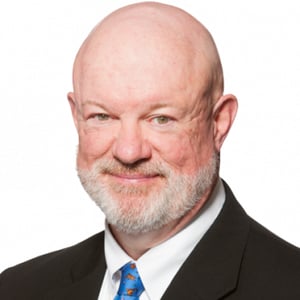
Senior Legal Fellow, the Meese Institute for the Rule of Law, Advancing American Freedom
Paul J. Larkin is a Senior Legal Fellow in the Meese Institute for the Rule of Law at Advancing American Freedom. Paul has held various positions in the federal and state governments throughout his career, such as being an attorney in the Organized Crime and Racketeering Section of the Criminal Division at the U.S. Department of Justice, an Assistant to the Solicitor General in the Office of the Solicitor General at the U.S. Department of Justice, Special Agent-in-Charge and Acting Director of the Criminal Investigation Division at the Environmental Protection Agency, and a member of the Parole Abolition and Sentencing Reform Commission and of the Juvenile Justice Reform Commission in the Office of Virginia Governor George Allen.
He has also worked at Verizon Communications and two law firms in Washington, D.C. His current research is principally in the fields of drug policy, criminal justice policy, and administrative law and policy. He has published numerous articles in law and public policy journals, both in print and online.
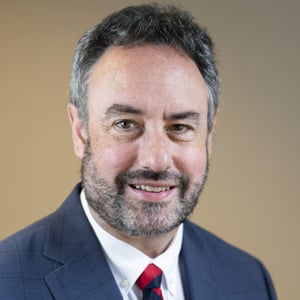
Research Director, Independence Institute
David B. Kopel is Research Director at the Independence Institute; Adjunct Scholar at the Cato Institute; and Senior Fellow at the University of Wyoming College of Law, Firearms Research Center. He received his B.A. in history with Highest Honors from Brown University and his J.D. magna cum laude from the University of Michigan Law School.
He is the author of over 20 books, including the textbook Firearm Law and the Second Amendment: Regulation, Rights, and Policy (Aspen Pubs. 4th ed. forthcoming 2026). His scholarship and briefs have been cited 7 Supreme Court cases--including Heller, McDonald, and Bruen--and in 140 lower courts opinions. He is the author of 120 scholarly articles. His shorter articles often appear on The Volokh Conspiracy blog, hosted by Reason magazine. His topics of interest include the right to arms throughout history, the Colorado Constitution, and law enforcement policy.

September 2016 DC Luncheon with Jan Crawford
Washington, District of ColumbiaConstitutional Subpoena Power Transcends Views on Climate Debate
The House Science, Space and Technology Committee, chaired by Lamar Smith, R-TX, recently issued subpoenas...
EEOC loses its hairstyle discrimination case
Pacific Legal Foundation's Joshua Thompson on the Eleventh Circuit's dismissal of an Equal Opportunity Employment...
Supreme Court 2015 Wrap Up: A Terrible Horrible No Good Very Bad Term
Birmingham, AlabamaFinal Agency Actions and Judicial Review: United States Army Corps of Engineers v. Hawkes Co.
James S. Burling
Note from the Editor: This article discusses the Supreme Court’s recent decision in United States Army...
Finding the Denominator in Regulatory Takings Cases: A Preview of Murr v. Wisconsin
Christopher M. Kieser
Note from the Editor: This article discusses Murr v. Wisconsin, a regulatory takings case that the...
The Justice Department’s Third-Party Payment Practice, the Antideficiency Act, and Legal Ethics
Paul James Larkin
Note from the Editor: This article argues that the Justice Department’s practice of distributing settlement...
Founders Meet Brand X
Funny things happen when you let the executive exercise legislative power in a quasi-judicial proceeding....
Texas Supreme Court Review
Austin, TexasVoisine v. United States - Post-Decision SCOTUScast
David B. Kopel
On June 27, 2016, the Supreme Court decided Voisine v. United States. Stephen Voisine was...