
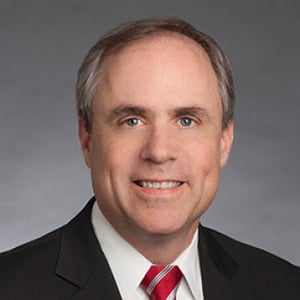
Partner, Goodwin Procter LLP
Tom Hefferon, partner and co-chair of Goodwin’s Financial Industry Practice, focuses his practice on civil litigation and government enforcement matters, with particular emphasis on the banking and consumer financial services industries. Mr. Hefferon frequently provides compliance advice and litigation risk analysis to industry clients.
Mr. Hefferon has a national practice concentrating on defending prominent financial institutions facing class action lawsuits pending in a large variety of state and federal courts. These cases typically arise under state and federal laws, including the Real Estate Settlement Procedures Act (RESPA), the Fair Housing Act (FHA), the Truth in Lending Act (TILA), the Fair Credit Reporting Act (FCRA), the Fair Debt Collection Practices Act (FDCPA), the Telephone Consumer Protection Act (TCPA), state and federal unfair and deceptive acts and practices laws (UDAP), other consumer lending statutes and regulations, bankruptcy laws and the common law.
The matters at issue in these cases include fair lending; the legality under RESPA of a variety of business practices; federal preemption; arbitration; assignee liability; loan servicing; foreclosure, bankruptcy and default issues; and claims that challenge various lending practices under a wide variety of federal and state statutes, including UDAP laws. He has an active practice before numerous state and federal courts. In the last several years, Mr. Hefferon and others in the group have defended more than 200 putative class actions, most of which were brought as nationwide class actions, and have been lead counsel in four multidistrict litigation proceedings. He also is acting and has previously acted as lead counsel to mortgage industry trade associations appearing as amicus curiae in cases that present significant issues for the consumer credit industry, and as counsel to trade associations in connection with regulatory comment letters.
In the 2011 Term, Mr. Hefferon argued in the United States Supreme Court, for the Respondent in Freeman v. Quicken Loans, Inc. The case involved an important consumer credit question under RESPA, which the Court decided unanimously in his client’s favor. Mr. Hefferon also has presented oral argument in most federal circuit courts and in a number of state supreme and lower appellate courts.
Mr. Hefferon also represents financial institutions and trade groups in a variety of contested matters in court and before federal and state administrative agencies, including the Consumer Financial Protection Bureau (CFPB), the Federal Trade Commission, the Department of Housing and Urban Development, the Federal Deposit Insurance Corporation, numerous state attorneys general, and state banking agencies. He is actively representing consumer finance companies in CFPB examinations and enforcement proceedings.
In addition to his specialty area, Mr. Hefferon has represented a range of corporate and individual clients, and has substantial experience in complex commercial disputes, including contract litigation, insurance disputes, lender liability cases and litigation arising in connection with bankruptcies filed under Chapters 7, 11 or 13. He has been sole or joint lead counsel in the trial of cases in federal and state courts in Massachusetts, Connecticut, New York, Missouri, Texas and Illinois.
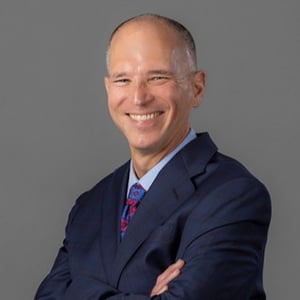
George Mason University Foundation Professor of Law, Antonin Scalia Law School, George Mason University
TODD J. ZYWICKI is George Mason University Foundation Professor of Law at Antonin Scalia Law School at George Mason University and Research Fellow of the George Mason Law and Economics Center. During the Fall 2023 semester he served as the Visiting Scholar in Conservative Thought and Policy for the Bruce Benson Center for the Study of Western Civilization at the University of Colorado-Boulder. From 2020-2021 he was Chair of the Consumer Financial Protection Bureau Taskforce on Federal Consumer Financial Law. In 2021 he was inducted to the American College of Consumer Financial Services Lawyers. He is also a Senior Fellow of the F.A. Hayek Program for the Advanced Study of Politics, Philosophy, and Economics at George Mason University and a former Senior Fellow of the Cato Institute. From 2015-2017 he was Executive Director of the George Mason Law and Economics Center. He served as Co-Editor of the Supreme Court Economic Review from 2006-2017. From 2003-2004, Professor Zywicki served as the Director of the Office of Policy Planning at the Federal Trade Commission. He has also taught at Vanderbilt University Law School, Georgetown University Law Center, Boston College Law School, Mississippi College School of Law, and China University of Political Science and Law.
Professor Zywicki clerked for Judge Jerry E. Smith of the U.S. Court of Appeals for the Fifth Circuit and worked as an associate at Alston & Bird in Atlanta, Georgia, where he practiced bankruptcy and commercial law. He received his J.D. from the University of Virginia, where he was executive editor of the Virginia Tax Review and John M. Olin Scholar in Law and Economics. Professor Zywicki also received an M.A. in Economics from Clemson University and an A.B. cum Laude with high honors in his major from Dartmouth College.
Professor Zywicki is also a Lone Mountain Fellow of the Property and Environment Research Center, a Fellow of the International Centre for Economic Research in Turin, Italy, and a former Senior Fellow of the Goldwater Institute. During the Fall 2008 Semester Professor Zywicki was the Searle Fellow of the George Mason University School of Law and was a 2008-09 W. Glenn Campbell and Rita Ricardo-Campbell National Fellow and the Arch W. Shaw National Fellow at the Hoover Institution on War, Revolution and Peace. He has lectured and consulted with government officials around the world, including Iceland, Italy, Japan, and Guatemala. In 2006 Professor Zywicki served as a Member of the United States Department of Justice Study Group on “Identifying Fraud, Abuse and Errors in the United States Bankruptcy System.”
Professor Zywicki is the author of more than 130 articles in leading law reviews and peer-reviewed economics journals. He is one of the Top 10 most-cited law professors in the field of Commercial Law and one of the Top 25 law professors on Twitter as measured by engagement levels. He is one of the Top 50 Most Downloaded Law Authors at the Social Science Research Network. He has testified multiple times before Congress on issues of consumer bankruptcy law and consumer credit and is a frequent commentator on legal issues in the print and broadcast media, including the Wall Street Journal, New York Times, The Washington Post, The Washington Times, Nightline, The Newshour with Jim Lehrer, Neil Cavuto Show, Fox & Friends, Smerconish, Fox News @ Night with Shannon Bream, Fox Business, CNN, CNBC, Bloomberg News, BBC, The Diane Rehm Show, Lou Dobbs Show, Jerry Doyle Show, and The Laura Ingraham Show.
Professor Zywicki is former Chairman and a current member of the Board of Directors of the Competitive Enterprise Institute, and is a member of the Board of Directors of the Institute for Humane Studies, Bill of Rights Institute, the Executive Committee for the Federalist Society's Financial Institutions and E-Commerce Practice Group, the Board of Trustees of the Foundation for Research on Economics and the Environment. He formerly served on the Governing Board and the Advisory Council for the Financial Services Research Program at George Washington University School of Business. He is currently the Chair of the Academic Advisory Council for the following organizations: The Bill of Rights Institute, the film “We the People in IMAX,” and the McCormick-Tribune Foundation “Freedom Museum” in Chicago, Illinois. He is a member of the Board of Visitors of Ralston College and was a member of the Board of Trustees of Yorktown University. From 2005-2009 he served as an elected Alumni Trustee of the Dartmouth College Board of Trustees.
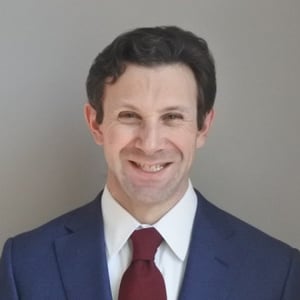
General Counsel - International, Willis Towers Watson
Todd F. Braunstein is General Counsel - International as well as Head of Global Investigations at Willis Towers Watson, an insurance broking and consulting firm with $9 billion in revenues, 45,000 employees, and business in 140+ countries. He previously worked as a federal prosecutor, at two DC law firms, and in the White House.
A.B., Harvard College; J.D., Harvard Law School
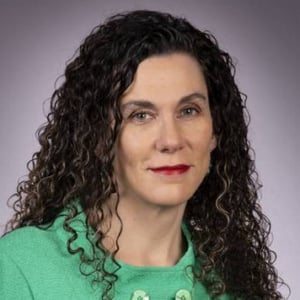
Associate Professor of Law, Center for Intellectual Property and Entrepreneurship, University of Missouri School of Law
Professor Lietzan researches, writes, and teaches primarily in the areas of food and drug regulation, intellectual property, and administrative law. Some of her recent scholarship has focused on the nature and purpose of the new drug approval system, federal regulation of fecal microbiota transplantation, federal regulation of products derived from cannabis, the political economy of the Hatch-Waxman (generic drug) statute, and incentives to study already approved drugs for new uses. She is an award-winning teacher, and she has been an elected member of the American Law Institute since 2006.
Professor Lietzan brings to her scholarship and teaching eighteen years of private practice experience, eight of them as a partner in the food and drug group at Covington & Burling in Washington, DC. In practice, she handled a wide range of complex legal problems and broader legislative and regulatory policy questions affecting FDA-regulated companies. This work included lifecycle management and strategy issues, regulatory strategy and advocacy, white collar defense, congressional investigations, briefing in products liability cases, and international regulatory policy work. She was involved in every major amendment to the Federal Food, Drug, and Cosmetic Act (FDCA) between 1997 and 2014 and was deeply immersed for more than a decade in the development of the Biologics Price Competition and Innovation Act of 2010. She has been consistently identified by her peers in private practice as a “Best Lawyer in America” in the categories of FDA law (since 2013) and Biotechnology Law (since 2007).
Professor Lietzan has held one leadership position or another at the Food and Drug Law Institute (FDLI) since 2004, including a stint on its Board of Directors from 2008 to 2012. She also held leadership positions in the American Bar Association’s Section of Science and Technology Law for fourteen years.
Professor Lietzan received a bachelor’s degree from the University of North Carolina, where she graduated with honors in history. She holds a master’s degree in history from UCLA and a law degree with high honors from Duke Law School.

Topics
Size Doesn't Matter: Why Shrinking the Supreme Court Won't Promote Constitutionally Limited Government
The Supreme Court needs to be cut down to size. So argues Professor Michael Stokes...
The Globe And The Gavel: Judicial Decision-making In the Age of Globalization
Honolulu, HawaiiCFPB Ruled Structurally Unconstitutional: PHH v. CFPB
TeleforumThe CFPB, Justice Scalia, and Lone Dissents
This past Tuesday, the United States Court of Appeals for the D.C. Circuit—in arguably its...
Courthouse Steps: Salman v. U.S. Oral Arguments
TeleforumMissouri Employers Now Potentially Liable for Increased Workers’ Compensation Liability
Justin Whitworth
In a recent worker’s compensation decision, the Missouri Supreme Court has increased protections for workers...
Colorado Supreme Court Strikes Down Local Fracking Bans
Douglas N. Marsh
In City of Fort Collins v. Colo. Oil and Gas Ass’n1 and City of Longmont v. Colo. Oil...
Misunderstanding of Statistics Confounds Analyses of Criminal Justice Issues in Baltimore and Voter ID Issues in Texas and North Carolina
I have written here before, most recently in “Things the President Doesn’t Know About Racial Disparities” (Aug....
Topics
Supreme Court orders update
The Supreme Court issued a post-long conference Order list granting certiorari in nine cases, consolidating two. Per SCOTUSblog,...
A Second Look at the CREATES Act: What’s Not Being Said
Erika Lietzan
Note from the Editor: This article critically discusses the CREATES Act, which is currently pending...