

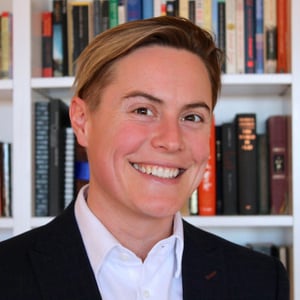
Partner, Clement & Murphy, PLLC
Erin Murphy is founding partner of Clement & Murphy, PLLC. She is widely recognized as one of the nation’s leading Supreme Court and appellate advocates. She has argued dozens of cases in appellate and trial courts throughout the country, including the Supreme Court and nearly all of the federal courts of appeals. Erin has long been ranked by Chambers & Partners rankings as a leading appellate practitioner, and the National Law Journal has named her one of the nation’s “Outstanding Women Lawyers.” Erin also has an active pro bono practice, through which she has successfully represented many religious organizations and adherents, criminal defendants, asylum applicants, adoptive parents, and more.
Erin is an adjunct professor at her alma mater the Georgetown University Law Center, a member and former officer of the Edward Coke Appellate Inn of Court, and a frequent speaker on topics relating to the Supreme Court and appellate advocacy. In her spare time, Erin serves on the board of directors of Street Law.
Associate Professor of Legal Studies & Business Ethics, The University of Pennsylvania Wharton School of Business
Amanda Shanor is an Assistant Professor at the University of Pennsylvania Wharton School, where her scholarship focuses on constitutional and administrative law, and in particular the First Amendment.
Shanor is a graduate of Yale Law School and Yale College, and a PhD candidate in law at Yale University. She served as a law clerk to Judges Cornelia T.L. Pillard and Judith W. Rogers on the D.C. Circuit, and Judge Robert W. Sweet in the Southern District of New York. She has taught at both Yale and Georgetown law schools and has published in the New York University Law Review, the Harvard Law Review Forum, and the Yale Law Journal Forum, among others. She is a contributor to Take Care and the co-author of a textbook on counterterrorism law.
Prior to joining the academy, Amanda worked in the National Legal Department of the American Civil Liberties Union on the organization’s Supreme Court litigation, including Masterpiece Cakeshop. Previously, she litigated a number of constitutional and national security cases with Professor David Cole, including Humanitarian Law Project v. Holder, while a fellow at Georgetown.
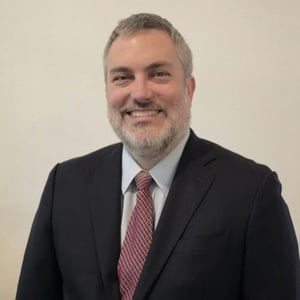
Host, The Prosecutors Podcast; Partner, Culper Law
Brett J. Talley is former a federal prosecutor (appellate chief in the Middle District of Alabama) and host of the true crime podcast "The Prosecutors." Brett has served as nominations chief and deputy assistant attorney general at the US Department of Justice, Advisor to the White House Counsel, speechwriter to Senator Rob Portman, a political and legal communications professional, deputy state solicitor general, staff writer for a presidential campaign, award-nominated horror fiction author (possibly related to the previous items on the list), US District and 11th Circuit judicial clerk, and adjunct law school professor. He is currently a partner ar Culper Law. Along the way, Brett has been involved at some level in the confirmation of a full majority of the sitting justices on the U.S. Supreme Court and scores of U.S. district and appellate court judges. A native Alabamian, Brett earned his undergraduate degree in History and Philosophy from the University of Alabama and JD from Harvard Law School. He lives in Montgomery with his wife Annie and their three small kids.
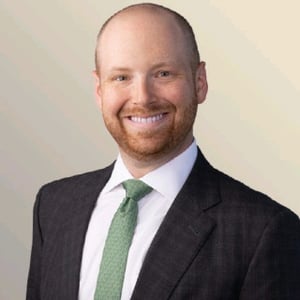
Solicitor General, Iowa Office of the Attorney General
Eric Wessan serves as Iowa’s Solicitor General in the Iowa Attorney General’s Office. In that role, Wessan leads Iowa’s litigation before State and federal appellate courts, including the Iowa and U.S. Supreme Courts. Before that role, Wessan worked on complex commercial litigation at two large law firms in Chicago. Wessan also served as a law clerk for the Honorable James C. Ho on the U.S. Court of Appeals for the Fifth Circuit and for the Honorable John F. Kness on the U.S. District Court for the Northern District of Illinois. Wessan is a graduate of the University of Chicago Law School, with honors, and of the University of Chicago.

Laurence H. Silberman Chair in Constitutional Governance, American Enterprise Institute; Executive Director, Antonin Scalia Law School’s C. Boyden Gray Center for the Study of the Administrative State
Adam J. White is the Laurence H. Silberman Chair in Constitutional Governance and senior fellow at the American Enterprise Institute, where he focuses on the Supreme Court and the administrative state. He also directs the Antonin Scalia Law School’s C. Boyden Gray Center for the Study of the Administrative State.
He writes on regulation and constitutional government for a variety of publications. He practiced law in Washington, D.C., after clerking for the D.C. Circuit's Judge David Sentelle. He also has been chairman of the ABA's Administrative Law Section.
In 2021, he served on the Presidential Commission on the Supreme Court of the United States, where he criticized “Court packing” and other efforts to restructure the Supreme Court.
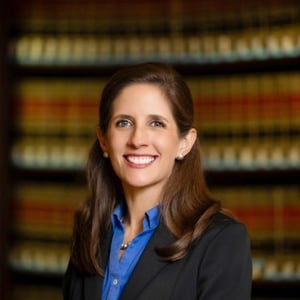
Associate Professor of Law, Notre Dame Law School
Haley Proctor joined Notre Dame Law School in 2024 as an Associate Professor of Law. She teaches and writes on procedure, evidence, constitutional law, and federal courts. Her scholarship explores the connections between judicial and administrative procedures and the powers legislators, administrators, and courts exercise. Before coming to ND Law, she was a faculty fellow at the University of Missouri School of Law and the Kinder Institute for Constitutional Democracy and practiced law at the law firm of Cooper & Kirk PLLC. She also served as a clerk to Justice Clarence Thomas of the U.S. Supreme Court and Judge Thomas Griffith of the U.S. Court of Appeals for the D.C. Circuit. Proctor earned her B.A., magna cum laude, in political science and international studies from Yale College, and her J.D. from Yale Law School.
Senior Legal Fellow, Advancing American Freedom
Amy Swearer is a leading national expert on a wide range of public policy, legal, and constitutional issues, including the Second Amendment, criminal justice, and mental health policy. She has long been a respected conservative voice on gun policy and is routinely asked to testify before state and federal legislative bodies. Her work on birthright citizenship, meanwhile, has been featured extensively in litigation over the meaning of the Fourteenth Amendment’s Citizenship Clause.
Swearer was formerly a Senior Legal Fellow in the Edwin Meese III Center for Legal & Judicial Studies at the Heritage Foundation. At Heritage, she ran the Defensive Gun Use Database and was the primary author of the e-book “The Essential Second Amendment.” She was also a driving force behind the organization’s School Safety Initiative.
She was the 2022 recipient of the Heritage Foundation’s Joseph Shattan Award for “writing that presents conservative ideas in a powerful and compelling fashion to policymakers and the American people.” She was also named the Second Amendment Institute’s 2022 Gun Rights Champion.
Swearer received her law degree from the University of Nebraska College of Law and was a member of the Nebraska Law Review. She holds a B.S. in Criminology & Criminal Justice from the University of Nebraska, where she was a Chancellor’s Scholar and a goalkeeper on the women’s soccer team

General Counsel, American Suppressor Association
Michael first joined ASA in 2014, and served as ASA’s General Counsel from 2015 to 2016, before leaving to join the Administration in 2017.
Michael began his federal service at the White House Office of Management and Budget (OMB), where he served two years as an attorney in the Office of General Counsel and focused on federal budget and regulatory matters. He then transitioned to the West Wing in March of 2019, where he served as Deputy Assistant to the President and Counselor to White House Chief of Staff Mick Mulvaney. During his time in the West Wing, Michael advised the Chief of Staff and the President on numerous matters, and served as the top White House policy advisor on Second Amendment issues. Michael left the West Wing in July of 2020 to serve as Acting General Counsel at the US Department of Housing and Urban Development (HUD), where he managed a budget of over $100 million and supervised a staff of nearly 300 attorneys and 250 other professionals.
Associate Professor, Widener Law Commonwealth

Chief Policy Counsel, Council on Criminal Justice and Senior Advisor, Right on Crime
Marc A. Levin is the Chief Policy Counsel for the Council on Criminal Justice (counciloncj.org) and Senior Advisor for Right on Crime.
An attorney and accomplished author on legal and public policy issues, Marc began the Foundation’s criminal justice program in 2005. This work contributed to nationally praised policy changes that have been followed by dramatic declines in crime and incarceration in Texas. Building on this success, in 2010, Levin developed the concept for the Right on Crime initiative, a TPPF project in partnership with Prison Fellowship and the American Conservative Union Foundation. Right on Crime has become the national clearinghouse for conservative criminal justice reforms and has contributed to the adoption of policies in dozens of states that fight crime, support victims, and protect taxpayers.
In 2014, Levin was named one of the “Politico 50” in the magazine’s annual “list of thinkers, doers, and dreamers who really matter in this age of gridlock and dysfunction.”
Marc has testified on criminal justice policy on four occasions before Congress and has testified before legislatures in states including Texas, Nevada, Kansas, Wisconsin, and California. He also has met personally with leaders such as U.S. Presidents, Speakers of the House, and the Justice Commtitee of the United Kingdom Parliament to share his ideas on criminal justice reform. In 2007, he was honored in a resolution unanimously passed by the Texas House of Representatives that stated, “Mr. Levin’s intellect is unparalleled and his research is impeccable.”
Since 2005, Marc has published dozens of policy papers on topics such as sentencing, probation, parole, reentry, and overcriminalization which are available on the TPPF website. Levin’s articles on law and public policy have been featured in publications such as the Wall Street Journal, USA Today, Texas Review of Law & Politics, National Law Journal, New York Daily News, Jerusalem Post, Toronto Star, Atlanta Journal-Constitution, Philadelphia Inquirer, San Francisco Chronicle, Washington Times, Los Angeles Daily Journal, Charlotte Observer, Dallas Morning News, Houston Chronicle, Austin American-Statesman, San Antonio Express-News and Reason Magazine.
In 1999, Marc graduated with honors from the University of Texas with a B.A. in Plan II Honors and Government. In 2002, Marc received his J.D. with honors from the University of Texas School of Law. Marc was a Charles G. Koch Summer Fellow in 1996. He served as a law clerk to Judge Will Garwood on the U.S. Court of Appeals for the Fifth Circuit and Staff Attorney at the Texas Supreme Court.
Partner, Cooper & Kirk PLLC
John Ohlendorf has extensive experience with every aspect of litigation, from arguing discovery disputes and cross-examining trial witnesses to working on appeals at all levels of the state and federal judicial systems. Mr. Ohlendorf has written dozens of briefs in the United States Supreme Court and has argued numerous cases, including appeals in both state and federal court. While much of his career has focused on appellate advocacy, he has also developed deep experience litigating at the trial-court level, consistent with the Firm’s frequent approach of handling a matter over its entire lifespan, from the filing of the complaint to proceedings in the Supreme Court.
Mr. Ohlendorf’s litigation experience is wide-ranging, but it includes a particular focus on constitutional law and suits against the government. He has litigated multiple claims involving the separation of powers, the Appointments Clause, freedom of speech, the Second Amendment, the Due Process Clause, the Equal Protection Clause, and the Takings Clause. He has been heavily involved in over thirty matters defending the right to keep and bear arms, and he was Counsel of Record on an amicus brief in New York State Rifle & Pistol Association v. Bruen, a recent Supreme Court case involving the Second Amendment right to carry a firearm, that was singled out by Justice Kavanaugh during the oral argument as very helpful to his consideration of the case. Mr. Ohlendorf has also litigated many cases involving administrative law and government contracts.
Before coming to Cooper & Kirk, Mr. Ohlendorf clerked for Judge Raymond Gruender of the United States Court of Appeals for the Eighth Circuit, taught at Northwestern University School of Law as an Olin-Searle-Smith Fellow, and then at Georgetown University Law Center as a Visiting Lecturer and Fellow at the Georgetown Center for the Constitution. His articles have been published in the Notre Dame Law Review, the Harvard Journal of Law and Public Policy, National Affairs (with Joel Alicea), the Georgia Law Review, and the Maine Law Review. He received a J.D. from Harvard Law School, magna cum laude, in 2010, where he was an Editor for the Harvard Journal of Law and Public Policy, and graduated with a B.A. from Bethany Lutheran College, summa cum laude, in 2007.
Principal Deputy Assistant Attorney General, Office of Legal Policy, United States Department of Justice
GianCarlo Canaparo serves as the Principal Deputy Assistant Attorney General in the Office of Legal Policy at the Department of Justice. He oversees the Office's regulatory work, assists the White House in the process of selecting nominees for federal judgeships and advises Department leadership on policy and legal matters.
Before joining the Department, Canaparo was a senior legal fellow at The Heritage Foundation’s Edwin Meese III Center for Legal and Judicial Studies where he researched constitutional law, administrative law, and civil rights.
Canaparo’s scholarship has appeared in various law reviews and periodicals. His research has been cited by Justice Neil Gorsuch and featured in the Wall Street Journal and Washington Post.
Canaparo co-hosted The Heritage Foundation’s SCOTUS 101 podcast, which followed the Supreme Court’s arguments and opinions and featured interviews with judges, advocates, and scholars.
After graduating Georgetown law, Canaparo spent three years at the law firm of Skadden, Arps, Slate, Meagher & Flom and two years as a federal law clerk. He earned his bachelor’s degree in economics from the University of California at Davis.
Canaparo is a classical pianist.

Professor of Law, Northwestern University Pritzker School of Law
Joshua Kleinfeld teaches and writes about political, legal, and moral philosophy, criminal law, and criminal procedure. He also practices law in Northwestern's Juvenile Criminal Defense Clinic. He is a full professor with tenure at the Northwestern Pritzker School of the Law and (by courtesy) in Northwestern’s philosophy department. In 2017-18, he was a visiting professor at Harvard and Stanford Law Schools. He is the recipient of the Bator Award, given annually to one American law professor under the age of 40 who has demonstrated "excellence in legal scholarship, a commitment to teaching, a concern for students, and who has made a significant public impact."
In philosophy, Kleinfeld's research focuses on the idea of "embodied ethical life," as developed in the socio-theoretic tradition of Hegel, Weber, and Durkheim. This tradition aims to understand and critique social life by bringing to light the normative ideas implicit in social practices and institutions. In law, this means that the most interesting philosophical concepts are often those reflected or actualized in legal practice – in the law as judges and lawyers think of it and wield it.
In criminal law and procedure, Kleinfeld has developed a theory known as "reconstructivism," which holds that the chief office of criminal law is not to dole out retributive justice, nor to optimize crime and cost control, but to reconstruct a violated normative order in the wake of a crime. This work, which draws on the thought of Hegel, Durkheim, Jean Hampton, and Antony Duff, develops an alternative to retributive and utilitarian theories of criminal law by focusing on the distinctive social function and sense of justice at work in the criminal system.
Kleinfeld is also involved in practical criminal justice reform. In this vein, he defends children accused of homicide in the Northwestern Juvenile Criminal Defense clinic and assists in litigation efforts meant to reform American criminal law through the courts. He has also developed a view of criminal justice reform known as "democratization," which holds that the root of the American criminal justice crisis is a set of bureaucratic attitudes, structures, and incentives divorced from the American public’s concerns and sense of justice, and that the primary solution is to make criminal justice more community-focused and responsive to lay influences. Working with others, he has developed a number of policy proposals meant to reform American criminal justice in a democratic direction.
Kleinfeld holds a JD from Yale Law School, a PhD in philosophy from the Goethe University of Frankfurt (supervised by Axel Honneth, Klaus Günther, and Rainer Forst), and a BA in philosophy from Yale College. He clerked for Judge J. Harvie Wilkinson on the United States Court of Appeals for the Fourth Circuit; Judge Janice Rogers Brown on the United States Court of Appeals for the D.C. Circuit; and President (chief justice) Aharon Barak of the Supreme Court of Israel. He worked as an Associate at Debevoise & Plimpton LLP in Frankfurt, Germany, in the area of corporate criminal law. Before law school, he worked as a Senior Research Analyst at the White House’s Council on Bioethics.

Patrick Hotung Professor of Constitutional Law, Georgetown University Law Center; Faculty Director, Georgetown Center for the Constitution
Randy E. Barnett is the Patrick Hotung Professor of Constitutional Law at the Georgetown University Law Center and is the Faculty Director of the Georgetown Center for the Constitution. After graduating from Northwestern University and Harvard Law School, he tried many felony cases as a prosecutor in the Cook County States’ Attorney’s Office in Chicago. A recipient of a Guggenheim Fellowship in Constitutional Studies and the Bradley Prize, Professor Barnett has been a visiting professor at Penn, Northwestern and Harvard Law School.
Professor Barnett’s publications includes thirteen books, more than one hundred articles and reviews, as well as numerous op-eds. His most recent book is Felony Review: Tales of True Crime and Corruption in Chicago (2026). His other books on the Constitution include: A Life for Liberty: The Making of an American Originalist (2024); The Original Meaning of the Fourteenth Amendment: Its Letter and Spirit (2021) (with Evan Bernick); An Introduction to Constitutional Law: 100 Supreme Court Cases Everyone Should Know (2019) (with Josh Blackman); Restoring the Lost Constitution: The Presumption of Liberty (2nd ed. 2013); Our Republican Constitution: Securing the Liberty and Sovereignty of We the People (2016); and Constitutional Law: Cases in Context (5th ed. forthcoming 2027) (with Josh Blackman). His books on contracts are The Oxford Introductions to U.S. Law: Contracts (2010) and Contracts: Cases and Doctrine (7th ed. 2021) (with Nate Oman). And he is the author of The Structure of Liberty: Justice and the Rule of Law (2nd ed. 2014).
In 2004, he argued the medical marijuana case of Gonzalez v. Raich before the U.S. Supreme Court. In 2012, he was one of the lawyers representing the National Federation of Independent Business in its constitutional challenge to the Affordable Care Act in NFIB v. Sebelius. He’s appeared in numerous documentaries and portrayed a prosecutor in the 2010 science-fiction feature film, InAlienable: The Movie. On X he is @RandyEBarnett
Professor of Law, Northwestern University Pritzker School of Law
Joshua Kleinfeld teaches and writes about political, legal, and moral philosophy, criminal law, and criminal procedure. He also practices law in Northwestern's Juvenile Criminal Defense Clinic. He is a full professor with tenure at the Northwestern Pritzker School of the Law and (by courtesy) in Northwestern’s philosophy department. In 2017-18, he was a visiting professor at Harvard and Stanford Law Schools. He is the recipient of the Bator Award, given annually to one American law professor under the age of 40 who has demonstrated "excellence in legal scholarship, a commitment to teaching, a concern for students, and who has made a significant public impact."
In philosophy, Kleinfeld's research focuses on the idea of "embodied ethical life," as developed in the socio-theoretic tradition of Hegel, Weber, and Durkheim. This tradition aims to understand and critique social life by bringing to light the normative ideas implicit in social practices and institutions. In law, this means that the most interesting philosophical concepts are often those reflected or actualized in legal practice – in the law as judges and lawyers think of it and wield it.
In criminal law and procedure, Kleinfeld has developed a theory known as "reconstructivism," which holds that the chief office of criminal law is not to dole out retributive justice, nor to optimize crime and cost control, but to reconstruct a violated normative order in the wake of a crime. This work, which draws on the thought of Hegel, Durkheim, Jean Hampton, and Antony Duff, develops an alternative to retributive and utilitarian theories of criminal law by focusing on the distinctive social function and sense of justice at work in the criminal system.
Kleinfeld is also involved in practical criminal justice reform. In this vein, he defends children accused of homicide in the Northwestern Juvenile Criminal Defense clinic and assists in litigation efforts meant to reform American criminal law through the courts. He has also developed a view of criminal justice reform known as "democratization," which holds that the root of the American criminal justice crisis is a set of bureaucratic attitudes, structures, and incentives divorced from the American public’s concerns and sense of justice, and that the primary solution is to make criminal justice more community-focused and responsive to lay influences. Working with others, he has developed a number of policy proposals meant to reform American criminal justice in a democratic direction.
Kleinfeld holds a JD from Yale Law School, a PhD in philosophy from the Goethe University of Frankfurt (supervised by Axel Honneth, Klaus Günther, and Rainer Forst), and a BA in philosophy from Yale College. He clerked for Judge J. Harvie Wilkinson on the United States Court of Appeals for the Fourth Circuit; Judge Janice Rogers Brown on the United States Court of Appeals for the D.C. Circuit; and President (chief justice) Aharon Barak of the Supreme Court of Israel. He worked as an Associate at Debevoise & Plimpton LLP in Frankfurt, Germany, in the area of corporate criminal law. Before law school, he worked as a Senior Research Analyst at the White House’s Council on Bioethics.
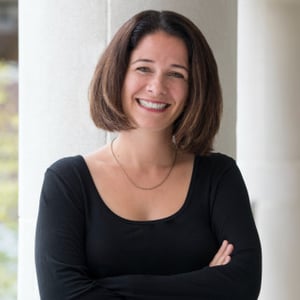
Anne Shea Ransdell and William Garland "Buck" Ransdell, Jr. Distinguished Professor of Law, University of North Carolina School of Law
Carissa Byrne Hessick joined the Carolina Law faculty in 2016. She serves as the Anne Shea Ransdell and William Garland “Buck” Ransdell, Jr. Distinguished Professor of Law and as the director of the Prosecutors and Politics Project. Her teaching and research interests include criminal law, the structure of the criminal justice system, criminal sentencing, and child pornography crimes. Hessick is the author of multiple law review articles, essays, and op eds on plea bargaining, the powers and selection of prosecutors, Sixth Amendment sentencing rights, and criminal statutes. Her work has appeared in the California Law Review, the Cornell Law Review, the L.A. Times, the UCLA Law Review, and the Virginia Law Review, among others. She founded the Prosecutors and Politics Project in 2018. And she currently serves as the Reporter for the ABA Criminal Justice Section’s Sentencing Standards Task Force.
Hessick attended Yale Law School, where she was an editor of the Yale Law Journal and winner of the Potter Stewart Prize for the Morris Tyler Moot Court of Appeals. After graduating from law school, she clerked for Judge Barbara S. Jones on the Southern District of New York and for Judge A. Raymond Randolph on the D.C. Circuit. She also worked as a litigation associate at Wachtell, Lipton, Rosen & Katz in New York City. Before joining the faculty at Carolina Law, Hessick taught on the faculties at Arizona State University’s Sandra Day O’Connor College of Law and the University of Utah’s S.J. Quinney College of Law. She also spent two years as a Climenko Fellow at Harvard Law School.
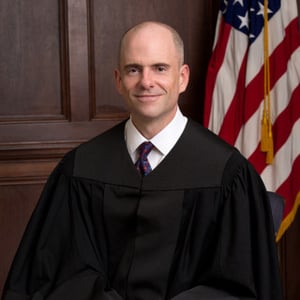
Judge, United States Court of Appeals, Eleventh Circuit
Judge Kevin C. Newsom is a member of the United States Court of Appeals for the Eleventh Circuit. He sits in Birmingham, Alabama.
Before his appointment to the bench, Judge Newsom was the head of the appellate practice group at Bradley Arant Boult Cummings LLP and, before that, the Solicitor General of Alabama. As a practicing lawyer, Judge Newsom argued four cases in the Supreme Court of the United States, and nearly 40 more in the United States Courts of Appeals and state supreme and appellate courts.
Judge Newsom graduated summa cum laude from Samford University and magna cum laude from Harvard Law School, where he was an articles editor on the Harvard Law Review. Following law school, Judge Newsom clerked for Judge Diarmuid F. O’Scannlain of the United States Court of Appeals for the Ninth Circuit and Justice David H. Souter of the Supreme Court of the United States.
Judge Newsom teaches at Harvard Law School, Yale Law School, Stanford Law School, and the University of Chicago Law School. His published work has appeared in the Yale Law Journal and the Harvard Law Review.
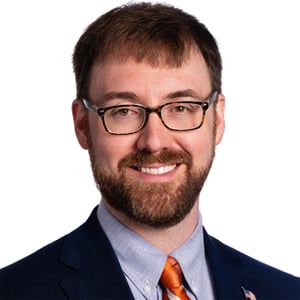
Senior Legal Fellow, Courts and the Constitution, Legal Policy Center, The Heritage Foundation
Zack is a Senior Legal Fellow of Courts and the Constitution at The Heritage Foundation.
He previously served for several years as an Assistant United States Attorney in the Northern District of Florida. Prior to that, he spent two years as an associate in the Washington, D.C. office of Cleary Gottlieb Steen & Hamilton, which he joined after clerking for the Hon. Emmett R. Cox on the United States Court of Appeals for the Eleventh Circuit.
Smith received his undergraduate, master’s, and law degrees from the University of Florida. During law school, Smith served as the Editor in Chief of the Florida Law Review and served on the executive boards of several student organizations, including the UF Chapter of the Federalist Society.
State’s Attorney, DuPage County, Illinois
A career prosecutor with over 31 years of experience and counting, Bob Berlin was sworn in as DuPage County State’s Attorney on December 14, 2010, after being appointed to complete the unexpired term of Joseph Birkett. In 2012, 2016, and 2020, Bob was elected to full four-year terms as DuPage County State’s Attorney. He serves as the Chief Law Enforcement Officer for the 2nd largest county in Illinois and leads an office of 87 Assistant State’s Attorneys and 90 support staff and investigators.
Berlin began his career in 1987 as an Assistant State’s Attorney in Cook County. During his tenure in Cook County, Bob’s assignments included the criminal appeals, misdemeanor, felony review, homicide-sexual assault preliminary hearing, child exploitation, and felony trial divisions. In 2001, Bob left the Cook County State’s Attorney’s Office opting to continue his career as First Assistant State’s Attorney for the Kane County State’s Attorney’s Office. As First Assistant State’s Attorney, Bob managed and supervised the entire Office staff of more than 140 lawyers and support staff.
While in Kane County, Bob developed and implemented new policies including the Community Prosecutions and a Felony Review Unit. Bob also served as Chief of the Priority Prosecutions Unit. In 2004, Bob began working for the DuPage County State’s Attorney’s Office as Deputy Chief of the Office’s Juvenile Division. During the next several years, Bob was promoted to Deputy Chief of the Felony Trial Division and in April 2010, Chief of the Criminal Bureau, where he supervised all Assistant State’s Attorneys charged with the criminal prosecutions function of the Office.
In his 31-year career as a prosecutor, Bob has tried more than 85 felony jury trials, 55 of which involved first-degree murder. Bob has also tried hundreds of felony bench trials, including more than 50 homicide cases.
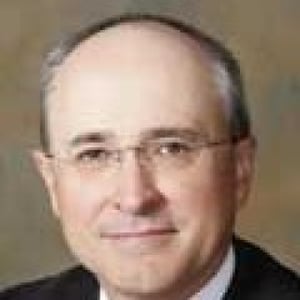
Appellate Court Justice, Illinois Appellate Court for the Fourth District
Justice Eugene Doherty graduated summa cum laude from the Northern Illinois University School of Law in 1989. After serving as a law clerk to Honorable Philip G. Reinhard at the Illinois Appellate Court, Justice Doherty engaged in a civil litigation practice in Rockford, Illinois. The Illinois Supreme Court appointed him to the 17th Judicial Circuit Court in 2007, a position to which he was elected in 2008 and retained in 2012 and 2020. He served as chief judge of the 17th Circuit from 2018 through 2021. Justice Doherty is the author of a variety of articles in several legal publications including the Illinois Bar Journal, and he has been an instructor at the Illinois Education Conference multiple times. He serves on several Supreme Court Committees, including serving as chair of the e-Business Policy Advisory Board and vice-chair of the COVID-19 Task Force. In 2022, the Illinois Supreme Court assigned him to the Illinois Appellate Court for the Fourth District.
Chief Policy Counsel, Council on Criminal Justice and Senior Advisor, Right on Crime
Marc A. Levin is the Chief Policy Counsel for the Council on Criminal Justice (counciloncj.org) and Senior Advisor for Right on Crime.
An attorney and accomplished author on legal and public policy issues, Marc began the Foundation’s criminal justice program in 2005. This work contributed to nationally praised policy changes that have been followed by dramatic declines in crime and incarceration in Texas. Building on this success, in 2010, Levin developed the concept for the Right on Crime initiative, a TPPF project in partnership with Prison Fellowship and the American Conservative Union Foundation. Right on Crime has become the national clearinghouse for conservative criminal justice reforms and has contributed to the adoption of policies in dozens of states that fight crime, support victims, and protect taxpayers.
In 2014, Levin was named one of the “Politico 50” in the magazine’s annual “list of thinkers, doers, and dreamers who really matter in this age of gridlock and dysfunction.”
Marc has testified on criminal justice policy on four occasions before Congress and has testified before legislatures in states including Texas, Nevada, Kansas, Wisconsin, and California. He also has met personally with leaders such as U.S. Presidents, Speakers of the House, and the Justice Commtitee of the United Kingdom Parliament to share his ideas on criminal justice reform. In 2007, he was honored in a resolution unanimously passed by the Texas House of Representatives that stated, “Mr. Levin’s intellect is unparalleled and his research is impeccable.”
Since 2005, Marc has published dozens of policy papers on topics such as sentencing, probation, parole, reentry, and overcriminalization which are available on the TPPF website. Levin’s articles on law and public policy have been featured in publications such as the Wall Street Journal, USA Today, Texas Review of Law & Politics, National Law Journal, New York Daily News, Jerusalem Post, Toronto Star, Atlanta Journal-Constitution, Philadelphia Inquirer, San Francisco Chronicle, Washington Times, Los Angeles Daily Journal, Charlotte Observer, Dallas Morning News, Houston Chronicle, Austin American-Statesman, San Antonio Express-News and Reason Magazine.
In 1999, Marc graduated with honors from the University of Texas with a B.A. in Plan II Honors and Government. In 2002, Marc received his J.D. with honors from the University of Texas School of Law. Marc was a Charles G. Koch Summer Fellow in 1996. He served as a law clerk to Judge Will Garwood on the U.S. Court of Appeals for the Fifth Circuit and Staff Attorney at the Texas Supreme Court.
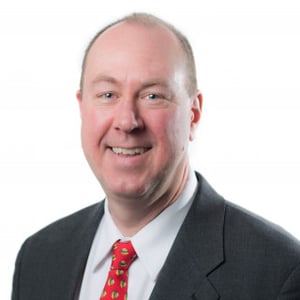
Professor, Department of Criminal Justice and Criminology & Co-Director, Center for Criminal Justice, Loyola University Chicago
David Olson is a Professor in the Criminal Justice and Criminology Department at Loyola University Chicago, where he is the Co-Director (with Don Stemen) of Loyola’s interdisciplinary Center for Criminal Justice Research. Previously Dr. Olson served as the Chair of the Department of Criminal Justice and Criminology, the Director of the Department’s Graduate Program, and as Director of Loyola’s interdisciplinary Forensic Science Program. Dr. Olson currently serves as the Chairperson for the advisory boards of the Illinois Department of Corrections and the Illinois Department of Juvenile Justice, and as a member of the Illinois Criminal Justice Information Authority’s Board through separate gubernatorial appointments. Dr. Olson also currently serves on the Illinois Supreme Court Commission on Pretrial Practices Implementation Task Force, the Illinois Department of Human Services’ Firearm Violence Research Group, and the Illinois Pretrial Practices Data Oversight Board.
For nearly 20 years, Dr. Olson worked at the Illinois Criminal Justice Information Authority, where he was the director of Illinois’ Statewide Drug and Violent Crime Control Strategy Impact Evaluation Program and was responsible for overseeing the evaluation and monitoring of federally funded drug control efforts in the State of Illinois. For six years, Dr. Olson served as a Special Assistant to the Cook County Sheriff through a cooperative agreement between Loyola and the Cook County Sheriff’s Office.
David has served as staff to the Illinois Governor’s Task Force on Crime and Corrections (1992-1993), the Illinois Legislative Committee on Juvenile Justice (1994-1996), the Illinois Truth-in-Sentencing Commission (1996-1998), the Illinois Governor’s Community Safety and Prisoner Re-Entry Management Workgroup/Commission (2004-2006), and the Illinois Capital Punishment Reform Study Committee (2007-2010). In 2015 Dr. Olson was appointed as a Commissioner to the Illinois Governor’s Commission on Criminal Justice and Sentencing Reform. Dr. Olson has worked with a variety of federal, state and local agencies to develop and evaluate programs and policies, particularly in the area of community and institutional corrections, during his 35 years in the field of criminal justice.
Dr. Olson has published more than 100 articles, research bulletins and research reports, and has made more than 100 presentations at professional conferences and training symposia. Some of David’s most recent research has been published in The Journal of Substance Abuse Treatment, the Journal of Crime and Justice, and by the Duke University School of Law’s Center for Firearms Law.
Dr. Olson received his B.S. in Criminal Justice from Loyola University Chicago, his M.A. in Criminal Justice from the University of Illinois at Chicago, and his Ph.D. in Political Science/Public Policy Analysis from the University of Illinois at Chicago, where he was the recipient of the Assistant United States Attorney General’s Graduate Research Fellowship. In 2015 Dr. Olson received the John Howard Association Outstanding Research Contributions Award, and in 2011 he received the Hans W. Mattick Award for outstanding accomplishments in the field of criminology and criminal justice research from the Illinois Academy of Criminology.
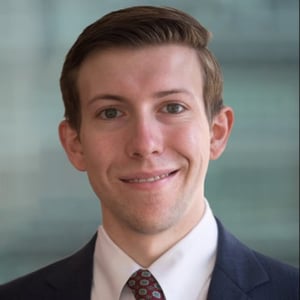
Policy Analyst, Cato Institute
Will Duffield is a policy analyst in the Cato Institute’s Center for Representative Government, where he studies speech and internet governance. His research focuses on the web of government regulation and private rules that govern Americans’ speech online.

Partner, BakerHostetler, Adjunct Fellow, The Manhattan Institute
Andrew Grossman leads BakerHostetler’s Appellate and Major Motion team. He has appeared before the U.S. Supreme Court, nearly all the federal courts of appeals, as well as some state appellate courts, litigating high-profile and complex commercial, administrative and constitutional issues.
Andrew works with practice groups across BakerHostetler to identify and tackle complex issues, advise on administrative law and strategy, tee up issues for appeal and tackle appeals. He has developed and implemented litigation and administrative strategies for clients in several fields and industries.
In addition to his practice, Andrew advises members of Congress on matters of constitutional and administrative law, having testified more than a dozen times before the House and Senate Judiciary Committees. He has been a frequent legal commentator on radio and television, having appeared on Fox News, CNN, MSNBC, CNBC, NPR and its affiliates, CBN and elsewhere. His legal commentary has also appeared in dozens of magazines and newspapers, including The Wall Street Journal, USA Today, The Washington Post, The Washington Times and many others.
Andrew is a Senior Legal Fellow at the Buckeye Institute, an Adjunct Fellow the Manhattan Institute and a member of the leadership of the Federalist Society. He previously served as an adjunct scholar at the Cato Institute’s Robert A. Levy Center for Constitutional Studies and a legal fellow at the Heritage Foundation’s Meese Center for Legal and Judicial Studies. He clerked for Judge Edith H. Jones on the U.S. Court of Appeals for the Fifth Circuit.
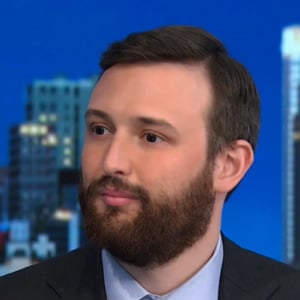
Senior Staff Attorney, Speech, Privacy & Technology Project, ACLU
Brian Hauss is a senior staff attorney with the ACLU’s Speech, Privacy & Technology Project, where he focuses on free expression issues. Since joining the ACLU in 2012, he has litigated cases defending the First Amendment rights of writers, journalists, media organizations, activists, advocacy groups, labor unions and private citizens. He has authored or co-authored numerous Supreme Court amicus curiae briefs on behalf of the ACLU and other groups. He also regularly discusses First Amendment issues in the media and at law schools throughout the country. Brian was a 2021-22 Wasserstein Public Interest Fellow at Harvard Law School. He is a graduate of Yale University and Harvard Law School and served as a law clerk to the Hon. Marsha S. Berzon of the U.S. Court of Appeals for the Ninth Circuit.

Independent Analyst, None
Allison Hayward most recently served as the Head of Case Selection at the Oversight Board. Previously, she was a Commissioner at the California Fair Political Practices Commission, a Board Member at the Office of Congressional Ethics, and an Assistant Professor of Law at George Mason University School of Law. She also previously worked as Chief of Staff and Counsel in the office of Federal Election Commission Commissioner Bradley A. Smith and practiced election law in California and in Washington DC.
In 1994-1995, Professor Hayward was a judicial clerk for the Honorable Danny J. Boggs, United States Court of Appeal for the Sixth Circuit.
She is a member of the State Bar of California and the District of Columbia Bar.

Partner, Schaerr | Jaffe LLP
Erik Jaffe has been involved in appeals on a broad range of legal issues, including First Amendment challenges to campaign finance reform, Commerce Clause challenges to Health Care Reform and other federal legislation, Equal Protection Clause challenges to affirmative action in education, First Amendment challenges to school vouchers, Fifth Amendment challenges to takings of property, Second Amendment challenges to restrictions on gun ownership, and a wide variety of cases involving patents, copyrights, ERISA, securities fraud, federal preemption, environmental regulation, and other state and federal constitutional and statutory matters. He has represented businesses and non-profit groups, Judges, Senators, former government officials, Nobel Prize winners, and a broad cross-section of private individuals. Mr. Jaffe has been involved in over 120 Supreme Court matters, including filing over 30 cert. petitions, representing half-a-dozen parties on the merits, and filing over 70 amicus briefs at both the cert. and merits stages.
A 1990 graduate of the Columbia University School of Law, Mr. Jaffe was a law clerk to Judge Douglas H. Ginsburg of the United States Court of Appeals for the District of Columbia Circuit from 1990 to 1991. Following that clerkship he spent five years in litigation practice with the Washington, D.C. law firm of Williams & Connolly. In the summer of 1996 he left Williams & Connolly to clerk for Supreme Court Justice Clarence Thomas. At the end of that clerkship he started his own practice, and he was a sole practitioner from 1997 to 2018. He joined the firm of Schaerr | Jaffe LLP in 2018.

Judge, United States Court of Appeals, District of Columbia Circuit
Judge Katsas was appointed to the D.C. Circuit in December 2017. He graduated from Princeton University and Harvard Law School, where he was an executive editor on the Harvard Law Review. Between 1989 and 1992, he served as a law clerk to Judge Edward Becker on the Third Circuit, to then-Judge Clarence Thomas on the D.C. Circuit, and to Justice Thomas on the Supreme Court. Between 1992 and 2001, he was an associate and then partner in the Washington office of Jones Day, where he specialized in appellate and complex civil litigation. Between 2001 and 2009, he served in many senior positions in the Department of Justice, including as Assistant Attorney General for the Civil Division and as Acting Associate Attorney General. In 2009, he returned to Jones Day. From January to December 2017, he served as Deputy Assistant to the President and Deputy Counsel to the President.
Before joining the bench, Judge Katsas argued more than 75 appeals, including three cases in the Supreme Court, 13 cases in the D.C. Circuit, and cases in every other federal court of appeals. By appointment of the Chief Justice, he served on the Advisory Committee on Appellate Rules from 2013 to 2017. In 2016, he was elected to membership in the American Academy of Appellate Lawyers.

Senior DIrector, Brennan Center for Justice
Lauren-Brooke Eisen is director of the Brennan Center’s Justice Program where she leads the organization’s work to end mass incarceration. Her team focuses on exposing the profound social and economic hardships that impact those who encounter the justice system while creating policies that ultimately shrink its size and scope.
Eisen has authored several nationally recognized reports and articles on how to reduce America’s reliance on incarceration. Her work has been featured in media outlets across the country, including the New York Times, USA Today, Time, U.S. News & World Report, the Daily News, and the Marshall Project and has appeared on MSNBC, CNN, CBS News, NBC News, Fox News, National Public Radio, as well as many other television and radio news programs.
Eisen is the author of Inside Private Prisons: An American Dilemma in the Age of Mass Incarceration (Columbia University Press, 2017) and a Pulitzer Center on Crisis Reporting journalism grantee. She co-chaired Manhattan DA-elect Alvin Bragg’s transition team to ensure they have the tools to enact innovative reforms in the criminal legal system and has served on the Advisory Council of the New York City Bar’s Task Force on Mass Incarceration and the transition committee for Brooklyn District Attorney Eric Gonzalez. In 2020, Eisen became a founding member of the Council on Criminal Justice, which works to advance understanding of the criminal justice policy choices facing the nation and build consensus for solutions that enhance safety and justice for all. Eisen taught an undergraduate seminar on mass incarceration at Yale University and served as an adjunct instructor at John Jay College of Criminal Justice.
Before joining the Brennan Center, Eisen was a senior program associate at the Vera Institute of Justice, where she worked on the sentencing and corrections team to implement policies in multiple states to improve public safety while reducing prison populations. She also previously served as an assistant district attorney in New York City, where she worked in the Appeals Bureau, the Criminal Court Bureau, and the Sex Crimes Special Victims Bureau. Before entering law school, Eisen worked as a beat reporter for a daily newspaper in Laredo, Texas, covering criminal justice and immigration. Eisen holds an AB from Princeton University and a JD from the Georgetown University Law Center.
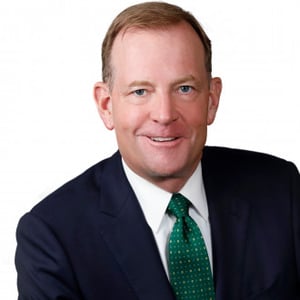
Partner, King & Spalding LLP
Former U.S. Attorney for the Eastern District of California, a 34-county district with an area that stretches from the Oregon border to Bakersfield, Greg Scott is an experienced trial lawyer who represents major companies facing government investigations and litigation, with a focus in the healthcare, retail, and construction industries. He has extensive knowledge on matters involving consumer protection, construction disputes, the Foreign Corrupt Practices Act (FCPA) and the False Claims Act (FCA).
Greg represents corporations under investigation by state district attorneys concerning potential violations of consumer protection laws, as well as corporations operating senior assisted livingfacilities under investigation by the state attorney general regarding potential violations of elder abuse laws. In addition, he represents construction companies under investigation by state district attorneys when employees are involved in serious accidents at worksites.
A retired Lieutenant Colonel after serving more than 20 years in the California Army National Guard & United States Army Reserve, Greg went on to become a deputy district attorney in Contra Costa County and twice-elected District Attorney of Shasta County. He also served as an Adjunct Professor of National Security Law at the University of the Pacific, McGeorge School of Law following his first term as U.S. Attorney for the E.D. of California. Between his two terms as U.S. Attorney for the E.D. of California, Greg was the vice chair of the white-collar defense and corporate investigations practice at an AmLaw 50 firm.

Senior Legal Fellow and Manager, National Security Law Program, The Heritage Foundation
Charles “Cully” Stimson is a widely recognized expert in national security, homeland security, crime control, drug policy and immigration. A senior legal fellow at The Heritage Foundation since 2007, Stimson became Manager of the National Security Law Program in Heritage’s Institute for Constitutional Government in April 2013 after serving as Heritage’s chief of staff for a year.
Stimson writes and lectures on policy issues such as the law of armed conflict, terrorist detainee policy and interrogations, the Geneva Conventions, military commissions, the Patriot Act and FISA, criminal law and the death penalty, immigration and the war on drugs. As chief of staff to then-Heritage President Edwin J. Feulner, he was a key adviser on public policy matters as well as manager of Feulner’s office staff and Heritage’s day-to-day operations.
Stimson’s many research papers, op-eds and articles include special reports such as “Adult Time for Adult Crime,” a comprehensive study on the constitutionality of life sentences for teen-age murderers, and Sexual Assault in the Military: Understanding the Problem and How to Fix It, a ground-breaking paper detailing the inner workings of the military justice system compared to its civilian counterpart. His work on criminal and immigration law has been cited in briefs before the U.S. Supreme Court.
He testifies before the U.S. Senate and House on national security issues, and recently testified before the Senate Armed Services Committee on the Law of Armed Conflict, Law of War, and the 2001 Authorization for Use of Military Force.
Before joining the think tank in 2007, Stimson served as Deputy Assistant Secretary of Defense for Detainee Affairs. He advised then-Secretaries of Defense Donald Rumsfeld and Robert Gates and coordinated the Pentagon’s global detention policy and operations, including at Guantanamo Bay and in Iraq and Afghanistan. He was chairman of detainee-related panels such as the Defense Senior Leadership Oversight Committee, and the Special Detainee Follow Up Group. He represented the United States before the U.N. in Geneva, Switzerland in May 2006 where he led the DOD delegation in defense of the United States’ Second Period Report on the Convention Against Torture.
An accomplished trial lawyer, Stimson worked as a prosecutor at the local, state and federal levels, where he concentrated on violent crimes such as homicide, sexual assault and domestic violence. A third generation naval officer, Cully also served as a military prosecutor, defense counsel, and recently served as Deputy Chief Judge of the Navy-Marine Corps Trial Judiciary. He continues to serve, with the rank of Captain, as the Commanding Officer of the Preliminary Hearing Unit.
Stimson’s thousands of media interviews and appearances include Fox News Channel, MSNBC, CNN, BBC, NPR and C-SPAN. He has been quoted by most major newspapers, including The Washington Post, Wall Street Journal, New York Times, Los Angeles Times, and London Times.
A businessman and educator by training, Stimson is Vice Chairman of his family’s commercial real estate company in Seattle. Before 9/11, he was a Vice President at a New York-based global financial services and insurance brokerage firm where ran the private equity mergers and acquisitions D.C. operation.
Stimson holds a law degree from the George Mason University School of Law, where he later taught as an Adjunct Professor of Law. He is a graduate of Kenyon College, where he was Captain of the men’s varsity soccer team and an All-Conference player. He also studied at Harvard and Exeter universities. An avid soccer player and triathlete, he serves as Chairman of the Board of the United States Soccer Foundation, the charitable giving arm of U.S. Soccer.

Supreme Court Preview: What Is in Store for October Term 2026?
Erin E. Murphy, Amanda Shanor, Brett J. Talley, Eric Wessan, Adam White
Registration is now closed No registration is needed to view the live stream, which will be...
Beyond Bruen: Exploring the Supreme Court's Second Amendment Jurisprudence Past, Present and Future
Haley N. Proctor, Amy E. Swearer, Michael Williams
The Supreme Court's Second Amendment jurisprudence continues to evolve. This past Term, the Court issued...
Courthouse Steps Oral Argument: United States v. Hemani
F. Lee Francis, Marc Levin, John Ohlendorf
On March 2, 2026, the Supreme Court will hear oral argument in United States v. Hemani....
Understanding Jussie Smollett’s Appellate Win
GianCarlo Canaparo
Late last year, the Supreme Court of Illinois overturned former actor Jussie Smollett’s hate-crime hoax...
Open Minds: Prof. Randy Barnett & Prof. Joshua Kleinfeld Part III
Joshua Kleinfeld, Randy E. Barnett
In Part Three of Open Minds with Prof. Randy Barnett and Prof. Joshua Kleinfeld, Prof....
Open Minds: Prof. Randy Barnett & Prof. Joshua Kleinfeld Part II
Randy E. Barnett, Joshua Kleinfeld
In Part Two of Open Minds with Prof. Randy Barnett and Prof. Joshua Kleinfeld, Prof....
Criminal Law & Procedure: Evaluating the Progressive Prosecutor Experiment
John Creuzot, Carissa Byrne Hessick, Kevin C. Newsom, Zack Smith, Ray Tierney
It has been almost ten years since the advent of the ‘progressive prosecutor,’ local elected...
Bail Reform: Illinois’ Experience After 9 months
Robert Berlin, Eugene Doherty, Marc Levin, David Olson
Balancing safety and justice is especially challenging in the pretrial context where difficult decisions must...
Censorship by Proxy?
Will Duffield, Andrew Grossman, Brian Hauss, Allison R. Hayward, Erik S. Jaffe, Gregory G. Katsas
The First Amendment forbids public officials from censoring disfavored speech and speakers. But what happens...
Panel 3: Progressive Prosecutors: Decarceration, “Harm of Policing” and Bail Reform
Lauren-Brooke Eisen, McGregor W. Scott, Charles "Cully" Stimson
George Soros has contended that “there is no connection between the election of reform-minded prosecutors...