
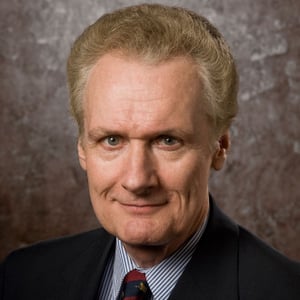
Vice President for Legal Affairs, Cato Institute
Roger Pilon is the Cato’s Institute’s vice president for legal affairs, the founding director of Cato’s Robert A. Levy Center for Constitutional Studies, the inaugural holder of Cato’s B. Kenneth Simon Chair in Constitutional Studies, and the founding publisher of the Cato Supreme Court Review.
Prior to joining Cato, Pilon held five senior posts in the Reagan administration, including at State and Justice, and was a national fellow at Stanford’s Hoover Institution. In 1989 the Bicentennial Commission presented him with its Benjamin Franklin Award for excellence in writing on the U.S. Constitution. In 2001 Columbia University’s School of General Studies awarded him its Alumni Medal of Distinction. Pilon lectures and debates at universities and law schools across the country and testifies often before Congress.
His writing has appeared in the Wall Street Journal, the Washington Post, the New York Times, the Los Angeles Times, Legal Times, National Law Journal, Harvard Journal of Law and Public Policy, Stanford Law and Policy Review, and elsewhere. He has appeared on ABC’s Nightline, CBS’s 60 Minutes II, Fox News Channel, NPR, CNN, MSNBC, CNBC, C-SPAN, and other media.
Pilon holds a BA from Columbia University, an MA and a PhD from the University of Chicago, and a JD from the George Washington University School of Law.
Milton R. Underwood Professor of Law Emeritus and Professor of History Emeritus, Vanderbilt University
James Ely is a renowned legal historian and property rights expert whose career accomplishments were recognized with both the Brigham-Kanner Property Rights Prize and the Owner's Counsel of American Crystal Eagle Award in 2006. He is the author of several books that have received widespread critical acclaim from legal scholars and historians, including The Guardian of Every Other Right: A Constitutional History of Property Rights, The Fuller Court: Justices, Rulings and Legacy in which he examines the work of the Supreme Court between 1888 and 1910, Railroads and American Law in which he systematically explores the way that the rise of the railroad shaped American legal culture, and The Contract Clause: A Constitutional History. He also is the author of numerous articles dealing with the rights of property owners. He served as an editor of both the Oxford Companion to the Supreme Court, and the second edition of the Oxford Guide to Supreme Court Decisions. Professor Ely received the Tennessee History Book Award in 2002 for A History of the Tennessee Supreme Court. Between 1987 and 1999, he served as an associate editor of the American Journal of Legal History. Since Professor Ely joined Vanderbilt faculty in 1972, he has been frequently recognized by students as one of the law school's outstanding teachers.
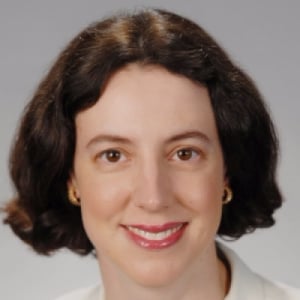
Donald Phillip Rothschild Research Professor, George Washington University Law School
Renée Lettow Lerner is Donald Phillip Rothschild Research Professor of Law at George Washington University Law School.
Professor Lerner works in the fields of U.S. and English legal history, civil and criminal procedure, and comparative law. She advises judges, lawyers, and government officials from the United States and countries in Europe, Latin America, and Asia about the differences between adversarial and nonadversarial legal systems.
She writes extensively about the history of American juries. Her work includes not only scholarly articles, but also online publications intended for a broader audience of legal professionals and the public. In many different settings, she has debated the role of juries with other academics and with lawyers. She has a book forthcoming with Oxford University Press in the Very Short Introduction Series entitled “The Jury.” She is also working on a book about the American civil jury, from the colonial period to the present.
She is the author, with John Langbein and Bruce Smith, of the book History of the Common Law: The Development of Anglo-American Legal Institutions (2009).
Her recent writings include a book review of Amalia D. Kessler’s Inventing American Exceptionalism: The Origins of American Adversarial Legal Culture, 1800-1877, 67 J. Legal Ed. 888 (2018); “How the Creation of Appellate Courts in England and the United States Limited Judicial Comment on Evidence to the Jury,” 40 Journal of the Legal Profession 215 (2016); “The Troublesome Inheritance of Americans in Magna Carta and Trial by Jury,” in Magna Carta and its Modern Legacy 77-98 (Robert Hazell and James Melton eds., Cambridge University Press 2015); and “The Failure of Originalism in Preserving Constitutional Rights to Civil Jury Trial,” 22 William & Mary Bill of Rights Journal 811 (2014).
Professor Lerner received an A.B. summa cum laude in history from Princeton University. She was a Rhodes Scholar at Oxford University, where she studied English legal history. At Yale Law School, she was Articles Editor of the Yale Law Journal. She served as a law clerk to Justice Anthony M. Kennedy of the U.S. Supreme Court and to Judge Stephen F. Williams of the U.S. Court of Appeals for the District of Columbia Circuit. From 2003 to 2005, she served as Deputy Assistant Attorney General in the Office of Legal Counsel at the U.S. Department of Justice.
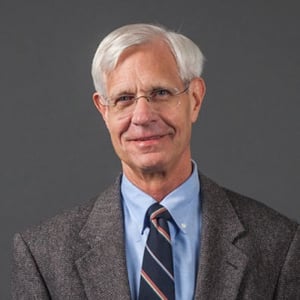
Distinguished University Professor, Antonin Scalia Law School, George Mason University
University Professor Nelson Lund is the author of Rousseau’s Rejuvenation of Political Philosophy: A New Introduction. He has also written widely in the field of constitutional law, including articles on constitutional interpretation, federalism, separation of powers, the Second Amendment, the Commerce Clause, the Speech or Debate Clause, the Equal Protection Clause, and the Uniformity Clause. In addition, he has published articles in the fields of employment discrimination and civil rights, the legal regulation of medical ethics, and the application of economic analysis to legal institutions and legal ethics.
Professor Lund graduated from St. John's College in Annapolis, Maryland, after which he received an MA in philosophy from the Catholic University of America and a PhD in political science from Harvard University. He left the faculty of the University of Chicago to attend its law school, where he served as executive editor of the University of Chicago Law Review and chapter chairman of the Federalist Society for Law and Public Policy Studies. After law school, he held positions at the United States Department of Justice in the Office of the Solicitor General and the Office of Legal Counsel. He also served as a law clerk to the Honorable Patrick E. Higginbotham of the United States Court of Appeals for the Fifth Circuit and to the Honorable Sandra Day O'Connor of the United States Supreme Court. Following his clerkship with Justice O'Connor, Professor Lund served in the White House as associate counsel to the president from 1989 to 1992.
Since joining the faculty at George Mason University's Antonin Scalia Law School, Professor Lund has taught Constitutional Law, Legislation, Federal Election Law, Employment Discrimination, State and Local Government, and seminars on the Second Amendment and on a variety of topics in Jurisprudence.
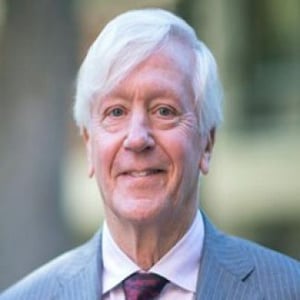
David and Mary Harrison Distinguished Professor of Law, University of Virginia School of Law
G. Edward White joined the Virginia law faculty in 1972 after a clerkship with Chief Justice Earl Warren of the Supreme Court of the United States and a year as visiting scholar at the American Bar Foundation. He was appointed John B. Minor Professor of Law and History in 1987, and held that chair until 2003, when he became David and Mary Harrison Distinguished Professor of Law. In 1992, he was appointed to a University Professorship, which he held until 2003. From 1990 until 1992 and from 2001-03, he was the Sullivan & Cromwell Research Professor; from 1994-97 the E. James Kelly Research Professor; and from 1999-2001 the Class of 1963 Research Professor. He has held visiting appointments at New York Law School, William & Mary School of Law, Brooklyn Law School, Arizona College of Law, the London School of Economics and Political Science, and Harvard Law School. He has been a Guggenheim Fellow, and twice a senior fellow of the National Endowment for the Humanities. He is a fellow of the American Academy of Arts & Sciences, a fellow of the Society of American Historians, and a member of the American Law Institute.He received the Roger and Madeleine Traynor Faculty Achievement Award in 2008.
White's 14 published books have won numerous honors and awards. These include final listing for the Pulitzer Prize in history, the Silver Gavel Award from the American Bar Association, the James Willard Hurst Prize from the Law & Society Association, the Littleton-Griswold Prize from the American Historical Association, the Scribes Award and the Association of American Law Schools' Triennial Coif Award. White's books have garnered 15 such honors and awards since 1976.
White was editor of the Studies in Legal History series for the North Carolina Press from 1980-85, and advisor on law manuscripts for Oxford University Press from 1986-96. He was on the editorial board of the Virginia Quarterly Review from 1980-2002. He has served on the Commission for Undergraduate Education in Law and the Humanities, and has taught summer humanities seminars for lawyers and judges under the auspices of the National Endowment for the Humanities.
White has delivered several endowed lectures, including the inaugural John Marshall Lecture, sponsored by the Boston Bar Association; the inaugural Jerome Hall Lecture at Hastings College of Law; the Swinford Lecture, sponsored by the University of Kentucky School of Law and the Kentucky Bar Association; the Keck Lecture at Amherst College, the Rosenthal Lectures at Northwestern University School of Law; the Neesima Lectures at Doshisha University, Japan; the Fulton Lecture at the University of Chicago School of Law and the Knowlton Distinguished Lecture at the University of South Carolina School of Law. His most recent lecture was the 2010 Hendricks Law and History Lecture at Washington & Lee Law School.
White's 1996 book, Creating the National Pastime: Baseball Transforms Itself, 1903-1953, reflects his life-long participation and interest in athletics. He lettered in four sports in college, formerly coached the Charlottesville High School girls soccer team, and has won a number of state- and citywide tournaments in doubles squash.
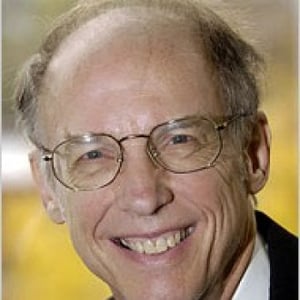
United States Court of Appeals, Fourth Circuit
James Harvie Wilkinson III is an Article III federal judge on the United States Court of Appeals for the Fourth Circuit. He joined the Court in 1984 after being nominated by President Ronald Reagan.
Born in New York City, New York, Wilkinson graduated from Yale University with his Bachelor's degree in 1967. Wilkinson served in the United States Army from 1968 to 1969 and received his Juris Doctor degree from the University of Virginia School of Law in 1972.
On the recommendation of Virginia U.S. Senator John Warner, Wilkinson was nominated to the United States Court of Appeals for the Fourth Circuit by President Ronald Reagan on January 30, 1984 to a seat vacated by John Butzner, Jr.,. Wilkinson was confirmed by the Senate on August 9, 1984 on a Senate vote and received commission on August 13, 1984. Wilkinson served as the Chief Judge of the Court from 1996 to 2003.

Patrick Hotung Professor of Constitutional Law, Georgetown University Law Center; Faculty Director, Georgetown Center for the Constitution
Randy E. Barnett is the Patrick Hotung Professor of Constitutional Law at the Georgetown University Law Center and is the Faculty Director of the Georgetown Center for the Constitution. After graduating from Northwestern University and Harvard Law School, he tried many felony cases as a prosecutor in the Cook County States’ Attorney’s Office in Chicago. A recipient of a Guggenheim Fellowship in Constitutional Studies and the Bradley Prize, Professor Barnett has been a visiting professor at Penn, Northwestern and Harvard Law School.
Professor Barnett’s publications includes thirteen books, more than one hundred articles and reviews, as well as numerous op-eds. His most recent book is Felony Review: Tales of True Crime and Corruption in Chicago (2026). His other books on the Constitution include: A Life for Liberty: The Making of an American Originalist (2024); The Original Meaning of the Fourteenth Amendment: Its Letter and Spirit (2021) (with Evan Bernick); An Introduction to Constitutional Law: 100 Supreme Court Cases Everyone Should Know (2019) (with Josh Blackman); Restoring the Lost Constitution: The Presumption of Liberty (2nd ed. 2013); Our Republican Constitution: Securing the Liberty and Sovereignty of We the People (2016); and Constitutional Law: Cases in Context (5th ed. forthcoming 2027) (with Josh Blackman). His books on contracts are The Oxford Introductions to U.S. Law: Contracts (2010) and Contracts: Cases and Doctrine (7th ed. 2021) (with Nate Oman). And he is the author of The Structure of Liberty: Justice and the Rule of Law (2nd ed. 2014).
In 2004, he argued the medical marijuana case of Gonzalez v. Raich before the U.S. Supreme Court. In 2012, he was one of the lawyers representing the National Federation of Independent Business in its constitutional challenge to the Affordable Care Act in NFIB v. Sebelius. He’s appeared in numerous documentaries and portrayed a prosecutor in the 2010 science-fiction feature film, InAlienable: The Movie. On X he is @RandyEBarnett
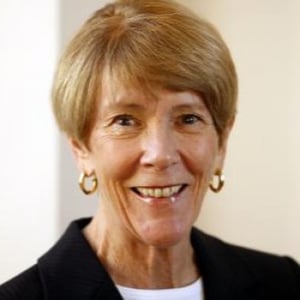
David and Mary Harrison Distinguished Professor of Law Emeritus, University of Virginia School of Law
Lillian BeVier taught constitutional law (with special emphasis on First Amendment issues), intellectual property (trademark, copyright), real property and torts from 1973-2010 at the Law School, and now teaches a January Term course on judicial philosophy.
At Stanford Law School, BeVier was revising editor for the Stanford Law Review and a member of the Order of the Coif. Before coming to Virginia, she was associate professor of law at the University of Santa Clara Law School; practiced law with Spaeth Blase Valentine & Klein in Palo Alto, Calif.; served as research associate to Professor William F. Baxter at Stanford University Law School, working on the FAA-ABA study of the legal aspects of airport noise and the sonic boom; and was assistant to the general secretary and assistant staff legal counsel for Stanford University.
BeVier received the University of Virginia Alumni Association Distinguished Professor Award in 2006. The Raven Society elected her to membership in 1993 and honored her with the faculty award in 2010. She delivered the Henry Miller Memorial Lecture at Georgia State Law School in 2005, the Coen Memorial Lecture at the University of Colorado Law School in 2000, and the David C. Baum Lecture on Civil Rights and Civil Liberties at the University of Illinois Law School in 1996. In 1999, at the invitation of the Supreme Court Historical Society, she spoke to the Society on Free Expression in the Warren and Burger Courts. Suffolk University awarded her an honorary S.J.D. degree in 1998. In the fall of 2003, she was a visiting scholar at the National Constitution Center in Philadelphia.
Having been nominated by President Bush and confirmed by the Senate in 2003, she served as vice-chair of the Board of Directors of the Legal Services Corporation until 2009. She serves on the national Board of Visitors of the Federalist Society. Within the Charlottesville community, BeVier has served as chair of the Board of Trustees of St. Anne’s-Belfield School and of the Martha Jefferson Hospital. She is currently chair of the board of the Martha Jefferson Health Services Corporation and of Piedmont CASA (Court-Appointed Special Advocates).
Judge, United States Court of Appeals, Second Circuit
Judge Livingston was appointed United States Circuit Judge for the Second Circuit on May 17, 2007 and entered on duty June 1, 2007. Prior to her appointment she was the Paul J. Kellner Professor of Law at Columbia Law School, where she also served as Vice Dean from 2005 to 2006. Judge Livingston joined the Columbia faculty in 1994. She continues to serve as a member of that faculty as the Paul J. Kellner Professor.
Judge Livingston received her B.A., magna cum laude, in 1980 from Princeton University, where she was elected to Phi Beta Kappa. She received her J.D., magna cum laude, in 1984 from Harvard Law School, where she was an editor on the Harvard Law Review. Following law school, she served as a law clerk to Judge J. Edward Lumbard of the United States Court of Appeals for the Second Circuit.
Judge Livingston was an Assistant United States Attorney in the Southern District of New York from 1986 to 1991 and she served as a Deputy Chief of Appeals in the Criminal Division from 1990 to 1991. She was an associate with the New York law firm of Paul, Weiss, Rifkind, Wharton & Garrison from 1985 to 1986 and again from 1991 to 1992, when she elected to pursue an academic career. Judge Livingston was a member of the University of Michigan's Law School faculty from 1992 until 1994.
Judge Livingston is a co-author of the casebook, Comprehensive Criminal Procedure, and has published numerous academic articles on legal topics. She has taught courses in evidence, criminal law and procedure, and national security and terrorism. From 1994 to 2003, Judge Livingston was a Commissioner on New York City's Civilian Complaint Review Board.
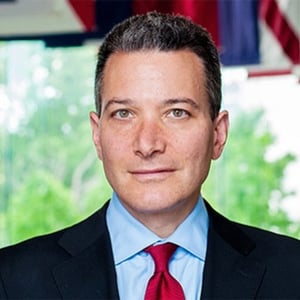
Senior Fellow, FIRE and CEO Emeritus, National Constitution Center
Jeffrey Rosen is a senior FIRE fellow as well as the host of “The Blessings of Liberty” podcast, presented by FIRE. He is also the CEO emeritus of the National Constitution Center, a professor of law at the George Washington University Law School, and a contributing editor of The Atlantic. He was previously the legal affairs editor of The New Republic and a staff writer for The New Yorker.
Rosen is the author of the New York Times bestsellers The Pursuit of Happiness and Conversations with RBG. His new book is The Pursuit of Liberty: How Hamilton vs. Jefferson Ignited the Lasting Battle Over Power in America.
Rosen is a graduate of Harvard College; Oxford University, where he was a Marshall Scholar; and Yale Law School. He is an elected member of the American Philosophical Society and the American Law Institute. In 2024, the French government recognized him as a Chevalier in the Ordre des Arts et des Lettres.
Daniel Morton-Bentley is a member of the Massachusetts bar and an LL.M student at Suffolk University Law School. He graduated cum laude from Roger Williams University School of Law in Bristol, Rhode Island.
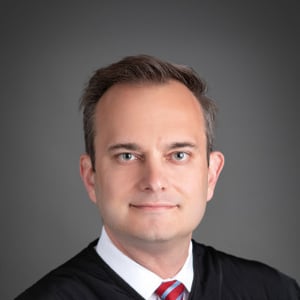
United States Magistrate Judge, Eastern District of North Carolina
Robert T. Numbers, II serves as a United States Magistrate Judge in the United States District Court for the Eastern District of North Carolina.
Judge Numbers received degrees in Political Science and Economics, with honors, from Wake Forest University. After completing his undergraduate work, Judge Numbers obtained his law degree from the University of Notre Dame where he served on the Notre Dame Law Review.
Upon his graduation from law school, Judge Numbers joined the Winston-Salem office of a large, regional law firm. From 2005 until 2010, Judge Numbers’ practice focused on civil rights claims against local municipalities and government contractors. In 2010, Judge Numbers joined the firm’s Raleigh office and concentrated his practice on complex business litigation in state and federal courts.
Milton R. Underwood Professor of Law Emeritus and Professor of History Emeritus, Vanderbilt University
James Ely is a renowned legal historian and property rights expert whose career accomplishments were recognized with both the Brigham-Kanner Property Rights Prize and the Owner's Counsel of American Crystal Eagle Award in 2006. He is the author of several books that have received widespread critical acclaim from legal scholars and historians, including The Guardian of Every Other Right: A Constitutional History of Property Rights, The Fuller Court: Justices, Rulings and Legacy in which he examines the work of the Supreme Court between 1888 and 1910, Railroads and American Law in which he systematically explores the way that the rise of the railroad shaped American legal culture, and The Contract Clause: A Constitutional History. He also is the author of numerous articles dealing with the rights of property owners. He served as an editor of both the Oxford Companion to the Supreme Court, and the second edition of the Oxford Guide to Supreme Court Decisions. Professor Ely received the Tennessee History Book Award in 2002 for A History of the Tennessee Supreme Court. Between 1987 and 1999, he served as an associate editor of the American Journal of Legal History. Since Professor Ely joined Vanderbilt faculty in 1972, he has been frequently recognized by students as one of the law school's outstanding teachers.
Donald Phillip Rothschild Research Professor, George Washington University Law School
Renée Lettow Lerner is Donald Phillip Rothschild Research Professor of Law at George Washington University Law School.
Professor Lerner works in the fields of U.S. and English legal history, civil and criminal procedure, and comparative law. She advises judges, lawyers, and government officials from the United States and countries in Europe, Latin America, and Asia about the differences between adversarial and nonadversarial legal systems.
She writes extensively about the history of American juries. Her work includes not only scholarly articles, but also online publications intended for a broader audience of legal professionals and the public. In many different settings, she has debated the role of juries with other academics and with lawyers. She has a book forthcoming with Oxford University Press in the Very Short Introduction Series entitled “The Jury.” She is also working on a book about the American civil jury, from the colonial period to the present.
She is the author, with John Langbein and Bruce Smith, of the book History of the Common Law: The Development of Anglo-American Legal Institutions (2009).
Her recent writings include a book review of Amalia D. Kessler’s Inventing American Exceptionalism: The Origins of American Adversarial Legal Culture, 1800-1877, 67 J. Legal Ed. 888 (2018); “How the Creation of Appellate Courts in England and the United States Limited Judicial Comment on Evidence to the Jury,” 40 Journal of the Legal Profession 215 (2016); “The Troublesome Inheritance of Americans in Magna Carta and Trial by Jury,” in Magna Carta and its Modern Legacy 77-98 (Robert Hazell and James Melton eds., Cambridge University Press 2015); and “The Failure of Originalism in Preserving Constitutional Rights to Civil Jury Trial,” 22 William & Mary Bill of Rights Journal 811 (2014).
Professor Lerner received an A.B. summa cum laude in history from Princeton University. She was a Rhodes Scholar at Oxford University, where she studied English legal history. At Yale Law School, she was Articles Editor of the Yale Law Journal. She served as a law clerk to Justice Anthony M. Kennedy of the U.S. Supreme Court and to Judge Stephen F. Williams of the U.S. Court of Appeals for the District of Columbia Circuit. From 2003 to 2005, she served as Deputy Assistant Attorney General in the Office of Legal Counsel at the U.S. Department of Justice.
Distinguished University Professor, Antonin Scalia Law School, George Mason University
University Professor Nelson Lund is the author of Rousseau’s Rejuvenation of Political Philosophy: A New Introduction. He has also written widely in the field of constitutional law, including articles on constitutional interpretation, federalism, separation of powers, the Second Amendment, the Commerce Clause, the Speech or Debate Clause, the Equal Protection Clause, and the Uniformity Clause. In addition, he has published articles in the fields of employment discrimination and civil rights, the legal regulation of medical ethics, and the application of economic analysis to legal institutions and legal ethics.
Professor Lund graduated from St. John's College in Annapolis, Maryland, after which he received an MA in philosophy from the Catholic University of America and a PhD in political science from Harvard University. He left the faculty of the University of Chicago to attend its law school, where he served as executive editor of the University of Chicago Law Review and chapter chairman of the Federalist Society for Law and Public Policy Studies. After law school, he held positions at the United States Department of Justice in the Office of the Solicitor General and the Office of Legal Counsel. He also served as a law clerk to the Honorable Patrick E. Higginbotham of the United States Court of Appeals for the Fifth Circuit and to the Honorable Sandra Day O'Connor of the United States Supreme Court. Following his clerkship with Justice O'Connor, Professor Lund served in the White House as associate counsel to the president from 1989 to 1992.
Since joining the faculty at George Mason University's Antonin Scalia Law School, Professor Lund has taught Constitutional Law, Legislation, Federal Election Law, Employment Discrimination, State and Local Government, and seminars on the Second Amendment and on a variety of topics in Jurisprudence.
David and Mary Harrison Distinguished Professor of Law, University of Virginia School of Law
G. Edward White joined the Virginia law faculty in 1972 after a clerkship with Chief Justice Earl Warren of the Supreme Court of the United States and a year as visiting scholar at the American Bar Foundation. He was appointed John B. Minor Professor of Law and History in 1987, and held that chair until 2003, when he became David and Mary Harrison Distinguished Professor of Law. In 1992, he was appointed to a University Professorship, which he held until 2003. From 1990 until 1992 and from 2001-03, he was the Sullivan & Cromwell Research Professor; from 1994-97 the E. James Kelly Research Professor; and from 1999-2001 the Class of 1963 Research Professor. He has held visiting appointments at New York Law School, William & Mary School of Law, Brooklyn Law School, Arizona College of Law, the London School of Economics and Political Science, and Harvard Law School. He has been a Guggenheim Fellow, and twice a senior fellow of the National Endowment for the Humanities. He is a fellow of the American Academy of Arts & Sciences, a fellow of the Society of American Historians, and a member of the American Law Institute.He received the Roger and Madeleine Traynor Faculty Achievement Award in 2008.
White's 14 published books have won numerous honors and awards. These include final listing for the Pulitzer Prize in history, the Silver Gavel Award from the American Bar Association, the James Willard Hurst Prize from the Law & Society Association, the Littleton-Griswold Prize from the American Historical Association, the Scribes Award and the Association of American Law Schools' Triennial Coif Award. White's books have garnered 15 such honors and awards since 1976.
White was editor of the Studies in Legal History series for the North Carolina Press from 1980-85, and advisor on law manuscripts for Oxford University Press from 1986-96. He was on the editorial board of the Virginia Quarterly Review from 1980-2002. He has served on the Commission for Undergraduate Education in Law and the Humanities, and has taught summer humanities seminars for lawyers and judges under the auspices of the National Endowment for the Humanities.
White has delivered several endowed lectures, including the inaugural John Marshall Lecture, sponsored by the Boston Bar Association; the inaugural Jerome Hall Lecture at Hastings College of Law; the Swinford Lecture, sponsored by the University of Kentucky School of Law and the Kentucky Bar Association; the Keck Lecture at Amherst College, the Rosenthal Lectures at Northwestern University School of Law; the Neesima Lectures at Doshisha University, Japan; the Fulton Lecture at the University of Chicago School of Law and the Knowlton Distinguished Lecture at the University of South Carolina School of Law. His most recent lecture was the 2010 Hendricks Law and History Lecture at Washington & Lee Law School.
White's 1996 book, Creating the National Pastime: Baseball Transforms Itself, 1903-1953, reflects his life-long participation and interest in athletics. He lettered in four sports in college, formerly coached the Charlottesville High School girls soccer team, and has won a number of state- and citywide tournaments in doubles squash.
United States Court of Appeals, Fourth Circuit
James Harvie Wilkinson III is an Article III federal judge on the United States Court of Appeals for the Fourth Circuit. He joined the Court in 1984 after being nominated by President Ronald Reagan.
Born in New York City, New York, Wilkinson graduated from Yale University with his Bachelor's degree in 1967. Wilkinson served in the United States Army from 1968 to 1969 and received his Juris Doctor degree from the University of Virginia School of Law in 1972.
On the recommendation of Virginia U.S. Senator John Warner, Wilkinson was nominated to the United States Court of Appeals for the Fourth Circuit by President Ronald Reagan on January 30, 1984 to a seat vacated by John Butzner, Jr.,. Wilkinson was confirmed by the Senate on August 9, 1984 on a Senate vote and received commission on August 13, 1984. Wilkinson served as the Chief Judge of the Court from 1996 to 2003.
Milton R. Underwood Professor of Law Emeritus and Professor of History Emeritus, Vanderbilt University
James Ely is a renowned legal historian and property rights expert whose career accomplishments were recognized with both the Brigham-Kanner Property Rights Prize and the Owner's Counsel of American Crystal Eagle Award in 2006. He is the author of several books that have received widespread critical acclaim from legal scholars and historians, including The Guardian of Every Other Right: A Constitutional History of Property Rights, The Fuller Court: Justices, Rulings and Legacy in which he examines the work of the Supreme Court between 1888 and 1910, Railroads and American Law in which he systematically explores the way that the rise of the railroad shaped American legal culture, and The Contract Clause: A Constitutional History. He also is the author of numerous articles dealing with the rights of property owners. He served as an editor of both the Oxford Companion to the Supreme Court, and the second edition of the Oxford Guide to Supreme Court Decisions. Professor Ely received the Tennessee History Book Award in 2002 for A History of the Tennessee Supreme Court. Between 1987 and 1999, he served as an associate editor of the American Journal of Legal History. Since Professor Ely joined Vanderbilt faculty in 1972, he has been frequently recognized by students as one of the law school's outstanding teachers.
Donald Phillip Rothschild Research Professor, George Washington University Law School
Renée Lettow Lerner is Donald Phillip Rothschild Research Professor of Law at George Washington University Law School.
Professor Lerner works in the fields of U.S. and English legal history, civil and criminal procedure, and comparative law. She advises judges, lawyers, and government officials from the United States and countries in Europe, Latin America, and Asia about the differences between adversarial and nonadversarial legal systems.
She writes extensively about the history of American juries. Her work includes not only scholarly articles, but also online publications intended for a broader audience of legal professionals and the public. In many different settings, she has debated the role of juries with other academics and with lawyers. She has a book forthcoming with Oxford University Press in the Very Short Introduction Series entitled “The Jury.” She is also working on a book about the American civil jury, from the colonial period to the present.
She is the author, with John Langbein and Bruce Smith, of the book History of the Common Law: The Development of Anglo-American Legal Institutions (2009).
Her recent writings include a book review of Amalia D. Kessler’s Inventing American Exceptionalism: The Origins of American Adversarial Legal Culture, 1800-1877, 67 J. Legal Ed. 888 (2018); “How the Creation of Appellate Courts in England and the United States Limited Judicial Comment on Evidence to the Jury,” 40 Journal of the Legal Profession 215 (2016); “The Troublesome Inheritance of Americans in Magna Carta and Trial by Jury,” in Magna Carta and its Modern Legacy 77-98 (Robert Hazell and James Melton eds., Cambridge University Press 2015); and “The Failure of Originalism in Preserving Constitutional Rights to Civil Jury Trial,” 22 William & Mary Bill of Rights Journal 811 (2014).
Professor Lerner received an A.B. summa cum laude in history from Princeton University. She was a Rhodes Scholar at Oxford University, where she studied English legal history. At Yale Law School, she was Articles Editor of the Yale Law Journal. She served as a law clerk to Justice Anthony M. Kennedy of the U.S. Supreme Court and to Judge Stephen F. Williams of the U.S. Court of Appeals for the District of Columbia Circuit. From 2003 to 2005, she served as Deputy Assistant Attorney General in the Office of Legal Counsel at the U.S. Department of Justice.
Distinguished University Professor, Antonin Scalia Law School, George Mason University
University Professor Nelson Lund is the author of Rousseau’s Rejuvenation of Political Philosophy: A New Introduction. He has also written widely in the field of constitutional law, including articles on constitutional interpretation, federalism, separation of powers, the Second Amendment, the Commerce Clause, the Speech or Debate Clause, the Equal Protection Clause, and the Uniformity Clause. In addition, he has published articles in the fields of employment discrimination and civil rights, the legal regulation of medical ethics, and the application of economic analysis to legal institutions and legal ethics.
Professor Lund graduated from St. John's College in Annapolis, Maryland, after which he received an MA in philosophy from the Catholic University of America and a PhD in political science from Harvard University. He left the faculty of the University of Chicago to attend its law school, where he served as executive editor of the University of Chicago Law Review and chapter chairman of the Federalist Society for Law and Public Policy Studies. After law school, he held positions at the United States Department of Justice in the Office of the Solicitor General and the Office of Legal Counsel. He also served as a law clerk to the Honorable Patrick E. Higginbotham of the United States Court of Appeals for the Fifth Circuit and to the Honorable Sandra Day O'Connor of the United States Supreme Court. Following his clerkship with Justice O'Connor, Professor Lund served in the White House as associate counsel to the president from 1989 to 1992.
Since joining the faculty at George Mason University's Antonin Scalia Law School, Professor Lund has taught Constitutional Law, Legislation, Federal Election Law, Employment Discrimination, State and Local Government, and seminars on the Second Amendment and on a variety of topics in Jurisprudence.
David and Mary Harrison Distinguished Professor of Law, University of Virginia School of Law
G. Edward White joined the Virginia law faculty in 1972 after a clerkship with Chief Justice Earl Warren of the Supreme Court of the United States and a year as visiting scholar at the American Bar Foundation. He was appointed John B. Minor Professor of Law and History in 1987, and held that chair until 2003, when he became David and Mary Harrison Distinguished Professor of Law. In 1992, he was appointed to a University Professorship, which he held until 2003. From 1990 until 1992 and from 2001-03, he was the Sullivan & Cromwell Research Professor; from 1994-97 the E. James Kelly Research Professor; and from 1999-2001 the Class of 1963 Research Professor. He has held visiting appointments at New York Law School, William & Mary School of Law, Brooklyn Law School, Arizona College of Law, the London School of Economics and Political Science, and Harvard Law School. He has been a Guggenheim Fellow, and twice a senior fellow of the National Endowment for the Humanities. He is a fellow of the American Academy of Arts & Sciences, a fellow of the Society of American Historians, and a member of the American Law Institute.He received the Roger and Madeleine Traynor Faculty Achievement Award in 2008.
White's 14 published books have won numerous honors and awards. These include final listing for the Pulitzer Prize in history, the Silver Gavel Award from the American Bar Association, the James Willard Hurst Prize from the Law & Society Association, the Littleton-Griswold Prize from the American Historical Association, the Scribes Award and the Association of American Law Schools' Triennial Coif Award. White's books have garnered 15 such honors and awards since 1976.
White was editor of the Studies in Legal History series for the North Carolina Press from 1980-85, and advisor on law manuscripts for Oxford University Press from 1986-96. He was on the editorial board of the Virginia Quarterly Review from 1980-2002. He has served on the Commission for Undergraduate Education in Law and the Humanities, and has taught summer humanities seminars for lawyers and judges under the auspices of the National Endowment for the Humanities.
White has delivered several endowed lectures, including the inaugural John Marshall Lecture, sponsored by the Boston Bar Association; the inaugural Jerome Hall Lecture at Hastings College of Law; the Swinford Lecture, sponsored by the University of Kentucky School of Law and the Kentucky Bar Association; the Keck Lecture at Amherst College, the Rosenthal Lectures at Northwestern University School of Law; the Neesima Lectures at Doshisha University, Japan; the Fulton Lecture at the University of Chicago School of Law and the Knowlton Distinguished Lecture at the University of South Carolina School of Law. His most recent lecture was the 2010 Hendricks Law and History Lecture at Washington & Lee Law School.
White's 1996 book, Creating the National Pastime: Baseball Transforms Itself, 1903-1953, reflects his life-long participation and interest in athletics. He lettered in four sports in college, formerly coached the Charlottesville High School girls soccer team, and has won a number of state- and citywide tournaments in doubles squash.
United States Court of Appeals, Fourth Circuit
James Harvie Wilkinson III is an Article III federal judge on the United States Court of Appeals for the Fourth Circuit. He joined the Court in 1984 after being nominated by President Ronald Reagan.
Born in New York City, New York, Wilkinson graduated from Yale University with his Bachelor's degree in 1967. Wilkinson served in the United States Army from 1968 to 1969 and received his Juris Doctor degree from the University of Virginia School of Law in 1972.
On the recommendation of Virginia U.S. Senator John Warner, Wilkinson was nominated to the United States Court of Appeals for the Fourth Circuit by President Ronald Reagan on January 30, 1984 to a seat vacated by John Butzner, Jr.,. Wilkinson was confirmed by the Senate on August 9, 1984 on a Senate vote and received commission on August 13, 1984. Wilkinson served as the Chief Judge of the Court from 1996 to 2003.
Patrick Hotung Professor of Constitutional Law, Georgetown University Law Center; Faculty Director, Georgetown Center for the Constitution
Randy E. Barnett is the Patrick Hotung Professor of Constitutional Law at the Georgetown University Law Center and is the Faculty Director of the Georgetown Center for the Constitution. After graduating from Northwestern University and Harvard Law School, he tried many felony cases as a prosecutor in the Cook County States’ Attorney’s Office in Chicago. A recipient of a Guggenheim Fellowship in Constitutional Studies and the Bradley Prize, Professor Barnett has been a visiting professor at Penn, Northwestern and Harvard Law School.
Professor Barnett’s publications includes thirteen books, more than one hundred articles and reviews, as well as numerous op-eds. His most recent book is Felony Review: Tales of True Crime and Corruption in Chicago (2026). His other books on the Constitution include: A Life for Liberty: The Making of an American Originalist (2024); The Original Meaning of the Fourteenth Amendment: Its Letter and Spirit (2021) (with Evan Bernick); An Introduction to Constitutional Law: 100 Supreme Court Cases Everyone Should Know (2019) (with Josh Blackman); Restoring the Lost Constitution: The Presumption of Liberty (2nd ed. 2013); Our Republican Constitution: Securing the Liberty and Sovereignty of We the People (2016); and Constitutional Law: Cases in Context (5th ed. forthcoming 2027) (with Josh Blackman). His books on contracts are The Oxford Introductions to U.S. Law: Contracts (2010) and Contracts: Cases and Doctrine (7th ed. 2021) (with Nate Oman). And he is the author of The Structure of Liberty: Justice and the Rule of Law (2nd ed. 2014).
In 2004, he argued the medical marijuana case of Gonzalez v. Raich before the U.S. Supreme Court. In 2012, he was one of the lawyers representing the National Federation of Independent Business in its constitutional challenge to the Affordable Care Act in NFIB v. Sebelius. He’s appeared in numerous documentaries and portrayed a prosecutor in the 2010 science-fiction feature film, InAlienable: The Movie. On X he is @RandyEBarnett
David and Mary Harrison Distinguished Professor of Law Emeritus, University of Virginia School of Law
Lillian BeVier taught constitutional law (with special emphasis on First Amendment issues), intellectual property (trademark, copyright), real property and torts from 1973-2010 at the Law School, and now teaches a January Term course on judicial philosophy.
At Stanford Law School, BeVier was revising editor for the Stanford Law Review and a member of the Order of the Coif. Before coming to Virginia, she was associate professor of law at the University of Santa Clara Law School; practiced law with Spaeth Blase Valentine & Klein in Palo Alto, Calif.; served as research associate to Professor William F. Baxter at Stanford University Law School, working on the FAA-ABA study of the legal aspects of airport noise and the sonic boom; and was assistant to the general secretary and assistant staff legal counsel for Stanford University.
BeVier received the University of Virginia Alumni Association Distinguished Professor Award in 2006. The Raven Society elected her to membership in 1993 and honored her with the faculty award in 2010. She delivered the Henry Miller Memorial Lecture at Georgia State Law School in 2005, the Coen Memorial Lecture at the University of Colorado Law School in 2000, and the David C. Baum Lecture on Civil Rights and Civil Liberties at the University of Illinois Law School in 1996. In 1999, at the invitation of the Supreme Court Historical Society, she spoke to the Society on Free Expression in the Warren and Burger Courts. Suffolk University awarded her an honorary S.J.D. degree in 1998. In the fall of 2003, she was a visiting scholar at the National Constitution Center in Philadelphia.
Having been nominated by President Bush and confirmed by the Senate in 2003, she served as vice-chair of the Board of Directors of the Legal Services Corporation until 2009. She serves on the national Board of Visitors of the Federalist Society. Within the Charlottesville community, BeVier has served as chair of the Board of Trustees of St. Anne’s-Belfield School and of the Martha Jefferson Hospital. She is currently chair of the board of the Martha Jefferson Health Services Corporation and of Piedmont CASA (Court-Appointed Special Advocates).
Judge, United States Court of Appeals, Second Circuit
Judge Livingston was appointed United States Circuit Judge for the Second Circuit on May 17, 2007 and entered on duty June 1, 2007. Prior to her appointment she was the Paul J. Kellner Professor of Law at Columbia Law School, where she also served as Vice Dean from 2005 to 2006. Judge Livingston joined the Columbia faculty in 1994. She continues to serve as a member of that faculty as the Paul J. Kellner Professor.
Judge Livingston received her B.A., magna cum laude, in 1980 from Princeton University, where she was elected to Phi Beta Kappa. She received her J.D., magna cum laude, in 1984 from Harvard Law School, where she was an editor on the Harvard Law Review. Following law school, she served as a law clerk to Judge J. Edward Lumbard of the United States Court of Appeals for the Second Circuit.
Judge Livingston was an Assistant United States Attorney in the Southern District of New York from 1986 to 1991 and she served as a Deputy Chief of Appeals in the Criminal Division from 1990 to 1991. She was an associate with the New York law firm of Paul, Weiss, Rifkind, Wharton & Garrison from 1985 to 1986 and again from 1991 to 1992, when she elected to pursue an academic career. Judge Livingston was a member of the University of Michigan's Law School faculty from 1992 until 1994.
Judge Livingston is a co-author of the casebook, Comprehensive Criminal Procedure, and has published numerous academic articles on legal topics. She has taught courses in evidence, criminal law and procedure, and national security and terrorism. From 1994 to 2003, Judge Livingston was a Commissioner on New York City's Civilian Complaint Review Board.
Senior Fellow, FIRE and CEO Emeritus, National Constitution Center
Jeffrey Rosen is a senior FIRE fellow as well as the host of “The Blessings of Liberty” podcast, presented by FIRE. He is also the CEO emeritus of the National Constitution Center, a professor of law at the George Washington University Law School, and a contributing editor of The Atlantic. He was previously the legal affairs editor of The New Republic and a staff writer for The New Yorker.
Rosen is the author of the New York Times bestsellers The Pursuit of Happiness and Conversations with RBG. His new book is The Pursuit of Liberty: How Hamilton vs. Jefferson Ignited the Lasting Battle Over Power in America.
Rosen is a graduate of Harvard College; Oxford University, where he was a Marshall Scholar; and Yale Law School. He is an elected member of the American Philosophical Society and the American Law Institute. In 2024, the French government recognized him as a Chevalier in the Ordre des Arts et des Lettres.
Patrick Hotung Professor of Constitutional Law, Georgetown University Law Center; Faculty Director, Georgetown Center for the Constitution
Randy E. Barnett is the Patrick Hotung Professor of Constitutional Law at the Georgetown University Law Center and is the Faculty Director of the Georgetown Center for the Constitution. After graduating from Northwestern University and Harvard Law School, he tried many felony cases as a prosecutor in the Cook County States’ Attorney’s Office in Chicago. A recipient of a Guggenheim Fellowship in Constitutional Studies and the Bradley Prize, Professor Barnett has been a visiting professor at Penn, Northwestern and Harvard Law School.
Professor Barnett’s publications includes thirteen books, more than one hundred articles and reviews, as well as numerous op-eds. His most recent book is Felony Review: Tales of True Crime and Corruption in Chicago (2026). His other books on the Constitution include: A Life for Liberty: The Making of an American Originalist (2024); The Original Meaning of the Fourteenth Amendment: Its Letter and Spirit (2021) (with Evan Bernick); An Introduction to Constitutional Law: 100 Supreme Court Cases Everyone Should Know (2019) (with Josh Blackman); Restoring the Lost Constitution: The Presumption of Liberty (2nd ed. 2013); Our Republican Constitution: Securing the Liberty and Sovereignty of We the People (2016); and Constitutional Law: Cases in Context (5th ed. forthcoming 2027) (with Josh Blackman). His books on contracts are The Oxford Introductions to U.S. Law: Contracts (2010) and Contracts: Cases and Doctrine (7th ed. 2021) (with Nate Oman). And he is the author of The Structure of Liberty: Justice and the Rule of Law (2nd ed. 2014).
In 2004, he argued the medical marijuana case of Gonzalez v. Raich before the U.S. Supreme Court. In 2012, he was one of the lawyers representing the National Federation of Independent Business in its constitutional challenge to the Affordable Care Act in NFIB v. Sebelius. He’s appeared in numerous documentaries and portrayed a prosecutor in the 2010 science-fiction feature film, InAlienable: The Movie. On X he is @RandyEBarnett
David and Mary Harrison Distinguished Professor of Law Emeritus, University of Virginia School of Law
Lillian BeVier taught constitutional law (with special emphasis on First Amendment issues), intellectual property (trademark, copyright), real property and torts from 1973-2010 at the Law School, and now teaches a January Term course on judicial philosophy.
At Stanford Law School, BeVier was revising editor for the Stanford Law Review and a member of the Order of the Coif. Before coming to Virginia, she was associate professor of law at the University of Santa Clara Law School; practiced law with Spaeth Blase Valentine & Klein in Palo Alto, Calif.; served as research associate to Professor William F. Baxter at Stanford University Law School, working on the FAA-ABA study of the legal aspects of airport noise and the sonic boom; and was assistant to the general secretary and assistant staff legal counsel for Stanford University.
BeVier received the University of Virginia Alumni Association Distinguished Professor Award in 2006. The Raven Society elected her to membership in 1993 and honored her with the faculty award in 2010. She delivered the Henry Miller Memorial Lecture at Georgia State Law School in 2005, the Coen Memorial Lecture at the University of Colorado Law School in 2000, and the David C. Baum Lecture on Civil Rights and Civil Liberties at the University of Illinois Law School in 1996. In 1999, at the invitation of the Supreme Court Historical Society, she spoke to the Society on Free Expression in the Warren and Burger Courts. Suffolk University awarded her an honorary S.J.D. degree in 1998. In the fall of 2003, she was a visiting scholar at the National Constitution Center in Philadelphia.
Having been nominated by President Bush and confirmed by the Senate in 2003, she served as vice-chair of the Board of Directors of the Legal Services Corporation until 2009. She serves on the national Board of Visitors of the Federalist Society. Within the Charlottesville community, BeVier has served as chair of the Board of Trustees of St. Anne’s-Belfield School and of the Martha Jefferson Hospital. She is currently chair of the board of the Martha Jefferson Health Services Corporation and of Piedmont CASA (Court-Appointed Special Advocates).
Judge, United States Court of Appeals, Second Circuit
Judge Livingston was appointed United States Circuit Judge for the Second Circuit on May 17, 2007 and entered on duty June 1, 2007. Prior to her appointment she was the Paul J. Kellner Professor of Law at Columbia Law School, where she also served as Vice Dean from 2005 to 2006. Judge Livingston joined the Columbia faculty in 1994. She continues to serve as a member of that faculty as the Paul J. Kellner Professor.
Judge Livingston received her B.A., magna cum laude, in 1980 from Princeton University, where she was elected to Phi Beta Kappa. She received her J.D., magna cum laude, in 1984 from Harvard Law School, where she was an editor on the Harvard Law Review. Following law school, she served as a law clerk to Judge J. Edward Lumbard of the United States Court of Appeals for the Second Circuit.
Judge Livingston was an Assistant United States Attorney in the Southern District of New York from 1986 to 1991 and she served as a Deputy Chief of Appeals in the Criminal Division from 1990 to 1991. She was an associate with the New York law firm of Paul, Weiss, Rifkind, Wharton & Garrison from 1985 to 1986 and again from 1991 to 1992, when she elected to pursue an academic career. Judge Livingston was a member of the University of Michigan's Law School faculty from 1992 until 1994.
Judge Livingston is a co-author of the casebook, Comprehensive Criminal Procedure, and has published numerous academic articles on legal topics. She has taught courses in evidence, criminal law and procedure, and national security and terrorism. From 1994 to 2003, Judge Livingston was a Commissioner on New York City's Civilian Complaint Review Board.
Senior Fellow, FIRE and CEO Emeritus, National Constitution Center
Jeffrey Rosen is a senior FIRE fellow as well as the host of “The Blessings of Liberty” podcast, presented by FIRE. He is also the CEO emeritus of the National Constitution Center, a professor of law at the George Washington University Law School, and a contributing editor of The Atlantic. He was previously the legal affairs editor of The New Republic and a staff writer for The New Yorker.
Rosen is the author of the New York Times bestsellers The Pursuit of Happiness and Conversations with RBG. His new book is The Pursuit of Liberty: How Hamilton vs. Jefferson Ignited the Lasting Battle Over Power in America.
Rosen is a graduate of Harvard College; Oxford University, where he was a Marshall Scholar; and Yale Law School. He is an elected member of the American Philosophical Society and the American Law Institute. In 2024, the French government recognized him as a Chevalier in the Ordre des Arts et des Lettres.

Contrasting Constitutional Perspectives
ColumbusThe Tea Party, the Constitution, and a Return to First Principles
Habeas Petitioner Denied Use of Sentence Reduction Credits
Daniel Morton-Bentley
In Jones v. Keller,1 the North Carolina Supreme Court denied a prisoner’s release after the prisoner asserted...
North Carolina Appellate Court Questions the Constitutionality of Campus Police at Universities with Religious Heritages in State v. Yencer
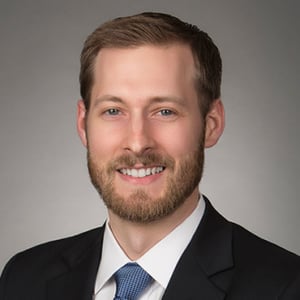
Robert T. Numbers
In late August, as colleges and universities across North Carolina were preparing to welcome back...
Panel I: Economic Theory, Civic Virtue and the Meaning of the Constitution
James W. Ely, Renée Lettow Lerner, G. Brinton Lucas, Nelson Lund, G. Edward White, J. Harvie Wilkinson
Justice Holmes' dissent in Lochner v. New York is well-known for the statement, "[A] constitution is not...
Panel I: Economic Theory, Civic Virtue and the Meaning of the Constitution
James W. Ely, Renée Lettow Lerner, G. Brinton Lucas, Nelson Lund, G. Edward White, J. Harvie Wilkinson
Justice Holmes' dissent in Lochner v. New York is well-known for the statement, "[A] constitution is not...
Debate: Economic Freedoms and the Constitution
Randy E. Barnett, Lillian R. BeVier, Devin Allan DeBacker, Debra Ann Livingston, Ben Massey, Jeffrey Rosen
Since West Coast Hotel Co. v. Parrish and the end of the Lochner Era, the Supreme Court has adhered...
Debate: Economic Freedoms and the Constitution
Randy E. Barnett, Lillian R. BeVier, Devin Allan DeBacker, Debra Ann Livingston, Ben Massey, Jeffrey Rosen
Since West Coast Hotel Co. v. Parrish and the end of the Lochner Era, the Supreme Court has adhered...
Panel I: Economic Theory, Civic Virtue and the Meaning of the Constitution
2011 National Student Symposium
Charlottesville, VADebate: Economic Freedoms and the Constitution
2011 National Student Symposium
Charlottesville, VA