
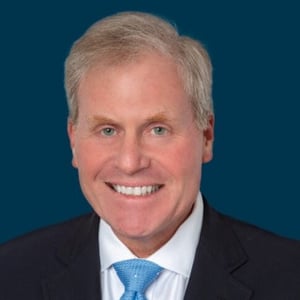
Director, ENRD, Pacific Legal Foundation
Mark Miller is the Director of the Environment and Natural Resources practice group at Pacific Legal Foundation, where he leads the firm’s efforts to protect individuals and small businesses from government overreach in matters involving land and water, and its efforts to encourage America to better harness its abundant natural resources, including energy resources, minerals, timber, and grazing lands. Mark first joined PLF in 2014.
A seasoned appellate specialist, Mark has litigated several high-profile cases for PLF, including Weyerhaeuser v. United States Fish & Wildlife Service, U.S. Army Corps of Engineers v. Hawkes Co., and United States v. Robertson, all of them unanimous Supreme Court of the United States wins for property owners fighting federal overreach via the Clean Water Act and Endangered Species Act.
In 2020, Mark left PLF to serve as General Counsel and later Chief of Staff for then-South-Dakota Governor Kristi Noem. As Noem’s longest-serving chief of staff, he worked behind the scenes to advance limited government, cut red tape, defend individual rights, and promote free-market principles. In 2023, he returned home to PLF.
A frequent commentator and public speaker, Mark regularly appears in print, on radio and TV, and before legislative committees across the country. His commentary and work has been featured in The Wall Street Journal, CBS News, The View, CBN, and Fox News. He is a regular guest each Thursday morning on SiriusXM’s POTUS channel, offering insight on Supreme Court cases and trends.
Mark earned both his undergraduate and law degrees with honors from the University of Florida. He clerked for U.S. District Judge Henry Lee Adams, Jr., and Florida state appellate Judge Emerson R. Thompson, Jr.—two mentors who deepened his commitment to the Bill of Rights, especially the Fourth, Fifth, and Fourteenth Amendments.
Mark serves on the Board of Trustees for the University of Florida College of Law, and he is a member of the boards of directors for both Americans United for Life, the nation’s oldest pro-life non-profit law firm, and Farm of the Child USA, a nonprofit that supports an orphanage and school for children in need in Honduras called La Finca del Niño.
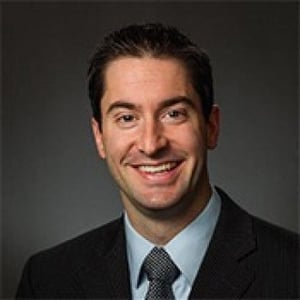
Chief Legal Counsel, Alliance Defending Freedom
Jim Campbell serves as chief legal counsel with Alliance Defending Freedom, where he leads the U.S. Legal Advocacy team. In that role, Campbell oversees all U.S. litigation teams and Allied Legal Affairs.
Prior to joining ADF in March 2023, Campbell was the solicitor general in the office of Nebraska Attorney General Douglas J. Peterson and Michael T. Hilgers. In that role, he represented the state of Nebraska in cases before state and federal courts and oversaw all civil appeals for the state. In February 2023, Campbell argued Biden v. Nebraska before the U.S. Supreme Court, a case in which Nebraska and five other states challenged the Biden administration’s attempt to forgive over $400 billion in federal student loans for over 40 million individuals.
Before joining the Nebraska attorney general’s office in January 2020, Campbell worked as senior counsel with ADF. In that role, he defended his clients’ religious freedom and freedom of speech, with a particular focus on appellate work. Campbell has also authored many articles and legal commentary pieces, including some published by USA Today and The Washington Post.
A native of northeastern Ohio, Campbell earned his Juris Doctor from the University of Akron School of Law, where he graduated summa cum laude in 2006. Following law school, he clerked for the Honorable Alice M. Batchelder of the U.S. Court of Appeals for the 6th Circuit. Campbell is admitted to the state bars of Ohio, Arizona, and Nebraska. He is also admitted to multiple federal district and appellate courts, including the U.S. Supreme Court.
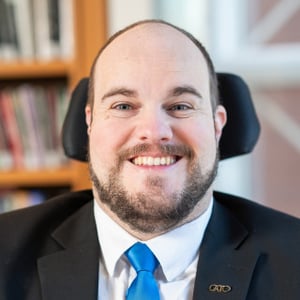
Director, Project on Criminal Justice, Cato Institute
Matthew Cavedon is the Director of the Cato Institute’s Project on Criminal Justice. He focuses on reforming plea-driven mass adjudication, ensuring police accountability, and defending constitutional criminal originalism. Cavedon’s scholarship has been published (or is forthcoming in) publications including the Arizona State Law Journal, Cato Supreme Court Review, Seattle University Law Review, and Georgetown Journal of Law and Public Policy. Formerly a Georgia public defender and fellow at the Institute for Justice, Cavedon has taught law school courses on criminal law and procedure, as well as the First Amendment. Cavedon clerked for a U.S. district court and the Supreme Court of Georgia. He came to Cato following a fellowship at the Emory University Center for the Study of Law and Religion.
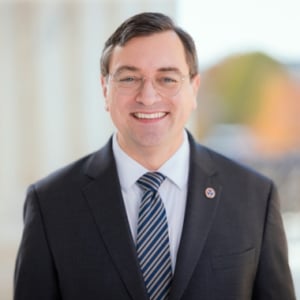
Attorney General of Tennessee
Jonathan Skrmetti was sworn in to an eight-year term as Tennessee’s Attorney General and Reporter on September 1, 2022.
Prior to his current role, General Skrmetti served as Chief Counsel to Governor Bill Lee and as Chief Deputy Attorney General to his predecessor, Tennessee Attorney General Herbert Slatery.
Before working for the State of Tennessee, General Skrmetti was a partner at Butler Snow LLP in Memphis. His legal career began with nearly a decade as a federal prosecutor. He worked at the Civil Rights Division at Main Justice and then at the Memphis U.S. Attorney’s Office and prosecuted sex traffickers, corrupt government officials, and violent white supremacists. In addition, General Skrmetti taught cyberlaw as an adjunct professor at the University of Memphis.
General Skrmetti earned honors degrees from George Washington University, the University of Oxford, and Harvard Law School, where he was editor-in-chief of the Harvard Journal of Law & Public Policy. Following law school, Jonathan clerked for Judge Steven Colloton on the U.S. Court of Appeals for the Eighth Circuit. He lives in Franklin, Tennessee, with his wife and four children.
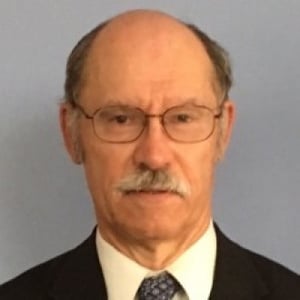
Professorial Lecturer in Law, George Washington University Law School
Theodore C. (Ted) Hirt was an attorney in the Department of Justice's Civil Division from August 1979 to March 2016. He was in its Federal Programs Branch from 1979 to 2008 (trial attorney, senior trial counsel, assistant director), and then in its Office of Immigration Litigation from 2008 to 2016 (trial attorney and senior litigation counsel). Among his responsibilities (September 2001 to March 2016) was being an advisor to the Assistant Attorneys General for the Civil Division, who serve ex officio on the Civil Rules Advisory Committee. Mr. Hirt’s areas of specialization include First Amendment issues, internet and telecommunications law, and electronic discovery. From 1976 to 1979, he was an associate at Fried, Frank, Harris, Shriver & Kampelman. From 1975 to 1976 he was an attorney in the Prehearing Division of the Michigan Court of Appeals.
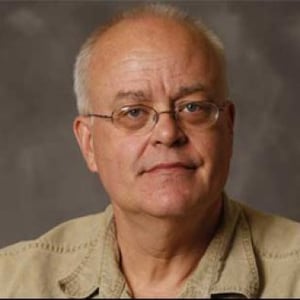
Professor of Law, University of Baltimore School of Law
Professor Garrett Epps joined the University of Baltimore School of Law in 2008. He teaches courses in Constitutional Law, First Amendment, and Fiction and Non-Fiction Writing for Law Students. He is a contributing writer to The Atlantic Online and serves as the magazine's Supreme Court correspondent. He is also a contributing editor of The American Prospect. Epps' most recent book, American Justice 2014: Nine Clashing Visions on the Supreme Court, was published by the University of Pennsylvania Press.
Professor Epps' previous book, American Epic: Reading the U.S. Constitution, was published in 2013 by Oxford University Press. In March 2014, American Epic was named a finalist for the American Bar Association’s Silver Gavel Book award. Two of his previous books, Democracy Reborn: The Fourteenth Amendment and the Fight for Equal Rights in Post-Civil War America (2006) and To an Unknown God: Religious Freedom on Trial (2001), were both also Silver Gavel finalists. A former staff writer for The Washington Post, Epps has written for The New York Times, The New York Review of Books, The Nation, The New Republic and The American Prospect.
He received his LL.M. in Comparative and International Law and his J.D. from Duke University, where he served as articles editor of Law and Contemporary Problems and graduated with the Willis Smith Award for the highest three-year academic average. Before attending law school, Epps earned his M.A. in English Writing in 1975 from Hollins College and his B.A. in 1972 from Harvard College, where he was editor of The Harvard Crimson.
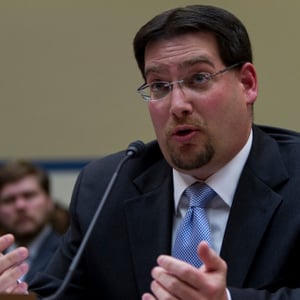
Deputy General Counsel, U. S. House of Representatives, Office of General Counsel
Todd Tatelman has served in the Office of General Counsel since November 2011. Mr. Tatelman previously served as a Legislative Attorney for the American Law Division of the Congressional Research Service. He received his bachelor of arts degrees in Philosophy, Political Science, and Economics from Boston University and his law degree, with honors, from The Catholic University of America, Columbus School of Law, where he was a member of The Catholic University Law Review.
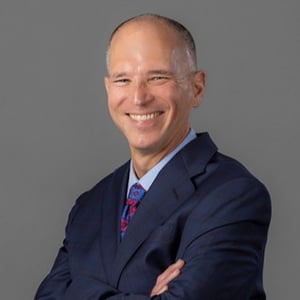
George Mason University Foundation Professor of Law, Antonin Scalia Law School, George Mason University
TODD J. ZYWICKI is George Mason University Foundation Professor of Law at Antonin Scalia Law School at George Mason University and Research Fellow of the George Mason Law and Economics Center. During the Fall 2023 semester he served as the Visiting Scholar in Conservative Thought and Policy for the Bruce Benson Center for the Study of Western Civilization at the University of Colorado-Boulder. From 2020-2021 he was Chair of the Consumer Financial Protection Bureau Taskforce on Federal Consumer Financial Law. In 2021 he was inducted to the American College of Consumer Financial Services Lawyers. He is also a Senior Fellow of the F.A. Hayek Program for the Advanced Study of Politics, Philosophy, and Economics at George Mason University and a former Senior Fellow of the Cato Institute. From 2015-2017 he was Executive Director of the George Mason Law and Economics Center. He served as Co-Editor of the Supreme Court Economic Review from 2006-2017. From 2003-2004, Professor Zywicki served as the Director of the Office of Policy Planning at the Federal Trade Commission. He has also taught at Vanderbilt University Law School, Georgetown University Law Center, Boston College Law School, Mississippi College School of Law, and China University of Political Science and Law.
Professor Zywicki clerked for Judge Jerry E. Smith of the U.S. Court of Appeals for the Fifth Circuit and worked as an associate at Alston & Bird in Atlanta, Georgia, where he practiced bankruptcy and commercial law. He received his J.D. from the University of Virginia, where he was executive editor of the Virginia Tax Review and John M. Olin Scholar in Law and Economics. Professor Zywicki also received an M.A. in Economics from Clemson University and an A.B. cum Laude with high honors in his major from Dartmouth College.
Professor Zywicki is also a Lone Mountain Fellow of the Property and Environment Research Center, a Fellow of the International Centre for Economic Research in Turin, Italy, and a former Senior Fellow of the Goldwater Institute. During the Fall 2008 Semester Professor Zywicki was the Searle Fellow of the George Mason University School of Law and was a 2008-09 W. Glenn Campbell and Rita Ricardo-Campbell National Fellow and the Arch W. Shaw National Fellow at the Hoover Institution on War, Revolution and Peace. He has lectured and consulted with government officials around the world, including Iceland, Italy, Japan, and Guatemala. In 2006 Professor Zywicki served as a Member of the United States Department of Justice Study Group on “Identifying Fraud, Abuse and Errors in the United States Bankruptcy System.”
Professor Zywicki is the author of more than 130 articles in leading law reviews and peer-reviewed economics journals. He is one of the Top 10 most-cited law professors in the field of Commercial Law and one of the Top 25 law professors on Twitter as measured by engagement levels. He is one of the Top 50 Most Downloaded Law Authors at the Social Science Research Network. He has testified multiple times before Congress on issues of consumer bankruptcy law and consumer credit and is a frequent commentator on legal issues in the print and broadcast media, including the Wall Street Journal, New York Times, The Washington Post, The Washington Times, Nightline, The Newshour with Jim Lehrer, Neil Cavuto Show, Fox & Friends, Smerconish, Fox News @ Night with Shannon Bream, Fox Business, CNN, CNBC, Bloomberg News, BBC, The Diane Rehm Show, Lou Dobbs Show, Jerry Doyle Show, and The Laura Ingraham Show.
Professor Zywicki is former Chairman and a current member of the Board of Directors of the Competitive Enterprise Institute, and is a member of the Board of Directors of the Institute for Humane Studies, Bill of Rights Institute, the Executive Committee for the Federalist Society's Financial Institutions and E-Commerce Practice Group, the Board of Trustees of the Foundation for Research on Economics and the Environment. He formerly served on the Governing Board and the Advisory Council for the Financial Services Research Program at George Washington University School of Business. He is currently the Chair of the Academic Advisory Council for the following organizations: The Bill of Rights Institute, the film “We the People in IMAX,” and the McCormick-Tribune Foundation “Freedom Museum” in Chicago, Illinois. He is a member of the Board of Visitors of Ralston College and was a member of the Board of Trustees of Yorktown University. From 2005-2009 he served as an elected Alumni Trustee of the Dartmouth College Board of Trustees.

Topics
Judge Willett: Happy Constitution Day, if You Can Keep It
On Monday September 17, the Wall Street Journal ran a Constitution Day article authored by Judge...
Topics
Maintaining the Constitution's Separation of Powers
On Tuesday, October 1, the Supreme Court will hear oral argument in Gundy v. United...
Courthouse Steps: Weyerhaeuser v. United States Fish & Wildlife Service Oral Argument
TeleforumA Shy Frog, the Administrative State, and Judicial Review of Agency Decision-Making: A Preview of Weyerhaeuser v. United States Fish & Wildlife Service
Mark Miller
Note from the Editor: This article previews one of the first cases of the Supreme...
Compelled Speech in Masterpiece Cakeshop: What the Supreme Court’s June 2018 Decisions Tell Us About the Unresolved Questions
Jim Campbell
Note from the Editor: This article discusses the unresolved compelled-speech questions in Masterpiece Cakeshop v....
Party Like It’s 1935?: Gundy v. United States and the Future of the Non-Delegation Doctrine
Matthew P. Cavedon, Jonathan Skrmetti
Note from the Editor: This article discusses Gundy v. United States, a case involving the...
Can Americans Reconcile Our Constitutional System With an Expansive Administrative State?
Ted Hirt
A review of: Bureaucracy in America: The Administrative State’s Challenge to Constitutional Government, by Joseph...
How Should the United States Senate be Elected?
Washington, DCA Constitution Day Storytime -- CANCELED
Norfolk, VATopics
President Reagan on the Signing of the Constitution
Happy Constitution Day! The following is a transcript of President Reagan's speech at the 200th...