
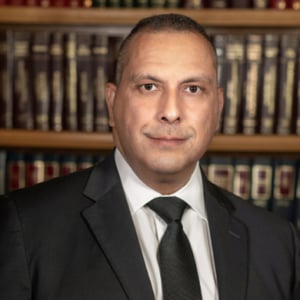
Dean, Capital Law School
Reynaldo Anaya Valencia is the dean of the Capital Law School, previously having served as associate dean for Finance and Administration and as professor of Law at University of North Texas at Dallas College of Law.
Valencia has practiced, taught, written, and lectured nationally and internationally on corporate law, corporate bankruptcy, and race and gender issues, and also has served as an expert witness in complex corporate and bankruptcy multimillion dollar litigation.
Valencia earned an undergraduate degree in psychology (with honors) and a graduate degree in sociology from Stanford University, then went on to receive a juris doctor degree from Harvard Law School. He practiced corporate bankruptcy and general corporate law at the Dallas office of the international law firm of Jones Day for five years, while serving as an adjunct professor of Law at Texas Tech School of Law, where at age 25 he became the youngest faculty member in the law school’s history.
In 1995, Valencia joined the faculty at St. Mary’s University School of Law in San Antonio as an associate professor, earning tenure in 1999 and promotion to the rank of full professor. In 2008, he was appointed associate dean of Administration and Finance at St. Mary’s and held the Ernest W. Clemmons Professor of Corporate and Securities Law endowed professorship.
President Bill Clinton appointed Valencia as a White House Fellow for 1999-2000, where he served in the Office of the Chief of Staff. He also has served on the Board of Directors of the American Board of Certification (which produces the national bankruptcy certification examination); the Board of Governors of the Council on Legal Education Opportunity (CLEO); the Board of Trustees of the Law School Admission Council; and as an elected director on the Harvard Alumni Association Board of Directors.
Valencia received the St. Mary’s University Distinguished Faculty Award (Law School) in 2008. In 2003 and again in 2006, he received the Outstanding Legal Achievement award by the Mexican American Bar Association of San Antonio, and in 2012, was awarded the Becky Cross Anchor Award from Equality Texas in recognition of his work with, and support of, LBGTQ students.
He has published several articles in traditional law reviews, and was the lead co-author of “Mexican Americans and The Law: ¡El Pueblo Unido Jamas Sera Vencido!,” the first undergraduate textbook to focus on Latinos/as and the law.
Valencia and his sons, Elias, Leo and Robert, look forward to becoming part of the Capital University community.
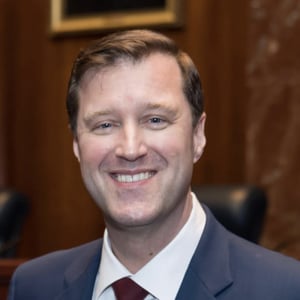
Justice, Texas Supreme Court
Evan Young is a Justice of the Supreme Court of Texas. Governor Greg Abbott, who appointed Young to fill an unexpired term, swore him into office on November 10, 2021. Justice Young was elected to a full term in November 2022.
Young graduated summa cum laude from Duke University in 1999, where he was inducted into Phi Beta Kappa. He was a British Marshall Scholar at Oxford University, where he completed his studies in 2001 and earned a First Class Honours degree in Modern History, focusing on British constitutional history. He earned his law degree from Yale Law School in 2004.
Young then worked as a lawyer in the judicial and executive branches of the federal government. He first served as a law clerk to Judge J. Harvie Wilkinson III of the U.S. Court of Appeals for the Fourth Circuit, and then to Justice Antonin Scalia at the U.S. Supreme Court. In 2006, after his clerkship with Justice Scalia ended, Justice Young became Counsel to the Attorney General at the U.S. Department of Justice, serving in the Office of the Attorney General under Attorneys General Alberto R. Gonzales and Michael B. Mukasey. While on the Attorney General’s staff, he accepted a detail to the U.S. Embassy in Baghdad, Iraq, where he was the Deputy Rule of Law Coordinator. In that position he worked to assist the Iraqi government in its efforts to strengthen its legal regime, including, for example, its courts and prison system.
Young returned to Texas and joined the Austin office of Baker Botts L.L.P. in 2009. His practice focused on trial and appellate litigation. He argued cases before both the Supreme Court of the United States and the Supreme Court of Texas, as well as many federal and state appellate courts. He represented clients across the country before every level of the state and federal judiciary.
Before joining the Texas Supreme Court, Young was appointed in 2017 by Governor Abbott and confirmed by the Texas Senate to serve as a member of the Texas Judicial Council, which is the policy-making body for the Texas Judiciary. In 2015, the Texas Supreme Court appointed him to the Supreme Court Advisory Committee, which assists the Court in drafting the rules that govern litigation in Texas courts. He served on both until his elevation to the bench.
Justice Young is an elected member of the American Law Institute and a member of the Texas Philosophical Society. He has been an adjunct law professor for many years at the University of Texas School of Law, where he has frequently taught the Federal Courts and Religious Liberty courses. He also has been an adjunct professor at the University of Mississippi School of Law, where he has taught multiple courses involving U.S. Supreme Court history. He served as Chair of the State Bar of Texas Business Law Section, Chair of the National Center for Missing and Exploited Children's Texas Regional Office, and Trustee of the Texas Supreme Court Historical Society.
Justice Young and his wife, Tobi, live in Austin with their daughter.
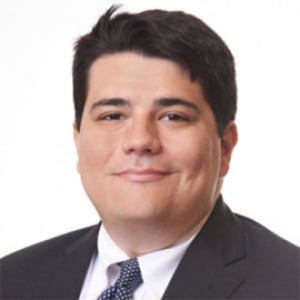
Assistant Professor of Law, Liberty University School of Law
Eric Bolinder joined Liberty University as an Assistant Professor of Law after a 10-year career in public interest litigation, working both as counsel at Cause of Action Institute and managing policy counsel at Americans for Prosperity Foundation.
Most notably, Professor Bolinder argued Loper Bright at the D.C. Circuit and was part of the team that took it from the district court to the Supreme Court. In 2024, the Supreme Court decided Loper Bright, overturning the 40-year precedent of Chevron deference. Professor Bolinder was also part of a team that successfully defended an FTC claim for equitable relief at trial, resulting in no monetary judgment against his clients.
At Cause of Action Institute, Professor Bolinder litigated exclusively against the federal government on both plaintiff actions challenging government regulations and as defense counsel in an agency enforcement proceeding.
At Americans for Prosperity Foundation, Professor Bolinder drove community efforts to plan engagement with strategic litigation opportunities. He also led a team dedicated to government oversight: filing FOIA requests and litigation, connecting with Hill staff, and producing investigative reports.
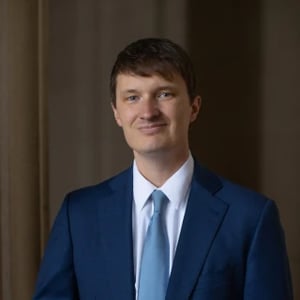
Partner, Boyden Gray PLLC
Trent McCotter is a partner with Boyden Gray PLLC. He previously served as Deputy Associate Attorney General of the United States and as an Assistant U.S. Attorney.
Mr. McCotter maintains an extensive appellate practice. He has considerable experience identifying and briefing cases that draw the Supreme Court’s attention, having persuaded the Court to grant certiorari in numerous cases raising issues of sovereignty, constitutional rights, due process, and criminal law. He has authored and submitted over 60 briefs at the Court.
He has also personally argued more than fifteen federal appeals across the Second, Fourth, Fifth, Sixth, Ninth, Eleventh, Federal, and D.C. Circuits—including once arguing three separate appeals in just four days. He has also twice argued before the 17-judge en banc Fifth Circuit. He has been counsel in over 50 other appeals raising matters from FOIA and the APA to constitutional rights and statutory construction.
As Deputy Associate Attorney General, Mr. McCotter oversaw DOJ’s Civil Appellate and Federal Programs branches, which are responsible for defending nearly all major litigation against the federal government. During his three years as a federal trial attorney in the Eastern District of Virginia’s “Rocket Docket,” Mr. McCotter won the Attorney General’s Award for Distinguished Service.
During his DOJ tenures, Mr. McCotter also assisted with the confirmations of two Supreme Court justices and over a dozen lower-court judges.
Mr. McCotter served as an inaugural clerk to the Hon. Steven J. Menashi on the U.S. Court of Appeals for the Second Circuit and also clerked for the Hon. R. Lanier Anderson III on the U.S. Court of Appeals for the Eleventh Circuit.
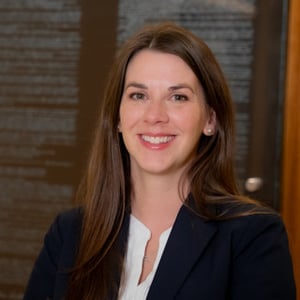
Vice President, Practice Groups, The Federalist Society
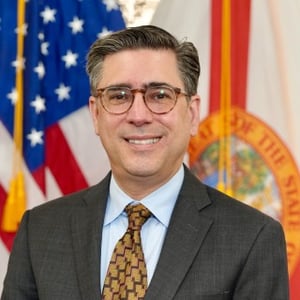
Senior Advisor to the Governor, State of Florida
Eric Soskin is the team leader for Florida’s DOGE initiative, identifying wasteful and unnecessary spending within the state government, local governments, state colleges, and universities as Senior Advisor to Florida Governor Ron DeSantis. He previously served in the federal government as Inspector General for the U.S. Department of Transportation, as Senior Trial Counsel and Counsel to the Assistant Attorney General at the U.S. Department of Justice.
In extending the DOGE mission to Florida, Gov. DeSantis and Mr. Soskin are assuring that citizens receive efficient and effective government at all levels of our federal system, as taxpayers are entitled to expect. Florida has long been a leader in efficient state government, relying on the fewest state employees per capita to deliver government services with excellence and reliability. Nevertheless, there is more to be done to take advantage of this inspiring moment of public enthusiasm for government reform efforts.
Mr. Soskin was previously nominated by President Trump, and confirmed by the Senate, as the 7th Inspector General of the Department of Transportation. As IG, he provided oversight to the programs and operations of DOT, guiding audits that identified improvements to the Department’s efficiency and effectiveness as well as opportunities to combat waste and fraud. He also led DOT’s principal law enforcement component, with over 100 federal law enforcement officers investigating crimes against America’s transportation networks. While serving, he introduced mandatory training for law enforcement agents in the First and Second Amendments, and educated all agency staff in the U.S. Constitution and highlights from American history. When President Trump removed nearly all then-serving IGs in 2025, Mr. Soskin filed an amicus brief in support of the President’s authority to do so, explaining why IGs should be treated as principal officers for whom statutory removal restrictions cannot be constitutional.
During 14 years at the Department of Justice, Mr. Soskin specialized in constitutional and administrative law, representing the President, Cabinet officials and agencies, and law enforcement in district court. His work included defending President Trump’s Executive Orders on immigration, the public-charge rule, and actions to assert the state secrets privilege and other executive privileges. Mr. Soskin also served as one of DOJ’s leading experts in Second Amendment and firearms litigation and spent four years defending habeas petitions brought by Al Qaeda terrorists detained at Guantanamo Bay. He also taught trial advocacy, deposition practice, and received the Attorney General’s 2nd highest award for his work on Supreme Court confirmations.
Mr. Soskin graduated from Williams College and Harvard Law School and clerked for Judge Paul S. Diamond of the Eastern District of Pennsylvania.
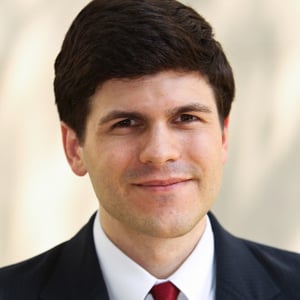
Senior Fellow, American Enterprise Institute
Philip Wallach is a senior fellow at the American Enterprise Institute (AEI), where he studies America’s separation of powers, with a focus on regulatory policy issues and the relationship between Congress and the administrative state.
In his latest book Why Congress (Oxford University Press, 2023), Dr. Wallach defends the centrality of Congress in America’s constitutional system, traces the roots of current dysfunction, and suggests how the institution might be restored.
Before joining AEI, Dr. Wallach was a senior fellow in governance studies at the Brookings Institution, where he authored To the Edge: Legality, Legitimacy, and the Responses to the 2008 Financial Crisis (Brookings Institution Press, 2015). He was later affiliated with the R Street Institute and served as a fellow with the House Select Committee on the Modernization of Congress in 2019.
Dr. Wallach’s scholarly and popular work has been published widely, including in the publications of the Brookings Center on Regulation and Markets, Studies in American Political Development, Fortune, National Affairs, National Review, Law & Liberty, Los Angeles Times, RealClearPolicy, the Bulwark, the Hill, the Wall Street Journal, and the Washington Post. A frequent conference participant, he has lectured at William & Mary, the University of Oregon, Northwestern University’s Medill School of Journalism, and the University of Michigan, among others.
Dr. Wallach received a master’s and doctorate in politics from Princeton University and a bachelor’s degree from Wesleyan University’s College of Social Studies.
Assistant Professor of Law, Liberty University School of Law
Eric Bolinder joined Liberty University as an Assistant Professor of Law after a 10-year career in public interest litigation, working both as counsel at Cause of Action Institute and managing policy counsel at Americans for Prosperity Foundation.
Most notably, Professor Bolinder argued Loper Bright at the D.C. Circuit and was part of the team that took it from the district court to the Supreme Court. In 2024, the Supreme Court decided Loper Bright, overturning the 40-year precedent of Chevron deference. Professor Bolinder was also part of a team that successfully defended an FTC claim for equitable relief at trial, resulting in no monetary judgment against his clients.
At Cause of Action Institute, Professor Bolinder litigated exclusively against the federal government on both plaintiff actions challenging government regulations and as defense counsel in an agency enforcement proceeding.
At Americans for Prosperity Foundation, Professor Bolinder drove community efforts to plan engagement with strategic litigation opportunities. He also led a team dedicated to government oversight: filing FOIA requests and litigation, connecting with Hill staff, and producing investigative reports.
Partner, Boyden Gray PLLC
Trent McCotter is a partner with Boyden Gray PLLC. He previously served as Deputy Associate Attorney General of the United States and as an Assistant U.S. Attorney.
Mr. McCotter maintains an extensive appellate practice. He has considerable experience identifying and briefing cases that draw the Supreme Court’s attention, having persuaded the Court to grant certiorari in numerous cases raising issues of sovereignty, constitutional rights, due process, and criminal law. He has authored and submitted over 60 briefs at the Court.
He has also personally argued more than fifteen federal appeals across the Second, Fourth, Fifth, Sixth, Ninth, Eleventh, Federal, and D.C. Circuits—including once arguing three separate appeals in just four days. He has also twice argued before the 17-judge en banc Fifth Circuit. He has been counsel in over 50 other appeals raising matters from FOIA and the APA to constitutional rights and statutory construction.
As Deputy Associate Attorney General, Mr. McCotter oversaw DOJ’s Civil Appellate and Federal Programs branches, which are responsible for defending nearly all major litigation against the federal government. During his three years as a federal trial attorney in the Eastern District of Virginia’s “Rocket Docket,” Mr. McCotter won the Attorney General’s Award for Distinguished Service.
During his DOJ tenures, Mr. McCotter also assisted with the confirmations of two Supreme Court justices and over a dozen lower-court judges.
Mr. McCotter served as an inaugural clerk to the Hon. Steven J. Menashi on the U.S. Court of Appeals for the Second Circuit and also clerked for the Hon. R. Lanier Anderson III on the U.S. Court of Appeals for the Eleventh Circuit.
Vice President, Practice Groups, The Federalist Society
Senior Advisor to the Governor, State of Florida
Eric Soskin is the team leader for Florida’s DOGE initiative, identifying wasteful and unnecessary spending within the state government, local governments, state colleges, and universities as Senior Advisor to Florida Governor Ron DeSantis. He previously served in the federal government as Inspector General for the U.S. Department of Transportation, as Senior Trial Counsel and Counsel to the Assistant Attorney General at the U.S. Department of Justice.
In extending the DOGE mission to Florida, Gov. DeSantis and Mr. Soskin are assuring that citizens receive efficient and effective government at all levels of our federal system, as taxpayers are entitled to expect. Florida has long been a leader in efficient state government, relying on the fewest state employees per capita to deliver government services with excellence and reliability. Nevertheless, there is more to be done to take advantage of this inspiring moment of public enthusiasm for government reform efforts.
Mr. Soskin was previously nominated by President Trump, and confirmed by the Senate, as the 7th Inspector General of the Department of Transportation. As IG, he provided oversight to the programs and operations of DOT, guiding audits that identified improvements to the Department’s efficiency and effectiveness as well as opportunities to combat waste and fraud. He also led DOT’s principal law enforcement component, with over 100 federal law enforcement officers investigating crimes against America’s transportation networks. While serving, he introduced mandatory training for law enforcement agents in the First and Second Amendments, and educated all agency staff in the U.S. Constitution and highlights from American history. When President Trump removed nearly all then-serving IGs in 2025, Mr. Soskin filed an amicus brief in support of the President’s authority to do so, explaining why IGs should be treated as principal officers for whom statutory removal restrictions cannot be constitutional.
During 14 years at the Department of Justice, Mr. Soskin specialized in constitutional and administrative law, representing the President, Cabinet officials and agencies, and law enforcement in district court. His work included defending President Trump’s Executive Orders on immigration, the public-charge rule, and actions to assert the state secrets privilege and other executive privileges. Mr. Soskin also served as one of DOJ’s leading experts in Second Amendment and firearms litigation and spent four years defending habeas petitions brought by Al Qaeda terrorists detained at Guantanamo Bay. He also taught trial advocacy, deposition practice, and received the Attorney General’s 2nd highest award for his work on Supreme Court confirmations.
Mr. Soskin graduated from Williams College and Harvard Law School and clerked for Judge Paul S. Diamond of the Eastern District of Pennsylvania.
Senior Fellow, American Enterprise Institute
Philip Wallach is a senior fellow at the American Enterprise Institute (AEI), where he studies America’s separation of powers, with a focus on regulatory policy issues and the relationship between Congress and the administrative state.
In his latest book Why Congress (Oxford University Press, 2023), Dr. Wallach defends the centrality of Congress in America’s constitutional system, traces the roots of current dysfunction, and suggests how the institution might be restored.
Before joining AEI, Dr. Wallach was a senior fellow in governance studies at the Brookings Institution, where he authored To the Edge: Legality, Legitimacy, and the Responses to the 2008 Financial Crisis (Brookings Institution Press, 2015). He was later affiliated with the R Street Institute and served as a fellow with the House Select Committee on the Modernization of Congress in 2019.
Dr. Wallach’s scholarly and popular work has been published widely, including in the publications of the Brookings Center on Regulation and Markets, Studies in American Political Development, Fortune, National Affairs, National Review, Law & Liberty, Los Angeles Times, RealClearPolicy, the Bulwark, the Hill, the Wall Street Journal, and the Washington Post. A frequent conference participant, he has lectured at William & Mary, the University of Oregon, Northwestern University’s Medill School of Journalism, and the University of Michigan, among others.
Dr. Wallach received a master’s and doctorate in politics from Princeton University and a bachelor’s degree from Wesleyan University’s College of Social Studies.
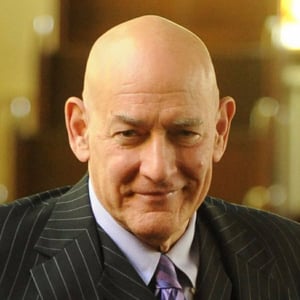
Raoul Berger Professor of Legal History at Northwestern University School of Law
Stephen Presser is a leading American legal historian and expert on shareholder liability for corporate debts. He is frequently an invited witness before committees of the U.S. Senate and House of Representatives on issues of constitutional law. He holds a joint appointment with the J. L. Kellogg Graduate School of Management and also teaches in Northwestern's history department.
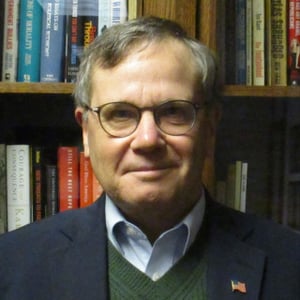
Senior Fellow in Constitutional Jurisprudence, Independence Institute
Professor Robert G. Natelson is a constitutional scholar and author.
Rob’s constitutional scholarship has been cited repeatedly by justices and parties at the U.S. Supreme Court—as well as by federal appeals courts, and at least 18 state supreme courts.
Rob’s research into the Constitution’s original meaning has carried him to libraries throughout the United States and in Britain, including four months at Oxford University. His books and articles span many different parts of the Constitution, including groundbreaking studies of the Necessary and Proper Clause, the Indian Commerce Clause, federalism, Founding-Era interpretation, regulation of elections, and the amendment process of Article V. He created the first-ever online bibliography for 18th century materials used in constitutional research. He is a contributing author to the Encyclopedia of the Supreme Court of the United States (on Magna Carta). He contributed eight essays to the third edition of the Heritage Guide to the Constitution: five on the amendment procedure and one each on the Guarantee Clause, the Postal Clause, and the Recess Appointments Clause.
U.S. Supreme Court justices have relied explicitly on Rob’s research in 41 citations in 13 separate cases.

Constitution Day Celebration
South Texas Student Chapter
Houston, TXGeorgia Supreme Court Tightens Limits on Organizational Standing
A unanimous Georgia Supreme Court recently weighed in on the ongoing battle over new...
Topics
Inside the Oral Argument of Trump v. CASA: Will the Court Rein in Universal Injunctions?
On May 15, 2025, the U.S. Supreme Court heard oral arguments in Trump v. CASA, Inc.,...
Topics
Tariff Orders Prompt Challenges to Presidential Authority and Congressional Delegation
In February 2025, President Trump began issuing executive orders and taking other presidential actions to...
Topics
Libby v. Fecteau: Supreme Court Blocks Maine House of Representatives from Punishing Members for Their Speech
Maine State Representative Laurel Libby made a Facebook post identifying a transgender athlete who had won...
Plenary 3: The Constitutionality and Economics of Presidential Tariffs and Impoundment
Washington, DCPlenary 3: The Constitutionality and Economics of Presidential Tariffs and Impoundment
Eric R. Bolinder, Trent McCotter, Elizabeth Slattery, Eric J. Soskin, Philip A. Wallach
CLE credit for this event is available at On-Demand CLE. Congress holds the purse strings, but...
Topics
The SAVE Act: Fact v. Fiction
The SAVE Act is a proposal from congressional Republicans to require people to provide proof...
The Past Is Not a Foreign Country: How a Historical Critique of Originalism Misses That the Past Is Prologue
Stephen B. Presser
A review of Jonathan Gienapp, Against Constitutional Originalism: A Historical Critique (2024) This review is...
Applying the Founders' Originalism
Robert G. Natelson
The 1787 Federal Convention drafted, and the ratifiers approved, the United States Constitution under the...