
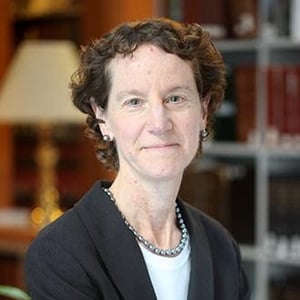
Partner, Arnold & Porter
Debbie Feinstein heads the firm's Global Antitrust group, and brings a wealth of experience to her practice in advising clients on a range of antitrust challenges before US antitrust authorities. She recently re-joined the firm from the US Federal Trade Commission (FTC), where she was Director of the Bureau of Competition. In that capacity, she was responsible for supervising the investigation and enforcement of the US antitrust laws against anticompetitive mergers and conduct. During her tenure from 2013 to 2017, the FTC had substantial litigation success and a number of major merger wins, including challenges to Sysco Corp.'s acquisition of rival US Foods Inc., and Staples Inc.'s merger with Office Depot Inc. She had previously served at the FTC from 1989 to 1991 as Assistant to the Director of the Bureau of Competition and Attorney Advisor.

Senior Judge, United States Court of Appeals, District of Columbia Circuit
Circuit Judge Douglas H. Ginsburg was appointed to the United States Court of Appeals for the District of Columbia in 1986. After receiving his B.S. from Cornell University in 1970, and his J.D. from the University of Chicago Law School in 1973, he clerked on the D.C. Circuit and for Justice Thurgood Marshall on the United States Supreme Court. Thereafter, Judge Ginsburg was a professor at the Harvard Law School, the Deputy Assistant and then Assistant Attorney General for the Antitrust Division of the Department of Justice, as well as the Administrator of the Office of Information and Regulatory Affairs in the Office of Management and Budget. Concurrent with his service as a federal judge, Judge Ginsburg has taught at the University of Chicago Law School and the New York University School of Law. Judge Ginsburg is currently a Professor of Law at the George Mason University and a visiting professor at University College London, Faculty of Laws.
Judge Ginsburg is the Chairman of the International Advisory Board of the Global Antitrust Institute at the Law and Economics Center of the George Mason University School of Law. He also serves on the Advisory Boards of: Competition Policy International; the Harvard Journal of Law and Public Policy; the Journal of Competition Law and Economics; the Journal of Law, Economics & Policy; the Supreme Court Economic Review; the University of Chicago Law Review; the New York University Journal of Law and Liberty; and, at University College London, both the Centre for Law, Economics and Society and the Jevons Institute for Competition Law and Economics.
In 2020, Judge Ginsburg was the 11th recipient of the John Sherman Award, presented by the Antitrust Division of the Department of Justice in recognition of the awardee’s Lifetime Contributions to Antitrust Law and Policy.
In 2014, Judge Ginsburg received the Lifetime Achievement Award given annually by the Global Competition Review.
He is the author or co-author of several books and more than 100 articles on competition and regulation, including, most recently, Growing Convergence: The Limited Role of Antitrust in Standard Essential Patent Disputes, in CPI Antitrust Chronicle, Summer 2021, Vol. 1, No. 2.
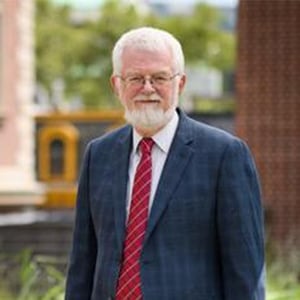
James G. Dinan University Professor, Carey Law School, University of Pennsylvania
Herbert Hovenkamp is a Fellow of the American Academy of Arts and Sciences, and in 2008 won the Justice Department’s John Sherman Award for his lifetime contributions to antitrust law. In 2012 he served on the ABA’s Committee to advise the President-elect on antitrust matters. His principal writing includes The Opening of American Law: Neoclassical Legal Thought, 1870-1970 (Oxford, 2015); Antitrust Law (formerly with Phillip E. Areeda and Donald F. Turner) (22 vols., Aspen 2008-18); Principles of Antitrust (West, 2017); Creation Without Restraint: Promoting Liberty and Rivalry in Innovation (Oxford, 2012, with Bohannan); The Making of Competition Policy (Oxford, 2012, with Crane); The Antitrust Enterprise: Principle and Execution (Harvard, 2006); Federal Antitrust Policy: The Law of Competition and Its Practice (West, 5th ed. 2015); IP and Antitrust (2 vols., Aspen, 2017, with Janis, Lemley, Leslie, and Carrier); and Enterprise and American Law, 1836-1937 (Harvard, 1991). He has also co-authored casebooks in antitrust, property law, and a free open source casebook on innovation and competition policy. He has consulted on numerous antitrust cases for various government entities and private plaintiffs. He has two sons.

Partner, Litigation Department, Paul Hastings
Michael Murray is co-chair of the Antitrust and Competition practice at Paul Hastings and represents clients in high-stakes mergers and acquisitions and antitrust litigation and investigations. Based in the firm’s Washington, D.C. office, Michael is Chambers ranked and brings significant government antitrust and competition experience, having most recently served as the principal deputy assistant attorney general in the Antitrust Division at the Department of Justice (DOJ), where he oversaw the work of approximately 350 lawyers and 50 economists. In that capacity, Michael supervised DOJ’s merger investigations, conduct matters and litigation for several years.
Michael is the rare antitrust lawyer who maintains both an active merger control practice and a bustling litigation practice. In 2025, for example, he shepherded over $65 billion of transactions through global merger control regimes, including a litigated merger challenge in the U.S., while also representing over a dozen clients in major antitrust litigation. In that year, he won awards for both his merger work and his litigation matters. Chambers USA describes Mike for having “an encyclopedic knowledge of antitrust law [who] can recite different issues for different circuits.”
Michael also is a partner in the Appellate, Regulatory and Complex Litigation practices at Paul Hastings. He brings significant government experience to a practice consisting of preparing and litigating challenges to agency rulemaking, adjudication or other activity, having served as an associate deputy attorney general at DOJ, where he oversaw the Civil Division’s defense of high-profile rulemaking challenges and other agency actions. Earlier in his career, Michael clerked for the Honorable Justice Anthony M. Kennedy of the U.S. Supreme Court and the Honorable Judge Diarmuid F. O'Scannlain of the U.S. Court of Appeals for the Ninth Circuit. He also served as an AUSA for the U.S. Attorney's Office for the Eastern District of Virginia.
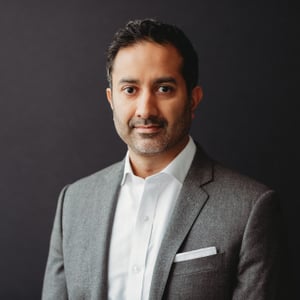
Antitrust Partner, White & Case
Rahul Rao is a partner in the Global Antitrust Practice at White & Case and the former Deputy Director of the Federal Trade Commission’s Bureau of Competition. He advises clients on merger clearance, government investigations, antitrust litigation, and regulatory strategy, with particular depth in healthcare, life sciences, private equity, retail, and labor markets.
At the FTC, Rahul led major merger and conduct investigations, supervised enforcement in critical sectors, and helped shape landmark policy initiatives, including the revised Merger Guidelines and the Commission’s noncompete rulemaking. Earlier, he helped establish the Washington State Attorney General’s Antitrust Division as a national leader in labor market competition enforcement.
Having served on both the federal and state enforcement front lines, Rahul brings clients a unique understanding of agency priorities, risk profiles, and strategies for navigating today’s increasingly dynamic antitrust environment.

Carolyn Craig Franklin Chair in Law; Professor of Law and Business; Affiliate Professor of Business, USC Gould School of Law and Marshall School of Business
D. Daniel Sokol is the Carolyn Craig Franklin Chair in Law and a Professor of Law and Business at the USC Gould School of Law and Marshall School of Business (marketing department). He holds a courtesy appointment in the Department of Economics. He also serves as faculty director of the Center for Transnational Law and Business and the co-director of the USC Marshall Initiative on Digital Competition. Additionally, in a part time capacity, he serves as Senior Advisor at White & Case LLP.
Professor Sokol is among the top 10 most cited antitrust law professors in the past five years. He focuses his teaching and scholarship on complex business issues from early stage start-ups to multinational businesses and the issues that businesses face regarding competition: antitrust, data breaches, corporate governance, digital platforms, compliance, innovation, M&A, digital transformation, and global business regulation.
He is a member of the American Law Institute. He also serves as academic advisor to the United States Chamber of Commerce and as a non-governmental Advisor to the International Competition Network. His work has appeared in a variety of journals: Strategic Management Journal, Journal of Law and Economics, Journal of Economics & Management Strategy, Harvard Business Review, Sloan Management Review, Michigan Law Review and Northwestern Law Review, among others.
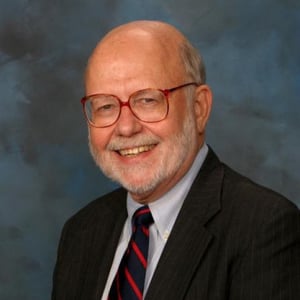
Principal, Ely & Company, Inc.
Bert Ely has specialized in deposit insurance and banking structure issues since 1981. In 1986, he became an early predictor of the S&L crisis and a taxpayer bailout of the FSLIC. In 1991, he was the first person to correctly predict the non-crisis in commercial banking; in 1992, he predicted an eventual taxpayer bailout of the Japanese banking system.
Bert continuously monitors conditions in the banking and S&L industries, monetary policy, and the growing federalization of credit risk. He has helped to draft legislation to enact the cross-guarantee concept for privatizing banking regulation and its related deposit insurance and systemic risks. He has testified on numerous occasions before congressional committees on banking issues and he often speaks on these matters to bankers and others.
Bert first established his consulting practice in 1972. Before that, he was the chief financial officer of a public company, a consultant with Touche, Ross & Company, and an auditor with Ernst & Ernst. He received his MBA from the Harvard Business School in 1968 and his Bachelor's degree in economics in 1964 from Case Western Reserve University.

General Counsel, Strive
Before joining Strive, Alexandra served as the Director of Regulatory Affairs at River Financial, where she handled all regulatory and government matters and served as product counsel. Prior to her time at River, Alexandra worked at the U.S. Department of Treasury, first in the General Counsel’s office and then as the youngest-ever Executive Secretary, where she worked directly with Secretary Mnuchin. Alexandra previously worked as an associate in the Washington, D.C. office of Akin Gump. She clerked for then-Justice Allison Eid on the Colorado Supreme Court and Judge Jennifer Elrod on the U.S. Court of Appeals for the Fifth Circuit. She holds a J.D. from the University of Texas and a B.A. from The King’s College.

Senior Fellow, Mises Institute
Alex J. Pollock is a Senior Fellow with the Mises Institute, providing thought and policy leadership on financial issues and the study of financial systems. His work includes cycles of booms and busts, financial crises with their political responses, housing finance, government-sponsored enterprises, risk and uncertainty, central banking, banking and financial regulation, corporate governance, retirement finance, student loans, and the politics of finance.
He previously served as the Principal Deputy Director of the Office of Financial Research in the U.S. Treasury Department 2019-2021. He was a Distinguished Senior Fellow with the R Street Institute 2015-2019 and 2021, and a resident fellow at the American Enterprise Institute, 2004-2015. Among the many aspects of his AEI work, he developed the One Page Mortgage Form to give borrowers in clear form the key information they need in order to know what they are committing themselves to. He was President and CEO of the Federal Home Loan Bank of Chicago from 1991 to 2004. There he invented the Mortgage Partnership Finance program, which successfully created front-end mortgage credit risk sharing beginning in 1997. His decades of banking experience include being a Visiting Scholar at the Federal Reserve Bank of St. Louis, 1991.
Pollock was a director of the CME Group 2004-2019 and of Ascendium Education Group 1989-2019. He is a director and past-chairman of the Great Books Foundation and a past president of the International Union for Housing Finance.
He is the co-author of Surprised Again! - The COVID Crisis and the New Market Bubble (2022), and the author of Finance and Philosophy—Why We’re Always Surprised (2018) and Boom and Bust: Financial Cycles and Human Prosperity (2011), as well as numerous articles and Congressional testimony.
Pollock is a graduate of Williams College, the University of Chicago, and Princeton University.
His work is available on alexjpollock.com.
Professor of Economics, George Mason University
Lawrence H. White has been a professor of economics at George Mason University since 2009. An expert on banking and monetary policy, he is the author of Better Money, The Clash of Economic Ideas (Cambridge University Press, 2012), The Theory of Monetary Institutions (Basil Blackwell, 1999), Free Banking in Britain (2nd ed., Institute of Economic Affairs, 1995), and Competition and Currency (New York University Press, 1989).
He is coeditor of Renewing the Search for a Monetary Constitution (Cato Institute, 2015) and editor of The History of Gold and Silver (3 vols., Pickering and Chatto, 2000), Free Banking (3 vols., Edward Elgar, 1993), and The Crisis in American Banking (NYU Press, 1993). His articles on monetary theory and banking history have appeared in the American Economic Review; Journal of Money, Credit, and Banking; and other leading professional journals.
White received the 2008 Distinguished Scholar Award of the Association for Private Enterprise Education. He has been a visiting research fellow at the American Institute for Economic Research, a visiting lecturer at the Swiss National Bank, and a visiting scholar at the Federal Reserve Bank of Atlanta. He is a coeditor of the online journal Econ Journal Watch and hosts bimonthly podcasts for EJW Audio. He is a member of the Financial Markets Working Group of the Mercatus Center at George Mason University. He writes regularly for the Center for Monetary and Financial Alternatives publication Alt‑M.
White holds a BA in economics from Harvard College and a PhD in economics from the University of California, Los Angeles.
Consultant in Media Policy and Law
Jane Mago began her communications law career in 1978 as a staff attorney at the Federal Communications Commission. She stayed at the FCC for more than 26 years, serving in many high level roles, including General Counsel, Chief of Strategic Planning and Policy Analysis, Deputy Chief of the Enforcement Bureau, Chief of Staff for Commissioners Rachelle Chong and Michael Powell, and Legal Advisor to Commissioner Anne Jones. During her FCC career, she also worked as an appellate litigator defending the FCC’s decisions in such matters as Radio and TV Deregulation, Broadcast Indecency and Must-Carry Rules.
Jane joined the National Association of Broadcasters in 2004 where she stayed until retiring in October 2014 as the Executive Vice President and General Counsel. She led the NAB legal team during many significant shifts in the regulatory landscape, including two rounds of review of the broadcast ownership rules.
Jane is a member of the New York Bar. She has an extensive background in appellate litigation and expertise in Constitutional issues (particularly First Amendment matters), FCC ownership rules, political broadcasting, EEO, administrative law, enforcement and licensing matters.
Jane holds BA, MA and JD degrees from the State University of New York at Buffalo.
Visiting Fellow, Hudson Institute
Michael O’Rielly is a visiting fellow with Hudson Institute’s Center for the Economics of the Internet.
Comm. O'Rielly was nominated for a seat on the Federal Communications Commission by President Barack Obama on August 1, 2013 and was confirmed unanimously by the United States Senate on October 29, 2013. He was sworn into office on November 4, 2013. On January 29, 2015, he was sworn into office for a new term, following his re-nomination by the President and confirmation by the United States Senate and served through December 11, 2020.
Prior to joining the agency Commissioner O’Rielly served as a Policy Advisor in the Office of the Senate Republican Whip, led by U.S. Senator John Cornyn, since January 2013. He worked in the Republican Whip’s Office since 2010, as an Advisor from 2010 to 2012 and Deputy Chief of Staff and Policy Director from 2012 to 2013 for U.S. Senator Jon Kyl.
He previously worked for the Republican Policy Committee in the U.S. Senate as a Policy Analyst for Banking, Technology, Transportation, Trade, and Commerce issues from 2009 to 2010. Prior to this, Commissioner O’Rielly worked in the Office of U.S. Senator John Sununu, as Legislative Director from 2007 to 2009, and Senior Legislative Assistant from 2003 to 2007. Before his tenure as a Senate staffer, he served as a Professional Staff Member on the Committee on Energy and Commerce in the United States House of Representatives from 1998 to 2003, and Telecommunications Policy Analyst from 1995 to 1998.
He began his career as a Legislative Assistant to U.S. Congressman Tom Bliley from 1994 to 1995.
Commissioner O’Rielly received his B.A. from the University of Rochester.
President, Phoenix Center for Advanced Legal and Economic Public Policy Studies
Lawrence J. Spiwak is President of the Phoenix Center for Advanced Legal & Economic Public Policy Studies, a non-profit 501(c)(3) organization that studies broad public-policy issues related to governance, social and economic conditions, with a particular emphasis on the law and economics of the digital age. Mr. Spiwak is a prolific scholar whose work is frequently cited by policymakers, major news media and academic journals around the world, and is in the top 1.3%of authors downloaded on the Social Science Research Network. Mr. Spiwak currently serves as the co-chair of the Federal Communications Bar Association’s (FCBA) committee responsible for overseeing the FEDERAL COMMUNICATIONS LAW JOURNAL and is a member of the program committee of the Telecommunications Policy Research Conference (“TPRC”). Mr. Spiwak is also the recipient of the FCBA’s Distinguished Service Award. Prior to joining the Phoenix Center, Mr. Spiwak was a Senior Attorney with the Competition Division in the FCC’s Office of General Counsel from 1994-1998. While in college, Mr. Spiwak was accepted into the Presidential Stay-In School program where he was responsible for delivering classified and confidential material among senior White House and Reagan Administration officials and received a full FBI security clearance. Mr. Spiwak received his B.A. with Special Honors from the George Washington University and his J.D. from the Benjamin N. Cardozo School of Law. Mr. Spiwak is a member in good standing of the bars of New York, Massachusetts, the District of Columbia, and the U.S. Court of Appeals for the D.C. Circuit.
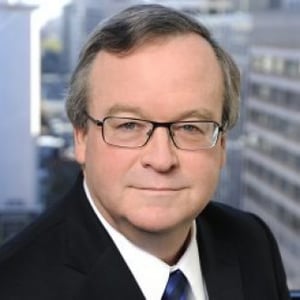
Partner, Harris, Wiltshire & Grannis LLP
Christopher Wright has been the head of the appellate group at Harris, Wiltshire & Grannis LLP since 2001. He has represented clients in a wide variety of appellate cases, with an emphasis on cases involving complex technical issues and cutting-edge constitutional law and administrative law issues.
Prior to joining the firm, Mr. Wright served as General Counsel of the Federal Communications Commission, in the Office of the Solicitor General of the United States, and as a law clerk to Chief Justice Warren E. Burger and Ninth Circuit Judge Joseph T. Sneed. Mr. Wright is one of very few lawyers who has argued more than 25 cases in both the Supreme Court and the D.C. Circuit, and he has argued in many of the other federal circuits as well.
Mr. Wright is a former President of the Edward Coke Appellate Inn of Court, the nation’s preeminent association of appellate lawyers, and a former President of the Federal Communications Bar Association, the nation’s preeminent association of communications lawyers. Mr. Wright has taught the D.C. Bar CLE courses on oral advocacy and judicial review of agency decisions on multiple occasions. He is ranked as an outstanding appellate lawyer and/or communications lawyer by numerous publications. Mr. Wright was elected to the Order of the Coif at Stanford Law School and Phi Beta Kappa at Harvard College.

Founding Partner, Lodestar Law and Economics PLLC
Josh is the founder of Lodestar Law and Economics, PLLC. On January 1, 2013, the U.S. Senate unanimously confirmed Wright as a Commissioner of the Federal Trade Commission (FTC). He is a leading scholar in antitrust law, economics, intellectual property, regulation, and consumer protection, and has published more than 100 articles and book chapters, co-authored a leading antitrust casebook, and edited several book volumes focusing on these issues. Commentators have recognized Wright as “widely considered his generation’s greatest mind on antitrust law,” and his academic work ranks him as one of the most cited antitrust academics in the world. Wright was also awarded the Paul M. Bator Award by the Federalist Society in 2014 to “an academic who demonstrated excellence in legal scholarship, a commitment to teaching, a concern for students, and who has made a significant public impact.” Wright also served as the Executive Director of the Global Antitrust Institute, the world’s premiere academic institute focused upon antitrust education for judges and regulators and has taught hundreds of judges and thousands of regulators from dozens of countries.
Wright’s practice focuses upon helping clients solve complex competition, consumer protection, and regulatory problems by providing legal and economic analysis, strategic advice and counseling, and economic expert testimony.
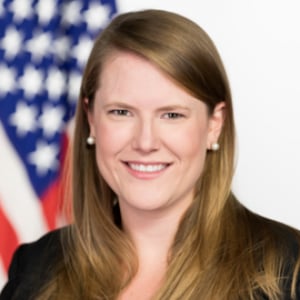
Deputy Policy Director, U.S. Senate Committee on Commerce, Science & Transportation

Director, Government Affairs, Semiconductor Industry Association
Maryam Cope is director of government affairs at SIA. In this role, Maryam works closely with industry, Congress, and the Administration to advance key legislative and regulatory priorities related to semiconductor research and technology, high-skilled immigration, and product security.
Maryam brings over a decade of technology policy and advocacy experience to SIA. Prior to SIA, she was managing partner for the technology practice at GoldsteinCope Policy Solutions. She also established the technology policy practice at the American Hotel & Lodging Association. Maryam also worked at the Information Technology Industry Council, where she led advocacy efforts in the areas of cybersecurity, encryption, and supply chain security.
Maryam began her career with Sen. Kay Bailey Hutchison. As professional staff for the United States Senate Committee on Commerce, Science, and Transportation, she focused on innovation, cybersecurity, emerging technologies, and R&D, including the reauthorization of the America COMPETES Act of 2010.
Maryam holds a Bachelor’s degree in Biology from Northwestern University, and a graduate certificate from Stanford’s Graduate School of Business Executive Program for Women Leaders.
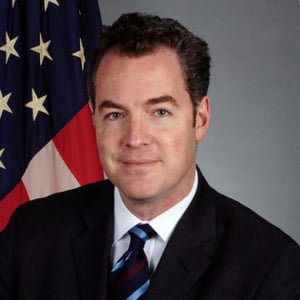
President and Founder, JKC Consulting LLC
John Kneuer is the President and Founder of JKC Consulting LLC. He sits on multiple public and private company boards.
Prior to starting Kneuer LLC, Mr. Kneuer served as the Assistant Secretary of Commerce for Communications and Information. In this capacity Mr. Kneuer was the principal advisor to the President of the United States on telecommunications policy and the Administrator of the National Telecommunications and Information Administration ("NTIA").In addition to representing the Executive Branch in domestic and international telecommunications and information policy activities, NTIA also manages the federal use of spectrum; performs cutting edge telecommunications research and engineering, including resolving technical telecommunications issues for the federal government and private sector; and administers infrastructure and public telecommunications facilities grants.
Prior to his service at NTIA, Mr. Kneuer served as a Senior Associate at the law firm of Piper Rudnick in Washington, D.C., providing regulatory and legislative representation to corporate clients in the telecommunications, defense, and transportation industries. Earlier in his career, Mr. Kneuer served as the Executive Director for Government Relations at the Industrial Telecommunications Association, and prior to that served as an Attorney-Advisor in the Commercial Wireless Division of the Federal Communications Commission's Wireless Bureau. Mr. Kneuer received B.A. and J.D. degrees from the Catholic University of America.

Partner, HWG LLP
Patricia Paoletta is a partner with the law firm of HWG LLP, where she specializes in telecommunications, trade and technology policy. Ms. Paoletta provides advice on regulatory, trade and legislative policy to clients before the FCC, Congress and the Administration. Her clients include providers of content, cloud, mobile broadband, VoIP, international telecommunications, small cells, cognitive radio, public safety and homeland security solutions. She serves on Advisory Boards for several entities engaged in information services, communications and technology.
Ms. Paoletta has accrued considerable experience with telecommunications trade and policy in the public sector. From 1990 to 1995, she was senior advisor to the International Bureau Chief and Office Director at the Federal Communications Commission. In the mid 1990s, Ms. Paoletta served as Director of Telecommunications Trade Policy in the Office of the U.S. Trade Representative, Executive Office of the President, where she worked on the WTO Information Technology Agreement (ITA) and the Basic Telecommunications Agreement. After USTR, Ms. Paoletta served as Majority Counsel to the House Energy and Commerce Committee. She then moved to Level 3 Communications, as Vice President, Government Relations.
Ms. Paoletta is on the Steering Committee of the Transatlantic Roundtable on Telecommunications and Information Technology of the European Institute. She is a member of the USTR Alumni Association, Washington International Trade Association, the Federal Communications Bar Association (FCBA), and Women in Technology. Ms. Paoletta has served on the Board of Advisors for the Inter-American Dialogue's Latin America Telecom Advisor, Co-Chairman of the American Bar Association International Communications Committee, and as a member of the U.S. Chamber of Commerce's Technology Policy Committee.
Ms. Paoletta served as a delegate in 2012 to the ITU-R's Study Group 6 Working Party 6A Meeting and in 2009 and 2010 to the ITU-R's Study Group I Working Party IB Meetings; the 2009 meetings of CITEL (the Committee on International Telecommunications at the Organization of American States) PCC-II; the International Telecommunication Union (ITU) World Telecommunications Standards Assembly (2000); the ITU Internet Protocol Telephony Experts Group and the ITU World Telecommunications Policy Forum in 2001; as Chairman of the National Reliability and Interoperability Council (NRIC) Steering Committee (2000-2001); as Board Member for the Voice on the Net Coalition (2001); as Co-Chairman of the FCBA's Annual Seminar Committee (2009-2011); as a member of the FCBA's Ad Hoc Speakers Committee (2006-2007); as Co-Chairman for the FCBA International Practice Committee (2001-2002 and 2005-2006); and as a Co-Chairman of the FCBA Legislative Practice Committee (1999-2000).
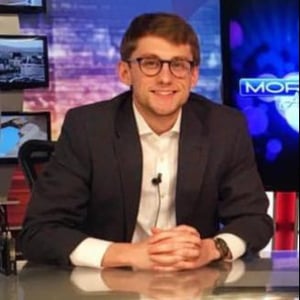
Policy Advisor, Federal Communications Commission
Gregory Watson serves as policy advisor to Federal Communications Commissioner Brendan Carr. Prior to joining Commissioner Carr’s office, Greg served as a Policy Advisor to the Chief Technology Officer of the United States in the White House Office of Science and Technology Policy where he led efforts to increase broadband access through the American Broadband Initiative. He was also involved with the Administration’s efforts to advance America’s leadership in 5G. Prior to his tenure at the White House, Greg was an advisor to Congressman Steve Scalise and the House Energy and Commerce Committee where he handled a broad range of communications and technology issues. Before moving to Washington, DC, he was a campaign aide to Congressman Fred Upton. Greg is a graduate of East Carolina University, where he studied History and Political Science.
Executive Director, Center for Law, Science and Innovation, Sandra Day O'Connor College of Law
Josh Abbott serves as Executive Director of the Center for Law, Science & Innovation at Arizona State University’s Sandra Day O’Connor College of Law. His research interests focus on the ethical, legal, and social issues surrounding new and emerging digital technologies. He is currently collaborating on a grant project on “Soft Law” Governance of AI technologies. He also organizes ASU’s annual conference on Governance of Emerging Technologies and Science (GETS) as well as the ASU-Arkfeld eDiscovery, Law and Technology Conference. Prior to joining the College of Law, Josh worked as an attorney in Washington, D.C., where his practice focused on international telecom regulation and antitrust litigation.
James A. Baker III Chair in the Rule of Law and World Affairs and Associate Dean for Academic Affairs, The University of Texas at Austin School of Law
Bobby Chesney holds the James Baker Chair and also serves as the Associate Dean for Academic Affairs at the University of Texas School of Law. In addition, he is the Director of the Robert S. Strauss Center for International Security and Law, a University-wide research unit bridging across disciplines to improve understanding of international security issues.
In 2009, Professor Chesney served in the Justice Department in connection with the Detention Policy Task Force created by Executive Order 13493. He also previously served the Intelligence Community as an associate member of the Intelligence Science Board and as a member of the Advanced Technology Board. In addition to his current positions at the University of Texas, he is a member of the American Law Institute, and a senior editor for the Journal of National Security Law & Policy, and a former non-resident Senior Fellow of the Brookings Institution.
Professor Chesney is a co-founder and contributor to www.lawfareblog.com, the leading source for analysis, commentary, and news relating to law and national security. In addition to his blogging at Lawfare, those interested in national security law should consider following Professor Chesney on Twitter (@bobbychesney) as well as subscribing to the National Security Law Podcast (which he co-hosts with his colleague Steve Vladeck). Professor Chesney's scholarship focuses on U.S. national security policies and institutions, encompassing both domestic and international law issues. His articles may be downloaded from SSRN here.
Professor Chesney is a magna cum laude graduate of both Texas Christian University and Harvard Law School. After law school he clerked for the Honorable Lewis A. Kaplan of the United States District Court for the Southern District of New York and the Honorable Robert D. Sack of the United States Court of Appeals for the Second Circuit. He then practiced with the firm Davis Polk & Wardwell in New York (litigation), before beginning his academic career with Wake Forest University School of Law. There he received a teacher of the year award from the student body in one year, and from the school's dean in another. In 2008 he came to the University of Texas School of Law as a visiting professor, and then joined UT on a permanent basis in 2009. He became the Associate Dean for Academic Affairs in 2011.
Professor Chesney teaches a variety of courses, including: Constitutional Law, National Security Law, Foundations of Cybersecurity: Law, Institutions, and Policy; Law of the Intelligence Community; History of U.S. Counterterrorism Law & Policy: 1970 to Present; Evidence, Civil Procedure, and an array of seminars. He is from San Antonio.

Adjunct Professor of Law, Scalia Law; Google, Corporate Counsel
Kathryn Ciano Mauler currently serves as a Corporate Counsel at Google. Prior to Google, Kathryn was Senior Regulatory Counsel at Uber Technologies, and also spent three years at i360, LLC as General Counsel. Before this, she also worked at a boutique law firm in Washington, D.C. and at the Institute for Justice.
She received her B.A. from the University of Florida. She also received her business degree from the University of Florida - Warrington College of Business, studying at the Ecole supérieure de Commerce de Toulouse in France. Kathryn's J.D. is from the George Mason University School of Law.
Head of Tech & Innovation, Centre for Policy Studies
Matthew Feeney is Head of Tech & Innovation at Centre for Policy Studies. Before joining CPS, Matthew was the director of Cato Institute’s Project on Emerging Technologies. His writing has appeared in The New York Times, The Washington Post, City A.M., and others. He received both his BA and MA in philosophy from the University of Reading.

Chairman and CEO, Stand Together
Brian Hooks is president of the Charles Koch Foundation and chairman and CEO of Stand Together, a philanthropic community that works with more than 700 business leaders and philanthropists to empower people to realize their unique potential and help every person rise. Stand Together’s comprehensive approach to addressing the country’s biggest challenges includes support for more than 1000 professors at 300 universities, tens of thousands of K-12 teachers, more than 160 community-based organizations addressing persistent poverty, and millions of grassroots activists working to improve public policy.
Previously, Brian served as executive director and COO of the Mercatus Center at George Mason University, where he led strategy and operations for a growing research, education, and public policy center.

President and CEO, Foundation for Individual Rights in Education (FIRE)
Greg Lukianoff is an attorney, New York Times best-selling author, and the President and CEO of the Foundation for Individual Rights in Education (FIRE). He is the author of Unlearning Liberty: Campus Censorship and the End of American Debate, Freedom From Speech, and FIRE’s Guide to Free Speech on Campus. Most recently, he co-authored The Coddling of the American Mind: How Good Intentions and Bad Ideas Are Setting Up a Generation for Failure with Jonathan Haidt. This New York Times best-seller expands on their September 2015 Atlantic cover story of the same name. Greg is also an Executive Producer of Can We Take a Joke? (2015), a feature-length documentary that explores the collision between comedy, censorship, and outrage culture, both on and off campus, and of Mighty Ira: A Civil Liberties Story (2020), a feature-length film about the life and career of former ACLU Executive Director Ira Glasser.
Greg has been published in The New York Times, The Wall Street Journal, The Washington Post, Los Angeles Times, The Boston Globe, and numerous other publications. He frequently appears on TV shows and radio programs, including the CBS Evening News, The Today Show, and NPR’s Morning Edition. In 2008, he became the first-ever recipient of the Playboy Foundation’s Freedom of Expression Award, and he has testified before both the U.S. Senate and the House of Representatives about free speech issues on America’s college campuses.

Executive Vice President, The Federalist Society
Dean Reuter is Executive Vice President at the Federalist Society for Law and Public Policy Studies. He has served in two federal government agency Offices of the Inspector General, as Counsel to the Inspector General and Deputy Inspector General, responsible for policing the use of federal funds granted and contracted through those agencies. As such, he helped conduct and oversee criminal investigations across the country. He is the principal author of the non-fiction book, The Hidden Nazi: The Untold Story of America's Deal with the Devil, and editor of Liberty’s Nemesis: The Unchecked Expansion of the State and Confronting Terror: 9/11 and the Future of American National Security. He was appointed by the President and served as Vice-Chairman of the Board of Directors of the Corporation for National and Community Service, and recently served as an appointee on the U.S. Commission on Presidential Scholars. He is a graduate of Hood College (BA with Honors) and the University of Maryland School of Law.

Professor of Law, Antonin Scalia Law School, George Mason University
Adam Mossoff is Professor of Law at Antonin Scalia Law School, George Mason University. He has published extensively on why patents, copyrights, and other intellectual property rights have been—and should be—legally secured to innovators and creators as property rights. His scholarship has been relied on by the United States Supreme Court, by lower federal courts, and by U.S. federal agencies. He has been invited to testify numerous times before the U.S. Senate and the House of Representatives on intellectual property legislation. His writings on intellectual property policy have also appeared in the Wall Street Journal, New York Times, Forbes, Investors Business Daily, and in other media outlets. His journal articles can be downloaded here.
Professor Mossoff is a longstanding member of the Executive Committee of the Intellectual Property Practice Group of the Federalist Society, on which he served as Chairperson from 2016-2018, and he is Chair of the Intellectual Property Working Group of the Regulatory Transparency Project of the Federalist Society. He is a Senior Fellow and Chair of the Forum for Intellectual Property at the Hudson Institute, a Visiting Intellectual Property Fellow at the Heritage Foundation, and a member of the Board of Directors of the Center for Intellectual Property Understanding. He is a member of the Intellectual Property Rights Policy Committee of ANSI and he has served as Chair and Vice-Chair of the Intellectual Property Committee of the IEEE-USA, on which he remains a member in good standing.
Senior Policy Advisor, Speaker Nancy Pelosi
Wendell Primus is the Senior Policy Advisor on Budget and Health Issues to Speaker Nancy Pelosi. In that capacity, he was the lead staffer in developing the Affordable Care Act. He also played a major role in the SGR legislation in 2015 and various budget agreements. Prior to this appointment in March, 2005, Dr. Primus was the Minority Staff Director at the Joint Economic Committee. He has also held positions at the Center on Budget and Policy Priorities, served in the Clinton Administration at the Department of Health and Human Services and also served as Chief Economist for the House Ways and Means Committee and Staff Director for the Committee's Subcommittee on Human Resources. Dr. Primus received his Ph.D. in economics from Iowa State University.
Executive Vice President, The Federalist Society
Dean Reuter is Executive Vice President at the Federalist Society for Law and Public Policy Studies. He has served in two federal government agency Offices of the Inspector General, as Counsel to the Inspector General and Deputy Inspector General, responsible for policing the use of federal funds granted and contracted through those agencies. As such, he helped conduct and oversee criminal investigations across the country. He is the principal author of the non-fiction book, The Hidden Nazi: The Untold Story of America's Deal with the Devil, and editor of Liberty’s Nemesis: The Unchecked Expansion of the State and Confronting Terror: 9/11 and the Future of American National Security. He was appointed by the President and served as Vice-Chairman of the Board of Directors of the Corporation for National and Community Service, and recently served as an appointee on the U.S. Commission on Presidential Scholars. He is a graduate of Hood College (BA with Honors) and the University of Maryland School of Law.
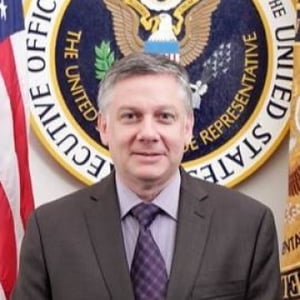
Assistant U.S. Trade Representative for Labor
Lewis Karesh was named Assistant U.S. Trade Representative for Labor Affairs in August 2005. In this capacity, he oversees trade and labor issues for USTR, including negotiation of labor provisions in multilateral, regional, and bilateral free trade agreements, monitoring and enforcement of those labor provisions, countries' adherence to worker rights provisions of U.S. trade preference programs, and development of U.S. positions on the relationship between trade and labor in international fora, including the International Labor Organization, World Trade Organization, Organization for Economic Cooperation and Development, and Asia-Pacific Economic Cooperation.
Mr. Karesh began his work on trade and labor issues in 1994 with the negotiation and implementation of the North American Agreement on Labor Cooperation (the labor supplemental agreement to the North American Free Trade Agreement). From 1996 to 2005, Mr. Karesh served in the U.S. Department of Labor’s Bureau of International Labor Affairs as Deputy Director and then Director of the office responsible for administering U.S. obligations under the North American Agreement on Labor Cooperation and the labor chapters of bilateral and regional free trade agreements. During his tenure, Mr. Karesh served as the Department’s lead representative on U.S. labor and dispute settlement negotiating teams for free trade agreements with Chile, Singapore, Australia, Central America, Morocco, and Bahrain.
From 1988 to 1996, Mr. Karesh worked as an attorney in the Department of Labor's Office of the Solicitor serving as legal counsel on a variety of domestic labor matters, including the Labor-Management Reporting and Disclosure Act and the Veterans’ Reemployment Rights Act, and international labor matters, including the North American Free Trade Agreement, the World Trade Organization, and the International Labor Organization.
Mr. Karesh holds a J.D. from the University of North Carolina and a B.S. in Industrial Engineering from North Carolina State University.
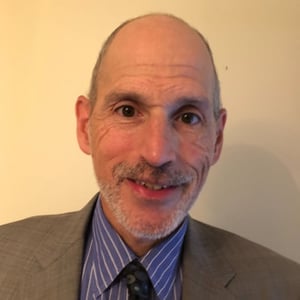
Director, Office of Trade and Labor Affairs, Bureau of International Labor Affairs, U.S. Department of Labor
Matthew Levin’s office oversees the negotiation and implementation of labor provisions in free trade agreements, participates in the administration of U.S. trade preference programs, negotiates guidelines governing lending by multilateral development banks and international financial institutions, and coordinates international technical cooperation addressing worker rights in key trading partner countries. Mr. Levin participated in the negotiation of the USMCA Labor Chapter and the Rapid Response Labor Mechanism. He has served as legal counsel to the U.S. delegation to the International Labor Organization Conference on numerous occasions and has a long history of working on labor issues all over of the world. Mr. Levin graduated from the State University of New York in Albany and Case Western Reserve University School of Law.

Stefan Marculewicz is a Shareholder in the Washington, DC office of Littler Mendelson, P.C., and focuses his legal practice on traditional labor law matters, international labor law and standards, and non-traditional worker representation.
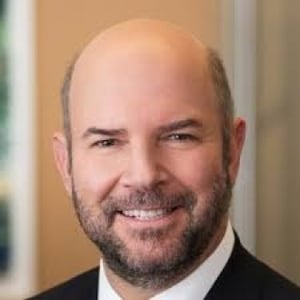
Partner, Morgan, Lewis & Bockius LLP
Philip A. Miscimarra is the former Chairman of the National Labor Relations Board (NLRB). Phil leads the firm’s NLRB special appeals practice and is co-leader of Morgan Lewis Workforce Change, which manages all employment, labor, benefits, and related issues arising from mergers, acquisitions, startups, workforce reductions, and other types of business restructuring. He represents clients on a wide range of labor and employment issues, with a focus on labor-management relations, business acquisitions and restructuring, and employment litigation. Phil is also a Senior Fellow at the University of Pennsylvania's Wharton School and the Wharton Center for Human Resources. He is admitted in Illinois only, and his practice is supervised by DC Bar members.
Phil was named Chairman of the NLRB by President Donald J. Trump on April 24, 2017, after previously serving as Acting Chairman and a Board Member. He was appointed to the NLRB by President Barack Obama on April 9, 2013, and was approved unanimously by the Senate Committee on Health, Education, Labor, and Pensions on May 22, 2013. He was confirmed by voice vote in the US Senate on July 30, 2013, and served from August 7, 2013, to December 16, 2017. Upon the completion of his term, Phil served on the NLRB longer than 26 other board members over the past 30 years.
Phil is the author or co-author of several books involving labor law issues, including The NLRB and Managerial Discretion: Subcontracting, Relocations, Closings, Sales, Layoffs, and Technological Change (2d ed. 2010) (by Miscimarra, Turner, Friedman, Callahan, Conrad, Lignowski and Scroggins); The NLRB and Secondary Boycotts (3d ed. 2002) (by Miscimarra, Berkowitz, Wiener and Ditelberg); and Government Protection of Employees Involved in Mergers and Acquisitions (1989 and 1997 supp.) (by Northrup and Miscimarra); and other publications. He has also testified on labor and employment law issues in the United States Congress.
Chambers USA named Phil one of the leading lawyers for employment law in the United States from 2004 to 2012, based on the views of clients, peers, and other industry professionals. He has been described as a "fantastic lawyer" and "prolific writer," with clients admiring his "multilayered abilities and business savvy" and his "high level of integrity."
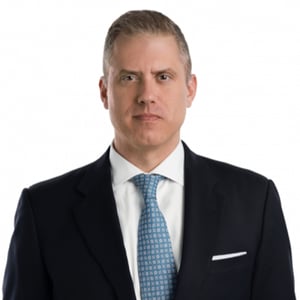
Member, Miller & Chevalier
Anthony Provenzano's practice focuses on the tax, ERISA, and other laws impacting executive compensation and employee benefits, as well as the employment tax and reporting issues that may arise with respect to such arrangements. He routinely advises clients on the various rules regarding non-qualified, equity, and tax-qualified arrangements, and the surrounding employment tax and deduction issues. In addition, Mr. Provenzano's practice includes controversy matters involving the IRS, DOL and PBGC exams and disputes.
Mr. Provenzano's extensive experience in executive compensation and employee benefit matters allows him to advise clients on the broader legal implications of an arrangement and how various benefit regimes could interact. His experience in handling controversy matters, involving split dollar arrangements, deferred compensation programs, mispriced stock options, and qualified plans, can also help a client understand how plan language may be viewed by a government examiner or a participant asserting a claim. Clients quoted by Chambers have described Mr. Provenzano as "very thorough and very knowledgeable of the tax code."
Mr. Provenzano is frequently asked to speak on matters regarding executive compensation, including deferred compensation and the attendant payroll tax and reporting obligations with respect to such arrangements, the deduction limitations under Internal Revenue Code Section 162(m), defending against IRS executive compensation and employment tax audits, and IRS guidance regarding correction of failures under a Code Section 409A arrangement.

Revisiting Philadelphia National Bank: The Structural Presumption and the Future of Merger Review
Debbie Feinstein, Douglas H. Ginsburg, Herbert Hovenkamp, Michael Murray, Rahul Rao, D. Daniel Sokol
The 1963 Supreme Court case United States v. Philadelphia National Bank established a "structural presumption": if a merger...
Talks With Authors: Better Money: Gold, Fiat, Or Bitcoin?
Bert Ely, Alexandra Gaiser, Alex J. Pollock, Lawrence H. White
In Better Money: Gold, Fiat, Or Bitcoin?, monetary expert Lawrence H. White delves into the...
Courthouse Steps Decision Webinar: FCC v. Prometheus Radio Project
Jane Mago, Michael O'Rielly, Lawrence J. Spiwak, Christopher J. Wright
On April 1, 2021, the U.S. Supreme Court decided Federal Communications Commission v. Prometheus Radio...
Courthouse Steps Oral Argument Teleforum: NCAA v. Alston
Joshua D. Wright
On March 31, 2021, the Supreme Court hears oral arguments in the case of NCAA v....
ICT Supply Chain Security: A Panel Discussion
Kelsey Guyselman, Maryam Khan Cope, John Kneuer, Patricia J. Paoletta, Gregory Watson
On February 24, 2021, President Biden signed an executive order (EO) on a whole-of-government strategy...
Deep Dive Episode 168 – Deepfakes: What, If Anything, Should Policymakers Do?
Joshua Abbott, Robert Chesney, Kathryn Ciano Mauler, Matthew Feeney
“Deepfakes” are one of the latest technologies to prompt debate about online media. Using Deepfake...
Book Review: Believe in People: Bottom-Up Solutions for a Top-Down World
Brian Hooks, Greg Lukianoff, Dean Reuter
Following a year of disruptions not seen in generations: a global pandemic, economic crisis, social...
International Reference Pricing and Negotiation: Yes or No?
Adam Mossoff, Wendell Primus, Dean Reuter
Drug prices are a pressing policy issue. On November 20, 2020, President Donald Trump announced two new...
The USMCA and the Rapid Response Enforcement Mechanism - Enforcing Compliance with Labor Laws through Free Trade Agreements?
Lewis Karesh, Matthew Levin, Stefan J. Marculewicz, Philip A. Miscimarra
The United States Mexico Canada Agreement (USMCA) free trade agreement went into force in July...
Courthouse Steps Decision Teleforum: Rutledge v. Pharmaceutical Care Management Association
Anthony G. Provenzano
On December 10, 2020, the Supreme Court released its decision in Rutledge v. Pharmaceutical Care...