
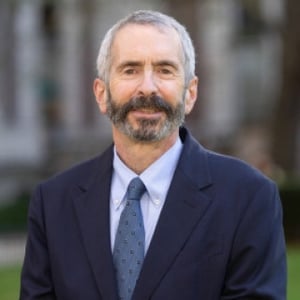
Joseph P. Chamberlain Professor of Legislation, Columbia Law
Since joining the Columbia Law School faculty in 1983, Richard Briffault has combined public and government service with teaching, research, and scholarship. He is the Law School’s authority on state and local government; the news media often turns to him for his expert insight into and analysis of issues central to democracy and the political process such as campaign finance reform, government ethics, gerrymandering, election administration, and fair elections. He is also a leading thinker on “the new preemption,” a critique of states that are increasingly passing ideological laws that override local ordinances. Working with the Local Solutions Support Center, he educates city and county government officials on how to respond to state preemption.
Briffault is a pillar of the Columbia Law School community. He has served as a vice dean at three different times during his career. He sits on the advisory board of The Max Berger ’71 Public Interest/Public Service Fellows Program and on the board of directors of the Columbia Journal of Law & Social Problems.
A prodigious scholar, Briffault has written or coauthored more than 90 law review and journal articles as well as books and monographs, including Dollars and Democracy: A Blueprint for Campaign Finance Reform; Cleaning Up Hazardous Waste: Is There a Better Way?; the fifth, sixth, seventh, eighth, and ninth editions of the casebook State and Local Government Law; and The New Preemption Reader.
Before becoming an academic, Briffault was a clerk to Judge Shirley M. Hufstedler of the 9th U.S. Circuit Court of Appeals, an assistant counsel to New York Governor Hugh L. Carey, and an associate at Paul Weiss Rifkind Wharton & Garrison. During his tenure at Columbia Law, he has served as a member of, or consultant to, an array of New York state and city commissions, including the New York State Moreland Act Commission to Investigate Public Corruption. From 2014 to 2020, Briffault served as chair of the New York City Conflicts of Interest Board. He is the reporter for the American Law Institute’s Project on Principles of Government Ethics, vice-chair of the Citizens Union of the City of New York, and a member of the New York State Bar Association Committee on Professional Ethics.
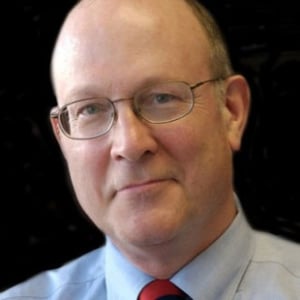
Professor Emeritus of Law, Antonin Scalia Law School, George Mason University
Jeremy A. Rabkin is a Professor Emeritus of Law at the Antonin Scalia Law School, George Mason University. Before joining the faculty in June 2007, he was for over two decades a professor in the Department of Government at Cornell University. Professor Rabkin serves on the board of directors of the Center for Individual Rights, a public interest law firm based in Washington, D.C. Previously he was a board member of the U.S. Institute of Peace and the board of academic advisors of the American Enterprise Institute.
Professor Rabkin’s books include Law Without Nations? (Princeton University Press, 2005). He authored “If You Need a Friend, Don’t Call a Cosmopolitan,” a chapter in Varieties of Sovereignty and Citizenship (Sigal R. Ben-Porath & Rogers M. Smith eds., University of Pennsylvania Press, 2012). His articles have appeared in major law reviews and political science journals and his journalistic contributions in a range of magazines and newspapers, including the Washington Post and the Wall Street Journal.
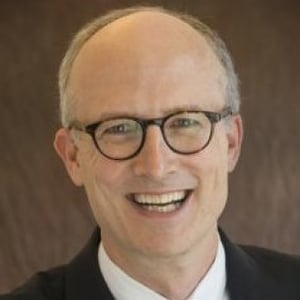
Michael J. Marks Professor of Law, University of Chicago Law School
M. Todd Henderson is the Michael J. Marks Professor of Law at the University of Chicago Law School. Professor Henderson’s research interests include corporations, securities regulation, and law and economics. He has taught classes ranging from Banking Regulation to Torts to American Indian Law.
Professor Henderson received an engineering degree cum laude from Princeton University in 1993. He worked for several years designing and building dams in California before matriculating at the Law School. While at the Law School, Todd was an editor of the Law Review and captained the Law School's all-University champion intramural football team. He graduated magna cum laude in 1998 and was elected to the Order of the Coif. Following law school, Todd served as clerk to the Hon. Dennis Jacobs of the US Court of Appeals for the Second Circuit. He then practiced appellate litigation at Kirkland & Ellis in Washington, DC, and was an engagement manager at McKinsey & Company in Boston, where he specialized in counseling telecommunications and high-tech clients on business and regulatory strategy.

Laurence A. Tisch Professor of Law and Director, Classical Liberal Institute, New York University School of Law; Director, Classical Liberal Institute, Civitas Institute University of Texas at Austin
Richard A. Epstein is the inaugural Laurence A. Tisch Professor of Law at NYU School of Law. Prior to his joining the faculty, he was a visiting law professor at NYU from 2007 through 2009. He served as the Peter and Kirstin Bedford Senior Fellow at the Hoover Institution from 2000 to 2024. Since 2024 to the present he is a senior lecturer at the Civitas Institute at the University of Texas—Austin. Epstein is also the James Parker Hall Distinguished Service Professor of Law Emeritus and a senior lecturer at the University of Chicago. His initial law school appointment was at the University of Southern California from 1968 to 1972. Epstein received an LL.D., h.c. from the University of Ghent, 2003. He has been a member of the American Academy of Arts and Sciences since 1985 and was a Senior Fellow of the Center for Clinical Medical Ethics at the University of Chicago Division of Biological Sciences, also from 1983. to 2022 He served as editor of the Journal of Legal Studies from 1981 to 1991, and of the Journal of Law and Economics from 1991-2001. From 2001 to 2010 he was a director of the John M. Olin Program in Law and Economics at the University of Chicago.
His newest book, The Myth of Birthright Citizenship: What the Fourteenth Amendment Really Says was published in 2026 (Encounter Books). Prior to that he has published many books including, The Dubious Morality of the Modern Administrative State (Roman & Littlefield 2020).Earlier he published th Classical Liberal Constitution: The Uncertain Quest for Limited Government (Harvard 2014) iHis previous books include Design for Liberty: Private Property, Public Administration and the Rule of Law (Harvard 2011); The Case Against the Employee Free Choice Act (Hoover 2009); Supreme Neglect: How to Revive the Constitutional Protection of Property Rights (Oxford 2008); Antitrust Decrees in Theory and Practice: Why Less is More (AEI 2007); Overdose: How Excessive Government Regulation Stifles Pharmaceutical Innovation (Yale University Press. 2006); How Progressives Rewrote the Constitution (Cato 2006); Cases and Materials on Torts (Aspen Law & Business; 8th ed. 2004); Skepticism and Freedom: A Modern Case for Classical Liberalism (University of Chicago, 2003); Torts (Aspen Law & Business 1999); Principles for a Free Society: Reconciling Individual Liberty with the Common Good (Perseus Books, 1998): Mortal Peril: Our Inalienable Rights to Health Care (Addison-Wesley, 1997); Simple Rules for a Complex World (Harvard, 1995); Bargaining With the State (Princeton, 1993); Forbidden Grounds: The Case Against Employment Discrimination Laws (Harvard , 1992); Takings: Private Property and the Power of Eminent Domain (Harvard, 1985); and Modern Products Liability Law (Greenwood Press, 1980). He has also edited(with Catherine M. Sharkey) Cases and Materials on the Law of Torts (10th edition 2012).
Professor Epstein has written numerous articles on a wide range of legal and interdisciplinary subjects. He has taught courses in administrative law, antitrust law, civil procedure, communications, constitutional law, contracts, corporations, criminal law, employment discrimination law, environmental law, food and drug law health law and policy, legal history, labor law, property, real estate development and finance, jurisprudence, labor law; land use planning, patents, individual, estate and corporate taxation, Roman Law; torts, and workers' compensation.
Professor Epstein also writes a regular column for Civitas Institute, which also sponsors his podcast, The Libertarian with Charles C.W. Cooke, and Law Talk, with Cooke and John Yoo. He also does a podcast with John Batchelor. And appears regularly on the Freedom File with Judge Andrew Napolitano.

Maurice and Hilda Friedman Professor of Law, Columbia Law School; CEO, New Civil Liberties Alliance
Philip Hamburger is the Maurice and Hilda Friedman Professor of Law at Columbia Law School, and Chief Executive Officer at the New Civil Liberties Alliance. Before coming to Columbia, he was the John P. Wilson Professor at the University of Chicago Law School.
He writes on constitutional law and its history—with particular emphasis on religious liberty, freedom of speech and the press, judicial office, administrative power, and unconstitutional conditions.
His books are Separation of Church and State (Harvard 2002), Law and Judicial Duty (Harvard 2008), Is Administrative Law Unlawful? (Chicago 2014), The Administrative Threat (Encounter 2017), and Liberal Suppression: Section 501(c)(3) and the Taxation of Speech (Chicago 2018). A forthcoming book is Purchasing Submission: Conditions, Power, and Freedom (Harvard 2021).
He is a member of the American Academy of Arts and Sciences, and he has served on the board of directors of the American Society for Legal History. He has twice received the Sutherland Prize for the most significant contribution to English legal history, and has been awarded the Henry Paolucci - Walter Bagehot Book Award, the Hayek Book Prize, and the Bradley Prize.
Attorney, Klein O'Neill & Singh LLP
Mr. Klein is a registered patent attorney with over thirty years of experience in patent and trademark prosecution, licensing, opinion work, and litigation. Mr. Klein has written and prosecuted hundreds of patents in a wide variety of technologies. He has been engaged extensively in validity and infringement opinions, and he has experience in the litigation of all aspects of IP: Patents, trademarks, copyrights, and trade secrets.
Mr. Klein has served clients throughout the United States, as well as Europe, Taiwan, and Australia. Clients include start-up companies, and corporations of all sizes, including Fortune 500® companies.
Mr. Klein is now also an Adjunct Professor of Law at Chapman University Law School.
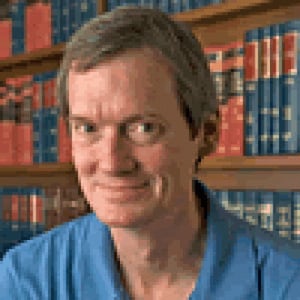
Albert E. Cinelli Enterprise Professor of Law, Columbia Law School
Law clerk to Judge Joseph T. Sneed, U.S. Court of Appeals for the Ninth Circuit (1985-1986) and Justice Lewis F. Powell, Jr. of the U.S. Supreme Court (1986-1987). Practiced real estate and transactional law in Houston, Texas (1987-1991). Worked for the Justice Department as an Assistant for the Solicitor General of the United States, (1991-1994).
Joined the Columbia faculty on July 1, 2007 after holding tenured positions at the University of Michigan, University of Texas, and the Washington University School of Law. A nationally renowned scholar in the areas of secured credit, payment systems, and intellectual property, he has authored dozens of law review articles in leading law reviews, as well as pathbreaking casebooks on Payment Systems and Electronic Commerce.
He is a member of the American Law Institute, a conferee of the National Bankruptcy Conference, and a frequent visiting scholar at Federal Reserve Banks.
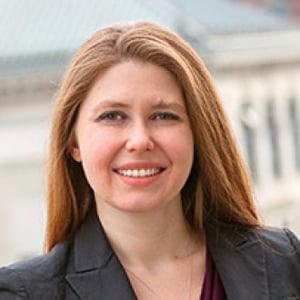
Professor of Law, Brooklyn Law School
Professor Mulligan teaches Internet law, intellectual property law, and trusts & estates. Her research addresses efforts to adapt intellectual property law for the digital age, the relationship between law and technology, and theories of constitutional interpretation. Recently, she has written about the Internet of Things, robot punishment, and early translations of the Constitution.
While at Brooklyn, Professor Mulligan researched as a visiting scholar at the Georgetown Center for the Constitution and taught as a visiting associate professor at Yale Law School. Previously, she taught at the University of Georgia and was a postdoctoral associate and lecturer in law at the Information Society Project at Yale Law School. Her scholarship has been published in a variety of journals and law reviews, including Georgia Law Review, SMU Law Review, and Constitutional Commentary.
Professor Mulligan earned her bachelor’s degree cum laude and her law degree cum laude from Harvard University, where she worked as a production and article editor for the Harvard Journal of Law & Technology. Before entering academia, she served as a law clerk for Judge Charles F. Lettow of the U.S. Court of Federal Claims.
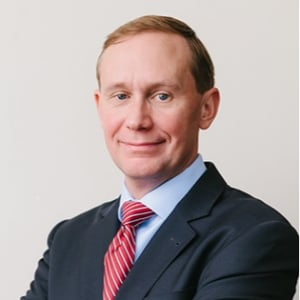
Associate Professor, Boston College Law School
David Olson is an associate professor and the Faculty Director of the Program on Innovation and Entrepreneurship. He teaches patent law, intellectual property law, antitrust law, and various seminars. His research and writing primarily focus on patents, copyrights, antitrust, and incentives for innovation and competition. Since joining BC Law in 2007, he has been recognized for his teaching excellence and contributions. In 2011, he received the Business & Law Society Faculty Award for Achievement in Business & Law. In 2012, he received the Professor Emil Slizewski Award for Faculty Excellence. For one semester in 2015, Olson served as a visiting professor at Pontifical Catholic University, Rio de Janeiro, Brazil, where he conducted research and taught a course on intellectual property.
Olson has published scholarly articles on patent law, copyright law, antitrust, music licensing, and first amendment copyright issues. His writing has been cited in Supreme Court and other legal opinions. He has testified before the U.S. Congress on matters of drug patents, FDA regulation, and antitrust.
The media frequently seeks Olson’s insights and opinions. He has been quoted in the Wall Street Journal, Associated Press, and Reuters, among others. He has appeared as a guest panelist on WBUR’s Radio Boston, WAMU's Kojo Namdi Show, and Public Radio Canada. His op-eds have appeared in the Chicago Tribune, Washington Times, and The Hill.
Olson came to Boston College from Stanford Law School's Center for Internet and Society, where he conducted research on patent law and litigated copyright fair use impact cases. Before entering academia, Olson practiced law as a patent litigator. He clerked for Judge Jerry Smith of the U.S. Court of Appeals for the Fifth Circuit.
Lecturer in Law; Executive Director, Public Patent Foundation, Cardozo School of Law
Daniel B. Ravicher is a Lecturer in Law at Benjamin N. Cardozo School of Law and Executive Director of the Public Patent Foundation (“PUBPAT”). Labeled a modern day 'Robin Hood' by Science, named one of "The 50 Most Influential People in IP" by Managing Intellectual Property, and awarded anEchoing Green Fellowship for social entrepreneurship, Professor Ravicher is a registered patent attorney who writes and speaks frequently on patent law and policy, including testifying as an invited witness before Congress on the topic of patent reform. Professor Ravicher writes about patent policy issues for the Huffington Post and patent related corporate valuations issues for Seeking Alpha and through the Ravicher Reports. He is on Twitter@danravicher.
Professor Ravicher received his law degree from the University of Virginia School of Law, where he was the Franklin O'Blechman Scholar of his class, a Mortimer Caplin Public Service Award recipient and an Editor of the Virginia Journal of Law and Technology, and his bachelors degree in materials science magna cum laude with University Honors from the University of South Florida. He is admitted to the United States Supreme Court, the Courts of Appeals for the Federal, 2nd and 11th Circuits, the District Courts for the Southern and Eastern Districts of New York, the State of New York, and the United States Patent and Trademark Office.
Professor of Political Science, Brown University
COREY BRETTSCHNEIDER is professor of political science at Brown University, where he teaches courses in political theory and public law. He is also professor, by courtesy, of philosophy. Brettschneider was a Rockefeller faculty fellow at the Princeton University Center for Human Values for the 2010-2011 academic year, a visiting associate professor at Harvard Law School for the 2009 winter term, and a faculty fellow at Harvard's Safra Center for Ethics for the 2006-2007 academic year. Brettschneider received a PhD in politics from Princeton University and a JD from Stanford University. He is the author ofWhen the State Speaks, What Should it Say? How Democracies Can Protect Expression and Promote Equality, (Princeton University Press, 2012) and Democratic Rights: The Substance of Self-Government (Princeton University Press, 2007). Brettschneider is also the author of a casebook, Constitutional Law and American Democracy: Cases and Readings, (Aspen Publishers/Wolters Kluwer Law and Business, 2011). His articles include "A Transformative Theory of Religious Freedom," in Political Theory (2010), "When the State Speaks, What Should it Say? Democratic Persuasion and the Freedom of Expression," in Perspectives on Politics (2010), and "The Politics of the Personal: A Liberal Approach," in the American Political Science Review (2007).
Maurice and Hilda Friedman Professor of Law, Columbia Law School; CEO, New Civil Liberties Alliance
Philip Hamburger is the Maurice and Hilda Friedman Professor of Law at Columbia Law School, and Chief Executive Officer at the New Civil Liberties Alliance. Before coming to Columbia, he was the John P. Wilson Professor at the University of Chicago Law School.
He writes on constitutional law and its history—with particular emphasis on religious liberty, freedom of speech and the press, judicial office, administrative power, and unconstitutional conditions.
His books are Separation of Church and State (Harvard 2002), Law and Judicial Duty (Harvard 2008), Is Administrative Law Unlawful? (Chicago 2014), The Administrative Threat (Encounter 2017), and Liberal Suppression: Section 501(c)(3) and the Taxation of Speech (Chicago 2018). A forthcoming book is Purchasing Submission: Conditions, Power, and Freedom (Harvard 2021).
He is a member of the American Academy of Arts and Sciences, and he has served on the board of directors of the American Society for Legal History. He has twice received the Sutherland Prize for the most significant contribution to English legal history, and has been awarded the Henry Paolucci - Walter Bagehot Book Award, the Hayek Book Prize, and the Bradley Prize.
United States District Court, Eastern District of New York
William Francis Kuntz II is a United States district judge on the United States District Court for the Eastern District of New York. The United States Senate confirmed him on October 3, 2011. He received his judicial commission on October 4, 2011.
Judge Kuntz was a commercial litigator in private practice in New York, and had been a partner at the law firm of Baker Hostetler since 2005. He has been a partner at several law firms in New York during his career, including Torys LLP from 2001 to 2004, Seward & Kissel LLP from 1994 to 2001, and Milgrim, Thomajan, Jacobs & Lee from 1986 to 1994. In addition, he worked as Counsel at Constantine Cannon from 2004 to 2005, and as an associate at Shearman & Sterling LLP from 1978 to 1986. Since 1987, Kuntz has served as a Commissioner of the New York City Civilian Complaint Review Board, supervising hundreds of investigations into allegations of abuse by members of the New York City Police Department. From 1987 to 2003, he was an adjunct associate professor of law at Brooklyn Law School, teaching a course in American legal history. He received his A.B. from Harvard College in 1972 and his J.D. from Harvard Law School in 1977. Kuntz also received an M.A. and Ph.D. in American History from Harvard University in 1974 and 1979, respectively.
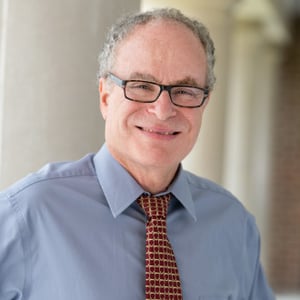
William Rand Kenan, Jr. Distinguished Professor of Law, University of North Carolina School of Law
William (Bill) Marshall joined the Carolina Law faculty in 2001 and serves as the William R. Kenan Jr. Distinguished Professor of Law. His teaching and research interests include the first amendment, presidential power, election law, federal jurisdiction, federal judicial selection, civil procedure, and media law. Marshall is the author of numerous book chapters, articles, and essays on free speech, separation of powers, the Establishment Clause, and the Free Exercise Clause. His work has appeared in the Harvard Law Review, the Yale Law Journal, the Supreme Court Review, and the University of Chicago Law Review, among others.
Marshall received his law degree from the University of Chicago and his undergraduate degree from the University of Pennsylvania. Marshall was Deputy Counsel to the President and Deputy Assistant to the President during the Clinton Administration and also served as the Solicitor General for the State of Ohio. He has taught at the Northwestern, Boston University, Vanderbilt, Ohio State, DePaul, Case Western Reserve, William and Mary, and the University Connecticut law schools. Prior to beginning his teaching career, Marshall was a Special Assistant Attorney General for the State of Minnesota.

Richard and Frances Mallery Professor of Law and Faculty Director, Constitutional Law Center, Stanford Law School
Michael W. McConnell is the Richard and Frances Mallery Professor and Faculty Director of the Constitutional Law Center at Stanford Law School, and a Senior Fellow at the Hoover Institution. From 2002 to 2009, he served as a Circuit Judge on the United States Court of Appeals for the Tenth Circuit. He was nominated by President George W. Bush, a Republican, and confirmed by a Democratic Senate by unanimous consent. McConnell has previously held chaired professorships at the University of Chicago and the University of Utah, and visiting professorships at Harvard and NYU. He teaches courses on constitutional law, constitutional history, First Amendment, and interpretive theory. He has published widely in the fields of constitutional law and theory, especially church and state, equal protection, and separation of powers. His book, “The President Who Would Not Be King: Executive Power Under the Constitution,” was published by Princeton University Press in 2020, based on the Tanner Lectures in Human Values, which he delivered at Princeton in 2019. His latest book, co-authored with Nathan Chapman, “Agreeing to Disagree: How the Establishment Clause Protects Religious Diversity and Freedom of Conscience,” was published by Oxford University Press in mid-2023. McConnell has argued sixteen cases in the United States Supreme Court, most recently Carney v. Adams (2020). defending a provision of the Delaware Constitution requiring political balance on that state’s courts. More recently, he was co-counsel in Gonzalez v. Google. He earned his B.A. from Michigan State University and his J.D. from the University of Chicago, and has received honorary degrees from Notre Dame University and Michigan State. He served as law clerk to Supreme Court Justice William J. Brennan, Jr. and D.C. Circuit Chief Judge J. Skelly Wright. He has been Assistant General Counsel of the Office of Management & Budget, Assistant to the Solicitor General of the Department of Justice, and a member of the President’s Intelligence Oversight Board. He is Senior of Counsel to the law firm Wilson, Sonsini, Goodrich & Rosati, and is co-chair of Meta’s Oversight Review Board.

Executive Vice President, The Federalist Society
Dean Reuter is Executive Vice President at the Federalist Society for Law and Public Policy Studies. He has served in two federal government agency Offices of the Inspector General, as Counsel to the Inspector General and Deputy Inspector General, responsible for policing the use of federal funds granted and contracted through those agencies. As such, he helped conduct and oversee criminal investigations across the country. He is the principal author of the non-fiction book, The Hidden Nazi: The Untold Story of America's Deal with the Devil, and editor of Liberty’s Nemesis: The Unchecked Expansion of the State and Confronting Terror: 9/11 and the Future of American National Security. He was appointed by the President and served as Vice-Chairman of the Board of Directors of the Corporation for National and Community Service, and recently served as an appointee on the U.S. Commission on Presidential Scholars. He is a graduate of Hood College (BA with Honors) and the University of Maryland School of Law.
Professor of Political Science, Brown University
COREY BRETTSCHNEIDER is professor of political science at Brown University, where he teaches courses in political theory and public law. He is also professor, by courtesy, of philosophy. Brettschneider was a Rockefeller faculty fellow at the Princeton University Center for Human Values for the 2010-2011 academic year, a visiting associate professor at Harvard Law School for the 2009 winter term, and a faculty fellow at Harvard's Safra Center for Ethics for the 2006-2007 academic year. Brettschneider received a PhD in politics from Princeton University and a JD from Stanford University. He is the author ofWhen the State Speaks, What Should it Say? How Democracies Can Protect Expression and Promote Equality, (Princeton University Press, 2012) and Democratic Rights: The Substance of Self-Government (Princeton University Press, 2007). Brettschneider is also the author of a casebook, Constitutional Law and American Democracy: Cases and Readings, (Aspen Publishers/Wolters Kluwer Law and Business, 2011). His articles include "A Transformative Theory of Religious Freedom," in Political Theory (2010), "When the State Speaks, What Should it Say? Democratic Persuasion and the Freedom of Expression," in Perspectives on Politics (2010), and "The Politics of the Personal: A Liberal Approach," in the American Political Science Review (2007).
Maurice and Hilda Friedman Professor of Law, Columbia Law School; CEO, New Civil Liberties Alliance
Philip Hamburger is the Maurice and Hilda Friedman Professor of Law at Columbia Law School, and Chief Executive Officer at the New Civil Liberties Alliance. Before coming to Columbia, he was the John P. Wilson Professor at the University of Chicago Law School.
He writes on constitutional law and its history—with particular emphasis on religious liberty, freedom of speech and the press, judicial office, administrative power, and unconstitutional conditions.
His books are Separation of Church and State (Harvard 2002), Law and Judicial Duty (Harvard 2008), Is Administrative Law Unlawful? (Chicago 2014), The Administrative Threat (Encounter 2017), and Liberal Suppression: Section 501(c)(3) and the Taxation of Speech (Chicago 2018). A forthcoming book is Purchasing Submission: Conditions, Power, and Freedom (Harvard 2021).
He is a member of the American Academy of Arts and Sciences, and he has served on the board of directors of the American Society for Legal History. He has twice received the Sutherland Prize for the most significant contribution to English legal history, and has been awarded the Henry Paolucci - Walter Bagehot Book Award, the Hayek Book Prize, and the Bradley Prize.
United States District Court, Eastern District of New York
William Francis Kuntz II is a United States district judge on the United States District Court for the Eastern District of New York. The United States Senate confirmed him on October 3, 2011. He received his judicial commission on October 4, 2011.
Judge Kuntz was a commercial litigator in private practice in New York, and had been a partner at the law firm of Baker Hostetler since 2005. He has been a partner at several law firms in New York during his career, including Torys LLP from 2001 to 2004, Seward & Kissel LLP from 1994 to 2001, and Milgrim, Thomajan, Jacobs & Lee from 1986 to 1994. In addition, he worked as Counsel at Constantine Cannon from 2004 to 2005, and as an associate at Shearman & Sterling LLP from 1978 to 1986. Since 1987, Kuntz has served as a Commissioner of the New York City Civilian Complaint Review Board, supervising hundreds of investigations into allegations of abuse by members of the New York City Police Department. From 1987 to 2003, he was an adjunct associate professor of law at Brooklyn Law School, teaching a course in American legal history. He received his A.B. from Harvard College in 1972 and his J.D. from Harvard Law School in 1977. Kuntz also received an M.A. and Ph.D. in American History from Harvard University in 1974 and 1979, respectively.
William Rand Kenan, Jr. Distinguished Professor of Law, University of North Carolina School of Law
William (Bill) Marshall joined the Carolina Law faculty in 2001 and serves as the William R. Kenan Jr. Distinguished Professor of Law. His teaching and research interests include the first amendment, presidential power, election law, federal jurisdiction, federal judicial selection, civil procedure, and media law. Marshall is the author of numerous book chapters, articles, and essays on free speech, separation of powers, the Establishment Clause, and the Free Exercise Clause. His work has appeared in the Harvard Law Review, the Yale Law Journal, the Supreme Court Review, and the University of Chicago Law Review, among others.
Marshall received his law degree from the University of Chicago and his undergraduate degree from the University of Pennsylvania. Marshall was Deputy Counsel to the President and Deputy Assistant to the President during the Clinton Administration and also served as the Solicitor General for the State of Ohio. He has taught at the Northwestern, Boston University, Vanderbilt, Ohio State, DePaul, Case Western Reserve, William and Mary, and the University Connecticut law schools. Prior to beginning his teaching career, Marshall was a Special Assistant Attorney General for the State of Minnesota.
Richard and Frances Mallery Professor of Law and Faculty Director, Constitutional Law Center, Stanford Law School
Michael W. McConnell is the Richard and Frances Mallery Professor and Faculty Director of the Constitutional Law Center at Stanford Law School, and a Senior Fellow at the Hoover Institution. From 2002 to 2009, he served as a Circuit Judge on the United States Court of Appeals for the Tenth Circuit. He was nominated by President George W. Bush, a Republican, and confirmed by a Democratic Senate by unanimous consent. McConnell has previously held chaired professorships at the University of Chicago and the University of Utah, and visiting professorships at Harvard and NYU. He teaches courses on constitutional law, constitutional history, First Amendment, and interpretive theory. He has published widely in the fields of constitutional law and theory, especially church and state, equal protection, and separation of powers. His book, “The President Who Would Not Be King: Executive Power Under the Constitution,” was published by Princeton University Press in 2020, based on the Tanner Lectures in Human Values, which he delivered at Princeton in 2019. His latest book, co-authored with Nathan Chapman, “Agreeing to Disagree: How the Establishment Clause Protects Religious Diversity and Freedom of Conscience,” was published by Oxford University Press in mid-2023. McConnell has argued sixteen cases in the United States Supreme Court, most recently Carney v. Adams (2020). defending a provision of the Delaware Constitution requiring political balance on that state’s courts. More recently, he was co-counsel in Gonzalez v. Google. He earned his B.A. from Michigan State University and his J.D. from the University of Chicago, and has received honorary degrees from Notre Dame University and Michigan State. He served as law clerk to Supreme Court Justice William J. Brennan, Jr. and D.C. Circuit Chief Judge J. Skelly Wright. He has been Assistant General Counsel of the Office of Management & Budget, Assistant to the Solicitor General of the Department of Justice, and a member of the President’s Intelligence Oversight Board. He is Senior of Counsel to the law firm Wilson, Sonsini, Goodrich & Rosati, and is co-chair of Meta’s Oversight Review Board.
Executive Vice President, The Federalist Society
Dean Reuter is Executive Vice President at the Federalist Society for Law and Public Policy Studies. He has served in two federal government agency Offices of the Inspector General, as Counsel to the Inspector General and Deputy Inspector General, responsible for policing the use of federal funds granted and contracted through those agencies. As such, he helped conduct and oversee criminal investigations across the country. He is the principal author of the non-fiction book, The Hidden Nazi: The Untold Story of America's Deal with the Devil, and editor of Liberty’s Nemesis: The Unchecked Expansion of the State and Confronting Terror: 9/11 and the Future of American National Security. He was appointed by the President and served as Vice-Chairman of the Board of Directors of the Corporation for National and Community Service, and recently served as an appointee on the U.S. Commission on Presidential Scholars. He is a graduate of Hood College (BA with Honors) and the University of Maryland School of Law.
Professor of Political Science, Brown University
COREY BRETTSCHNEIDER is professor of political science at Brown University, where he teaches courses in political theory and public law. He is also professor, by courtesy, of philosophy. Brettschneider was a Rockefeller faculty fellow at the Princeton University Center for Human Values for the 2010-2011 academic year, a visiting associate professor at Harvard Law School for the 2009 winter term, and a faculty fellow at Harvard's Safra Center for Ethics for the 2006-2007 academic year. Brettschneider received a PhD in politics from Princeton University and a JD from Stanford University. He is the author ofWhen the State Speaks, What Should it Say? How Democracies Can Protect Expression and Promote Equality, (Princeton University Press, 2012) and Democratic Rights: The Substance of Self-Government (Princeton University Press, 2007). Brettschneider is also the author of a casebook, Constitutional Law and American Democracy: Cases and Readings, (Aspen Publishers/Wolters Kluwer Law and Business, 2011). His articles include "A Transformative Theory of Religious Freedom," in Political Theory (2010), "When the State Speaks, What Should it Say? Democratic Persuasion and the Freedom of Expression," in Perspectives on Politics (2010), and "The Politics of the Personal: A Liberal Approach," in the American Political Science Review (2007).
Maurice and Hilda Friedman Professor of Law, Columbia Law School; CEO, New Civil Liberties Alliance
Philip Hamburger is the Maurice and Hilda Friedman Professor of Law at Columbia Law School, and Chief Executive Officer at the New Civil Liberties Alliance. Before coming to Columbia, he was the John P. Wilson Professor at the University of Chicago Law School.
He writes on constitutional law and its history—with particular emphasis on religious liberty, freedom of speech and the press, judicial office, administrative power, and unconstitutional conditions.
His books are Separation of Church and State (Harvard 2002), Law and Judicial Duty (Harvard 2008), Is Administrative Law Unlawful? (Chicago 2014), The Administrative Threat (Encounter 2017), and Liberal Suppression: Section 501(c)(3) and the Taxation of Speech (Chicago 2018). A forthcoming book is Purchasing Submission: Conditions, Power, and Freedom (Harvard 2021).
He is a member of the American Academy of Arts and Sciences, and he has served on the board of directors of the American Society for Legal History. He has twice received the Sutherland Prize for the most significant contribution to English legal history, and has been awarded the Henry Paolucci - Walter Bagehot Book Award, the Hayek Book Prize, and the Bradley Prize.
United States District Court, Eastern District of New York
William Francis Kuntz II is a United States district judge on the United States District Court for the Eastern District of New York. The United States Senate confirmed him on October 3, 2011. He received his judicial commission on October 4, 2011.
Judge Kuntz was a commercial litigator in private practice in New York, and had been a partner at the law firm of Baker Hostetler since 2005. He has been a partner at several law firms in New York during his career, including Torys LLP from 2001 to 2004, Seward & Kissel LLP from 1994 to 2001, and Milgrim, Thomajan, Jacobs & Lee from 1986 to 1994. In addition, he worked as Counsel at Constantine Cannon from 2004 to 2005, and as an associate at Shearman & Sterling LLP from 1978 to 1986. Since 1987, Kuntz has served as a Commissioner of the New York City Civilian Complaint Review Board, supervising hundreds of investigations into allegations of abuse by members of the New York City Police Department. From 1987 to 2003, he was an adjunct associate professor of law at Brooklyn Law School, teaching a course in American legal history. He received his A.B. from Harvard College in 1972 and his J.D. from Harvard Law School in 1977. Kuntz also received an M.A. and Ph.D. in American History from Harvard University in 1974 and 1979, respectively.
William Rand Kenan, Jr. Distinguished Professor of Law, University of North Carolina School of Law
William (Bill) Marshall joined the Carolina Law faculty in 2001 and serves as the William R. Kenan Jr. Distinguished Professor of Law. His teaching and research interests include the first amendment, presidential power, election law, federal jurisdiction, federal judicial selection, civil procedure, and media law. Marshall is the author of numerous book chapters, articles, and essays on free speech, separation of powers, the Establishment Clause, and the Free Exercise Clause. His work has appeared in the Harvard Law Review, the Yale Law Journal, the Supreme Court Review, and the University of Chicago Law Review, among others.
Marshall received his law degree from the University of Chicago and his undergraduate degree from the University of Pennsylvania. Marshall was Deputy Counsel to the President and Deputy Assistant to the President during the Clinton Administration and also served as the Solicitor General for the State of Ohio. He has taught at the Northwestern, Boston University, Vanderbilt, Ohio State, DePaul, Case Western Reserve, William and Mary, and the University Connecticut law schools. Prior to beginning his teaching career, Marshall was a Special Assistant Attorney General for the State of Minnesota.
Richard and Frances Mallery Professor of Law and Faculty Director, Constitutional Law Center, Stanford Law School
Michael W. McConnell is the Richard and Frances Mallery Professor and Faculty Director of the Constitutional Law Center at Stanford Law School, and a Senior Fellow at the Hoover Institution. From 2002 to 2009, he served as a Circuit Judge on the United States Court of Appeals for the Tenth Circuit. He was nominated by President George W. Bush, a Republican, and confirmed by a Democratic Senate by unanimous consent. McConnell has previously held chaired professorships at the University of Chicago and the University of Utah, and visiting professorships at Harvard and NYU. He teaches courses on constitutional law, constitutional history, First Amendment, and interpretive theory. He has published widely in the fields of constitutional law and theory, especially church and state, equal protection, and separation of powers. His book, “The President Who Would Not Be King: Executive Power Under the Constitution,” was published by Princeton University Press in 2020, based on the Tanner Lectures in Human Values, which he delivered at Princeton in 2019. His latest book, co-authored with Nathan Chapman, “Agreeing to Disagree: How the Establishment Clause Protects Religious Diversity and Freedom of Conscience,” was published by Oxford University Press in mid-2023. McConnell has argued sixteen cases in the United States Supreme Court, most recently Carney v. Adams (2020). defending a provision of the Delaware Constitution requiring political balance on that state’s courts. More recently, he was co-counsel in Gonzalez v. Google. He earned his B.A. from Michigan State University and his J.D. from the University of Chicago, and has received honorary degrees from Notre Dame University and Michigan State. He served as law clerk to Supreme Court Justice William J. Brennan, Jr. and D.C. Circuit Chief Judge J. Skelly Wright. He has been Assistant General Counsel of the Office of Management & Budget, Assistant to the Solicitor General of the Department of Justice, and a member of the President’s Intelligence Oversight Board. He is Senior of Counsel to the law firm Wilson, Sonsini, Goodrich & Rosati, and is co-chair of Meta’s Oversight Review Board.
Executive Vice President, The Federalist Society
Dean Reuter is Executive Vice President at the Federalist Society for Law and Public Policy Studies. He has served in two federal government agency Offices of the Inspector General, as Counsel to the Inspector General and Deputy Inspector General, responsible for policing the use of federal funds granted and contracted through those agencies. As such, he helped conduct and oversee criminal investigations across the country. He is the principal author of the non-fiction book, The Hidden Nazi: The Untold Story of America's Deal with the Devil, and editor of Liberty’s Nemesis: The Unchecked Expansion of the State and Confronting Terror: 9/11 and the Future of American National Security. He was appointed by the President and served as Vice-Chairman of the Board of Directors of the Corporation for National and Community Service, and recently served as an appointee on the U.S. Commission on Presidential Scholars. He is a graduate of Hood College (BA with Honors) and the University of Maryland School of Law.
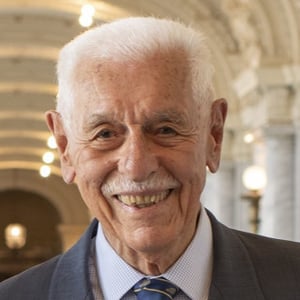
Judge, United States Court of Appeals, Ninth Circuit
Judge Carlos Bea serves as a judge on the United States Court of Appeals for the Ninth Circuit. He received his Bachelor's Degree from Stanford University in 1956 and his J.D. from Stanford Law School in 1958. Judge Bea was born in San Sebastian, Spain, and immigrated with his family to Cuba in 1939. In 1952, he represented Cuba on the Cuban National basketball team in the Helsinki Olympics. Judge Bea became a naturalized citizen of the United States in 1958. He engaged in private practice in San Francisco, principally in the area of civil trials (jury and non-jury), from 1959-75 at Dunne, Phelps & Mills and from 1975-90 at Carlos Bea, A Law Corporation. He taught courses in civil litigation advocacy at Hastings College of Law and Stanford Law School. From 1990 to 2003, Judge Bea served as a judge of the San Francisco Superior Court. He was nominated by President George W. Bush to the United States Court of Appeals for the Ninth Circuit and was confirmed in 2003.
Judge Bea and his wife Louise reside in San Francisco, where they raised their four sons, Sebastian, Alexander, Nicholas, and Dominic.
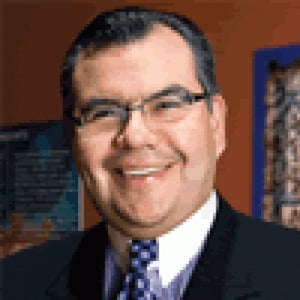
President and CEO, Castro Synergies, LLC and Commissioner, U.S. Commission on Civil Rights
Marty Castro is the President and CEO of Castro Synergies, LLC, which provides strategic consulting services to corporations, entrepreneurs and non-profit organizations that seek to collaborate with and have a positive social impact on diverse communities.
Mr. Castro was appointed by President Barack Obama to the U.S. Commission on Civil Rights in January of 2011.
In December 2009, Mr. Castro was appointed by Illinois Governor Pat Quinn to Chair the Illinois Human Rights Commission. The Human Rights Commission is the State public body that arbitrates complaints of civil rights violations in housing, employment, public accommodations and financial credit.
Mr. Castro is chair of the board of the National Museum of Mexican Art, the only accredited Latino Museum in the United States. He also serves on the board of the Chicago Community Trust. Mr. Castro is a former national board member of the Mexican American Legal Defense and Educational Fund and former chair of the Hispanic National Bar Association’s U.S. Supreme Court Committee. Mr. Castro is also the former chair of the Judicial Nominations Commission for the Northern District of Illinois, by appointment of U.S. Senator Richard Durbin.
For his leadership and accomplishments, Mr. Castro has received numerous awards and recognitions, including the National Medical Fellowships’ Humanitarian Award; the Hispanic National Bar Association’s Cesar Chavez Humanitarian Award; the Edwin A. Rothschild Civil Liberties Award from the American Civil Liberties Union of Illinois; and the Thurgood Marshall Lifetime Achievement Award from the Association of Corporate Counsel, Chicago Chapter.
Mr. Castro received his B.A. in political science in 1985 from DePaul University and his Juris Doctorate degree from the University of Michigan Law School in 1988.

Professor of Law, University of San Diego School of Law (Retired)
Gail Heriot is a recently retired law professor from the University of San Diego. She also served as a member of the U.S. Commission on Civil Rights from 2007 to 2025. She is also the chairman of the board of the American Civil Rights Project and the chair emerita of the Civil Rights practice group at the Federalist Society for Law & Public Policy.
Professor Heriot is a prolific writer in the area of civil rights. She is the author of many law review articles. She is also the editor (along with Maimon Schwarzschild) of the 2021 anthology, A Dubious Expediency: How Race Preferences Damage Higher Education. Her upcoming book is entitled, Why We Walk on Eggshell: How Our Civil Rights Laws Helped Bring About the Woke Era—And the Trump Era, Too.
Her writings for a general audience have appeared in the Wall Street Journal, the San Diego Union-Tribune, the National Review and many other newspapers and magazines.
In 1996, she co-chaired the successful “Yes on Proposition 209” campaign, which amended the California Constitution to prohibit state-sponsored discrimination or preferential treatment based on race, sex, color, ethnicity or national origin. In 2020, she co-chaired the “No on Proposition 16” campaign, which successfully prevented Proposition 209’s repeal.
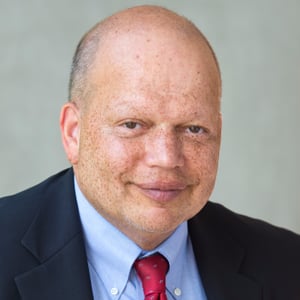
Julius L. Chambers Distinguished Professor of Law and Director of the Center for Civil Rights, University of North Carolina School of Law
Theodore M. Shaw is the Julius L. Chambers Distinguished Professor of Law and Director of the Center for Civil Rights at the University of North Carolina School of Law at Chapel Hill. Professor Shaw teaches Civil Procedure and Advanced Constitutional Law/Fourteenth Amendment. Before joining the faculty of UNC Law School, from 2008-2014 Professor Shaw taught at Columbia University Law School, where he was Professor of Professional Practice. During that time he was also “Of Counsel” to the law firm of Norton Rose Fulbright (formerly Fulbright & Jaworski, LLP). His practice involved civil litigation and representation of institutional clients on matters concerning diversity and civil rights.
Professor Shaw was the fifth Director-Counsel and President of the NAACP Legal Defense and Educational Fund, Inc., for which he worked in various capacities over the span of twenty-six years. He has litigated education, employment, voting rights, housing, police misconduct, capital punishment and other civil rights cases in trial and appellate courts, and in the United States Supreme Court.From 1982 until 1987, he litigated education, housing, and capital punishment cases and directed LDF's education litigation docket. In 1987, under the direction of LDF's third Director-Counsel, Julius Chambers, Mr. Shaw relocated to Los Angeles to establish LDF's Western Regional Office. In 1990, Mr. Shaw left LDF to join the faculty of the University of Michigan Law School, where he taught Constitutional Law, Civil Procedure and Civil Rights. While at Michigan, he played a key role in initiating a review of the law school's admissions practices and policies, and served on the faculty committee that promulgated the admissions program that was upheld by the U.S. Supreme Court in 2003 in Grutter v. Bollinger.
In 1993, Mr. Shaw returned to LDF as Associate Director-Counsel, and in 2004, he became LDF's fifth Director-Counsel. Mr. Shaw's legal career began as a Trial Attorney in the Honors Program of the United States Department of Justice, Civil Rights Division in Washington, D.C., where he worked from 1979 until 1982.
Mr. Shaw has testified on numerous occasions before Congress and before state and local legislatures. His human rights work has taken him to Africa, Asia, Europe, and South America. In addition to teaching at Columbia and at Michigan Law School, Professor Shaw held the 1997-1998 Haywood Burns Chair at CUNY School of Law at Queens College and the 2003 Phyllis Beck Chair at Temple Law School. He was a visiting scholar at the Constitution Center in Philadelphia in 2008-2009. He is a member of the faculty of the Practicing Law Institute (PLI).
Mr. Shaw served on the Obama Transition Team after the 2008 presidential election, as team leader for the Civil Rights Division of the Justice Department.
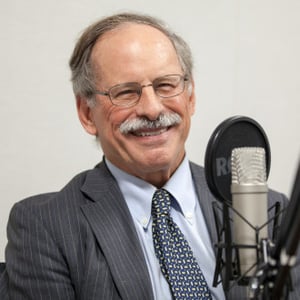
Freelance Journalist and Author
Stuart Taylor, Jr. is a Washington writer focusing on legal and policy issues and a National Journal contributing editor. He occasionally practices law.
Taylor has coauthored three books. All have been acclaimed by commentators across the ideological spectrum. In January 2017, KC Johnson and Taylor authored The Campus Rape Frenzy: The Attack on Due Process at America's Universities. In 2012, Richard Sander and Taylor authored Mismatch: How Affirmative Action Hurts Students It's Intended to Help, and Why Universities Won't Admit It. In 2007, Taylor and Johnson authored Until Proven Innocent: Political Correctness and the Shameful Injustices of the Duke Lacrosse Rape Fraud. Sander and Taylor have also filed amicus briefs in Supreme Court cases involving admissions preferences.
Since 1980, Taylor has done reporting and commentary about issues ranging from the biggest Supreme Court cases to race, voting rights, mindlessly excessive criminal penalties, guilt-presuming campus rape processes, journalistic bias, the death penalty, war powers, gerrymandering, guns, polarization, civil liberties, national security, torture, campaign finance, education, impeachment, and other issues. He has often been called one of the nation's best legal journalists and is known for challenging both liberal and conservative conventional wisdom.
Taylor was a reporter for The New York Times from 1980-1988, covering legal affairs and then the Supreme Court. He wrote commentaries and long features for The American Lawyer, Legal Times and their affiliates from 1989-1997, and for National Journal and Newsweek from 1998 through 2010. He has written (less often) on a freelance basis for numerous publications since 2010. He has written op-eds for The Washington Post, The New York Times, The Wall Street Journal, The Los Angeles Times, USA Today, and The New York Daily News and longer commentaries for RealClearPolitics, The Atlantic, The New Republic, the (late) Weekly Standard, National Review, Slate, The Daily Beast, Harper’s, Reader’s Digest, Time and other magazines. He has been interviewed on all major television and radio networks. He taught “Law and the News Media” at Stanford Law School in 2011 and 2012 and practices law on occasion.
Taylor graduated from Princeton University in 1970 with an A.B. in History. After working as a reporter for the Baltimore Evening Sun and Sun from 1971-1974, he moved to Harvard Law School, was a Harvard Law Review note editor, and graduated in 1977 at the top of his class, with high honors. He also won a Frederick Sheldon Traveling Fellowship and traveled around the world in 1977-1978 while studying freedom of the press in the United Kingdom and Kenya.
Taylor practiced law with Wilmer, Cutler & Pickering, in Washington, D.C., from 1977-1980 before returning to journalism in 1980 by joining the Washington Bureau of The New York Times.
Taylor's journalism honors include the 2009 Northern California Innocence Project Media Award for his work on the Duke lacrosse rape fraud; a 2002 National Headliner Award for best special magazine column on one subject; and a share of The American Lawyer’s National Magazine Award for a March 1990 special issue on the drug war. He was a National Magazine Award finalist in 1993 and 1997 and was nominated by The New York Times for a Pulitzer Prize in 1988.
Judge, United States Court of Appeals, Ninth Circuit
Judge Carlos Bea serves as a judge on the United States Court of Appeals for the Ninth Circuit. He received his Bachelor's Degree from Stanford University in 1956 and his J.D. from Stanford Law School in 1958. Judge Bea was born in San Sebastian, Spain, and immigrated with his family to Cuba in 1939. In 1952, he represented Cuba on the Cuban National basketball team in the Helsinki Olympics. Judge Bea became a naturalized citizen of the United States in 1958. He engaged in private practice in San Francisco, principally in the area of civil trials (jury and non-jury), from 1959-75 at Dunne, Phelps & Mills and from 1975-90 at Carlos Bea, A Law Corporation. He taught courses in civil litigation advocacy at Hastings College of Law and Stanford Law School. From 1990 to 2003, Judge Bea served as a judge of the San Francisco Superior Court. He was nominated by President George W. Bush to the United States Court of Appeals for the Ninth Circuit and was confirmed in 2003.
Judge Bea and his wife Louise reside in San Francisco, where they raised their four sons, Sebastian, Alexander, Nicholas, and Dominic.
President and CEO, Castro Synergies, LLC and Commissioner, U.S. Commission on Civil Rights
Marty Castro is the President and CEO of Castro Synergies, LLC, which provides strategic consulting services to corporations, entrepreneurs and non-profit organizations that seek to collaborate with and have a positive social impact on diverse communities.
Mr. Castro was appointed by President Barack Obama to the U.S. Commission on Civil Rights in January of 2011.
In December 2009, Mr. Castro was appointed by Illinois Governor Pat Quinn to Chair the Illinois Human Rights Commission. The Human Rights Commission is the State public body that arbitrates complaints of civil rights violations in housing, employment, public accommodations and financial credit.
Mr. Castro is chair of the board of the National Museum of Mexican Art, the only accredited Latino Museum in the United States. He also serves on the board of the Chicago Community Trust. Mr. Castro is a former national board member of the Mexican American Legal Defense and Educational Fund and former chair of the Hispanic National Bar Association’s U.S. Supreme Court Committee. Mr. Castro is also the former chair of the Judicial Nominations Commission for the Northern District of Illinois, by appointment of U.S. Senator Richard Durbin.
For his leadership and accomplishments, Mr. Castro has received numerous awards and recognitions, including the National Medical Fellowships’ Humanitarian Award; the Hispanic National Bar Association’s Cesar Chavez Humanitarian Award; the Edwin A. Rothschild Civil Liberties Award from the American Civil Liberties Union of Illinois; and the Thurgood Marshall Lifetime Achievement Award from the Association of Corporate Counsel, Chicago Chapter.
Mr. Castro received his B.A. in political science in 1985 from DePaul University and his Juris Doctorate degree from the University of Michigan Law School in 1988.
Professor of Law, University of San Diego School of Law (Retired)
Gail Heriot is a recently retired law professor from the University of San Diego. She also served as a member of the U.S. Commission on Civil Rights from 2007 to 2025. She is also the chairman of the board of the American Civil Rights Project and the chair emerita of the Civil Rights practice group at the Federalist Society for Law & Public Policy.
Professor Heriot is a prolific writer in the area of civil rights. She is the author of many law review articles. She is also the editor (along with Maimon Schwarzschild) of the 2021 anthology, A Dubious Expediency: How Race Preferences Damage Higher Education. Her upcoming book is entitled, Why We Walk on Eggshell: How Our Civil Rights Laws Helped Bring About the Woke Era—And the Trump Era, Too.
Her writings for a general audience have appeared in the Wall Street Journal, the San Diego Union-Tribune, the National Review and many other newspapers and magazines.
In 1996, she co-chaired the successful “Yes on Proposition 209” campaign, which amended the California Constitution to prohibit state-sponsored discrimination or preferential treatment based on race, sex, color, ethnicity or national origin. In 2020, she co-chaired the “No on Proposition 16” campaign, which successfully prevented Proposition 209’s repeal.
Julius L. Chambers Distinguished Professor of Law and Director of the Center for Civil Rights, University of North Carolina School of Law
Theodore M. Shaw is the Julius L. Chambers Distinguished Professor of Law and Director of the Center for Civil Rights at the University of North Carolina School of Law at Chapel Hill. Professor Shaw teaches Civil Procedure and Advanced Constitutional Law/Fourteenth Amendment. Before joining the faculty of UNC Law School, from 2008-2014 Professor Shaw taught at Columbia University Law School, where he was Professor of Professional Practice. During that time he was also “Of Counsel” to the law firm of Norton Rose Fulbright (formerly Fulbright & Jaworski, LLP). His practice involved civil litigation and representation of institutional clients on matters concerning diversity and civil rights.
Professor Shaw was the fifth Director-Counsel and President of the NAACP Legal Defense and Educational Fund, Inc., for which he worked in various capacities over the span of twenty-six years. He has litigated education, employment, voting rights, housing, police misconduct, capital punishment and other civil rights cases in trial and appellate courts, and in the United States Supreme Court.From 1982 until 1987, he litigated education, housing, and capital punishment cases and directed LDF's education litigation docket. In 1987, under the direction of LDF's third Director-Counsel, Julius Chambers, Mr. Shaw relocated to Los Angeles to establish LDF's Western Regional Office. In 1990, Mr. Shaw left LDF to join the faculty of the University of Michigan Law School, where he taught Constitutional Law, Civil Procedure and Civil Rights. While at Michigan, he played a key role in initiating a review of the law school's admissions practices and policies, and served on the faculty committee that promulgated the admissions program that was upheld by the U.S. Supreme Court in 2003 in Grutter v. Bollinger.
In 1993, Mr. Shaw returned to LDF as Associate Director-Counsel, and in 2004, he became LDF's fifth Director-Counsel. Mr. Shaw's legal career began as a Trial Attorney in the Honors Program of the United States Department of Justice, Civil Rights Division in Washington, D.C., where he worked from 1979 until 1982.
Mr. Shaw has testified on numerous occasions before Congress and before state and local legislatures. His human rights work has taken him to Africa, Asia, Europe, and South America. In addition to teaching at Columbia and at Michigan Law School, Professor Shaw held the 1997-1998 Haywood Burns Chair at CUNY School of Law at Queens College and the 2003 Phyllis Beck Chair at Temple Law School. He was a visiting scholar at the Constitution Center in Philadelphia in 2008-2009. He is a member of the faculty of the Practicing Law Institute (PLI).
Mr. Shaw served on the Obama Transition Team after the 2008 presidential election, as team leader for the Civil Rights Division of the Justice Department.
Freelance Journalist and Author
Stuart Taylor, Jr. is a Washington writer focusing on legal and policy issues and a National Journal contributing editor. He occasionally practices law.
Taylor has coauthored three books. All have been acclaimed by commentators across the ideological spectrum. In January 2017, KC Johnson and Taylor authored The Campus Rape Frenzy: The Attack on Due Process at America's Universities. In 2012, Richard Sander and Taylor authored Mismatch: How Affirmative Action Hurts Students It's Intended to Help, and Why Universities Won't Admit It. In 2007, Taylor and Johnson authored Until Proven Innocent: Political Correctness and the Shameful Injustices of the Duke Lacrosse Rape Fraud. Sander and Taylor have also filed amicus briefs in Supreme Court cases involving admissions preferences.
Since 1980, Taylor has done reporting and commentary about issues ranging from the biggest Supreme Court cases to race, voting rights, mindlessly excessive criminal penalties, guilt-presuming campus rape processes, journalistic bias, the death penalty, war powers, gerrymandering, guns, polarization, civil liberties, national security, torture, campaign finance, education, impeachment, and other issues. He has often been called one of the nation's best legal journalists and is known for challenging both liberal and conservative conventional wisdom.
Taylor was a reporter for The New York Times from 1980-1988, covering legal affairs and then the Supreme Court. He wrote commentaries and long features for The American Lawyer, Legal Times and their affiliates from 1989-1997, and for National Journal and Newsweek from 1998 through 2010. He has written (less often) on a freelance basis for numerous publications since 2010. He has written op-eds for The Washington Post, The New York Times, The Wall Street Journal, The Los Angeles Times, USA Today, and The New York Daily News and longer commentaries for RealClearPolitics, The Atlantic, The New Republic, the (late) Weekly Standard, National Review, Slate, The Daily Beast, Harper’s, Reader’s Digest, Time and other magazines. He has been interviewed on all major television and radio networks. He taught “Law and the News Media” at Stanford Law School in 2011 and 2012 and practices law on occasion.
Taylor graduated from Princeton University in 1970 with an A.B. in History. After working as a reporter for the Baltimore Evening Sun and Sun from 1971-1974, he moved to Harvard Law School, was a Harvard Law Review note editor, and graduated in 1977 at the top of his class, with high honors. He also won a Frederick Sheldon Traveling Fellowship and traveled around the world in 1977-1978 while studying freedom of the press in the United Kingdom and Kenya.
Taylor practiced law with Wilmer, Cutler & Pickering, in Washington, D.C., from 1977-1980 before returning to journalism in 1980 by joining the Washington Bureau of The New York Times.
Taylor's journalism honors include the 2009 Northern California Innocence Project Media Award for his work on the Duke lacrosse rape fraud; a 2002 National Headliner Award for best special magazine column on one subject; and a share of The American Lawyer’s National Magazine Award for a March 1990 special issue on the drug war. He was a National Magazine Award finalist in 1993 and 1997 and was nominated by The New York Times for a Pulitzer Prize in 1988.

Owning a Handgun in New York City
Cyber Threats: Rethinking the Law of Armed Conflict
Reforming Wall Street While Harming Main Street: The Impact of Dodd-Frank's Ramifications
Columbia Student Chapter
New York City, NYStructure of the Common Law
The Supreme Court and Patentable Subject Matter: Can Prometheus be Bound?
Intellectual Property Practice Group Teleforum
Showcase Panel III: Religion Clauses
Corey Brettschneider, Philip A. Hamburger, William Kuntz, William P. Marshall, Michael W. McConnell, Dean Reuter
The current Supreme Court divided five to four in Arizona Christian School Tuition Organization v....
Showcase Panel III: Religion Clauses
Corey Brettschneider, Philip A. Hamburger, William Kuntz, William P. Marshall, Michael W. McConnell, Dean Reuter
The current Supreme Court divided five to four in Arizona Christian School Tuition Organization v....
Civil Rights: Who Benefits from Affirmative Action and Race and Gender Consciousness?
Carlos T. Bea, Martin Castro, Gail L. Heriot, Theodore M. Shaw, Stuart S. Taylor
The Civil Rights Practice Group hosted this panel on "Who Benefits from Affirmative Action and...
Civil Rights: Who Benefits from Affirmative Action and Race and Gender Consciousness?
Carlos T. Bea, Martin Castro, Gail L. Heriot, Theodore M. Shaw, Stuart S. Taylor
The Civil Rights Practice Group hosted this panel on "Who Benefits from Affirmative Action and...
Showcase Panel III: Religion Clauses
2012 National Lawyers Convention
Washington, DC