
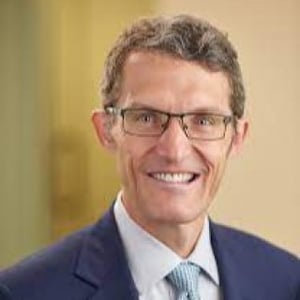
Eric V. Hall joined the firm in July of 2019. Eric’s practice focuses on business litigation, constitutional law, school law, church law, and employment. Eric specializes in complex civil litigation, especially trials and appeals. Eric has extensive experience with both jury and bench trials. He has also briefed and argued dozens of cases to the Colorado Court of Appeals, Colorado Supreme Court, and Tenth Circuit Court of Appeals.
Prior to joining Sparks Willson, Eric was a partner with Lewis Roca Rothgerber Christie LLP, where he worked for 18 years. Eric is a native of Colorado Springs. He earned his BA from the College of William and Mary in Virginia, graduating magna cum laude and delivering the valedictory address on behalf of the class of 1991. He earned his MA in 1994 from St. John’s College in Santa Fe, New Mexico. He earned his JD from Notre Dame Law School, graduating summa cum laude in 2000. He clerked for the Honorable David M. Ebel on the Tenth Circuit Court of Appeals for one year immediately after law school.
Eric is a member of the El Paso County Bar Association and has served as its President and a Trustee. He was named “Outstanding Young Lawyer of the Year” in 2005. He is member of the Ben S. Wendelken Inn of Court, the Colorado Bar Association, the Faculty of Federal Advocates, and the Federalist Society. He served on the Colorado Supreme Court Nominating Committee from 2012 to 2018. He is also a co-founder of Thomas MacLaren School, an award-winning charter school located in Colorado Springs School District 11 serving students in grades K-12.
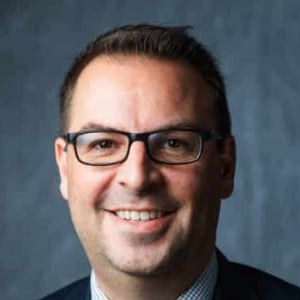
Associate Professor of Politics, Hillsdale College
Higher education is one of the few remaining environments where human beings can be at leisure to read, think, and study. Hillsdale College is one of the few remaining places in higher education where students are actively encouraged and required to engage in those activities. This opportunity to be at leisure to think about the most fundamental and pressing questions of modern life is precious and transformative.
As a first-year undergraduate at a liberal arts college, my own life was changed over several evenings of reading in the library about the history of the French Revolution. It was in that moment that I realized the importance of the perennial and perplexing questions in which we engage in the liberal arts setting. I switched my major to political science, history, and philosophy, and have never looked back.
In my graduate studies, I focused extensively on political theory, but my current thinking and research are directed to understanding the political institutions that determine how politics works in America. I am especially interested in understanding the modern administrative state, Congress, and political parties. We must grapple with the interaction of these institutions, and how they relate to the basic principles of American constitutionalism, if we want to preserve and restore constitutional government in the United States.
In my teaching, I aim to engage students in a common enterprise, where we think together and discuss fundamental questions. My goal is not to instruct, but to educate students. That requires active and thoughtful engagement rather than passively receiving information. I am blessed to be at a place like Hillsdale where the students are drawn to this model of education and thrive in such an environment.
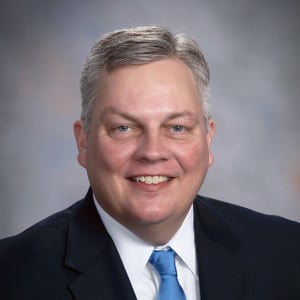
University Professor of Law and Religion and Director of the Eleanor H. McCullen Center for Law, Religion and Public Policy, Villanova University Charles Widger School of Law
Michael P. Moreland was appointed University Professor of Law and Religion and Director of the Eleanor H. McCullen Center for Law, Religion and Public Policy at Villanova University in 2017. Professor Moreland joined the Villanova faculty in 2006 and served as Vice Dean from 2012 to 2015. His research is primarily in the areas of torts, law and religion, constitutional law, and Catholic social thought, and he regularly teaches Torts, First Amendment, seminars in law and religion, and undergraduate courses in ethics.
Professor Moreland is the co-editor of Christianity and Private Law (Routledge, 2021), and his most recent publications include: “The Authority of Tradition: John Henry Newman and Legal Theory” in Christianity and the Making of Irish Law (Routledge, 2025); “Christianity and Torts” in The Oxford Handbook on Christianity and Law, (Oxford University Press, 2023); “Germaneness and Religious Liberty” in the Notre Dame Law Review (2023); “Contingency and Contestation in Christianity and Liberalism” in the Notre Dame Law Review (2023); “Friendship as the Primary Purpose of Law” in The American Journal of Jurisprudence 279 (2022); and “The Moral of Torts” (with Jeffrey Pojanowski) in Christianity and Private Law (Routledge, 2021).
Professor Moreland was a Visiting Professor of Law at the University of Notre Dame and the Mary Ann Remick Senior Visiting Fellow at the Notre Dame Center for Ethics and Culture from 2015 to 2017. He was the Forbes Visiting Fellow at Princeton University in the James Madison Program during academic year 2010-11. He has served as the project leader for grants from the John Templeton Foundation and the Charles Koch Foundation. He serves as the Chair of the Federalist Society’s Religious Liberties Practice Group Executive Committee and the Chair of the Board of Trustees of the Institute for Advanced Catholic Studies at the University of Southern California.
Professor Moreland received his BA in philosophy from the University of Notre Dame, his MA and PhD in theological ethics from Boston College, and his JD from the University of Michigan Law School. Following law school, Professor Moreland clerked for the Honorable Paul J. Kelly Jr., of the United States Court of Appeals for the Tenth Circuit and was an associate at Williams & Connolly LLP in Washington, DC, where he represented clients in First Amendment, professional liability, and products liability matters. Before coming to Villanova, he served as Associate Director for Domestic Policy at the White House under President George W. Bush, where he worked on a range of legal policy issues, including criminal justice, immigration, civil rights, and liability reform.
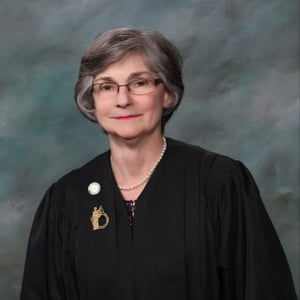
Judge, United States Court of Appeals, Fifth Circuit
Edith Jones graduated from Alamo Heights High School, where she was a National Merit Scholar. In 1971, she received her B.A. in Economics from Cornell University, graduating with honors. In 1974, she was awarded her J.D. at the University of Texas Law School, where she was a law review editor and received the Order of the Coif.
Judge Jones was the first female partner at Andrews, Kurth, Campbell & Jones (now Hunton Andrews Kurth) where she practiced various types of litigation and bankruptcy cases. Judge Jones went on the federal bench on June 1, 1985.
Judge Jones served as a former member of the National Bankruptcy Review Commission, and as a member of the Judicial Conference Commission on Bankruptcy Rules. Judge Jones served on the White House Fellows Commission. Judge Jones served on the board of the Sam Houston Area Council of the Boy Scouts of America. She has been a member of the Garland Walker Inn of Court in Houston for more than 20 years and its President for at least ten years. Judge Jones is also on the Board of the Calvin Coolidge Presidential Foundation.
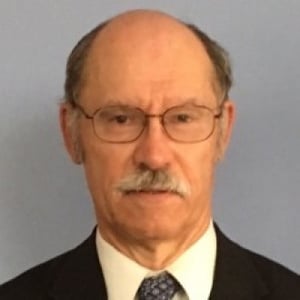
Professorial Lecturer in Law, George Washington University Law School
Theodore C. (Ted) Hirt was an attorney in the Department of Justice's Civil Division from August 1979 to March 2016. He was in its Federal Programs Branch from 1979 to 2008 (trial attorney, senior trial counsel, assistant director), and then in its Office of Immigration Litigation from 2008 to 2016 (trial attorney and senior litigation counsel). Among his responsibilities (September 2001 to March 2016) was being an advisor to the Assistant Attorneys General for the Civil Division, who serve ex officio on the Civil Rules Advisory Committee. Mr. Hirt’s areas of specialization include First Amendment issues, internet and telecommunications law, and electronic discovery. From 1976 to 1979, he was an associate at Fried, Frank, Harris, Shriver & Kampelman. From 1975 to 1976 he was an attorney in the Prehearing Division of the Michigan Court of Appeals.
Associate Professor of Politics, Hillsdale College
Higher education is one of the few remaining environments where human beings can be at leisure to read, think, and study. Hillsdale College is one of the few remaining places in higher education where students are actively encouraged and required to engage in those activities. This opportunity to be at leisure to think about the most fundamental and pressing questions of modern life is precious and transformative.
As a first-year undergraduate at a liberal arts college, my own life was changed over several evenings of reading in the library about the history of the French Revolution. It was in that moment that I realized the importance of the perennial and perplexing questions in which we engage in the liberal arts setting. I switched my major to political science, history, and philosophy, and have never looked back.
In my graduate studies, I focused extensively on political theory, but my current thinking and research are directed to understanding the political institutions that determine how politics works in America. I am especially interested in understanding the modern administrative state, Congress, and political parties. We must grapple with the interaction of these institutions, and how they relate to the basic principles of American constitutionalism, if we want to preserve and restore constitutional government in the United States.
In my teaching, I aim to engage students in a common enterprise, where we think together and discuss fundamental questions. My goal is not to instruct, but to educate students. That requires active and thoughtful engagement rather than passively receiving information. I am blessed to be at a place like Hillsdale where the students are drawn to this model of education and thrive in such an environment.
Partner, Holme Roberts & Owen LLP
 Stuart Lark is a partner in the firm's Colorado Springs office. He concentrates on corporate, tax, constitutional and transactional matters for nonprofit organizations. His experience includes joint ventures, mergers and acquisitions, tax exempt financing, corporate structure, IRS rulings, private foundations, unrelated trade or business income tax, property and sales tax, international structure and transactions, planned giving, government funding for religious organizations, faith-based employment rights, immigration, church property disputes and other religious liberty issues. He has published articles and given presentations on many of these issues.
 In 2002, Mr. Lark took a one-year leave of absence during which he served as Legal Counsel for Christian Legal Society's Center for Law and Religious Freedom in Washington, D.C.
Prior to entering law school, Mr. Lark worked for AT&T as an engineer and international product manager. He also spent one year in the former Soviet Russia working on a missions project.
M.S., Stanford University, 1985
B.S., Purdue University, with distinction, 1984

CLE Seminar on Equity, Diversity, Inclusivity and Constitutional Litigation
Denver, CODress Codes and Sex Discrimination
Colorado Lawyers Chapter
Denver, COCan Americans Reconcile Our Constitutional System With an Expansive Administrative State?
Ted Hirt
A review of: Bureaucracy in America: The Administrative State’s Challenge to Constitutional Government, by Joseph...
Bureaucracy in America
Joseph Postell
Administrative agencies, and extensive regulation of the economy, have always existed in America. But from...
Deep Dive Episode 9 – Bureaucracy in America
Regulatory Transparency Project Teleforum
TeleforumReligious Liberties in 2012
Colorado Springs, ColoradoConstitutional Challenges to Federal Health Care Legislation and Prospects for Federalism
Denver, ColoradoWealth Creation and the Rule of Law
Denver, ColoradoDoes the Establishment Clause Require Broad Restrictions on Religious Expression As Recommended By President Obama’s Faith-Based Advisory Council?
Stuart J. Lark
Brought to you by the Religious Liberties Practice GroupThe Federalist Society takes no position on particular...
Should We Quit the War on Terror When Our Enemies Won’t?