

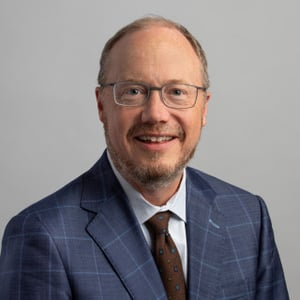
Patrick Hotung Professor of Constitutional Law, Georgetown University Law Center
Randy Barnett is the Patrick Hotung Professor of Constitutional Law at Georgetown University Law Center. He has argued before the United States Supreme Court, tried murder cases to juries as a prosecutor in Chicago, and appeared as a prosecutor in the feature film Inalienable. He is the author of numerous books, including Restoring the Lost Constitution, The Structure of Liberty, Our Republican Constitution, and The Original Meaning of the Fourteenth Amendment. He has published two memoirs, A Life for Liberty: The Making of an American Originalist, and Felony Review: Tales of True Crime and Corruption in Chicago. He is currently working on a new book, Freedom and Flourishing: Libertarianism for the Real World.
President and Chief Counsel, Institute for Justice
Scott Bullock joined the Institute for Justice at its founding in 1991 and now serves as a senior attorney. Although he has litigated in all of the Institute's areas, his current work focuses on property rights and economic liberty cases in federal and state courts.
In property rights, Bullock has been involved in many cases challenging the use of eminent domain for private development. He argued the landmark case, Kelo v. City of New London, one of the most controversial and widely discussed U.S. Supreme Court decisions in decades. Along with co-counsel Dana Berliner, Bullock secured the first state supreme court victory after Kelo, where the Supreme Court of Ohio unanimously struck down the use of eminent domain for private development. Some of his other successes in this area include spearheading the litigation that saved a beachfront neighborhood in Long Branch, New Jersey, a small record label in Nashville, Tennessee, and the homes of the Archie family in Canton, Mississippi.
In addition to litigation, Bullock works extensively on grassroots campaigns with homeowners, small business owners, and activists throughout the country to oppose condemnations for private use. Following the Kelodecision, he drafted legislation and testified before numerous committees when legislatures began reforming abusive eminent domain laws.
Bullock directs the Institute’s campaign against civil forfeiture, a nationwide effort to challenge the ability of governments to take property from owners without a criminal conviction. He is co-author of Policing for Profit, a comprehensive report published in 2010 documenting forfeiture abuse at all levels of government.
Among his work on other constitutional issues, Bullock currently represents the monks of St. Joseph Abbey in their challenge to a Louisiana law that prevents them from selling hand-made wooden caskets. He also served as lead counsel in the Institute's First Amendment challenge to a federal regulatory agency’s campaign against investment newsletters, computer software and websites, establishing one of the first federal precedents extending free speech guarantees to Internet and software publishers. He has led successful lawsuits against rental inspection laws on behalf of tenants and defending efforts to open up taxi markets to more competition.
Bullock’s articles and views on constitutional litigation have appeared in a wide variety of media. He has published articles in the New York Times and the Wall Street Journal and he has appeared on 60 Minutes, ABC Nightly News, and National Public Radio, among many other publications and broadcasts.
His volunteer activities include serving on the boards of HR-57, a Washington, D.C.-based music and cultural center dedicated to the promotion of jazz and a national forfeiture reform organization.
Bullock was born in Guantanamo Bay, Cuba, and grew up outside of Pittsburgh, Pennsylvania. He received his law degree from the University of Pittsburgh and his B.A. in economics and philosophy from Grove City College.
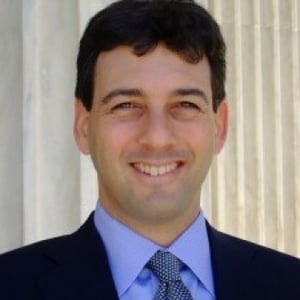
Vice President for Litigation, Institute for Free Speech
Alan joined the Institute for Free Speech as Vice President for Litigation in February 2021. In this role, Alan directs the Institute’s litigation and legal advocacy, leads our in-house legal team, and manages and works to expand our network of volunteer attorneys.
Prior to joining the Institute, Alan litigated complex federal matters for twenty years, in his own practice and as a partner in various Washington-area firms. He argued and won landmark constitutional cases in the United States Supreme Court and has appeared before numerous appellate and district courts throughout the country. Alan often speaks at law schools and continuing legal education seminars. He also teaches strategic/public interest litigation as an adjunct professor at the Georgetown University Law Center.
Alan began his career clerking for the Hon. Terrence W. Boyle, United States District Judge for the Eastern District of North Carolina. He has also served as a Deputy Attorney General for the State of California, a litigation associate at the Washington office of Sidley Austin, and as counsel to the United States Senate Judiciary Committee.
Alan earned his J.D. at Georgetown (1995) and his B.A. at Cornell University (1992). He is an active member in good standing of the Virginia, District of Columbia, and California bars, the Bar of the United States Supreme Court, and various federal appellate and district court bars.
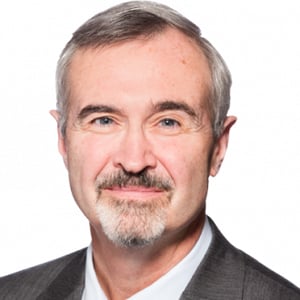
Vice President, Edwin Meese III Institute for the Rule of Law, Advancing American Freedom
John G. Malcolm oversees Advancing American Freedom’s work to increase understanding of the Constitution and the rule of law as Vice President of the organization’s Edwin Meese III Institute for the Rule of Law. Malcolm brings to the challenge a wealth of legal expertise and experience in both the public and private sectors.
Prior to joining Advancing American Freedom in 2025, Malcolm was the Vice President of the Institute for Constitutional Government and the Director of the Meese Center for Legal and Judicial Studies at the Heritage Foundation. Prior to joining Heritage in 2012, Malcolm was general counsel at the U.S. Commission on International Religious Freedom, as well as a distinguished practitioner in residence at Pepperdine Law School. From 2004 to 2009, Malcolm was executive vice president and director of worldwide anti-piracy operations for the Motion Picture Association.
Malcolm served as a deputy assistant attorney general in the Department of Justice’s Criminal Division from 2001 to 2004, where he oversaw sections on computer crime and intellectual property, domestic security, child exploitation and obscenity, and special investigations. Immediately prior to that, he was a founding partner in the Atlanta law firm of Malcolm & Schroeder, LLP.
From 1990 to 1997, Malcolm was an assistant U.S. attorney in Atlanta, assigned to the fraud and public corruption section, and also an associate independent counsel, investigating fraud and abuse in the Department of Housing and Urban Development. He was honored with the Director’s Award for Superior Performance for his work in connection with the successful prosecution of Walter Leroy Moody Jr., who assassinated an 11th Circuit judge and the head of the Savannah chapter of the NAACP.
A graduate of Harvard Law School and Columbia College, Malcolm began his career as a law clerk to a federal district court judge and a federal appellate court judge, and as an associate at the Atlanta-based law firm of Sutherland, Asbill & Brennan (new Eversheds Sutherland).
Malcolm, who resides in Washington, D.C., serves on the Board of Trustees of the Washington National Opera and is a Senate-confirmed member of the Board of Directors of the Legal Services Corporation, the largest funder of civil legal aid in the United States.
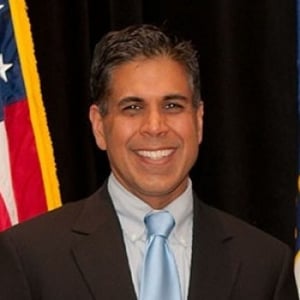
Judge, United States Court of Appeals, Sixth Circuit
Amul R. Thapar serves as a judge on the United States Court of Appeals for the Sixth Circuit. His judicial career began in 2007 when President George W. Bush nominated him to serve on the Eastern District of Kentucky, making him the first South Asian Article III judge in American history. In 2017, he became President Donald J. Trump’s first appellate court nominee.
Before joining the bench, Judge Thapar served as the United States Attorney for the Eastern District of Kentucky. While United States Attorney, Judge Thapar worked on the Attorney General’s Advisory Committee (“AGAC”) and chaired the AGAC’s Controlled Substances and Asset Forfeiture subcommittee. He also served on the Terrorism and National Security subcommittee, the Violent Crime subcommittee, and the Child Exploitation working group.
Judge Thapar has worked in private practice, at Williams & Connolly in Washington, D.C., and Squire, Sanders & Dempsey in Cincinnati, Ohio. He also served as an Assistant United States Attorney in both the Southern District of Ohio and the District of Columbia.
Judge Thapar received his undergraduate degree from Boston College and his law degree from the University of California, Berkeley. After graduating, Judge Thapar worked as a law clerk to the Honorable S. Arthur Spiegel of the United States District Court for the Southern District of Ohio, and the Honorable Nathaniel R. Jones of the United States Court of Appeals for the Sixth Circuit.
Judge Thapar has also published in the Yale Law Journal, Michigan Law Review, and Catholic University Law Review. He teaches courses on originalism, the Federalists and Anti-Federalists, and legal writing at Notre Dame Law School, the University of Virginia School of Law, and Vanderbilt Law School.
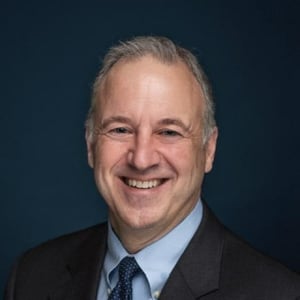
Senior Counsel, Litigation, Defense of Freedom Institute
Don Daugherty is Senior Counsel, Litigation, at the Defense of Freedom Institute for Policy Studies. He previously served as a Senior Counsel at the Institute for Free Speech and the Wisconsin Institute for Law & Liberty. Before that, he was a partner at three of Wisconsin’s largest firms, with nearly 30 years of trial and appellate litigation experience. He has been consistently recognized as among the “Best Lawyers in America,” as well as Wisconsin’s “Super Lawyers.” He received his B.A. from the University of Virginia and his J.D. from Northwestern University Law School. After law school, he served as a clerk to the Honorable Roger J. Miner of the United States Court of Appeals for the Second Circuit.
Don is on the Board of Advisors for the Milwaukee Lawyers’ Chapter of the Federalist Society, and on the Executive Committee of the Federalist Society’s Litigation Practice Group.

The People’s Justice: Clarence Thomas and the Constitutional Stories that Define Him
Co-hosted by The Heritage Foundation
Washington, DCTopics
The Supreme Court’s Confused Decision in Haaland v. Brackeen
On June 15, the Supreme Court issued Haaland v. Brackeen. Among other issues, the Court...
Topics
Crypto King Cites Recent SCOTUS Ruling in Effort to Dismiss Charges
Everyone deserves their day in court. Disgraced former crypto king and FTX founder Sam Bankman-Fried...
Topics
Why Three Conservative Justices Enabled California to Regulate a Nationwide Industry
10 a.m. on a Thursday is a bit early to have pork chops on the...
Topics
C. Boyden Gray: One of a Kind
When Boyden Gray hired me into his law firm in 2013, he had already entered...
CLE Seminar on Equity, Diversity, Inclusivity and Constitutional Litigation
Denver, COOriginalism Carries On
Donald A. Daugherty
A review of Erwin Chemerinsky, A Momentous Year in the Supreme Court: October Term 2021...
Topics
How Clear is Clear Enough: A Mix of Textualism, Tribal Sovereignty, and Bankruptcy at the Supreme Court
Indian Tribes are unique entities. They’re sui generis (one of a kind) in American law....
Topics
Four Things to Watch in Gonzalez v. Google
Many Americans have heard of Section 230 of the Communications Decency Act. Not many know...
Topics
New Substack: Ed Whelan’s Confirmation Tales
One of the more interesting places to find deep dives into all sorts of issues...