
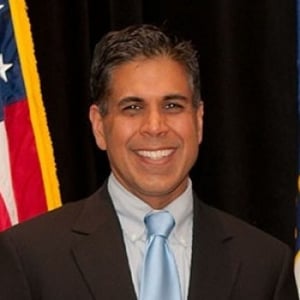
Judge, United States Court of Appeals, Sixth Circuit
Amul R. Thapar serves as a judge on the United States Court of Appeals for the Sixth Circuit. His judicial career began in 2007 when President George W. Bush nominated him to serve on the Eastern District of Kentucky, making him the first South Asian Article III judge in American history. In 2017, he became President Donald J. Trump’s first appellate court nominee.
Before joining the bench, Judge Thapar served as the United States Attorney for the Eastern District of Kentucky. While United States Attorney, Judge Thapar worked on the Attorney General’s Advisory Committee (“AGAC”) and chaired the AGAC’s Controlled Substances and Asset Forfeiture subcommittee. He also served on the Terrorism and National Security subcommittee, the Violent Crime subcommittee, and the Child Exploitation working group.
Judge Thapar has worked in private practice, at Williams & Connolly in Washington, D.C., and Squire, Sanders & Dempsey in Cincinnati, Ohio. He also served as an Assistant United States Attorney in both the Southern District of Ohio and the District of Columbia.
Judge Thapar received his undergraduate degree from Boston College and his law degree from the University of California, Berkeley. After graduating, Judge Thapar worked as a law clerk to the Honorable S. Arthur Spiegel of the United States District Court for the Southern District of Ohio, and the Honorable Nathaniel R. Jones of the United States Court of Appeals for the Sixth Circuit.
Judge Thapar has also published in the Yale Law Journal, Michigan Law Review, and Catholic University Law Review. He teaches courses on originalism, the Federalists and Anti-Federalists, and legal writing at Notre Dame Law School, the University of Virginia School of Law, and Vanderbilt Law School.
Judge, United States Court of Appeals, Sixth Circuit
Amul R. Thapar serves as a judge on the United States Court of Appeals for the Sixth Circuit. His judicial career began in 2007 when President George W. Bush nominated him to serve on the Eastern District of Kentucky, making him the first South Asian Article III judge in American history. In 2017, he became President Donald J. Trump’s first appellate court nominee.
Before joining the bench, Judge Thapar served as the United States Attorney for the Eastern District of Kentucky. While United States Attorney, Judge Thapar worked on the Attorney General’s Advisory Committee (“AGAC”) and chaired the AGAC’s Controlled Substances and Asset Forfeiture subcommittee. He also served on the Terrorism and National Security subcommittee, the Violent Crime subcommittee, and the Child Exploitation working group.
Judge Thapar has worked in private practice, at Williams & Connolly in Washington, D.C., and Squire, Sanders & Dempsey in Cincinnati, Ohio. He also served as an Assistant United States Attorney in both the Southern District of Ohio and the District of Columbia.
Judge Thapar received his undergraduate degree from Boston College and his law degree from the University of California, Berkeley. After graduating, Judge Thapar worked as a law clerk to the Honorable S. Arthur Spiegel of the United States District Court for the Southern District of Ohio, and the Honorable Nathaniel R. Jones of the United States Court of Appeals for the Sixth Circuit.
Judge Thapar has also published in the Yale Law Journal, Michigan Law Review, and Catholic University Law Review. He teaches courses on originalism, the Federalists and Anti-Federalists, and legal writing at Notre Dame Law School, the University of Virginia School of Law, and Vanderbilt Law School.
Judge, United States Court of Appeals, Sixth Circuit
Amul R. Thapar serves as a judge on the United States Court of Appeals for the Sixth Circuit. His judicial career began in 2007 when President George W. Bush nominated him to serve on the Eastern District of Kentucky, making him the first South Asian Article III judge in American history. In 2017, he became President Donald J. Trump’s first appellate court nominee.
Before joining the bench, Judge Thapar served as the United States Attorney for the Eastern District of Kentucky. While United States Attorney, Judge Thapar worked on the Attorney General’s Advisory Committee (“AGAC”) and chaired the AGAC’s Controlled Substances and Asset Forfeiture subcommittee. He also served on the Terrorism and National Security subcommittee, the Violent Crime subcommittee, and the Child Exploitation working group.
Judge Thapar has worked in private practice, at Williams & Connolly in Washington, D.C., and Squire, Sanders & Dempsey in Cincinnati, Ohio. He also served as an Assistant United States Attorney in both the Southern District of Ohio and the District of Columbia.
Judge Thapar received his undergraduate degree from Boston College and his law degree from the University of California, Berkeley. After graduating, Judge Thapar worked as a law clerk to the Honorable S. Arthur Spiegel of the United States District Court for the Southern District of Ohio, and the Honorable Nathaniel R. Jones of the United States Court of Appeals for the Sixth Circuit.
Judge Thapar has also published in the Yale Law Journal, Michigan Law Review, and Catholic University Law Review. He teaches courses on originalism, the Federalists and Anti-Federalists, and legal writing at Notre Dame Law School, the University of Virginia School of Law, and Vanderbilt Law School.
Judge, United States Court of Appeals, Sixth Circuit
Amul R. Thapar serves as a judge on the United States Court of Appeals for the Sixth Circuit. His judicial career began in 2007 when President George W. Bush nominated him to serve on the Eastern District of Kentucky, making him the first South Asian Article III judge in American history. In 2017, he became President Donald J. Trump’s first appellate court nominee.
Before joining the bench, Judge Thapar served as the United States Attorney for the Eastern District of Kentucky. While United States Attorney, Judge Thapar worked on the Attorney General’s Advisory Committee (“AGAC”) and chaired the AGAC’s Controlled Substances and Asset Forfeiture subcommittee. He also served on the Terrorism and National Security subcommittee, the Violent Crime subcommittee, and the Child Exploitation working group.
Judge Thapar has worked in private practice, at Williams & Connolly in Washington, D.C., and Squire, Sanders & Dempsey in Cincinnati, Ohio. He also served as an Assistant United States Attorney in both the Southern District of Ohio and the District of Columbia.
Judge Thapar received his undergraduate degree from Boston College and his law degree from the University of California, Berkeley. After graduating, Judge Thapar worked as a law clerk to the Honorable S. Arthur Spiegel of the United States District Court for the Southern District of Ohio, and the Honorable Nathaniel R. Jones of the United States Court of Appeals for the Sixth Circuit.
Judge Thapar has also published in the Yale Law Journal, Michigan Law Review, and Catholic University Law Review. He teaches courses on originalism, the Federalists and Anti-Federalists, and legal writing at Notre Dame Law School, the University of Virginia School of Law, and Vanderbilt Law School.
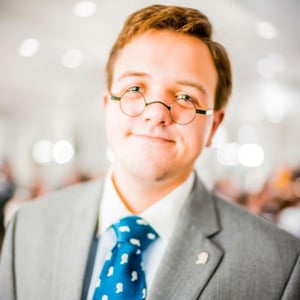
Trial Attorney, Civil Rights Division, United States Department of Justice (incoming)
Adam Griffin is a graduate of the University of North Carolina School of Law. During law school, he served as a research assistant to Professor Stephen E. Sachs and UNC Law Dean Martin Brinkley. After law school, he spent two years litigating for liberty at the Institute for Justice as an inaugural Law and Liberty Fellow. He served as a law clerk to Chief Judge Richard E. Myers in the United States District Court for the Eastern District of North Carolina, and is now a separation-of-powers attorney at Pacific Legal Foundation.
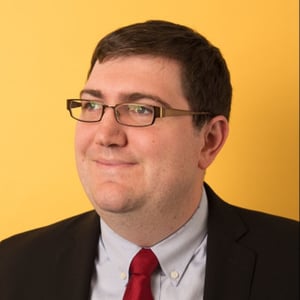
Attorney, Pacific Legal Foundation
Jeff McCoy is an attorney at Pacific Legal Foundation. Jeff joined PLF in 2017. Since then, he has focused his litigation on separation of powers and private property rights. Jeff also leads PLF’s coastal land rights initiative, which seeks to strengthen and defend statutory and constitutional protections for coastal property owners across the country.
Throughout his career, Jeff has worked for various organizations that promote individual liberty and limited government. Prior to joining PLF, Jeff was a staff attorney at Mountain States Legal Foundation in Lakewood, Colorado, for five years. His work at Mountain States included helping secure victory for a Wyoming private property owner in U.S. Supreme Court case Marvin M. Brandt Revocable Trust v. United States. Besides Mountain States, Jeff worked as an intern for the Cato Institute during the spring of 2008, and after his first year of law school, he worked as a Charles G. Koch Summer Fellow at the Institute for Justice’s Seattle office.
Jeff received his B.A. degree in political science and philosophy from the University of Colorado in 2007 and his law degree, also from the University of Colorado, in 2011. During his time at law school, Jeff had the honor of working as a judicial extern for then-Judge Neil Gorsuch at the U.S. Court of Appeals for the Tenth Circuit.
Trial Attorney, Civil Rights Division, United States Department of Justice (incoming)
Adam Griffin is a graduate of the University of North Carolina School of Law. During law school, he served as a research assistant to Professor Stephen E. Sachs and UNC Law Dean Martin Brinkley. After law school, he spent two years litigating for liberty at the Institute for Justice as an inaugural Law and Liberty Fellow. He served as a law clerk to Chief Judge Richard E. Myers in the United States District Court for the Eastern District of North Carolina, and is now a separation-of-powers attorney at Pacific Legal Foundation.
Attorney, Pacific Legal Foundation
Jeff McCoy is an attorney at Pacific Legal Foundation. Jeff joined PLF in 2017. Since then, he has focused his litigation on separation of powers and private property rights. Jeff also leads PLF’s coastal land rights initiative, which seeks to strengthen and defend statutory and constitutional protections for coastal property owners across the country.
Throughout his career, Jeff has worked for various organizations that promote individual liberty and limited government. Prior to joining PLF, Jeff was a staff attorney at Mountain States Legal Foundation in Lakewood, Colorado, for five years. His work at Mountain States included helping secure victory for a Wyoming private property owner in U.S. Supreme Court case Marvin M. Brandt Revocable Trust v. United States. Besides Mountain States, Jeff worked as an intern for the Cato Institute during the spring of 2008, and after his first year of law school, he worked as a Charles G. Koch Summer Fellow at the Institute for Justice’s Seattle office.
Jeff received his B.A. degree in political science and philosophy from the University of Colorado in 2007 and his law degree, also from the University of Colorado, in 2011. During his time at law school, Jeff had the honor of working as a judicial extern for then-Judge Neil Gorsuch at the U.S. Court of Appeals for the Tenth Circuit.
Trial Attorney, Civil Rights Division, United States Department of Justice (incoming)
Adam Griffin is a graduate of the University of North Carolina School of Law. During law school, he served as a research assistant to Professor Stephen E. Sachs and UNC Law Dean Martin Brinkley. After law school, he spent two years litigating for liberty at the Institute for Justice as an inaugural Law and Liberty Fellow. He served as a law clerk to Chief Judge Richard E. Myers in the United States District Court for the Eastern District of North Carolina, and is now a separation-of-powers attorney at Pacific Legal Foundation.
Attorney, Pacific Legal Foundation
Jeff McCoy is an attorney at Pacific Legal Foundation. Jeff joined PLF in 2017. Since then, he has focused his litigation on separation of powers and private property rights. Jeff also leads PLF’s coastal land rights initiative, which seeks to strengthen and defend statutory and constitutional protections for coastal property owners across the country.
Throughout his career, Jeff has worked for various organizations that promote individual liberty and limited government. Prior to joining PLF, Jeff was a staff attorney at Mountain States Legal Foundation in Lakewood, Colorado, for five years. His work at Mountain States included helping secure victory for a Wyoming private property owner in U.S. Supreme Court case Marvin M. Brandt Revocable Trust v. United States. Besides Mountain States, Jeff worked as an intern for the Cato Institute during the spring of 2008, and after his first year of law school, he worked as a Charles G. Koch Summer Fellow at the Institute for Justice’s Seattle office.
Jeff received his B.A. degree in political science and philosophy from the University of Colorado in 2007 and his law degree, also from the University of Colorado, in 2011. During his time at law school, Jeff had the honor of working as a judicial extern for then-Judge Neil Gorsuch at the U.S. Court of Appeals for the Tenth Circuit.
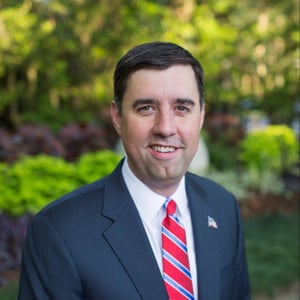
Associate Justice, Alabama Supreme Court
James L. “Jay” Mitchell was elected to the Alabama Supreme Court in 2018.
Prior to serving on the Supreme Court, Justice Mitchell was an accomplished litigation attorney with Maynard, Cooper & Gale, P.C. During his time in private practice, he tried a number of complex cases to verdict, successfully handled appeals, and obtained favorable settlements for clients. He was rated as one of the top litigators in the United States and Alabama, and received the highest possible rating for professional ethics. He also served on Maynard, Cooper & Gale’s executive committee, helping to lead strategic and growth initiatives for the firm.
Justice Mitchell was born in Mobile and grew up in South Alabama and in Homewood. He is a graduate of Homewood High School and received his Bachelor of Arts with honors from Birmingham-Southern College, where he graduated Phi Beta Kappa, served as president of the student body, and played forward on the school’s 1995 national championship basketball team. He holds a Master of Arts from University College in Dublin, Ireland, and received his law degree from the University of Virginia School of Law.
Justice Mitchell has long been active in organizations that benefit the community and enhance the legal profession. In addition to his service with other organizations, he is a member of the Rotary Club of Birmingham and serves on the board of directors at Cornerstone School, an inner city Christian school. He is also a member of the Federalist Society.
Justice Mitchell and his wife, Elizabeth, have been married for 20 years and have four children. They reside in Homewood and are longtime members of Church of the Highlands.

Happy Hour & Book-Signing with Judge Thapar
New York City Young Lawyers Chapter
New York, NYJustice Clarence Thomas: The People's Justice
Toledo Lawyers Chapter
Toledo, OHReception & Book-Signing with Judge Thapar
Pittsburgh Lawyers Chapter
Pittsburgh, PATopics
Tyler v. Hennepin County: Why This Seemingly Innocent Decision is Disquieting
A Supreme Court ruling, like many other things, may not be quite what it seems....
Luncheon & Book-Signing with Judge Thapar
Chicago, ILCourthouse Steps Decision: Wilkins v. United States
Adam F. Griffin, Jeffrey McCoy
On March 28, 2023, the Supreme Court handed down its decision in Wilkins v. United States....
Courthouse Steps Decision: Wilkins v. United States
Adam F. Griffin, Jeffrey McCoy
On March 28, 2023, the Supreme Court handed down its decision in Wilkins v. United States....
Topics
Arizona v. Navajo Nation: SCOTUS Zags Back
Indian law, including Indian constitutional law, is famously chaotic. With the Supreme Court’s 5-4 decision...
Courthouse Steps Decision: Wilkins v. United States
TeleforumTextualism in Alabama
Jay Mitchell
Textualism is alive and well in Alabama. This interpretive doctrine teaches that legal texts have...