
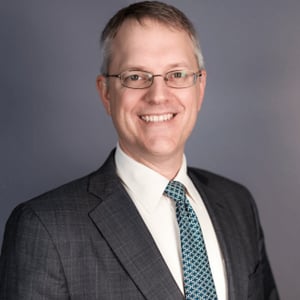
President and General Counsel, New Civil Liberties Alliance
NCLA’s President and General Counsel, Mark Chenoweth, has observed the administrative state up close and personal from perches in all four branches of the federal government. Mark served as the first chief of staff to Congressman Mike Pompeo, as legal counsel to Commissioner Anne Northup at the U.S. Consumer Product Safety Commission, as an attorney advisor in the Office of Legal Policy at the U.S. Department of Justice, and as a law clerk to the Hon. Danny J. Boggs on the U.S. Court of Appeals for the Sixth Circuit.
Mark has worked in several different roles in the private sector as well. He began his legal career in D.C. as a regulatory associate at Wilmer, Cutler & Pickering. He then returned to his home state of Kansas to serve as in-house counsel for Koch Industries. Most recently he spent over four years as general counsel of the Washington Legal Foundation.
Mark is a graduate of Yale College and the University of Chicago Law School, where he co-founded the Institute for Justice Clinic on Entrepreneurship and became a Tony Patiño Fellow. Mark has been widely quoted and/or published in newspapers and websites including the New York Times, San Francisco Chronicle, New Hampshire Union Leader, and Metropolitan Corporate Counsel. He has also had recurring op-eds in the Los Angeles Daily Journal, and at Forbes.com.
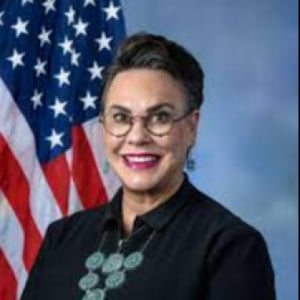
U.S. Representative, Wyoming
Congresswoman Harriet Hageman represents the state of Wyoming in the U.S. House of Representatives. She grew up on a ranch, attended Casper College on a livestock judging scholarship and earned both her bachelor's degree and law degree from the University of Wyoming. A litigator for 34 years, Harriet is nationally known for challenging federal overreach, for protecting water and property rights, for exposing federal land and wildlife mismanagement, and for fighting back against the unconstitutional and unlawful acts of unelected bureaucrats. Harriet has extensive experience engaging in complex trials against federal agencies and has been admitted to practice in several states as well as the United States Supreme Court.
In her freshman term in the 118th Congress, Harriet has been selected to serve on the House Natural Resources committee where she is Chair of the Subcommittee on Indian and Insular Affairs, and also serves on the Subcommittee on Water, Wildlife, and Fisheries. Representative Hageman also serves on the Judiciary Committee and Subcommittees on the Constitution and Limited Government; the Subcommittee on the Administrative State, Regulatory Reform, and Antitrust; and the Select Committee on the Weaponization of the Federal Government. She has shown her support for American energy independence by serving as Co-Chair of the Congressional Coal Caucus.
Legislation sponsored by Representative Hageman has been focused on reining in the regulatory state, ending the weaponization of our federal government and its proxies against American citizens, and ending the de facto moratorium on American energy production.

Former Acting Assistant Secretary, US Department of Education; Partner, Jackson Bone LLP, U.S. Department of Education
Candice Jackson is an attorney who served as Acting Assistant Secretary for Civil Rights and Deputy General Counsel in the US Department of Education from 2017 to 2021 where she was responsible for drafting the first-ever regulations under Title IX addressing campus sexual harassment and assault. Candice has returned to private law practice and currently represents incarcerated women in California prisons in WoLF’s lawsuit to overturn the 2021 law that allows male criminals to choose to be housed in women’s prisons based on “gender identity.” Candice lives with her wife Patricia and their 9-year-old twins Madelyn and Zachary.

Professor of History, Brooklyn College and the CUNY Graduate Center
KC Johnson is professor of history at Brooklyn College and the CUNY Graduate Center, where he has taught since 1999. He has written 13 books on topics in U.S. political history, U.S. foreign policy, and legal and policy debates surrounding campus due process and civil liberties. His Duke lacrosse case blog, Durham-in-Wonderland, was named ABA Journal’s Best Ethics Blog in 2007; and he continues to blog on higher-ed matters at the blog Minding the Campus.
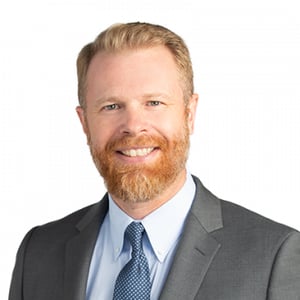
Owner, Schneider Education & Employment Law PLLC
Scott Schneider is the owner and founder of Schneider Education & Employment Law and has advised companies and educational institutions nationwide on a variety of complex legal issues with a focus on particularly sensitive matters like institutional response to sexual misconduct.
Prior to founding Schneider Education & Employment Law, Scott was an equity partner in two major national law firms and served as in-house counsel for Tulane University.
He is a prominent litigator as well as a sought-after advisor on Title IX, labor and employment law issues, and various risk management concerns. He has led numerous investigations of serial sex abuse allegations, allegations of misconduct involving senior leadership and other acts of institutional misconduct. He has also handled various high-profile program reviews of institutional response to sexual misconduct, racial discrimination, athletics department ethics and compliance, and treatment of at-risk employees and students.
Scott has provided training nationally to thousands of personnel on a variety of issues, including Title IX; labor and employment law; faculty hiring, promotion and tenure processes; and Greek Life risk management. Scott also provides expert witness testimony on matters dealing with institutional response to allegations of sexual misconduct.
Scott regularly presents to national organizations, including the National Association of College and University Attorneys (NACUA), the National Association of Independent Schools (NAIS), the Association for Student Conduct Administration (ASCA) Gehring Academy, the International Association of Campus Law Enforcement Administrators (IACLEA), the Association of College and University Housing Officers-International (ACUHO-I), EDUCAUSE and various associations of independent schools.
Additionally, Scott previously served as an award-winning professor at Tulane University, where he taught courses on higher education and labor and employment law and created the Tulane University Law School’s Title IX certification program. Scott has been retained by the National Center for Campus Public Safety to serve as a faculty member for its Trauma-Informed Sexual Assault Investigation and Adjudication training program for campus officials. Scott also serves on the faculty for the State University of New York’s Student Conduct Institute where he provides training on informal resolution and restorative justice.
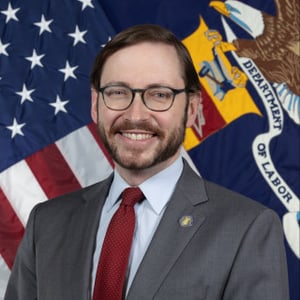
Solicitor, U.S. Department of Labor
Jonathan Berry is Solicitor at the U.S. Department of Labor, in service to President Trump’s agenda to put American workers first. He leads the Department’s lawyers in advising the Secretary and agency leadership on all aspects of law and in representing the Department in court. He was previously managing partner at Boyden Gray PLLC, where he provided strategic counsel and litigated on issues at the intersection of law, politics, and public policy. Earlier, he headed the regulatory office at Labor, and also served at the Department of Justice, in the first Trump Administration. Mr. Berry served as a law clerk to Judge Jerry E. Smith of the United States Court of Appeals for the Fifth Circuit, and to Associate Justice Samuel A. Alito, Jr., of the Supreme Court of the United States.
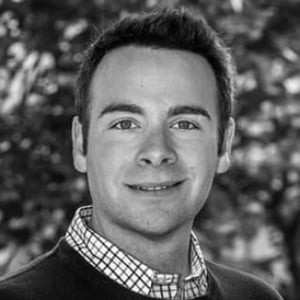
Hoover Fellow, Hoover Institution, Stanford University
Michael T. Hartney is a Fellow at Stanford University’s Hoover Institution, an adjunct fellow at
the Manhattan Institute, and an associate professor of political science at Boston College.
Hartney’s scholarly expertise is in American politics and public policy. His work has been
published in top academic journals such as the American Political Science Review, the American
Journal of Political Science and Perspectives on Politics and garnered media coverage from
the Economist, New York Times, Washington Post, and Wall Street Journal. Hartney also writes
regularly for popular outlets including City Journal, Education Next, National Review, and the
Washington Post.
Hartney’s first book, How Policies Make Interest Groups: Governments, Unions, and American
Education was published late last year by the University of Chicago Press. The book examines
the origins, power, and activities of America’s teachers’ unions and shows how governments
have long subsidized the unions’ political organizing efforts, enabling them to wield outsized
influence in American education. Before his academic career, he worked as a policy analyst for
the National Governors Association, where he provided analysis to state policymakers on a wide
range of school reform issues, from teacher and principal quality to high school redesign.
Hartney earned his Ph.D. from the University of Notre Dame and his bachelor’s degree from
Vanderbilt University.
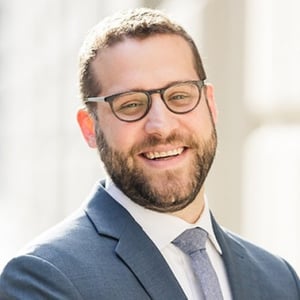
President and General Counsel, The Fairness Center
David R. Osborne is President & General Counsel of the Fairness Center. David helped to launch the Fairness Center in 2014 and provides advice and counsel to clients, directs the Fairness Center’s legal strategy, and oversees all litigation efforts. Prior to joining the Fairness Center, David practiced law in Florida, where he had previously served as clerk to a Florida Supreme Court justice.
David received his Juris Doctorate from the Florida State University College of Law, graduating magna cum laude. He enrolled in law school after working as official staff for a Member of Congress from Orlando, Florida.
David is a member of the Pennsylvania and Florida state bars and has been admitted to the federal District Court for the Middle District of Pennsylvania. He is based in central Pennsylvania, where he is also president of the Harrisburg Chapter of the Federalist Society and a State Advisory Committee Member for the U.S. Commission on Civil Rights. David and his wife have been happily married for 11 years and have four children together.

Senior Fellow and Director of Constitutional Studies, Manhattan Institute
Ilya Shapiro is a senior fellow and director of constitutional studies at the Manhattan Institute and a contributing editor of City Journal. Previously he was executive director and senior lecturer at the Georgetown Center for the Constitution, and before that a vice president of the Cato Institute.
Shapiro is the author of Lawless: The Miseducation of America’s Elites (2025) and Supreme Disorder: Judicial Nominations and the Politics of America’s Highest Court (2020), coauthor of Religious Liberties for Corporations? (2014), and editor of 11 volumes of the Cato Supreme Court Review (2008-18). He has contributed to a variety of academic, popular, and professional publications, including the Wall Street Journal, Harvard Journal of Law & Public Policy, Washington Post, Los Angeles Times, USA Today, National Review, and Newsweek. He also regularly provides commentary for various media outlets, writes the Shapiro’s Gavel newsletter on Substack, and once appeared on the Colbert Report.
Shapiro has testified many times before Congress and state legislatures and has filed more than 500 amicus curiae “friend of the court” briefs in the Supreme Court. He lectures regularly on behalf of the Federalist Society, is a member of the board of fellows of the Jewish Policy Center, was an inaugural Washington Fellow at the National Review Institute, and has been an adjunct law professor at the George Washington University and University of Mississippi. He is also the chairman of the board of advisers of the Mississippi Justice Institute, a barrister in the Edward Coke Appellate Inn of Court, and a former member of the Virginia Advisory Committee to the U.S. Commission on Civil Rights.
Earlier in his career, Shapiro was a special assistant/adviser to the Multi-National Force in Iraq on rule-of-law issues and practiced at Patton Boggs and Cleary Gottlieb. Before entering private practice, he clerked for Judge E. Grady Jolly of the U.S. Court of Appeals for the Fifth Circuit. He holds an AB from Princeton University, an MSc from the London School of Economics, and a JD from the University of Chicago Law School.
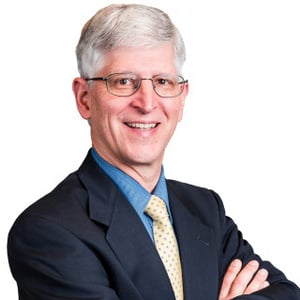
Eric Stahlfeld has been Chief Litigation Counsel and head of the legal team since 2018 for the Freedom Foundation, whose mission is to free public sector employees from union bondage. Eric graduated in 1992 from the Marshall-Wythe School of Law at the College of William and Mary in Virginia, after which he moved to Washington State to practice law. Prior to law school, Eric worked in the Office of Presidential Personnel under President Ronald Reagan.
Eric and his wife, Susan, live outside Seattle. They have two children, daughter Marta teaches American and world history, and son Karl who is a law student. Eric’s principal hobby involves birds: watching them, taking pictures of them, shooting them, and eating them.
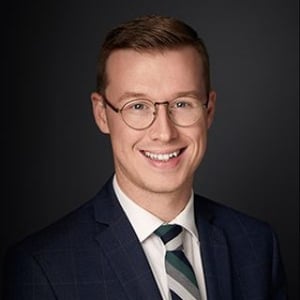
Faculty Legal Defense Fund Fellow, The Foundation for Individual Rights and Expression
Josh earned his B.A. in political science from Wabash College, and his J.D. in 2019 from Indiana University Maurer School of Law. During law school, Josh was Executive Editor of the Indiana Journal of Law & Social Equality and president of the Environmental Law Society. He also completed clerkships with the ACLU of Indiana and the Indiana Office of the Attorney General. Prior to joining FIRE, Josh was the Law Fellow at the National Association of College and University Attorneys, where he closely studied the various legal issues involving institutions of higher education and wrote daily updates on the world of higher education law. Josh lives in Washington, D.C., and is a member of the Indiana bar. In his free time, Josh loves cycling, walking around the city with his wife and their dog, and rooting for the St. Louis Cardinals.
Director, Cleveland Scholarship and Tutoring Program
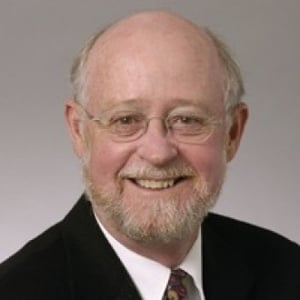
Professor Emeritus of Public Affairs & Political Science, University of Wisconsin-Madison
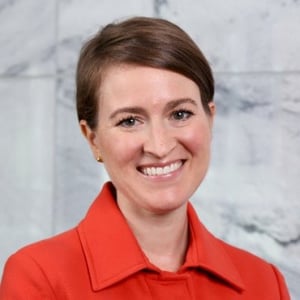
Fuller E. Callaway Chair of Law, University of Georgia School of Law
Elizabeth Chamblee Burch joined the School of Law faculty in 2011. She was promoted to the rank of full professor in 2015 and served a visiting professor at Harvard Law School in 2017. After holding the Charles H. Kirbo Chair of Law for two years, she assumed the Fuller E. Callaway Chair of Law in 2019. She is the author of Mass Tort Deals: Backroom Bargaining in Multidistrict Litigation (Cambridge University Press 2019) and her teaching and research interests include civil procedure, class actions and mass torts.
Burch is an award-winning scholar whose groundbreaking work on multidistrict litigation and class actions won the American Law Institute’s Early Career Scholars Medal in 2015, the Fred C. Zacharias Memorial Prize for Professional Responsibility Scholarship in 2016 and the Mangano Dispute Resolution Advancement Award in 2019.
Burch has published over 30 articles and essays in respected journals such as the New York University Law Review, Yale Law Journal, Cornell Law Review, Virginia Law Review, Vanderbilt Law Review, Washington University Law Review, Boston University Law Review and George Washington Law Review, among others. She co-authors a casebook titled The Law of Class Actions and Other Aggregate Litigation with the late Richard A. Nagareda, Robert G. Bone, Charles Silver, and Patrick Woolley.
Burch has delivered over 70 lectures at research institutions across the United States and abroad to diverse audiences—from law professors at their annual meeting to federal judges at their judicial retreats, lawyers and jurists at the American Law Institute and the American Bar Association, and psychologists at the International Congress on the Psychology of Law. She was elected as a member of the American Law Institute in 2013, and she is a frequent commentator in various international and national news media such as National Public Radio’s Marketplace, BBC World News, The New York Times, The Wall Street Journal, USA Today and The L.A. Times.
Before joining the School of Law's faculty, she was an assistant professor at Florida State University College of Law, where she received the university-wide Graduate Teaching Award and was voted “Professor of the Year” by second- and third-year students. Burch began her academic career in 2006 at Cumberland School of Law, part of Samford University, where she received the Harvey S. Jackson Excellence in Teaching Award and the Lightfoot, Franklin & White Faculty Scholarship Award. In 2014, she received the School of Law’s John C. O’Byrne Memorial Award for Significant Contributions Furthering Student-Faculty Relations.
Before entering the legal academy, Burch worked as an associate at Holland & Knight in Atlanta, where she practiced in the area of complex litigation, including securities class actions. She has served as the mass torts subcommittee chair for the American Bar Association's Class Action and Derivative Suits Committee, on the executive board for the Association of American Law Schools’ Scholarship Committee and as a co-editor of the Mass Tort Litigation Blog.
She earned her bachelor's degree cum laude from Vanderbilt University and her Juris Doctor cum laude from Florida State University, where she served as the writing and research editor for the Florida State University Law Review.

Milton R. Underwood Chair in Free Enterprise, Vanderbilt University Law School
Brian Fitzpatrick is the Milton R. Underwood Chair in Free Enterprise and Professor of Law at Vanderbilt Law School, where his research focuses on class action litigation, federal courts, judicial selection, and constitutional law. He is best known for his empirical studies of class action settlements as well as his book The Conservative Case for Class Actions (University of Chicago Press, 2019). Professor Fitzpatrick joined Vanderbilt's law faculty in 2007 after serving as the John M. Olin Fellow at New York University School of Law. He graduated first in his class from Harvard Law School and went on to clerk for Judge Diarmuid O'Scannlain on the U.S. Court of Appeals for the Ninth Circuit and Justice Antonin Scalia on the U.S. Supreme Court. After his clerkships, Professor Fitzpatrick practiced commercial and appellate litigation for several years at Sidley Austin in Washington, D.C., and served as Special Counsel for Supreme Court Nominations to U.S. Senator John Cornyn. Before earning his law degree, Fitzpatrick graduated summa cum laude with a bachelor's of science in chemical engineering from the University of Notre Dame. He has received the Hall-Hartman Outstanding Professor Award, which recognizes excellence in classroom teaching, for his Civil Procedure and Federal Courts courses.
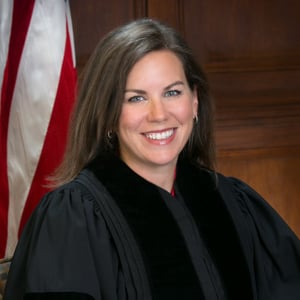
Judge, United States Court of Appeals, Eleventh Circuit
Britt C. Grant is a judge on the U.S. Court of Appeals for the Eleventh Circuit. Judge Grant was appointed to the federal bench in August 2018 after serving as a Justice on the Supreme Court of Georgia. Prior to her judicial appointment, she served as the Solicitor General of Georgia and practiced in the Washington, D.C. office of Kirkland & Ellis. Upon graduation from law school, Judge Grant served as a law clerk to then-Judge Brett M. Kavanaugh of the U.S. Court of Appeals for the District of Columbia Circuit. She earned her J.D., with distinction, from Stanford Law School, where she was the Co-Founder of the Stanford National Security and the Law Society, and the President of the Stanford Law chapter of the Federalist Society. Before enrolling in law school, Judge Grant served in The White House in a variety of domestic policy roles as well as on the staff of Congressman Nathan Deal. Judge Grant earned her B.A., summa cum laude, from Wake Forest University, where she was inducted into Phi Beta Kappa. She now lives in Atlanta, Georgia with her husband and three children.
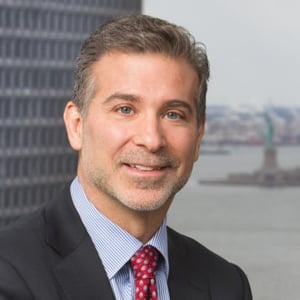
Partner, Seeger Weiss LLP
Chris is a founding partner of Seeger Weiss and one of the nation’s leading attorneys in the areas of complex and mass tort actions. He has earned leadership appointments from state and federal courts throughout the U.S. in many noteworthy multi-district litigations, including pharmaceutical actions involving Vioxx, Zyprexa, Gadolinium, and DePuy ASR, among others. In 2012, the U.S. District Court for the Eastern District of Pennsylvania appointed Chris to lead the multi-district litigation against the National Football League arising out of concussion-related injuries sustained by thousands of former NFL players. In the face of significant legal challenges, he was able to negotiate an uncapped global settlement with an estimated value of over one billion dollars. In 2016, he was appointed to the Plaintiffs' Steering Committee for the MDL concerning the Volkswagen diesel emissions scandal, in the U.S. District Court, Northern District of California. Chris served on the Settlement Committee and was one of the lead negotiators of a $14.7 billion settlement which includes a massive buyback program for consumers and billions of dollars for environmental remediation. He was also appointed Plaintiffs' Co-Lead Counsel for the Testosterone Replacement Therapy litigation in the Northern District of Illinois; as Co-Lead Counsel in the Proton Pump Inhibitor multidistrict litigation in the U.S. District Court for the District of New Jersey; to the Executive and Settlement Committees for the National Prescription Opiate litigation in the Northern District of Ohio; to the Plaintiffs’ Settlement Committee, serving as Lead Negotiator, for the Syngenta GMO Corn litigation, resulting in a $1.5 billion nationwide settlement. Recent appointments include: Co-Lead Counsel in the 3M Combat Arms Earplug Products Liability Litigation, in the Northern District of Florida, where Chris represents thousands of U.S. military members who have suffered hearing loss and tinnitus; and Co-Lead Counsel in the Intel CPU Marketing, Sales Practices and Products Liability litigation in the District of Oregon. He is an elected member of the American Law Institute; a member of the Board of Advisors to the NYU School of Law, Center on Civil Justice; and serves on the Leadership Council to the Bolch Judicial Institute at Duke Law School.

Chief Policy Counsel, Council on Criminal Justice and Senior Advisor, Right on Crime
Marc A. Levin is the Chief Policy Counsel for the Council on Criminal Justice (counciloncj.org) and Senior Advisor for Right on Crime.
An attorney and accomplished author on legal and public policy issues, Marc began the Foundation’s criminal justice program in 2005. This work contributed to nationally praised policy changes that have been followed by dramatic declines in crime and incarceration in Texas. Building on this success, in 2010, Levin developed the concept for the Right on Crime initiative, a TPPF project in partnership with Prison Fellowship and the American Conservative Union Foundation. Right on Crime has become the national clearinghouse for conservative criminal justice reforms and has contributed to the adoption of policies in dozens of states that fight crime, support victims, and protect taxpayers.
In 2014, Levin was named one of the “Politico 50” in the magazine’s annual “list of thinkers, doers, and dreamers who really matter in this age of gridlock and dysfunction.”
Marc has testified on criminal justice policy on four occasions before Congress and has testified before legislatures in states including Texas, Nevada, Kansas, Wisconsin, and California. He also has met personally with leaders such as U.S. Presidents, Speakers of the House, and the Justice Commtitee of the United Kingdom Parliament to share his ideas on criminal justice reform. In 2007, he was honored in a resolution unanimously passed by the Texas House of Representatives that stated, “Mr. Levin’s intellect is unparalleled and his research is impeccable.”
Since 2005, Marc has published dozens of policy papers on topics such as sentencing, probation, parole, reentry, and overcriminalization which are available on the TPPF website. Levin’s articles on law and public policy have been featured in publications such as the Wall Street Journal, USA Today, Texas Review of Law & Politics, National Law Journal, New York Daily News, Jerusalem Post, Toronto Star, Atlanta Journal-Constitution, Philadelphia Inquirer, San Francisco Chronicle, Washington Times, Los Angeles Daily Journal, Charlotte Observer, Dallas Morning News, Houston Chronicle, Austin American-Statesman, San Antonio Express-News and Reason Magazine.
In 1999, Marc graduated with honors from the University of Texas with a B.A. in Plan II Honors and Government. In 2002, Marc received his J.D. with honors from the University of Texas School of Law. Marc was a Charles G. Koch Summer Fellow in 1996. He served as a law clerk to Judge Will Garwood on the U.S. Court of Appeals for the Fifth Circuit and Staff Attorney at the Texas Supreme Court.

Senior Research Scientist, Columbia University School of Social Work
Vincent Schiraldi has extensive experience in public life, founding the policy think tank, the Justice Policy Institute, then moving to government as director of the juvenile corrections in Washington DC, and then as Commissioner of the New York City Department of Probation. Most recently Schiraldi served as Senior Advisor to the New York City Mayor’s Office of Criminal Justice. Schiraldi gained a national reputation as a fearless reformer who emphasized the humane and decent treatment of the men, women, and children under his correctional supervision. He pioneered efforts at community-based alternatives to incarceration in NYC and Washington DC. Schiraldi received a MSW from New York University, and a Bachelor of Arts from Binghamton University.

Plenary Session 1: Title IX: Gender Identity and So Much More
Mark Chenoweth, Harriet Hageman, Candice Jackson, KC Johnson, Scott Schneider
The Biden administration contends that the U.S. Department of Education’s final Title IX regulations published...
Topics
Goldstein v. CUNY: Can New York State compel Jewish professors to be represented by an antisemitic union?
In Janus v. AFSCME, a public employee challenged the State of Illinois’ requirement that he...
Topics
Cultivating Controversy: Proposed ABA Standard Would Link Freedom of Expression to Law School Accreditation
What opinions belong on law school campuses? Given that hundreds of aspiring lawyers flock to...
Plenary Session #1 Teacher Unions: Roadblocks to Education Reform or Defenders of Teacher and Student Interests?
Jonathan Berry, Michael Hartney, David R. Osborne, Ilya Shapiro, Eric Stahlfeld
The COVID-19 pandemic demonstrated the powerful influence of teacher unions in public education. As a...
Topics
Book Review: NOT Accountable, by Philip Howard (Part Two)
In light of the inequities and inefficiencies associated with monopolistic government unionism discussed in Part...
Topics
Jewish Professors Challenge Forced Representation by an Anti-Semitic Union as Incompatible with the First Amendment
In Janus v. AFSCME Council 31, the U.S. Supreme Court held that requiring public employees to...
Litigation Update: Reges v. Univ. of Washington – University Acknowledgement of Indigenous Land
Joshua Bleisch
Stuart Reges is an award-winning professor at the University of Washington in the Allen School...
Panel Four: School Choice in Action [Archive Collection]
Roberta Holt, Myron Lieberman, Ann Payne, Bob Smith, John Witte
On March 26, 1999, the Federalist Society co-sponsored the Stranahan National Issues Forum with the...
Litigation: Are MDL Judges Too Powerful?
Elizabeth Chamblee Burch, Brian T. Fitzpatrick, Britt C. Grant, Christopher A. Seeger
On November 10, 2020, The Federalist Society's Litigation Practice Group hosted a virtual panel for...
Rethinking Probation & Parole: How Much Supervision is Too Much?
Marc Levin, Vincent Schiraldi
Given that half of those admitted to prison are revoked from probation or parole, there...