
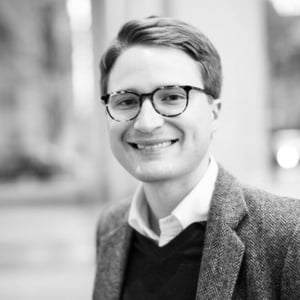
Senior Counsel, The Becket Fund for Religious Liberty
Joe Davis joined Becket in 2017 as Legal Counsel. His work at Becket has included appellate litigation in both federal and state courts, including representing religious entities and governments sued because of their openness to religious expression in precedent-setting victories before the Third, Fifth, Seventh, and Eleventh Circuits. Joe has appeared in national media to discuss religious liberty issues, including on Fox News and numerous radio and print outlets, and his academic work on topics related to religious liberty has been published at venues including the Yale Law Journal Forum and the Notre Dame Law Review Online.
Before joining Becket, Joe worked as a litigator at Jones Walker LLP in New Orleans, Louisiana, where he worked on a variety of matters from commercial and criminal litigation to bankruptcy. From 2014 to 2015, he clerked for the Honorable E. Grady Jolly of the U.S. Court of Appeals for the Fifth Circuit.
Joe graduated summa cum laude from the University of Virginia School of Law in 2014, where he served on the Virginia Law Review and was elected to the Order of the Coif. While in law school, Joe studied religious liberty law with one of the top religious liberty scholars and litigators in the nation. He also worked as a researcher for the law school’s Supreme Court Litigation Clinic. Before going to law school, Joe received his B.A. in Economics with a minor in Religion, summa cum laude, from Mississippi State University.
Joe is married to his high school sweetheart. When he’s not helping her corral their four young children, he tends to be reading the classics, watching college football, or listening to his vinyl collection.
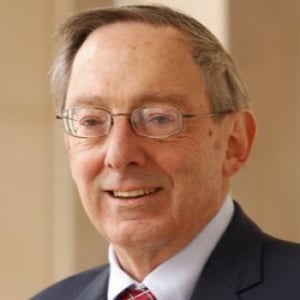
Robert E. Scott Distinguished Professor of Law Emeritus, University of Virginia School of Law; Alice McKean Young Regents Chair in Law Emeritus, University of Texas
Douglas Laycock is perhaps the nation’s leading authority on the law of religious liberty and also on the law of remedies. He has taught and written about these topics for more than four decades at the University of Chicago, the University of Texas, the University of Michigan and the University of Virginia. He retired from teaching at UVA Law School in May 2023.
Laycock has testified frequently before Congress and has argued many cases in the courts, including the U.S. Supreme Court, where he has served as lead counsel in six cases and has also filed influential amicus briefs. He is the author (co-author in the most recent edition) of the leading casebook Modern American Remedies, the award-winning monograph The Death of the Irreparable Injury Rule and many articles in leading law reviews. He co-edited a collection of essays, Same-Sex Marriage and Religious Liberty.
His many writings on religious liberty have been republished in a five-volume collection:
Laycock resigned from the council and as first vice president of the American Law Institute to become co-reporter for the Restatement (Third) of Torts: Remedies. He is a fellow of the American Academy of Arts and Sciences. He earned his B.A. from Michigan State University and his J.D. from the University of Chicago.

Richard and Frances Mallery Professor of Law and Faculty Director, Constitutional Law Center, Stanford Law School
Michael W. McConnell is the Richard and Frances Mallery Professor and Faculty Director of the Constitutional Law Center at Stanford Law School, and a Senior Fellow at the Hoover Institution. From 2002 to 2009, he served as a Circuit Judge on the United States Court of Appeals for the Tenth Circuit. He was nominated by President George W. Bush, a Republican, and confirmed by a Democratic Senate by unanimous consent. McConnell has previously held chaired professorships at the University of Chicago and the University of Utah, and visiting professorships at Harvard and NYU. He teaches courses on constitutional law, constitutional history, First Amendment, and interpretive theory. He has published widely in the fields of constitutional law and theory, especially church and state, equal protection, and separation of powers. His book, “The President Who Would Not Be King: Executive Power Under the Constitution,” was published by Princeton University Press in 2020, based on the Tanner Lectures in Human Values, which he delivered at Princeton in 2019. His latest book, co-authored with Nathan Chapman, “Agreeing to Disagree: How the Establishment Clause Protects Religious Diversity and Freedom of Conscience,” was published by Oxford University Press in mid-2023. McConnell has argued sixteen cases in the United States Supreme Court, most recently Carney v. Adams (2020). defending a provision of the Delaware Constitution requiring political balance on that state’s courts. More recently, he was co-counsel in Gonzalez v. Google. He earned his B.A. from Michigan State University and his J.D. from the University of Chicago, and has received honorary degrees from Notre Dame University and Michigan State. He served as law clerk to Supreme Court Justice William J. Brennan, Jr. and D.C. Circuit Chief Judge J. Skelly Wright. He has been Assistant General Counsel of the Office of Management & Budget, Assistant to the Solicitor General of the Department of Justice, and a member of the President’s Intelligence Oversight Board. He is Senior of Counsel to the law firm Wilson, Sonsini, Goodrich & Rosati, and is co-chair of Meta’s Oversight Review Board.
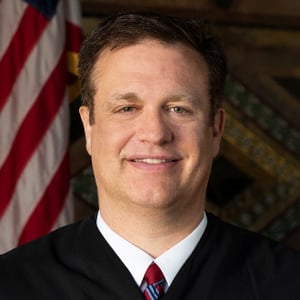
Judge, United States Court of Appeals, Ninth Circuit
Judge Nelson was confirmed to the Ninth Circuit in October 2018, as the youngest Circuit Judge to serve from Idaho and he has chambers in his hometown of Idaho Falls. Prior to his confirmation, Judge Nelson served for nine years as General Counsel of Idaho Falls-based Melaleuca, Inc., a consumer goods company. He previously worked in Washington, DC, where he served in all three branches of the federal government, including as Special Counsel for Supreme Court nominations to the Ranking Member of the Senate Judiciary Committee; Deputy General Counsel to the White House Office of Management and Budget; Deputy Assistant Attorney General in the Environment and Natural Resources Division of the United States Department of Justice; and a law clerk to Judge Henderson of the United States Court of Appeals for the D.C. Circuit. He has argued in most of the federal courts of appeals and worked on dozens of Supreme Court briefs. He started in the Washington, DC office of Sidley Austin as an appellate lawyer, after clerking for Judges Mosk and Brower of the Iran-U.S. Claims Tribunal at The Hague, and for now-Judge Tom Griffith, then-Senate Legal Counsel, during the impeachment trial of President Clinton. Judge Nelson earned his B.A. from Brigham Young University and his J.D., with honors, from BYU Law School. Judge Nelson has been a member of the Federalist Society since 1998.
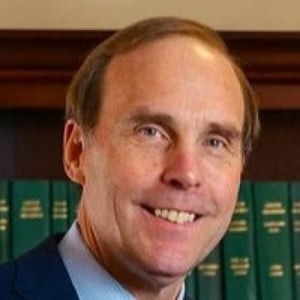
Distinguished Research Professor, Center for Citizenship and Constitutional Government, University of Notre Dame
Donald L. Drakeman is Distinguished Research Professor in the Center for Citizenship and Constitutional Government at the University of Notre Dame, and a Fellow of the Centre for Health Leadership and Enterprise at the University of Cambridge. His writings have been cited by the Supreme Courts of the United States and the Philippines. He has published seven books, including The Hollow Core of Constitutional Theory (Cambridge University Press, 2021), Why We Need the Humanities (Palgrave, 2016), and Church, State, and Original Intent (Cambridge University Press, 2010). He received an A.B. magna cum laude from Dartmouth College; a J.D. from Columbia Law School, where he was a Harlan Fiske Stone Scholar; and a Ph.D. from Princeton University. He is a Fellow of the Royal Historical Society, and he was the founding chair of the Advisory Council for the James Madison Program on American Ideals and Institutions at Princeton University.
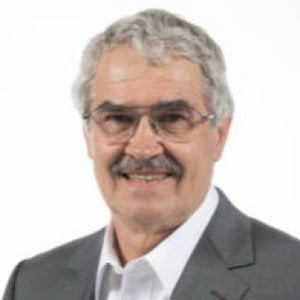
R. B. Price and Isabelle Wade & Paul C. Lyda Professor Emeritus of Law, University of Missouri School of Law
Carl H. Esbeck is R.B. Price Professor and Isabelle Wade & Paul C. Lyda Professor of Law emeritus at the University of Missouri. After attending Cornell University School of Law where he served as an editor on the Cornell Law Review, he held a judicial clerkship with the Honorable Howard C. Bratton, chief judge of the U.S. District Court in New Mexico.
Professor Esbeck publishes widely in the area of religious liberty and church-state relations. He is recognized as the progenitor of "Charitable Choice," an integral part of the 1996 Federal Welfare Reform Act, later made a part of the faith-based initiative and equal-treatment regulations under presidents George W. Bush and Barack Obama. In addition, he has taken the lead in recognizing that the modern Supreme Court has applied the Establishment Clause not as a personal right, but as a structural limit on the government's authority in disputes involving church governance. While on leave from 1999 to 2002, Professor Esbeck directed the Center for Law & Religious Freedom (CLRF) and later served as Senior Counsel to the Deputy Attorney General at the U.S. Department of Justice. While directing the CLRF, Professor Esbeck was a central part of the congressional advocacy behind the Religious Land Use and Institutionalized Persons Act of 2000 (RLUIPA). While at the Department of Justice one of his duties was to direct a task force to remove barriers to the equal-treatment of faith-based organizations applying for social service grants. He is the author of Disestablishment and Religious Dissent: Church-State Relations in the New American States, 1776 - 1833 (U. of MO Press, 2019).
R. B. Price and Isabelle Wade & Paul C. Lyda Professor Emeritus of Law, University of Missouri School of Law
Carl H. Esbeck is R.B. Price Professor and Isabelle Wade & Paul C. Lyda Professor of Law emeritus at the University of Missouri. After attending Cornell University School of Law where he served as an editor on the Cornell Law Review, he held a judicial clerkship with the Honorable Howard C. Bratton, chief judge of the U.S. District Court in New Mexico.
Professor Esbeck publishes widely in the area of religious liberty and church-state relations. He is recognized as the progenitor of "Charitable Choice," an integral part of the 1996 Federal Welfare Reform Act, later made a part of the faith-based initiative and equal-treatment regulations under presidents George W. Bush and Barack Obama. In addition, he has taken the lead in recognizing that the modern Supreme Court has applied the Establishment Clause not as a personal right, but as a structural limit on the government's authority in disputes involving church governance. While on leave from 1999 to 2002, Professor Esbeck directed the Center for Law & Religious Freedom (CLRF) and later served as Senior Counsel to the Deputy Attorney General at the U.S. Department of Justice. While directing the CLRF, Professor Esbeck was a central part of the congressional advocacy behind the Religious Land Use and Institutionalized Persons Act of 2000 (RLUIPA). While at the Department of Justice one of his duties was to direct a task force to remove barriers to the equal-treatment of faith-based organizations applying for social service grants. He is the author of Disestablishment and Religious Dissent: Church-State Relations in the New American States, 1776 - 1833 (U. of MO Press, 2019).
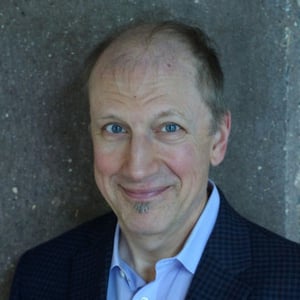
James L. Oberstar Professor of Law and Public Policy, University of St. Thomas School of Law
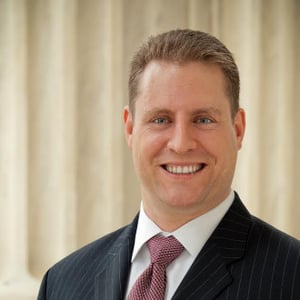
Senior Counsel, Schaerr Jaffe LLP
Ken Klukowski is senior counsel at the law firm Schaerr Jaffe, focusing on constitutional, administrative, and election law, and the federal courts. He has served in politically appointed positions in the U.S. government, including senior counsel in the Civil Division of the U.S. Department of Justice, and prior to that in the White House as special counsel in the Office of Management and Budget. He was also the constitutional rights advisor on the Presidential Transition Team of President Donald J. Trump. In the private sector, he has worked as a senior fellow of the American Constitutional Rights Union, senior counsel at First Liberty Institute, and a legal journalist. He litigates constitutional cases in the U.S. Supreme Court and lower federal courts, and contributes to media coverage of the nation’s highest court and legal issues. Earlier in his career, Klukowski served as special deputy attorney general of Indiana, and worked on faculty at Liberty University School of Law. His academic works have been published by journals such as the Federalist Society’s Harvard Journal of Law & Public Policy, and his columns have appeared in the Wall Street Journal and other national publications. His amicus briefs and nine law review articles have been cited by various federal courts and top legal journals. He has participated in numerous Supreme Court cases, and lectured and debated at 100 law school events nationwide. Klukowski received his bachelor’s degree from the University of Notre Dame, studied history at Arizona State University, earned his law degree from Scalia Law School at George Mason University, and served as a law clerk to Chief Judge Alice Batchelder on the U.S. Court of Appeals for the Sixth Circuit.
Author and Columnist
Bruce Bawer is the author of several books, including the bestselling While Europe Slept: How Radical Islam Is Destroying the West from Within (2006), a finalist for the National Book Critics Circle Award, and Surrender: Appeasing Islam, Sacrificing Freedom (2009). His earlier books include the influential A Place at the Table: The Gay Individual in American Society (1993), which was a New York Times “Notable Book of the Year”; Stealing Jesus: How Fundamentalism Betrays Christianity (1997); and several volumes of literary criticism, film criticism, and poetry. His essays have appeared in The New Republic, The Nation, The New York Times Magazine, The American Scholar, Newsweek, The Wilson Quarterly, Standpoint, City Journal, and The Chronicle of Higher Education, and he has been a prolific book reviewer, contributing regularly to The New Criterion, The Hudson Review, The New York Times Book Review, The Washington Post Book World, and The Wall Street Journal. He is a native New Yorker, holds a doctorate in English from Stony Brook University, and has lived in Norway for over a decade. His website is http://www.brucebawer.com.
Barrister
Paul Diamond is a barrister who practices in the field of the law of religious liberty. He is one of Britain’s and Europe’s leading attorneys in this area. He has been instructed in some of the most controversial cases; for example, the case of the British Airways employee who was prevented from wearing a Cross (whilst other religious groups were permitted to manifest their faith), the right to free religious speech during a General Election by the ProLife Alliance and in cases over the repeated clash between the religious rights of individuals and the same sex agenda. In his recent major case, on the right of a Christian marriage counselor to be exempted from the counseling of same sex partners, he acted on behalf of the former Archbishop of Canterbury, Lord Carey. Paul’s counsel is sought after by a number of religious leaders and organizations.
The rapid growth of the militant secular agenda which seek to remove religious values from public life has turned a rather specialist and sleepy area of law into the front line in the battle to maintain Judeo Christian civilized values. This gave the opportunity to Paul to develop his legal skills.
Paul was always fascinated with the issue of religion and felt the call of God in his life. After studying Middle East Government, Paul attended Magdalene College, Cambridge to study law. From there, he won a scholarship to the Hague Academy of International Law, The Netherlands. An early article by Paul, attracted the attention of Lord Denning (the most famous British Judge) who openly supported Paul’s arguments. He commenced practice thereafter and has appeared before all levels of court including the House of Lords.
Early in his career, he became the barrister to the Keep Sunday Special Campaign (until the mid 1990s, Britain had a ban on Sunday trading and the campaign sought to keep Sundays as a ‘day of rest’). As standing Counsel, Paul handled many leading controversial cases and built a reputation for his future work in religious liberties. The issue of Sunday working was one that directly affected family life as the pressures on low income families to work has become relentless in recent years.
Paul has been involved in a number of controversial cases. In 2009, he was instructed to prevent a Hizbollah terrorist from entering the United Kingdom by the use of the threat of an international arrest warrant; and in 2011, Vladimir Bukovsky, the famous Soviet dissident instructed Paul to seek legal redress against former Soviet President Gorbachev.
Vicar of St Mary, Australia
Mark Durie completed an Arts Degree with First Class Honours and a University Medal in Germanic Languages and Linguistics. He gained his PhD in Linguistics from the Australian National University in 1984 with a study of the language of the Acehnese, a Muslim people of Indonesia. He conducted field research trips in Aceh during the 1980’s and 1990’s, producing several books, and many research articles. The dialects he documented were among those obliterated by the Indian Ocean Tsunami in 2004.
Dr. Durie was a visiting researcher at the University of Leiden in 1985, investigating the Dutch Acehnese manuscripts, many of which are concerned with Islamic jihad. Then he spent two years as a Harkness Fellow in the USA, holding positions as visiting researcher at the Massachusetts Institute of Technology, the University of California at Los Angeles and Stanford University. After coming to Melbourne, Dr. Durie became Head of the Department of Linguistics and Language Studies before taking up an Australian Research Council Senior Research Fellowship in the mid 1990’s. He was elected a Fellow of the Australian Academy of Humanities in 1991, and awarded an Australian Centennial Medal in 2001 for contributions to linguistics.
After a change in career, Dr. Durie now works as the Vicar of St Mary’s Anglican Church, Caulfield in Melbourne. He is a human rights activist, writing and speaking extensively in Australia and internationally on issues relating to freedom of religion, freedom of speech, and the persecution of religious minorities, particularly Christians living under the Islamic sharia. He speaks across Australia and internationally on Islam. He also writes on issues related to world missions, interfaith dialogue and religious conflict. His book Revelation: do we worship the same God? was published by CityHarvest in July 2006 and is into its second edition. His latest books The Third Choice and Liberty to the Captives, appeared in 2010. They are on understanding Islam, the experience of non-Muslims living under Islamic rule, and how to find spiritual freedom in the face of the challenge of Islam.
Author and Columnist
Bruce Bawer is the author of several books, including the bestselling While Europe Slept: How Radical Islam Is Destroying the West from Within (2006), a finalist for the National Book Critics Circle Award, and Surrender: Appeasing Islam, Sacrificing Freedom (2009). His earlier books include the influential A Place at the Table: The Gay Individual in American Society (1993), which was a New York Times “Notable Book of the Year”; Stealing Jesus: How Fundamentalism Betrays Christianity (1997); and several volumes of literary criticism, film criticism, and poetry. His essays have appeared in The New Republic, The Nation, The New York Times Magazine, The American Scholar, Newsweek, The Wilson Quarterly, Standpoint, City Journal, and The Chronicle of Higher Education, and he has been a prolific book reviewer, contributing regularly to The New Criterion, The Hudson Review, The New York Times Book Review, The Washington Post Book World, and The Wall Street Journal. He is a native New Yorker, holds a doctorate in English from Stony Brook University, and has lived in Norway for over a decade. His website is http://www.brucebawer.com.
Barrister
Paul Diamond is a barrister who practices in the field of the law of religious liberty. He is one of Britain’s and Europe’s leading attorneys in this area. He has been instructed in some of the most controversial cases; for example, the case of the British Airways employee who was prevented from wearing a Cross (whilst other religious groups were permitted to manifest their faith), the right to free religious speech during a General Election by the ProLife Alliance and in cases over the repeated clash between the religious rights of individuals and the same sex agenda. In his recent major case, on the right of a Christian marriage counselor to be exempted from the counseling of same sex partners, he acted on behalf of the former Archbishop of Canterbury, Lord Carey. Paul’s counsel is sought after by a number of religious leaders and organizations.
The rapid growth of the militant secular agenda which seek to remove religious values from public life has turned a rather specialist and sleepy area of law into the front line in the battle to maintain Judeo Christian civilized values. This gave the opportunity to Paul to develop his legal skills.
Paul was always fascinated with the issue of religion and felt the call of God in his life. After studying Middle East Government, Paul attended Magdalene College, Cambridge to study law. From there, he won a scholarship to the Hague Academy of International Law, The Netherlands. An early article by Paul, attracted the attention of Lord Denning (the most famous British Judge) who openly supported Paul’s arguments. He commenced practice thereafter and has appeared before all levels of court including the House of Lords.
Early in his career, he became the barrister to the Keep Sunday Special Campaign (until the mid 1990s, Britain had a ban on Sunday trading and the campaign sought to keep Sundays as a ‘day of rest’). As standing Counsel, Paul handled many leading controversial cases and built a reputation for his future work in religious liberties. The issue of Sunday working was one that directly affected family life as the pressures on low income families to work has become relentless in recent years.
Paul has been involved in a number of controversial cases. In 2009, he was instructed to prevent a Hizbollah terrorist from entering the United Kingdom by the use of the threat of an international arrest warrant; and in 2011, Vladimir Bukovsky, the famous Soviet dissident instructed Paul to seek legal redress against former Soviet President Gorbachev.
Vicar of St Mary, Australia
Mark Durie completed an Arts Degree with First Class Honours and a University Medal in Germanic Languages and Linguistics. He gained his PhD in Linguistics from the Australian National University in 1984 with a study of the language of the Acehnese, a Muslim people of Indonesia. He conducted field research trips in Aceh during the 1980’s and 1990’s, producing several books, and many research articles. The dialects he documented were among those obliterated by the Indian Ocean Tsunami in 2004.
Dr. Durie was a visiting researcher at the University of Leiden in 1985, investigating the Dutch Acehnese manuscripts, many of which are concerned with Islamic jihad. Then he spent two years as a Harkness Fellow in the USA, holding positions as visiting researcher at the Massachusetts Institute of Technology, the University of California at Los Angeles and Stanford University. After coming to Melbourne, Dr. Durie became Head of the Department of Linguistics and Language Studies before taking up an Australian Research Council Senior Research Fellowship in the mid 1990’s. He was elected a Fellow of the Australian Academy of Humanities in 1991, and awarded an Australian Centennial Medal in 2001 for contributions to linguistics.
After a change in career, Dr. Durie now works as the Vicar of St Mary’s Anglican Church, Caulfield in Melbourne. He is a human rights activist, writing and speaking extensively in Australia and internationally on issues relating to freedom of religion, freedom of speech, and the persecution of religious minorities, particularly Christians living under the Islamic sharia. He speaks across Australia and internationally on Islam. He also writes on issues related to world missions, interfaith dialogue and religious conflict. His book Revelation: do we worship the same God? was published by CityHarvest in July 2006 and is into its second edition. His latest books The Third Choice and Liberty to the Captives, appeared in 2010. They are on understanding Islam, the experience of non-Muslims living under Islamic rule, and how to find spiritual freedom in the face of the challenge of Islam.

What Was an "Establishment of Religion" at the Founding?
Joseph Davis, Douglas Laycock, Michael W. McConnell, Ryan D. Nelson
In this Federalist Society America250 series, experts analyze modern legal and policy debates through the...
Topics
Huntsman v. Church of Jesus Christ of Latter-Day Saints: Church Autonomy is “a Threshold Structural Bar that Must be Reckoned With”
In Huntsman v. Corporation of the President of the Church of Jesus Christ of Latter-day...
Establishing an Agreement to Disagree About Church and State
Donald L. Drakeman
A review of Nathan Chapman & Michael McConnell, Agreeing to Disagree: How the Establishment Clause...
An Extended Essay on Church Autonomy
Carl H. Esbeck
The doctrine of church autonomy[1] is distinct from the two more familiar lines of cases...
After Espinoza, What’s Left of the Establishment Clause?
Carl H. Esbeck
Note from the Editor: The Federalist Society takes no positions on particular legal and public...
Religious Exemptions and Third-Party Harms
Thomas C. Berg
Note from the Editor: This article discusses the effect that third-party harms should have on religious...
In Whose Name We Pray: Restoring the Establishment Clause in Town of Greece v. Galloway
Kenneth A. Klukowski
Note from the Editor: This article is a discussion about the Establishment Clause issue in...
Panel II: Growing Repression in the West
Bruce Bawer, Paul Diamond, Mark Durie
The 1989 fatwa against Salman Rushdie and the deadly 2006 Danish cartoon riots brought worldwide...
Panel II: Growing Repression in the West
Bruce Bawer, Paul Diamond, Mark Durie
The 1989 fatwa against Salman Rushdie and the deadly 2006 Danish cartoon riots brought worldwide...