

Supreme Court & Appellate Litigation Chair, Lex Politica; Of Counsel, Alliance Defending Freedom
Erin Morrow Hawley serves as Chair of Lex Politica's Supreme Court and Appellate Practice overseeing the firm’s strategic appellate litigation and critical motions practice in the trial courts. Erin is an experienced litigator who represents clients in constitutional, regulatory, and appellate matters in federal and state courts throughout the country.
Erin has represented dozens of clients before the Supreme Court of the United States, served as lead counsel in high-profile cases raising novel constitutional and statutory issues, and authored numerous successful petitions for certiorari and briefs in opposition. She has argued in state and federal appellate and trial courts throughout the country, including the Supreme Court of the United States. Erin represents diverse clients in high-stakes litigation from state governments to faith-based nonprofits to Fortune 100 companies. She possesses expertise on a wide range of subject matters including administrative law, the First Amendment, religious liberty, federal jurisdiction, federal preemption, equitable jurisdiction, tax law, the Affordable Care Act, and Title IX.
Erin represents clients in cases where public communications strategy is paramount. She is a sought-after speaker and writer, has testified multiple times before Congress, and is a frequent presenter on constitutional and administrative law issues, including at the Oxford Union, the National Federalist Society Convention, and university campuses across the country. She is a frequent commentator to media outlets, including Fox News, MSNBC, the Wall Street Journal, WORLD, USA Today, the Federalist, and the Hill.
Erin previously oversaw Alliance Defending Freedom’s--where she still serves as Of Counsel--litigation strategies to empower women and protect the dignity of life, defend pregnancy centers’ First Amendment rights from government overreach, and safeguard Americans’ freedoms from the ever-encroaching administrative state.

Laurence H. Silberman Chair in Constitutional Governance, American Enterprise Institute; Executive Director, Antonin Scalia Law School’s C. Boyden Gray Center for the Study of the Administrative State
Adam J. White is the Laurence H. Silberman Chair in Constitutional Governance and senior fellow at the American Enterprise Institute, where he focuses on the Supreme Court and the administrative state. He also directs the Antonin Scalia Law School’s C. Boyden Gray Center for the Study of the Administrative State.
He writes on regulation and constitutional government for a variety of publications. He practiced law in Washington, D.C., after clerking for the D.C. Circuit's Judge David Sentelle. He also has been chairman of the ABA's Administrative Law Section.
In 2021, he served on the Presidential Commission on the Supreme Court of the United States, where he criticized “Court packing” and other efforts to restructure the Supreme Court.

E. Claiborne Robins Distinguished Chair in Law, University of Richmond School of Law
Professor Kurt Lash teaches and writes about constitutional law. Founder and director of the Richmond Program on the American Constitution, Professor Lash has published widely on the subjects of constitutional law and constitutional history, including The Fourteenth Amendment and the Privileges or Immunities of American Citizenship (Cambridge University Press, 2014), The Lost History of the Ninth Amendment (Oxford University Press, 2009), and The American First Amendment in the Twenty-first Century: Cases and Materials(with William W. Van Alstyne) (5th ed., Foundation Press, 2014). An elected member of the American Law Institute, Professor Lash’s work has appeared in numerous legal journals including the Stanford Law Journal, Georgetown Law Journal, Virginia Law Review, andNotre Dame Law Review. He has been a visiting professor at Northwestern University School of Law and is the former director of the University of Illinois College of Law Program in Constitutional Theory, History, and Law.

Solicitor General, Iowa Office of the Attorney General
Eric Wessan serves as Iowa’s Solicitor General in the Iowa Attorney General’s Office. In that role, Wessan leads Iowa’s litigation before State and federal appellate courts, including the Iowa and U.S. Supreme Courts. Before that role, Wessan worked on complex commercial litigation at two large law firms in Chicago. Wessan also served as a law clerk for the Honorable James C. Ho on the U.S. Court of Appeals for the Fifth Circuit and for the Honorable John F. Kness on the U.S. District Court for the Northern District of Illinois. Wessan is a graduate of the University of Chicago Law School, with honors, and of the University of Chicago.

Julius E. Davis Professor of Law, University of Minnesota Law School
Ilan Wurman is the Julius E. Davis Professor of Law at the University of Minnesota, where he teaches administrative law and constitutional law. He previously taught at Arizona State University. He writes primarily on the Fourteenth Amendment, administrative law, separation of powers, and constitutionalism. His academic writing has appeared in the Yale Law Journal, the Stanford Law Review, the University of Chicago Law Review, the University of Pennsylvania Law Review, the Virginia Law Review, the Duke Law Journal, the Minnesota Law Review, the Notre Dame Law Review, and the Texas Law Review among other journals.
Professor Wurman is the author of the new book The Constitution of 1789: A New Introduction (Cambridge 2026). His previous books include A Debt Against the Living: An Introduction to Originalism (Cambridge 2017), and The Second Founding: An Introduction to the Fourteenth Amendment (Cambridge 2020). He is also the author of the casebook, Administrative Law Theory and Fundamentals: An Integrated Approach (Foundation Press 3d ed. 2025).
Professor Wurman practices law with the firm Tully Bailey. He has litigated a variety of administrative law and constitutional law cases, including cases involving COVID-19 restrictions, transmission lines, and Appointments Clause challenges. He also devised winning public nuisance theories to force city governments to address the increasingly challenging public camping crises throughout the country.

Judge, Arizona Court of Appeals, Division One
The Honorable Jennifer M. Perkins began service on the Arizona Court of Appeals, Division One, on October 30, 2017. At the time of her appointment by Governor Douglas Ducey, Judge Perkins was Assistant Solicitor General for the State of Arizona.
Judge Perkins was born in Portales, New Mexico, and primarily raised in Albuquerque. She attended the prestigious Albuquerque Academy from 1988-1995, before moving to Washington D.C. to attend the Elliott School of International Affairs at the George Washington University as a National Merit Scholar. Therafter, she relocated again to Dallas, Texas, and earned her juris doctor from the SMU Dedman School of Law, graduating cum laude in 2002.
Judge Perkins started her career at the law firm of Browning & Peifer (now Peifer, Hanson, Mullins, and Baker) in Albuquerque, New Mexico. While there, she litigated complex commercial matters including class action plaintiff and defense work, and assisted with employment and contract litigation. In 2003, the judge accompanied the Honorable James O. Browning in transitioning to the federal district court bench, serving as his first law clerk.
After her clerkship, Judge Perkins moved to Arizona to work for the Institute for Justice, Arizona Chapter, a public interest law firm. She spent five years with IJ-AZ litigating civil rights cases in Arizona and across the country. In 2009, the judge became Disciplinary Counsel for the Arizona Commission on Judicial Conduct, where she reviewed and prosecuted ethics complaints against state court judges throughout Arizona. After five years serving the state in this capacity, Judge Perkins entered private practice by joining an appellate law firm in Phoenix. While there, she worked on state and federal appeals involving a wide range of legal subjects, including complex business disputes, property rights, judicial ethics, and personal injury matters.
In January 2015, Judge Perkins joined the Office of the Arizona Attorney General to serve as the first Assistant Solicitor General; in that capacity, she was responsible for oversight of Attorney General Opinions and served as ethics counsel to the entire office. In addition to these two primary roles, the judge assisted on a variety of matters including trial and appellate litigation of election-related matters; federal appellate litigation with the Federalism Unit; state criminal appeals; and drafting amicus briefs on behalf of Arizona in state and federal courts.
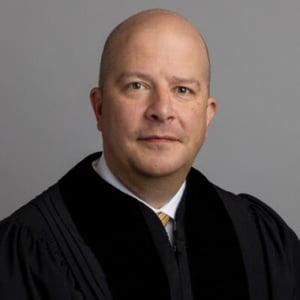
Chief Justice, Supreme Court of Georgia
Chief Justice Nels Peterson was appointed to the Georgia Supreme Court in 2016, and was elected to full six-year terms in 2018 and 2024. He previously served in a variety of other roles in Georgia state government, including as judge on the Georgia Court of Appeals, general counsel for the University System of Georgia, Georgia’s first solicitor general in the Attorney General’s Office, and executive counsel to the Governor.
Before entering state government, Nels practiced at King & Spalding LLP in Atlanta and clerked for Chief Judge William H. Pryor Jr. of the United States Court of Appeals for the Eleventh Circuit. He is a graduate of Kennesaw State University and Harvard Law School. Nels and his wife Jennifer have two children and live in Cobb County, where they teach adult Sunday school at Johnson Ferry Baptist Church.

Vice President for Legal Affairs, Goldwater Institute

Chief Judge, United States Court of Appeals, Sixth Circuit
JEFFREY S. SUTTON is the Chief Judge of the United States Court of Appeals for the Sixth Circuit. He has served as Chair of the Federal Judicial Conference Committee on Rules of Practice and Procedure, Chair of the Advisory Committee on Appellate Rules, and Chair of the Supreme Court Fellows Commission. He currently serves as Chair of the Executive Committee of the Judicial Conference of the United States. Since 1993, Chief Judge Sutton has been an adjunct professor at The Ohio State University College of Law, where he teaches seminars on State Constitutional Law, the United States Supreme Court, and Appellate Advocacy. He also teaches a class on State Constitutional Law at Harvard Law School. Among other publications, he is the author of Who Decides? States as Laboratories of Constitutional Experimentation and 51 Imperfect Solutions: States and the Making of American Constitutional Law. He is the co-author of a casebook, State Constitutional Law: The Modern Experience, as well as The Law of Judicial Precedent. He is also the co-editor of The Essential Scalia: On the Constitution, the Courts, and the Rule of Law. In 2006, Chief Judge Sutton was elected to the American Law Institute, and in 2017 he was elected to its Council.
Judge, Arizona Court of Appeals, Division One
The Honorable Jennifer M. Perkins began service on the Arizona Court of Appeals, Division One, on October 30, 2017. At the time of her appointment by Governor Douglas Ducey, Judge Perkins was Assistant Solicitor General for the State of Arizona.
Judge Perkins was born in Portales, New Mexico, and primarily raised in Albuquerque. She attended the prestigious Albuquerque Academy from 1988-1995, before moving to Washington D.C. to attend the Elliott School of International Affairs at the George Washington University as a National Merit Scholar. Therafter, she relocated again to Dallas, Texas, and earned her juris doctor from the SMU Dedman School of Law, graduating cum laude in 2002.
Judge Perkins started her career at the law firm of Browning & Peifer (now Peifer, Hanson, Mullins, and Baker) in Albuquerque, New Mexico. While there, she litigated complex commercial matters including class action plaintiff and defense work, and assisted with employment and contract litigation. In 2003, the judge accompanied the Honorable James O. Browning in transitioning to the federal district court bench, serving as his first law clerk.
After her clerkship, Judge Perkins moved to Arizona to work for the Institute for Justice, Arizona Chapter, a public interest law firm. She spent five years with IJ-AZ litigating civil rights cases in Arizona and across the country. In 2009, the judge became Disciplinary Counsel for the Arizona Commission on Judicial Conduct, where she reviewed and prosecuted ethics complaints against state court judges throughout Arizona. After five years serving the state in this capacity, Judge Perkins entered private practice by joining an appellate law firm in Phoenix. While there, she worked on state and federal appeals involving a wide range of legal subjects, including complex business disputes, property rights, judicial ethics, and personal injury matters.
In January 2015, Judge Perkins joined the Office of the Arizona Attorney General to serve as the first Assistant Solicitor General; in that capacity, she was responsible for oversight of Attorney General Opinions and served as ethics counsel to the entire office. In addition to these two primary roles, the judge assisted on a variety of matters including trial and appellate litigation of election-related matters; federal appellate litigation with the Federalism Unit; state criminal appeals; and drafting amicus briefs on behalf of Arizona in state and federal courts.
Chief Justice, Supreme Court of Georgia
Chief Justice Nels Peterson was appointed to the Georgia Supreme Court in 2016, and was elected to full six-year terms in 2018 and 2024. He previously served in a variety of other roles in Georgia state government, including as judge on the Georgia Court of Appeals, general counsel for the University System of Georgia, Georgia’s first solicitor general in the Attorney General’s Office, and executive counsel to the Governor.
Before entering state government, Nels practiced at King & Spalding LLP in Atlanta and clerked for Chief Judge William H. Pryor Jr. of the United States Court of Appeals for the Eleventh Circuit. He is a graduate of Kennesaw State University and Harvard Law School. Nels and his wife Jennifer have two children and live in Cobb County, where they teach adult Sunday school at Johnson Ferry Baptist Church.
Vice President for Legal Affairs, Goldwater Institute
Chief Judge, United States Court of Appeals, Sixth Circuit
JEFFREY S. SUTTON is the Chief Judge of the United States Court of Appeals for the Sixth Circuit. He has served as Chair of the Federal Judicial Conference Committee on Rules of Practice and Procedure, Chair of the Advisory Committee on Appellate Rules, and Chair of the Supreme Court Fellows Commission. He currently serves as Chair of the Executive Committee of the Judicial Conference of the United States. Since 1993, Chief Judge Sutton has been an adjunct professor at The Ohio State University College of Law, where he teaches seminars on State Constitutional Law, the United States Supreme Court, and Appellate Advocacy. He also teaches a class on State Constitutional Law at Harvard Law School. Among other publications, he is the author of Who Decides? States as Laboratories of Constitutional Experimentation and 51 Imperfect Solutions: States and the Making of American Constitutional Law. He is the co-author of a casebook, State Constitutional Law: The Modern Experience, as well as The Law of Judicial Precedent. He is also the co-editor of The Essential Scalia: On the Constitution, the Courts, and the Rule of Law. In 2006, Chief Judge Sutton was elected to the American Law Institute, and in 2017 he was elected to its Council.

Anne Fleming Research Professor and Professor of Law, Georgetown University Law Center; Faculty Director, Georgetown Center for the Constitution
Stephanie Barclay is a Professor of Law at Georgetown Law School, and the Faculty Director of the Georgetown Center for the Constitution. Her research focuses on the role our different democratic institutions play in protecting minority rights, particularly at the intersection of free speech and religious exercise. Barclay‘s work is published or is forthcoming in leading journals such as the Harvard Law Review, the Chicago Law Review, the University of Pennsylvania Law Review, and the Yale Law Journal Forum. One of her articles was also selected for the 2020 Stanford/Harvard/Yale Junior Faculty Forum. Her work has been featured in many media outlets, including The New York Times, The Wall Street Journal, The Washington Post, USA Today, Bloomberg BNA, The Hill, and Law 360. And her work has also been cited by the U.S. Supreme Court.
Prior to joining Georgetown, Barclay was twice voted Professor of the Year. Barclay has also litigated constitutional cases at both the trial and appellate level, including before the U.S. Supreme Court. Barclay served as a law clerk to Judge N. Randy Smith on the U.S. Court of Appeals for the Ninth Circuit, and to Justice Neil M. Gorsuch of the U.S. Supreme Court.
Barclay is a Faculty Affiliate at the Constitutional Law Center at Stanford Law School; and she is a Nootbaar Fellow at the Nootbaar Institute on Law, Religion, and Ethics at Pepperdine University. She currently serves as the Chair for the AALS Law and Religion Section and as a Member of the Executive Committee for the AALS Constitutional Law Section. She graduated summa cum laude from BYU Law School, where she was elected to the Order of the Coif. She is completing a Ph.D. in Law at Oxford University as a Clarendon Scholar and a Tang Scholar.

President, JCN
Carrie Campbell Severino is the president of the JCN, and co-author with Mollie Hemingway of the bestselling book Justice on Trial: The Kavanaugh Confirmation and the Future of the Court. As a go-to expert on the confirmation process, Mrs. Severino has been extensively quoted in the media. She regularly appears on television, including FOX, CNN, MSNBC, C-SPAN, and ABC’s This Week.
Severino writes and speaks on a wide range of judicial issues, including the constitutional limits on government, the federal nomination process, and state judicial selection. She has testified before Congress on constitutional questions and briefed Senators on judicial nominations, and regularly files briefs in high-profile Supreme Court cases. She was a law clerk to Supreme Court Justice Clarence Thomas and to Judge David B. Sentelle of the U.S. Court of Appeals for the D.C. Circuit, and is a graduate of Harvard Law School (J.D.), Duke University (B.A., Biology), and Michigan State University (M.A., Linguistics).
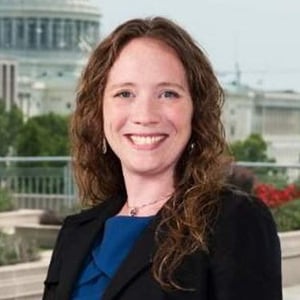
Partner, Luther Strange & Associates
Annie Donaldson Talley is Partner at Luther Strange and Associates. She recently departed the White House after serving as Deputy Assistant to the President and Deputy Counsel to the President. Over the past four years, she provided outside counsel to the Donald J. Trump for President campaign; helped stand up and manage the White House Counsel’s Office; interfaced with agencies across the federal government; and advised the President of the United States, White House Counsel, Chief of Staff and other senior staff across the Executive Office of the President on a broad range of issues from regulatory reform to executive nominations to the day-to-day issues facing the Administration.
Prior to her White House service, Annie Donaldson Talley counseled clients in the non-profit, for-profit, political, and government sectors, as well as high-profile individuals in private practice at Jones Day and Patton Boggs. She provided strategic counseling to clients structuring their affairs to ensure compliance with a web of state and federal laws and represented clients in complex, multi-faceted investigations, leading teams navigating issues of intense public scrutiny.
Annie Donaldson Talley is also a veteran of three presidential campaigns and served in state government. She holds a B.A., summa cum laude, from the University of Alabama and a J.D. from Harvard Law School, where she served on the Harvard Law Review. She lives in Montgomery, Alabama with her husband, Brett.

Associate Dean for Academic Affairs, The George Washington University Law School
Aram A. Gavoor is the Associate Dean for Academic Affairs and an internationally recognized scholar in American administrative law, national security, and federal courts. His co-authored work was cited by the U.S. Supreme Court in Department of Commerce v. New York (2019). His scholarship has earned placement in the Florida Law Review, Indiana Law Journal, Ohio State Law Journal, and other law journals. He has briefed and argued over a dozen high-profile public law cases before a majority of the U.S. Courts of Appeals and numerous cases before almost a third of the 94 U.S. District Courts. Associate Dean Gavoor frequently shares his national security, artificial intelligence policy, and federal courts expertise with international news media, including CNN, BBC World News, Wall Street Journal, NBC News, and ABC (Australia) World News. In 2021, the National Law Journal named Associate Dean Gavoor a Rising Star (top 40 under 40) honoree.
Earlier in his career, Associate Dean Gavoor served as Senior Counsel for National Security in the Civil Division of the U.S. Department of Justice, as third-in-rank Counselor to the Administrator of the Office of Information and Regulatory Affairs in the White House Office of Management and Budget, and in private practice. He received the Attorney General's Award for Distinguished Service in 2019, the Civil Division Special Commendation Award in 2020, 2019, and 2018, and a Commendation from the Human Rights and Special Prosecutions Section of the Criminal Division in 2018.
Associate Dean Gavoor previously served on the law school’s part-time faculty from 2008-2017 before accepting a term-limited position as Visiting Associate Professor from 2017-2019. He received GW Law’s Distinguished Adjunct Faculty Teaching Award from the 2020 and 2017 graduating classes. He currently teaches Constitutional Law II, Administrative Law, National Security Law, and Federal Courts.

Partner, BakerHostetler, Adjunct Fellow, The Manhattan Institute
Andrew Grossman leads BakerHostetler’s Appellate and Major Motion team. He has appeared before the U.S. Supreme Court, nearly all the federal courts of appeals, as well as some state appellate courts, litigating high-profile and complex commercial, administrative and constitutional issues.
Andrew works with practice groups across BakerHostetler to identify and tackle complex issues, advise on administrative law and strategy, tee up issues for appeal and tackle appeals. He has developed and implemented litigation and administrative strategies for clients in several fields and industries.
In addition to his practice, Andrew advises members of Congress on matters of constitutional and administrative law, having testified more than a dozen times before the House and Senate Judiciary Committees. He has been a frequent legal commentator on radio and television, having appeared on Fox News, CNN, MSNBC, CNBC, NPR and its affiliates, CBN and elsewhere. His legal commentary has also appeared in dozens of magazines and newspapers, including The Wall Street Journal, USA Today, The Washington Post, The Washington Times and many others.
Andrew is a Senior Legal Fellow at the Buckeye Institute, an Adjunct Fellow the Manhattan Institute and a member of the leadership of the Federalist Society. He previously served as an adjunct scholar at the Cato Institute’s Robert A. Levy Center for Constitutional Studies and a legal fellow at the Heritage Foundation’s Meese Center for Legal and Judicial Studies. He clerked for Judge Edith H. Jones on the U.S. Court of Appeals for the Fifth Circuit.

Associate Dean for Research and Intellectual Life, McKnight Presidential Professor in Law, Distinguished McKnight University Professor, Harlan Albert Rogers Professor in Law, Associate Director, Corporate Institute, University of Minnesota Law School
Professor Kristin E. Hickman is the McKnight Presidential Professor in Law, a Distinguished McKnight University Professor, and Harlan Albert Rogers Professor in Law at the University of Minnesota Law School. She also has taught at Harvard Law School and Northwestern University School of Law. Professor Hickman teaches and writes primarily in the areas of administrative law, tax administration, and statutory interpretation. Her articles on these topics have appeared in the Columbia Law Review, Cornell Law Review, Virginia Law Review, Duke Law Journal, and other publications. She also co-authors the Administrative Law Treatise with Richard J. Pierce, Jr., and a casebook on federal administrative law with Pierce and Christopher J. Walker. Her scholarly work has been cited several times in opinions of the United States Supreme Court as well as regularly in lower court judicial opinions and court briefs.
In 2018-19, Professor Hickman served as Special Adviser to the Administrator of the Office of Information and Regulatory Affairs in Washington, D.C. She presently serves as a Senior Fellow, and previously served as a public member and chair of the judicial review committee, for the Administrative Conference of the United States. She also is a Fellow of the American College of Tax Counsel.
Professor Hickman received her B.S. degree in business administration with a concentration in accounting and a secondary major in history from Trinity University in San Antonio, Texas. After practicing for several years as a certified public accountant, Professor Hickman earned her J.D. degree, magna cum laude, from Northwestern University School of Law, where she was awarded the Raoul Berger Prize and the Lowden Wigmore Prize for her scholarly writings. Following law school, Professor Hickman clerked for The Honorable David B. Sentelle of the United States Court of Appeals for the District of Columbia Circuit and practiced law as an associate with the Chicago office of Skadden, Arps, Slate, Meagher & Flom, concentrating on corporate and international tax transactions and matters.

Harlan Fiske Stone Professor of Constitutional Law, Columbia Law School
A leading administrative and constitutional law scholar, Gillian Metzger ’96 writes and teaches in the areas of administrative law, constitutional law, and federal courts, with an emphasis on federalism and privatization. In 2023-2024, she served as Acting Assistant Attorney General and Deputy Assistant Attorney General in the Office of Legal Counsel in the Department of Justice.
Metzger's recent work covers topics ranging from constitutional attacks on the administrative state to appropriations, administrative law under the Roberts Court, and the role of administrative agencies in a polarized world. In 2015, Metzger won the American Bar Association Administrative Law Section Annual Scholarship Award for “The Constitutional Duty to Supervise,” which examined presidential control and oversight of the modern administrative state. She is a co-editor of Gellhorn & Byse’s Administrative Law: Cases and Comments, 13th ed. (Foundation Press, 2023), a seminal administrative law casebook.
Professor Metzger was recently elected to the American Academy of Arts & Sciences and is a Senior Fellow of the Administrative Conference of the United States. In 2020, she was awarded Columbia University's Faculty Mentorship Award and in 2014, the Law School’s graduating class awarded Metzger the Willis L.M. Reese Prize for Excellence in Teaching, recognizing, among many other accomplishments, her commitment to mentoring new generations of law students.
In 2012, Metzger helped launch Columbia Law School’s Center for Constitutional Governance (CCG)—where she now serves as faculty director—a nonpartisan legal and policy organization devoted to the study of constitutional structure and authority. CCG brings together a diverse group of constitutional scholars to explore policy areas such as health care, civil rights, immigration, financial regulation, and national security.
Metzger also has co-authored and filed numerous amicus briefs in major constitutional and administrative law challenges before the Supreme Court and other courts. Most recently, Metzger filed a brief in Seila Law Center v. CFPB, a separation of powers challenge, and in Kisor v. Wilkie, a case involving judicial deference to agencies. She has also filed briefs in cases involving reproductive rights and the Affordable Care Act, among others.
Previously, Metzger served as vice dean of intellectual life at Columbia Law School. Before joining the Law School, she worked as an attorney with the Brennan Center for Justice. Metzger also clerked for U.S. Supreme Court Justice Ruth Bader Ginsburg ’59 and Judge Patricia M. Wald of the U.S. Circuit Court of Appeals for the District of Columbia. In 2018, Metzger moderated a panel discussion with Justice Ginsburg on impact litigation at Columbia Law School.

Legal Director, Institute for Policy Integrity, New York University School of Law
Max Sarinsky is the Legal Director at Policy Integrity and an adjunct clinical professor at New York University School of Law. Since joining Policy Integrity in 2019, Max has testified before Congress on the climate impacts of the oil and gas leasing program, submitted amicus briefs in the U.S. Supreme Court and numerous federal courts of appeals, and published articles in the Yale Journal on Regulation, Harvard Environmental Law Review Online, New York Times, Science, and elsewhere. He also teaches the Regulatory Policy Clinic at NYU School of Law. From May 2024 to January 2025, Max took leave from Policy Integrity to serve as a senior advisor in the Office of Information and Regulatory Affairs in White House Office of Management and Budget.
Prior to joining Policy Integrity, Max clerked for the Honorable Pamela A. Harris of the U.S. Court of Appeals for the Fourth Circuit Court. He also previously served as an Assistant Corporation Counsel with the Administrative Law Division of the New York City Law Department, where he defended City health, labor-rights, and consumer-protection regulations. Max received his J.D. magna cum laude from the New York University School of Law, and his B.A. cum laude from Georgetown University.
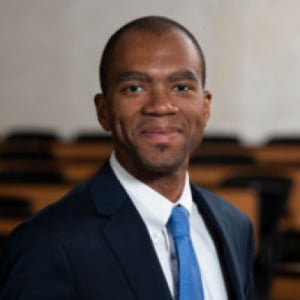
Associate Professor, Widener Law Commonwealth

Chief Policy Counsel, Council on Criminal Justice and Senior Advisor, Right on Crime
Marc A. Levin is the Chief Policy Counsel for the Council on Criminal Justice (counciloncj.org) and Senior Advisor for Right on Crime.
An attorney and accomplished author on legal and public policy issues, Marc began the Foundation’s criminal justice program in 2005. This work contributed to nationally praised policy changes that have been followed by dramatic declines in crime and incarceration in Texas. Building on this success, in 2010, Levin developed the concept for the Right on Crime initiative, a TPPF project in partnership with Prison Fellowship and the American Conservative Union Foundation. Right on Crime has become the national clearinghouse for conservative criminal justice reforms and has contributed to the adoption of policies in dozens of states that fight crime, support victims, and protect taxpayers.
In 2014, Levin was named one of the “Politico 50” in the magazine’s annual “list of thinkers, doers, and dreamers who really matter in this age of gridlock and dysfunction.”
Marc has testified on criminal justice policy on four occasions before Congress and has testified before legislatures in states including Texas, Nevada, Kansas, Wisconsin, and California. He also has met personally with leaders such as U.S. Presidents, Speakers of the House, and the Justice Commtitee of the United Kingdom Parliament to share his ideas on criminal justice reform. In 2007, he was honored in a resolution unanimously passed by the Texas House of Representatives that stated, “Mr. Levin’s intellect is unparalleled and his research is impeccable.”
Since 2005, Marc has published dozens of policy papers on topics such as sentencing, probation, parole, reentry, and overcriminalization which are available on the TPPF website. Levin’s articles on law and public policy have been featured in publications such as the Wall Street Journal, USA Today, Texas Review of Law & Politics, National Law Journal, New York Daily News, Jerusalem Post, Toronto Star, Atlanta Journal-Constitution, Philadelphia Inquirer, San Francisco Chronicle, Washington Times, Los Angeles Daily Journal, Charlotte Observer, Dallas Morning News, Houston Chronicle, Austin American-Statesman, San Antonio Express-News and Reason Magazine.
In 1999, Marc graduated with honors from the University of Texas with a B.A. in Plan II Honors and Government. In 2002, Marc received his J.D. with honors from the University of Texas School of Law. Marc was a Charles G. Koch Summer Fellow in 1996. He served as a law clerk to Judge Will Garwood on the U.S. Court of Appeals for the Fifth Circuit and Staff Attorney at the Texas Supreme Court.
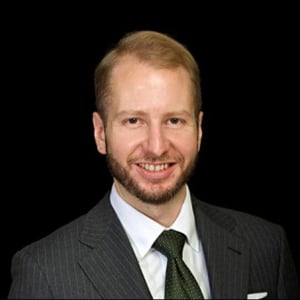
Partner, Cooper & Kirk PLLC
John Ohlendorf has extensive experience with every aspect of litigation, from arguing discovery disputes and cross-examining trial witnesses to working on appeals at all levels of the state and federal judicial systems. Mr. Ohlendorf has written dozens of briefs in the United States Supreme Court and has argued numerous cases, including appeals in both state and federal court. While much of his career has focused on appellate advocacy, he has also developed deep experience litigating at the trial-court level, consistent with the Firm’s frequent approach of handling a matter over its entire lifespan, from the filing of the complaint to proceedings in the Supreme Court.
Mr. Ohlendorf’s litigation experience is wide-ranging, but it includes a particular focus on constitutional law and suits against the government. He has litigated multiple claims involving the separation of powers, the Appointments Clause, freedom of speech, the Second Amendment, the Due Process Clause, the Equal Protection Clause, and the Takings Clause. He has been heavily involved in over thirty matters defending the right to keep and bear arms, and he was Counsel of Record on an amicus brief in New York State Rifle & Pistol Association v. Bruen, a recent Supreme Court case involving the Second Amendment right to carry a firearm, that was singled out by Justice Kavanaugh during the oral argument as very helpful to his consideration of the case. Mr. Ohlendorf has also litigated many cases involving administrative law and government contracts.
Before coming to Cooper & Kirk, Mr. Ohlendorf clerked for Judge Raymond Gruender of the United States Court of Appeals for the Eighth Circuit, taught at Northwestern University School of Law as an Olin-Searle-Smith Fellow, and then at Georgetown University Law Center as a Visiting Lecturer and Fellow at the Georgetown Center for the Constitution. His articles have been published in the Notre Dame Law Review, the Harvard Journal of Law and Public Policy, National Affairs (with Joel Alicea), the Georgia Law Review, and the Maine Law Review. He received a J.D. from Harvard Law School, magna cum laude, in 2010, where he was an Editor for the Harvard Journal of Law and Public Policy, and graduated with a B.A. from Bethany Lutheran College, summa cum laude, in 2007.
Judge, Arizona Court of Appeals, Division One
The Honorable Jennifer M. Perkins began service on the Arizona Court of Appeals, Division One, on October 30, 2017. At the time of her appointment by Governor Douglas Ducey, Judge Perkins was Assistant Solicitor General for the State of Arizona.
Judge Perkins was born in Portales, New Mexico, and primarily raised in Albuquerque. She attended the prestigious Albuquerque Academy from 1988-1995, before moving to Washington D.C. to attend the Elliott School of International Affairs at the George Washington University as a National Merit Scholar. Therafter, she relocated again to Dallas, Texas, and earned her juris doctor from the SMU Dedman School of Law, graduating cum laude in 2002.
Judge Perkins started her career at the law firm of Browning & Peifer (now Peifer, Hanson, Mullins, and Baker) in Albuquerque, New Mexico. While there, she litigated complex commercial matters including class action plaintiff and defense work, and assisted with employment and contract litigation. In 2003, the judge accompanied the Honorable James O. Browning in transitioning to the federal district court bench, serving as his first law clerk.
After her clerkship, Judge Perkins moved to Arizona to work for the Institute for Justice, Arizona Chapter, a public interest law firm. She spent five years with IJ-AZ litigating civil rights cases in Arizona and across the country. In 2009, the judge became Disciplinary Counsel for the Arizona Commission on Judicial Conduct, where she reviewed and prosecuted ethics complaints against state court judges throughout Arizona. After five years serving the state in this capacity, Judge Perkins entered private practice by joining an appellate law firm in Phoenix. While there, she worked on state and federal appeals involving a wide range of legal subjects, including complex business disputes, property rights, judicial ethics, and personal injury matters.
In January 2015, Judge Perkins joined the Office of the Arizona Attorney General to serve as the first Assistant Solicitor General; in that capacity, she was responsible for oversight of Attorney General Opinions and served as ethics counsel to the entire office. In addition to these two primary roles, the judge assisted on a variety of matters including trial and appellate litigation of election-related matters; federal appellate litigation with the Federalism Unit; state criminal appeals; and drafting amicus briefs on behalf of Arizona in state and federal courts.
Chief Justice, Supreme Court of Georgia
Chief Justice Nels Peterson was appointed to the Georgia Supreme Court in 2016, and was elected to full six-year terms in 2018 and 2024. He previously served in a variety of other roles in Georgia state government, including as judge on the Georgia Court of Appeals, general counsel for the University System of Georgia, Georgia’s first solicitor general in the Attorney General’s Office, and executive counsel to the Governor.
Before entering state government, Nels practiced at King & Spalding LLP in Atlanta and clerked for Chief Judge William H. Pryor Jr. of the United States Court of Appeals for the Eleventh Circuit. He is a graduate of Kennesaw State University and Harvard Law School. Nels and his wife Jennifer have two children and live in Cobb County, where they teach adult Sunday school at Johnson Ferry Baptist Church.
Vice President for Legal Affairs, Goldwater Institute
Chief Judge, United States Court of Appeals, Sixth Circuit
JEFFREY S. SUTTON is the Chief Judge of the United States Court of Appeals for the Sixth Circuit. He has served as Chair of the Federal Judicial Conference Committee on Rules of Practice and Procedure, Chair of the Advisory Committee on Appellate Rules, and Chair of the Supreme Court Fellows Commission. He currently serves as Chair of the Executive Committee of the Judicial Conference of the United States. Since 1993, Chief Judge Sutton has been an adjunct professor at The Ohio State University College of Law, where he teaches seminars on State Constitutional Law, the United States Supreme Court, and Appellate Advocacy. He also teaches a class on State Constitutional Law at Harvard Law School. Among other publications, he is the author of Who Decides? States as Laboratories of Constitutional Experimentation and 51 Imperfect Solutions: States and the Making of American Constitutional Law. He is the co-author of a casebook, State Constitutional Law: The Modern Experience, as well as The Law of Judicial Precedent. He is also the co-editor of The Essential Scalia: On the Constitution, the Courts, and the Rule of Law. In 2006, Chief Judge Sutton was elected to the American Law Institute, and in 2017 he was elected to its Council.

From the Courthouse Steps: Trump v. Slaughter and Trump v. Cook
Erin M. Hawley, Adam White
In Trump v. Slaughter, the Supreme Court held 6-3 that the Federal Trade Commission's (FTC)...
From the Courthouse Steps: Trump v. Barbara
Kurt T. Lash, Eric Wessan, Ilan Wurman
In Trump v. Barbara, the U.S. Supreme Court held that the Fourteenth Amendment's Citizenship Clause...
How Did State Constitutions Shape the American Founding?
Jennifer Perkins, Nels S.D. Peterson, Timothy Sandefur, Jeffrey S. Sutton
In this Federalist Society America 250 series, experts analyze modern legal and policy debates through...
How Did State Constitutions Shape the American Founding?
Jennifer Perkins, Nels S.D. Peterson, Timothy Sandefur, Jeffrey S. Sutton
In this Federalist Society America 250 series, experts analyze modern legal and policy debates through...
Plenary Session 3: Horizontal Federalism– When Another State is Regulating Yours
Featuring: Mr. Daniel Burton, Chief Deputy Attorney General and General Counsel, Utah Attorney General's Office Mr....
Lunch & Discussion: Branches, Boundaries, and the Bench– A Judicious Conversation
Hon. Stuart Kyle Duncan, U.S. Court of Appeals, Fifth Circuit Hon. Paul Newby, North Carolina...
How Did State Constitutions Shape the American Founding?
The Founders Gave Us the Tools Series
From Chambers to the Front Page: Supreme Court Leaks and Judicial Integrity
Stephanie Barclay, Carrie Campbell Severino, Annie Donaldson Talley
What happens when confidential Supreme Court deliberations make their way into the press—most recently through...
Major Questions Doctrine: From West Virginia v. EPA to Learning Resources
Aram A. Gavoor, Andrew Grossman, Kristin E. Hickman, Gillian E. Metzger, Max Sarinsky
The Supreme Court's decision in Learning Resources, Inc. v. Trump produced at least four distinct visions of...
Courthouse Steps Oral Argument: United States v. Hemani
F. Lee Francis, Marc Levin, John Ohlendorf
On March 2, 2026, the Supreme Court will hear oral argument in United States v. Hemani....