
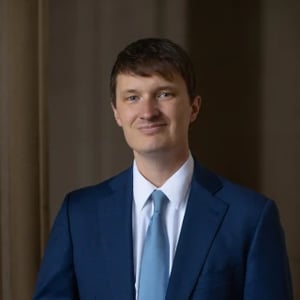
Partner, Boyden Gray PLLC
Trent McCotter is a partner with Boyden Gray PLLC. He previously served as Deputy Associate Attorney General of the United States and as an Assistant U.S. Attorney.
Mr. McCotter maintains an extensive appellate practice. He has considerable experience identifying and briefing cases that draw the Supreme Court’s attention, having persuaded the Court to grant certiorari in numerous cases raising issues of sovereignty, constitutional rights, due process, and criminal law. He has authored and submitted over 60 briefs at the Court.
He has also personally argued more than fifteen federal appeals across the Second, Fourth, Fifth, Sixth, Ninth, Eleventh, Federal, and D.C. Circuits—including once arguing three separate appeals in just four days. He has also twice argued before the 17-judge en banc Fifth Circuit. He has been counsel in over 50 other appeals raising matters from FOIA and the APA to constitutional rights and statutory construction.
As Deputy Associate Attorney General, Mr. McCotter oversaw DOJ’s Civil Appellate and Federal Programs branches, which are responsible for defending nearly all major litigation against the federal government. During his three years as a federal trial attorney in the Eastern District of Virginia’s “Rocket Docket,” Mr. McCotter won the Attorney General’s Award for Distinguished Service.
During his DOJ tenures, Mr. McCotter also assisted with the confirmations of two Supreme Court justices and over a dozen lower-court judges.
Mr. McCotter served as an inaugural clerk to the Hon. Steven J. Menashi on the U.S. Court of Appeals for the Second Circuit and also clerked for the Hon. R. Lanier Anderson III on the U.S. Court of Appeals for the Eleventh Circuit.

Professor of Law, Antonin Scalia Law School, George Mason University
ILYA SOMIN is Professor of Law at George Mason University and the B. Kenneth Simon Chair in Constitutional Studies at the Cato Institute. His research focuses on constitutional law, property law, democratic theory, federalism, and migration rights. He is the author of Free to Move: Foot Voting, Migration, and Political Freedom (Oxford University Press, revised and expanded edition, 2022), Democracy and Political Ignorance: Why Smaller Government is Smarter (Stanford University Press, revised and expanded second edition, 2016), and The Grasping Hand: Kelo v. City of New London and the Limits of Eminent Domain (University of Chicago Press, 2015, rev. paperback ed., 2016), coauthor of A Conspiracy Against Obamacare: The Volokh Conspiracy and the Health Care Case (Palgrave Macmillan, 2013), and co-editor of Eminent Domain: A Comparative Perspective (Cambridge University Press, 2017). Democracy and Political Ignorance has been translated into Italian and Japanese.
Somin’s work has appeared in numerous scholarly journals, including the Yale Law Journal, Stanford Law Review, Northwestern University Law Review, Georgetown Law Journal, Critical Review, and others. Somin has also published articles in a variety of popular press outlets, including the New York Times, Washington Post, Wall Street Journal, Los Angeles Times, CNN, NBC, The Atlantic, USA Today, Boston Globe, US News and World Report, South China Morning Post, National Law Journal and Reason. He has been quoted or interviewed by the New York Times, Washington Post, Wall Street Journal, Time, Newsweek, The Economist, the Christian Science Monitor, the Financial Times, The Guardian, the Associated Press, CBS, MSNBC, NPR, BBC, Reuters, the Canadian Broadcasting Corporation, the Australian Broadcasting Corporation, Radio Free Europe/Radio Liberty, Al Jazeera, and the Voice of America, among other media.
Somin’s writings have been cited in decisions by the United States Supreme Court, multiple state supreme courts and lower federal courts, and the Supreme Court of Israel. He is co-counsel for the plaintiffs in VOS Selections, Inc. v. Trump, a case challenging the constitutionality of President Trump’s “Liberation Day” tariffs. Somin has testified on the use of drones for targeted killing in the War on Terror before the US Senate Judiciary Subcommittee on the Constitution, Civil Rights, and Human Rights. In 2009, he testified on property rights issues at the United States Senate Judiciary Committee confirmation hearings for Supreme Court Justice Sonia Sotomayor. Somin writes regularly for the popular Volokh Conspiracy law and politics blog, now affiliated with Reason magazine (previously affiliated with the Washington Post from 2014 to 2017). From 2006 to 2013, he served as Co-Editor of the Supreme Court Economic Review, one of the country’s top-rated law and economics journals.
Somin has served as a visiting professor at the University of Pennsylvania Law School. He has also been a visiting professor or scholar at the Georgetown University Law Center, the University of Hamburg, Germany, the University of Torcuato Di Tella in Buenos Aires, Argentina, Uriel Reichman University in Israel, and Zhengzhou University in China. He is a University Affiliate of the Schar School of Policy and Government at George Mason University, and an affiliated faculty member of the George Mason University Institute for Immigration Research. Before joining the faculty at George Mason, Somin was the John M. Olin Fellow in Law at Northwestern University Law School in 2002-2003. In 2001-2002, he clerked for the Hon. Judge Jerry E. Smith of the U.S. Court of Appeals for the Fifth Circuit. Professor Somin earned his B.A., Summa Cum Laude, at Amherst College, M.A. in Political Science from Harvard University, and J.D. from Yale Law School.
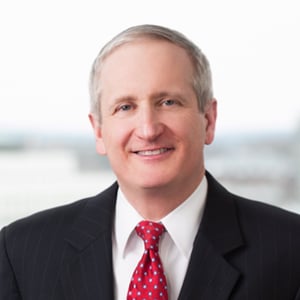
Judge, U.S. Court of International Trade
M. Miller Baker was appointed as a Judge of the United States Court of International Trade on December 18, 2019, by President Donald J. Trump. Judge Baker entered on duty on December 20, 2019.
A native of Terrebonne Parish, Louisiana, Judge Baker grew up in Louisiana and Wyoming and attended Louisiana State University. Judge Baker thereafter earned his J.D. from Tulane University Law School and was admitted to the Louisiana bar in 1984 at age 22. After graduating from Tulane, he served as a law clerk to Judge John Malcolm Duhé, Jr., of the United States District Court for the Western District of Louisiana and then for Judge Thomas Gibbs Gee of the United States Court of Appeals for the Fifth Circuit. Following his judicial clerkships, from 1986 until the end of the Reagan Administration on January 20, 1989, Judge Baker served in the Justice Department under Attorneys General Edwin Meese III and Richard Thornburgh, first as an attorney-advisor in the Office of Legal Policy, and later as a special assistant to the Assistant Attorney General for Civil Rights. Judge Baker then entered private practice in Washington, D.C., until 1991. From 1991 to 1993 he served as counsel to Senator Orrin G. Hatch on the staff of the Senate Judiciary Committee.
Following his service on the Judiciary Committee staff, Judge Baker returned to private practice in Washington, D.C., focusing on complex civil litigation involving a wide range of subjects at the law firms of Carr Goodson Warner (1993–2000) and McDermott Will & Emery LLP (2000–2019). At McDermott, Judge Baker co-chaired the firm’s appellate practice group.
When he was in private practice, Judge Baker argued before the Supreme Court, nine of the thirteen federal courts of appeals, and appellate courts in three states and the District of Columbia. In 2009, The American Lawyer named Judge Baker as “Litigator of the Week” for one of his Supreme Court wins. In addition to his appellate practice, Judge Baker litigated in state and federal trial courts in seventeen states and the District of Columbia.
From 1986 to 1995, Judge Baker served as a naval reserve intelligence officer and received an honorable discharge. His duties included serving with an anti-terrorist unit, on the battle staff of an admiral commanding a carrier battle group operating in the North Atlantic during a large NATO exercise in the Cold War, and as a watch officer in the Navy Command Center in the Pentagon during the Persian Gulf War.
In the aftermath of 9/11, Judge Baker testified before the House and Senate Judiciary Committees on constitutional and policy issues associated with continuity of government. He also testified before the Continuity of Government Commission, a bipartisan study commission established by the American Enterprise Institute and the Brookings Institution.
Judge Baker and his wife Margaret have five children, two of whom are active duty military officers.

Daniel Webster Debate Series: Does the Fourteenth Amendment Guarantee Birthright Citizenship to All?
Trent McCotter, Ilya Somin
The Federalist Society's Georgetown Law Chapter'sDaniel Webster Debate Series presents Daniel Webster Debate Series:Does...
Fools, Drunkards, & Presidential Succession
M. Miller Baker
by M. Miller Baker* The terrorist attack on America on September 11, 2001, represents an...