
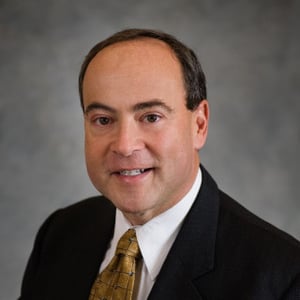
Justice, Supreme Court of Arizona
Clint Bolick was appointed by Governor Doug Ducey in January 2016 to serve on the Arizona Supreme Court and was retained by the voters in 2018 and 2024.
Prior to joining the Court, Justice Bolick litigated constitutional cases in state and federal courts from coast to coast, including the U.S. Supreme Court. Among other positions, he served as Vice President for Litigation at the Goldwater Institute and as Co-founder and Vice President for Litigation at the Institute for Justice. He has litigated in support of school choice, freedom of enterprise, private property rights, freedom of speech, and federalism, and against racial classifications and government subsidies.
Justice Bolick received his Juris Doctor degree from the University of California at Davis, where he has been recognized as a distinguished alumnus, and his Bachelor of Arts degree magna cum laude from Drew University. He serves as a research fellow with the Hoover Institution. Among other honors, he was named one of the 90 Greatest DC Lawyers in the Last 30 Years by Legal Times in 2008, received a Bradley Prize in 2006, and was recognized as one of the nation’s three lawyers of the year by American Lawyer in 2002 for his successful defense of school vouchers in Zelman v. Simmons-Harris.
Justice Bolick is a prolific author of a dozen books and hundreds of articles. Among his most recent books are Unshackled: Freeing America’s K-12 Education System: Immigration Wars: Forging an American Solution, co-authored with former Florida Governor Jeb Bush; and David’s Hammer: The Case for an Activist Judiciary. Bolick serves as an adjunct professor of constitutional law at Arizona State University’s Sandra Day O’Connor School of Law and has served as a lecturer at Harvard University’s John F. Kennedy School of Government.
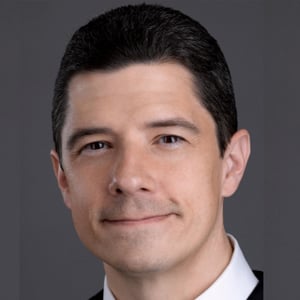
Justice, Texas Supreme Court
Brett Busby was appointed to the Supreme Court of Texas in 2019, confirmed unanimously by the Texas Senate, and elected to a full term in 2020. He previously practiced as an appellate litigator in Houston, served on the Fourteenth Court of Appeals and the Texas Multi-District Litigation Panel, and taught at U.T. Law School as an adjunct professor.
Brett is a seventh-generation Texan, third-generation Eagle Scout, and life-long violinist who grew up in Amarillo and Austin. After graduating with high honors from Duke University and Columbia Law School, he served as a law clerk to Justices Byron R. White (Ret.) and John Paul Stevens, U.S. Supreme Court, and to Judge Gerald Bard Tjoflat, U.S. Court of Appeals, Eleventh Circuit.
In private practice, Brett presented oral argument in the U.S. Supreme Court and handled dozens of appeals in that Court, the Supreme Court of Texas, and federal and state appellate courts. He is board-certified in civil appellate law, and his fellow Texas appellate lawyers elected him as Chair of the State Bar of Texas Appellate Section in 2018. He has also served as Chair of the Texas Bar Committee on Pattern Jury Charges (Business, Consumer, Insurance, and Employment) and as a Director of the Texas Young Lawyers Association.
Brett serves as the Court’s liaison to the Texas Access to Justice Commission and Foundation, which help assure that Texans with limited means have access to basic civil legal services. He received the 2022 Judicial Civic Education Award from the American Lawyers Alliance for his work on the Teach Texas judicial civics program, a partnership with the Houston Bar Association and the Texas Supreme Court Historical Society that sends lawyers and judges to teach seventh graders about our court system and Texas legal history. The Texas Association of Civil Trial and Appellate Specialists named him Appellate Judge of the Year in 2018.
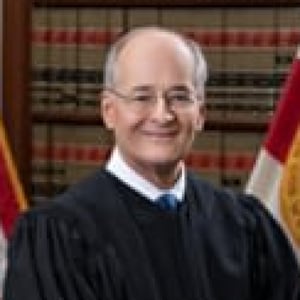
Chief Justice, Florida Supreme Court
Justice Charles Canady was born in Lakeland, Florida, in 1954. He is married to Jennifer Houghton, and they have two children. He received his B.A. from Haverford College in 1976 and his J.D. from the Yale Law School in 1979.
Justice Canady practiced law with the firm of Holland and Knight in Lakeland from 1979 through 1982. He practiced with the firm of Lane, Trohn, et al., from 1983 through 1992.
From November 1984 to November 1990, Justice Canady served three terms in the Florida House of Representatives, and from January 1993 to January 2001, he served four terms in the United States House of Representatives. Throughout his service in Congress, Justice Canady was a member of the House Judiciary Committee. For three terms, from January 1995 to January 2001, Justice Canady was the Chairman of the House Judiciary Subcommittee on the Constitution.
Upon leaving Congress, Justice Canady became General Counsel to Governor Jeb Bush. He was appointed by Governor Bush to the Second District Court of Appeal for a term beginning November 20, 2002.
On August 28, 2008, Justice Canady was appointed to the Florida Supreme Court by Governor Charlie Crist and took office on September 8, 2008. He served as Chief Justice from July 2010 through June 2012. In March 2018, he was elected by his colleagues to serve as Chief Justice for a second time, with his two-year term starting July 1, 2018, and a third time starting July 1, 2020.
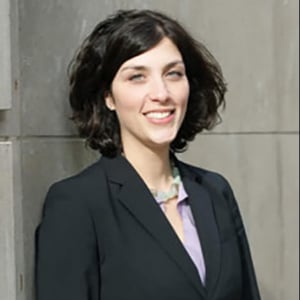
Managing Director, Court Consulting Division, National Center for State Court
Danielle Hirsch is Managing Director of the Access to Justice Team, Court Consulting Services, National Center for State Courts. In that capacity, Danielle is working to develop, guide and implement policies and procedures of court consulting operations to ensure success, high-quality work aimed at expanding access to justice for people without lawyers, people with limited English proficiency, and people with disabilities in need of accommodations in state and local courts. Danielle directs a number of important NCSC and Conference of Chief Justice/Conference of State Court Administrator Initiatives with her fantastic team of colleagues, including the $11M Eviction Diversion Initiative, CORA, and the Conference of Chief Justices and Conference of State Court Administrators’ (CCJ/COSCA) Committee on Legal Education and Admissions Reform (CLEAR), the CCJ/COSCA Access and Fairness and Civil Justice Committees, and the CCJ/COSCA Fees, Fines, and Bail Practices Taskforce. In addition, Danielle is the co-creator and a co-host of Tiny Chats.
Before joining NCSC, Danielle was the Assistant Director of Civil Justice Division of the Administrative Office of Illinois, where Danielle was responsible for leading and managing the judicial branch’s work to promote, facilitate and enhance access to justice in Illinois with a particular emphasis on efforts to remove barriers and increase the ease of interacting with courts by persons who cannot afford lawyers to represent their interests and needs. Before joining the Administrative Office of Illinois Courts, Danielle served as the Executive Director of the Illinois Supreme Court Commission on Access to Justice and the Director of Advocacy at The Chicago Bar Foundation. Among many highlights of her work, Danielle developed and managed an innovative new program, Illinois JusticeCorps, which places college and law students in courthouses to provide procedural assistance to people without lawyers. At the beginning of her career, Danielle clerked for the Honorable William Wayne Justice of the US District Court for the Western District of Texas and Justice ZM Yacoob of the Constitutional Court of South Africa.
Danielle brings a broad range of relevant experience to the NCSC. Danielle has authored numerous articles in law reviews, bar journals and other publications and is frequently called upon to speak at court, legal, academic, and nonprofit meetings and events.
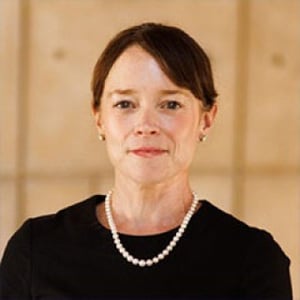
Executive Director, Deborah L. Rhode Center on the Legal Profession, Stanford
Lucy Ricca is the Executive Director of the Deborah L. Rhode Center on the Legal Profession. Before starting this role, Ricca was the Director of Policy and Programs for the Center and served as the Executive Director from 2013-2018.
Ricca is a national expert in efforts to reform regulation of the legal profession to increase innovation, market diversification, and access to justice. She served as the first Executive Director of the Utah Office of Legal Services Innovation, a new regulator of legal services launched by the Utah Supreme Court. She is a member of the Board of Advisors of the Institute for the Advancement of the American Legal System (“IAALS”). Ricca has written on the regulation of the profession, the changing practice of law, and diversity in the profession.
Ricca clerked for Judge James P. Jones of the United States District Court for the Western District of Virginia. Before clerking, Ricca practiced white collar criminal defense, securities, antitrust, and complex commercial litigation as an associate at Orrick, Herrington & Sutcliffe. Ricca received her B.A. cum laude in History from Dartmouth College and her J.D. from the University of Virginia School of Law.
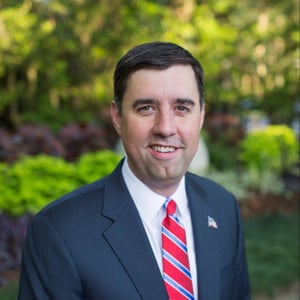
Associate Justice, Alabama Supreme Court
James L. “Jay” Mitchell was elected to the Alabama Supreme Court in 2018.
Prior to serving on the Supreme Court, Justice Mitchell was an accomplished litigation attorney with Maynard, Cooper & Gale, P.C. During his time in private practice, he tried a number of complex cases to verdict, successfully handled appeals, and obtained favorable settlements for clients. He was rated as one of the top litigators in the United States and Alabama, and received the highest possible rating for professional ethics. He also served on Maynard, Cooper & Gale’s executive committee, helping to lead strategic and growth initiatives for the firm.
Justice Mitchell was born in Mobile and grew up in South Alabama and in Homewood. He is a graduate of Homewood High School and received his Bachelor of Arts with honors from Birmingham-Southern College, where he graduated Phi Beta Kappa, served as president of the student body, and played forward on the school’s 1995 national championship basketball team. He holds a Master of Arts from University College in Dublin, Ireland, and received his law degree from the University of Virginia School of Law.
Justice Mitchell has long been active in organizations that benefit the community and enhance the legal profession. In addition to his service with other organizations, he is a member of the Rotary Club of Birmingham and serves on the board of directors at Cornerstone School, an inner city Christian school. He is also a member of the Federalist Society.
Justice Mitchell and his wife, Elizabeth, have been married for 20 years and have four children. They reside in Homewood and are longtime members of Church of the Highlands.
Justice, Supreme Court of Arizona
Clint Bolick was appointed by Governor Doug Ducey in January 2016 to serve on the Arizona Supreme Court and was retained by the voters in 2018 and 2024.
Prior to joining the Court, Justice Bolick litigated constitutional cases in state and federal courts from coast to coast, including the U.S. Supreme Court. Among other positions, he served as Vice President for Litigation at the Goldwater Institute and as Co-founder and Vice President for Litigation at the Institute for Justice. He has litigated in support of school choice, freedom of enterprise, private property rights, freedom of speech, and federalism, and against racial classifications and government subsidies.
Justice Bolick received his Juris Doctor degree from the University of California at Davis, where he has been recognized as a distinguished alumnus, and his Bachelor of Arts degree magna cum laude from Drew University. He serves as a research fellow with the Hoover Institution. Among other honors, he was named one of the 90 Greatest DC Lawyers in the Last 30 Years by Legal Times in 2008, received a Bradley Prize in 2006, and was recognized as one of the nation’s three lawyers of the year by American Lawyer in 2002 for his successful defense of school vouchers in Zelman v. Simmons-Harris.
Justice Bolick is a prolific author of a dozen books and hundreds of articles. Among his most recent books are Unshackled: Freeing America’s K-12 Education System: Immigration Wars: Forging an American Solution, co-authored with former Florida Governor Jeb Bush; and David’s Hammer: The Case for an Activist Judiciary. Bolick serves as an adjunct professor of constitutional law at Arizona State University’s Sandra Day O’Connor School of Law and has served as a lecturer at Harvard University’s John F. Kennedy School of Government.
Justice, Texas Supreme Court
Brett Busby was appointed to the Supreme Court of Texas in 2019, confirmed unanimously by the Texas Senate, and elected to a full term in 2020. He previously practiced as an appellate litigator in Houston, served on the Fourteenth Court of Appeals and the Texas Multi-District Litigation Panel, and taught at U.T. Law School as an adjunct professor.
Brett is a seventh-generation Texan, third-generation Eagle Scout, and life-long violinist who grew up in Amarillo and Austin. After graduating with high honors from Duke University and Columbia Law School, he served as a law clerk to Justices Byron R. White (Ret.) and John Paul Stevens, U.S. Supreme Court, and to Judge Gerald Bard Tjoflat, U.S. Court of Appeals, Eleventh Circuit.
In private practice, Brett presented oral argument in the U.S. Supreme Court and handled dozens of appeals in that Court, the Supreme Court of Texas, and federal and state appellate courts. He is board-certified in civil appellate law, and his fellow Texas appellate lawyers elected him as Chair of the State Bar of Texas Appellate Section in 2018. He has also served as Chair of the Texas Bar Committee on Pattern Jury Charges (Business, Consumer, Insurance, and Employment) and as a Director of the Texas Young Lawyers Association.
Brett serves as the Court’s liaison to the Texas Access to Justice Commission and Foundation, which help assure that Texans with limited means have access to basic civil legal services. He received the 2022 Judicial Civic Education Award from the American Lawyers Alliance for his work on the Teach Texas judicial civics program, a partnership with the Houston Bar Association and the Texas Supreme Court Historical Society that sends lawyers and judges to teach seventh graders about our court system and Texas legal history. The Texas Association of Civil Trial and Appellate Specialists named him Appellate Judge of the Year in 2018.
Chief Justice, Florida Supreme Court
Justice Charles Canady was born in Lakeland, Florida, in 1954. He is married to Jennifer Houghton, and they have two children. He received his B.A. from Haverford College in 1976 and his J.D. from the Yale Law School in 1979.
Justice Canady practiced law with the firm of Holland and Knight in Lakeland from 1979 through 1982. He practiced with the firm of Lane, Trohn, et al., from 1983 through 1992.
From November 1984 to November 1990, Justice Canady served three terms in the Florida House of Representatives, and from January 1993 to January 2001, he served four terms in the United States House of Representatives. Throughout his service in Congress, Justice Canady was a member of the House Judiciary Committee. For three terms, from January 1995 to January 2001, Justice Canady was the Chairman of the House Judiciary Subcommittee on the Constitution.
Upon leaving Congress, Justice Canady became General Counsel to Governor Jeb Bush. He was appointed by Governor Bush to the Second District Court of Appeal for a term beginning November 20, 2002.
On August 28, 2008, Justice Canady was appointed to the Florida Supreme Court by Governor Charlie Crist and took office on September 8, 2008. He served as Chief Justice from July 2010 through June 2012. In March 2018, he was elected by his colleagues to serve as Chief Justice for a second time, with his two-year term starting July 1, 2018, and a third time starting July 1, 2020.
Managing Director, Court Consulting Division, National Center for State Court
Danielle Hirsch is Managing Director of the Access to Justice Team, Court Consulting Services, National Center for State Courts. In that capacity, Danielle is working to develop, guide and implement policies and procedures of court consulting operations to ensure success, high-quality work aimed at expanding access to justice for people without lawyers, people with limited English proficiency, and people with disabilities in need of accommodations in state and local courts. Danielle directs a number of important NCSC and Conference of Chief Justice/Conference of State Court Administrator Initiatives with her fantastic team of colleagues, including the $11M Eviction Diversion Initiative, CORA, and the Conference of Chief Justices and Conference of State Court Administrators’ (CCJ/COSCA) Committee on Legal Education and Admissions Reform (CLEAR), the CCJ/COSCA Access and Fairness and Civil Justice Committees, and the CCJ/COSCA Fees, Fines, and Bail Practices Taskforce. In addition, Danielle is the co-creator and a co-host of Tiny Chats.
Before joining NCSC, Danielle was the Assistant Director of Civil Justice Division of the Administrative Office of Illinois, where Danielle was responsible for leading and managing the judicial branch’s work to promote, facilitate and enhance access to justice in Illinois with a particular emphasis on efforts to remove barriers and increase the ease of interacting with courts by persons who cannot afford lawyers to represent their interests and needs. Before joining the Administrative Office of Illinois Courts, Danielle served as the Executive Director of the Illinois Supreme Court Commission on Access to Justice and the Director of Advocacy at The Chicago Bar Foundation. Among many highlights of her work, Danielle developed and managed an innovative new program, Illinois JusticeCorps, which places college and law students in courthouses to provide procedural assistance to people without lawyers. At the beginning of her career, Danielle clerked for the Honorable William Wayne Justice of the US District Court for the Western District of Texas and Justice ZM Yacoob of the Constitutional Court of South Africa.
Danielle brings a broad range of relevant experience to the NCSC. Danielle has authored numerous articles in law reviews, bar journals and other publications and is frequently called upon to speak at court, legal, academic, and nonprofit meetings and events.
Associate Justice, Alabama Supreme Court
James L. “Jay” Mitchell was elected to the Alabama Supreme Court in 2018.
Prior to serving on the Supreme Court, Justice Mitchell was an accomplished litigation attorney with Maynard, Cooper & Gale, P.C. During his time in private practice, he tried a number of complex cases to verdict, successfully handled appeals, and obtained favorable settlements for clients. He was rated as one of the top litigators in the United States and Alabama, and received the highest possible rating for professional ethics. He also served on Maynard, Cooper & Gale’s executive committee, helping to lead strategic and growth initiatives for the firm.
Justice Mitchell was born in Mobile and grew up in South Alabama and in Homewood. He is a graduate of Homewood High School and received his Bachelor of Arts with honors from Birmingham-Southern College, where he graduated Phi Beta Kappa, served as president of the student body, and played forward on the school’s 1995 national championship basketball team. He holds a Master of Arts from University College in Dublin, Ireland, and received his law degree from the University of Virginia School of Law.
Justice Mitchell has long been active in organizations that benefit the community and enhance the legal profession. In addition to his service with other organizations, he is a member of the Rotary Club of Birmingham and serves on the board of directors at Cornerstone School, an inner city Christian school. He is also a member of the Federalist Society.
Justice Mitchell and his wife, Elizabeth, have been married for 20 years and have four children. They reside in Homewood and are longtime members of Church of the Highlands.
Executive Director, Deborah L. Rhode Center on the Legal Profession, Stanford
Lucy Ricca is the Executive Director of the Deborah L. Rhode Center on the Legal Profession. Before starting this role, Ricca was the Director of Policy and Programs for the Center and served as the Executive Director from 2013-2018.
Ricca is a national expert in efforts to reform regulation of the legal profession to increase innovation, market diversification, and access to justice. She served as the first Executive Director of the Utah Office of Legal Services Innovation, a new regulator of legal services launched by the Utah Supreme Court. She is a member of the Board of Advisors of the Institute for the Advancement of the American Legal System (“IAALS”). Ricca has written on the regulation of the profession, the changing practice of law, and diversity in the profession.
Ricca clerked for Judge James P. Jones of the United States District Court for the Western District of Virginia. Before clerking, Ricca practiced white collar criminal defense, securities, antitrust, and complex commercial litigation as an associate at Orrick, Herrington & Sutcliffe. Ricca received her B.A. cum laude in History from Dartmouth College and her J.D. from the University of Virginia School of Law.
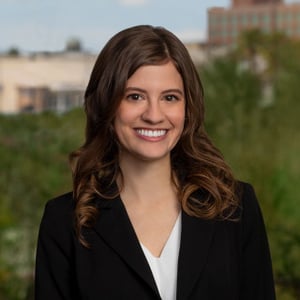
Associate, Shutts & Bowen LLP
Elise Engle is an attorney in the Tampa office of Shutts & Bowen LLP, where she is a member of the Appellate Practice Group.
Elise focuses her practice on civil appeals, civil litigation in both state and federal courts, political law, administrative law, and constitutional law. Before joining Shutts, she served as a judicial law clerk for the Honorable Jamie R. Grosshans at the Florida Supreme Court, following a clerkship with the Honorable John L. Badalamenti at the United States District Court, Middle District of Florida. During law school, she served as a judicial extern for Judge Badalamenti at the Florida Second District Court of Appeal.
Elise served on the Judicial Nominating Commission for Florida’s Thirteenth Judicial Circuit. As a member of the Federalist Society, she is a Vice President of the Tampa Bay Lawyers Chapter and a Tampa representative of the Florida Young Lawyers Chapter.
As a sixth-generation Floridian, Elise is proud to be a 2017 graduate of the University of Florida (B.S., Journalism) and a 2020 graduate of Stetson University College of Law.
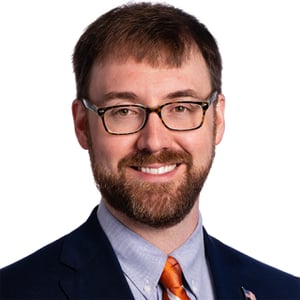
Senior Legal Fellow, Courts and the Constitution, Legal Policy Center, The Heritage Foundation
Zack is a Senior Legal Fellow of Courts and the Constitution at The Heritage Foundation.
He previously served for several years as an Assistant United States Attorney in the Northern District of Florida. Prior to that, he spent two years as an associate in the Washington, D.C. office of Cleary Gottlieb Steen & Hamilton, which he joined after clerking for the Hon. Emmett R. Cox on the United States Court of Appeals for the Eleventh Circuit.
Smith received his undergraduate, master’s, and law degrees from the University of Florida. During law school, Smith served as the Editor in Chief of the Florida Law Review and served on the executive boards of several student organizations, including the UF Chapter of the Federalist Society.
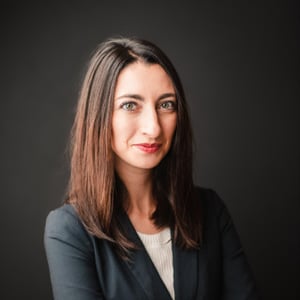
Bingham Fellow, Institute for Justice
Anna Goodman is an attorney with the Institute for Justice. She is currently serving as IJ’s Bingham Fellow.
Before joining IJ, Anna clerked for Judge Gregory Frizzell of the U.S. District Court for the Northern District of Oklahoma. She has also been an Appellate Fellow at Horvitz & Levy and an adjunct professor at Pepperdine University School of Law.
Chief Justice, Florida Supreme Court
Justice Charles Canady was born in Lakeland, Florida, in 1954. He is married to Jennifer Houghton, and they have two children. He received his B.A. from Haverford College in 1976 and his J.D. from the Yale Law School in 1979.
Justice Canady practiced law with the firm of Holland and Knight in Lakeland from 1979 through 1982. He practiced with the firm of Lane, Trohn, et al., from 1983 through 1992.
From November 1984 to November 1990, Justice Canady served three terms in the Florida House of Representatives, and from January 1993 to January 2001, he served four terms in the United States House of Representatives. Throughout his service in Congress, Justice Canady was a member of the House Judiciary Committee. For three terms, from January 1995 to January 2001, Justice Canady was the Chairman of the House Judiciary Subcommittee on the Constitution.
Upon leaving Congress, Justice Canady became General Counsel to Governor Jeb Bush. He was appointed by Governor Bush to the Second District Court of Appeal for a term beginning November 20, 2002.
On August 28, 2008, Justice Canady was appointed to the Florida Supreme Court by Governor Charlie Crist and took office on September 8, 2008. He served as Chief Justice from July 2010 through June 2012. In March 2018, he was elected by his colleagues to serve as Chief Justice for a second time, with his two-year term starting July 1, 2018, and a third time starting July 1, 2020.
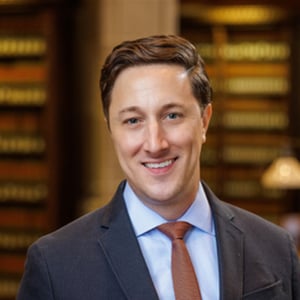
Professor of Law, Notre Dame Law School
Professor Derek Muller is a nationally-recognized scholar in the field of election law. His research focuses on the role of states in the administration of federal elections, the constitutional contours of voting rights and election administration, the limits of judicial power in the domain of elections, and the Electoral College.
He has published more than two dozen academic works, and his op-eds have appeared in the New York Times, the Los Angeles Times, and the Wall Street Journal. He has testified before Congress, and he is a contributor at the Election Law Blog. He is a co-author on a Federal Courts casebook published by Carolina Academic Press. He is also the co-reporter on a new Restatement of the Law, Election Litigation, an effort led by the American Law Institute.
Professor Muller teaches Election Law, Civil Procedure, and Evidence.
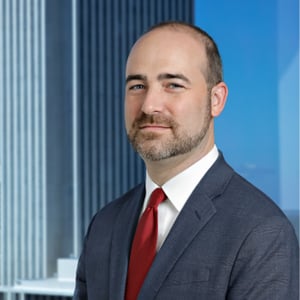
Partner, Shutts & Bowen LLP
Daniel Nordby is a partner in the Tallahassee office of Shutts & Bowen LLP, where he is a member of the Appellate Practice Group. His practice focuses on high-profile, high stakes matters of law and public policy, particularly in the areas of constitutional, appellate and administrative law.
Over the course of his career, Daniel has developed extensive experience in the area of government and administrative law. He is a Past Chair of the Florida Bar’s Administrative Law Section and has served on the Section’s Executive Council for more than a decade. Daniel has represented clients in some of Florida’s largest competitive procurements and has served as counsel of record in a variety of administrative and judicial proceedings involving the application of constitutional and administrative law principles. He has personally presented oral argument on multiple occasions before the Florida Supreme Court, Florida’s First District Court of Appeal, and the Federal Court of Appeals for the Eleventh Circuit on high-profile matters of constitutional law. A representative list of Daniel’s reported opinions in the state and federal courts is available here.
Daniel draws on his prior service in the public sector when representing businesses, individuals and governmental clients on their most challenging legal issues. As General Counsel to then-Governor Rick Scott from 2017-2019, Daniel provided oversight and strategic direction for all major litigation involving Florida’s executive branch agencies and advised Governor Scott on the appointment of more than 100 judges to Florida’s trial and appellate courts. Daniel’s career also includes service as General Counsel to the Florida House of Representatives, General Counsel to Florida’s Secretary of State, Assistant General Counsel to the Florida Department of Education, and Staff Attorney to the Florida Legislature’s Joint Administrative Procedures Committee.
Daniel continues his public service as a gubernatorial appointee to the Florida Supreme Court Judicial Nominating Commission. After serving on the Commission from 2012-2018 as a direct appointee of Governor Scott, Daniel was appointed by Governor DeSantis in July 2019 to a third term. He currently serves as Chair of the Florida Supreme Court Judicial Nominating Commission.
Daniel is also involved with several non-profit and community groups. He is a graduate of Leadership Florida (Connect VI), a member of Florida Blue Key, a member of the American Enterprise Institute’s Leaders Network, and a member of the James Madison Institute’s Inaugural Class of Leaders Fellows. Daniel is on the Steering Committee of the Tallahassee Lawyers Chapter of the Federalist Society for Law and Public Policy Studies and is a Past President of both its Tallahassee Lawyers Chapter and University of Florida Student Chapter. Daniel is an Eagle Scout and attends St. Peter’s Anglican Cathedral in Tallahassee.
Daniel is a “triple-Gator” with three degrees from the University of Florida: a J.D. (with high honors), a B.S. in Microbiology and Cell Science, and a B.A. in Classical Studies. He has been recognized as a Florida Super Lawyers “Rising Star” and has been named to the roster of Florida Legal Elite by Florida Trend magazine in the categories of “Government & Administrative Law,” “Best Government & Non-Profit Attorneys,” and ”Best Up & Coming Attorneys.”
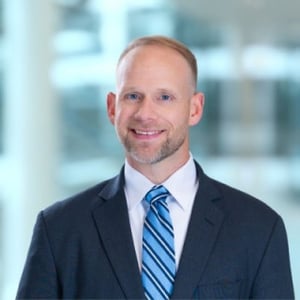
Partner, Holtzman Vogel Baran Torchinsky & Josefiak PLLC
Ed Wenger, a partner at Holtzman Vogel and Florida Bar board certified in appellate law, has successfully handled every stage of litigation, from the initial complaint-drafting stage all the way through United States Supreme Court review. Experienced in skills covering, among other things, state-court administrative hearings to expert-witness cross-examination, Ed has focused the bulk of his career on appellate and constitutional litigation, as well as critical motions practice.
His appellate experience began, first, as a law clerk for the Honorable Edward C. Prado of the United States Court of Appeals for the Fifth Circuit, and it continued as a law clerk for the Honorable Karen LeCraft Henderson of the United States Court of Appeals for the District of Columbia Circuit. He has since served as the Chief Deputy Solicitor General for the State of Florida (the number two appellate litigator for the State) and the General Counsel to the West Virginia Attorney General.
Drawing on the work ethic that once earned him a two-year stint as captain of FIU’s football team, Ed has presented oral argument in state and federal courts throughout the country, submitted scores of briefs in courts throughout the nation (and roughly two dozen with the Supreme Court of the United States), and represented, among others, the Office of Governor Ron DeSantis and Former United States Attorney General Edwin Meese III.
When Ed isn’t writing briefs, he can be found studying political philosophy and American statesmanship at Hillsdale College or boxing for charity (no wins yet, but we’re optimistic)!
Justice, Supreme Court of Arizona
Clint Bolick was appointed by Governor Doug Ducey in January 2016 to serve on the Arizona Supreme Court and was retained by the voters in 2018 and 2024.
Prior to joining the Court, Justice Bolick litigated constitutional cases in state and federal courts from coast to coast, including the U.S. Supreme Court. Among other positions, he served as Vice President for Litigation at the Goldwater Institute and as Co-founder and Vice President for Litigation at the Institute for Justice. He has litigated in support of school choice, freedom of enterprise, private property rights, freedom of speech, and federalism, and against racial classifications and government subsidies.
Justice Bolick received his Juris Doctor degree from the University of California at Davis, where he has been recognized as a distinguished alumnus, and his Bachelor of Arts degree magna cum laude from Drew University. He serves as a research fellow with the Hoover Institution. Among other honors, he was named one of the 90 Greatest DC Lawyers in the Last 30 Years by Legal Times in 2008, received a Bradley Prize in 2006, and was recognized as one of the nation’s three lawyers of the year by American Lawyer in 2002 for his successful defense of school vouchers in Zelman v. Simmons-Harris.
Justice Bolick is a prolific author of a dozen books and hundreds of articles. Among his most recent books are Unshackled: Freeing America’s K-12 Education System: Immigration Wars: Forging an American Solution, co-authored with former Florida Governor Jeb Bush; and David’s Hammer: The Case for an Activist Judiciary. Bolick serves as an adjunct professor of constitutional law at Arizona State University’s Sandra Day O’Connor School of Law and has served as a lecturer at Harvard University’s John F. Kennedy School of Government.
Justice, Texas Supreme Court
Brett Busby was appointed to the Supreme Court of Texas in 2019, confirmed unanimously by the Texas Senate, and elected to a full term in 2020. He previously practiced as an appellate litigator in Houston, served on the Fourteenth Court of Appeals and the Texas Multi-District Litigation Panel, and taught at U.T. Law School as an adjunct professor.
Brett is a seventh-generation Texan, third-generation Eagle Scout, and life-long violinist who grew up in Amarillo and Austin. After graduating with high honors from Duke University and Columbia Law School, he served as a law clerk to Justices Byron R. White (Ret.) and John Paul Stevens, U.S. Supreme Court, and to Judge Gerald Bard Tjoflat, U.S. Court of Appeals, Eleventh Circuit.
In private practice, Brett presented oral argument in the U.S. Supreme Court and handled dozens of appeals in that Court, the Supreme Court of Texas, and federal and state appellate courts. He is board-certified in civil appellate law, and his fellow Texas appellate lawyers elected him as Chair of the State Bar of Texas Appellate Section in 2018. He has also served as Chair of the Texas Bar Committee on Pattern Jury Charges (Business, Consumer, Insurance, and Employment) and as a Director of the Texas Young Lawyers Association.
Brett serves as the Court’s liaison to the Texas Access to Justice Commission and Foundation, which help assure that Texans with limited means have access to basic civil legal services. He received the 2022 Judicial Civic Education Award from the American Lawyers Alliance for his work on the Teach Texas judicial civics program, a partnership with the Houston Bar Association and the Texas Supreme Court Historical Society that sends lawyers and judges to teach seventh graders about our court system and Texas legal history. The Texas Association of Civil Trial and Appellate Specialists named him Appellate Judge of the Year in 2018.
Chief Justice, Florida Supreme Court
Justice Charles Canady was born in Lakeland, Florida, in 1954. He is married to Jennifer Houghton, and they have two children. He received his B.A. from Haverford College in 1976 and his J.D. from the Yale Law School in 1979.
Justice Canady practiced law with the firm of Holland and Knight in Lakeland from 1979 through 1982. He practiced with the firm of Lane, Trohn, et al., from 1983 through 1992.
From November 1984 to November 1990, Justice Canady served three terms in the Florida House of Representatives, and from January 1993 to January 2001, he served four terms in the United States House of Representatives. Throughout his service in Congress, Justice Canady was a member of the House Judiciary Committee. For three terms, from January 1995 to January 2001, Justice Canady was the Chairman of the House Judiciary Subcommittee on the Constitution.
Upon leaving Congress, Justice Canady became General Counsel to Governor Jeb Bush. He was appointed by Governor Bush to the Second District Court of Appeal for a term beginning November 20, 2002.
On August 28, 2008, Justice Canady was appointed to the Florida Supreme Court by Governor Charlie Crist and took office on September 8, 2008. He served as Chief Justice from July 2010 through June 2012. In March 2018, he was elected by his colleagues to serve as Chief Justice for a second time, with his two-year term starting July 1, 2018, and a third time starting July 1, 2020.
Managing Director, Court Consulting Division, National Center for State Court
Danielle Hirsch is Managing Director of the Access to Justice Team, Court Consulting Services, National Center for State Courts. In that capacity, Danielle is working to develop, guide and implement policies and procedures of court consulting operations to ensure success, high-quality work aimed at expanding access to justice for people without lawyers, people with limited English proficiency, and people with disabilities in need of accommodations in state and local courts. Danielle directs a number of important NCSC and Conference of Chief Justice/Conference of State Court Administrator Initiatives with her fantastic team of colleagues, including the $11M Eviction Diversion Initiative, CORA, and the Conference of Chief Justices and Conference of State Court Administrators’ (CCJ/COSCA) Committee on Legal Education and Admissions Reform (CLEAR), the CCJ/COSCA Access and Fairness and Civil Justice Committees, and the CCJ/COSCA Fees, Fines, and Bail Practices Taskforce. In addition, Danielle is the co-creator and a co-host of Tiny Chats.
Before joining NCSC, Danielle was the Assistant Director of Civil Justice Division of the Administrative Office of Illinois, where Danielle was responsible for leading and managing the judicial branch’s work to promote, facilitate and enhance access to justice in Illinois with a particular emphasis on efforts to remove barriers and increase the ease of interacting with courts by persons who cannot afford lawyers to represent their interests and needs. Before joining the Administrative Office of Illinois Courts, Danielle served as the Executive Director of the Illinois Supreme Court Commission on Access to Justice and the Director of Advocacy at The Chicago Bar Foundation. Among many highlights of her work, Danielle developed and managed an innovative new program, Illinois JusticeCorps, which places college and law students in courthouses to provide procedural assistance to people without lawyers. At the beginning of her career, Danielle clerked for the Honorable William Wayne Justice of the US District Court for the Western District of Texas and Justice ZM Yacoob of the Constitutional Court of South Africa.
Danielle brings a broad range of relevant experience to the NCSC. Danielle has authored numerous articles in law reviews, bar journals and other publications and is frequently called upon to speak at court, legal, academic, and nonprofit meetings and events.
Associate Justice, Alabama Supreme Court
James L. “Jay” Mitchell was elected to the Alabama Supreme Court in 2018.
Prior to serving on the Supreme Court, Justice Mitchell was an accomplished litigation attorney with Maynard, Cooper & Gale, P.C. During his time in private practice, he tried a number of complex cases to verdict, successfully handled appeals, and obtained favorable settlements for clients. He was rated as one of the top litigators in the United States and Alabama, and received the highest possible rating for professional ethics. He also served on Maynard, Cooper & Gale’s executive committee, helping to lead strategic and growth initiatives for the firm.
Justice Mitchell was born in Mobile and grew up in South Alabama and in Homewood. He is a graduate of Homewood High School and received his Bachelor of Arts with honors from Birmingham-Southern College, where he graduated Phi Beta Kappa, served as president of the student body, and played forward on the school’s 1995 national championship basketball team. He holds a Master of Arts from University College in Dublin, Ireland, and received his law degree from the University of Virginia School of Law.
Justice Mitchell has long been active in organizations that benefit the community and enhance the legal profession. In addition to his service with other organizations, he is a member of the Rotary Club of Birmingham and serves on the board of directors at Cornerstone School, an inner city Christian school. He is also a member of the Federalist Society.
Justice Mitchell and his wife, Elizabeth, have been married for 20 years and have four children. They reside in Homewood and are longtime members of Church of the Highlands.
Executive Director, Deborah L. Rhode Center on the Legal Profession, Stanford
Lucy Ricca is the Executive Director of the Deborah L. Rhode Center on the Legal Profession. Before starting this role, Ricca was the Director of Policy and Programs for the Center and served as the Executive Director from 2013-2018.
Ricca is a national expert in efforts to reform regulation of the legal profession to increase innovation, market diversification, and access to justice. She served as the first Executive Director of the Utah Office of Legal Services Innovation, a new regulator of legal services launched by the Utah Supreme Court. She is a member of the Board of Advisors of the Institute for the Advancement of the American Legal System (“IAALS”). Ricca has written on the regulation of the profession, the changing practice of law, and diversity in the profession.
Ricca clerked for Judge James P. Jones of the United States District Court for the Western District of Virginia. Before clerking, Ricca practiced white collar criminal defense, securities, antitrust, and complex commercial litigation as an associate at Orrick, Herrington & Sutcliffe. Ricca received her B.A. cum laude in History from Dartmouth College and her J.D. from the University of Virginia School of Law.
Chief Justice, Florida Supreme Court
Justice Charles Canady was born in Lakeland, Florida, in 1954. He is married to Jennifer Houghton, and they have two children. He received his B.A. from Haverford College in 1976 and his J.D. from the Yale Law School in 1979.
Justice Canady practiced law with the firm of Holland and Knight in Lakeland from 1979 through 1982. He practiced with the firm of Lane, Trohn, et al., from 1983 through 1992.
From November 1984 to November 1990, Justice Canady served three terms in the Florida House of Representatives, and from January 1993 to January 2001, he served four terms in the United States House of Representatives. Throughout his service in Congress, Justice Canady was a member of the House Judiciary Committee. For three terms, from January 1995 to January 2001, Justice Canady was the Chairman of the House Judiciary Subcommittee on the Constitution.
Upon leaving Congress, Justice Canady became General Counsel to Governor Jeb Bush. He was appointed by Governor Bush to the Second District Court of Appeal for a term beginning November 20, 2002.
On August 28, 2008, Justice Canady was appointed to the Florida Supreme Court by Governor Charlie Crist and took office on September 8, 2008. He served as Chief Justice from July 2010 through June 2012. In March 2018, he was elected by his colleagues to serve as Chief Justice for a second time, with his two-year term starting July 1, 2018, and a third time starting July 1, 2020.
Professor of Law, Notre Dame Law School
Professor Derek Muller is a nationally-recognized scholar in the field of election law. His research focuses on the role of states in the administration of federal elections, the constitutional contours of voting rights and election administration, the limits of judicial power in the domain of elections, and the Electoral College.
He has published more than two dozen academic works, and his op-eds have appeared in the New York Times, the Los Angeles Times, and the Wall Street Journal. He has testified before Congress, and he is a contributor at the Election Law Blog. He is a co-author on a Federal Courts casebook published by Carolina Academic Press. He is also the co-reporter on a new Restatement of the Law, Election Litigation, an effort led by the American Law Institute.
Professor Muller teaches Election Law, Civil Procedure, and Evidence.
Partner, Shutts & Bowen LLP
Daniel Nordby is a partner in the Tallahassee office of Shutts & Bowen LLP, where he is a member of the Appellate Practice Group. His practice focuses on high-profile, high stakes matters of law and public policy, particularly in the areas of constitutional, appellate and administrative law.
Over the course of his career, Daniel has developed extensive experience in the area of government and administrative law. He is a Past Chair of the Florida Bar’s Administrative Law Section and has served on the Section’s Executive Council for more than a decade. Daniel has represented clients in some of Florida’s largest competitive procurements and has served as counsel of record in a variety of administrative and judicial proceedings involving the application of constitutional and administrative law principles. He has personally presented oral argument on multiple occasions before the Florida Supreme Court, Florida’s First District Court of Appeal, and the Federal Court of Appeals for the Eleventh Circuit on high-profile matters of constitutional law. A representative list of Daniel’s reported opinions in the state and federal courts is available here.
Daniel draws on his prior service in the public sector when representing businesses, individuals and governmental clients on their most challenging legal issues. As General Counsel to then-Governor Rick Scott from 2017-2019, Daniel provided oversight and strategic direction for all major litigation involving Florida’s executive branch agencies and advised Governor Scott on the appointment of more than 100 judges to Florida’s trial and appellate courts. Daniel’s career also includes service as General Counsel to the Florida House of Representatives, General Counsel to Florida’s Secretary of State, Assistant General Counsel to the Florida Department of Education, and Staff Attorney to the Florida Legislature’s Joint Administrative Procedures Committee.
Daniel continues his public service as a gubernatorial appointee to the Florida Supreme Court Judicial Nominating Commission. After serving on the Commission from 2012-2018 as a direct appointee of Governor Scott, Daniel was appointed by Governor DeSantis in July 2019 to a third term. He currently serves as Chair of the Florida Supreme Court Judicial Nominating Commission.
Daniel is also involved with several non-profit and community groups. He is a graduate of Leadership Florida (Connect VI), a member of Florida Blue Key, a member of the American Enterprise Institute’s Leaders Network, and a member of the James Madison Institute’s Inaugural Class of Leaders Fellows. Daniel is on the Steering Committee of the Tallahassee Lawyers Chapter of the Federalist Society for Law and Public Policy Studies and is a Past President of both its Tallahassee Lawyers Chapter and University of Florida Student Chapter. Daniel is an Eagle Scout and attends St. Peter’s Anglican Cathedral in Tallahassee.
Daniel is a “triple-Gator” with three degrees from the University of Florida: a J.D. (with high honors), a B.S. in Microbiology and Cell Science, and a B.A. in Classical Studies. He has been recognized as a Florida Super Lawyers “Rising Star” and has been named to the roster of Florida Legal Elite by Florida Trend magazine in the categories of “Government & Administrative Law,” “Best Government & Non-Profit Attorneys,” and ”Best Up & Coming Attorneys.”
Partner, Holtzman Vogel Baran Torchinsky & Josefiak PLLC
Ed Wenger, a partner at Holtzman Vogel and Florida Bar board certified in appellate law, has successfully handled every stage of litigation, from the initial complaint-drafting stage all the way through United States Supreme Court review. Experienced in skills covering, among other things, state-court administrative hearings to expert-witness cross-examination, Ed has focused the bulk of his career on appellate and constitutional litigation, as well as critical motions practice.
His appellate experience began, first, as a law clerk for the Honorable Edward C. Prado of the United States Court of Appeals for the Fifth Circuit, and it continued as a law clerk for the Honorable Karen LeCraft Henderson of the United States Court of Appeals for the District of Columbia Circuit. He has since served as the Chief Deputy Solicitor General for the State of Florida (the number two appellate litigator for the State) and the General Counsel to the West Virginia Attorney General.
Drawing on the work ethic that once earned him a two-year stint as captain of FIU’s football team, Ed has presented oral argument in state and federal courts throughout the country, submitted scores of briefs in courts throughout the nation (and roughly two dozen with the Supreme Court of the United States), and represented, among others, the Office of Governor Ron DeSantis and Former United States Attorney General Edwin Meese III.
When Ed isn’t writing briefs, he can be found studying political philosophy and American statesmanship at Hillsdale College or boxing for charity (no wins yet, but we’re optimistic)!

Practice Groups: Physician, Heal Thyself— Regulatory Reform of the Legal Profession
Clint Bolick, Brett Busby, Charles T. Canady, Danielle E. Hirsch, Lucy Ricca, Jay Mitchell
In the twentieth century, state supreme courts and legislatures limited the practice of law to...
Practice Groups: Physician, Heal Thyself— Regulatory Reform of the Legal Profession
Clint Bolick, Brett Busby, Charles T. Canady, Danielle E. Hirsch, Jay Mitchell, Lucy Ricca
In the twentieth century, state supreme courts and legislatures limited the practice of law to...
Practice Groups: Physician, Heal Thyself— Regulatory Reform of the Legal Profession
2024 National Lawyers Convention
Washington, DC[Construction] 2024 NLC
Florida Supreme Court Approves Ballot Initiative to Legalize Recreational Use of Marijuana
Elise Engle
In Advisory Opinion to the Attorney General Re: Adult Personal Use of Marijuana, the...
Originalism, Ballot Initiatives, and Abortion in Florida
Zack Smith
With its June 2022 Dobbs v. Jackson Women’s Health Organization decision, the U.S. Supreme Court...
Florida Supreme Court Identifies Limits on Governmental Immunity Doctrines
Anna Goodman
In the recent decision Fried v. Florida, the Florida Supreme Court confronted the tension between...
Panel Four: Three Perspectives on the Independent State Legislature Doctrine - Moore v. Harper
Charles T. Canady, Derek T. Muller, Daniel E. Nordby, Edward Mark Wenger
Under the U.S. Constitution, does the state legislative body, independent of any constraints by state...
Panel Four: Three Perspectives on the Independent State Legislature Doctrine - Moore v. Harper
Ninth Annual Florida Chapters Conference
Lake Buena Vista, FLAnnual Federalist Society Reception at the Florida Bar's Annual Meeting
Orlando, FL