
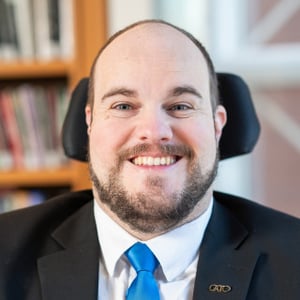
Director, Project on Criminal Justice, Cato Institute
Matthew Cavedon is the Director of the Cato Institute’s Project on Criminal Justice. He focuses on reforming plea-driven mass adjudication, ensuring police accountability, and defending constitutional criminal originalism. Cavedon’s scholarship has been published (or is forthcoming in) publications including the Arizona State Law Journal, Cato Supreme Court Review, Seattle University Law Review, and Georgetown Journal of Law and Public Policy. Formerly a Georgia public defender and fellow at the Institute for Justice, Cavedon has taught law school courses on criminal law and procedure, as well as the First Amendment. Cavedon clerked for a U.S. district court and the Supreme Court of Georgia. He came to Cato following a fellowship at the Emory University Center for the Study of Law and Religion.
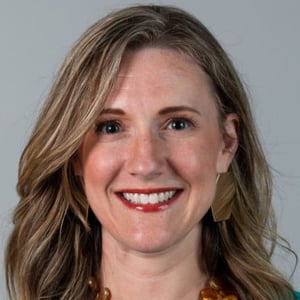
Chief Counsel, Legal Policy, Koch Capabilities, LLC
Sarah Field is Chief Counsel, Legal Policy at Koch Capabilities, LLC, where she develops and scales Koch-wide strategic policy initiatives on a variety of legal, judicial, and regulatory topics.
Sarah specializes in leading initiatives that require rapid vision development, start-up, and scaling expertise. This has included leading criminal justice reform and constitutionally limited government initiatives for the Stand Together community, overseeing the comprehensive portfolio of the Stand Together community’s issue areas, driving Americans for Prosperity’s long-term vision and strategy for addressing the country’s political environment, and leading judicial engagement strategy at Americans for Prosperity.
Before that, Sarah served as Executive Director of the Center for Shared Services, which provided compliance, talent development, and operational support for the Stand Together community. Previously, Sarah held roles at the Charles Koch Foundation, the Federalist Society, and a variety of other nonprofit organizations.
Sarah serves on the board of Americans for Public Safety, an organization dedicated to public safety, justice, and the rule of law.
Sarah received her B.A. from Grove City College, her law degree from Case Western Reserve University School of Law, and is an alumna of the Koch Associate Program.
Director, Project on Criminal Justice, Cato Institute
Matthew Cavedon is the Director of the Cato Institute’s Project on Criminal Justice. He focuses on reforming plea-driven mass adjudication, ensuring police accountability, and defending constitutional criminal originalism. Cavedon’s scholarship has been published (or is forthcoming in) publications including the Arizona State Law Journal, Cato Supreme Court Review, Seattle University Law Review, and Georgetown Journal of Law and Public Policy. Formerly a Georgia public defender and fellow at the Institute for Justice, Cavedon has taught law school courses on criminal law and procedure, as well as the First Amendment. Cavedon clerked for a U.S. district court and the Supreme Court of Georgia. He came to Cato following a fellowship at the Emory University Center for the Study of Law and Religion.
Chief Counsel, Legal Policy, Koch Capabilities, LLC
Sarah Field is Chief Counsel, Legal Policy at Koch Capabilities, LLC, where she develops and scales Koch-wide strategic policy initiatives on a variety of legal, judicial, and regulatory topics.
Sarah specializes in leading initiatives that require rapid vision development, start-up, and scaling expertise. This has included leading criminal justice reform and constitutionally limited government initiatives for the Stand Together community, overseeing the comprehensive portfolio of the Stand Together community’s issue areas, driving Americans for Prosperity’s long-term vision and strategy for addressing the country’s political environment, and leading judicial engagement strategy at Americans for Prosperity.
Before that, Sarah served as Executive Director of the Center for Shared Services, which provided compliance, talent development, and operational support for the Stand Together community. Previously, Sarah held roles at the Charles Koch Foundation, the Federalist Society, and a variety of other nonprofit organizations.
Sarah serves on the board of Americans for Public Safety, an organization dedicated to public safety, justice, and the rule of law.
Sarah received her B.A. from Grove City College, her law degree from Case Western Reserve University School of Law, and is an alumna of the Koch Associate Program.

Legal Fellow, Center for Constitutional Studies, Cato Institute
Brent Skorup is a legal fellow in the Cato Institute’s Robert A. Levy Center for Constitutional Studies.
Before joining Cato, he was a senior research fellow at the Mercatus Center at the George Mason University. His research areas include free speech, technology law, Fourth Amendment protections, regulation, and property law. Skorup has published pieces in economics and law journals and in popular media, including The Wall Street Journal, The New York Times, Bloomberg Law, Reuters, and Wired. He’s appeared as a TV and radio interview guest for news outlets like C‑SPAN, NPR, CBS News, ABC News, and CNBC Asia.
The Pennsylvania Supreme Court, a dissenting opinion at the Illinois Supreme Court, and the ALI's Restatement of the Law of Property have cited his legal research and he has testified as a technology and legal expert in legislative hearings in several states. Skorup has been appointed to several federal and state advisory bodies and he is currently a member of the Texas Advanced Air Mobility Advisory Committee.
Skorup has a BA in economics from Wheaton College and a law degree from the George Mason University School of Law, where he was articles editor for the Civil Rights Law Journal. He was a legal clerk at the FCC’s wireless bureau and Office of General Counsel and at the Energy and Commerce Committee in the U.S. House of Representatives.
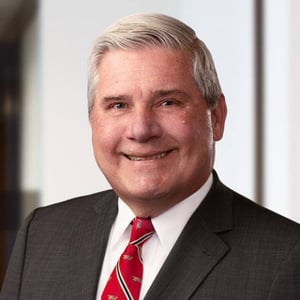
Aviation & Aerospace Team Co-Leader, Adams & Reese
Marc Warren is ranked Band 1 Nationwide in Transportation: Aviation: Regulatory by Chambers USA
Marc is a respected leader in the international aviation bar, and advises many of the world’s leading aviation and aerospace operators and manufacturers. Marc is the co-leader of the Adams & Reese Aviation and Aerospace Practice Team and resident in the firm’s DC and Jacksonville offices.
Marc has deep connections to industry regulators, associations, and leaders, based on decades of providing dependable, authoritative service, with a well-recognized commitment to air safety and the public interest. He has built an unparalleled reputation for wisdom in aviation matters.
Marc’s clients include major airlines, defense, transportation, logistics and infrastructure companies, trade associations, and public venues. Marc steers clients through FAA and Department of Transportation regulatory compliance, government investigations, and enforcement matters.
Marc has deep and extensive experience in aviation matters including those involving U.S. and foreign airlines, aerospace manufacturing, unmanned aircraft systems (UAS), commercial space transportation, advanced air mobility, airports and infrastructure, business aviation, certification and licensing, safety management systems, hazardous materials transport, government contracts, rulemaking and policy, litigation, and government investigations.
Marc’s wide-ranging experience also includes mergers, acquisitions, national security and military law, and international legal and policy issues. His practice also provides full-service, multi-disciplinary capabilities in areas such as antitrust and competition, investigations, crisis response environmental, international, regulatory, government contracts, administrative compliance and enforcement, business transactions and litigation matters, including arbitrations.
A former FAA acting chief counsel and deputy chief counsel, and a senior legal officer for the Army, Marc has technical aviation and senior leader advisory experience.
Marc is helping to shape the future of aviation by developing innovative solutions for drone delivery and urban air mobility systems, and for more effective and efficient use of airspace and airports. He employs novel funding strategies and guides clients in finding proper ways to implement new technologies. Clients turn to Marc to secure and protect government-issued certificates and licenses, relying on him to ensure that their core authorities are maintained.
Before his FAA appointment, Marc served in the US Army Judge Advocate General’s Corps, from which he retired in 2007 after having been selected for promotion to brigadier general.
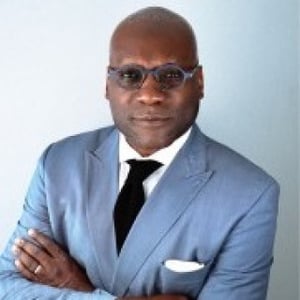
Partner; Co-Chair, Transportation Practice, DLA Piper
Marc Nichols is co-chair of the DLA Piper Transportation Practice. His practice is primarily focused on a broad range of aviation and aerospace issues, including overseeing litigation responsibilities, enforcement, safety and security matters, regulatory and legislative affairs, employment and labor matters, data and emerging technology, and ethics and compliance issues. Marc was previously Chief Counsel of the Federal Aviation Administration (FAA), appointed by Former President Biden and the US Secretary of Transportation in 2022. In his role as the Chief Legal Officer of the FAA, Marc provided comprehensive legal guidance across all operational facets of the FAA on matters of importance to the national aviation and aerospace sector.
As Chief Counsel, Marc led a team of more than 300 legal professionals located across 13 offices nationwide and oversaw an annual budget exceeding US$65 million. His responsibilities encompassed representing and advising the FAA's various lines of business and staff offices on a broad range of aviation and aerospace issues. Additionally, Marc offered direct counsel to the FAA Administrator, the Deputy Administrator, and the Office of the General Counsel of the US Department of Transportation to ensure the safest and most efficient aerospace system in the world.
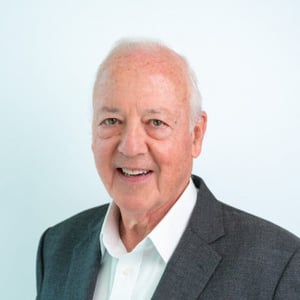
CEO, Republic Airways
David Grizzle has been serving as Chief Executive Officer since July 2, 2025 and has served as the Chairman of our Board of Directors since May 2017. Since 2013, Mr. Grizzle has engaged as an aviation consultant through his firm, Dazzle Partners. Mr. Grizzle previously served as Chief Operating Officer of the FAA’s Air Traffic Organization from 2011 to 2013 and as Chief Counsel of the FAA from 2009 to 2011. Prior to his time with the FAA, Mr. Grizzle was with Continental Airlines, Inc. and its affiliates for 22 years, retiring as the Senior Vice President of Customer Experience. In 2004, Mr. Grizzle served for 14 months with the U.S. Department of State in Kabul, Afghanistan as Attaché, Senior Advisor and Coordinator for Transportation and Infrastructure.
Legal Fellow, Center for Constitutional Studies, Cato Institute
Brent Skorup is a legal fellow in the Cato Institute’s Robert A. Levy Center for Constitutional Studies.
Before joining Cato, he was a senior research fellow at the Mercatus Center at the George Mason University. His research areas include free speech, technology law, Fourth Amendment protections, regulation, and property law. Skorup has published pieces in economics and law journals and in popular media, including The Wall Street Journal, The New York Times, Bloomberg Law, Reuters, and Wired. He’s appeared as a TV and radio interview guest for news outlets like C‑SPAN, NPR, CBS News, ABC News, and CNBC Asia.
The Pennsylvania Supreme Court, a dissenting opinion at the Illinois Supreme Court, and the ALI's Restatement of the Law of Property have cited his legal research and he has testified as a technology and legal expert in legislative hearings in several states. Skorup has been appointed to several federal and state advisory bodies and he is currently a member of the Texas Advanced Air Mobility Advisory Committee.
Skorup has a BA in economics from Wheaton College and a law degree from the George Mason University School of Law, where he was articles editor for the Civil Rights Law Journal. He was a legal clerk at the FCC’s wireless bureau and Office of General Counsel and at the Energy and Commerce Committee in the U.S. House of Representatives.
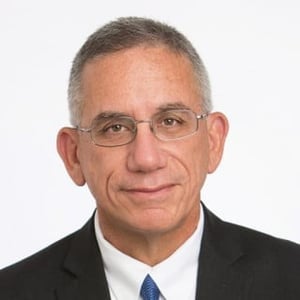
Of Counsel, GrayRobinson
Charlie Trippe practiced civil litigation for the 14 years between 1980 and 1994, most of that with Jones Day, where he was a partner in the New York office. He was the chief litigation counsel of CSX Transportation, Inc., one of the country’s largest freight railroads, from 1994 through 2001. He returned to private practice in Jacksonville in 2001, continuing to practice in the area of civil litigation. He also served as General Counsel to both the Governor of Florida (2010-2011) and the Attorney General of Florida (2020-2022), and as the Chief Counsel of the Federal Aviation Administration (2017-2019). Since 2025 he has been Of Counsel to the Florida firm of GrayRobinson. He is a Florida Supreme Court Certified Circuit Civil Mediator, as well as an experienced arbitrator.
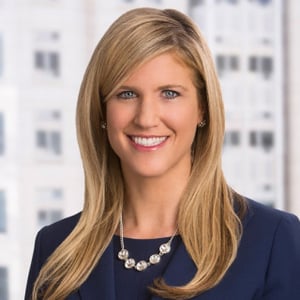
Partner, Global Regulatory, Hogan Lovells
As chair of the Uncrewed Aircraft Systems (UAS) practice and co-founder and Executive Director of the non-profit Commercial Drone Alliance, Lisa is focused on helping businesses succeed in the dynamic drone marketplace. She also focuses on UAS security efforts and enabling Advanced Air Mobility (AAM). Lisa founded and hosts the Advanced Aviation Innovation Summit series, bringing together regulators, policymakers, and industry stakeholders to explore ways to enhance U.S. global leadership in advanced aviation.
Legal Fellow, Center for Constitutional Studies, Cato Institute
Brent Skorup is a legal fellow in the Cato Institute’s Robert A. Levy Center for Constitutional Studies.
Before joining Cato, he was a senior research fellow at the Mercatus Center at the George Mason University. His research areas include free speech, technology law, Fourth Amendment protections, regulation, and property law. Skorup has published pieces in economics and law journals and in popular media, including The Wall Street Journal, The New York Times, Bloomberg Law, Reuters, and Wired. He’s appeared as a TV and radio interview guest for news outlets like C‑SPAN, NPR, CBS News, ABC News, and CNBC Asia.
The Pennsylvania Supreme Court, a dissenting opinion at the Illinois Supreme Court, and the ALI's Restatement of the Law of Property have cited his legal research and he has testified as a technology and legal expert in legislative hearings in several states. Skorup has been appointed to several federal and state advisory bodies and he is currently a member of the Texas Advanced Air Mobility Advisory Committee.
Skorup has a BA in economics from Wheaton College and a law degree from the George Mason University School of Law, where he was articles editor for the Civil Rights Law Journal. He was a legal clerk at the FCC’s wireless bureau and Office of General Counsel and at the Energy and Commerce Committee in the U.S. House of Representatives.
Of Counsel, GrayRobinson
Charlie Trippe practiced civil litigation for the 14 years between 1980 and 1994, most of that with Jones Day, where he was a partner in the New York office. He was the chief litigation counsel of CSX Transportation, Inc., one of the country’s largest freight railroads, from 1994 through 2001. He returned to private practice in Jacksonville in 2001, continuing to practice in the area of civil litigation. He also served as General Counsel to both the Governor of Florida (2010-2011) and the Attorney General of Florida (2020-2022), and as the Chief Counsel of the Federal Aviation Administration (2017-2019). Since 2025 he has been Of Counsel to the Florida firm of GrayRobinson. He is a Florida Supreme Court Certified Circuit Civil Mediator, as well as an experienced arbitrator.
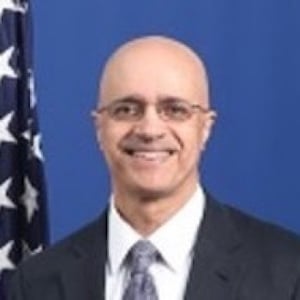
Former Chief Counsel, Federal Aviation Administration
Reggie Govan is former Chief Counsel of the Federal Aviation Administration’s (FAA). The Office of the Chief Counsel provides legal advice in support of the FAA Administrator and all aspects of agency operations at headquarters, regions, and centers and works closely with the Department of Transportation’s Office of General Counsel on issues of national significance to the aviation industry.
Mr. Govan previously served as a corporate counsel, litigator, and legislative counsel. Prior to joining the FAA, he served as Managing Associate General Counsel of Freddie Mac. He also served as Counsel to Chairmen Augustus H. Hawkins and William D. Ford of the United States (U.S.) House of Representatives Committee on Education and Labor, and as Counsel to the then-Chairman (now Vice President) Joseph R. Biden of the U.S. Senate Committee on the Judiciary. His litigation experience includes service as an Assistant District Attorney in Manhattan and as plaintiffs’ counsel in federal civil rights litigation, including school desegregation and voting rights cases.
After acquiring a Bachelor’s degree in Economics and Philosophy from Carnegie-Mellon University and a Juris Doctor from the University of Pennsylvania Law School, he clerked for the Honorable Nathaniel Jones of U.S. Court of Appeals for Sixth Circuit.
Mr. Govan is the author of several professional journal and law review articles. He lives in the District of Columbia.
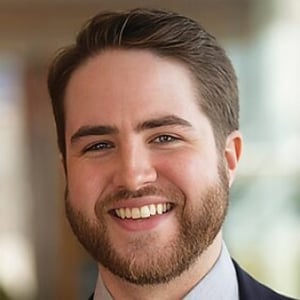
Nicholas Anthony is a policy analyst at the Cato Institute’s Center for Monetary and Financial Alternatives, a fellow at the Human Rights Foundation (HRF), and a member of the Economic Inclusion Group’s Advisory Board. Anthony’s research covers a wide range of topics within the field of monetary and financial economics, including central bank digital currency (CBDC), financial privacy, cryptocurrency, and the use of money in society. Anthony is the author of Digital Currency or Digital Control? Decoding CBDC and the Future of Money and his work has been published in the Wall Street Journal, MarketWatch, Business Insider, and numerous other outlets. Anthony has testified before Congress and maintains the HRF CBDC Tracker, which documents CBDC development and civil liberties concerns around the world.
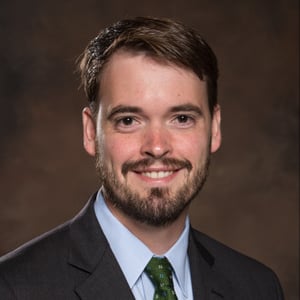
Senior Attorney, Institute for Justice
Rob Johnson is a senior attorney at the Institute for Justice, where he litigates to protect private property, free speech, and other individual rights. Rob is a nationally-recognized expert on civil forfeiture. He previously represented a series of small business owners who had their entire bank accounts seized by the IRS, and he launched an initiative that resulted in the IRS reopening hundreds of closed forfeiture cases and returning millions of dollars. He has also litigated cases challenging the constitutionality of civil forfeiture procedures, and he scored a victory striking down a forfeiture program as a violation of due process.
Beyond civil forfeiture, Rob has litigated cases defending a range of constitutional rights. He was part of teams that successfully challenged occupational licensing requirements for tour guides in Savannah and Charleston. He also developed a class action lawsuit fighting the NYPD’s use of a draconian “no-fault eviction” statute to coerce residents to waive their constitutional rights, which led New York City to reform the challenged law.
Rob’s writing has been published in the Wall Street Journal, Washington Post, Politico, and Reason, among other venues. Rob has testified about occupational licensing before the House and Senate Judiciary Committees and has twice testified about civil forfeiture before the House Ways & Means Oversight Subcommittee. He has also testified before state legislatures across the country.
From 2014-2017, Rob served as IJ’s first Elfie Gallun Fellow for Freedom and the Constitution. In that role, Rob wrote and spoke about the vital role the U.S. Constitution plays in protecting our most precious freedoms. He is currently at work on a book about the Fourteenth Amendment.
Rob studied literature and anthropology at Columbia University, and he studied law at Harvard Law School. Upon graduation, he clerked for Chief Judge Alex Kozinski on the Ninth Circuit and for Justice Anthony Kennedy on the Supreme Court.
Rob lives in Cleveland with his wife and two daughters—all named after characters in Shakespeare plays—and is an amateur large format photographer.
Nicholas Anthony is a policy analyst at the Cato Institute’s Center for Monetary and Financial Alternatives, a fellow at the Human Rights Foundation (HRF), and a member of the Economic Inclusion Group’s Advisory Board. Anthony’s research covers a wide range of topics within the field of monetary and financial economics, including central bank digital currency (CBDC), financial privacy, cryptocurrency, and the use of money in society. Anthony is the author of Digital Currency or Digital Control? Decoding CBDC and the Future of Money and his work has been published in the Wall Street Journal, MarketWatch, Business Insider, and numerous other outlets. Anthony has testified before Congress and maintains the HRF CBDC Tracker, which documents CBDC development and civil liberties concerns around the world.
Senior Attorney, Institute for Justice
Rob Johnson is a senior attorney at the Institute for Justice, where he litigates to protect private property, free speech, and other individual rights. Rob is a nationally-recognized expert on civil forfeiture. He previously represented a series of small business owners who had their entire bank accounts seized by the IRS, and he launched an initiative that resulted in the IRS reopening hundreds of closed forfeiture cases and returning millions of dollars. He has also litigated cases challenging the constitutionality of civil forfeiture procedures, and he scored a victory striking down a forfeiture program as a violation of due process.
Beyond civil forfeiture, Rob has litigated cases defending a range of constitutional rights. He was part of teams that successfully challenged occupational licensing requirements for tour guides in Savannah and Charleston. He also developed a class action lawsuit fighting the NYPD’s use of a draconian “no-fault eviction” statute to coerce residents to waive their constitutional rights, which led New York City to reform the challenged law.
Rob’s writing has been published in the Wall Street Journal, Washington Post, Politico, and Reason, among other venues. Rob has testified about occupational licensing before the House and Senate Judiciary Committees and has twice testified about civil forfeiture before the House Ways & Means Oversight Subcommittee. He has also testified before state legislatures across the country.
From 2014-2017, Rob served as IJ’s first Elfie Gallun Fellow for Freedom and the Constitution. In that role, Rob wrote and spoke about the vital role the U.S. Constitution plays in protecting our most precious freedoms. He is currently at work on a book about the Fourteenth Amendment.
Rob studied literature and anthropology at Columbia University, and he studied law at Harvard Law School. Upon graduation, he clerked for Chief Judge Alex Kozinski on the Ninth Circuit and for Justice Anthony Kennedy on the Supreme Court.
Rob lives in Cleveland with his wife and two daughters—all named after characters in Shakespeare plays—and is an amateur large format photographer.
Director, Project on Criminal Justice, Cato Institute
Matthew Cavedon is the Director of the Cato Institute’s Project on Criminal Justice. He focuses on reforming plea-driven mass adjudication, ensuring police accountability, and defending constitutional criminal originalism. Cavedon’s scholarship has been published (or is forthcoming in) publications including the Arizona State Law Journal, Cato Supreme Court Review, Seattle University Law Review, and Georgetown Journal of Law and Public Policy. Formerly a Georgia public defender and fellow at the Institute for Justice, Cavedon has taught law school courses on criminal law and procedure, as well as the First Amendment. Cavedon clerked for a U.S. district court and the Supreme Court of Georgia. He came to Cato following a fellowship at the Emory University Center for the Study of Law and Religion.
Chief Counsel, Legal Policy, Koch Capabilities, LLC
Sarah Field is Chief Counsel, Legal Policy at Koch Capabilities, LLC, where she develops and scales Koch-wide strategic policy initiatives on a variety of legal, judicial, and regulatory topics.
Sarah specializes in leading initiatives that require rapid vision development, start-up, and scaling expertise. This has included leading criminal justice reform and constitutionally limited government initiatives for the Stand Together community, overseeing the comprehensive portfolio of the Stand Together community’s issue areas, driving Americans for Prosperity’s long-term vision and strategy for addressing the country’s political environment, and leading judicial engagement strategy at Americans for Prosperity.
Before that, Sarah served as Executive Director of the Center for Shared Services, which provided compliance, talent development, and operational support for the Stand Together community. Previously, Sarah held roles at the Charles Koch Foundation, the Federalist Society, and a variety of other nonprofit organizations.
Sarah serves on the board of Americans for Public Safety, an organization dedicated to public safety, justice, and the rule of law.
Sarah received her B.A. from Grove City College, her law degree from Case Western Reserve University School of Law, and is an alumna of the Koch Associate Program.
Director, Project on Criminal Justice, Cato Institute
Matthew Cavedon is the Director of the Cato Institute’s Project on Criminal Justice. He focuses on reforming plea-driven mass adjudication, ensuring police accountability, and defending constitutional criminal originalism. Cavedon’s scholarship has been published (or is forthcoming in) publications including the Arizona State Law Journal, Cato Supreme Court Review, Seattle University Law Review, and Georgetown Journal of Law and Public Policy. Formerly a Georgia public defender and fellow at the Institute for Justice, Cavedon has taught law school courses on criminal law and procedure, as well as the First Amendment. Cavedon clerked for a U.S. district court and the Supreme Court of Georgia. He came to Cato following a fellowship at the Emory University Center for the Study of Law and Religion.
Nicholas Anthony is a policy analyst at the Cato Institute’s Center for Monetary and Financial Alternatives, a fellow at the Human Rights Foundation (HRF), and a member of the Economic Inclusion Group’s Advisory Board. Anthony’s research covers a wide range of topics within the field of monetary and financial economics, including central bank digital currency (CBDC), financial privacy, cryptocurrency, and the use of money in society. Anthony is the author of Digital Currency or Digital Control? Decoding CBDC and the Future of Money and his work has been published in the Wall Street Journal, MarketWatch, Business Insider, and numerous other outlets. Anthony has testified before Congress and maintains the HRF CBDC Tracker, which documents CBDC development and civil liberties concerns around the world.
Senior Attorney, Institute for Justice
Rob Johnson is a senior attorney at the Institute for Justice, where he litigates to protect private property, free speech, and other individual rights. Rob is a nationally-recognized expert on civil forfeiture. He previously represented a series of small business owners who had their entire bank accounts seized by the IRS, and he launched an initiative that resulted in the IRS reopening hundreds of closed forfeiture cases and returning millions of dollars. He has also litigated cases challenging the constitutionality of civil forfeiture procedures, and he scored a victory striking down a forfeiture program as a violation of due process.
Beyond civil forfeiture, Rob has litigated cases defending a range of constitutional rights. He was part of teams that successfully challenged occupational licensing requirements for tour guides in Savannah and Charleston. He also developed a class action lawsuit fighting the NYPD’s use of a draconian “no-fault eviction” statute to coerce residents to waive their constitutional rights, which led New York City to reform the challenged law.
Rob’s writing has been published in the Wall Street Journal, Washington Post, Politico, and Reason, among other venues. Rob has testified about occupational licensing before the House and Senate Judiciary Committees and has twice testified about civil forfeiture before the House Ways & Means Oversight Subcommittee. He has also testified before state legislatures across the country.
From 2014-2017, Rob served as IJ’s first Elfie Gallun Fellow for Freedom and the Constitution. In that role, Rob wrote and spoke about the vital role the U.S. Constitution plays in protecting our most precious freedoms. He is currently at work on a book about the Fourteenth Amendment.
Rob studied literature and anthropology at Columbia University, and he studied law at Harvard Law School. Upon graduation, he clerked for Chief Judge Alex Kozinski on the Ninth Circuit and for Justice Anthony Kennedy on the Supreme Court.
Rob lives in Cleveland with his wife and two daughters—all named after characters in Shakespeare plays—and is an amateur large format photographer.

Courthouse Steps Decision: Ellingburg v. United States
Matthew P. Cavedon, Sarah Field
Ellingburg v. United States concerned whether forced restitution under the Mandatory Victims Restitution Act of 1996...
Courthouse Steps Decision: Ellingburg v. United States
Matthew P. Cavedon, Sarah Field
Ellingburg v. United States concerned whether forced restitution under the Mandatory Victims Restitution Act of 1996...
Courthouse Steps Decision: Ellingburg v. United States
From Pretended Offences to Real Rights: Revolutionary Inspirations for Constitutional Criminal Protections
Charleston Lawyer Chapter
Charleston, SCAviation Policy Episode 3: Air Traffic Control
Brent Skorup, Marc Warren, Marc Nichols, David Grizzle
In this final episode of the Regulatory Transparency Project’s aviation policy podcast series, host Brent...
Aviation Policy Episode 2: Innovation at the FAA
Brent Skorup, Charles M. Trippe, Lisa Ellman
Brent Skorup (Cato Institute) continues the discussion of innovation at the Federal Aviation Administration (FAA),...
Aviation Policy Episode 1: Drones & Federalism
Brent Skorup, Charles M. Trippe, Reggie Govan
Brent Skorup (Cato Institute) is joined by Reggie Govan (Former Chief Counsel, Federal Aviation Administration)...
Litigation Update: Texas Association of Money Services Businesses v. Bondi
Nicholas Anthony, Robert E. Johnson
On April 1, 2025, the Texas Association of Money Services Businesses filed suit in the...
Litigation Update: Texas Association of Money Services Businesses v. Bondi
Nicholas Anthony, Robert E. Johnson
On April 1, 2025, the Texas Association of Money Services Businesses filed suit in the...
Litigation Update: Texas Association of Money Services Businesses v. Bondi