
Bruce C. Hafen Professor of Law, Brigham Young University, J. Reuben Clark Law School
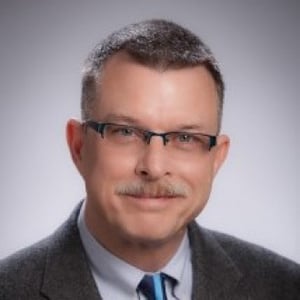
Founder and Senior Director, Institutional Religious Freedom Alliance
Stanley Carlson-Thies is the Founder and Senior Director of the Institutional Religious Freedom Alliance (IRFA), a division of the Center for Public Justice. As part of this role, he convenes the Coalition to Preserve Religious Freedom, a multi-faith alliance of social-service, education, and religious freedom organizations that advocates for the religious freedom of faith-based organizations to Congress and the federal government. In addition he is also a Senior Fellow at the Canadian think tank Cardus.
From 2009-2010 he served on a task force of President Obama’s Advisory Council on Faith-Based and Neighborhood Partnerships, helping to draft recommendations on how to clarify the church-state rules that apply to federal funding of social-service providers, and has consulted with federal departments and several states.
He served with the White House Office of Faith-Based & Community Initiatives from its inception in February 2001 until mid-May 2002. He assisted with writing “Unlevel Playing Field: Barriers to Participation by Faith-Based and Community Organizations in Federal Social Service Programs,” a report released by the White House in August 2001, and “Rallying the Armies of Compassion,” the initial blueprint for President George W. Bush’s faith and community agenda.
Previously, he was Director of Social Policy Studies for CPJ and directed CPJ’s project to track the implementation and impact of the Charitable Choice provision of the 1996 federal welfare reform law. Following his term in the White House, he returned to CPJ as the Director of Faith-based Policy Studies.
He received the William Bentley Ball Life and Religious Liberty Defense Award from the Center for Law and Religious Freedom and the Christian Legal Society in October 2004. He was named as one of 12 advocates who are “reinterpreting God and country” by the National Journal in May 2004. He holds a doctorate in political science from the University of Toronto. His dissertation is on the role of Protestants and Catholics in the development of Dutch politics in the 19th and 20th centuries. Besides the United States, he has lived in Canada, the Netherlands, and Japan, where he was born of missionary parents. He lives in Annapolis, Maryland, with his wife, Christiane. They are the proud parents of Simon.
Of Counsel, Wimberly, Lawson, Steckel, Schneider & Stine P.C.
Elizabeth K. (Betsy) Dorminey is of counsel with the firm. She received a B.A. magna cum laude from the University of Georgia in 1976, a license ès lettres from the Sorbonne in 1978, a J.D. from UGA’s Law School in 1981, and an LL.M. from Columbia in 1984. She clerked for the Hon. Ed Carnes on the U.S. Court of Appeals for the Eleventh Circuit and worked for the U.S. Departments of Justice and Commerce prior to joining the firm. Ms. Dorminey is a member of the State Bars of Georgia, Connecticut, and New York, and is admitted to practice in Federal District and Appellate Courts throughout the Southeast. With Larry Stine and Mark Waschak, she is co-author of “Occupational Safety & Health Law: Compliance and Practice” (Thomson/West 2008). Her practice concentrates in all aspects of employer defense, including but not limited to litigation the Fair Labor Standards Act, Title VII employment discrimination, and occupational safety and health. She is a member of the Executive Committee of the Labor & Employment Practice Group of the Federalist Society, and serves on the Board of the Friends of the Georgia Museum of Art.
David Scott has a Ph.D. in political science from Northwestern University and has taught American government courses at a number of Illinois colleges and universities. In retirement he was the president of the Illinois State Historical Society and attended Federalist Society meetings in St. Louis.
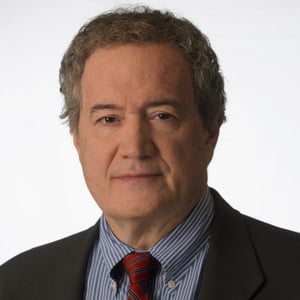
Director of the Program in Human Rights, Catholic University of America
William L. Saunders is Chair Emeritus of the Religious Liberties Practice Group of the Federalist Society. He is also a religious liberty and human rights scholar as well as director of the Center for Human rights at The Catholic University of America. He is Law Fellow with the Institute for Human Ecology, Professor and Director of the Program in Human Rights in the School of Arts & Sciences and Co-director of the Center for Religious Liberty at the Columbus School of Law. Before joining The Catholic University of America, Mr. Saunders served as Senior Vice President and Senior Counsel with Americans United for Life for ten years. From 1999 to 2009, he was Senior Fellow in Bioethics and Human Rights Counsel at the Family Research Council.
Mr. Saunders attended the University of North Carolina at Chapel Hill on a Morehead scholarship. He obtained his degree in law from the Harvard Law School.
Mr. Saunders was featured in Harvard’s first Guide to Conservative Public Interest Law in 2003 and again in the 2008 edition. He served on Harvard’s Advisory Committee for its 2008 celebration of public interest law. A member of the Supreme Court bar, he has authored numerous legal briefs in state, federal, foreign, and international courts.
Mr. Saunders’ book, Unborn Human Life and Fundamental Rights: Leading Constitutional Cases Under Scrutiny, was published in 2019. His articles and book chapters have been published by the university presses of Harvard, Villanova, Brigham Young, Fordham, Georgetown, Houston, Scranton, and the Catholic University of America, as well as by the Intercollegiate Studies Institute, Freedom House, Greenhaven Press, Rowan & Littlefield, Praeger, St. Augustine’s, and Intervarsity press. He has given lectures and participated in debates at many colleges, universities, and law schools, including Princeton, Harvard, Georgetown, and Notre Dame. He delivered the annual J. Michael Miller Lecture at the University of St. Thomas (on international law) in February 2007, the annual R. Wayne Kraft Memorial Lecture (on bioethics) at DeSales University in February 2004 and the annual James Moore Lecture (on human rights violations in Sudan) at Millikin University in 1999. He has also lectured, and/or has been published, in many foreign countries, including Italy, Germany, Poland, Austria, Spain, Greece, Slovakia, Mexico, Qatar, Malaysia, Romania, the Philippines, Hong Kong, and the United Kingdom.
In addition to speaking and writing frequently on bioethics topics, Mr. Saunders has submitted testimony to the President’s Council on Bioethics, as well as to UNESCO’s Committee on Bioethics, and has briefed Congressional staff and state legislatures. He is a regular columnist for the National Catholic Bioethics Quarterly.
Mr. Saunders has appeared often in the media, including BBC World News, CNN, Fox News, Vatican Radio, and National Public Radio. His articles on issues have appeared in a variety of journals, such as First Things, Human Events, Human Life Review, The Legal Times, Communio, The Family in America: A Journal of Public Policy, Ethics & Medics, and Touchstone.
Mr. Saunders served on the official United States delegation to the UN Special Session on Children in 2001/02. In 2011, he was a speaker at an official briefing at the UN, addressing the topic, why euthanasia is not a human right.
In 2004, he served on the NGO Working Committee in connection with the Doha Intergovernmental Conference for the Family.
Mr. Saunders is Senior Fellow with the Religious Freedom Institute, and Affiliated Scholar with the Pellegrino Center for Clinical Ethics at the Georgetown University School of Medicine. He is President of the Fellowship of Catholic Scholars and a member of the boards of the International Association of Catholic Bioethicists, the International Right to Life Federation, the Institute on Religion and Democracy, and the Society of Catholic Social Scientists.
In 1999, Mr. Saunders founded Sudan Relief and Rescue, Inc., to aid the persecuted church in Sudan. He has worked for and written on behalf of the persecuted church for many years.
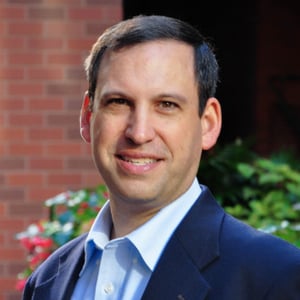
President, Becket Fund for Religious Liberty; Professor of Law and Co-Director of the Center for Religious Liberty, Catholic University; Visiting Professor, Harvard Law School
Mark joined the Becket team in 2011 and splits his time as Associate Professor at The Catholic University of America, Columbus School of Law, and as Visiting Professor at Harvard Law School. Mark teaches constitutional law, religious liberty, torts, and evidence. He has been voted Teacher of the Year three years in a row by the Law School’s Student Bar Association.
Mark has broad experience litigating First Amendment religious exercise and free speech cases. He has represented the winning parties in a variety of Supreme Court First Amendment cases including Hobby Lobby, Little Sisters, Wheaton College, and Holt. In January 2014, Mark argued before the Supreme Court in McCullen v. Coakley, a First Amendment challenge to a Massachusetts speech restriction outside of abortion clinics. The Justices ruled in favor of his clients 9-0. Mark also led a successful eight-year litigation battle against Governor Blagojevich’s effort to force religious pharmacists to distribute the morning-after and week-after pills.
Mark’s academic writing focuses on the First and Fourteenth Amendments, and has appeared in a variety of prestigious journals, including the Harvard Law Review.
Mark is a widely sought after speaker on constitutional issues, particularly concerning abortion and the First Amendment. Professor Rienzi has been invited to discuss these issues at Harvard Law School, Columbia University Law School, Georgetown University Law Center, Boston College Law School, Notre Dame Law School, the National Press Club, and the Capitol. He has been quoted on constitutional law issues on NPR, in the Washington Times, The New York Daily News, and the Chicago Sun-Times. Mark has also been featured on the Kelly File, Fox News Sunday, Your World with Neil Cavuto, Geraldo at Large, CNN Tonight, CNN Live, Andrea Mitchell Reports, and Wall Street Journal Live.
Prior to joining Becket, Mark served as counsel for the litigation department and the intellectual property litigation practice group of WilmerHale LLP. His practice focused on complex civil and appellate litigation with a particular emphasis on intellectual property and First Amendment issues. Prior to joining WilmerHale, he served as law clerk to the Hon. Stephen F. Williams, senior circuit judge for the U.S. Court of Appeals for the D.C. Circuit. Prior to that, Mark was an editor of the Harvard Law Review, and earned his J.D. from Harvard Law School and B.A. from Princeton University, both with honors.

Senior Fellow and Director of Constitutional Studies, Manhattan Institute
Ilya Shapiro is a senior fellow and director of constitutional studies at the Manhattan Institute and a contributing editor of City Journal. Previously he was executive director and senior lecturer at the Georgetown Center for the Constitution, and before that a vice president of the Cato Institute.
Shapiro is the author of Lawless: The Miseducation of America’s Elites (2025) and Supreme Disorder: Judicial Nominations and the Politics of America’s Highest Court (2020), coauthor of Religious Liberties for Corporations? (2014), and editor of 11 volumes of the Cato Supreme Court Review (2008-18). He has contributed to a variety of academic, popular, and professional publications, including the Wall Street Journal, Harvard Journal of Law & Public Policy, Washington Post, Los Angeles Times, USA Today, National Review, and Newsweek. He also regularly provides commentary for various media outlets, writes the Shapiro’s Gavel newsletter on Substack, and once appeared on the Colbert Report.
Shapiro has testified many times before Congress and state legislatures and has filed more than 500 amicus curiae “friend of the court” briefs in the Supreme Court. He lectures regularly on behalf of the Federalist Society, is a member of the board of fellows of the Jewish Policy Center, was an inaugural Washington Fellow at the National Review Institute, and has been an adjunct law professor at the George Washington University and University of Mississippi. He is also the chairman of the board of advisers of the Mississippi Justice Institute, a barrister in the Edward Coke Appellate Inn of Court, and a former member of the Virginia Advisory Committee to the U.S. Commission on Civil Rights.
Earlier in his career, Shapiro was a special assistant/adviser to the Multi-National Force in Iraq on rule-of-law issues and practiced at Patton Boggs and Cleary Gottlieb. Before entering private practice, he clerked for Judge E. Grady Jolly of the U.S. Court of Appeals for the Fifth Circuit. He holds an AB from Princeton University, an MSc from the London School of Economics, and a JD from the University of Chicago Law School.
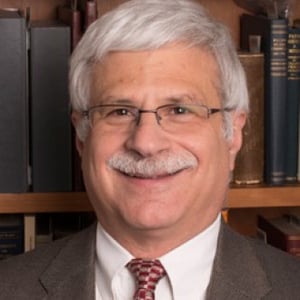
Professor of Law, Catholic University of America
Robert Destro served as Assistant Secretary for the Bureau of Democracy, Human Rights, and Labor (DRL). He has a long history as a human rights advocate and civil rights attorney with expertise in elections, employment, and constitutional law. Destro has served on the faculty at Catholic University’s Columbus School of Law since 1982 and served as its interim dean from 1999 to 2001. He was founding director of the Interdisciplinary Program in Law and Religion and served as the Director of the Institute for Policy Research and Catholic Studies from June 2017 to September 2019. He served as a commissioner on the U.S. Commission on Civil Rights from 1983-1989. His legal work includes collaboration with the Peace Research Institute Oslo in a fifteen-year dialogue among Muslim, Christian, and Jewish leaders in the legal, business, and religious fields in the United States and the Middle East as well as efforts promoting the release of political prisoners and prisoners of conscience in the Middle East. He has served as voting rights counsel for the Ohio Secretary of State and has advocated for the first amendment rights of individuals and organizations.
He earned a B.A. from Miami University, Ohio, and a J.D. from the University of California at Berkeley. He is an active member of the Bar in Ohio and California.
The rest of his bio including his publications are available on the Catholic University Faculty page linked here.
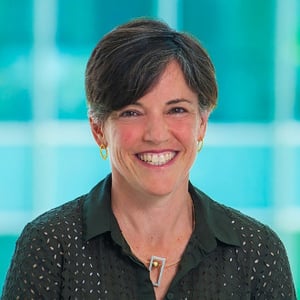
Professor of Law and Director of the Program on Environmental and Energy Law, American University Washington College of Law
Professor Leiter is a Professor of Law and the Director of the Program on Environmental and Energy Law at American University's Washington College of Law. She teaches environmental law, administrative law, and torts, and her research interests include administrative law and process, and domestic environmental law and policy. From August 2015 – January 2017, Leiter served as a Deputy Assistant Secretary for Land and Minerals at the U.S. Department of the Interior, advancing Department priorities related to oil and gas and renewable energy development on public lands both on- and offshore. Before joining the WCL faculty in the fall of 2011, Professor Leiter was an associate professor at Catholic University’s Columbus School of Law. Prior to that, she was a Beagle/HLS fellow at the Natural Resources Defense Council, where she developed and pursued federal appeals court challenges to EPA rules governing industrial air pollution.
Professor Leiter clerked for Judge Nancy Gertner of the Federal District Court for the District of Massachusetts; for Judge David Tatel of the U.S. Court of Appeals for the D.C. Circuit; and for Supreme Court Justice John Paul Stevens. She is admitted to practice before the District of Columbia, the States of Colorado and Massachusetts, and the U.S. Supreme Court.
President, Becket Fund for Religious Liberty; Professor of Law and Co-Director of the Center for Religious Liberty, Catholic University; Visiting Professor, Harvard Law School
Mark joined the Becket team in 2011 and splits his time as Associate Professor at The Catholic University of America, Columbus School of Law, and as Visiting Professor at Harvard Law School. Mark teaches constitutional law, religious liberty, torts, and evidence. He has been voted Teacher of the Year three years in a row by the Law School’s Student Bar Association.
Mark has broad experience litigating First Amendment religious exercise and free speech cases. He has represented the winning parties in a variety of Supreme Court First Amendment cases including Hobby Lobby, Little Sisters, Wheaton College, and Holt. In January 2014, Mark argued before the Supreme Court in McCullen v. Coakley, a First Amendment challenge to a Massachusetts speech restriction outside of abortion clinics. The Justices ruled in favor of his clients 9-0. Mark also led a successful eight-year litigation battle against Governor Blagojevich’s effort to force religious pharmacists to distribute the morning-after and week-after pills.
Mark’s academic writing focuses on the First and Fourteenth Amendments, and has appeared in a variety of prestigious journals, including the Harvard Law Review.
Mark is a widely sought after speaker on constitutional issues, particularly concerning abortion and the First Amendment. Professor Rienzi has been invited to discuss these issues at Harvard Law School, Columbia University Law School, Georgetown University Law Center, Boston College Law School, Notre Dame Law School, the National Press Club, and the Capitol. He has been quoted on constitutional law issues on NPR, in the Washington Times, The New York Daily News, and the Chicago Sun-Times. Mark has also been featured on the Kelly File, Fox News Sunday, Your World with Neil Cavuto, Geraldo at Large, CNN Tonight, CNN Live, Andrea Mitchell Reports, and Wall Street Journal Live.
Prior to joining Becket, Mark served as counsel for the litigation department and the intellectual property litigation practice group of WilmerHale LLP. His practice focused on complex civil and appellate litigation with a particular emphasis on intellectual property and First Amendment issues. Prior to joining WilmerHale, he served as law clerk to the Hon. Stephen F. Williams, senior circuit judge for the U.S. Court of Appeals for the D.C. Circuit. Prior to that, Mark was an editor of the Harvard Law Review, and earned his J.D. from Harvard Law School and B.A. from Princeton University, both with honors.

“Conscience Exemptions”
Lynn Wardle
Note from the Editor: This paper discusses the meaning, history, and present application of conscience...
Which Religious Organizations Count as Religious? The Religious Employer Exemption of the Health Insurance Law's Contraceptives Mandate
Stanley Carlson-Thies
On August 1, 2011, the Health Resources and Service Administration issued guidelines specifying that, among...
Veiled Meaning: Tolerance and Prohibition of the Hijab in the U.S. and France
Elizabeth K. Dorminey
Introduction France and the U.S. have much in common. Both nations share a commitment to...
The Ohio Constitution of 1803, Jefferson's Danbury Letter, and Religion in Education
David W. Scott
That all men have a natural and indefeasible right to worship Almighty God according to...
The Constitution and the Impact of the Health Insurance Contraception Mandate on the Catholic Church
A Religious Organization's Autonomy in Matters of Self-Governance: Hosanna-Tabor and the First Amendment
In the second week of January, the U.S. Supreme Court handed down its unanimous decision...
Obamacare
Does Neutrality Equal Secularism? The European Court of Human Rights Decides Lautsi v. Italy
William L. Saunders
Introduction Religion can be an intensely personal activity. However, the idea that religion is only...
Snyder v. Phelps Supreme Court Moot
Update: Overview of the White House Office on Faith-Based and Neighborhood Partnerships and the Council on Faith-Based and Neighborhood Partnerships
Brought to you by the Religious Liberties Practice GroupThe Federalist Society takes no position on particular...