
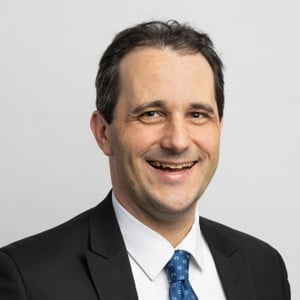
Director, Center for Judicial Engagement, Institute for Justice
Anthony Sanders is the Director of the Center for Judicial Engagement (CJE) at the Institute for Justice and a senior attorney. He joined IJ in 2010. As CJE’s director, he educates the public about the proper role of judges in enforcing constitutional limits on the size and scope of government. As a senior attorney he litigates cutting-edge constitutional cases protecting economic liberty, private property, freedom of speech and other individual liberties in both federal and state courts across the country.
One area of Anthony’s expertise is on using state constitutions to protect individual rights. He is the author of the book, published by University of Michigan Press, Baby Ninth Amendments: How Americans Embraced Unenumerated Rights and Why It Matters. He has also written several law review articles on state constitutional law, unenumerated rights, judicial review, economic liberty, property rights, international law, and other subjects. His work has appeared in publications such as the Iowa Law Review, Minnesota Law Review, American University Law Review, and Rutgers Law Review, and he has published opinion pieces in leading media outlets across the country. Further, he frequently speaks to various audiences on these matters and others, including judicial engagement, free speech, civil forfeiture, and the continuing importance of Magna Carta. Additionally, he hosts the weekly Short Circuit podcast, which often records live in front of law student audiences.
Anthony has litigated several cases in various state courts on state constitutional protections, as well as in federal courts on matters such as economic liberty, free speech, administrative law, and fines and fees abuse. Prior to joining IJ, Anthony served as a law clerk to Justice W. William Leaphart on the Montana Supreme Court. Anthony also worked for several years in private practice in Chicago where he was an active member of the Chicago Bar Association and chaired its Civil Rights Committee.
Anthony received his law degree cum laude from the University of Minnesota Law School in 2004, where he served as an articles submission editor for the Minnesota Law Review. He received his undergraduate degree from Hamline University in St. Paul, Minnesota, and his master’s degree from the University of Wisconsin-Madison. A dual U.S. and U.K. citizen, Anthony grew up on the islands of Vashon in Washington State, and Alderney in the British Channel Islands.

Attorney, Institute for Justice
Anya Bidwell (née Cherkasova) leads IJ’s Project on Immunity and Accountability (“PIA”). Through this project, Anya works to promote judicial engagement and ensure that government officials are held to account when they violate individuals’ constitutional rights. Anya also serves as an adviser on the American Law Institute’s Restatement of the Law, Constitutional Torts project.
One of Anya’s PIA cases—Gonzalez v. Trevino—was heard by the United States Supreme Court on March 20, 2024. She argued the case for the petitioner, with the goal of convincing the Justices that retaliatory arrests not involving on-the-spot decisions by police officers should be actionable under the First Amendment regardless of probable cause. The decision is expected in June.
This was Anya’s third appearance before the U.S. Supreme Court. She second-chaired Brownback v. King (an excessive force case) and Tennessee Wine & Spirits Retailers Association v. Thomas (a commerce clause case) in November 2020 and January 2019 respectfully.
Before joining IJ, Anya worked for a top national law firm, handling cases in trial and appellate courts. She earned her J.D. with honors from the University of Texas. Two years prior to entering law school, Anya received a master’s degree in Global Policy Studies, also from the University of Texas, and wrote a thesis on asymmetric warfare.
Anya spent her childhood in Ukraine and Kyrgyzstan. At 16, she left her family behind and came to America on a university scholarship. Her upbringing motivated her to study law and become an advocate for a strong, independent judiciary.
Anya’s work has been featured in numerous publications, including the Washington Post, the Wall Street Journal, the New York Times, USA Today, and the Guardian. She is also the host of live recordings of our Short Circuit podcast and a co-producer of our documentary-style podcast Bound by Oath.
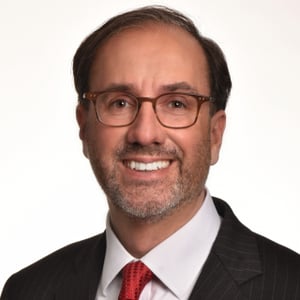
President and CEO, The Buckeye Institute
Robert Alt is the President and Chief Executive Officer of The Buckeye Institute where he has catalyzed exponential growth since he took the organization’s helm in 2012. He has since founded Buckeye’s renowned Economic Research Center and established its impactful Legal Center.
Alt is a distinguished scholar and attorney with particular expertise in legal policy, criminal justice, national security, and constitutional law. He previously worked for former U.S. Attorney General Edwin Meese III, regularly provides commentary on television and radio programs, and his writings have appeared in countless outlets.
In 2004, Alt spent five months in Iraq as an embedded war correspondent.
Alt has testified before Congress multiple times—including at the confirmation hearings for U.S. Supreme Court Justice Elena Kagan—the Federal Election Commission regarding matters of constitutional and administrative law, and numerous state legislatures.
Alt serves as an officer on the boards of The Philadelphia Society and the Federalist Society’s Columbus Lawyers Chapter. He taught national security law, criminal law, and legislation at Case Western Reserve University School of Law, as well as constitutional law and political parties and interest groups at Ashland University.
Alt earned his Doctor of Law degree from The University of Chicago Law School, where he was Symposium Editor and the winner of the Mulroy Prize for Excellence in Appellate Advocacy as well as research assistant to Professor Richard Epstein. Following law school, he clerked for Judge Alice Batchelder on the U.S. Court of Appeals for the Sixth Circuit. Alt graduated with his Bachelor of Arts in philosophy and political science magna cum laude from Azusa Pacific University where he also won the Outstanding Senior Award in Political Science.
Alt is an accomplished high-altitude alpinist and endurance athlete who has successfully climbed 6.75 of the famed Seven Summits of the World including Mount Everest. He is the creator of PROFOUND CLIMBING™ and a frequent speaker across the country and around the world on legal and public policy topics as well as effective leadership, management, decision-making, and teamwork in contexts ranging from extraordinary life/death situations to ordinary professional/business settings.
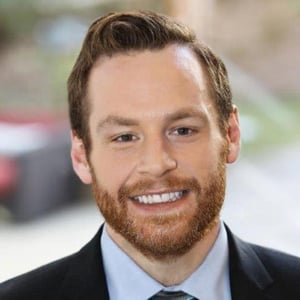
Deputy Director - Center for Effective Public Management; Senior Fellow - Governance Studies, The Brookings Institution
John Hudak is deputy director of the Center for Effective Public Management and a senior fellow in Governance Studies. His research examines questions of presidential power in the contexts of administration, personnel, and public policy. Additionally, he focuses on campaigns and elections, legislative-executive interaction, and state and federal marijuana policy.
John’s 2016 book, Marijuana: A Short History, offers a unique, up-to-date profile of how cannabis emerged from the shadows of counterculture and illegality to become a serious, even mainstream, public policy issue and source of legal revenue for both businesses and governments. In it, he describes why attitudes and policy have changed, and what those changes mean for marijuana's future place in society.
His 2014 Presidential Pork: White House Influence over the Distribution of Federal Grants demonstrates that pork-barrel politics occurs beyond the halls of Congress. Presidents capitalize on their discretionary funding authority to target federal dollars to swing states in advance of presidential elections. His other work explores how agency staffing, expertise, and institutional structure facilitate or hinder presidential power and influence. This research explores the balance between political control and bureaucratic expertise in the delivery of public policy.
John’s work has been recognized for its quality and contribution by the Midwest Political Science Association and the American Political Science Association’s Presidency Research Group. His work has been supported by institutions including the National Science Foundation.
Prior to joining Brookings, John served as the program director and as a graduate fellow at the Center for the Study of Democratic Institutions. He holds a B.A. in political science and economics from the University of Connecticut and an M.A. and Ph.D. in political science from Vanderbilt University.
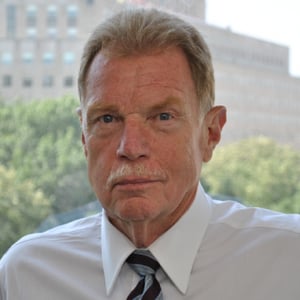
Senior Fellow, Hudson Institute
David W. Murray is a Senior Fellow at Hudson Institute where he co-directs the Center for Substance Abuse Policy Research. While serving previous posts as Chief Scientist and Associate Deputy Director (Supply Reduction) in the federal government’s Office of National Drug Control Policy, Murray directed extensive scientific research on all aspects of the drug problem and helped coordinate high-level inter-agency efforts to limit the production of illicit drugs and counter the transnational criminal organizations that control their global shipment and marketing.
Before entering government, Murray was executive director of the Statistical Assessment Service and held academic appointments at Connecticut College and Brown, Brandeis, and Georgetown Universities. He is the author of numerous scholarly papers, essays, and commentaries; co-author (with Joel Schwartz and S. Robert Lichter) of the widely-noted book It Ain’t Necessarily So: How Media Make and Unmake the Scientific Picture of Reality; and a frequent guest on major network television and radio programs.
Murray holds an M.A. and Ph.D. in social anthropology from the University of Chicago.

Smell of Marijuana Alone Can Justify an Arrest, Even After Legalization of Hemp, Says Wisconsin Supreme Court
Anthony Sanders
In State v. Moore,[1] decided on June 20, 2023, the Wisconsin Supreme Court faced a...
State Court Docket Watch: Commonwealth v. Barr
Anya Bidwell
For decades, the plain smell doctrine allowed law enforcement to use the smell of marijuana,...
Criminal Justice Reform: A Survey of 2018 State Laws
Robert Alt
State legislatures across the country made significant strides in reforming their criminal justice regimes throughout...
Should DEA Remove Cannabis from Schedule I? [POLICYbrief]
John Hudak, David W. Murray
The Drug Enforcement Agency lists cannabis as a Schedule I substance, meaning it has no...