
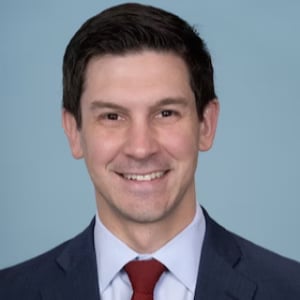
General Counsel, U.S. Commodity Futures Trading Commissioin
Tyler Badgley is the General Counsel at the Commodity Futures Trading Commission. In that role, Mr. Badgley leads the agency’s Legal Division and serves as the Commission’s chief legal advisor. He was appointed General Counsel in January 2026.
Prior to joining the CFTC, Mr. Badgley served as the Deputy General Counsel at the U.S. Department of the Treasury and was the first Executive Secretary under Secretary Scott K.H. Bessent. Mr. Badgley was previously a Senior Counsel at the U.S. Chamber Litigation Center, the litigation arm of the U.S. Chamber of Commerce. There, he focused on complex litigation and regulatory issues, particularly in connection with capital markets.
Mr. Badgley also practiced law at Sullivan & Cromwell LLP, served as a Special Counsel to the U.S. Senate Committee on the Judiciary, and began his legal career as a law clerk for the Honorable Edith H. Jones of the U.S. Court of Appeals for the Fifth Circuit. Mr. Badgley graduated Order of the Coif from the University of Virginia School of Law, where he served as Articles Editor for the Virginia Law Review. He also received his undergraduate degree in Economics and Government from the University of Virginia.

Partner, Lewis Brisbois
Sarah E. Lang is a partner in the New York office of Lewis Brisbois and a member of the Appellate Practice. Ms. Lang has represented clients at all levels of state and federal courts, including the New York State Appellate Division, the Second Circuit Court of Appeals, and the U.S. Supreme Court. The primary focus of her practice is drafting and arguing substantive motions and appeals before the federal courts and New York’s trial and appellate courts in substantive areas including general liability, New York Labor Law, medical malpractice, premises liability, and rideshare and transportation matters, among others. She also has extensive experience representing clients, including religious institutions, in matters arising under Title VII, the First Amendment, RLUIPA, New York’s City and State Human Rights Laws, New York’s Religious Corporations Law, and New York’s Real Property Tax Law. This includes federal jury trial experience and providing preventive advice and counseling. Prior to joining the firm, Ms. Lang clerked on the United States Court of Appeals for the Eighth Circuit, as well as the United States District Court for the Eastern District of North Carolina. She also previously served as an Attorney Advisor for the United States Department of Education.

President, Harned Strategies LLC
Karen Harned is President at Harned Strategies LLC. Previously, she served as Executive Director of the National Federation of Independent Business Small Business Legal Center, a post she held from 2002-2022. Prior to joining the Legal Center, Ms. Harned was an attorney at a Washington, D.C. law firm specializing in food and drug law, where she represented several small and large businesses and their respective trade associations before Congress and federal agencies. She also served as Assistant Press Secretary to U.S. Senator Don Nickles of Oklahoma from August of 1989 to March of 1993. Ms. Harned received her B.A. from the University of Oklahoma in 1989 and her J.D. from The George Washington University National Law Center in 1995. She is admitted to practice in the District of Columbia.
As Executive Director of the NFIB Small Business Legal Center, Ms. Harned commented regularly on small business cases before federal and state courts, as well as the U.S. Supreme Court. She has appeared on Fox News, Fox Business, NBC Nightly News, CNN, CNBC and MSNBC, as well as National Public Radio, CBS Radio, and radio outlets across the country. Her opinion editorials and articles regarding healthcare, lawsuit abuse, regulation, and other issues important to small business have been published in newspapers and other publications nationwide.
Ms. Harned has testified before Congress on the small business impact of regulation and the civil justice system. Additionally, she has conducted numerous webinars and legal compliance seminars for small business owners across the country on issues relating to employment law, including unionization and immigration.

President, Center for Constitutional Litigation
Robert S. Peck, founder and president of CCL, is a sought-after appellate litigator within the plaintiffs’ bar. He is credited with having developed groundbreaking constitutional challenges to laws impeding access to courts. He regularly appears before the U.S. Supreme Court and state supreme courts, litigating cases on the merits as well as at the petition stage. Bob’s diverse practice includes state and federal constitutional law, complex civil litigation, federal preemption, personal jurisdiction, punitive damages, products liability, mass torts, consumer protection, and Section 1983 cases.
Bob has taught advanced constitutional law and state constitutional law at The George Washington University Law School and American University Washington College of Law as a member of the adjunct faculty. He is a past chair of the Board of Advisors of the RAND Corporation’s Institute for Civil Justice; past member of the Board of Directors of the National Center for State Courts; a member of the advisory committee of the Civil Justice Research Institute at the University of California, Berkeley; and a Leaders Forum member of the American Association for Justice. Bob is a past president of the U.S. Supreme Court Fellows Alumni Association and the Freedom to Read Foundation, and a past national chair of Lawyers for Libraries. He has received the prestigious AV Preeminent rating from Martindale Hubbell for both legal ability and ethical standards.

Of Counsel, Kellogg Hansen
Collin White litigates high-stakes cases in trial and appellate courts across the country. Since he joined the firm in 2015, he has represented clients from a wide range of industries in cases about antitrust, intellectual property, securities, telecommunications, and administrative and constitutional law. He also advises clients on antitrust and regulatory matters.
Collin regularly represents both plaintiffs and defendants in antitrust cases. He has represented plaintiffs in a conspiracy case about software for auto dealers, In re Dealer Management Systems Antitrust Litig., MDL No. 2817 (N.D. Ill.), and a landmark monopolization case about spot cable advertising, Viamedia Inc. v. Comcast Corp., No. 16-cv-05486 (N.D. Ill.). He has represented defendants in the Supreme Court’s leading modern Rule of Reason decision, Ohio v. American Express Co., 138 S. Ct. 2274 (2018); a price-discrimination case about a well-known energy shot, U.S. Wholesale Outlet & Distribution, Inc. v. Innovation Ventures, LLC, 89 F.4th 1126 (9th Cir. 2023) (cert. petition filed Apr. 12, 2024); the FTC’s attempt to block Meta’s acquisition of Within, a virtual reality application developer, FTC v. Meta Platforms Inc., No. No. 5:22-cv-04325-EJD (N.D. Cal.); and the FTC’s ongoing monopolization action in FTC v. Meta Platforms, Inc., No. 20-3590 (D.D.C.).
Collin also regularly represents clients in appeals. For example, he has helped secure victories for telecommunications clients (in Greenlining Institute v. FCC, No. 17-73283 (9th Cir. 2020), and Bellsouth Telecommunications LLC v. Cobb County, No. S17G2011 (Ga. 2019)); a software company (in Intellisoft, Ltd. v. Acer Am. Corp., 955 F.3d 927 (Fed. Cir. 2020)); and an individual injured by a medical device (in In re Bard IVC Filters Products Liability Litigation, 969 F.3d 1067 (9th Cir. 2020)).

Tazewell Taylor Professor of Law and William H. Cabell Research Professor, William & Mary Law School
Jonathan H. Adler joined the William & Mary law faculty as the Tazwell Taylor Professor of Law and William H. Cabell Research Professor in 2025. Prior to joining the faculty, he was the inaugural Johan Verheij Memorial Professor of Law and the founding Director of the Coleman P. Burke Center for Environmental Law at the Case Western Reserve University School of Law.
Professor Adler is the author or editor of seven books, including Climate Liberalism: Perspectives on Liberty, Property and Pollution (Palgrave, 2023), Marijuana Federalism: Uncle Sam and Mary Jane (Brookings Institution Press, 2020), Business and the Roberts Court (Oxford University Press, 2016) and Rebuilding the Ark: New Perspectives on Endangered Species Act Reform (AEI Press, 2011).
His articles have appeared in publications ranging from the Harvard Environmental Law Review and Yale Journal on Regulation to the Wall Street Journal, New York Times, and Washington Post. He has testified before Congress a dozen times, and his work has been cited in the U.S. Supreme Court. A 2024 study identified Professor Adler as the seventh most cited legal academic in administrative and environmental law from 2019 to 2023.
Professor Adler is a contributing editor to Civitas Outlook and a regular contributor to the popular legal blog, The Volokh Conspiracy. A regular commentator on constitutional and regulatory issues, he has appeared on numerous radio and television programs, ranging from the PBS Newshour and National Public Radio to the Fox News Channel and Entertainment Tonight.
Professor Adler is a senior fellow at the Property & Environment Research Center in Bozeman, Montana. In 2018, Professor Adler was elected to membership in the American Law Institute and helped co-found the organization Checks and Balances. In 2024, Professor Adler was appointed a public member of the Administrative Conference of the United States.
Professor Adler clerked for the Honorable David B. Sentelle on the U.S. Court of Appeals for the District of Columbia Circuit.

Chairman of the Securities and Exchange Commission
Paul S. Atkins was sworn into office as the 34th Chairman of the Securities and Exchange Commission on April 21, 2025, after being nominated by President Donald J. Trump on January 20, 2025, and confirmed by the U.S. Senate on April 9, 2025.
Prior to returning to the SEC, Chairman Atkins was most recently chief executive of Patomak Global Partners, a company he founded in 2009. Chairman Atkins helped lead efforts to develop best practices for the digital asset sector. He served as an independent director and non-executive chairman of the board of BATS Global Markets, Inc. from 2012 to 2015.
Chairman Atkins was appointed by President George W. Bush to serve as a Commissioner of the SEC from 2002 to 2008. During his tenure, he advocated for transparency, consistency, and the use of cost-benefit analysis at the agency. Chairman Atkins also represented the SEC at meetings of the President’s Working Group on Financial Markets and the U.S.-EU Transatlantic Economic Council. From 2009 to 2010, he was appointed a member of the Congressional Oversight Panel for the Troubled Asset Relief Program.
Before serving as an SEC Commissioner, Chairman Atkins was a consultant on securities and investment management industry matters, especially regarding issues of strategy, regulatory compliance, risk management, new product development, and organizational control.
From 1990 to 1994, Chairman Atkins served on the staff of two chairmen of the SEC, Richard C. Breeden and Arthur Levitt, ultimately as chief of staff and counselor, respectively. He received the SEC’s 1992 Law and Policy Award for work regarding corporate governance matters.
Chairman Atkins began his career as a lawyer in New York, focusing on a wide range of corporate transactions for U.S. and foreign clients, including public and private securities offerings and mergers and acquisitions. He was resident for 2½ years in his firm's Paris office and admitted as conseil juridique in France.
A member of the New York and Florida bars, Chairman Atkins received his J.D. from Vanderbilt University School of Law in 1983 and was Senior Student Writing Editor of the Vanderbilt Law Review. He received his A.B., Phi Beta Kappa, from Wofford College in 1980.
Originally from Lillington, North Carolina, Chairman Atkins grew up in Tampa, Florida. He and his wife Sarah have three sons.
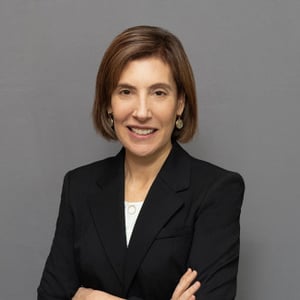
Partner, Williams & Connolly
Lisa Blatt serves as Chair of Williams & Connolly’s Supreme Court and Appellate practice. Lisa has argued 53 cases before the United States Supreme Court, prevailing in 86% of them. The National Law Journal has called her a "visionary" and one of "the 100 most influential lawyers in America." Bloomberg has described her as a "legendary high court litigator" while The National Journal likewise has referred to her as a "SCOTUS legend." In 2021, The American Lawyer recognized Lisa as the "Litigator of the Year." Lisa’s appellate work has been highlighted by multiple publications and has earned her rankings in Chambers USA, Benchmark Litigation, The Legal 500, and Washingtonian magazine. Lisa was selected as one of the “Top 10 Women in Litigation” in the United States by Benchmark Litigation in 2020 and 2021. Managing IP named her the 2021 “Practitioner of the Year (Appellate)” for her work as lead counsel to Booking.com before the Supreme Court. In 2021, Chambers USA reported that clients describe Lisa as “one of the best advocates today. She is extremely strong on her feet, connects with judges and has an unmatched win record,” and her “command of the case law and the way she presents is a work of art.”
Lisa has argued and briefed numerous appeals on a wide range of business law issues in federal and state courts of appeal. The American Lawyer Litigation Daily has twice named her "Litigator of the Week" – for her work in Price v. Philip Morris, Inc. in overturning reinstatement of a $10 billion verdict against client Philip Morris in a "light" cigarette case, and in SmithKline Beecham Corp. v. Abbott Laboratories, a landmark case on behalf of GlaxoSmithKline finding that the Equal Protection Clause bars peremptory challenges of jurors based on sexual orientation. Lisa also represented Marvin Gaye’s heirs in their copyright dispute over the hit songs “Got To Give It Up” and “Blurred Lines,” and the Washington Redskins football team in its dispute with the U.S. Patent and Trademark Office over the team's trademarks.
Lisa has substantial experience with trademark law and the pharmaceutical industry. Her Supreme Court cases also have addressed a broad range of issues, involving First Amendment, arbitration, antitrust, civil procedure, preemption, employment and ERISA, and bankruptcy.
Lisa began her career at Williams & Connolly as an associate before joining the general counsel’s office at the Department of Energy, followed by thirteen years in the Office of the Solicitor General.
Lisa received her J.D. summa cum laude from the University of Texas School of Law before clerking for The Honorable Ruth Bader Ginsburg on the U.S. Court of Appeals for the District of Columbia Circuit.
Lisa assists the U.S. Chamber of Commerce in selecting cases for amicus participation, and is on the Advisory Boards for Georgetown University Law Center's Supreme Court Institute and the Washington Legal Foundation. She also teaches at Georgetown University’s Law Center.

Supreme Court & Appellate Litigation Chair, Lex Politica; Of Counsel, Alliance Defending Freedom
Erin Morrow Hawley serves as Chair of Lex Politica's Supreme Court and Appellate Practice overseeing the firm’s strategic appellate litigation and critical motions practice in the trial courts. Erin is an experienced litigator who represents clients in constitutional, regulatory, and appellate matters in federal and state courts throughout the country.
Erin has represented dozens of clients before the Supreme Court of the United States, served as lead counsel in high-profile cases raising novel constitutional and statutory issues, and authored numerous successful petitions for certiorari and briefs in opposition. She has argued in state and federal appellate and trial courts throughout the country, including the Supreme Court of the United States. Erin represents diverse clients in high-stakes litigation from state governments to faith-based nonprofits to Fortune 100 companies. She possesses expertise on a wide range of subject matters including administrative law, the First Amendment, religious liberty, federal jurisdiction, federal preemption, equitable jurisdiction, tax law, the Affordable Care Act, and Title IX.
Erin represents clients in cases where public communications strategy is paramount. She is a sought-after speaker and writer, has testified multiple times before Congress, and is a frequent presenter on constitutional and administrative law issues, including at the Oxford Union, the National Federalist Society Convention, and university campuses across the country. She is a frequent commentator to media outlets, including Fox News, MSNBC, the Wall Street Journal, WORLD, USA Today, the Federalist, and the Hill.
Erin previously oversaw Alliance Defending Freedom’s--where she still serves as Of Counsel--litigation strategies to empower women and protect the dignity of life, defend pregnancy centers’ First Amendment rights from government overreach, and safeguard Americans’ freedoms from the ever-encroaching administrative state.

Editor, SCOTUSblog
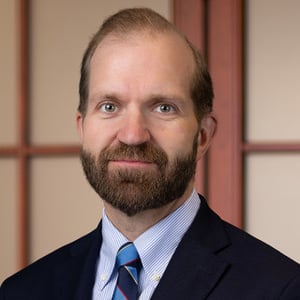
Partner, McGuireWoods
John Moran is a member of the firm’s nationally recognized Government Investigations and White Collar Litigation department. A former senior official at the U.S. Department of Justice (DOJ) and the White House and an experienced litigator and counselor, John draws on his broad experience from private practice and government service to advise and represent clients in government enforcement, congressional investigations, high-stakes civil disputes, and regulatory litigation. He also serves as co-chair of the firm’s Congressional Investigations practice, representing both companies and individuals in congressional investigations and hearings and is a member of the firm’s Appeals & Issues group.

Chief Legal Officer, Paradigm

Chief Legal Officer, Coinbase
Paul Grewal is the Chief Legal Officer of Coinbase Global, Inc., where he is responsible for Coinbase’s legal, compliance, global intelligence and government relations groups. Before joining Coinbase, Paul was Vice President and Deputy General Counsel at Facebook and served as United States Magistrate Judge for the United States District Court for the Northern District of California. Paul was previously a partner at Howrey LLP . He received his JD from the University of Chicago Law School and his SB from MIT.

Partner, Gibson, Dunn & Crutcher, LLP
Svetlana S. Gans is a partner in the Washington, D.C. office of Gibson, Dunn & Crutcher, LLP where she helps clients navigate complex consumer protection, privacy, and competition related regulatory proceedings before the U.S. Federal Trade Commission (FTC), , U.S. Department of Justice Antitrust Division, State Attorneys General and other enforcement bodies. Ms. Gans also assists on litigation matters and provides strategic counseling and advice related to public policy issues.
Before joining Gibson Dunn, she served as the Vice President & Associate General Counsel at NCTA, the Internet & Television Association, where she helped lead the association’s consumer protection and competition policy work. Prior to joining NCTA, Ms. Gans served with distinction as Chief of Staff to Acting Chairman Maureen K. Ohlhausen at the FTC. As the agency chief of staff, Ms. Gans managed and oversaw agency operations, including bureau and office heads reporting to the Chairman, a seven-member office staff, and an agency budget of over $300 million. She also served as the Acting Chairman’s key advisor on consumer protection and competition investigations and litigation, working with a diverse team of attorneys and economists to preserve competition and protect U.S. consumers. She created, executed, and oversaw several strategic initiatives for the agency, including the agency process reform, regulatory reform, and data security transparency initiatives. Previously, Ms. Gans had the unique experience of serving in both litigating bureaus of the FTC: the Bureau of Competition and the Bureau of Consumer Protection.
Prior to her time in government, Ms. Gans worked as an antitrust associate at major law firms. Her practice focused on defending consumer product, financial services, and trade association clients in regulatory and private investigations alleging conspiracy and violations of antitrust and consumer protection laws.
Ms. Gans has been an active leader in the ABA Antitrust Law Section (“Section”) for two decades, and currently serves as the Section’s Marketing Officer. Ms. Gans helped create the Section’s Young Lawyer Representative Program, now in its 10th year, and the Section’s Law Ambassador Program, each aimed at developing and promoting the next generation of consumer protection and competition attorneys. Ms. Gans is also active in the Federal Communications Bar Association, currently serving as Co-Chair of the Diversity Pipeline Initiative and the Women’s Leadership Committee.
Ms. Gans received her law degree with high honors from the University of Denver College of Law. During law school, Ms. Gans served as a Judicial Intern to the Honorable John L. Kane, Jr. and as an Honors Program Paralegal for the United States Department of Justice Antitrust Division, Merger Taskforce. Ms. Gans earned her undergraduate degree cum laude from Boston University.

Elizabeth and Thomas Holder Chair, Scheller College of Business, Georgia Institute of Technology
Peter Swire has been a leading privacy and cyberlaw scholar, government leader, and practitioner since the rise of the Internet in the 1990’s. He came to the Georgia Institute of Technology in 2013, where he is the Elizabeth and Tommy Holder Chair in the Scheller College of Business, and Professor in the School of Cybersecurity and Privacy. He is senior counsel with the law firm of Alston & Bird LLP.
Swire served as one of five members of President Obama’s Review Group on Intelligence and Communications Technology. Prior to that, he was co-chair of the global Do Not Track process for the World Wide Web Consortium. He is a Senior Fellow with the Future of Privacy Forum, and has served on the National Academy of Sciences & Engineering Forum on Cyber Resilience.
Under President Clinton, Swire was the Chief Counselor for Privacy, in the U.S. Office of Management and Budget, the first person to have U.S. government-wide responsibility for privacy policy. Under President Obama, he was Special Assistant to the President for Economic Policy.
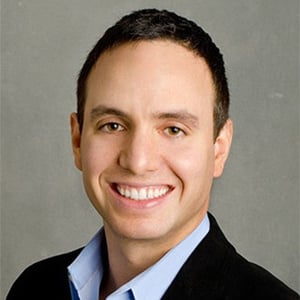
Professor of Economics, Stuart School of Business, Illinois Institute of Technology
Liad Wagman is Professor of Economics at the Illinois Institute of Technology’s Stuart School of Business.
Professor Wagman works on topics in the areas of Information Economics, Industrial Organization, Law and Economics, and Entrepreneurship, studying issues of data and privacy, information trade and utilization, and new venture financing. He is a recipient of the Sigma Xi Excellence in Research Award, the Bauer Family University Excellence in Teaching Award, the Yahoo Faculty Research and Engagement Award, and has been selected into Poet & Quants 2015 Top 40 Business School Faculty Under 40.
Professor Wagman is the Senior Economic and Technology Advisor of the Federal Trade Commission’s Office of Policy Planning, and was a Visiting Associate Professor of Executive Education and Managerial Economics & Decision Sciences at Northwestern University’s Kellogg School of Management, a Visiting Scholar at the Duke University Economics Department, a research fellow at the Duke University Computer Science Department, a research fellow at the Duke University Social Sciences Research Institute, a recipient of the Program for Advanced Study in the Social Sciences Fellowship, a recipient of the Education and Research Initiative Award, a recipient of the Institute of Industrial and Systems Engineers Best Paper Award, and a recipient of the International Conference on Artificial Intelligence Outstanding Paper Award.
Professor Wagman’s work is published in academic journals in economics, finance, operations research, and marketing, including the RAND Journal of Economics, the American Economic Journal: Microeconomics, the Journal of Corporate Finance, and Marketing Science.
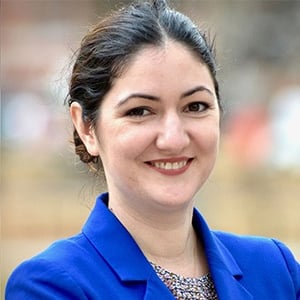
Senior Counsel, Future of Privacy Forum
Dr. Gabriela Zanfir-Fortuna is Senior Counsel for the Future of Privacy Forum, where she leads the work on Global privacy developments and European data protection law and policy, with their impact on all focus areas of FPF, including de-identification, AI, mobility, adtech and education.
Prior to moving to the US in 2016, Gabriela worked for the European Data Protection Supervisor in Brussels, being part of the team that advised the EU legislator on the GDPR during its legislative process. She dealt with both enforcement and policy matters, was a member of the EDPS litigation team, as well as actively participated in the work of the Article 29 Working Party. She worked on the assessments of both the draft EU-US Privacy Shield and the draft EU-US Umbrella Agreement during her time at the EDPS and the Article 29 Working Party.
Gabriela is currently serving as a Program Chair (Law) for the ACM Fairness, Accountability and Transparency Conference 2020 and she served as a member of the Program Advisory Committee for the ICDPPC 2019 Conference in Tirana. She is also a member of the Program Committee of PLSC Europe, CPDP – academic track, ACM – AIES 2020 and the ENISA Annual Privacy Forum.
She holds a PhD in law (2013, University of Craiova) with a thesis on the rights of the data subject from the perspective of their adjudication in civil law and an LLM in Human Rights (2010), after obtaining her law degree at the same university (2009). She is also an associated researcher with the Law, Science, Technology and Society Center at Vrije Universiteit Brussel and a Project Scientist supporting the IoT Privacy Infrastructure Project within the Institute for Software Research of Carnegie Mellon University.
Gabriela is a contributor-author to ‘The EU General Data Protection Regulation – A Commentary‘, edited by C. Kuner, C. Docksey and L.A. Bygrave, Oxford University Press, 2020 (on Articles 13, 14, 15, 21 and 82). She is also the author of the volume ‘Protecția Datelor Personale. Drepturile Persoanei Vizate‘, C.H. Beck, Bucharest, 2015.

Laurence A. Tisch Professor of Law and Director, Classical Liberal Institute, New York University School of Law; Senior Fellow, The Civitas Institute, University of Texas at Austin
Richard A. Epstein is the inaugural Laurence A. Tisch Professor of Law at NYU School of Law. Prior to his joining the faculty, he was a visiting law professor at NYU from 2007 through 2009. He served as the Peter and Kirstin Bedford Senior Fellow at the Hoover Institution from 2000 to 2024. Since 2024 to the present he is a senior lecturer at the Civitas Institute at the University of Texas—Austin. Epstein is also the James Parker Hall Distinguished Service Professor of Law Emeritus and a senior lecturer at the University of Chicago. His initial law school appointment was at the University of Southern California from 1968 to 1972. Epstein received an LL.D., h.c. from the University of Ghent, 2003. He has been a member of the American Academy of Arts and Sciences since 1985 and was a Senior Fellow of the Center for Clinical Medical Ethics at the University of Chicago Division of Biological Sciences, also from 1983. to 2022 He served as editor of the Journal of Legal Studies from 1981 to 1991, and of the Journal of Law and Economics from 1991-2001. From 2001 to 2010 he was a director of the John M. Olin Program in Law and Economics at the University of Chicago.
His newest book, The Myth of Birthright Citizenship: What the Fourteenth Amendment Really Says was published in 2026 (Encounter Books). Prior to that he has published many books including, The Dubious Morality of the Modern Administrative State (Roman & Littlefield 2020).Earlier he published th Classical Liberal Constitution: The Uncertain Quest for Limited Government (Harvard 2014) iHis previous books include Design for Liberty: Private Property, Public Administration and the Rule of Law (Harvard 2011); The Case Against the Employee Free Choice Act (Hoover 2009); Supreme Neglect: How to Revive the Constitutional Protection of Property Rights (Oxford 2008); Antitrust Decrees in Theory and Practice: Why Less is More (AEI 2007); Overdose: How Excessive Government Regulation Stifles Pharmaceutical Innovation (Yale University Press. 2006); How Progressives Rewrote the Constitution (Cato 2006); Cases and Materials on Torts (Aspen Law & Business; 8th ed. 2004); Skepticism and Freedom: A Modern Case for Classical Liberalism (University of Chicago, 2003); Torts (Aspen Law & Business 1999); Principles for a Free Society: Reconciling Individual Liberty with the Common Good (Perseus Books, 1998): Mortal Peril: Our Inalienable Rights to Health Care (Addison-Wesley, 1997); Simple Rules for a Complex World (Harvard, 1995); Bargaining With the State (Princeton, 1993); Forbidden Grounds: The Case Against Employment Discrimination Laws (Harvard , 1992); Takings: Private Property and the Power of Eminent Domain (Harvard, 1985); and Modern Products Liability Law (Greenwood Press, 1980). He has also edited(with Catherine M. Sharkey) Cases and Materials on the Law of Torts (10th edition 2012).
Professor Epstein has written numerous articles on a wide range of legal and interdisciplinary subjects. He has taught courses in administrative law, antitrust law, civil procedure, communications, constitutional law, contracts, corporations, criminal law, employment discrimination law, environmental law, food and drug law health law and policy, legal history, labor law, property, real estate development and finance, jurisprudence, labor law; land use planning, patents, individual, estate and corporate taxation, Roman Law; torts, and workers' compensation.
Professor Epstein also writes a regular column for Civitas Institute, which also sponsors his podcast, The Libertarian with Charles C.W. Cooke, and Law Talk, with Cooke and John Yoo. He also does a podcast with John Batchelor. And appears regularly on the Freedom File with Judge Andrew Napolitano.

Senior Fellow and Academic Director, Penn Carey Law School
Gus Hurwitz is a Senior Fellow and the Academic Director of the Center for Technology, Innovation & Competition and the University of Pennsylvania Carey Law School where he is working to develop academic and scholarly programs at the intersecution of law, technology, and policy.
He is also Director of Law & Economics Programs at the International Center for Law & Economics (ICLE), a think tank based in Portland, Oregon, where he directs its law and economics-focused research program and helps to translate academic research into applied policy issues.
Hurwitz's research focuses on the regulation of technology, including administrative and regulatory law, antitrust law, torts and products liability, and media law - alongside cognate fields. Inrecent years he has worked on an AI standardization initiative with Seoul National University, a UNICEF-organized study of broadband deployment to public schools in Rwanda, and a book on conglomerate and ecosystems theories of antitrust.
He has published over 30 articles and book chapters, two books (one on cybersecurity law & policy, one on media regulation in the digital era) and have two more in process, over 100 shorter writings (op-eds, shorter analyses, blog posts, &c), hosted over 100 podcast episodes, and regularly appear or am quoted in popular media (including the NY Times, Wall Street Journal, Washington Post, and Associated Press). His work has been cited by legislators, federal courts of appeals, and federal regulatory agencies.
He was previously a full professor and founding director of the Governance & Technology Center at the University of Nebraska, prior to which he was the inaugural research fellow at the Center for Technology, Innovation & Competition (CTIC). From 2007 to 2010, he was a trial attorney with the U.S. Department of Justice Antitrust Division in the Telecommunications and Media Enforcement Section.
He also is, or has been, affiliated with the Classical Liberal Institute at New York University School of Law, the National Security Institute at George Mason University, and the American Enterprise Institute (AEI).
Before attending law school, Hurwitz worked at Los Alamos National Lab and interned at the Naval Research Lab. During this time his work was recognized by the Federal Laboratory Consortium, Los Alamos National Lab, IEEE & ACM, Corporation for Education Network Initiatives in California, R&D Magazine, and even the Guinness Book of World Records.
A current list of Hurwitz’s publications is available on his website: GusHurwitz.net.
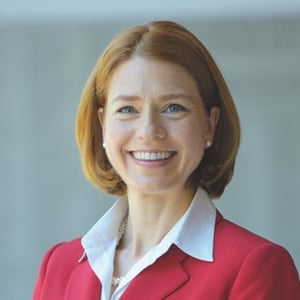
Associate Professor of Law, Villanova University Charles Widger School of Law
Professor Nelson joined the Villanova Law School faculty in 2017 as the Associate Professor of Law (Business Ethics), and she holds a courtesy appointment in the Management & Operations Department of Villanova Business School. A scholar, legal consultant, and start-up advisor, Professor Nelson teaches and writes on issues related to business law, ethics, and white collar crime. She also works collaboratively with two of the Law School’s Centers of Excellence—the John F. Scarpa Center for Law and Entrepreneurship and the David F. and Constance B. Girard-diCarlo Center for Ethics, Integrity, and Compliance—to advance legal scholarship and teaching that lie at the intersection of ethics and business. Professor Nelson came to Villanova from The Wharton School of the University of Pennsylvania, where she has served since 2015 as a Senior Fellow at the Carol and Lawrence Zicklin Center for Business Ethics Research. She also was an advisor in the Center for Entrepreneurial Studies for the Stanford University Graduate School of Business.
Professor Nelson has received numerous awards from the Academy of Legal Studies in Business, including its 2016 Ralph Bunche Outstanding International Paper and its 2015 Outstanding Proceedings awards. Her scholarship has been published in both legal and business journals, including Harvard Law Review, Berkeley Business Law Journal, Journal of Management Inquiry, Cardozo Law Review, Journal of Legal Studies in Business (forthcoming), and The Georgetown Law Journal. Her book co-authored with Lynn Stout, Business Ethics: What Everyone Needs to Know, will be published by the Oxford University Press in 2018.
In addition to her roles at Penn and Stanford, Professor Nelson previously taught at the Drucker School at Claremont Graduate University, the Mihaylo School at Cal State Fullerton, and was a faculty mentor at the Haas Business School of the University of California at Berkeley.
Prior to her work in academia, Nelson served as staff counsel for the U.S. Court of Appeals for the Tenth Circuit and clerked for the Honorable David M. Ebel of the U.S. Court of Appeals for the Tenth Circuit and the Honorable William H. Yohn Jr. of the U.S. District Court for the Eastern District of Pennsylvania. She previously worked as a deputy district attorney and as a business litigator in Denver, Colorado. Nelson is a graduate of Harvard Law School, where she was the Supreme Court Co-Chair of the Harvard Law Review. She earned a Bachelor of Arts in Political Science with honors and distinction in the major from Yale University.

Professor of Law, Florida International University College of Law
Hannibal Travis teaches and conducts research in the fields of cyberlaw, intellectual property, antitrust, international and comparative law, and human rights. He joined FIU after several years practicing intellectual property and Internet law at O’Melveny & Myers in San Francisco, California, and at Debevoise & Plimpton in New York. He has also served as the Irving Cypen Visiting Professor of Law at the University of Florida, a Visiting Associate Professor of Law at Villanova University, and a Visiting Fellow at Oxford. He graduated summa cum laude in philosophy from Washington University, where he was named to Phi Beta Kappa. He graduated magna cum laude from Harvard Law School, where he served as a teaching assistant in philosophy classes taught at Harvard College. After law school, Professor Travis clerked for the United States District Court in Los Angeles, California. Professor Travis has published articles on copyright, trademark, and antitrust law in a variety of journals and books. He has also published works on antitrust law, telecommunications law, and net neutrality in American University Law Review, Hofstra Law Review, and Santa Clara Law Review.
His works have focused on the intellectual property implications of new technologies and user-generated content, as well as antitrust law as applied to broadband and Wi-Fi Internet access markets. He has contributed to symposia and edited volumes on the international and comparative law of copyright and performers’ rights, including a piece on software contracts and copyright that was selected by West Group as one of the best articles relating to intellectual property law that was published in 2010. Professor Travis has also published widely on genocide, cultural survival, and human rights. He is currently an editorial advisory board member of Genocide Studies International (University of Toronto Press), and has served as a peer reviewer for manuscripts submitted to Cambridge University Press, Oxford University Press, Edinburgh University Press, Routledge, and Genocide Studies and Prevention (the journal of the International Association of Genocide Scholars). He has coached FIU’s Jessup International Law Moot Court team, Lefkowitz Trademark Law Moot Court team, and BMI Copyright Law Moot Court team. He is a member of the Copyright Society of the USA and the American Law and Economics Association.
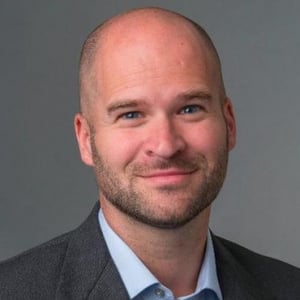
Associate Clinical Professor of Law and Founder/Director, Tech Startup Clinic, Benjamin N. Cardozo School of Law
Aaron Wright is an expert in corporate and intellectual property law, with extensive experience in Internet and new technology issues. Before joining Cardozo's faculty, he sold a company to Wikia, the for-profit sister project of Wikipedia, where he ran Wikia’s New York office, served as General Counsel and Vice President of Product and Business Development, and helped build an open source search engine. Wright has clerked for the Honorable William J. Martini of the U.S. District Court for the District of New Jersey and worked as an associate at several prominent New York law firms, including Patterson Belknap and Jenner & Block. He received his J.D. from the Benjamin N. Cardozo School of Law, where he served as the editor-in-chief of the Cardozo Law Review. He has a forthcoming book about blockchain technology and the law (co-authored with Primavera De Filippi) that will be published by Harvard University Press.

Head of AI Policy, Abundance Institute
Neil Chilson is the Head of AI Policy at the Abundance Institute. Prior to this position, he served as a Senior Research Fellow at the Center for Growth and Opportunity. Chilson is a lawyer, computer scientist, and author of the book “Getting Out of Control: Emergent Leadership in a Complex World.”
Chilson was previously the senior research fellow for Technology and Innovation at Stand Together, where he guided efforts to understand and promote the legal and cultural paradigms that best enable people to discover, innovate, and improve all our lives.
Before Stand Together, Chilson was the Chief Technologist at the Federal Trade Commission, where he focused on the economics of privacy and blockchain-related issues. Previously, he was an attorney advisor to Acting FTC Chairman Maureen K. Ohlhausen. In both roles he advised Chairman Ohlhausen and worked with staff on nearly every major technology-related case, report, workshop, or other FTC proceeding since January 2014. Neil joined the FTC from telecom firm Wilkinson Barker Knauer. Neil is frequently quoted by the press and his work has appeared in numerous news outlets, including The Wall Street Journal, The Washington Post, USAToday, and Newsweek. Neil has a J.D. from The George Washington Law School, a M.S. in computer science from University of Illinois, Urbana-Champaign, and a B.S. in computer science from Harding University.

H.H. Macaulay Endowed Professor of Economics, Clemson College of Business
Thomas Hazlett is the Hugh H. Macaulay Endowed Professor of Economics at Clemson University. He has previously held faculty positions at George Mason University, the University of California, Davis, and the Wharton School, and served as Chief Economist of the Federal Communications Commission. A noted expert in regulatory economics and information markets, his research has appeared in academic forums such as the Journal of Law & Economics, RAND Journal of Economics, the Journal of Financial Economics, the University of Pennsylvania Law Review and the Columbia Law Review. He has also written for such popular periodicals as the Wall Street Journal, The Economist, Slate, the N.Y. Times, N.Y. Daily News, Reuters.com, Business Week, The New Republic and the Financial Times. His most recent book, The Political Spectrum: The Tumultuous Liberation of Wireless Technology, from Herbert Hoover to the Smartphone, (Yale, 2017), was featured as one of the top tech books of the year at CES 2018.

Executive Vice President, Chief Legal Officer, Gates Corporation
Matthew R. A. Heiman joined the Company in May 2026 and has served as the Company’s Chief Legal Officer and Corporate Secretary since June 2026. As Chief Legal Officer, Mr. Heiman is responsible for all legal functions for Gates, including securities and corporate governance, M&A, litigation, commercial, regulatory, compliance, patents and trademarks, real estate, employment and labor, sustainability and environmental matters. Prior to joining Gates, Mr. Heiman held senior legal leadership roles at Waystar, where he served as Chief Legal & Administrative Officer from 2023 to 2025 and as General Counsel and Corporate Secretary from 2020 to 2023. Prior to that, he was with Johnson Controls, where he served as Vice President, Corporate Secretary, and Associate General Counsel. Mr. Heiman has been a Senior Fellow for the National Security Institute at George Mason University’s Antonin Scalia School of Law since 2018.

Founder and Executive Director, National Security Institute; Assistant Professor of Law, Antonin Scalia Law School, George Mason University
Jamil N. Jaffer is the Founder and Executive Director of the National Security Institute at the Antonin Scalia Law School at George Mason University where he also serves as an Assistant Professor of Law, Director of the National Security Law and Policy Program, and Director of the Cyber, Intelligence, and National Security LLM Program. Jamil also teaches classes on counterterrorism, intelligence, surveillance, cybersecurity, and other national security matters, as well as a summer course held abroad with U.S. Supreme Court Justice Neil M. Gorsuch. Jamil is also affiliated with Stanford University’s Center for International Security and Cooperation and previously served as a Visiting Fellow at the Hoover Institution from 2016 to 2019.
Jamil is also a Venture Partner with Paladin Capital Group, where he assists the firm with investments across the full range of its themes and theses, including a focus on dual-use national security technologies. Jamil also serves on the board of directors of RangeForce, a cybersecurity training and readiness platform startup and Tozny, a digital identity startup, and on the advisory boards of U.S. Strategic Metals, North America’s largest primary producer of cobalt, a critical mineral used in EV batteries, aerospace, and other national security applications; and Constella Intelligence, a deep and dark web intelligence startup. Jamil also serves as an advisor to Beacon Global Strategies, a strategic advisory firm and Duco, a technology platform startup that connects corporations with geopolitical and international business experts. Jamil is also the managing director of Trigraph Caveat Capital, a private investment vehicle.
Among other things, Jamil currently serves on the Board of Directors for the Greater Washington Board of Trade, the Board of Advisors for the Global Cyber Alliance, and the Advisory Board of the Foundation for the Defense of Democracies’ Center on Cyber and Tech Innovation, the Executive Committee of the Reagan Institute Strategy Group. Jamil is also a Fellow at the Academy for Judaic, Christian, and Islamic Studies, an advisor to the Concordia Summit, and is a member of the Board of Directors for the Center for Intelligence Policy, the Board of Directors of Speech First, and the Executive Committee of the International Law and National Security Practice Group of the Federalist Society.
Immediately prior to his current positions, from 2015-2021, Jamil served as a senior business leader at IronNet Cybersecurity, helping take the company from a bootstrapped first-year technology products startup through two rounds of venture capital fundraising, growing from 40 employees to over 300, and through its listing on New York Stock Exchange. In his role as IronNet's Senior Vice President for Strategy, Partnerships & Corporate Development, Jamil worked directly for the co-CEOs of the company, Gen (ret.) Keith B. Alexander, the former Director of the National Security Agency and Founding Commander of U.S. Cyber Command, and Bill Welch, the former COO of Zscaler and Duo; in that role, Jamil led all of the company’s strategic and technology partnership efforts, including developing go-to-market and technology integration plans with some of the largest cloud platforms and cybersecurity companies in the market, evaluating potential acquisition targets, and developing overall corporate strategy and thought leadership around collective security and collaborative defense in the cyber arena.
Prior to his time at IronNet, Jamil served on the leadership team of the Senate Foreign Relations Committee as Chief Counsel and Senior Advisor under Chairman Bob Corker (R-TN), where he worked on key national security and foreign policy issues, including leading the drafting of the proposed Authorization for the Use of Military Force against ISIS in 2014 and 2015, the AUMF against Syria in 2013, and revisions to the 9/11 AUMF against al Qaeda. Jamil was also the lead architect of the Iran Nuclear Agreement Review Act and two sanctions laws against Russia for its first intervention in Ukraine.
Prior to joining SFRC, Jamil served as Senior Counsel to the House Permanent Select Committee on Intelligence under Chairman Mike Rogers (R-MI) where he led the committee’s oversight of NSA surveillance, NRO intelligence issues, and NGA analytic and collection matters, as well as intelligence community-wide counterterrorism issues. Jamil was also the lead architect of the Cyber Intelligence Sharing and Protection Act, the nation’s first cyber threat intelligence sharing legislation that was signed into law in 2015.
In the Bush Administration, Jamil served in the White House as an Associate Counsel to the President, handling Defense Department, State Department, and intelligence community matters, and serving as one of the White House Counsel’s primary representatives to the National Security Council Deputies Committee.
Prior to the White House, Jamil served on the leadership team of the Justice Department’s National Security Division as Counsel to the Assistant Attorney General for National Security, where he focused on counterterrorism and intelligence matters. At NSD, Jamil helped lead the division’s work on In re: Directives, the first ever two-party litigated matter in the FISA Court and the second case before the FISA Court of Review in its 30-year history. Jamil also led NSD’s efforts on the President’s Comprehensive National Cybersecurity Initiative (CNCI), including the drafting of NSPD-54/HSPD-23, and related classified matters, and advised the National Security Agency (NSA) and U.S. Cyber Command’s predecessor organization, the Joint Function Component Command for Network Warfare (JFCC-NW), on matters related to cyber intelligence collection and offensive cyber activities. For his work on these matters, Jamil was awarded the Assistant Attorney General’s Award for Special Initiative and was among the group of lawyers awarded the Director of National Intelligence’s 2008 Legal Award (Team of the Year – Cyber Legal).
Jamil also served in other positions in the Justice Department, including in the Office of Legal Policy, where he worked on the confirmations of Chief Justice John G. Roberts, Jr. and Justice Samuel A. Alito, Jr. to the United States Supreme Court.
Jamil also served as a lawyer in private practice at Kellogg Huber, a Washington, DC-based litigation boutique, as a policy advisor to Congressman Bob Goodlatte (R-VA), and as a staff member or senior advisor on a number of political campaigns, including two presidential campaigns and a presidential transition team. While in law school, Jamil was a member of the University of Chicago Law Review, managing editor of the Chicago Journal of International Law, and National Symposium Editor of the Harvard Journal of Law & Public Policy. Following law school, Jamil served as a law clerk to Judge Edith H. Jones of the United States Court of Appeals for the Fifth Circuit and, later in his career, as a law clerk to then-Judge Neil M. Gorsuch when he first joined the United States Court of Appeals for the Tenth Circuit as well as a law clerk to Justice Neil Gorsuch when he joined the U.S. Supreme Court.
Jamil has published multiple op-eds and academic articles on national security, foreign policy, cybersecurity, counterterrorism, encryption, and intelligence matters, and is the co-author of a book chapter with former NSA Director Gen. (Ret.) Keith B. Alexander on national security and the press in National Security, Leaks, and the Freedom of the Press: The Pentagon Papers Fifty Years On (2021) and a book chapter with former CIA Director Gen. (ret.) Mike Hayden on ISIS, al Qaeda, and other international terrorist groups in Choosing to Lead: American Foreign Policy for a Disordered World (2015). Jamil has also written book chapters on cybersecurity and surveillance, as well as op-eds and policy papers with former Attorney General Michael B. Mukasey, former National Counterterrorism Center Director Matt Olsen, and Congressman Mike Waltz (R-FL), among others.
Jamil has previously taught graduate-level courses in intelligence law and policy at George Washington University’s Elliott School of International Affairs and the National Intelligence University, served an outside advisor to the Cyberspace Solarium Commission, and has recently testified before committees of the U.S. Senate and House of Representatives on China, cybersecurity, counterterrorism, and other national security matters. Jamil has also recently appeared on a range of national television and radio outlets including CNN, Fox News, Fox Business, MSNBC, Bloomberg, PBS, Voice of America, and National Public Radio, and in various print and online publications, including the Wall Street Journal, New York Times, and the Washington Post on a range of national security matters including cybersecurity, counterterrorism, surveillance, encryption, privacy, and foreign policy issues.
Jamil holds degrees from UCLA (BA, cum laude), the University of Chicago Law School (JD, with honors), and the United States Naval War College (MA, with distinction).

Professorial Lecturer in Law, The George Washington University
Paul Rosenzweig is an accomplished writer and speaker with a national reputation in cyber security and homeland security. He is the founder of Red Branch Consulting PLLC, a homeland security consulting company. He is also a Senior Advisor to The Chertoff Group. Mr. Rosenzweig formerly served as Deputy Assistant Secretary for Policy in the Department of Homeland Security.
He is a Professorial Lecturer in Law at George Washington University, and a Senior Fellow in the Tech, Law & Security Program at the American University, Washington College of Law. He serves as an advisor to and former member of the American Bar Association Standing Committee on Law and National Security, and a Contributing Editor of the Lawfare blog. He is a member of the ABA Cybersecurity Legal Task Force and of the United States Court of Appeals for the District of Columbia Circuit Advisory Committee on Admissions and Grievances. He serves, as well, as a Hearing Committee Member of the District of Columbia Board of Professional Responsibility. In 2011 he was a Carnegie Fellow in National Security Journalism at the Medill School of Journalism, Northwestern University.
Mr. Rosenzweig is a cum laude graduate of the University of Chicago Law School. He has an M.S. in Chemical Oceanography from the Scripps Institution of Oceanography, University of California at San Diego and a B.A from Haverford College. Following graduation from law school he served as a law clerk to the Honorable R. Lanier Anderson, III of the United States Court of Appeals for the Eleventh Circuit.
He is the author of Cyber Warfare: How Conflicts in Cyberspace are Challenging America and Changing the World and of three video lecture series from The Great Courses, Thinking About Cybersecurity: From Cyber Crime to Cyber Warfare; The Surveillance State: Big Data, Freedom, and You; and Investigating American Presidents.
He is the co-author (with James Jay Carafano) of Winning the Long War: Lessons from the Cold War for Defeating Terrorism and Preserving Freedom and co-editor (with Jill D. Rhodes and Robert S. Litt) of the Cybersecurity Handbook (3rd ed.). He is also co-editor (with Timothy McNulty and Ellen Shearer) of two books, Whistleblowers, Leaks and the Media: The First Amendment and National Security, and National Security Law in the News: A Guide for Journalists, Scholars, and Policymakers. Mr. Rosenzweig is a member of the Literary Society of Washington.

Nonresident Senior Fellow, Cyber Statecraft Initiative, Atlantic Council
Megan Stifel is a Nonresident Senior Fellow with the Cyber Statecraft Initiative at the Brent Scowcroft Center on International Security and the Founder of Silicon Harbor Consultants, which provides strategic cybersecurity operations and policy counsel. Prior to founding Silicon Harbor Consultants, she was an attorney in the National Security Division at the U.S. Department of Justice (DOJ). She most recently served on detail as a Director for International Cyber Policy in the National Security Council at the White House. In this role Ms. Stifel developed and implemented policies in connection with Internet governance, cybersecurity, and cybercrime.
Prior to the White House, Ms. Stifel worked at the Computer Crime and Intellectual Property Section (CCIPS). At CCIPS she collaborated with law enforcement agencies to investigate and prosecute computer crime cases, including identity theft, network intrusion, and malware distribution.
Ms. Stifel also previously served as the Director for Cyber Policy at NSD, where she coordinated the Division's policy and legal analysis in connection with the 2009 Cyberspace Policy Review (CSPR) and the 2008 Comprehensive National Cybersecurity Initiative, cyber-related legislative proposals, cybersecurity investigations, cyber operations, and the telecommunications supply chain. She was a member of the interagency group that developed the 2011 International Strategy for Cyberspace and the CSPR.
Ms. Stifel earned her B.A. in International Studies and German, magna cum laude, from the University of Notre Dame and her J.D. from Indiana University.
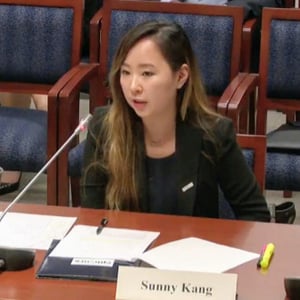
International Consumer Counsel, Electronic Privacy Information Center (EPIC)
Sunny Seon Kang is International Consumer Counsel at the Electronic Privacy Information Center (EPIC). Her work at EPIC focuses on U.S. privacy regulations and EU data protection laws. She advocates for the global implementation of the GDPR to raise online privacy standards. In London, Ms. Kang was a Legal Researcher for the Western Balkans Rule of Law Project and authored judicial guidelines on the right to privacy and freedom of expression under the European Convention on Human Rights. She was a Summer Associate at Allen & Overy UK in the intellectual property litigation department, and worked in Seoul as a Research Fellow at the Innovation, Competition & Regulation (ICR) Law Center. In San Francisco, Ms. Kang was a Legal Extern at the California Department of Justice, Attorney General Kamala Harris' Office, where she produced legislative analyses and policy recommendations on state privacy laws. Prior to joining EPIC, Ms. Kang was a Legal Fellow and Yelp Public Policy Affiliate at TechFreedom on FTC regulatory affairs and consumer privacy. Ms. Kang holds a law degree (LL.B.) from University College London and a Master of Laws (LL.M.) in Intellectual Property and Technology from the UC Berkeley School of Law. She is certified to the New York bar.

Senior Vice President, Strand Consult
Roslyn Layton, PhD is a leading international expert on technology policy. She is Senior Vice President of Strand Consult, an independent consultancy serving the global mobile telecom industry. She is also a Visiting Researcher at Aalborg University Copenhagen where she earned a doctoral thesis on network neutrality by measuring the outcome of the policy across 53 countries over 5 years. She served on the Presidential Transition Team for the Federal Communications Commission (FCC), and her work was critical to the FCC’s defense for the Restoring Internet Freedom Order. She has testified to the United States Senate and House on multiple topics including spectrum, broadband, mobile mergers, competition, and privacy. She founded the think tank China Tech Threat to study the problems of technology produced by the People’s Republic of China. She serves as the Program Chair for the Telecom Policy Research Conference, the leading interdisciplinary academic gathering. Her recent paper on rural broadband describes the empirical case for policy reform to recover network infrastructure costs from streaming video entertainment providers. She is a Senior Contributor to Forbes.

Senior Fellow, R Street Institute
Prior to R Street, Adam spent 12 years as a senior fellow at the Mercatus Center at George Mason University. Before the Mercatus Center, he served as the president of the Progress and Freedom Foundation. Adam has also worked for the Adam Smith Institute, the Heritage Foundation and the Cato Institute.
Adam has published 10 books on a wide range of topics, including online child safety, internet governance, intellectual property, telecommunications policy, media regulation and federalism.
In 2008, Adam received the Family Online Safety Institute’s “Award for Outstanding Achievement.”
Founder and Executive Director, National Security Institute; Assistant Professor of Law, Antonin Scalia Law School, George Mason University
Jamil N. Jaffer is the Founder and Executive Director of the National Security Institute at the Antonin Scalia Law School at George Mason University where he also serves as an Assistant Professor of Law, Director of the National Security Law and Policy Program, and Director of the Cyber, Intelligence, and National Security LLM Program. Jamil also teaches classes on counterterrorism, intelligence, surveillance, cybersecurity, and other national security matters, as well as a summer course held abroad with U.S. Supreme Court Justice Neil M. Gorsuch. Jamil is also affiliated with Stanford University’s Center for International Security and Cooperation and previously served as a Visiting Fellow at the Hoover Institution from 2016 to 2019.
Jamil is also a Venture Partner with Paladin Capital Group, where he assists the firm with investments across the full range of its themes and theses, including a focus on dual-use national security technologies. Jamil also serves on the board of directors of RangeForce, a cybersecurity training and readiness platform startup and Tozny, a digital identity startup, and on the advisory boards of U.S. Strategic Metals, North America’s largest primary producer of cobalt, a critical mineral used in EV batteries, aerospace, and other national security applications; and Constella Intelligence, a deep and dark web intelligence startup. Jamil also serves as an advisor to Beacon Global Strategies, a strategic advisory firm and Duco, a technology platform startup that connects corporations with geopolitical and international business experts. Jamil is also the managing director of Trigraph Caveat Capital, a private investment vehicle.
Among other things, Jamil currently serves on the Board of Directors for the Greater Washington Board of Trade, the Board of Advisors for the Global Cyber Alliance, and the Advisory Board of the Foundation for the Defense of Democracies’ Center on Cyber and Tech Innovation, the Executive Committee of the Reagan Institute Strategy Group. Jamil is also a Fellow at the Academy for Judaic, Christian, and Islamic Studies, an advisor to the Concordia Summit, and is a member of the Board of Directors for the Center for Intelligence Policy, the Board of Directors of Speech First, and the Executive Committee of the International Law and National Security Practice Group of the Federalist Society.
Immediately prior to his current positions, from 2015-2021, Jamil served as a senior business leader at IronNet Cybersecurity, helping take the company from a bootstrapped first-year technology products startup through two rounds of venture capital fundraising, growing from 40 employees to over 300, and through its listing on New York Stock Exchange. In his role as IronNet's Senior Vice President for Strategy, Partnerships & Corporate Development, Jamil worked directly for the co-CEOs of the company, Gen (ret.) Keith B. Alexander, the former Director of the National Security Agency and Founding Commander of U.S. Cyber Command, and Bill Welch, the former COO of Zscaler and Duo; in that role, Jamil led all of the company’s strategic and technology partnership efforts, including developing go-to-market and technology integration plans with some of the largest cloud platforms and cybersecurity companies in the market, evaluating potential acquisition targets, and developing overall corporate strategy and thought leadership around collective security and collaborative defense in the cyber arena.
Prior to his time at IronNet, Jamil served on the leadership team of the Senate Foreign Relations Committee as Chief Counsel and Senior Advisor under Chairman Bob Corker (R-TN), where he worked on key national security and foreign policy issues, including leading the drafting of the proposed Authorization for the Use of Military Force against ISIS in 2014 and 2015, the AUMF against Syria in 2013, and revisions to the 9/11 AUMF against al Qaeda. Jamil was also the lead architect of the Iran Nuclear Agreement Review Act and two sanctions laws against Russia for its first intervention in Ukraine.
Prior to joining SFRC, Jamil served as Senior Counsel to the House Permanent Select Committee on Intelligence under Chairman Mike Rogers (R-MI) where he led the committee’s oversight of NSA surveillance, NRO intelligence issues, and NGA analytic and collection matters, as well as intelligence community-wide counterterrorism issues. Jamil was also the lead architect of the Cyber Intelligence Sharing and Protection Act, the nation’s first cyber threat intelligence sharing legislation that was signed into law in 2015.
In the Bush Administration, Jamil served in the White House as an Associate Counsel to the President, handling Defense Department, State Department, and intelligence community matters, and serving as one of the White House Counsel’s primary representatives to the National Security Council Deputies Committee.
Prior to the White House, Jamil served on the leadership team of the Justice Department’s National Security Division as Counsel to the Assistant Attorney General for National Security, where he focused on counterterrorism and intelligence matters. At NSD, Jamil helped lead the division’s work on In re: Directives, the first ever two-party litigated matter in the FISA Court and the second case before the FISA Court of Review in its 30-year history. Jamil also led NSD’s efforts on the President’s Comprehensive National Cybersecurity Initiative (CNCI), including the drafting of NSPD-54/HSPD-23, and related classified matters, and advised the National Security Agency (NSA) and U.S. Cyber Command’s predecessor organization, the Joint Function Component Command for Network Warfare (JFCC-NW), on matters related to cyber intelligence collection and offensive cyber activities. For his work on these matters, Jamil was awarded the Assistant Attorney General’s Award for Special Initiative and was among the group of lawyers awarded the Director of National Intelligence’s 2008 Legal Award (Team of the Year – Cyber Legal).
Jamil also served in other positions in the Justice Department, including in the Office of Legal Policy, where he worked on the confirmations of Chief Justice John G. Roberts, Jr. and Justice Samuel A. Alito, Jr. to the United States Supreme Court.
Jamil also served as a lawyer in private practice at Kellogg Huber, a Washington, DC-based litigation boutique, as a policy advisor to Congressman Bob Goodlatte (R-VA), and as a staff member or senior advisor on a number of political campaigns, including two presidential campaigns and a presidential transition team. While in law school, Jamil was a member of the University of Chicago Law Review, managing editor of the Chicago Journal of International Law, and National Symposium Editor of the Harvard Journal of Law & Public Policy. Following law school, Jamil served as a law clerk to Judge Edith H. Jones of the United States Court of Appeals for the Fifth Circuit and, later in his career, as a law clerk to then-Judge Neil M. Gorsuch when he first joined the United States Court of Appeals for the Tenth Circuit as well as a law clerk to Justice Neil Gorsuch when he joined the U.S. Supreme Court.
Jamil has published multiple op-eds and academic articles on national security, foreign policy, cybersecurity, counterterrorism, encryption, and intelligence matters, and is the co-author of a book chapter with former NSA Director Gen. (Ret.) Keith B. Alexander on national security and the press in National Security, Leaks, and the Freedom of the Press: The Pentagon Papers Fifty Years On (2021) and a book chapter with former CIA Director Gen. (ret.) Mike Hayden on ISIS, al Qaeda, and other international terrorist groups in Choosing to Lead: American Foreign Policy for a Disordered World (2015). Jamil has also written book chapters on cybersecurity and surveillance, as well as op-eds and policy papers with former Attorney General Michael B. Mukasey, former National Counterterrorism Center Director Matt Olsen, and Congressman Mike Waltz (R-FL), among others.
Jamil has previously taught graduate-level courses in intelligence law and policy at George Washington University’s Elliott School of International Affairs and the National Intelligence University, served an outside advisor to the Cyberspace Solarium Commission, and has recently testified before committees of the U.S. Senate and House of Representatives on China, cybersecurity, counterterrorism, and other national security matters. Jamil has also recently appeared on a range of national television and radio outlets including CNN, Fox News, Fox Business, MSNBC, Bloomberg, PBS, Voice of America, and National Public Radio, and in various print and online publications, including the Wall Street Journal, New York Times, and the Washington Post on a range of national security matters including cybersecurity, counterterrorism, surveillance, encryption, privacy, and foreign policy issues.
Jamil holds degrees from UCLA (BA, cum laude), the University of Chicago Law School (JD, with honors), and the United States Naval War College (MA, with distinction).

Senior Privacy Policy Counsel, Google
David Lieber is a Senior Privacy Policy Counsel for Google based in Washington, D.C. In that capacity, Mr. Lieber works on government access, cybsersecurity, and international privacy issues on Google’s Public Policy team. Prior to joining Google, David worked in the E-Commerce & Privacy practice at DLA Piper. Mr. Lieber previously served as a Legislative Assistant to Senator Dick Durbin on the Senate Judiciary Committee. He is a graduate of Bates College and Northwestern University School of Law.

Chief Social Scientist at Endgame, Endgame
Andrea Little Limbago is the Chief Social Scientist at Endgame, where she researches and writes on geopolitics and cybersecurity, data science, and directs the company’s technical content. Her writing has been featured in numerous outlets, including Politico, the Hill, Business Insider, War on the Rocks, and Forbes. She also presents at a range of security, government and academic conferences, covering cybersecurity topics such as norms, attacker trends and techniques, computational propaganda, and bots. She previously worked in academia and at the Department of Defense. Andrea holds a PhD in Political Science from the University of Colorado at Boulder, where she taught international relations and foreign policy courses, and a Bachelor’s degree from Bowdoin College.

Senior Director, Cybersecurity Policy and Strategy, Microsoft
Ms. Angela McKay is Senior Director of Cybersecurity Policy and Strategy within Trustworthy Computing at Microsoft. She focuses on driving strategic change, both within Microsoft and externally, to advance trust in the computing ecosystem. Ms. McKay leads Microsoft’s public policy work on cybersecurity, cloud security, and norms, and on public sector use of cloud. Her team includes professionals working on these topics across Africa, Asia, Europe, Latin America, and the U.S.
Ms. McKay combines technical expertise and public policy acumen to develop policies that improve security and stability of cyberspace, and support development, growth, and innovation. She serves on the Board of Councilors for the East West Institute, a think tank focused on international conflict resolution, and as Microsoft’s Point of Contact for the National Security Telecommunications Advisory Committee, which provides the President of the United States with recommendations to maintain reliable, secure, and resilient communications.
Ms. McKay previously led Microsoft’s cybersecurity policy work in the U.S., and its work to increase cybersecurity capacity internationally. Before joining Microsoft in 2008, she worked at Booz Allen Hamilton on cybersecurity policy and communications resiliency, and at BellSouth Telecommunications as an engineer. Ms. McKay holds a Bachelor’s of Industrial and Systems Engineering from the Georgia Institute of Technology.

Fellow, National Security Institute, Antonin Scalia Law School, George Mason University
Vince Vitkowsky chaired the Executive Committee of the Federalist Society’s International and National Security Law and Policy Practice Group for over a decade. He is also a Fellow at the National Security Institute of George Mason University Law School. Vince spent 45 years in private practice, primarily in AmLaw 100/200 firms and their spin-offs. His practice included domestic and international commercial arbitration and litigation, as well as cyber risks and liabilities. Vince's current focus is on national security policy, artificial intelligence, cybersecurity, and counterterrorism. He has often written and spoken on national security and other public policy issues. Among other affiliations, Vince has been an Adjunct Fellow at the Center for Law and Counterterrorism of the Foundation for the Defense of Democracies, a member of the Executive Committee of the American Branch of the International Law Association, and Co-Chair of the Committee on Interventions and Trial Observations of the International Bar Association’s Human Rights Institute. He received his B.A. from Northwestern University and his J.D. from Cornell Law School.
H.H. Macaulay Endowed Professor of Economics, Clemson College of Business
Thomas Hazlett is the Hugh H. Macaulay Endowed Professor of Economics at Clemson University. He has previously held faculty positions at George Mason University, the University of California, Davis, and the Wharton School, and served as Chief Economist of the Federal Communications Commission. A noted expert in regulatory economics and information markets, his research has appeared in academic forums such as the Journal of Law & Economics, RAND Journal of Economics, the Journal of Financial Economics, the University of Pennsylvania Law Review and the Columbia Law Review. He has also written for such popular periodicals as the Wall Street Journal, The Economist, Slate, the N.Y. Times, N.Y. Daily News, Reuters.com, Business Week, The New Republic and the Financial Times. His most recent book, The Political Spectrum: The Tumultuous Liberation of Wireless Technology, from Herbert Hoover to the Smartphone, (Yale, 2017), was featured as one of the top tech books of the year at CES 2018.
Executive Vice President, Chief Legal Officer, Gates Corporation
Matthew R. A. Heiman joined the Company in May 2026 and has served as the Company’s Chief Legal Officer and Corporate Secretary since June 2026. As Chief Legal Officer, Mr. Heiman is responsible for all legal functions for Gates, including securities and corporate governance, M&A, litigation, commercial, regulatory, compliance, patents and trademarks, real estate, employment and labor, sustainability and environmental matters. Prior to joining Gates, Mr. Heiman held senior legal leadership roles at Waystar, where he served as Chief Legal & Administrative Officer from 2023 to 2025 and as General Counsel and Corporate Secretary from 2020 to 2023. Prior to that, he was with Johnson Controls, where he served as Vice President, Corporate Secretary, and Associate General Counsel. Mr. Heiman has been a Senior Fellow for the National Security Institute at George Mason University’s Antonin Scalia School of Law since 2018.
Founder and Executive Director, National Security Institute; Assistant Professor of Law, Antonin Scalia Law School, George Mason University
Jamil N. Jaffer is the Founder and Executive Director of the National Security Institute at the Antonin Scalia Law School at George Mason University where he also serves as an Assistant Professor of Law, Director of the National Security Law and Policy Program, and Director of the Cyber, Intelligence, and National Security LLM Program. Jamil also teaches classes on counterterrorism, intelligence, surveillance, cybersecurity, and other national security matters, as well as a summer course held abroad with U.S. Supreme Court Justice Neil M. Gorsuch. Jamil is also affiliated with Stanford University’s Center for International Security and Cooperation and previously served as a Visiting Fellow at the Hoover Institution from 2016 to 2019.
Jamil is also a Venture Partner with Paladin Capital Group, where he assists the firm with investments across the full range of its themes and theses, including a focus on dual-use national security technologies. Jamil also serves on the board of directors of RangeForce, a cybersecurity training and readiness platform startup and Tozny, a digital identity startup, and on the advisory boards of U.S. Strategic Metals, North America’s largest primary producer of cobalt, a critical mineral used in EV batteries, aerospace, and other national security applications; and Constella Intelligence, a deep and dark web intelligence startup. Jamil also serves as an advisor to Beacon Global Strategies, a strategic advisory firm and Duco, a technology platform startup that connects corporations with geopolitical and international business experts. Jamil is also the managing director of Trigraph Caveat Capital, a private investment vehicle.
Among other things, Jamil currently serves on the Board of Directors for the Greater Washington Board of Trade, the Board of Advisors for the Global Cyber Alliance, and the Advisory Board of the Foundation for the Defense of Democracies’ Center on Cyber and Tech Innovation, the Executive Committee of the Reagan Institute Strategy Group. Jamil is also a Fellow at the Academy for Judaic, Christian, and Islamic Studies, an advisor to the Concordia Summit, and is a member of the Board of Directors for the Center for Intelligence Policy, the Board of Directors of Speech First, and the Executive Committee of the International Law and National Security Practice Group of the Federalist Society.
Immediately prior to his current positions, from 2015-2021, Jamil served as a senior business leader at IronNet Cybersecurity, helping take the company from a bootstrapped first-year technology products startup through two rounds of venture capital fundraising, growing from 40 employees to over 300, and through its listing on New York Stock Exchange. In his role as IronNet's Senior Vice President for Strategy, Partnerships & Corporate Development, Jamil worked directly for the co-CEOs of the company, Gen (ret.) Keith B. Alexander, the former Director of the National Security Agency and Founding Commander of U.S. Cyber Command, and Bill Welch, the former COO of Zscaler and Duo; in that role, Jamil led all of the company’s strategic and technology partnership efforts, including developing go-to-market and technology integration plans with some of the largest cloud platforms and cybersecurity companies in the market, evaluating potential acquisition targets, and developing overall corporate strategy and thought leadership around collective security and collaborative defense in the cyber arena.
Prior to his time at IronNet, Jamil served on the leadership team of the Senate Foreign Relations Committee as Chief Counsel and Senior Advisor under Chairman Bob Corker (R-TN), where he worked on key national security and foreign policy issues, including leading the drafting of the proposed Authorization for the Use of Military Force against ISIS in 2014 and 2015, the AUMF against Syria in 2013, and revisions to the 9/11 AUMF against al Qaeda. Jamil was also the lead architect of the Iran Nuclear Agreement Review Act and two sanctions laws against Russia for its first intervention in Ukraine.
Prior to joining SFRC, Jamil served as Senior Counsel to the House Permanent Select Committee on Intelligence under Chairman Mike Rogers (R-MI) where he led the committee’s oversight of NSA surveillance, NRO intelligence issues, and NGA analytic and collection matters, as well as intelligence community-wide counterterrorism issues. Jamil was also the lead architect of the Cyber Intelligence Sharing and Protection Act, the nation’s first cyber threat intelligence sharing legislation that was signed into law in 2015.
In the Bush Administration, Jamil served in the White House as an Associate Counsel to the President, handling Defense Department, State Department, and intelligence community matters, and serving as one of the White House Counsel’s primary representatives to the National Security Council Deputies Committee.
Prior to the White House, Jamil served on the leadership team of the Justice Department’s National Security Division as Counsel to the Assistant Attorney General for National Security, where he focused on counterterrorism and intelligence matters. At NSD, Jamil helped lead the division’s work on In re: Directives, the first ever two-party litigated matter in the FISA Court and the second case before the FISA Court of Review in its 30-year history. Jamil also led NSD’s efforts on the President’s Comprehensive National Cybersecurity Initiative (CNCI), including the drafting of NSPD-54/HSPD-23, and related classified matters, and advised the National Security Agency (NSA) and U.S. Cyber Command’s predecessor organization, the Joint Function Component Command for Network Warfare (JFCC-NW), on matters related to cyber intelligence collection and offensive cyber activities. For his work on these matters, Jamil was awarded the Assistant Attorney General’s Award for Special Initiative and was among the group of lawyers awarded the Director of National Intelligence’s 2008 Legal Award (Team of the Year – Cyber Legal).
Jamil also served in other positions in the Justice Department, including in the Office of Legal Policy, where he worked on the confirmations of Chief Justice John G. Roberts, Jr. and Justice Samuel A. Alito, Jr. to the United States Supreme Court.
Jamil also served as a lawyer in private practice at Kellogg Huber, a Washington, DC-based litigation boutique, as a policy advisor to Congressman Bob Goodlatte (R-VA), and as a staff member or senior advisor on a number of political campaigns, including two presidential campaigns and a presidential transition team. While in law school, Jamil was a member of the University of Chicago Law Review, managing editor of the Chicago Journal of International Law, and National Symposium Editor of the Harvard Journal of Law & Public Policy. Following law school, Jamil served as a law clerk to Judge Edith H. Jones of the United States Court of Appeals for the Fifth Circuit and, later in his career, as a law clerk to then-Judge Neil M. Gorsuch when he first joined the United States Court of Appeals for the Tenth Circuit as well as a law clerk to Justice Neil Gorsuch when he joined the U.S. Supreme Court.
Jamil has published multiple op-eds and academic articles on national security, foreign policy, cybersecurity, counterterrorism, encryption, and intelligence matters, and is the co-author of a book chapter with former NSA Director Gen. (Ret.) Keith B. Alexander on national security and the press in National Security, Leaks, and the Freedom of the Press: The Pentagon Papers Fifty Years On (2021) and a book chapter with former CIA Director Gen. (ret.) Mike Hayden on ISIS, al Qaeda, and other international terrorist groups in Choosing to Lead: American Foreign Policy for a Disordered World (2015). Jamil has also written book chapters on cybersecurity and surveillance, as well as op-eds and policy papers with former Attorney General Michael B. Mukasey, former National Counterterrorism Center Director Matt Olsen, and Congressman Mike Waltz (R-FL), among others.
Jamil has previously taught graduate-level courses in intelligence law and policy at George Washington University’s Elliott School of International Affairs and the National Intelligence University, served an outside advisor to the Cyberspace Solarium Commission, and has recently testified before committees of the U.S. Senate and House of Representatives on China, cybersecurity, counterterrorism, and other national security matters. Jamil has also recently appeared on a range of national television and radio outlets including CNN, Fox News, Fox Business, MSNBC, Bloomberg, PBS, Voice of America, and National Public Radio, and in various print and online publications, including the Wall Street Journal, New York Times, and the Washington Post on a range of national security matters including cybersecurity, counterterrorism, surveillance, encryption, privacy, and foreign policy issues.
Jamil holds degrees from UCLA (BA, cum laude), the University of Chicago Law School (JD, with honors), and the United States Naval War College (MA, with distinction).
Nonresident Senior Fellow, Cyber Statecraft Initiative, Atlantic Council
Megan Stifel is a Nonresident Senior Fellow with the Cyber Statecraft Initiative at the Brent Scowcroft Center on International Security and the Founder of Silicon Harbor Consultants, which provides strategic cybersecurity operations and policy counsel. Prior to founding Silicon Harbor Consultants, she was an attorney in the National Security Division at the U.S. Department of Justice (DOJ). She most recently served on detail as a Director for International Cyber Policy in the National Security Council at the White House. In this role Ms. Stifel developed and implemented policies in connection with Internet governance, cybersecurity, and cybercrime.
Prior to the White House, Ms. Stifel worked at the Computer Crime and Intellectual Property Section (CCIPS). At CCIPS she collaborated with law enforcement agencies to investigate and prosecute computer crime cases, including identity theft, network intrusion, and malware distribution.
Ms. Stifel also previously served as the Director for Cyber Policy at NSD, where she coordinated the Division's policy and legal analysis in connection with the 2009 Cyberspace Policy Review (CSPR) and the 2008 Comprehensive National Cybersecurity Initiative, cyber-related legislative proposals, cybersecurity investigations, cyber operations, and the telecommunications supply chain. She was a member of the interagency group that developed the 2011 International Strategy for Cyberspace and the CSPR.
Ms. Stifel earned her B.A. in International Studies and German, magna cum laude, from the University of Notre Dame and her J.D. from Indiana University.

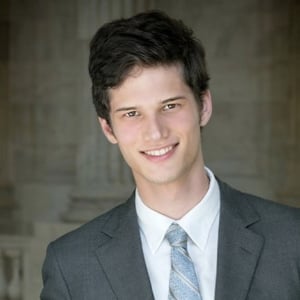
A Seat at the Sitting - November 2024
Tyler S. Badgley, Sarah E. Lang, Karen Harned, Robert S. Peck, Collin R. White
Each month, a panel of constitutional experts convenes to discuss the Court’s upcoming docket sitting...
Supreme Court Preview: What Is in Store for October Term 2024?
Jonathan H. Adler, Paul S. Atkins, Lisa S. Blatt, Erin M. Hawley, Sarah Isgur, John S. Moran
On October 1, 2024, the Federalist Society's Faculty Division and Practice Groups will host a panel at...
Holiday Happy Hour with "Dangerous Company" Author Sam Patten
Maine Lawyers Chapter
Portland, MEFireside Chat with Paul Grewal, Chief Legal Officer of Coinbase
Katie Biber, Theodore R. Furchtgott, Paul Grewal
Featuring: Paul Grewal, Chief Legal Officer, Coinbase Interviewer: Katie Biber, Chief Legal Officer, Brex Introduction: Theodore Furchtgott,...
Deep Dive Episode 139 – Implications of Data Portability: A Consumer Protection Tool or Burden?
Svetlana Gans, Peter Swire, Liad Wagman, Gabriela Zanfir-Fortuna
Data portability has been a hot topic of late, from GDPR to CCPA to the...
Panel: Social Media and Freedom of Speech
Richard A. Epstein, Justin (Gus) Hurwitz, J.S. Nelson, Hannibal Travis, Aaron Wright
Over the past year, there have been a number of discussions about social media and...
Social Media Oversight: The Debate Over Regulation and Antitrust Enforcement on Tech Titans
Neil Chilson, Thomas Hazlett, Matthew R. A. Heiman, Jamil N. Jaffer, Paul Rosenzweig, Megan Stifel
Russian interference in the 2016 election, Facebook and Cambridge Analytica, and claims of political bias...
The GDPR and the Future of Internet Privacy
Sunny Seon Kang, Roslyn Layton, Adam Thierer
Within 7 hours of the EU’s General Data Protection Regulation (GDPR) coming into effect, Austrian...
Panel I — The Tech Titans' Role in Cybersecurity
Jamil N. Jaffer, David Lieber, Andrea Little Limbago, Angela McKay, Vincent Vitkowsky
This panel will focus on questions such as what measures major companies can take, individually...
What to do about Facebook: On Data Privacy and the Future of Tech Regulation
Thomas Hazlett, Matthew R. A. Heiman, Jamil N. Jaffer, Megan Stifel
Facebook is not getting many "likes" these days following revelations that Cambridge Analytica accessed personal...