
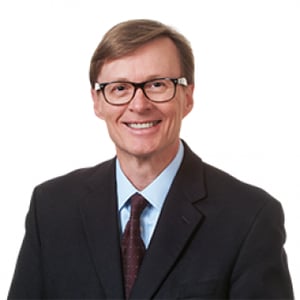
Shareholder, Littler Mendelson P.C.
Bruce J. Sarchet has focused his entire legal career on the representation of management in labor and employment law matters and has particular expertise in issues involving:
He regularly appears in state and federal courts and before the National Labor Relations Board (NLRB) on matters involving:
With energy, enthusiasm, and intense focus, Bruce provides clients with superior quality work and exceptional client service and has earned a reputation as a hands-on problem solver. He provides consultation and representation to large, medium and small businesses across California in a variety of industries, including food and beverage, healthcare, transportation, technology, and construction. He also represents public sector employers. He crafts practical, real world solutions to workplace problems such as dealing with difficult employees and recognizing and balancing business realities and necessities with the need to minimize exposure to litigation.
For unionized employers, Bruce frequently serves as chief spokesperson in collective bargaining negotiations and provides representation in grievances and arbitration hearings. He also represents employers during union organizing drives and unfair labor practice charges under the National Labor Relations Act.
An animated, effective and entertaining public speaker, Bruce regularly makes presentations to local professional organizations on labor and employment law topics and has also presented numerous in-house training sessions and workshops to management teams at private and public employers. Bruce has published numerous articles for local business journals, providing practical, hands-on labor and employment law advice to small business owners.
From 2005 to 2013, Bruce served on the firm's five-attorney Management Committee, which handles the firm's operations. In this capacity, he oversaw thirteen Littler offices in seven states. Prior to his selection to the Management Committee, he served as the office-managing shareholder for the firm's Sacramento office and served several terms as a member of the firm's Board of Directors.
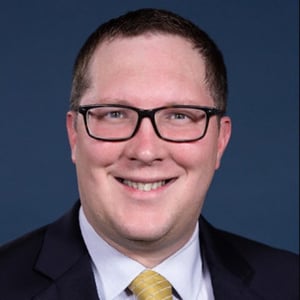
Attorney, Pacific Legal Foundation
Luke A. Wake is an attorney at the Pacific Legal Foundation. Prior to joining PLF, he was a senior staff attorney at the NFIB Small Business Legal Center.
Wake has particular expertise on environmental and land use issues, and has worked on numerous other constitutional issues and matters of importance to small business owners. He is an ardent defender of private property rights, which he believes are essential to the free enterprise system and the foundation of American liberty. As a strong advocate of individual rights and economic liberties, he has built his career defending small business interests.
Wake has focused on a whole host of issues, from employment law matters to regulatory compliance. In addition to serving as a resource for small business owners, Wake is committed to ensuring that the voice of small business is heard in the nation’s courts. As an appellate practitioner, Wake has focused particularly on informing the courts on matters of administrative law and on issues under the Fifth Amendment’s Takings Clause. He is also working to advance small business interests in law review articles, and was recently published in the Berkeley Journal of Law & Ecology. See R.S. Radford & Luke A. Wake, Deciphering and Extrapolating: Searching for Sense in Penn Central, 38 Ecology L.Q. 731, 746-747 (2011).
Before joining the Legal Center’s team, Wake completed a prestigious two-year fellowship as an attorney in the Pacific Legal Foundation’s College of Public Interest Law. Wake is a graduate of Case Western Reserve University School of Law in Cleveland Ohio, and is a member of the California Bar. He completed his undergraduate studies at Elon University in North Carolina in 2006 where he focused on political theory and corporate communications.
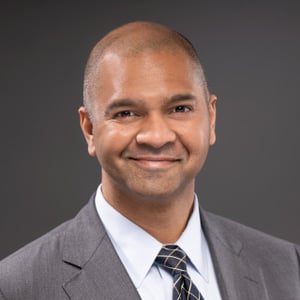
Senior Fellow, Stand Together Trust
Vikrant Reddy is a senior fellow at Stand Together Trust, specializing in the area of criminal justice reform. Reddy previously served as a senior policy analyst at the Texas Public Policy Foundation (TPPF), where he managed the launch of TPPF’s national Right on Crime initiative in 2010. He has worked as a research assistant at the Cato Institute, as a judicial clerk to the Hon. Gina M. Benavides in Texas, and as an attorney in private practice. He is a member of the State Bar of Texas, and he serves on the Executive Committee of the Criminal Law Practice Group of the Federalist Society. He is also an appointee to the U.S. Commission on Civil Rights Texas State Advisory Committee.
Reddy’s research and scholarly opinions have appeared in a range of national media outlets, including USA Today, National Review, The Federalist, and others.
Reddy earned his law degree from the Southern Methodist University School of Law. He received his undergraduate degree from the University of Texas at Austin.
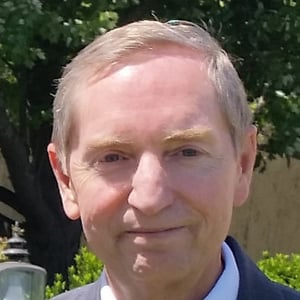
Legal Director & General Counsel, Criminal Justice Legal Foundation
Kent S. Scheidegger has been the Legal Director of the Criminal Justice Legal Foundation since December 1986. He also served as Chairman of the Criminal Law Practice Group of the Federalist Society 2003 to 2005. His articles on criminal and constitutional law have been published in law reviews, national legal publications, and congressional reports. Legal arguments authored by Mr. Scheidegger have been cited and incorporated in several precedent-setting United States Supreme Court decisions.
After receiving a degree in physics with honors from New Mexico State University in 1976, Mr. Scheidegger served for six years in the United States Air Force as a Nuclear Research Officer. He took his law degree with distinction from the University of the Pacific, McGeorge School of Law in 1982 and practiced civil law in Northern California. He was general counsel of California Cooler, Inc. from 1984 until 1986, when he joined the Foundation.
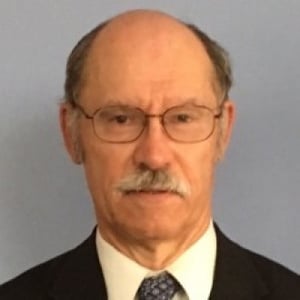
Professorial Lecturer in Law, George Washington University Law School
Theodore C. (Ted) Hirt was an attorney in the Department of Justice's Civil Division from August 1979 to March 2016. He was in its Federal Programs Branch from 1979 to 2008 (trial attorney, senior trial counsel, assistant director), and then in its Office of Immigration Litigation from 2008 to 2016 (trial attorney and senior litigation counsel). Among his responsibilities (September 2001 to March 2016) was being an advisor to the Assistant Attorneys General for the Civil Division, who serve ex officio on the Civil Rules Advisory Committee. Mr. Hirt’s areas of specialization include First Amendment issues, internet and telecommunications law, and electronic discovery. From 1976 to 1979, he was an associate at Fried, Frank, Harris, Shriver & Kampelman. From 1975 to 1976 he was an attorney in the Prehearing Division of the Michigan Court of Appeals.
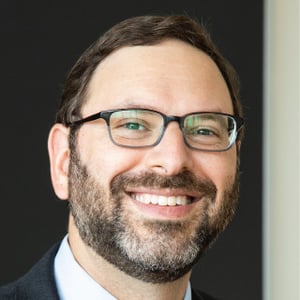
Antonin Scalia Professor of Law, Harvard Law School
Stephen E. Sachs is the Antonin Scalia Professor of Law at Harvard Law School, where he teaches civil procedure, conflict of laws, and seminars on constitutional law. His research focuses on the law and theory of constitutional interpretation, the jurisdiction of state and federal courts, the history of procedure and private law, and the role of the general common law in the U.S. legal system.
Sachs has authored numerous articles, essays, and book chapters. He is an elected member of the American Law Institute, an adviser to the ALI’s project on the Restatement of the Law (Third), Conflict of Laws, a former member of the Judicial Conference’s Advisory Committee on Appellate Rules, and a founding member of the Academic Freedom Alliance.
In 2020, Sachs received the Federalist Society’s Joseph Story Award, which recognizes a young academic who has demonstrated excellence in legal scholarship, a commitment to teaching, a concern for students, and who has made a significant public impact in a manner that advances the rule of law in a free society.
Sachs previously taught at Duke University School of Law and as a visiting professor at the University of Chicago Law School. Before entering academia, he practiced in the Washington, D.C., litigation group of Mayer Brown LLP, and he clerked for Chief Justice John G. Roberts Jr. as well as for Judge Stephen F. Williams of the U.S. Court of Appeals for the D.C. Circuit.
Sachs received his J.D. from Yale Law School, where he was executive editor of the Yale Law Journal and served both as executive editor and articles editor of the Yale Law & Policy Review. A Rhodes Scholar, he graduated from Oxford University with a first-class BA (Hons) degree in philosophy, politics, and economics. He received his A.B. degree summa cum laude in history from Harvard University, earning the Sophia Freund Prize.
Sachs is a licensed attorney in Massachusetts and the District of Columbia, and he is authorized to practice before the D.C. Circuit, the Second Circuit, the Seventh Circuit, and the Supreme Court of the United States.
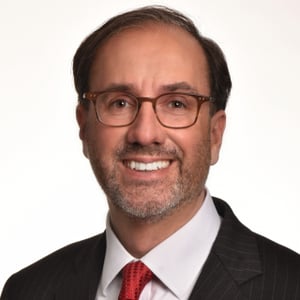
President and CEO, The Buckeye Institute
Robert Alt is the President and Chief Executive Officer of The Buckeye Institute where he has catalyzed exponential growth since he took the organization’s helm in 2012. He has since founded Buckeye’s renowned Economic Research Center and established its impactful Legal Center.
Alt is a distinguished scholar and attorney with particular expertise in legal policy, criminal justice, national security, and constitutional law. He previously worked for former U.S. Attorney General Edwin Meese III, regularly provides commentary on television and radio programs, and his writings have appeared in countless outlets.
In 2004, Alt spent five months in Iraq as an embedded war correspondent.
Alt has testified before Congress multiple times—including at the confirmation hearings for U.S. Supreme Court Justice Elena Kagan—the Federal Election Commission regarding matters of constitutional and administrative law, and numerous state legislatures.
Alt serves as an officer on the boards of The Philadelphia Society and the Federalist Society’s Columbus Lawyers Chapter. He taught national security law, criminal law, and legislation at Case Western Reserve University School of Law, as well as constitutional law and political parties and interest groups at Ashland University.
Alt earned his Doctor of Law degree from The University of Chicago Law School, where he was Symposium Editor and the winner of the Mulroy Prize for Excellence in Appellate Advocacy as well as research assistant to Professor Richard Epstein. Following law school, he clerked for Judge Alice Batchelder on the U.S. Court of Appeals for the Sixth Circuit. Alt graduated with his Bachelor of Arts in philosophy and political science magna cum laude from Azusa Pacific University where he also won the Outstanding Senior Award in Political Science.
Alt is an accomplished high-altitude alpinist and endurance athlete who has successfully climbed 6.75 of the famed Seven Summits of the World including Mount Everest. He is the creator of PROFOUND CLIMBING™ and a frequent speaker across the country and around the world on legal and public policy topics as well as effective leadership, management, decision-making, and teamwork in contexts ranging from extraordinary life/death situations to ordinary professional/business settings.
Shareholder, Littler Mendelson P.C.
Bruce J. Sarchet has focused his entire legal career on the representation of management in labor and employment law matters and has particular expertise in issues involving:
He regularly appears in state and federal courts and before the National Labor Relations Board (NLRB) on matters involving:
With energy, enthusiasm, and intense focus, Bruce provides clients with superior quality work and exceptional client service and has earned a reputation as a hands-on problem solver. He provides consultation and representation to large, medium and small businesses across California in a variety of industries, including food and beverage, healthcare, transportation, technology, and construction. He also represents public sector employers. He crafts practical, real world solutions to workplace problems such as dealing with difficult employees and recognizing and balancing business realities and necessities with the need to minimize exposure to litigation.
For unionized employers, Bruce frequently serves as chief spokesperson in collective bargaining negotiations and provides representation in grievances and arbitration hearings. He also represents employers during union organizing drives and unfair labor practice charges under the National Labor Relations Act.
An animated, effective and entertaining public speaker, Bruce regularly makes presentations to local professional organizations on labor and employment law topics and has also presented numerous in-house training sessions and workshops to management teams at private and public employers. Bruce has published numerous articles for local business journals, providing practical, hands-on labor and employment law advice to small business owners.
From 2005 to 2013, Bruce served on the firm's five-attorney Management Committee, which handles the firm's operations. In this capacity, he oversaw thirteen Littler offices in seven states. Prior to his selection to the Management Committee, he served as the office-managing shareholder for the firm's Sacramento office and served several terms as a member of the firm's Board of Directors.

Topics
Speech Police at the DMV: Regulation and Arbitrary Rule
Vague laws invite arbitrary power. Laws that require regulators to censor speech they find offensive,...
Independent Contractor Or Employee: Sometimes, Things Are Not As Easy As A-B-C
Bruce J. Sarchet
The status of independent contractors in California has been hotly debated over the past year,...
Independent Contractor Or Employee: Sometimes, Things Are Not As Easy As A-B-C
TeleforumExplainer Episode 4 – Civil Rights and Vanity Plates
Jon Kotler, a California fan of the London soccer club Fulham FC, wanted to put...
Explainer Episode 2 – The Dynamex Decision and its Implications for Independent Contractors
Luke A. Wake
In 2018, the California Superior Court announced a new test for determining whether a worker...
Two Views on Criminal Justice Reform: The Author and a Critic on Locked In
Vikrant P. Reddy, Kent Scheidegger
A Debate About: Locked In: The True Causes of Mass Incarceration—and How to Achieve Real...
Have the American People Irrevocably Ceded Control of Their Government to the Modern Administrative State?
Ted Hirt
A review of Unmasking the Administrative State: The Crisis of American Politics in the Twenty-First...
Topics
Fourth Circuit Recognizes Free Speech Concerns with Voter List Access Restrictions
On July 12, a panel of the U.S. Court of Appeals for the Fourth Circuit...
Franchise Tax Board of California v. Hyatt - Post-Decision SCOTUScast
Stephen E. Sachs
On May 13, 2019, the Supreme Court decided Franchise Tax Board of California v. Hyatt,...
Criminal Justice Reform: A Survey of 2018 State Laws
Robert Alt
State legislatures across the country made significant strides in reforming their criminal justice regimes throughout...