
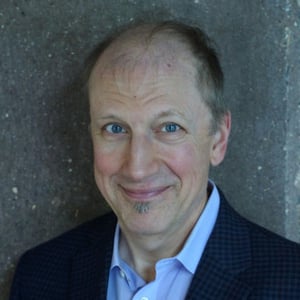
James L. Oberstar Professor of Law and Public Policy, University of St. Thomas School of Law

Paul J. Schierl Professor of Law, University of Notre Dame Law School
Professor Richard W. Garnett teaches and writes in the areas of constitutional law, criminal law, the First Amendment, and law and religion. He is a leading authority on questions and debates regarding religious freedom and church-state relations, and is the founding director of Notre Dame Law School’s Program on Church, State, and Society.
Garnett clerked for the late Chief Justice of the United States, William H. Rehnquist, and also for the late Chief Judge of the United States Court of Appeals for the Eighth Circuit, Richard S. Arnold. He earned his J.D. from Yale Law School in 1995 and his B.A., summa cum laude, from Duke University in 1990. He joined the faculty in 1999 after practicing law in Washington, D.C. with Miller, Cassidy, Larroca & Lewin.

President, Cass & Associates, PC
Ronald A. Cass is Dean Emeritus of Boston University School of Law (where he was Dean from 1990-2004), President of Cass & Associates, PC, former Vice-Chairman and Commissioner of the U.S. International Trade Commission, former faculty member at Boston University School of Law and the University of Virginia Law School, and Distinguished Senior Fellow at the C. Boyden Gray Center for the Study of the Administrative State. Dean Cass also sits as an arbitrator for commercial, international, and intellectual property rights disputes, and is a former United States member of the Panel of Conciliators of the International Centre for Settlement of Investment Disputes. He is a member of the Council of the Administrative Conference of the United States and has received seven presidential appointments, spanning Presidents Ronald Reagan to Donald J. Trump.
As a law professor, lecturer, and scholar, Dean Cass has been teaching and writing about a wide array of legal issues on topics such as administrative law and regulation, antitrust, constitutional law, communications, intellectual property, international trade, separation of powers, and legal process. He has published more than 160 scholarly books, chapters, articles, and papers, including a leading casebook on administrative law. Dean Cass has taught judges as well as students in schools of law, economics, business, and public policy and has held academic appointments in the United States, Europe, and Latin America.
In addition to his academic work, Dean Cass has participated in numerous important legal cases as an amicus, consultant, or expert, and has advised businesses, law firms, investment funds, and government agencies on a range of trade, antitrust, intellectual property, and regulatory issues. He has a broad range of affiliations with professional groups, and has received numerous honors, fellowships and awards.
Dean Cass is a graduate of the University of Virginia and the University of Chicago Law School.

Partner, Clement & Murphy, PLLC
Paul served as the 43rd Solicitor General of the United States from June 2005 until June 2008. Before his confirmation as Solicitor General, he served as Acting Solicitor General for nearly a year and as Principal Deputy Solicitor General for over three years.
Paul has argued over 100 cases before the United States Supreme Court, including McConnell v. FEC, Tennessee v. Lane, United States v. Booker, MGM v. Grokster, Hobby Lobby v. Burwell, Epic Systems Corp. v. Lewis, Rucho v. Common Cause, Facebook v. Duguid, and TransUnion v. Ramirez. Paul has argued more Supreme Court cases since 2000 than any lawyer in or out of government. He has also argued many important cases in the lower courts, including Walker v. Cheney, United States v. Moussaoui and NFL v. Brady.
Paul’s practice focuses on appellate matters, constitutional litigation and strategic counseling. He represents a broad array of clients in the Supreme Court and in federal and state appellate courts. Last year, for example, he successfully argued Supreme Court cases involving significant issues of energy regulation, statutory interpretation, state sovereign immunity and Article III standing, and successfully argued a trademark appeal in the Fourth Circuit, and a constitutional appeal before the en banc Eleventh Circuit.
Paul focuses on high-stakes appeals. In recent years, he successfully defended a $1.2 billion jury verdict for clients in a Tenth Circuit case, while securing the reversal of an over $2 billion jury verdict for another client in the Seventh Circuit and the approval of a nearly $1 billion dollar class action settlement in the Third Circuit. He has initiated major administrative law challenges and constitutional litigation against the federal government, such as the successful challenge to the HHS drug-pricing rule and threatened challenges that led to the withdrawal of the Treasury Department’s proposed cryptocurrency regulations. He also counsels clients on a variety of strategic legal questions, whether arising from pending legislation, government inquiries or ongoing litigation.
Paul has undertaken substantial pro bono engagements in the Supreme Court, such as twice successfully representing the defendant in Bond v. United States and successfully representing the Omaha Tribe in Nebraska v. Parker, the guardian ad litem in Adoptive Couple v. Baby Girl, the defendant in Sekhar v. United States, a high school football coach in Kennedy v. Bremerton, and the Little Sisters of the Poor. Paul’s pro bono representation also precipitated the federal government’s confession of error in United States v. Rojas.
Following law school, Paul clerked for Judge Laurence H. Silberman of the U.S. Court of Appeals for the D.C. Circuit and for Associate Justice Antonin Scalia of the U.S. Supreme Court. After his clerkships, he went on to serve as Chief Counsel of the U.S. Senate Subcommittee on the Constitution, Federalism and Property Rights.
Paul is a Distinguished Lecturer in Law at the Georgetown University Law Center, where he has taught in various capacities since 1998. He also serves as a Senior Fellow of the Law Center’s Supreme Court Institute. He is the Justice Joseph Story Distinguished Practitioner in Residence at the Gray Center at Scalia Law School.
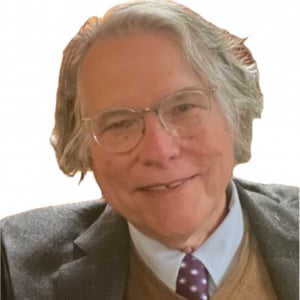
Partner, Earth and Water Law; retired Yale Law School professor (1981-2025), Yangtze River Distinguished Professor, Guangzhou Law School, ChinaDistinguished Adjunct Professor at Antonin Scalia Law School
E. Donald Elliott is a Florence Rogatz Visiting Professor of Law at Yale Law School and a leading academic scholar, as well as practitioner, in the fields of administrative and environmental law. He is “one of the most well-known, well-regarded environmental law professors in the nation,” according to John Cruden, former President of the Environmental Law Institute and Assistant Attorney General, Environment and Natural Resources Division, U.S. Department of Justice during the Obama administration. Elliott has been on the Yale Law faculty since 1981 and currently teaches courses in environmental law, energy law, administrative law and civil procedure. He is also senior of counsel in the Washington D.C. office of Covington & Burling LLP, and co-chair of the firm's Environmental Practice Group. From 2003 until he joined Covington in 2013, he was a partner in Willkie Farr & Gallagher LLP, chairing the firm’s worldwide Environment, Health and Safety Department.
From 1989 to 1991, Elliott served as Assistant Administrator and General Counsel of the U.S. Environmental Protection Agency (EPA). In 1993, he was named to the first endowed chair in environmental law and policy at any major American law school, the Julien and Virginia Cornell Chair in Environmental Law and Litigation at Yale Law School. From 2003-2009, he was a member of the National Academy of Sciences Board on Environmental Studies and Toxicology, which advises the federal government on environmental issues. Elliott also testifies frequently in Congress on environmental issues.
He has served as a consultant on improving the relationship of law and science to the Federal Courts Study Committee, which was chartered by Congress to make recommendations for improving the federal courts, and to the Carnegie Commission for Law, Science and Government. He co-chaired the National Environmental Policy Institute’s Committee on Improving Science at EPA.
Elliott is a Senior Fellow of the Administrative Conference of the United States (ACUS) and an elected member of the American College of Environmental Lawyers and the American Law Institute. He serves on the Board of the Connecticut Fund for the Environment and as chair of its legal committee, as well on the Advisory Board for NYU’s Institute for Policy Integrity. He is a former member of the boards of the Environmental Law Institute, and the Center for Clean Air Policy. He is the author or coauthor of seven books and has published more than 70 articles in professional journals. He was named one of the top 25 environmental attorneys in the United States by the National Law Journal and is highly ranked in Chambers USA: Leading Lawyers for Business; Best Lawyers in America; D.C. Super Lawyers; Who’s Who in American Law; and Who’s Who in the World.
He earned both his B.A., summa cum laude and Phi Beta Kappa, and his J.D. from Yale. Following graduation, he was a law clerk for Gerhard Gesell in the U.S. District Court for the District of Columbia, and for Chief Judge David Bazelon of the U.S. Court of Appeals for the District of Columbia Circuit.
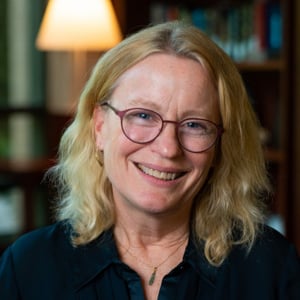
Justice William J. Brennan, Jr., Professor of Law, Georgetown University Law Center
Lisa Heinzerling is the Justice William J. Brennan, Jr. Professor of Law at Georgetown University. Her primary specialties are administrative law and environmental law. She is the author of several books, including Priceless: On Knowing the Price of Everything and the Value of Nothing, a critique of the use of cost-benefit analysis in environmental policy. Professor Heinzerling has received the Georgetown University President's Award for Distinguished Scholar-Teachers, the faculty teaching award at Georgetown Law, and several awards related to her scholarship and advocacy in environmental law. She was the lead author of the winning briefs in Massachusetts v. EPA, in which the Supreme Court held that the Clean Air Act gives EPA the authority to regulate greenhouse gases. From January 2009 to July 2009, Heinzerling served as Senior Climate Policy Counsel to the Administrator of the Environmental Protection Agency and then, from July 2009 to December 2010, she served as Associate Administrator of EPA’s Office of Policy. She was a law clerk to Judge Richard A. Posner of the U.S. Court of Appeals for the Seventh Circuit and Justice William J. Brennan, Jr. of the U.S. Supreme Court.

Founder, Law Office of Eileen J. O'Connor PLLC
After nearly 30 years as a national tax specialist with the IRS and major accounting firms, Eileen J. O’Connor, now an attorney in private practice, was Assistant Attorney General for the Justice Department’s Tax Division for six years during the administration of President George W. Bush and a member of then-President-elect Trump’s Treasury Department Transition Team. She focuses on federal administrative and tax law.

Partner, Gibson, Dunn & Crutcher, and Former United States Secretary of Labor
Eugene Scalia is a partner in the Washington, D.C. office of Gibson, Dunn & Crutcher, co-chair of the firm’s Administrative Law and Regulatory Practice Group, and a senior member of the firm’s Labor and Employment Practice Group and Financial Institutions Practice Group. He returned to the firm after serving as U.S. Secretary of Labor from September 2019 to January 2021.
Mr. Scalia has a nationally-prominent practice in two areas: Labor and employment law, and advice and litigation regarding the regulatory obligations of federal administrative agencies. He also has extensive appellate experience. Federal regulatory actions he has challenged include the SEC’s “proxy access” rule; the CFTC’s “position limits’” rule; MetLife’s designation as “too big to fail” by the Financial Services Oversight Council; the Labor Department’s “fiduciary” rule; and OSHA’s “cooperative compliance program.”
As Labor Secretary, Mr. Scalia engaged at the highest level with national employment policy and matters affecting the financial services industry and international trade, overseeing the enforcement and administration of more than 180 federal employment laws covering more than 150 million workers and 10 million workplaces. He also served as Chair of the Board of Directors of the Pension Benefit Guaranty Corporation and as a member of the White House Coronavirus Task Force. He was closely involved in the drafting and implementation of the CARES Act and other coronavirus-related legislation. Laws administered by the Labor Department also include the workplace safety requirements of OSHA and the Mine Safety and Health Administration, federal minimum wage and overtime protections, the anti-discrimination requirements applicable to federal contractors, and ERISA’s protection of the more than $11 trillion held in employee retirement plans and health plans.
Mr. Scalia served from 2002 to 2003 as Solicitor of the U.S. Department of Labor, with responsibility for all Labor Department litigation and legal advice on rulemakings and administrative law. He is the only person to have served as both Solicitor and Secretary of Labor.
He also served at the U.S. Department of Justice as a Special Assistant to the Attorney General, receiving the Department’s Edmund J. Randolph Award in 1993.
In private practice, Mr. Scalia has represented employers in high-profile matters under the National Labor Relations Act and in class actions and collective actions under Title VII, the Americans with Disabilities Act, the Age Discrimination in Employment Act, ERISA, and federal and state wage hour laws. He has extensive experience in federal district court, the courts of appeals, and in the arbitration of employment disputes. He has been a leading authority on “whistleblower” investigations and litigation since the 2002 enactment of the Sarbanes-Oxley Act. Mr. Scalia also counsels employers on reductions-in-force and the proper conduct of harassment and discrimination investigations. He has provided pro bono representation to workers in discrimination matters, wrongful separation disputes, and other matters.
Mr. Scalia is a Senior Fellow of the Administrative Conference of the United States, a federal agency that makes recommendations to Congress and the Executive Branch on ways to improve the administrative process. He is the author of more than 30 articles and papers on labor and employment law, administrative law, and other subjects. Among other accolades, he has been named an “Employment MVP,” a “Securities MVP,” and an “Appellate MVP” by Law360. The National Law Journal recognized Mr. Scalia as a “Visionary” for his litigation against financial regulatory agencies, and the Nation magazine has called him a “fearsome litigator.” He has been a Lecturer in labor and employment law at the University of Chicago Law School.
Mr. Scalia graduated cum laude from the University of Chicago Law School, where he was editor-in-chief of the Law Review. He graduated With Distinction from the University of Virginia in 1985 and was a speechwriter for Education Secretary William J. Bennett before attending law school. Mr. Scalia and his wife Trish have seven children.

Dr. John Eastman is the former Henry Salvatori Professor of Law & Community Service and former Dean at Chapman University's Dale E. Fowler School of Law, where he had been a member of the faculty since 1999, specializing in Constitutional Law, Legal History, and Property. He is a founding director of the Center for Constitutional Jurisprudence, a public interest law firm affiliated with the Claremont Institute that he founded in 1999. He has a Ph.D. in Government from the Claremont Graduate School and a J.D. from the University of Chicago Law School, and a B.A. in Politics and Economics from the University of Dallas. He serves as the Chairman of the Board of the National Organization for Marriage.
Prior to joining the Chapman law faculty, Dr. Eastman served as a law clerk to the Honorable Clarence Thomas, Associate Justice, Supreme Court of the United States, and to the Honorable J. Michael Luttig, Judge, United States Court of Appeals for the Fourth Circuit and practiced law with the national law firm of Kirkland & Ellis. Dr. Eastman has also represented numerous clients in important constitutional law matters and has argued before the Supreme Court. On behalf of the Claremont Institute Center for Constitutional Jurisprudence, he has participated as amicus curiae before the Supreme Court of the United States, U.S. Courts of Appeals, and State Supreme Courts in more than one hundred cases of constitutional significance, including Boy Scouts of America v. Dale, Zelman v. Simmons-Harris (the school vouchers case), Kelo v. New London, Ct. (eminent domain), and Van Orden v. Perry (the 10 Commandments case). He has also appeared as an expert legal commentator on numerous television and radio programs, including C-SPAN, Fox News, PBS, NewsHour, and The O'Reilly Factor.
Paul J. Schierl Professor of Law, University of Notre Dame Law School
Professor Richard W. Garnett teaches and writes in the areas of constitutional law, criminal law, the First Amendment, and law and religion. He is a leading authority on questions and debates regarding religious freedom and church-state relations, and is the founding director of Notre Dame Law School’s Program on Church, State, and Society.
Garnett clerked for the late Chief Justice of the United States, William H. Rehnquist, and also for the late Chief Judge of the United States Court of Appeals for the Eighth Circuit, Richard S. Arnold. He earned his J.D. from Yale Law School in 1995 and his B.A., summa cum laude, from Duke University in 1990. He joined the faculty in 1999 after practicing law in Washington, D.C. with Miller, Cassidy, Larroca & Lewin.

William Rand Kenan, Jr. Distinguished Professor of Law, University of North Carolina School of Law
William (Bill) Marshall joined the Carolina Law faculty in 2001 and serves as the William R. Kenan Jr. Distinguished Professor of Law. His teaching and research interests include the first amendment, presidential power, election law, federal jurisdiction, federal judicial selection, civil procedure, and media law. Marshall is the author of numerous book chapters, articles, and essays on free speech, separation of powers, the Establishment Clause, and the Free Exercise Clause. His work has appeared in the Harvard Law Review, the Yale Law Journal, the Supreme Court Review, and the University of Chicago Law Review, among others.
Marshall received his law degree from the University of Chicago and his undergraduate degree from the University of Pennsylvania. Marshall was Deputy Counsel to the President and Deputy Assistant to the President during the Clinton Administration and also served as the Solicitor General for the State of Ohio. He has taught at the Northwestern, Boston University, Vanderbilt, Ohio State, DePaul, Case Western Reserve, William and Mary, and the University Connecticut law schools. Prior to beginning his teaching career, Marshall was a Special Assistant Attorney General for the State of Minnesota.
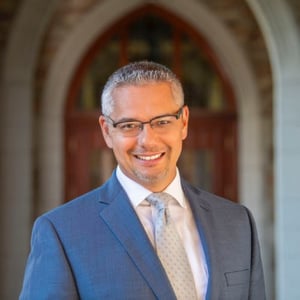
Tocqueville Associate Professor Department of Political Science and Concurrent Associate Professor of Law, University of Notre Dame Law School
Vincent Phillip Muñoz is the Tocqueville Associate Professor of Religion & Public Life in the Department of Political Science at the University of Notre Dame. He is the founding director of Notre Dame's undergraduate minor in Constitutional Studies and directs Notre Dame's Tocqueville Program for Inquiry into Religion and Public Life.
Muñoz writes and teaches across the fields of constitutional law, American politics, and political philosophy with a focus on religious liberty and the American Founding. His first book, God and the Founders: Madison, Washington, and Jefferson (Cambridge University Press, 2009) won the Hubert Morken Award from the American Political Science Association for the best publication on religion and politics in 2009 and 2010. His First Amendment church-state case reader, Religious Liberty and the American Supreme Court: The Essential Cases and Documents (Rowman & Littlefield) was first published in 2013 (revised edition, 2015) and is being used at Notre Dame and other leading universities.
Muñoz's current project is a scholarly monograph on the natural right of religious liberty and the original meaning of the First Amendment's Religion Clauses. Articles from that project have appeared in American Political Science Review, The Harvard Journal of Law and Public Policy, Notre Dame Law Review, American Political Thought, and the University of Pennsylvania's Journal of Constitutional Law.
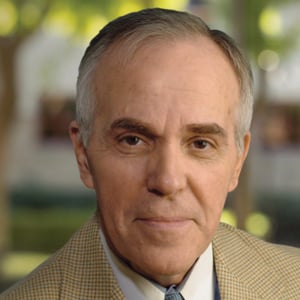
Professor of Government, Claremont Graduate University
Michael Uhlmann has been a professor in the Division of Politics & Economics at Claremont Graduate University since 2002. His research specializations include American presidency, executive–congressional relations, and the federal judiciary—namely, the federal administrative process and national security decision making. In addition to his regular coursework at CGU, Uhlmann teaches in and directs CGU’s Tribal Administration Certificate Program, made possible through a generous grant from the San Manuel Band of Mission Indians.
Uhlmann received his PhD in Government from Claremont Graduate University after receiving his BA in History from Yale University and his LLB from the University of Virginia Law School. Immediately prior to joining the CGU faculty, Uhlmann served as a senior vice president of the Lynde and Harry Bradley Foundation in Milwaukee, Wisconsin. Before that, he was a senior fellow at the Ethics and Public Policy Center in Washington, D.C. He had also served for many years as a partner in the Washington office of Pepper, Hamilton, & Scheetz, a large international law firm, where he specialized in federal antitrust and administrative law. Concurrently held alongside his position at CGU, Uhlmann is an adjunct professor at Claremont McKenna College, teaching a variety of courses in the Department of Government.
In addition to his academic career, private legal practice, and philanthropic work, Uhlmann has had a distinguished career in government, beginning with service as a staff and committee counsel in the U.S. Senate and as assistant general counsel of the Federal Trade Commission. In 1974, following Senate confirmation, he was appointed by President Gerald Ford to be assistant attorney general for Legislative Affairs in the Department of Justice. From 1981 to 1984, he served as special assistant to President Ronald Reagan and associate director of the White House Office of Policy Development. He directed legal and administrative policy for the Reagan presidential transition in 1980–1981 and chaired the Department of Justice transition team for President-Elect George H. W. Bush in 1988–1989.
Uhlmann has written for many leading newspapers and journals of opinion, including National Review, Weekly Standard, Philadelphia Inquirer, Los Angeles Times, Washington Post, First Things, and Claremont Review of Books.

Professor Emeritus, Paul M. Hebert Law Center, Louisiana State University
In memoriam
Dr. John Baker is Professor Emeritus of Law, and previously the Dale E. Bennett Professor of Law, at Louisiana State University Law School. He is currently Visiting Professor at Peking University School of Transnational Law (via Zoom) and has been Visiting Professor at The Center for the Constitution, Georgetown Law School (2013-2020). He has also been a Visiting Fellow at Oriel College, the University of Oxford (2012-2014) and taught at Blackfriars Hall, Oxford in 2014. Dr. Baker has also been an adjunct Fellow at the Heritage Foundation (Spring, 2008) and a Distinguished Scholar at the Catholic University of America Law School (2011-12). He has taught at Tulane Law School, George Mason Law School, Pepperdine Law School, New York Law School, Hong Kong University, and the University of Dallas, School of Management and also taught and/or lectured in 17 foreign countries. Notable among his foreign visits are the
following: Visiting Professor at the University of Lyon III (France) (1999-2011); Visiting Professor at the Universidad de los Andes, Chile (2012), as a Fulbright Specialist (2006); and a Fulbright Scholar at various universities in the Philippines. Dr. Baker received his J.D., with honors, from the University of Michigan Law School and his B.A., magna cum laude, from the University of Dallas. He also earned a Ph.D. in Political Thought from the University of London. Baker has taught over a dozen different subjects, mostly courses in public law. His main areas of interest are Constitutional Law (particularly federalism and separation of powers), Criminal Law, Anti-Terrorism Law, International Law, Health Care Law, Mediation, and Comparative Law.
In addition to law review articles and book chapters, Dr. Baker’s academic publications include Hall's Criminal Law: Cases and Materials (with Benson, Force and George; 5th ed. Michie, 1993); An Introduction to the Law of the United States (ed. with Levasseur; University Press of America, 1992). He has also published on Forbes.com, FoxNews.com, in The Washington Times, and a number of times in The Wall Street Journal. He argues in federal court, including two oral arguments in the U.S. Supreme Court. For many years, he co-taught courses for the Federalist Society on separation of powers with the late Supreme Court Justice Antonin Scalia. In September 2016, he co-taught a Supreme Court seminar in China with Justice Samuel Alito. Following law school, he served as a law clerk in federal district court and as an assistant district attorney in New Orleans before joining LSU in 1975. While a professor, he has been as a consultant to USAID, USIA (since rolled into the State Department), the Justice Department, the U.S. Senate Judiciary Subcommittee on Separation of Powers, and the Office of Planning in the White House. He served on an ABA Task Force which issued the report, The Federalization of Crime (1998) and later as a consultant to the “Bi-Partisan Task Force on the Over- federalization of Crime” (2012-2014) created by the U.S. House Judiciary Subcommittee on Crime. Dr. Baker was a co-founder of the first iteration (1995) of Stratfor Inc., a global intelligence agency. He co-authored its first book: The Intelligence Edge (with Friedman, Friedman and Chapman; Crown Books/Random House 1997). In 2022, he began a short, weekly video podcast available on YouTube and Rumble, The Baker Brief.
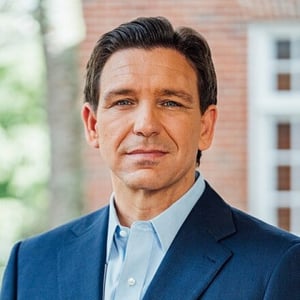
Governor, Florida
Ron DeSantis is the 46th Governor of the State of Florida. Since taking office in January 2019, he has worked hard to expand education opportunities, improve Florida’s water resources and Everglades, champion vocational training, bolster public safety, foster innovation in health care, assist with hurricane recovery, promote infrastructure development and support veterans – all while lowering taxes and being fiscally responsible.
A native Floridian, Governor DeSantis worked his way through Yale University, where he captained the university baseball team and graduated magna cum laude. He also gradated with honors from Harvard Law School. While at Harvard, he earned a commission in the U.S. Navy as a JAG Officer. During his active duty service, then- Lieutenant DeSantis deployed to Iraq as an advisor to a U.S. Navy SEAL Commander in support of the SEAL mission in Iraq. His military decorations include the Iraq Campaign Medal of the Bronze Star Medal (meritorious service).
Prior to serving as Governor, DeSantis served as the U.S. Congressman for Florida’s 6th District. As Chairman of the National Security Subcommittee, DeSantis spearheaded efforts to reform the UA, combat terrorism, identify government waste and relocate the American Embassy in Israel to Jerusalem. As a Congressman, DeSantis championed term limits, fiscal responsibility with a strong national defense.
Governor DeSantis is married to First Lady Casey DeSantis, a former Emmy Award winning television host. They are the proud parents of two children, Madison and Mason. They are the youngest family living in the Florida Governor’s Mansion in nearly fifty years.

Vice President for Legal Affairs, Cato Institute
Roger Pilon is the Cato’s Institute’s vice president for legal affairs, the founding director of Cato’s Robert A. Levy Center for Constitutional Studies, the inaugural holder of Cato’s B. Kenneth Simon Chair in Constitutional Studies, and the founding publisher of the Cato Supreme Court Review.
Prior to joining Cato, Pilon held five senior posts in the Reagan administration, including at State and Justice, and was a national fellow at Stanford’s Hoover Institution. In 1989 the Bicentennial Commission presented him with its Benjamin Franklin Award for excellence in writing on the U.S. Constitution. In 2001 Columbia University’s School of General Studies awarded him its Alumni Medal of Distinction. Pilon lectures and debates at universities and law schools across the country and testifies often before Congress.
His writing has appeared in the Wall Street Journal, the Washington Post, the New York Times, the Los Angeles Times, Legal Times, National Law Journal, Harvard Journal of Law and Public Policy, Stanford Law and Policy Review, and elsewhere. He has appeared on ABC’s Nightline, CBS’s 60 Minutes II, Fox News Channel, NPR, CNN, MSNBC, CNBC, C-SPAN, and other media.
Pilon holds a BA from Columbia University, an MA and a PhD from the University of Chicago, and a JD from the George Washington University School of Law.

Chief Judge, United States Court of Appeals, Eleventh Circuit
William H. Pryor Jr. serves as Chief Circuit Judge on the United States Court of Appeals for the Eleventh Circuit.
In 2013–18, he served on the United States Sentencing Commission and, in 2017–18, served as Acting Chair.
He has taught as a visiting professor at the University of Alabama School of Law and previously taught as an adjunct professor at the Cumberland School of Law of Samford University.
He served as the 45th Attorney General of Alabama from 1997 to 2004. When he took office, he was the youngest attorney general in the nation. In his reelection, he received the highest percentage of votes of any statewide candidate.
He graduated magna cum laude from Tulane Law School where he finished first in the common-law curriculum and was editor in chief of the Tulane Law Review. He then served as a law clerk for Judge John Minor Wisdom of the U.S. Court of Appeals for the Fifth Circuit.
He is a member of The American Law Institute and an Adviser for the RESTATEMENT OF THE LAW THIRD, CONFLICT OF LAWS. He is a coauthor with Bryan Garner, Justices Gorsuch and Kavanaugh, and several other judges of a treatise, THE LAW OF JUDICIAL PRECEDENT. He has published in the Yale Law Journal, Columbia Law Review, Virginia Law Review, Notre Dame Law Review, Harvard Journal of Law & Public Policy, Yale Law & Policy Review, George Mason Law Review, Florida Law Review, Alabama Law Review, Case Western Reserve Law Review, and Tulane Law Review. He has published op-eds in The Wall Street Journal, The New York Times, National Review, and USA Today. He has debated at National Lawyers’ Conventions of the Federalist Society (including on National Public Radio) and at the Oxford Union in the United Kingdom. And he is listed among several “widely admired judicial writers” in Bryan Garner’s The Redbook: A Manual on Legal Style.
He is a member of the Tulane Law School Hall of Fame and has received the Defender of the Constitution Award from the Heritage Foundation, the Jurist of the Year Award from the Texas Review of Law & Politics, and the St. Thomas More Award from the St. Thomas More Society of Atlanta. Judge Pryor is also a proud member of the National Society of the Sons of the American Revolution.
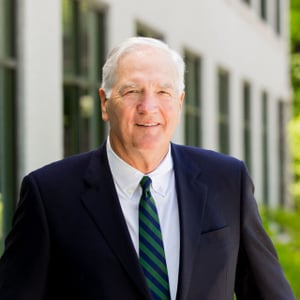
Former Senator, State of Alabama
Luther J. Strange, III is a former Republican member of the U.S. Senate from the state of Alabama. Strange was first appointed to the Senate position by Gov. Robert Bentley on February 9, 2017. He replaced Jeff Sessions, who was confirmed as United States Attorney General.
Strange is the former Republican Attorney General of Alabama. He was first elected to the statewide position in 2010 and assumed office on January 17, 2011. Strange's first four-year term ended on January 19, 2015, and he won re-election to a second term on November 4, 2014.
Prior to his election as Attorney General, Luther Strange practiced law in Birmingham, Alabama. In 2010, U.S. News-Best Lawyers "Best Law Firms" gave his firm a first-tier ranking, and the firm was named as one of the Top Ten Law Firms that Understand Economic Development by Southern Business & Development magazine.
Before establishing his own law firm, Strange was a partner with Bradley Arant Boult Cummings LLP. During his time in private practice, he was recognized in Best Lawyers in America® , named Best of the Bar by the Birmingham Business Journal, and called one of the "Best Lawyers" in Alabama by Birmingham magazine.
His tenure in office was marked by a strong emphasis on fighting public corruption, including the conviction and removal from office of the Alabama House Speaker in June 2016. He was also a leader in opposing costly overregulation and the expansion of the federal government at the expense of the states.
Luther Strange served as the court-appointed Coordinating Counsel for the Gulf Coast States in the historic Deepwater Horizon Oil spill litigation. Strange was actively involved in trying the case, which led to a landmark settlement agreement to compensate Alabama for both economic and environmental damages as a result of that disaster.
Among many civic commitments, he has served on the Advisory Board of the United States Merchant Marine Academy and as a Trustee of Talladega College, Alabama’s oldest historically black college.
An Eagle Scout since he was 13 and a recipient of the Distinguished Eagle Scout Award from the Boy Scouts of America in 2011, Strange is passionate about encouraging young people in Alabama to become involved in public service.
Strange received both his undergraduate and law degrees from Tulane University. He was a scholarship basketball player while earning his undergraduate degree at Tulane. In June of 2016, he was inducted into the Tulane Law School Hall of Fame.

J.B. and Maurice C. Shapiro Professor of Public Interest Law, The George Washington University Law School
Jonathan Turley is a nationally recognized legal scholar who has written extensively in areas ranging from constitutional law to legal theory to tort law. After a stint at Tulane Law School, Professor Turley joined the GW Law faculty in 1990, and in 1998, became the youngest chaired professor in the university's history.
He is the founder and executive director of the Project for Older Prisoners (POPS). He has written more than three dozen academic articles that have appeared in a variety of leading law journals including those of Cornell, Duke, Georgetown, Harvard, and Northwestern Universities, among others. He most recently completed a three-part study of the historical and constitutional evolution of the military system.
Professor Turley has served as counsel in some of the most notable cases in the last two decades, including his representation of the Area 51 workers at a secret air base in Nevada; the nuclear couriers at Oak Ridge, Tennessee; the Rocky Flats grand jury in Colorado; Dr. Eric Foretich, the husband in the Elizabeth Morgan custody controversy; and four former U.S. Attorney Generals during the Clinton impeachment litigation. Professor Turley also has served as counsel in a variety of national security and terrorism cases, and has been ranked as one of the top 10 lawyers handling military cases.
He has served as a consultant on statutory and constitutional issues, and he has been a witness in over 100 hearings before the House and Senate, including the impeachments of Presidents Bill Clinton and Donald Trump. He also is a nationally recognized legal commentator; he ranked 38th in the top 100 most cited ‘public intellectuals’ in a recent study by Judge Richard Posner and was found to be the second most cited law professor in the country.
He is a member of the USA Today board of contributors and the recipient of the “2005 Single Issue Advocate of the Year” – the annual opinion award for the Aspen Institute and The Week magazine. Hundreds of his articles on legal and policy issues regularly appear in national newspapers. He also has worked as the legal analyst for four networks, CBS, NBC, BBC, and Fox. After 30 years as a columnist and commentator, the Washington Post called him the "Dean of Legal Analysts."
He is a best-selling author, including his latest New York Times bestseller "Rage and the Republic: The Unfinished Story of the American Revolution." (Simon & Schuster 2026). Turley's blog, Res Ipsa (www.jonathanturley.org), is one of the most read legal sites in the country.
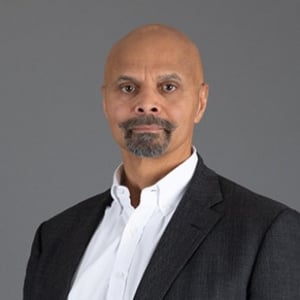
Partner, Benesch, Friedlander, Coplan & Aronoff LLP
Peter focuses his legal practice on representing management in employment-related litigation and in contract negotiations, NLRB proceedings, EEO matters and arbitration.
Peter Kirsanow is a partner with Benesch’s Labor & Employment Practice Group. He returned to Benesch in January 2008 after serving as a presidential appointee to the National Labor Relations Board (NLRB) in Washington D.C. for two years. While serving on the NLRB, he was involved with significant decisions including Oakwood Healthcare, Inc., Dana/Metaldyne and Oil Capital Sheet Metal, Inc. In addition, Peter testified before the Senate Judiciary Committee on the nominations of John Roberts, Samuel Alito, Sonia Sotomayor, Elena Kagan and Neil Gorsuch to the Supreme Court. He also continues to testify before and advise members of the U.S. Congress on employment law matters, most recently on November 18 before the House Subcommittee on Investigations and Oversight regarding disparate impact theory.
Peter was recently reappointed by the Majority Leader of the House of Representatives to his fourth consecutive six-year term on the U.S. Commission on Civil Rights. This is a part-time position which will expire in December 2025.
Recently, Peter and a team of Benesch attorneys served as lead counsel to the National Association of Manufacturers in litigation before the U.S. Circuit Court for the District of Columbia against the NLRB, challenging the Board’s Notice of Employer Rights Posting Rule. The court ruled in favor of Benesch’s client, striking down the NLRB’s Rule in its entirety. This ruling impacts over 6,000,000 employers nationwide which would have been subject to the posting requirement.
Additionally, Peter is past chair of the board of directors of the Center for New Black Leadership and is a member of Benesch’s Diversity & Inclusion Committee. This committee helps ensure that the firm promotes an environment in which differences are respected, employees are treated fairly, and individual skills and talents are valued.

Professor of Law and Centennial Chair, South Texas College of Law Houston
Josh Blackman is a national thought leader on constitutional law and the United States Supreme Court. Josh’s work was quoted during two presidential impeachment trials. He has testified before Congress and advises federal and state lawmakers. Josh regularly appears on TV, including NBC, CBS, ABC, Fox, and the BBC. Josh is also a frequent guest on NPR and other syndicated radio programs. He has published commentaries in the New York Times, Wall Street Journal, Washington Post, and leading national publications.
Since 2012, Josh has served as a professor at the South Texas College of Law Houston. He holds the Centennial Chair of Constitutional Law. Josh is an Adjunct Fellow at the Manhattan Institute. Josh has written more than seven dozen law review articles that have been cited more than a thousand times. Josh was selected as the Jurist of the Year by the Texas Journal of Law & Public Policy, received the inaugural Meese III Originalism Award, and was awarded the Inaugural Joseph Story Award. Josh was selected by Forbes Magazine for the “30 Under 30” in Law and Policy. Josh is the President of the Harlan Institute, and founded FantasySCOTUS, the Internet’s Premier Supreme Court Fantasy League. He blogs at the Volokh Conspiracyand posts@JoshMBlackman.
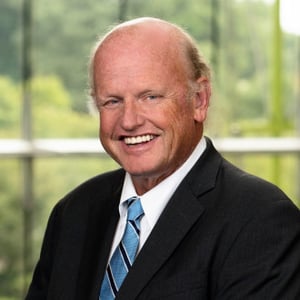
In his 35 years at the Justice Department and in private practice, Mike Carvin was one of the leading appellate and trial lawyers challenging state and federal regulations on constitutional and statutory grounds, with 10 Supreme Court arguments and numerous high-profile victories. In addition to his numerous cases in the United States Supreme Court, he argued in virtually every federal appeals court. His major cases include the recent constitutional challenge to the Affordable Care Act and the decisions invalidating Sarbanes-Oxley's accounting board, preventing the Justice Department from obtaining monetary relief against the tobacco industry under RICO, overturning the federal government's plan to statistically adjust the census, limiting the Justice Department's ability to create "majority-minority" districts, and upholding Proposition 209's ban on racial preferences in California.
Mike was one of the lead lawyers, and argued before the Florida Supreme Court, on behalf of George W. Bush in the 2000 presidential election Florida recount controversy. He also has represented state governments, financial institutions, telecommunications, and energy companies in "takings," First Amendment, civil rights, and statutory challenges to federal government actions.
Professor from Practice, Georgetown University Law Center
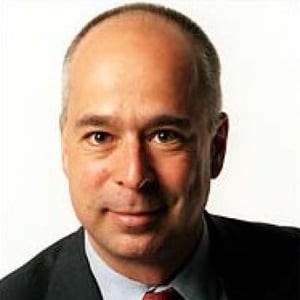
Supreme Court Correspondent, The New York Times
Adam Liptak covers the Supreme Court for The New York Times. Liptak’s column on legal affairs, “Sidebar,” appears every other Tuesday.
A graduate of Yale College and Yale Law School, Liptak practiced law at a large New York City law firm and in the legal department of The New York Times Company before joining the paper’s news staff in 2002.
Liptak was a finalist for the Pulitzer Prize in explanatory reporting in 2009 for “American Exception,” a series of articles examining ways in which the American legal system differs from those of other developed nations. He received the 2010 Scripps Howard Award for Washington reporting for a five-part series on the Roberts Court.
He is the author of “To Have and Uphold: The Supreme Court and the Battle for Same-Sex Marriage.”
His journalism has appeared in The New Yorker, Vanity Fair, Business Week and Rolling Stone, and he has published articles in The Arizona Law Review, The Michigan Law Review and The New York University Annual Survey of American Law.
Liptak has taught courses at Yale, Columbia, the University of Chicago, Washington University in St. Louis, the University of Southern California and U.C.L.A. He is a member of the American Academy of Arts and Sciences.
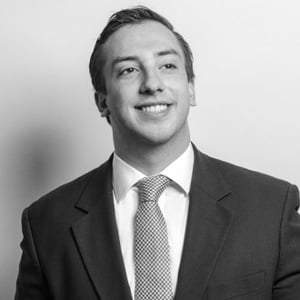
Associate, Venable LLP
Mike is a government regulatory associate at Venable LLP with experience in all stages of Federal Trade Commission (FTC) and Consumer Financial Protection Bureau (CFPB) investigations and enforcement actions. Mike previously served as a law clerk to Senator John Thune (R-SD) as chairman of the Senate Committee for Commerce, Science, and Transportation, where he focused on issues pertaining to consumer protection, product safety, and data security, as well as oversight of the FTC and Federal Communications Commission (FCC). During law school, Mike served as President of the Georgetown Student Chapter of the Federalist Society.
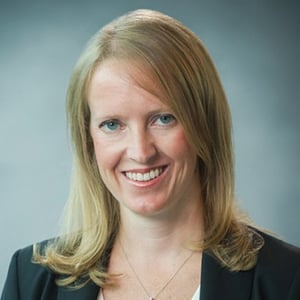
Partner, Clement & Murphy, PLLC
Erin Murphy is founding partner of Clement & Murphy, PLLC. She is widely recognized as one of the nation’s leading Supreme Court and appellate advocates. She has argued dozens of cases in appellate and trial courts throughout the country, including the Supreme Court and nearly all of the federal courts of appeals. Erin has long been ranked by Chambers & Partners rankings as a leading appellate practitioner, and the National Law Journal has named her one of the nation’s “Outstanding Women Lawyers.” Erin also has an active pro bono practice, through which she has successfully represented many religious organizations and adherents, criminal defendants, asylum applicants, adoptive parents, and more.
Erin is an adjunct professor at her alma mater the Georgetown University Law Center, a member and former officer of the Edward Coke Appellate Inn of Court, and a frequent speaker on topics relating to the Supreme Court and appellate advocacy. In her spare time, Erin serves on the board of directors of Street Law.

Author, Stolen Sovereignty: How to Stop Unelected Judges from Tr, Conservative Review
Daniel Horowitz is a Senior Editor at Conservative Review and host of the "Conservative Conscience" podcast. He has guest hosted nationally syndicated radio programs such as Sean Hannity and Steve Deace and appears on dozens of shows weekly. He has become known as one of the most respected, insightful, and prolific conservative writers on a full spectrum of policy and political issues, particularly on sovereignty, immigration, religious liberty, and the judiciary. He is the author of a new book, Stolen Sovereignty: How to Stop Unelected Judges from Transforming America. Horowitz resides in Baltimore, Maryland with his wife and three children.
Founder, Law Office of Eileen J. O'Connor PLLC
After nearly 30 years as a national tax specialist with the IRS and major accounting firms, Eileen J. O’Connor, now an attorney in private practice, was Assistant Attorney General for the Justice Department’s Tax Division for six years during the administration of President George W. Bush and a member of then-President-elect Trump’s Treasury Department Transition Team. She focuses on federal administrative and tax law.
James L. Oberstar Professor of Law and Public Policy, University of St. Thomas School of Law
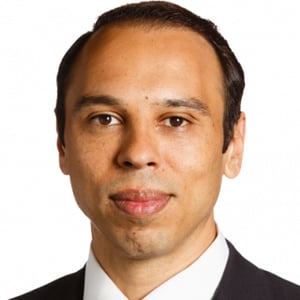
Vice President of Domestic and Economic Policy, The Heritage Foundation
Roger Severino is Vice President of Economic and Domestic Policy, and the Joseph C. and Elizabeth A. Anderlik Fellow at The Heritage Foundation.
Severino is a national authority on civil rights, conscience and religious freedom, the administrative state, and information privacy, particularly as applied to health care law and policy. Find his tweets at @RogerSeverino_.
Severino spearheaded the HHS Accountability Project while a Senior Fellow at EPPC from 2021 to 2023. Previously, Severino was Director of HHS’ Office for Civil Rights, where he led a team of over 250 staff enforcing our nation’s civil rights, conscience and religious freedom, and health information privacy laws. He served from 2017 to 2021 and was the longest-serving OCR director of the past three decades.
Prior to joining HHS, Severino served for two years as Director of the DeVos Center for Religion and Civil Society at Heritage, advocating for life, family, and religious-freedom policies. Before that, he was a trial attorney for seven years at the U.S. Department of Justice’s Civil Rights Division where he enforced the Fair Housing Act and the Civil Rights Act of 1964. Severino started his legal career at the Becket Fund for Religious Liberty, where he was Legal Counsel and Chief Operations Officer and defended the rights of people of all faiths under federal and international law.
Severino has been profiled in The New York Times, The Atlantic, The Wall Street Journal, and The Hill and has appeared on Fox News, CNN, MSNBC, NPR, and PBS, among others. In 2020, The New York Times dubbed him and his wife Carrie, “a conservative power couple” to be reckoned with.
Severino holds a JD from Harvard Law School, a master’s degree in public policy, with highest distinction, from Carnegie Mellon University, and a bachelor’s degree in business from the University of Southern California. He was appointed by President Trump to the Administrative Conference of the United States and is a member of the District of Columbia and the Commonwealth of Virginia bars.
As OCR director, Severino founded the federal government’s first division dedicated exclusively to conscience and religious freedom compliance and enforcement. He enforced the Weldon Amendment for the first time against a state (California) after it coerced families and religious organizations into paying for abortion insurance coverage, leading to a $200 million federal funding disallowance. He also enforced laws protecting pro-life pregnancy resource centers from discrimination by states hostile to their message and enforced laws prohibiting forced participation in abortions by medical professionals.
With respect to civil rights, Severino protected older persons and people with disabilities from being denied life-saving care due to discriminatory “quality of life” judgments, especially during the COVID-19 pandemic. He also achieved a landmark sexual harassment resolution with Michigan State University in the wake of the Larry Nassar sexual assault scandal and protected the rights of non-English speakers to have equal access to health and human services.
In the area of health privacy, he secured the largest HIPAA monetary settlement in history and achieved the largest number of enforcement resolutions both in a single year and across four years. He also facilitated the transformational use of Skype, Zoom, and Facetime for delivery of telehealth during the COVID-19 pandemic and beyond.
His regulatory reform activities resulted in a comprehensive conscience protection regulation and proposed a life-affirming disability rights regulation. He achieved regulatory savings of $3.6 billion in health care industry costs over five years and identified and proposed an additional $3.2 billion in cost savings from the repeal of ineffective and unnecessary regulatory burdens.
Severino is a Spanish speaker who teaches salsa and west coast swing in his spare time.
Professor of Law and Centennial Chair, South Texas College of Law Houston
Josh Blackman is a national thought leader on constitutional law and the United States Supreme Court. Josh’s work was quoted during two presidential impeachment trials. He has testified before Congress and advises federal and state lawmakers. Josh regularly appears on TV, including NBC, CBS, ABC, Fox, and the BBC. Josh is also a frequent guest on NPR and other syndicated radio programs. He has published commentaries in the New York Times, Wall Street Journal, Washington Post, and leading national publications.
Since 2012, Josh has served as a professor at the South Texas College of Law Houston. He holds the Centennial Chair of Constitutional Law. Josh is an Adjunct Fellow at the Manhattan Institute. Josh has written more than seven dozen law review articles that have been cited more than a thousand times. Josh was selected as the Jurist of the Year by the Texas Journal of Law & Public Policy, received the inaugural Meese III Originalism Award, and was awarded the Inaugural Joseph Story Award. Josh was selected by Forbes Magazine for the “30 Under 30” in Law and Policy. Josh is the President of the Harlan Institute, and founded FantasySCOTUS, the Internet’s Premier Supreme Court Fantasy League. He blogs at the Volokh Conspiracyand posts@JoshMBlackman.

The Future of Religious Liberties under the New Administration - Podcast
Thomas C. Berg, Richard W. Garnett
What is ahead for religious liberties under the Trump administration? Will churches be granted a...
Administrative Law & Regulation: The Evolution of Justice Scalia's Views on Administrative Law
Ronald A. Cass, Paul D. Clement, E. Donald Elliott, Lisa Heinzerling, Eileen J. O'Connor, Eugene Scalia
For all of his many contributions to modern American jurisprudence, no area of law bears...
Religious Liberties: Is the Religious Freedom Restoration Act (RFRA) the Future of Religious Liberty?
John C. Eastman, Richard W. Garnett, William P. Marshall, Vincent Phillip Munoz, Michael Uhlmann
In his seminal decision in Employment Division v. Smith in 1990, Justice Antonin Scalia held...
Federalism & Separation of Powers: Justice Scalia on Federalism and Separation of Powers
John S. Baker, Ron DeSantis, Roger Pilon, William H. Pryor, Luther Johnson Strange, Jonathan R. Turley
Justice Scalia often said that, while he always tried to get the Bill of Rights...
Religious Liberty vs. Nondiscrimination: Reconcilable or Intractable? - Podcast
Peter Kirsanow
Recent legal developments ranging from Supreme Court decisions to administrative actions have raised significant issues...
Supreme Court Litigation in the Obamacare Cases
Josh Blackman, Michael A. Carvin, Martin S. Lederman, Adam Liptak, Michael A. Munoz, Erin E. Murphy
On September 27, 2016, the Georgetown Student Chapter of the Federalist Society, in conjunction with...
Stolen Sovereignty: How to Stop Unelected Judges from Transforming America - Podcast
Daniel Horowitz, Eileen J. O'Connor
Stolen Sovereignty: How to Stop Unelected Judges from Transforming America, by Daniel Horowitz, discusses the...
Religious Exemptions and Third-Party Harms
Thomas C. Berg
Note from the Editor: This article discusses the effect that third-party harms should have on religious...
Zubik v. Burwell - Post-Decision SCOTUScast
Roger Severino
On May 16, 2016, the Supreme Court decided Zubik v. Burwell, the lead case in...
House of Representatives Wins Round One of Obamacare Challenge: U.S. House of Representatives v. Burwell - Podcast
Josh Blackman
On Thursday, May 12, a United States District Court Judge upheld a constitutional challenge to...