
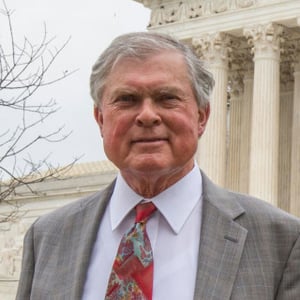
Senior Fellow, Independent Institute
Dr. Stephen P. Halbrook is a Senior Fellow at the Independent Institute. He has taught legal and political philosophy at George Mason University, Howard University, and Tuskegee Institute, and he received his J.D. from the Georgetown University Law Center and Ph.D. in social philosophy from Florida State University.
The winner of three cases before the U.S. Supreme Court (Printz v. United States, United States v. Thompson/Center Arms Company, and Castillo v. United States), he has testified before the Subcommittee on the Constitution of the Senate Judiciary Committee, Senate Subcommittee on the Constitution, Subcommittee on Crime of the House Judiciary Committee, Senate Governmental Affairs Committee, and House Committee on the District of Columbia.
A contributor to numerous scholarly volumes, he is the author of the books, Gun Control in Nazi-Occupied France: Tyranny and Resistance; Gun Control in the Third Reich: Disarming the Jews and “Enemies of the State”; The Founders’ Second Amendment: Origins of the Right to Bear Arms; That Every Man Be Armed: Evolution of a Constitutional Right; A Right to Bear Arms; Firearms Law Deskbook: Federal and State Criminal Practice; Securing Civil Rights: Freedmen, the Fourteenth Amendment, and the Right to Bear Arms; State and Federal Bills of Rights and Constitutional Guarantees; and Target Switzerland: Swiss Armed Neutrality in World War II. Dr. Halbrook’s scholarly articles have appeared in such journals as the Arizona Journal of International and Comparative Law, Drug Law Report, George Mason University Law Review, Journal of Air Law and Commerce, Journal of Law and Policy, Law & Contemporary Problems, National Law Journal, Northern Kentucky Law Review, St. John’s Journal of Legal Commentary; Seton Hall Constitutional Law Journal, Tennessee Law Review, University of Dayton Law Review, Valparaiso University Law Review, Vermont Law Review, and William & Mary Bill of Rights Journal.
Dr. Halbrook's popular articles have appeared in such publications as the Wall Street Journal, Newsday, San Francisco Chronicle, National Review, Investor’s Business Daily, Kansas City Star, Washington Examiner, Shreveport Times, Sacramento Bee, Providence Journal, Tampa Tribune, Pittsburgh Tribune-Review, History News Network, San Antonio Express-News, The Daily Caller, Detroit News, Honolulu Star Advertiser, Birmingham News, Environmental Forum, USA Today, and Washington Times. He has also appeared on numerous national TV/radio programs on CNN, Fox News Channel, Fox Business Network, Court TV, NewsMax TV, CBN, Voice of America, and C-SPAN.
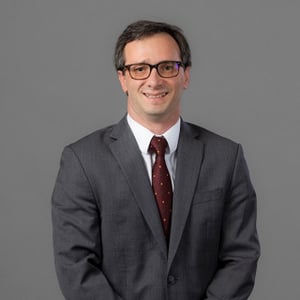
Assistant Professor of Law, George Mason University, Antonin Scalia Law School
Robert Leider is an Assistant Professor of Law at Antonin Scalia Law School, George Mason University. His scholarly interests are in criminal law, criminal procedure, and constitutional law, especially concerning questions about the use of force and the rule of law. He has written on the law of self-defense, the constitutional allocation of military power, and gun control. Among other places, he has published in the Florida Law Review (forthcoming), the Indiana Law Journal, and the Wall Street Journal.
Before joining Antonin Scalia Law School, Professor Leider was at Arnold & Porter in Washington, DC. He was previously with Mayer Brown LLP and was an Olin-Searle-Smith Fellow at the University of Pennsylvania Law School. He has clerked for Judge Diane S. Sykes, of the U.S. Court of Appeals for the Seventh Circuit, and Justice Clarence Thomas. Professor Leider earned a BA, summa cum laude, from The George Washington University, a JD from Yale Law School, and a PhD in Philosophy (dissertation defended with distinction) from Georgetown University. While at Yale, he served as an articles editor for the Yale Law Journal.
Professor Leider teaches criminal law and torts.
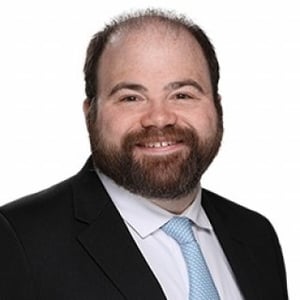
Partner, Horvitz & Levy
Leading businesses, public entities, and employers rely on Scott Dixler’s capabilities in matters involving complex business disputes, class actions, discrimination claims, and torts.
Scott has presented more than twenty oral arguments in state and federal appellate courts. Recognizing Scott’s capabilities as an oral advocate, clients have retained Scott to argue appeals briefed by other counsel. Scott serves on the Amicus Committee of the Association of Southern California Defense Counsel. He is also on the Executive Board of the American Bar Association Judicial Division’s Council of Appellate Lawyers and formally served on the Board of the Los Angeles Lawyers' Chapter of the Federalist Society.
Prior to joining the firm, Scott gained experience as a litigation associate at Cravath, Swaine & Moore LLP in New York.

Samuel H. McCoy II Professor of Law, University of Virginia School of Law
John F. Duffy is the Samuel H. McCoy II Professor of Law and Class of 1966 Research Professor of Law at the University of Virginia School of Law, where he teaches administrative law, torts and intellectual property. Professor Duffy has published articles on a wide range of administrative law and regulatory issues in journals such as University of Chicago Law Review, Yale Law Journal, Stanford Law Review, Virginia Law Review, Columbia Law Review, Texas Law Review, Northwestern University Law Review, NYU Law Review, University of Pennsylvania Law Review and the Supreme Court Review. His 1998 article Administrative Common Law in Judicial Review, 77 Tex. L. Rev. 113 (1998), was one of the first articles to criticize the Chevron doctrine as being irreconcilable with § 706 of the APA; it won the American Bar Association’s Scholarship Award in Administrative Law. His 2008 article “Are Administrative Patent Judges Unconstitutional?” was covered on National Public Radio), in the New York Times (Adam Liptak, In One Flaw, Questions on Validity of 46 Judges, May 6, 2008), and in the Wall Street Journal (Dan Slater, Patently Unconstitutional, May 6, 2008). The NYT and WSJ agreed that he was “a different kind of law professor,” “one of the lucky few” whose “writings actually wind up changing the law.”
As an attorney in the courts, Duffy has twice successfully convinced the Supreme Court to overturn lower court doctrines that had been applied in many cases over decades but that were unanimously held to be irreconcilable with Supreme Court precedents. See TC Heartland v. Kraft Foods Group Brands, 581 U.S. 258 (2017); KSR v. Teleflex, 550 U.S. 398 (2007).
Prior to entering legal academics, Duffy clerked on the D.C. Circuit for Stephen Williams and on the Supreme Court for Antonin Scalia. While clerking, he became known as Justice Scalia’s “hapless law clerk,” who had been tasked with unearthing three-quarters of a century of legislative history that made “no difference” to the outcome in an otherwise forgettable case. See Conroy v. Aniskoff, 507 U.S. 511, 527-28 (1993) (Scalia, J., concurring in the judgment).
In earlier days, Duffy enjoyed being a professional blackjack player unwelcome in all Atlantic City casinos and a semi-professional road runner (best marathon time 2:24:33). He holds an A.B. in physics from Harvard and a J.D. from the University of Chicago.
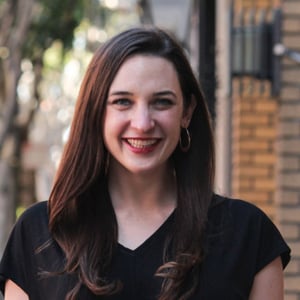
General Counsel, Strive
Before joining Strive, Alexandra served as the Director of Regulatory Affairs at River Financial, where she handled all regulatory and government matters and served as product counsel. Prior to her time at River, Alexandra worked at the U.S. Department of Treasury, first in the General Counsel’s office and then as the youngest-ever Executive Secretary, where she worked directly with Secretary Mnuchin. Alexandra previously worked as an associate in the Washington, D.C. office of Akin Gump. She clerked for then-Justice Allison Eid on the Colorado Supreme Court and Judge Jennifer Elrod on the U.S. Court of Appeals for the Fifth Circuit. She holds a J.D. from the University of Texas and a B.A. from The King’s College.
Senior Fellow, Independent Institute
Dr. Stephen P. Halbrook is a Senior Fellow at the Independent Institute. He has taught legal and political philosophy at George Mason University, Howard University, and Tuskegee Institute, and he received his J.D. from the Georgetown University Law Center and Ph.D. in social philosophy from Florida State University.
The winner of three cases before the U.S. Supreme Court (Printz v. United States, United States v. Thompson/Center Arms Company, and Castillo v. United States), he has testified before the Subcommittee on the Constitution of the Senate Judiciary Committee, Senate Subcommittee on the Constitution, Subcommittee on Crime of the House Judiciary Committee, Senate Governmental Affairs Committee, and House Committee on the District of Columbia.
A contributor to numerous scholarly volumes, he is the author of the books, Gun Control in Nazi-Occupied France: Tyranny and Resistance; Gun Control in the Third Reich: Disarming the Jews and “Enemies of the State”; The Founders’ Second Amendment: Origins of the Right to Bear Arms; That Every Man Be Armed: Evolution of a Constitutional Right; A Right to Bear Arms; Firearms Law Deskbook: Federal and State Criminal Practice; Securing Civil Rights: Freedmen, the Fourteenth Amendment, and the Right to Bear Arms; State and Federal Bills of Rights and Constitutional Guarantees; and Target Switzerland: Swiss Armed Neutrality in World War II. Dr. Halbrook’s scholarly articles have appeared in such journals as the Arizona Journal of International and Comparative Law, Drug Law Report, George Mason University Law Review, Journal of Air Law and Commerce, Journal of Law and Policy, Law & Contemporary Problems, National Law Journal, Northern Kentucky Law Review, St. John’s Journal of Legal Commentary; Seton Hall Constitutional Law Journal, Tennessee Law Review, University of Dayton Law Review, Valparaiso University Law Review, Vermont Law Review, and William & Mary Bill of Rights Journal.
Dr. Halbrook's popular articles have appeared in such publications as the Wall Street Journal, Newsday, San Francisco Chronicle, National Review, Investor’s Business Daily, Kansas City Star, Washington Examiner, Shreveport Times, Sacramento Bee, Providence Journal, Tampa Tribune, Pittsburgh Tribune-Review, History News Network, San Antonio Express-News, The Daily Caller, Detroit News, Honolulu Star Advertiser, Birmingham News, Environmental Forum, USA Today, and Washington Times. He has also appeared on numerous national TV/radio programs on CNN, Fox News Channel, Fox Business Network, Court TV, NewsMax TV, CBN, Voice of America, and C-SPAN.
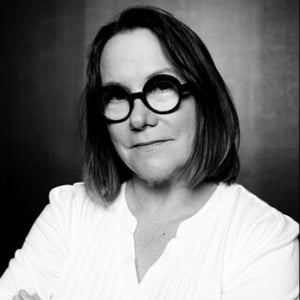
Independent Analyst, None
Allison Hayward most recently served as the Head of Case Selection at the Oversight Board. Previously, she was a Commissioner at the California Fair Political Practices Commission, a Board Member at the Office of Congressional Ethics, and an Assistant Professor of Law at George Mason University School of Law. She also previously worked as Chief of Staff and Counsel in the office of Federal Election Commission Commissioner Bradley A. Smith and practiced election law in California and in Washington DC.
In 1994-1995, Professor Hayward was a judicial clerk for the Honorable Danny J. Boggs, United States Court of Appeal for the Sixth Circuit.
She is a member of the State Bar of California and the District of Columbia Bar.
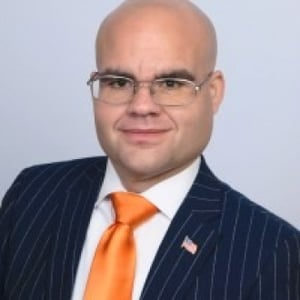
Counsel, Keller Postman LLC
John Masslon is a Counsel at Keller Postman LLC, where he works on a broad range of disputes, including products liability and consumer protections suits. He helps develop legal strategies, writes briefs, and presents argument on legal questions. Before joining Keller Postman, John was senior litigation counsel at Washington Legal Foundation. There, he wrote about 100 amicus briefs supporting free enterprise in courts across the country. He filed the first amicus brief in the Supreme Court supporting the challenge to OSHA’s vaccine mandate. He also filed a brief supporting ending the in-house proceedings at the Securities and Exchange Commission. Previously, John served as assistant solicitor general in a state attorney general’s office. There, he was first chair in a federal trial challenging a state election law that was ultimately upheld. He also wrote the briefs that convinced the state supreme court to uphold the State’s right-to-work statute.
John obtained his B.S. in economics with a minor in mathematical sciences from Clemson University. He then received his J.D. and LL.M. in Taxation from Georgetown University Law Center. After law school, John worked for Judge Arthur J. Schwab of the United States District Court for the Western District of Pennsylvania and clerked for Judge Judith Ference Olson of the Superior Court of Pennsylvania.
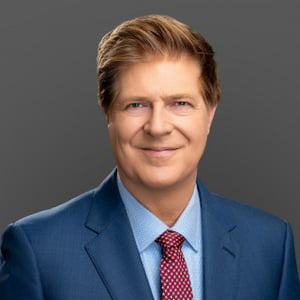
Senior Fellow, Ave Maria School of Law and Host of the Four Boxes Diner Second Amendment Channel
Mark W. Smith is a visiting member of the Senior Common Room, New College, Oxford University and a Visiting Fellow in Pharmaceutical Public Policy and Law in the Department of Pharmacology, Oxford University. Mark is also a Distinguished Scholar and Senior Fellow of Law and Public Policy at the Ave Maria School of Law. He hosts the Four Boxes Diner YouTube Channel (youtube.com/TheFourBoxesDiner), which addresses Second Amendment scholarship, cases, history and related issues, and whose videos have received almost 90 million views. Mark's scholarship has been cited by federal courts and by parties before the United States Supreme Court in Viramontes v. Cook County, New York State Rifle & Pistol Ass’n v. Bruen and in United States v. Rahimi. He is a graduate of the NYU School of Law. Mark is also a New York Times bestselling author who appears frequently in the national media including on the Fox News Channel.
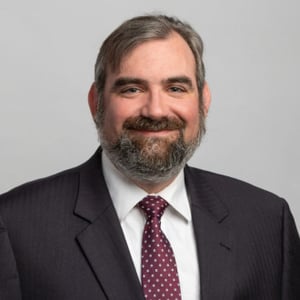
Senior Attorney, Institute for Justice
Robert Frommer serves as a senior attorney with the Institute for Justice. He joined the Institute in August 2008 and is currently litigating on behalf of SpeechNow.org, a group challenging the federal campaign finance laws regarding free speech.
Before joining IJ, Robert was an attorney with the Washington, D.C., office of Gibson, Dunn & Crutcher LLP, where he litigated both complex litigation and public-interest matters. He is a former law clerk to Judge Morris Sheppard Arnold of the U.S. Court of Appeals for the Eighth Circuit.
Robert received his law degree magna cum laude from the University of Michigan Law School in 2004, where he was elected to the Order of the Coif and served as both a book review editor for the Michigan Law Review and president of the Federalist Society student chapter. Before going to law school, Robert earned a master's degree in economics from George Mason University.
Adam Griffin is a graduate of the University of North Carolina School of Law. During law school, he served as a research assistant to Professor Stephen E. Sachs and UNC Law Dean Martin Brinkley. After law school, Adam spent two years litigating for liberty at the Institute for Justice as an inaugural Law and Liberty Fellow. He then served as a law clerk to Chief Judge Richard E. Myers in the United States District Court for the Eastern District of North Carolina, and previously worked at Pacific Legal Foundation and the Civil Rights Division of the Department of Justice.
Senior Attorney, Institute for Justice
Robert Frommer serves as a senior attorney with the Institute for Justice. He joined the Institute in August 2008 and is currently litigating on behalf of SpeechNow.org, a group challenging the federal campaign finance laws regarding free speech.
Before joining IJ, Robert was an attorney with the Washington, D.C., office of Gibson, Dunn & Crutcher LLP, where he litigated both complex litigation and public-interest matters. He is a former law clerk to Judge Morris Sheppard Arnold of the U.S. Court of Appeals for the Eighth Circuit.
Robert received his law degree magna cum laude from the University of Michigan Law School in 2004, where he was elected to the Order of the Coif and served as both a book review editor for the Michigan Law Review and president of the Federalist Society student chapter. Before going to law school, Robert earned a master's degree in economics from George Mason University.
Adam Griffin is a graduate of the University of North Carolina School of Law. During law school, he served as a research assistant to Professor Stephen E. Sachs and UNC Law Dean Martin Brinkley. After law school, Adam spent two years litigating for liberty at the Institute for Justice as an inaugural Law and Liberty Fellow. He then served as a law clerk to Chief Judge Richard E. Myers in the United States District Court for the Eastern District of North Carolina, and previously worked at Pacific Legal Foundation and the Civil Rights Division of the Department of Justice.
Director of Legal Policy, Firearms Policy Coalition
Matthew Larosiere is the policy director for the Firearms Policy Coalition. He writes on the subject of the 2nd Amendment, gun law, taxation, and gun violence. His work has been featured in National Review, Cato Blog, Fox Nation, Forbes, Wall Street Journal and more. Matt hosts the gun law myth-buster YouTube channel Fudd Busters.
Matthew graduated cum laude from the University of Alabama with a J.D. and Master of Laws in Taxation. During law school, he served as the president of the Federalist Society and the ethics opinion editor of the Journal of the Legal Profession. He holds a B.S. in Business Management from the University of Central Florida.
Wayne Fisher Research Professor, Professor of Law, South Texas College of Law Houston
Professor Dru Stevenson is a Wayne Fisher Research Professor and Professor of Law at South Texas College of Law Houston. He joined the faculty at South Texas College of Law Houston in 2003, and teaches Administrative Law/Regulation, Professional Responsibility, Nonprofit Incorporation, Legislation, and the Law & Economics seminar. He graduated Magna Cum Laude from the University of Connecticut School of Law, where he served as an editor of the Connecticut Law Review. After receiving his J.D., he practiced as a Legal Aid lawyer in Connecticut for three years. He earned his Master of Laws (LL.M.) from the Yale Law School in 2002, and became an Assistant Attorney General for the State of Connecticut until leaving to accept his position at South Texas College of Law Houston. Professor Stevenson’s publications cover topics ranging from criminal law to civil procedure, with an emphasis on the intersection of law with economics and linguistic theory. His articles have been cited in leading academic journals and treatises, by federal and state appellate courts, and in recent briefs to the U.S. Supreme Court. Professor Stevenson’s current research focus is firearm law and policy.
Senior Fellow, Ave Maria School of Law and Host of the Four Boxes Diner Second Amendment Channel
Mark W. Smith is a visiting member of the Senior Common Room, New College, Oxford University and a Visiting Fellow in Pharmaceutical Public Policy and Law in the Department of Pharmacology, Oxford University. Mark is also a Distinguished Scholar and Senior Fellow of Law and Public Policy at the Ave Maria School of Law. He hosts the Four Boxes Diner YouTube Channel (youtube.com/TheFourBoxesDiner), which addresses Second Amendment scholarship, cases, history and related issues, and whose videos have received almost 90 million views. Mark's scholarship has been cited by federal courts and by parties before the United States Supreme Court in Viramontes v. Cook County, New York State Rifle & Pistol Ass’n v. Bruen and in United States v. Rahimi. He is a graduate of the NYU School of Law. Mark is also a New York Times bestselling author who appears frequently in the national media including on the Fox News Channel.
Senior Fellow, Independent Institute
Dr. Stephen P. Halbrook is a Senior Fellow at the Independent Institute. He has taught legal and political philosophy at George Mason University, Howard University, and Tuskegee Institute, and he received his J.D. from the Georgetown University Law Center and Ph.D. in social philosophy from Florida State University.
The winner of three cases before the U.S. Supreme Court (Printz v. United States, United States v. Thompson/Center Arms Company, and Castillo v. United States), he has testified before the Subcommittee on the Constitution of the Senate Judiciary Committee, Senate Subcommittee on the Constitution, Subcommittee on Crime of the House Judiciary Committee, Senate Governmental Affairs Committee, and House Committee on the District of Columbia.
A contributor to numerous scholarly volumes, he is the author of the books, Gun Control in Nazi-Occupied France: Tyranny and Resistance; Gun Control in the Third Reich: Disarming the Jews and “Enemies of the State”; The Founders’ Second Amendment: Origins of the Right to Bear Arms; That Every Man Be Armed: Evolution of a Constitutional Right; A Right to Bear Arms; Firearms Law Deskbook: Federal and State Criminal Practice; Securing Civil Rights: Freedmen, the Fourteenth Amendment, and the Right to Bear Arms; State and Federal Bills of Rights and Constitutional Guarantees; and Target Switzerland: Swiss Armed Neutrality in World War II. Dr. Halbrook’s scholarly articles have appeared in such journals as the Arizona Journal of International and Comparative Law, Drug Law Report, George Mason University Law Review, Journal of Air Law and Commerce, Journal of Law and Policy, Law & Contemporary Problems, National Law Journal, Northern Kentucky Law Review, St. John’s Journal of Legal Commentary; Seton Hall Constitutional Law Journal, Tennessee Law Review, University of Dayton Law Review, Valparaiso University Law Review, Vermont Law Review, and William & Mary Bill of Rights Journal.
Dr. Halbrook's popular articles have appeared in such publications as the Wall Street Journal, Newsday, San Francisco Chronicle, National Review, Investor’s Business Daily, Kansas City Star, Washington Examiner, Shreveport Times, Sacramento Bee, Providence Journal, Tampa Tribune, Pittsburgh Tribune-Review, History News Network, San Antonio Express-News, The Daily Caller, Detroit News, Honolulu Star Advertiser, Birmingham News, Environmental Forum, USA Today, and Washington Times. He has also appeared on numerous national TV/radio programs on CNN, Fox News Channel, Fox Business Network, Court TV, NewsMax TV, CBN, Voice of America, and C-SPAN.
Assistant Professor of Law, George Mason University, Antonin Scalia Law School
Robert Leider is an Assistant Professor of Law at Antonin Scalia Law School, George Mason University. His scholarly interests are in criminal law, criminal procedure, and constitutional law, especially concerning questions about the use of force and the rule of law. He has written on the law of self-defense, the constitutional allocation of military power, and gun control. Among other places, he has published in the Florida Law Review (forthcoming), the Indiana Law Journal, and the Wall Street Journal.
Before joining Antonin Scalia Law School, Professor Leider was at Arnold & Porter in Washington, DC. He was previously with Mayer Brown LLP and was an Olin-Searle-Smith Fellow at the University of Pennsylvania Law School. He has clerked for Judge Diane S. Sykes, of the U.S. Court of Appeals for the Seventh Circuit, and Justice Clarence Thomas. Professor Leider earned a BA, summa cum laude, from The George Washington University, a JD from Yale Law School, and a PhD in Philosophy (dissertation defended with distinction) from Georgetown University. While at Yale, he served as an articles editor for the Yale Law Journal.
Professor Leider teaches criminal law and torts.
Senior Attorney, Institute for Justice
Robert Frommer serves as a senior attorney with the Institute for Justice. He joined the Institute in August 2008 and is currently litigating on behalf of SpeechNow.org, a group challenging the federal campaign finance laws regarding free speech.
Before joining IJ, Robert was an attorney with the Washington, D.C., office of Gibson, Dunn & Crutcher LLP, where he litigated both complex litigation and public-interest matters. He is a former law clerk to Judge Morris Sheppard Arnold of the U.S. Court of Appeals for the Eighth Circuit.
Robert received his law degree magna cum laude from the University of Michigan Law School in 2004, where he was elected to the Order of the Coif and served as both a book review editor for the Michigan Law Review and president of the Federalist Society student chapter. Before going to law school, Robert earned a master's degree in economics from George Mason University.
Adam Griffin is a graduate of the University of North Carolina School of Law. During law school, he served as a research assistant to Professor Stephen E. Sachs and UNC Law Dean Martin Brinkley. After law school, Adam spent two years litigating for liberty at the Institute for Justice as an inaugural Law and Liberty Fellow. He then served as a law clerk to Chief Judge Richard E. Myers in the United States District Court for the Eastern District of North Carolina, and previously worked at Pacific Legal Foundation and the Civil Rights Division of the Department of Justice.
Judge, United States District Court for the Eastern District of Tennessee
On December 23, 2020, Katherine A. Crytzer was sworn in as a United States District Judge for the Eastern District of Tennessee following confirmation by the United States Senate. Judge Crytzer sits in Knoxville, Tennessee. Prior to her confirmation, Judge Crytzer served as Principal Deputy Assistant Attorney General at the Department of Justice’s Office of Legal Policy in Washington, D.C., where she provided legal and policy advice to the Assistant Attorney General and Department of Justice Leadership. Before joining the Department of Justice’s Main Office, Judge Crytzer served as an Assistant United States Attorney in the United States Attorney’s Office for the Eastern District of Kentucky. In advance of entering public service, Judge Crytzer was a litigator at Kirkland & Ellis LLP. She began her legal career as a law clerk to The Honorable Raymond W. Gruender on the United States Court of Appeals for the Eighth Circuit. Judge Crytzer earned her Juris Doctor, magna cum laude, from George Mason University’s Antonin Scalia School of Law and her Bachelor of Science, summa cum laude, from Middle Tennessee State University.

Courthouse Steps Oral Argument: Garland v. Cargill
Stephen P. Halbrook, Robert Leider
Garland v. Cargill concerns whether bump stocks are considered "machineguns" as defined by Title 26...
Courthouse Steps Oral Argument: Garland v. Cargill
A Seat at the Sitting - February 2024
Scott P. Dixler, John F. Duffy, Alexandra Gaiser, Stephen P. Halbrook, Allison R. Hayward, John Masslon
Each month, a panel of constitutional experts convenes to discuss the Court’s upcoming docket sitting...
Courthouse Steps Oral Argument: United States v. Rahimi
Mark W. Smith
United States v. Rahimi, set to be argued before the Supreme Court this fall, raises...
Litigation Update: United States v. Moore-Bush
Is long-term police use of a surveillance camera targeted at a person’s home and curtilage a Fourth Amendment search?
TeleforumLitigation Update: United States v. Moore-Bush
Robert Frommer, Adam F. Griffin
In 2017, ATF agents placed a surveillance camera on a pole across the street from...
Litigation Update: United States v. Moore-Bush
Robert Frommer, Adam F. Griffin
In 2017, ATF agents placed a surveillance camera on a pole across the street from...
US Department of Justice Office of Legal Policy: Policy, Regulations, and Nominations
Knoxville Lawyers Chapter
Knoxville, TNThe Future of Homemade Firearms: The Legal and Political Implications of ATF Final Rule 2021R-05F
Matthew Larosiere, Dru Stevenson
Americans have been privately manufacturing and assembling firearms since before this country’s founding. Now, thanks...
Courthouse Steps Decision: New York State Rifle & Pistol Association Inc. v. Bruen
Mark W. Smith
On June 23, 2022, the Supreme Court decided New York State Rifle & Pistol Association...