
Erin Gaide is an Assistant Attorney General in the Kansas Office of the Attorney General, where she is a member of the Special Litigation & Constitutional Issues Division. Before beginning with the Kansas Attorney General, Erin clerked for the Honorable Allison H. Eid of the U.S. Court of Appeals for the Tenth Circuit.
Erin earned her J.D., magna cum laude, from the College of Law William & Mary, where she was elected to the Order of the Coif. She earned her B.A., cum laude, in International Studies from the Ohio State University.
Stephen Cranney has a dual PhD in sociology and demography from the University of Pennsylvania and is a freelance data scientist in the Washington, DC, area.
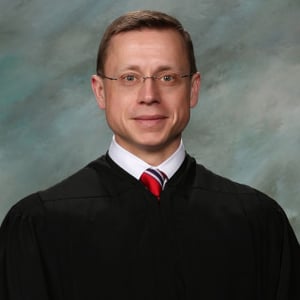
Judge, United States Court of Appeals, Fifth Circuit
Andrew Oldham is a Circuit Judge on the United States Court of Appeals for the Fifth Circuit. Before ascending to the bench, Judge Oldham served as General Counsel to Texas Governor Greg Abbott, where he advised the Governor on a range of issues under federal and state law and managed litigation in which the Governor was an interested party. Before that he served as Deputy Solicitor General for the State of Texas, where he represented Texas in federal courts across the country, including twice before the United States Supreme Court. Before moving to Texas, Judge Oldham was an attorney at Kellogg Hansen Todd Figel & Frederick in Washington, D.C. His practice focused on appellate litigation in federal courts of appeals throughout the country. Before entering private practice, Judge Oldham served as a law clerk to Justice Samuel A. Alito, Jr., at the Supreme Court of the United States and to Judge David B. Sentelle of the U.S. Court of Appeals for the District of Columbia Circuit. He also worked as an attorney-adviser in the Office of Legal Counsel at the U.S. Department of Justice from 2006 to 2008. Judge Oldham earned a B.A. from the University of Virginia with highest honors, a Truman Scholarship for graduate school, an M. Phil., first class (with distinction), from Cambridge University, and a J.D., magna cum laude, from Harvard Law School.

Judge, United States Court of Appeals, Sixth Circuit
Amul R. Thapar serves as a judge on the United States Court of Appeals for the Sixth Circuit. His judicial career began in 2007 when President George W. Bush nominated him to serve on the Eastern District of Kentucky, making him the first South Asian Article III judge in American history. In 2017, he became President Donald J. Trump’s first appellate court nominee.
Before joining the bench, Judge Thapar served as the United States Attorney for the Eastern District of Kentucky. While United States Attorney, Judge Thapar worked on the Attorney General’s Advisory Committee (“AGAC”) and chaired the AGAC’s Controlled Substances and Asset Forfeiture subcommittee. He also served on the Terrorism and National Security subcommittee, the Violent Crime subcommittee, and the Child Exploitation working group.
Judge Thapar has worked in private practice, at Williams & Connolly in Washington, D.C., and Squire, Sanders & Dempsey in Cincinnati, Ohio. He also served as an Assistant United States Attorney in both the Southern District of Ohio and the District of Columbia.
Judge Thapar received his undergraduate degree from Boston College and his law degree from the University of California, Berkeley. After graduating, Judge Thapar worked as a law clerk to the Honorable S. Arthur Spiegel of the United States District Court for the Southern District of Ohio, and the Honorable Nathaniel R. Jones of the United States Court of Appeals for the Sixth Circuit.
Judge Thapar has also published in the Yale Law Journal, Michigan Law Review, and Catholic University Law Review. He teaches courses on originalism, the Federalists and Anti-Federalists, and legal writing at Notre Dame Law School, the University of Virginia School of Law, and Vanderbilt Law School.
Judge, United States Court of Appeals, Fifth Circuit
Andrew Oldham is a Circuit Judge on the United States Court of Appeals for the Fifth Circuit. Before ascending to the bench, Judge Oldham served as General Counsel to Texas Governor Greg Abbott, where he advised the Governor on a range of issues under federal and state law and managed litigation in which the Governor was an interested party. Before that he served as Deputy Solicitor General for the State of Texas, where he represented Texas in federal courts across the country, including twice before the United States Supreme Court. Before moving to Texas, Judge Oldham was an attorney at Kellogg Hansen Todd Figel & Frederick in Washington, D.C. His practice focused on appellate litigation in federal courts of appeals throughout the country. Before entering private practice, Judge Oldham served as a law clerk to Justice Samuel A. Alito, Jr., at the Supreme Court of the United States and to Judge David B. Sentelle of the U.S. Court of Appeals for the District of Columbia Circuit. He also worked as an attorney-adviser in the Office of Legal Counsel at the U.S. Department of Justice from 2006 to 2008. Judge Oldham earned a B.A. from the University of Virginia with highest honors, a Truman Scholarship for graduate school, an M. Phil., first class (with distinction), from Cambridge University, and a J.D., magna cum laude, from Harvard Law School.
Judge, United States Court of Appeals, Sixth Circuit
Amul R. Thapar serves as a judge on the United States Court of Appeals for the Sixth Circuit. His judicial career began in 2007 when President George W. Bush nominated him to serve on the Eastern District of Kentucky, making him the first South Asian Article III judge in American history. In 2017, he became President Donald J. Trump’s first appellate court nominee.
Before joining the bench, Judge Thapar served as the United States Attorney for the Eastern District of Kentucky. While United States Attorney, Judge Thapar worked on the Attorney General’s Advisory Committee (“AGAC”) and chaired the AGAC’s Controlled Substances and Asset Forfeiture subcommittee. He also served on the Terrorism and National Security subcommittee, the Violent Crime subcommittee, and the Child Exploitation working group.
Judge Thapar has worked in private practice, at Williams & Connolly in Washington, D.C., and Squire, Sanders & Dempsey in Cincinnati, Ohio. He also served as an Assistant United States Attorney in both the Southern District of Ohio and the District of Columbia.
Judge Thapar received his undergraduate degree from Boston College and his law degree from the University of California, Berkeley. After graduating, Judge Thapar worked as a law clerk to the Honorable S. Arthur Spiegel of the United States District Court for the Southern District of Ohio, and the Honorable Nathaniel R. Jones of the United States Court of Appeals for the Sixth Circuit.
Judge Thapar has also published in the Yale Law Journal, Michigan Law Review, and Catholic University Law Review. He teaches courses on originalism, the Federalists and Anti-Federalists, and legal writing at Notre Dame Law School, the University of Virginia School of Law, and Vanderbilt Law School.
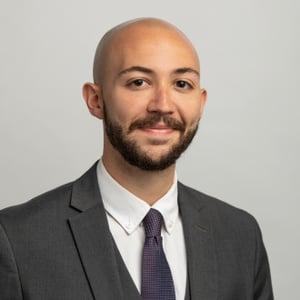
Attorney, Institute for Justice
John Wrench is a Constitutional Law Fellow at the Institute for Justice.
John grew up outside of Ithaca, New York, and received his law degree from the Case Western Reserve University School of Law in 2019. During law school, he served as editor in chief of the Case Western Reserve Journal of International Law and was a member of the Federalist Society. John interned in his law school’s First Amendment Litigation Clinic and was a judicial extern to the Honorable Paul E. Davison in the Southern District of New York. John graduated from Pace University in 2015 with a Bachelor of Arts in Philosophy and Religious Studies.
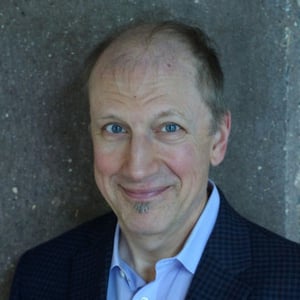
James L. Oberstar Professor of Law and Public Policy, University of St. Thomas School of Law
Erik Money is a third-year law student at the University of St. Thomas School of Law (Minnesota).
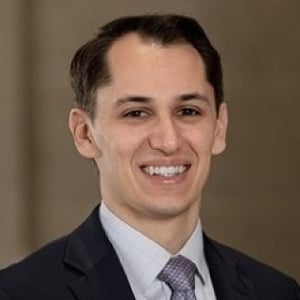
Assistant Professor of Law, Capital University Law School
Nathaniel M. Fouch is an Assistant Professor of Law at Capital University Law School in Columbus, Ohio. He previously clerked at every level of the state judiciary, including for Justice Pat DeWine of the Ohio Supreme Court. Professor Fouch was the founding president of both the Dayton Lawyers Chapter of the Federalist Society and the Dayton Catholic Lawyers Guild. He earned his B.A. from Berea College and his J.D. cum laude from the University of St. Thomas School of Law. His work on the Ohio Constitution and state constitutionalism has been cited by the Ohio Supreme Court. Professor Fouch lives in Dayton, Ohio, with his wife, Theresa, and their three young children.

Is Voting in Kansas a Fundamental Right? Kansas Supreme Court Weighs In
Erin Steinhilber
Those who do not spend their days thinking about election law may be surprised to...
Measuring and Evaluating Public Responses to Religious Rights Rulings
Creighton Roland Meland, Stephen Cranney
The story of Jack Phillips and his cake shop—Masterpiece Cakeshop—is by now familiar. Jack Phillips...
Topics
Biden Issues Executive Order Promoting “LGBTQI+” Policies
On June 15, 2022, President Joe Biden issued yet another executive order promoting his administration’s...
Banquet, Founders & Foes (An Exchange)
Andrew Oldham, Amul R. Thapar
Many originalists are well-versed in The Federalist Papers. They rely on these documents to better...
Banquet, Founders & Foes (An Exchange)
Andrew Oldham, Amul R. Thapar
Many originalists are well-versed in The Federalist Papers. They rely on these documents to better...
Topics
In the Shadow of Sherbert: An Understanding of Smith as Judicial Codification
Like all of the rights guaranteed by the Bill of Rights, the right to freely...
State Court Docket Watch: State of Iowa v. Wright
John Wrench
Note from the Editor: The Federalist Society takes no positions on particular legal and public...
Topics
Show Me the Monell-y: Municipal Liability for Civil Rights Violations
The Federalist Society is pleased to announce its Student Blog Initiative, a project of the...
Credentials Not Required: Why an Employee’s Significant Religious Functions Should Suffice to Trigger the Ministerial Exception
Thomas C. Berg, Erik Money, Nathaniel M. Fouch
Note from the Editor: The Federalist Society takes no positions on particular legal and public...
Topics
How Natural Law Informs Our Understanding of the Constitution
Natural law is the foundation upon which the spirit of the Constitution is built. Many...