
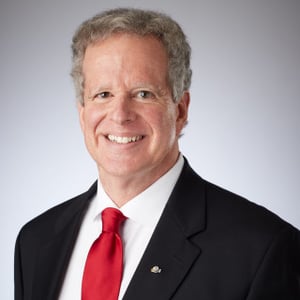
Director, Global Engagement; Vincent de Paul Professor of Law, DePaul University College of Law
Before joining DePaul, Dr. Alberto R. Coll served for five years as dean of the Center for Naval Warfare Studies, the U.S. Navy’s foremost strategic research center. A cum laude graduate from Princeton University in history, he earned his JD and PhD in government and foreign affairs from the University of Virginia. In 1982, Professor Coll joined the faculty at Georgetown University, and in 1986 was appointed secretary of the Navy Senior Research Fellow at the Naval War College. In 1989, he became the youngest holder of the Charles H. Stockton Chair of International Law, the college’s oldest chair. From 1990 to 1993, Professor Coll was principal deputy assistant secretary of defense, serving in the Pentagon office that oversaw the Defense Department’s policy, strategy and $3 billion budget for special operations forces and “low-intensity” conflict, including counterterrorism. For his work, he received the Secretary of Defense Medal for Outstanding Public Service. Professor Coll is the author of The Wisdom of Statecraft and editor of several other books on international relations and law. He is the author of prize-winning articles in the American Journal of International Law and the Naval War College Review, as well as articles in Foreign Policy, Washington Quarterly, Harvard Journal of International Law, the University of Pennsylvania Journal of International Law, and the UCLA Journal of International Law and Foreign Affairs. In 2004, Professor Coll received the Antonio Jose Irisarri Medal for his contribution to strengthening the rule of law and civilian control over the military in Guatemala. He has served as consultant to the Pew Charitable Trusts, the Ford Foundation, the Carnegie Council on Ethics and International Affairs, the Rand Corp., the United States Information Agency, and numerous defense and intelligence organizations. He is a frequent commentator on American foreign policy, U.S. relations with Cuba and Latin America, and international legal and political issues. Over the past 28 years he has lectured at more than 120 universities, think tanks, government agencies, and public forums in the United States, Latin America, Europe, Asia and South Africa. Professor Coll is a member of the Virginia Bar, the Council on Foreign Relations, and the Instituto de Estudios Juridicos y Politicos at the Universidad Complutense de Madrid. At DePaul, he teaches courses on international law, international human rights, U.S. foreign relations, terrorism, international trade and Latin America.
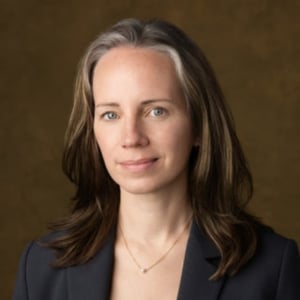
Senior Fellow in Executive Power, Cato Institute
Molly Nixon is a senior fellow at the Cato Institute, where she focuses on the scope, use, and history of executive power as well as its limits under the Constitution. Molly was previously an attorney with Pacific Legal Foundation’s separation of powers practice, where she litigated cases challenging congressional delegations of legislative power and executive branch overreach. Before that, she served as an Attorney-Advisor at the Department of the Interior and as Legislative Counsel for Congressman Justin Amash.
Molly holds a J.D. from New York University School of Law and a B.A. in History and International Relations from Boston University. She clerked for the U.S. District Court for the District of Alaska and practiced law at a firm in New York City for several years before moving to Washington, D.C.
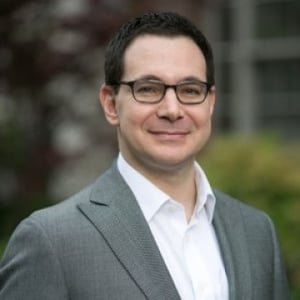
Liviu Librescu Professor of Law, Columbia School of Law
Matthew C. Waxman is a nationally known authority on national security law, cybersecurity, terrorism, intelligence, and armed conflict. He brings the perspective of a former senior government official to his scholarship on war powers, the regulation of military technology, counterterrorism, surveillance, and cybersecurity.
His writing appears regularly in the Lawfare national security blog, and his expertise is frequently sought in media interviews and congressional testimony. Waxman is a member of the Council on Foreign Relations, where he also serves as adjunct senior fellow for Law and Foreign Policy.
At the Law School, Waxman chairs the National Security Law Program and has co-chaired the Cybersecurity Center at Columbia’s Data Science Institute, an interdisciplinary endeavor that brings together experts from across the university to develop ways to keep data secure and private. His teaching focuses on constitutional war powers, international law, and data privacy and surveillance. In 2008, he helped create Columbia Law’s Judge Advocate (JAG) Scholars program, which brings military lawyers to the LL.M. program. He has cultivated opportunities for students to meet with alumni faculty at West Point, where he served as a senior fellow at the Lieber Institute for Law and Warfare.
Before joining the Law School in 2008, Waxman served in senior positions at the State Department, Department of Defense, and National Security Council during the George W. Bush administration. As a National Security Council aide, he was involved in the White House response to the attacks on September 11, 2001. In 2005, as a deputy assistant secretary of defense, he pressed for full compliance with the Geneva Conventions at military detention sites. In 2006, as the State Department’s principal deputy director of policy planning, he led the United States delegation to the United Nations Human Rights Committee in Geneva.
After law school, Waxman served as a law clerk to Supreme Court Justice David H. Souter and to Judge Joel M. Flaum of the U.S. Court of Appeals for the 7th Circuit. Earlier in his career, he worked as a defense analyst at RAND.

Emanuel S. Heller Professor of Law, University of California at Berkeley; Thomas Smith Senior Research Fellow, The Civitas Institute, University of Texas at Austin
John Yoo is the Emanuel Heller Professor of Law at the University of California at Berkeley. He is also the Thomas Smith Senior Research Fellow, Civitas Institute, at the University of Texas at Austin. He is also a Nonresident Senior Fellow at the American Enterprise Institute.
His most recent book, The Politically Incorrect Guide to the Supreme Court, co-authored with Robert Delahunty, was published in 2023. Professor Yoo’s other books include Defender-in-Chief: Trump’s Fight for Presidential Power; Striking Power: How Cyber, Robots, and Space Weapons Change the Rules for War; Point of Attack: Preventive War, International Law, and Global Welfare; and Crisis and Command: A History of Executive Power from George Washington to George Bush.
He is a co-author of volumes 1 and 2 of R. Rossum, G. Tarr, V. Munoz & J. Yoo American Constitution Law (Routledge, 2026), and a co-editor of the eight-volume series on the 250th anniversary of the American Revolution, We Hold These Truths, with Yuval Levin and Adam White of the American Enterprise Institute.
Professor Yoo has published more than 100 articles in academic journals on subjects including national security, constitutional law, international law, and the Supreme Court. He also regularly contributes to the editorial pages of the Wall Street Journal, New York Times, Washington Post, Los Angeles Times, and National Review, among others.
Professor Yoo has served in all three branches of government. He was an official in the U.S. Department of Justice, where he worked on national security and terrorism issues after the 9/11 attacks. He served as general counsel of the U.S. Senate Judiciary Committee. He has been a law clerk for Supreme Court Justice Clarence Thomas and federal appeals Judge Laurence Silberman. He has been a visiting professor at the University of Texas at Austin’s School of Civic Leadership, Seoul National University, the Interdisciplinary Center Herzliya, Keio University, Trento University, the University of Chicago, and the Free University of Amsterdam.
Professor Yoo supervises the Public Law and Policy Program and the California Constitution Center. He also serves on the boards of Founding Forward, the Washington Legal Foundation, the Pacific Legal Foundation, the Ulysses Grant Institute, the Federalist Society’s Separation of Powers and Federalism Division, the Universidad Cientifica del Sur Law School, and the Asia-Pacific Law Institute at Seoul National University. He is a winner of the Federalist Society’s Paul Bator award and the Heritage Foundation’s Edwin Meese III Originalism Lectureship.
Professor Yoo graduated from Yale Law School and summa cum laude from Harvard College.
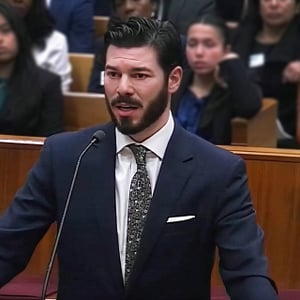
Office of the Florida Attorney General
JEFFREY DESOUSA served as the Acting Solicitor General in the Florida Attorney General’s Office, where he focused on criminal appeals and constitutional litigation, primarily in the United States and Florida Supreme Courts, the Eleventh Circuit Court of Appeal, and the Florida district courts. He is a member of the Florida Bar’s Appellate Court Rules Committee and the First District Appellate American Inn of Court. After graduating with honors from Georgetown Law, Jeffrey served as an appellate attorney for the Miami-Dade Public Defender’s Office. He has worked on hundreds of appellate cases and presented oral argument in approximately 70, including 18 in the Florida Supreme Court.
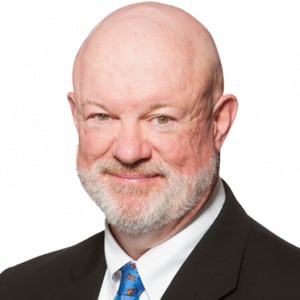
Senior Legal Fellow, the Meese Institute for the Rule of Law, Advancing American Freedom
Paul J. Larkin is a Senior Legal Fellow in the Meese Institute for the Rule of Law at Advancing American Freedom. Paul has held various positions in the federal and state governments throughout his career, such as being an attorney in the Organized Crime and Racketeering Section of the Criminal Division at the U.S. Department of Justice, an Assistant to the Solicitor General in the Office of the Solicitor General at the U.S. Department of Justice, Special Agent-in-Charge and Acting Director of the Criminal Investigation Division at the Environmental Protection Agency, and a member of the Parole Abolition and Sentencing Reform Commission and of the Juvenile Justice Reform Commission in the Office of Virginia Governor George Allen.
He has also worked at Verizon Communications and two law firms in Washington, D.C. His current research is principally in the fields of drug policy, criminal justice policy, and administrative law and policy. He has published numerous articles in law and public policy journals, both in print and online.

Senior Fellow, National Review
Bestselling author Andrew C. McCarthy is a contributing editor at National Review, a senior fellow at National Review Institute, and a Fox News contributor. He is a former Chief Assistant United States Attorney in the Southern District of New York and led the terrorism prosecution against the “Blind Sheikh” (Omar Abdel Rahman) and eleven other jihadists for conducting a war of urban terrorism against the United States that included the 1993 World Trade Center bombing and a plot to bomb New York City landmarks. During is 20-year career as a prosecutor, he received numerous honors, including the Justice Department’s highest awards. Andy speaks and writes widely on law and national security, radical Islam, politics, and culture. He has testified before Congress as an expert on issues of constitutional law, counterterrorism, and law-enforcement. He is a columnist for The Hill, and his essays and book reviews appear frequently at The New Criterion. His most recent New York Times bestselling book is Ball of Collusion (Encounter Books, 2019), about the Russiagate controversy (an updated version was published in 2020). His other books include Willful Blindness (2008), The Grand Jihad (2010), Spring Fever: The Illusion of Islamic Democracy (2012), and Faithless Execution (2014). He has also written several pamphlets in the Broadside series published by Encounter Books, most recently Islam and Free Speech (2015).
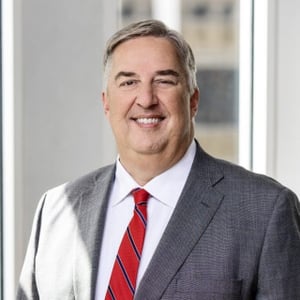
Member, Ifrah Law
After 27 years as a prosecutor, James (“Jim”) Trusty brings to Ifrah Law extensive experience in complex, multi-district white collar litigation, especially in matters involving RICO, The Computer Fraud and Abuse Act, and The Money Laundering Control Act of 1986.
Jim has represented a wide variety of individuals and corporations in the white-collar space. He regularly represents professional athletes, both criminally and civilly, and during 2022 and 2023 he represented President Trump during pre-indictment litigation relating to the Mar-a-Lago and January 6 cases.
Prior to joining Ifrah Law, Jim had a long career in public service, most recently as Chief of the Organized Crime Section at the United States Department of Justice. For seven years, Jim was ultimately responsible for investigating and prosecuting regional, national, and international cases, supervising significant pleadings, and providing strategic and tactical guidance in investigations and multi-defendant trials. In addition to running the RICO Review Unit, which reviewed and approved all criminal RICO cases brought by federal prosecutors, he also was in charge of establishing and promoting policies focused on immigration reform, firearms trafficking, proposed Congressional testimony for DOJ officials, and internet gambling. Significant and sensitive matters on which he worked include the post-conviction review of the Alaska corruption case related to U.S. v. Theodore Stevens and the investigation into allegations of misconduct by a sitting U.S. Attorney and one of her subordinates.
Prior to his work at DOJ, Jim acted as Assistant U.S. Attorney in Greenbelt, Maryland, where he investigated and prosecuted a wide variety of white-collar and other criminal cases, including The Washington area Sniper investigation. He also prosecuted three death penalty cases and was a member of the Attorney General’s Capital Review Committee, responsible for assessing capital-eligible cases such as the Boston Marathon Bomber and the Charleston Church massacre.
In 2018, Jim was appointed by the Governor of Maryland to serve on The Task Force to Study Maryland’s Criminal Gang Statutes. The Task Force assessed the efficacy of existing state laws as they apply to gang-related criminal activity in the state and presented its findings and recommendations to the Governor.

Director, Robert A. Levy Center for Constitutional Studies, Cato Institute
Thomas Berry is the director in the Cato Institute’s Robert A. Levy Center for Constitutional Studies and editor in chief of the Cato Supreme Court Review. Before joining Cato, he was an attorney at Pacific Legal Foundation and clerked for Judge E. Grady Jolly of the U.S. Court of Appeals for the Fifth Circuit. His academic work has appeared in NYU Journal of Law and Liberty, Washington and Lee Law Review Online, and Federalist Society Review. His popular writing has appeared in The Wall Street Journal, National Law Journal, Investor’s Business Daily, National Review Online, and The Hill Online. He has testified before the U.S. Senate, and his work has been cited by the U.S. District Court for the District of Columbia.
Berry holds a J.D. from Stanford Law School, where he was a senior editor on the Stanford Law and Policy Review and a Bradley Student Fellow in the Stanford Constitutional Law Center. He graduated with a B.A. in Liberal Arts from St. John’s College, Santa Fe.
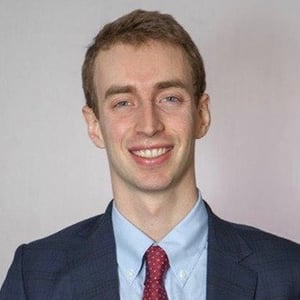
Partner, Boyden Gray PLLC
Jimmy Conde is partner at Boyden Gray PLLC, specializing in energy, environmental, and administrative law, with particular expertise in the Clean Air Act. He has protected clients against agency overreach in cutting-edge and complex legal proceedings, including challenges to EPA, DOE, DOT, and California rules seeking to compel electrification of motor vehicles, the FCC’s universal service fund, Department of Labor Wage & Hour Division rules, and HHS rules interfering with the practice of medicine and sound insurance practices. His written commentary has been published and referenced in the Wall Street Journal, the Washington Examiner, Concurrences (an antitrust publication), and Newsweek, among others.
Mr. Conde began his legal career as an associate with Boyden Gray PLLC. He clerked for Judge Douglas H. Ginsburg in the U.S. Court of Appeals for the D.C. Circuit and Judge David J. Porter in the U.S. Court of Appeals for the Third Circuit.
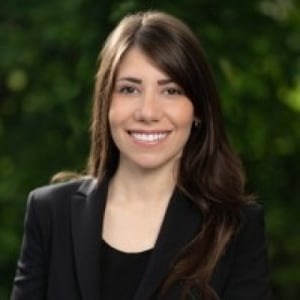
Associate Chief Counsel, U.S. Chamber Litigation Center, U.S. Chamber of Commerce
Maria C. Monaghan is associate chief counsel at the U.S. Chamber Litigation Center, the litigation arm of the U.S. Chamber of Commerce. In this capacity, she handles a variety of litigation matters for the Chamber.
Before joining the Litigation Center, Monaghan practiced as an associate in the D.C. office of Gibson, Dunn & Crutcher LLP. She represented clients in the telecommunications, energy, transportation, and e-commerce sectors, with a focus on appellate litigation and regulatory matters.
Monaghan served as a law clerk to the Honorable Samuel A. Alito of the United States Supreme Court, the Honorable Ed Carnes of the U.S. Court of Appeals for the Eleventh Circuit, and the Honorable Amul R. Thapar of the U.S. Court of Appeals for the Sixth Circuit. She graduated Order of the Coif from the University of Virginia School of Law, where she served as Articles Development Editor for the Virginia Law Review and participated in the Supreme Court Litigation Clinic. She received her undergraduate degree in Human Resource Management and Labor Studies from Rutgers University.
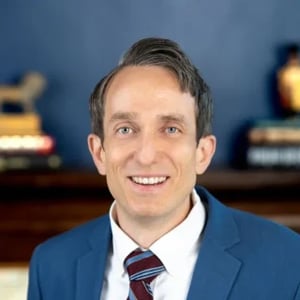
Senior Counsel, America First Legal Foundation
James Rogers is Senior Counsel at America First Legal Foundation, where he litigates in a number of areas, including border security, election integrity, parental rights, and administrative and constitutional law. Before joining America First Legal, from 2021 to 2022, he was Senior Litigation Counsel at the Solicitor General’s Office of the Arizona Attorney General’s Office. While there, he spearheaded lawsuits against the Biden Administration’s destructive open borders policies and its COVID19 vaccine mandates. From 2015 to 2021, James was a Foreign Service Officer at the U.S. Department of State, where he worked in the Office of the Assistant Legal Advisor for Consular Affairs, at the U.S. Consulate in Porto Alegre, Brazil, and at the U.S. Embassy in Windhoek, Namibia.
Prior to joining the Department of State, he was a commercial litigation partner at Osborn Maledon, a Phoenix-based firm with a #1 litigation ranking from Chambers and Partners. James earned a J.D. from Harvard Law School in 2009, an L.L.M. in International Law from the University of Cambridge in 2008, and a B.A., with honors, in International Studies from Brigham Young University in 2005. He is a sixth-generation Arizonan and lives in Mesa, Arizona, with his four children.
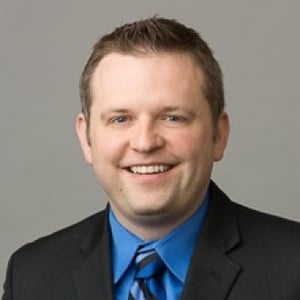
Partner, Marshall, Gerstein & Borun LLP
Ryan Schermerhorn is a registered patent attorney in the firm's Industrial & Mechanical Technologies Practice Group. His engineering background provides him with an understanding of clients’ technologies and enables him to effectively and efficiently provide a range of patent procurement services. He also leverages his experience to assist on intellectual property litigation as well as develop strategies for acquiring and protecting intellectual property.
Since 2017, Ryan has been listed as an "Emerging Lawyer" by Emerging Lawyers Magazine and has been selected for inclusion in the Illinois Rising Stars® lists. Ryan was recognized in Chicago Daily Law Bulletin's 2023 40 Under Forty list. Since 2024, Ryan has been selected for inclusion in The Best Lawyers in America© list in the practice areas of Litigation - Patent and Patent Law. In 2025, Ryan was selected by the Law Bulletin Publishing Company’s Leading Lawyer Network as a “Leading Lawyer.”

Professor of Law, South Texas College of Law Houston
Josh Blackman is a national thought leader on constitutional law and the United States Supreme Court. Josh’s work was quoted during two presidential impeachment trials. He has testified before Congress and advises federal and state lawmakers. Josh regularly appears on TV, including NBC, CBS, ABC, Fox, and the BBC. Josh is also a frequent guest on NPR and other syndicated radio programs. He has published commentaries in the New York Times, Wall Street Journal, Washington Post, and leading national publications.
Since 2012, Josh has served as a professor at the South Texas College of Law Houston. He holds the Centennial Chair of Constitutional Law. Josh is an Adjunct Fellow at the Manhattan Institute. Josh has written more than seven dozen law review articles that have been cited more than a thousand times. Josh was selected as the Jurist of the Year by the Texas Journal of Law & Public Policy, received the inaugural Meese III Originalism Award, and was awarded the Inaugural Joseph Story Award. Josh was selected by Forbes Magazine for the “30 Under 30” in Law and Policy. Josh is the President of the Harlan Institute, and founded FantasySCOTUS, the Internet’s Premier Supreme Court Fantasy League. He blogs at the Volokh Conspiracyand posts@JoshMBlackman.
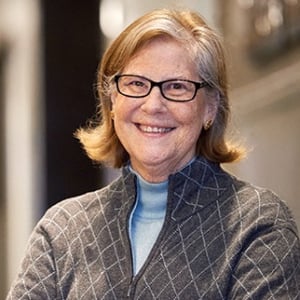
Professor of Practice and Distinguished Scholar in Residence; Co-Director of the Legislative and Regulatory Process Clinic, New York University School of Law
Sally Katzen served in the Clinton administration as administrator of the Office of Information and Regulatory Affairs in the Office of Management and Budget (OMB), as deputy assistant to the president for economic policy and deputy director of the National Economic Council in the White House, and then as the deputy director for management at OMB. She served as the head of the Agency Review Group for the Obama/Biden transition with responsibility for the Executive Office of the President and all government-wide agencies. She has taught both undergraduates and at various law schools. She is a member of the American Law Institute and the National Academy of Public Administration, has served on multiple panels for the National Academy of Sciences, testified frequently before Congress, and is on the board of several non-profit organizations. Before joining the Clinton administration, Katzen was a partner in the Washington, DC, law firm of Wilmer, Cutler & Pickering, specializing in regulatory and legislative matters, while serving in leadership roles in the American Bar Association (including chair of the Section on Administrative Law and Regulatory Practice and as DC delegate to the ABA’s House of Delegates), as president of the Federal Communications Bar Association and as president of the Women’s Legal Defense Fund. She graduated from Smith College and the University of Michigan Law School, where she was the first woman editor-in-chief of the Law Review. She clerked for Judge J. Skelly Wright of the United States Court of Appeals for the District of Columbia Circuit and served in the Carter administration as the general counsel of the Council on Wage and Price Stability in the Executive Office of the President.
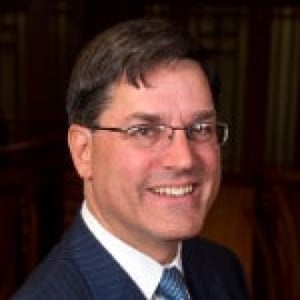
Vice President for Public Policy, American Forest and Paper Association
Paul Noe serves as Vice President for Public Policy at the American Forest and Paper Association. Paul has extensive regulatory, legislative and technical experience, including in environmental regulation, regulatory reform, renewable energy, biomass carbon neutrality, chemicals and product stewardship, workplace health and safety, and sustainability. He previously served as the Vice President of Regulatory Affairs at the Grocery Manufacturers Association.
Paul also has broad experience in public service, including as Counselor to the Administrator in the Office of Information and Regulatory Affairs, Office of Management and Budget (2001-2006), where he helped to lead the development of regulatory policy and White House review of regulations in the Administration of George W. Bush. He previously served as Senior Counsel to the U.S. Senate Committee on Governmental Affairs under Chairmen Fred Thompson, Ted Stevens and Bill Roth (1995-2001), where his work focused on reforming the regulatory process. He also has been a lawyer in private practice, most recently as a partner with C&M Capitolink LLC, as well as counsel in Crowell & Moring’s Environment and Natural Resources Group.
Paul currently serves as the Co-Chair of the Legislation Committee in the American Bar Association’s Section of Administrative Law and Regulatory Practice, and recently coauthored a chapter, “Beyond Process Excellence: Enhancing Societal Well-Being,” published in a book by Brookings Institution Press entitled, “Achieving Regulatory Excellence.” In the spring of 2016, he also served as a Policy Fellow at the University of Pennsylvania Law School, where he offered lectures in environmental law, advanced regulatory policy, legislation, and administrative law.
Paul is a graduate of The Georgetown University Law Center, where he was a John M. Olin fellow in law and economics and an editor on the law journal, and Williams College, where he was a member of Phi Beta Kappa.

Of Counsel, Covington & Burling LLP
The Honorable Paul J. Ray is currently Of Counsel at Covington & Burling LLP where he advises clients on regulatory opportunities and challenges and helps them formulate and execute advocacy strategies for their regulatory policy priorities before the executive branch and Congress.
During the first Trump Administration, Paul held various senior positions at the Office of Information and Regulatory Affairs (OIRA) within the White House’s Office of Management and Budget, including as acting, and then Senate-confirmed, head of the office. As OIRA Administrator (the "regulations czar"), Paul supervised the review of hundreds of regulations from across the government, drafted numerous executive orders governing the regulatory process, and led the Administration’s regulatory reform effort. As a result of this experience, Paul is well-positioned to help clients understand and achieve regulatory policy priorities in the context of the government’s regulatory agenda and ongoing reform efforts.
Most recently, Paul was also the Director of the Roe Institute for Economic Policy Studies at The Heritage Foundation. In that role, he supervised the formulation of the Foundation’s economic and regulatory policy recommendations and provided technical assistance to congressional committees and staff regarding legislative changes to the regulatory process. In addition to his role at The Heritage Foundation, Paul also served as a Senior Advisor at a strategic advisory firm. Before his time in government, Paul practiced law at a law firm in Washington, specializing in administrative law matters.
Prior to his role at the White House, Paul was Counselor to the Secretary at the U.S. Department of Labor. There he led departmental efforts in high-profile rulemakings and helped formulate the Department’s legal positions and strategy.
Paul served as a law clerk to Supreme Court Justice Samuel Alito and as a law clerk to the Honorable Debra Livingston of the U.S. Court of Appeals for the Second Circuit.
Paul is a thought leader in the conservative legal movement and is a frequent commentator and speaker on regulatory policy and reform matters, including at law schools, professional gatherings, and other venues. He is the Chairman of Innovations in Peacebuilding International and the Regulatory Process Working Group of the Federalist Society’s Regulatory Transparency Project and a public member of the Administrative Conference of the United States. Paul is also an adjunct lecturer at the Hillsdale College School of Government.

Founding Partner, Cooper & Kirk PLLC
Charles J. Cooper is a founding member and the chairman of Cooper & Kirk, PLLC, “one of the Nation’s leading litigation boutiques” (Above The Law 2017). The National Law Journal recently wrote that Mr. Cooper’s “brilliant legal career has so far spanned five decades and thrust Cooper into the spotlight in some of the most historic moments of the country’s modern history.” He has argued nine cases before the United States Supreme Court and scores of appeals before each of the 13 federal courts of appeals and several state supreme courts. He has been lead trial counsel in numerous complex, weeks-long trials in federal courts throughout the country. Named by the National Law Journal as one of the 10 best litigators in Washington D.C., Mr. Cooper’s work has been reported in numerous press accounts, and he has been called a “powerhouse attorney” (Fortune 2015), “a hard-nosed litigator” (Washington Post 2017), and “one of the country’s most in-demand civil litigators and a Washington legal institution unto himself” (The American Spectator 2014).
After graduating from the University of Alabama School of Law in 1977, where he ranked first in his class and served as Editor-in-Chief of the Alabama Law Review, Mr. Cooper began his career as a law clerk to Judge Paul Roney on the Fifth Circuit Court of Appeals and to Justice William H. Rehnquist in 1978–79. He then practiced law in Atlanta for two years before joining the Civil Rights Division of the U.S. Department of Justice, where he served as the Deputy Assistant Attorney General in charge of, among other things, appellate matters. In 1985 President Reagan appointed him to the position of Assistant Attorney General for the Office of Legal Counsel, which is the office responsible for providing legal opinions and advice to the White House, the Attorney General, and Executive Branch departments and agencies on issues covering the full spectrum of federal constitutional, statutory, and regulatory law.
In 1988 he returned to private practice as a litigation partner in the Washington, D.C. office of McGuireWoods. From 1990 until the founding of Cooper & Kirk in 1996, he was a partner at Shaw Pittman (now Pillsbury Winthrop Shaw Pittman), where he headed the firm’s Constitutional and Government Litigation Group.
Mr. Cooper has represented a wide range of public and private clients in highly complex constitutional, civil rights, antitrust, healthcare, banking, intellectual property, elections, campaign finance, administrative, commercial, and government contract cases. He has led trial teams in cases that have won judgments and settlements valued in the billions of dollars and that have established ground-breaking constitutional precedents.
Much of Mr. Cooper’s practice has involved representing high-profile clients in nationally prominent matters, including: the State of Florida in a First Amendment suit brought by the Disney Company concerning its autonomous regulatory authority over its Disney World property; the Commonwealth of Virginia in a suit seeking to enjoin the removal of noncitizens from its voter rolls; 38 members of the Duke Lacrosse team falsely accused of rape by officials of Duke University and the City of Durham; Harper Lee in a copyright dispute with the heirs of Gregory Peck; high-ranking former government officials such as former Attorneys General John Ashcroft, Jeff Sessions, and William Barr, and Ambassador John Bolton; several Governors and United States Senators; over 100 Members of Congress; and many state, territorial, and local government bodies and officials. He has also represented and advised government officials and public figures in connection with sensitive private issues that needed to be, and were, resolved discreetly without becoming matters of public record.
In 1998 Chief Justice Rehnquist appointed Mr. Cooper to the Standing Committee on Rules of Practice and Procedure of the Judicial Conference of the United States, where he served for three terms. He also served as a Public Member, appointed by President George H.W. Bush, of the National Commission on Judicial Discipline and Removal. He is a member of numerous professional associations, including the American Law Institute (since 1993) and the American Academy of Appellate Lawyers (since 1996). He is also an active member of the Federalist Society and the Republican National Lawyers Association, which in 2010 named him Republican Lawyer of the Year and in 2016 honored him with its Edwin Meese III Award.
Mr. Cooper has published scores of articles and spoken extensively on constitutional and legal policy topics. He has appeared before congressional committees on 26 occasions, testifying as an expert on a wide variety of legal issues, including the Chevron doctrine of judicial deference to administrative agencies, the diversity of citizenship jurisdiction of federal courts, statehood bills for Puerto Rico and the District of Columbia, and the impeachment of President Clinton.

McCormick Professor of Jurisprudence; Director, James Madison Program, Princeton University
Robert P. George is McCormick Professor of Jurisprudence and Director of the James Madison Program in American Ideals and Institutions at Princeton University. He has several times been a Visiting Professor at Harvard Law School. He has served as Chairman of the U.S. Commission on International Religious Freedom and on the U.S. Commission on Civil Rights and the President’s Council on Bioethics. He has also served as the U.S. member of UNESCO’s World Commission on the Ethics of Scientific Knowledge and Technology. He was a Judicial Fellow at the Supreme Court of the United States, where he received the Justice Tom C. Clark Award. A Phi Beta Kappa graduate of Swarthmore, he holds the degrees of J.D. and M.T.S. from Harvard University and the degrees of D.Phil., B.C.L., D.C.L., and D.Litt. from Oxford University, in addition to twenty-one honorary doctorates. He is a recipient of the U.S. Presidential Citizens Medal, the Honorific Medal for the Defense of Human Rights of the Republic of Poland, the Canterbury Medal of the Becket Fund for Religious Liberty, the Bradley Prize, the Irving Kristol Award of the American Enterprise Institute, and Princeton University’s President’s Award for Distinguished Teaching. His books include Making Men Moral: Civil Liberties and Public Morality and In Defense of Natural Law (both published by Oxford University Press), as well as The Clash of Orthodoxies and Conscience and Its Enemies (both published by ISI Books).

Judge, United States Court of Appeals, District of Columbia Circuit
Judge Katsas was appointed to the D.C. Circuit in December 2017. He graduated from Princeton University and Harvard Law School, where he was an executive editor on the Harvard Law Review. Between 1989 and 1992, he served as a law clerk to Judge Edward Becker on the Third Circuit, to then-Judge Clarence Thomas on the D.C. Circuit, and to Justice Thomas on the Supreme Court. Between 1992 and 2001, he was an associate and then partner in the Washington office of Jones Day, where he specialized in appellate and complex civil litigation. Between 2001 and 2009, he served in many senior positions in the Department of Justice, including as Assistant Attorney General for the Civil Division and as Acting Associate Attorney General. In 2009, he returned to Jones Day. From January to December 2017, he served as Deputy Assistant to the President and Deputy Counsel to the President.
Before joining the bench, Judge Katsas argued more than 75 appeals, including three cases in the Supreme Court, 13 cases in the D.C. Circuit, and cases in every other federal court of appeals. By appointment of the Chief Justice, he served on the Advisory Committee on Appellate Rules from 2013 to 2017. In 2016, he was elected to membership in the American Academy of Appellate Lawyers.
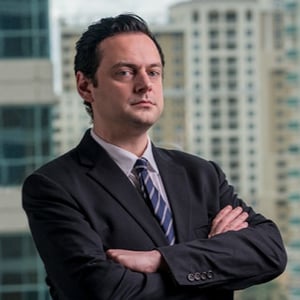
Partner, Boies Schiller Flexner LLP
Eric is an appellate and trial litigator who represents plaintiffs and defendants in high-stakes litigation and regulatory matters. His practice focuses on constitutional law, government regulation, antitrust, and class actions. A former United States Supreme Court clerk, Special Counsel to the United States Senate Judiciary Committee, and Deputy Attorney General for the state of Alabama, Eric’s experience serving at the highest levels of state and federal government informs every aspect of his approach to litigation and regulatory issues.
Eric has briefed and argued high-stakes appeals and dispositive motions in a variety of state and federal courts and briefed multiple matters at the United States Supreme Court. He has served as lead or co-lead counsel in regulatory, constitutional, and consumer-protection suits, including a pathbreaking suit challenging the Department of Commerce’s regulations governing census apportionment. Eric’s experience ranges across wide variety of substantive areas, including antitrust, civil rights, criminal law, energy, insurance, healthcare, securities and corporate law, defamation and privacy law, Indian law, gambling regulation, and international judgment enforcement.
Before joining the firm, Eric was a law clerk to the Hon. Samuel A. Alito at the United States Supreme Court and Chief Judge William H. Pryor at the Eleventh Circuit. Eric also served as a special counsel to Senator Lindsey Graham in his capacity as chairman of the Senate Judiciary Committee and as a Deputy Attorney General and the Assistant Solicitor General for the State of Alabama.
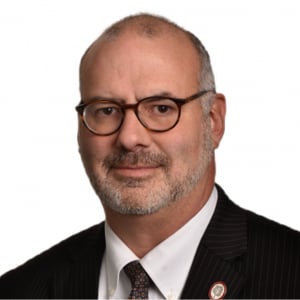
Senior Litigator, The Buckeye Institute; Partner, Wegman Hessler Valore
Jay R. Carson is the senior litigator at The Buckeye Institute. In this role he oversees all of Buckeye’s efforts to protect people’s rights and good public policy through the courts.
Carson brings 20 years of private-sector litigation and public policy experience to The Buckeye Institute, and has served as a legislative aide to the Ohio General Assembly, a law clerk to the Sixth Circuit Court of Appeals, as well as a Common Pleas Court Magistrate.
In addition to his work for The Buckeye Institute, Carson continues to practice at Wegman Hessler in Cleveland, where he focuses on business litigation, regulatory compliance counseling, and dispute resolution. Carson draws on his experiences in the public and private sectors to advocate for economic liberty and against burdensome government regulations on behalf of The Buckeye Institute and the people that it represents.
Carson is active in his community, the Cleveland Metropolitan Bar Association, the Northern District of Ohio Chapter of the Federal Bar Foundation, and is a life member of the Sixth Circuit Judicial Conference. Carson has also served on the Lakewood Civil Service Commission, the Lakewood Charter Review Commission, and the Cleveland-Cuyahoga County Workforce Investment Board. He currently serves on the boards of the North Coast Health Foundation and the Three Arches Foundation, which focus on providing health care to the uninsured, as well as the Lakewood Chamber of Commerce Board of Directors.
Jay earned his J.D. from The Ohio State University College of Law and his B.A. from Baldwin-Wallace College.
Senior Attorney, Institute for Justice
Sam Gedge is a senior attorney at the Institute for Justice. He joined IJ in June 2015 and litigates cases to promote economic liberty, protect political speech, and secure individuals’ rights to private property.
In 2017, Sam was named IJ’s second Elfie Gallun Fellow for Freedom and the Constitution. The fellowship comes with an emphasis on publishing written materials and speaking to students and others about the vital role the U.S. Constitution plays in protecting our most precious freedoms.
In his time at IJ, Sam has launched cases battling civil forfeiture and overzealous licensing boards, which generated widespread coverage and conversation in media outlets from Wired and The Atlantic to London’s Daily Mail.
Before joining IJ, Sam was an attorney at Wiley Rein LLP, in Washington, D.C., where he focused on litigation and election law. He is a former law clerk to Judge Raymond W. Gruender of the U.S. Court of Appeals for the Eighth Circuit.
Sam received his law degree cum laude from Harvard Law School in 2010.
Assistant Attorney General, Opinions Unit, Ohio Attorney General’s Office
Jeff Hobday serves as an Assistant Attorney General in the Opinions Unit at the Ohio Attorney General’s Office, where he researches and drafts formal opinions to guide state agencies, county officials, and townships on complex questions of statutory interpretation. He recently co-authored an amicus brief filed in the U.S. Supreme Court on behalf of Ohio and 28 other states in Montgomery v. Caribe Transport II, LLC, addressing federal preemption and the States’ authority to regulate highway safety through tort law.
Previously, Jeff held leadership roles at the Ohio Secretary of State’s Office, including as Senior Elections Counsel and Deputy Elections Director. He began his public service career as an attorney with the Ohio Legislative Service Commission, where he drafted legislation and advised lawmakers on criminal justice, tort law, and the state’s court system.
Jeff Hobday earned his law degree from Cornell Law School and holds a Bachelor of Music in Piano Performance and Psychology from Wheaton College in Illinois.
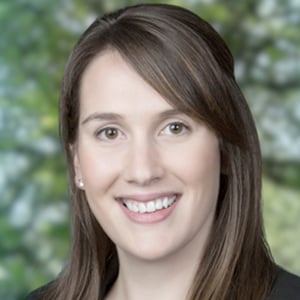
Partner, Lehotsky Keller Cohn LLP
Mary Miller is an experienced litigator focusing on complex trial and appellate litigation in state and federal courts. She has represented clients in matters involving antitrust, fraud, breach of contract, class actions, misappropriation of trade secrets, false advertising, and the False Claims Act. Mary previously first chaired a federal jury trial to successful verdict, and she has authored numerous motions and briefs at all stages of litigation.
Before joining Lehotsky Keller Cohn LLP, Mary was a partner at Kirkland & Ellis LLP in Washington, D.C. Mary previously clerked for the Honorable Justice Samuel A. Alito, Jr. of the Supreme Court of the United States, Judge Priscilla Richman of the United States Court of Appeals for the Fifth Circuit, and Judge Richard J. Leon of the United States District Court for the District of Columbia.
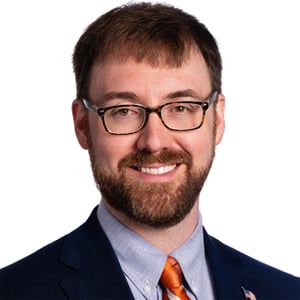
Senior Legal Fellow, Courts and the Constitution, Legal Policy Center, The Heritage Foundation
Zack is a Senior Legal Fellow of Courts and the Constitution at The Heritage Foundation.
He previously served for several years as an Assistant United States Attorney in the Northern District of Florida. Prior to that, he spent two years as an associate in the Washington, D.C. office of Cleary Gottlieb Steen & Hamilton, which he joined after clerking for the Hon. Emmett R. Cox on the United States Court of Appeals for the Eleventh Circuit.
Smith received his undergraduate, master’s, and law degrees from the University of Florida. During law school, Smith served as the Editor in Chief of the Florida Law Review and served on the executive boards of several student organizations, including the UF Chapter of the Federalist Society.
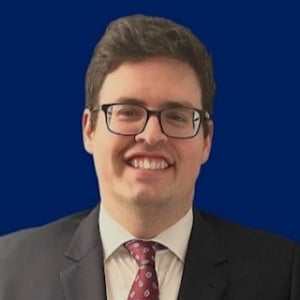
U.S. Chamber Litigation Center, Senior Counsel
Jordan Von Bokern is senior counsel at the U.S. Chamber Litigation Center, the litigation arm of the U.S. Chamber of Commerce. In this capacity, Von Bokern focuses on regulatory litigation, especially affirmative litigation in which the Chamber is suing to challenge federal, state, and local regulations.
Before joining the Litigation Center, Von Bokern served as a trial attorney in the Federal Programs Branch in the Civil Division of the U.S. Department of Justice. In this role, Von Bokern defended the United States and various federal agencies and officers against lawsuits that raised constitutional and statutory challenges to federal statutes, regulations, guidance documents, and other executive branch actions. Von Bokern litigated those claims in federal district courts across the country.
Prior to that, Von Bokern served as senior counsel in the Office of Legal Policy at the U.S. Department of Justice. Here, Von Bokern advised Department of Justice leadership and the White House on the selection, nomination, and confirmation of federal judges. He also worked on Department of Justice policy initiatives.
Von Bokern served as a law clerk for both then-Seventh Circuit Court of Appeals Judge Amy Coney Barrett and Fifth Circuit Court of Appeals Judge Jerry E. Smith. Between his clerkships, he was an associate at Jones Day in their Labor and Employment practice. He graduated cum laude from The University of Chicago Law School, where he served as managing editor of The University of Chicago Law Review. Von Bokern received his B.A. in Political Science, summa cum laude, from Colorado State University.
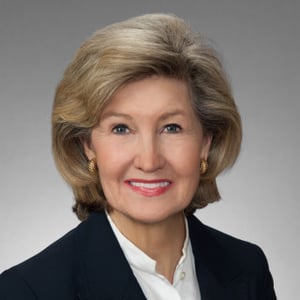
Former United States Ambassador to NATO, Former United States Senator, Texas
Kay Bailey Hutchison is a public servant and businesswoman who has served in roles from bank executive to U.S. Senator to most recently, U.S. Ambassador to NATO. She served as U.S. Senator from Texas from 1993 to 2013. In January 2021, she stepped down from a more than 3-year term as U.S. Ambassador to The North Atlantic Treaty Organization (NATO) in Brussels, Belgium where she worked to maintain U.S. leadership in the 30 Ally Alliance.
Kay Bailey Hutchison is a public servant and businesswoman who has served in roles from bank executive to U.S. Senator to most recently, U.S. Ambassador to NATO. She served as U.S. Senator from Texas from 1993 to 2013. In January 2021, she stepped down from a more than 3-year term as U.S. Ambassador to The North Atlantic Treaty Organization (NATO) in Brussels, Belgium where she worked to maintain U.S. leadership in the 30 Ally Alliance.
Kay has authored three books, including the bestselling American Heroines: The Spirited Women Who Shaped Our Country (2004), Leading Ladies: American Trailblazers (2007) and Unflinching Courage: Pioneering Women Who Shaped Texas (2013).
In 2013, the Dallas City Council honored her by naming the city’s convention center the Kay Bailey Hutchison Convention Center. Also in 2013, The Kay Bailey Hutchison Center for Energy, Law and Business (KBH Energy Center) was created by the University of Texas to provide unique opportunities for business and law school students to learn the energy industry. The Center sponsors an annual symposium for leaders in the energy field to discuss current issues in the industry.
Kay serves on the Dallas Mayor’s International Advisory Council, UT Southwestern Medical Foundation Board of Trustees, and the Board of Directors of the Atlantic Council. She is a Senior Adviser at CSIS (Center for Strategic and International Studies) and the NASA Advisory Council, in Washington DC. She also serves on the Bank of America Global Advisory Board.
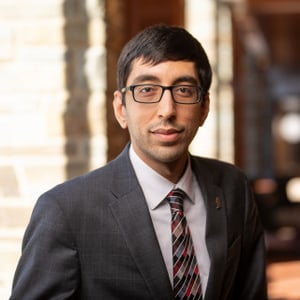
Judicial Law Clerk, U.S. District Court for the Southern District of Florida
Nitin is a recent graduate of Cornell Law School. Before his time in Ithaca, he majored in International Studies and Political Science at Johns Hopkins University and focused on power competition in South Asia during his graduate studies at the University of Oxford.
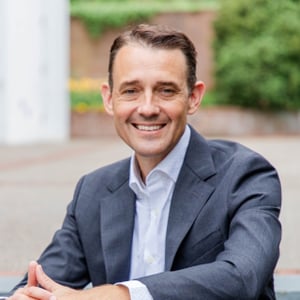
Senior Vice President, Strategic Initiatives & Special Counsel to the President, Alliance Defending Freedom
Ryan Bangert serves as senior vice president for strategic initiatives and special counsel to the president at Alliance Defending Freedom. He oversees ADF’s Blackstone Legal Fellowship and Research & Innovation Team. He also advises executive leadership on strategic initiatives.
Before joining ADF, Bangert served as deputy first assistant attorney general and deputy for legal counsel in the office of the Texas attorney general, and as deputy for civil litigation for Missouri Attorney General Josh Hawley. Prior to his government service, Bangert was a litigation partner at Baker Botts L.L.P., where he was a member of the firm’s commercial litigation and appellate practice sections.
Bangert has been published at First Things, Civitas Outlook, Law & Liberty, National Review, Daily Wire, The Hill, Washington Examiner, The Federalist, Fox News, and the American Reformer. He speaks nationally on constitutional, cultural, and religious liberty issues. He also serves as Visiting Faculty in Law at the University of Austin.
He earned his J.D. from Southern Methodist University, where he was a Hatton Sumners scholar and graduated first in his class. Following law school, he clerked for the Honorable Patrick E. Higginbotham on the Fifth Circuit Court of Appeals.
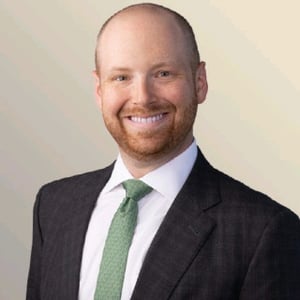
Solicitor General, Iowa Office of the Attorney General
Eric Wessan serves as Iowa’s Solicitor General in the Iowa Attorney General’s Office. In that role, Wessan leads Iowa’s litigation before State and federal appellate courts, including the Iowa and U.S. Supreme Courts. Before that role, Wessan worked on complex commercial litigation at two large law firms in Chicago. Wessan also served as a law clerk for the Honorable James C. Ho on the U.S. Court of Appeals for the Fifth Circuit and for the Honorable John F. Kness on the U.S. District Court for the Northern District of Illinois. Wessan is a graduate of the University of Chicago Law School, with honors, and of the University of Chicago.

What Was the Founders' Design for National Security Beyond the Battlefield?
Alberto R. Coll, Molly Nixon, Matthew Waxman, John C. Yoo
In this Federalist Society America 250 series, experts analyze modern legal and policy debates through...
Plenary Session 1: Congressional Primacy at the Founding and Today
Featuring: Dr. Nicholas P. Cole, Senior Research Fellow, University of Oxford Mr. Yuval Levin, Senior Fellow, American Enterprise Institute...
What Did the Founders Think of the President’s Pardon Power?
Jeffrey DeSousa, Paul James Larkin, Andrew McCarthy, James Trusty
In this Federalist Society America250 series, experts analyze modern legal and policy debates through the...
A Seat at the Sitting - April 2026
Thomas Berry, James Conde, Maria Monaghan, James Rogers, Ryan Schermerhorn
Each month, a panel of constitutional experts convenes to discuss the Court’s upcoming docket sitting...
The Presidential Toolbox: Instruments of Executive Power
Josh Blackman, Sally Katzen, Paul R. Noe, Paul J. Ray
What are the legal tools available to a President to shape policy and execute the...
Plenary Panel 1: Justice Alito's Impact on Statutory Interpretation
Charles J. Cooper, Robert P. George, Gregory G. Katsas, Eric M. Palmer
Justice Alito’s statutory interpretation jurisprudence reflects a sustained commitment to textual analysis, structural coherence, and...
A Seat at the Sitting - February 2026
Jay R. Carson, Sam Gedge, Jeffrey S. Hobday, Mary Elizabeth Miller, Zack Smith, Jordan Von Bokern
Each month, a panel of constitutional experts convenes to discuss the Court’s upcoming docket sitting...
Fireside Chat with Ambassador Kay Bailey Hutchison
Kay Bailey Hutchison, Nitin R. Nainani
Ambassador Kay Bailey Hutchison served as the U.S. Ambassador to NATO from 2017-2021. From 1993-2013,...
Topics
The SAVE Act: Fact v. Fiction
The SAVE Act is a proposal from congressional Republicans to require people to provide proof...
Courthouse Steps Oral Argument: Medina v. Planned Parenthood South Atlantic
Ryan L. Bangert, Eric Wessan
In July of 2018, Governor Henry McMaster of South Carolina issued an executive order to...