
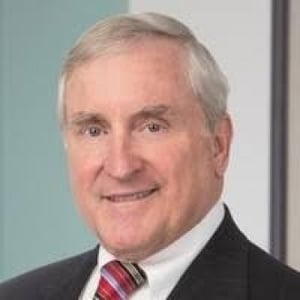
Senior Counsel, Caplin & Drysdale; Adjunct Professor of Law, Georgetown Law
Professor Carney is a Senior Counsel with Caplin & Drysdale, Cht’d. in Washington, D.C. He served as a Trial Attorney for the Tax Division of the U.S. Department of Justice for six years, and was in private (law firm) tax practice for many years, specializing in IRS administrative practice, tax controversies (audit and IRS Appeals Office), and tax litigation. He also advised clients in a similar capacity as a partner in the National Tax Office of Ernst & Young LLP in Washington. He is a member of the District of Columbia bar, as well as the bars of the U.S. Tax Court, U.S. Court of Federal Claims, U.S. District Court for the District of Columbia, and the U.S. Courts of Appeals for the Federal Circuit, D.C Circuit, and Eleventh Circuit.

Professor of Law, Maurer School of Law, Indiana University of Bloomington
Professor David Gamage is a scholar of tax law and policy and also of health law and policy. He has written extensively on tax and budget policy at both the U.S. state and federal levels, as well as on tax theory, fiscal federalism, and the intersections between taxation and health care. Professor Gamage consistently ranks in the top five of the SSRN Tax Professor Rankings.
Gamage has authored or coauthored over fifty scholarly articles and essays. His scholarship has appeared in a range of journals, including the peer-edited Tax Law Review and Public Finance Review, and the flagship law reviews of the University of Chicago, the University of California, and Northwestern Law Schools. His casebook, Taxation: Law, Planning, and Policy, is published by Carolina Academic Press.
From 2010 through 2012, Gamage served as special counsel to the U.S. Department of the Treasury, Office of Tax Policy. In that position, he administered the individual income tax portfolio of the Treasury Department's Tax Legislative Counsel, and he oversaw the drafting of all individual income tax regulations and executive branch initiatives related to the individual income tax. Gamage's position primarily involved the drafting and implementation of tax provisions of the Affordable Care Act ("Obamacare"). Since returning to academia in 2012, Gamage has served on a tax reform commission for the state of California and has regularly advised other state and federal policymakers on tax and health policy.
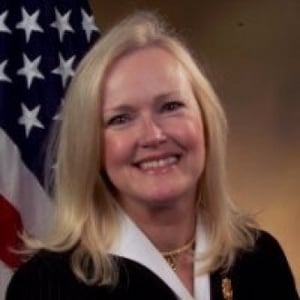
Founder, Law Office of Eileen J. O'Connor PLLC
After nearly 30 years as a national tax specialist with the IRS and major accounting firms, Eileen J. O’Connor, now an attorney in private practice, was Assistant Attorney General for the Justice Department’s Tax Division for six years during the administration of President George W. Bush and a member of then-President-elect Trump’s Treasury Department Transition Team. She focuses on federal administrative and tax law.
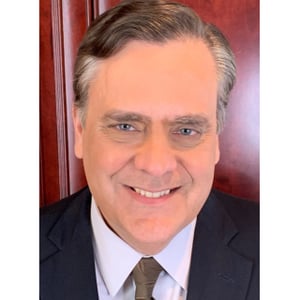
J.B. and Maurice C. Shapiro Professor of Public Interest Law, The George Washington University Law School
Jonathan Turley is a nationally recognized legal scholar who has written extensively in areas ranging from constitutional law to legal theory to tort law. After a stint at Tulane Law School, Professor Turley joined the GW Law faculty in 1990, and in 1998, became the youngest chaired professor in the university's history.
He is the founder and executive director of the Project for Older Prisoners (POPS). He has written more than three dozen academic articles that have appeared in a variety of leading law journals including those of Cornell, Duke, Georgetown, Harvard, and Northwestern Universities, among others. He most recently completed a three-part study of the historical and constitutional evolution of the military system.
Professor Turley has served as counsel in some of the most notable cases in the last two decades, including his representation of the Area 51 workers at a secret air base in Nevada; the nuclear couriers at Oak Ridge, Tennessee; the Rocky Flats grand jury in Colorado; Dr. Eric Foretich, the husband in the Elizabeth Morgan custody controversy; and four former U.S. Attorney Generals during the Clinton impeachment litigation. Professor Turley also has served as counsel in a variety of national security and terrorism cases, and has been ranked as one of the top 10 lawyers handling military cases.
He has served as a consultant on statutory and constitutional issues, and he has been a witness in over 100 hearings before the House and Senate, including the impeachments of Presidents Bill Clinton and Donald Trump. He also is a nationally recognized legal commentator; he ranked 38th in the top 100 most cited ‘public intellectuals’ in a recent study by Judge Richard Posner and was found to be the second most cited law professor in the country.
He is a member of the USA Today board of contributors and the recipient of the “2005 Single Issue Advocate of the Year” – the annual opinion award for the Aspen Institute and The Week magazine. Hundreds of his articles on legal and policy issues regularly appear in national newspapers. He also has worked as the legal analyst for four networks, CBS, NBC, BBC, and Fox. After 30 years as a columnist and commentator, the Washington Post called him the "Dean of Legal Analysts."
He is a best-selling author, including his latest New York Times bestseller "Rage and the Republic: The Unfinished Story of the American Revolution." (Simon & Schuster 2026). Turley's blog, Res Ipsa (www.jonathanturley.org), is one of the most read legal sites in the country.
Senior Counsel, Caplin & Drysdale; Adjunct Professor of Law, Georgetown Law
Professor Carney is a Senior Counsel with Caplin & Drysdale, Cht’d. in Washington, D.C. He served as a Trial Attorney for the Tax Division of the U.S. Department of Justice for six years, and was in private (law firm) tax practice for many years, specializing in IRS administrative practice, tax controversies (audit and IRS Appeals Office), and tax litigation. He also advised clients in a similar capacity as a partner in the National Tax Office of Ernst & Young LLP in Washington. He is a member of the District of Columbia bar, as well as the bars of the U.S. Tax Court, U.S. Court of Federal Claims, U.S. District Court for the District of Columbia, and the U.S. Courts of Appeals for the Federal Circuit, D.C Circuit, and Eleventh Circuit.
Professor of Law, Maurer School of Law, Indiana University of Bloomington
Professor David Gamage is a scholar of tax law and policy and also of health law and policy. He has written extensively on tax and budget policy at both the U.S. state and federal levels, as well as on tax theory, fiscal federalism, and the intersections between taxation and health care. Professor Gamage consistently ranks in the top five of the SSRN Tax Professor Rankings.
Gamage has authored or coauthored over fifty scholarly articles and essays. His scholarship has appeared in a range of journals, including the peer-edited Tax Law Review and Public Finance Review, and the flagship law reviews of the University of Chicago, the University of California, and Northwestern Law Schools. His casebook, Taxation: Law, Planning, and Policy, is published by Carolina Academic Press.
From 2010 through 2012, Gamage served as special counsel to the U.S. Department of the Treasury, Office of Tax Policy. In that position, he administered the individual income tax portfolio of the Treasury Department's Tax Legislative Counsel, and he oversaw the drafting of all individual income tax regulations and executive branch initiatives related to the individual income tax. Gamage's position primarily involved the drafting and implementation of tax provisions of the Affordable Care Act ("Obamacare"). Since returning to academia in 2012, Gamage has served on a tax reform commission for the state of California and has regularly advised other state and federal policymakers on tax and health policy.
Founder, Law Office of Eileen J. O'Connor PLLC
After nearly 30 years as a national tax specialist with the IRS and major accounting firms, Eileen J. O’Connor, now an attorney in private practice, was Assistant Attorney General for the Justice Department’s Tax Division for six years during the administration of President George W. Bush and a member of then-President-elect Trump’s Treasury Department Transition Team. She focuses on federal administrative and tax law.
J.B. and Maurice C. Shapiro Professor of Public Interest Law, The George Washington University Law School
Jonathan Turley is a nationally recognized legal scholar who has written extensively in areas ranging from constitutional law to legal theory to tort law. After a stint at Tulane Law School, Professor Turley joined the GW Law faculty in 1990, and in 1998, became the youngest chaired professor in the university's history.
He is the founder and executive director of the Project for Older Prisoners (POPS). He has written more than three dozen academic articles that have appeared in a variety of leading law journals including those of Cornell, Duke, Georgetown, Harvard, and Northwestern Universities, among others. He most recently completed a three-part study of the historical and constitutional evolution of the military system.
Professor Turley has served as counsel in some of the most notable cases in the last two decades, including his representation of the Area 51 workers at a secret air base in Nevada; the nuclear couriers at Oak Ridge, Tennessee; the Rocky Flats grand jury in Colorado; Dr. Eric Foretich, the husband in the Elizabeth Morgan custody controversy; and four former U.S. Attorney Generals during the Clinton impeachment litigation. Professor Turley also has served as counsel in a variety of national security and terrorism cases, and has been ranked as one of the top 10 lawyers handling military cases.
He has served as a consultant on statutory and constitutional issues, and he has been a witness in over 100 hearings before the House and Senate, including the impeachments of Presidents Bill Clinton and Donald Trump. He also is a nationally recognized legal commentator; he ranked 38th in the top 100 most cited ‘public intellectuals’ in a recent study by Judge Richard Posner and was found to be the second most cited law professor in the country.
He is a member of the USA Today board of contributors and the recipient of the “2005 Single Issue Advocate of the Year” – the annual opinion award for the Aspen Institute and The Week magazine. Hundreds of his articles on legal and policy issues regularly appear in national newspapers. He also has worked as the legal analyst for four networks, CBS, NBC, BBC, and Fox. After 30 years as a columnist and commentator, the Washington Post called him the "Dean of Legal Analysts."
He is a best-selling author, including his latest New York Times bestseller "Rage and the Republic: The Unfinished Story of the American Revolution." (Simon & Schuster 2026). Turley's blog, Res Ipsa (www.jonathanturley.org), is one of the most read legal sites in the country.
Partner, Bell Giftos St. John LLC
Kevin St. John is a partner with Bell Giftos St. John LLC in Madison, Wisconsin. From 2011 to 2015, he served as Wisconsin’s Deputy Attorney General. Prior to his government service St. John practiced law with the Madison office of Michael Best & Friedrich LLP and the Washington D.C. office of Gibson, Dunn & Crutcher LLP. St. John is a graduate of the University of Wisconsin-Madison and earned his law degree from the University of Chicago.
St. John has contributed to Federalist Society as a speaker and in commentaries on topics including redistricting, free speech, and separation of powers.
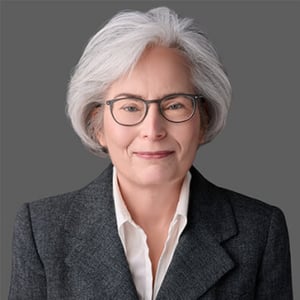
Partner, Rule Garza Howley LLP
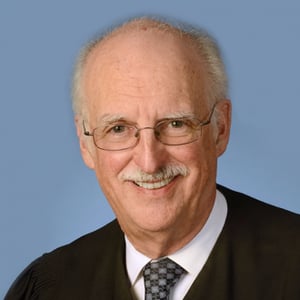
Senior Judge, United States Court of Appeals, District of Columbia Circuit
Circuit Judge Douglas H. Ginsburg was appointed to the United States Court of Appeals for the District of Columbia in 1986. After receiving his B.S. from Cornell University in 1970, and his J.D. from the University of Chicago Law School in 1973, he clerked on the D.C. Circuit and for Justice Thurgood Marshall on the United States Supreme Court. Thereafter, Judge Ginsburg was a professor at the Harvard Law School, the Deputy Assistant and then Assistant Attorney General for the Antitrust Division of the Department of Justice, as well as the Administrator of the Office of Information and Regulatory Affairs in the Office of Management and Budget. Concurrent with his service as a federal judge, Judge Ginsburg has taught at the University of Chicago Law School and the New York University School of Law. Judge Ginsburg is currently a Professor of Law at the George Mason University and a visiting professor at University College London, Faculty of Laws.
Judge Ginsburg is the Chairman of the International Advisory Board of the Global Antitrust Institute at the Law and Economics Center of the George Mason University School of Law. He also serves on the Advisory Boards of: Competition Policy International; the Harvard Journal of Law and Public Policy; the Journal of Competition Law and Economics; the Journal of Law, Economics & Policy; the Supreme Court Economic Review; the University of Chicago Law Review; the New York University Journal of Law and Liberty; and, at University College London, both the Centre for Law, Economics and Society and the Jevons Institute for Competition Law and Economics.
In 2020, Judge Ginsburg was the 11th recipient of the John Sherman Award, presented by the Antitrust Division of the Department of Justice in recognition of the awardee’s Lifetime Contributions to Antitrust Law and Policy.
In 2014, Judge Ginsburg received the Lifetime Achievement Award given annually by the Global Competition Review.
He is the author or co-author of several books and more than 100 articles on competition and regulation, including, most recently, Growing Convergence: The Limited Role of Antitrust in Standard Essential Patent Disputes, in CPI Antitrust Chronicle, Summer 2021, Vol. 1, No. 2.

Vice President and Director of Competition Policy, Progressive Policy Institute
Diana Moss joined the Progressive Policy Institute in 2023. She was previously President of the American Antitrust Institute from 2015-2023. An economist, Dr. Moss has developed and expanded competition enforcement and policy advocacy channels and strategies, and strengthened communications with enforcers, Congress, other advocacy groups, and the media. Her work spans both antitrust and regulation, with industry expertise in digital technology, electricity, petroleum, food and agriculture, airlines, telecommunications, and healthcare. Dr. Moss was previously at the Federal Energy Regulatory Commission, where she coordinated the agency’s competition analysis for electricity mergers. In the early 1990s, she consulted in private practice in the areas of regulation and antitrust. Dr. Moss has spoken widely on various topics involving competition policy and enforcement, testified before Congress, appeared before state and federal regulatory commissions, and made numerous radio and television appearances. She has published articles in a number of economic and legal academic journals, including: American Economic Review, Journal of Industrial Organization, the Energy Law Journal, and the Antitrust Bulletin. She is editor of Network Access, Regulation and Antitrust (2005). Dr. Moss is Adjunct Faculty in the Department of Economics at the University of Colorado at Boulder. She holds a M.A. degree from the University of Denver and a Ph.D. from the Colorado School of Mines.
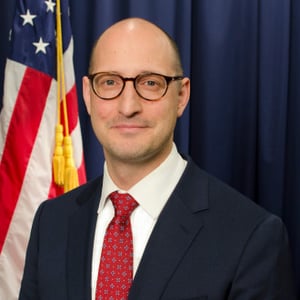
Partner, Cravath, Swaine & Moore LLP
Noah Joshua Phillips is Co-Chair of the Antitrust Practice and previously served as a Commissioner of the Federal Trade Commission. He advises clients on a range of antitrust issues, including mergers and acquisitions, business conduct and compliance, litigation and investigations, and data security and privacy.
On the FTC, Mr. Phillips played an integral role in precedent setting enforcement actions and regulatory efforts concerning antitrust, consumer protection and privacy. He decided dozens of merger and other antitrust enforcement matters across the economy, including in the consumer product, defense, energy, entertainment, healthcare, technology, pharmaceutical and retail industries. Mr. Phillips’ written antitrust opinions were consistently upheld by federal appellate courts.
As Commissioner, Mr. Phillips frequently testified before Congress and represented the FTC before international bodies, including the G7, the Competition Committee of the Organisation for Economic Co-operation and Development, and the International Conference of Data Protection and Privacy Commissioners. He speaks and writes frequently on a range of antitrust, consumer protection and privacy issues.
Prior to the FTC, Mr. Phillips served as Chief Counsel to U.S. Senator John Cornyn, of Texas, on the Senate Judiciary Committee. He advised Senator Cornyn on a variety of legal and policy issues, as well as judicial nominations.
Mr. Phillips received an A.B. magna cum laude from Dartmouth College in 2000 and a J.D. from Stanford Law School in 2005. He began his career at a New York-based investment bank. After law school, Mr. Phillips clerked for Hon. Edward C. Prado of the U.S. Court of Appeals for the Fifth Circuit and joined Cravath’s Litigation Department in 2006. He left the Firm in 2010, and he rejoined Cravath as a partner in December 2022.

Founding Partner, Lodestar Law and Economics PLLC
Josh is the founder of Lodestar Law and Economics, PLLC. On January 1, 2013, the U.S. Senate unanimously confirmed Wright as a Commissioner of the Federal Trade Commission (FTC). He is a leading scholar in antitrust law, economics, intellectual property, regulation, and consumer protection, and has published more than 100 articles and book chapters, co-authored a leading antitrust casebook, and edited several book volumes focusing on these issues. Commentators have recognized Wright as “widely considered his generation’s greatest mind on antitrust law,” and his academic work ranks him as one of the most cited antitrust academics in the world. Wright was also awarded the Paul M. Bator Award by the Federalist Society in 2014 to “an academic who demonstrated excellence in legal scholarship, a commitment to teaching, a concern for students, and who has made a significant public impact.” Wright also served as the Executive Director of the Global Antitrust Institute, the world’s premiere academic institute focused upon antitrust education for judges and regulators and has taught hundreds of judges and thousands of regulators from dozens of countries.
Wright’s practice focuses upon helping clients solve complex competition, consumer protection, and regulatory problems by providing legal and economic analysis, strategic advice and counseling, and economic expert testimony.
Partner, Rule Garza Howley LLP
Senior Judge, United States Court of Appeals, District of Columbia Circuit
Circuit Judge Douglas H. Ginsburg was appointed to the United States Court of Appeals for the District of Columbia in 1986. After receiving his B.S. from Cornell University in 1970, and his J.D. from the University of Chicago Law School in 1973, he clerked on the D.C. Circuit and for Justice Thurgood Marshall on the United States Supreme Court. Thereafter, Judge Ginsburg was a professor at the Harvard Law School, the Deputy Assistant and then Assistant Attorney General for the Antitrust Division of the Department of Justice, as well as the Administrator of the Office of Information and Regulatory Affairs in the Office of Management and Budget. Concurrent with his service as a federal judge, Judge Ginsburg has taught at the University of Chicago Law School and the New York University School of Law. Judge Ginsburg is currently a Professor of Law at the George Mason University and a visiting professor at University College London, Faculty of Laws.
Judge Ginsburg is the Chairman of the International Advisory Board of the Global Antitrust Institute at the Law and Economics Center of the George Mason University School of Law. He also serves on the Advisory Boards of: Competition Policy International; the Harvard Journal of Law and Public Policy; the Journal of Competition Law and Economics; the Journal of Law, Economics & Policy; the Supreme Court Economic Review; the University of Chicago Law Review; the New York University Journal of Law and Liberty; and, at University College London, both the Centre for Law, Economics and Society and the Jevons Institute for Competition Law and Economics.
In 2020, Judge Ginsburg was the 11th recipient of the John Sherman Award, presented by the Antitrust Division of the Department of Justice in recognition of the awardee’s Lifetime Contributions to Antitrust Law and Policy.
In 2014, Judge Ginsburg received the Lifetime Achievement Award given annually by the Global Competition Review.
He is the author or co-author of several books and more than 100 articles on competition and regulation, including, most recently, Growing Convergence: The Limited Role of Antitrust in Standard Essential Patent Disputes, in CPI Antitrust Chronicle, Summer 2021, Vol. 1, No. 2.
Vice President and Director of Competition Policy, Progressive Policy Institute
Diana Moss joined the Progressive Policy Institute in 2023. She was previously President of the American Antitrust Institute from 2015-2023. An economist, Dr. Moss has developed and expanded competition enforcement and policy advocacy channels and strategies, and strengthened communications with enforcers, Congress, other advocacy groups, and the media. Her work spans both antitrust and regulation, with industry expertise in digital technology, electricity, petroleum, food and agriculture, airlines, telecommunications, and healthcare. Dr. Moss was previously at the Federal Energy Regulatory Commission, where she coordinated the agency’s competition analysis for electricity mergers. In the early 1990s, she consulted in private practice in the areas of regulation and antitrust. Dr. Moss has spoken widely on various topics involving competition policy and enforcement, testified before Congress, appeared before state and federal regulatory commissions, and made numerous radio and television appearances. She has published articles in a number of economic and legal academic journals, including: American Economic Review, Journal of Industrial Organization, the Energy Law Journal, and the Antitrust Bulletin. She is editor of Network Access, Regulation and Antitrust (2005). Dr. Moss is Adjunct Faculty in the Department of Economics at the University of Colorado at Boulder. She holds a M.A. degree from the University of Denver and a Ph.D. from the Colorado School of Mines.
Partner, Cravath, Swaine & Moore LLP
Noah Joshua Phillips is Co-Chair of the Antitrust Practice and previously served as a Commissioner of the Federal Trade Commission. He advises clients on a range of antitrust issues, including mergers and acquisitions, business conduct and compliance, litigation and investigations, and data security and privacy.
On the FTC, Mr. Phillips played an integral role in precedent setting enforcement actions and regulatory efforts concerning antitrust, consumer protection and privacy. He decided dozens of merger and other antitrust enforcement matters across the economy, including in the consumer product, defense, energy, entertainment, healthcare, technology, pharmaceutical and retail industries. Mr. Phillips’ written antitrust opinions were consistently upheld by federal appellate courts.
As Commissioner, Mr. Phillips frequently testified before Congress and represented the FTC before international bodies, including the G7, the Competition Committee of the Organisation for Economic Co-operation and Development, and the International Conference of Data Protection and Privacy Commissioners. He speaks and writes frequently on a range of antitrust, consumer protection and privacy issues.
Prior to the FTC, Mr. Phillips served as Chief Counsel to U.S. Senator John Cornyn, of Texas, on the Senate Judiciary Committee. He advised Senator Cornyn on a variety of legal and policy issues, as well as judicial nominations.
Mr. Phillips received an A.B. magna cum laude from Dartmouth College in 2000 and a J.D. from Stanford Law School in 2005. He began his career at a New York-based investment bank. After law school, Mr. Phillips clerked for Hon. Edward C. Prado of the U.S. Court of Appeals for the Fifth Circuit and joined Cravath’s Litigation Department in 2006. He left the Firm in 2010, and he rejoined Cravath as a partner in December 2022.
Founding Partner, Lodestar Law and Economics PLLC
Josh is the founder of Lodestar Law and Economics, PLLC. On January 1, 2013, the U.S. Senate unanimously confirmed Wright as a Commissioner of the Federal Trade Commission (FTC). He is a leading scholar in antitrust law, economics, intellectual property, regulation, and consumer protection, and has published more than 100 articles and book chapters, co-authored a leading antitrust casebook, and edited several book volumes focusing on these issues. Commentators have recognized Wright as “widely considered his generation’s greatest mind on antitrust law,” and his academic work ranks him as one of the most cited antitrust academics in the world. Wright was also awarded the Paul M. Bator Award by the Federalist Society in 2014 to “an academic who demonstrated excellence in legal scholarship, a commitment to teaching, a concern for students, and who has made a significant public impact.” Wright also served as the Executive Director of the Global Antitrust Institute, the world’s premiere academic institute focused upon antitrust education for judges and regulators and has taught hundreds of judges and thousands of regulators from dozens of countries.
Wright’s practice focuses upon helping clients solve complex competition, consumer protection, and regulatory problems by providing legal and economic analysis, strategic advice and counseling, and economic expert testimony.
Senior Counsel, Caplin & Drysdale; Adjunct Professor of Law, Georgetown Law
Professor Carney is a Senior Counsel with Caplin & Drysdale, Cht’d. in Washington, D.C. He served as a Trial Attorney for the Tax Division of the U.S. Department of Justice for six years, and was in private (law firm) tax practice for many years, specializing in IRS administrative practice, tax controversies (audit and IRS Appeals Office), and tax litigation. He also advised clients in a similar capacity as a partner in the National Tax Office of Ernst & Young LLP in Washington. He is a member of the District of Columbia bar, as well as the bars of the U.S. Tax Court, U.S. Court of Federal Claims, U.S. District Court for the District of Columbia, and the U.S. Courts of Appeals for the Federal Circuit, D.C Circuit, and Eleventh Circuit.
Professor of Law, Maurer School of Law, Indiana University of Bloomington
Professor David Gamage is a scholar of tax law and policy and also of health law and policy. He has written extensively on tax and budget policy at both the U.S. state and federal levels, as well as on tax theory, fiscal federalism, and the intersections between taxation and health care. Professor Gamage consistently ranks in the top five of the SSRN Tax Professor Rankings.
Gamage has authored or coauthored over fifty scholarly articles and essays. His scholarship has appeared in a range of journals, including the peer-edited Tax Law Review and Public Finance Review, and the flagship law reviews of the University of Chicago, the University of California, and Northwestern Law Schools. His casebook, Taxation: Law, Planning, and Policy, is published by Carolina Academic Press.
From 2010 through 2012, Gamage served as special counsel to the U.S. Department of the Treasury, Office of Tax Policy. In that position, he administered the individual income tax portfolio of the Treasury Department's Tax Legislative Counsel, and he oversaw the drafting of all individual income tax regulations and executive branch initiatives related to the individual income tax. Gamage's position primarily involved the drafting and implementation of tax provisions of the Affordable Care Act ("Obamacare"). Since returning to academia in 2012, Gamage has served on a tax reform commission for the state of California and has regularly advised other state and federal policymakers on tax and health policy.
Founder, Law Office of Eileen J. O'Connor PLLC
After nearly 30 years as a national tax specialist with the IRS and major accounting firms, Eileen J. O’Connor, now an attorney in private practice, was Assistant Attorney General for the Justice Department’s Tax Division for six years during the administration of President George W. Bush and a member of then-President-elect Trump’s Treasury Department Transition Team. She focuses on federal administrative and tax law.
J.B. and Maurice C. Shapiro Professor of Public Interest Law, The George Washington University Law School
Jonathan Turley is a nationally recognized legal scholar who has written extensively in areas ranging from constitutional law to legal theory to tort law. After a stint at Tulane Law School, Professor Turley joined the GW Law faculty in 1990, and in 1998, became the youngest chaired professor in the university's history.
He is the founder and executive director of the Project for Older Prisoners (POPS). He has written more than three dozen academic articles that have appeared in a variety of leading law journals including those of Cornell, Duke, Georgetown, Harvard, and Northwestern Universities, among others. He most recently completed a three-part study of the historical and constitutional evolution of the military system.
Professor Turley has served as counsel in some of the most notable cases in the last two decades, including his representation of the Area 51 workers at a secret air base in Nevada; the nuclear couriers at Oak Ridge, Tennessee; the Rocky Flats grand jury in Colorado; Dr. Eric Foretich, the husband in the Elizabeth Morgan custody controversy; and four former U.S. Attorney Generals during the Clinton impeachment litigation. Professor Turley also has served as counsel in a variety of national security and terrorism cases, and has been ranked as one of the top 10 lawyers handling military cases.
He has served as a consultant on statutory and constitutional issues, and he has been a witness in over 100 hearings before the House and Senate, including the impeachments of Presidents Bill Clinton and Donald Trump. He also is a nationally recognized legal commentator; he ranked 38th in the top 100 most cited ‘public intellectuals’ in a recent study by Judge Richard Posner and was found to be the second most cited law professor in the country.
He is a member of the USA Today board of contributors and the recipient of the “2005 Single Issue Advocate of the Year” – the annual opinion award for the Aspen Institute and The Week magazine. Hundreds of his articles on legal and policy issues regularly appear in national newspapers. He also has worked as the legal analyst for four networks, CBS, NBC, BBC, and Fox. After 30 years as a columnist and commentator, the Washington Post called him the "Dean of Legal Analysts."
He is a best-selling author, including his latest New York Times bestseller "Rage and the Republic: The Unfinished Story of the American Revolution." (Simon & Schuster 2026). Turley's blog, Res Ipsa (www.jonathanturley.org), is one of the most read legal sites in the country.

Topics
The Bayh-Dole Act and the Debate Over “Reasonable Price” March-In Rights
In 1980, Congress passed the bipartisan Patent and Trademark Law Amendments Act—better known as the...
Would a Wealth Tax Pass Constitutional Muster?
Robert T. Carney, David Gamage, Eileen J. O'Connor, Jonathan R. Turley
Always on the lookout for new sources of federal revenue, some lawmakers are now drawn...
Would a Wealth Tax Pass Constitutional Muster?
Robert T. Carney, David Gamage, Eileen J. O'Connor, Jonathan R. Turley
Always on the lookout for new sources of federal revenue, some lawmakers are now drawn...
Would a Wealth Tax Pass Constitutional Muster?
Administrative Law & Regulation Practice Group Teleforum
TeleforumTopics
Make Billionaires Pay!
Thursday before last, Sen. Bernie Sanders (I-Vt.), together with Sens. Ed Markey (D-Mass.) and...
Why Proportional Representation Will Not Stem Redistricting Litigation But Will Undermine Normative Representative Values
Kevin St. John
Note from the Editor: The Federalist Society takes no positions on particular legal and public...
Topics
Examining Judicial Life Tenure
The Constitution provides that judges serve during good behavior – essentially for life – but...
Topics
Commentary on Credit Card Interest Rate Caps Legislation
Federalist Society expert Prof. Todd Zywicki has written several articles on the recent legislative momentum...
Panel II: Current State-of-Play
Deborah A. Garza, Douglas H. Ginsburg, Diana L. Moss, Noah Joshua Phillips, Joshua D. Wright
In recent years, a new populist movement in antitrust law has been labeled “hipster antitrust,”...
Panel II: Current State-of-Play
Deborah A. Garza, Douglas H. Ginsburg, Diana L. Moss, Noah Joshua Phillips, Joshua D. Wright
In recent years, a new populist movement in antitrust law has been labeled “hipster antitrust,”...