

Senior Fellow and Director of Constitutional Studies, Manhattan Institute
Ilya Shapiro is a senior fellow and director of constitutional studies at the Manhattan Institute and a contributing editor of City Journal. Previously he was executive director and senior lecturer at the Georgetown Center for the Constitution, and before that a vice president of the Cato Institute.
Shapiro is the author of Lawless: The Miseducation of America’s Elites (2025) and Supreme Disorder: Judicial Nominations and the Politics of America’s Highest Court (2020), coauthor of Religious Liberties for Corporations? (2014), and editor of 11 volumes of the Cato Supreme Court Review (2008-18). He has contributed to a variety of academic, popular, and professional publications, including the Wall Street Journal, Harvard Journal of Law & Public Policy, Washington Post, Los Angeles Times, USA Today, National Review, and Newsweek. He also regularly provides commentary for various media outlets, writes the Shapiro’s Gavel newsletter on Substack, and once appeared on the Colbert Report.
Shapiro has testified many times before Congress and state legislatures and has filed more than 500 amicus curiae “friend of the court” briefs in the Supreme Court. He lectures regularly on behalf of the Federalist Society, is a member of the board of fellows of the Jewish Policy Center, was an inaugural Washington Fellow at the National Review Institute, and has been an adjunct law professor at the George Washington University and University of Mississippi. He is also the chairman of the board of advisers of the Mississippi Justice Institute, a barrister in the Edward Coke Appellate Inn of Court, and a former member of the Virginia Advisory Committee to the U.S. Commission on Civil Rights.
Earlier in his career, Shapiro was a special assistant/adviser to the Multi-National Force in Iraq on rule-of-law issues and practiced at Patton Boggs and Cleary Gottlieb. Before entering private practice, he clerked for Judge E. Grady Jolly of the U.S. Court of Appeals for the Fifth Circuit. He holds an AB from Princeton University, an MSc from the London School of Economics, and a JD from the University of Chicago Law School.

Harry Kalven, Jr. Professor of Law & Faculty Director, Constitutional Law Institute, University of Chicago Law School
William Baude is a Professor of Law and the Faculty Director of the Constitutional Law Institute at the University of Chicago Law School, where he teaches federal courts, constitutional law, and conflict of laws. His current research interests include different aspects of the Fourteenth Amendment (particularly both Section One and Section Three) and the nature of judicial discretion.
Among his other activities Baude is: the co-editor of two textbooks, The Constitution of the United States and Hart & Wechsler's Federal Courts in the Federal System; an Affiliated Scholar at the Center for the Study of Constitutional Originalism; a founding member of the Academic Freedom Alliance; a member of the American Law Institute; an occasional blogger at The Volokh Conspiracy; and a podcaster on Divided Argument. He also recently served on the Presidential Commission on the Supreme Court of the United States.
Professor Baude received his BS in Mathematics from the University of Chicago and his JD from Yale Law School. He then clerked for then-Judge Michael McConnell on the United States Court of Appeals, and Chief Justice John Roberts on the United States Supreme Court. Before joining the Chicago faculty, he was a fellow at the Stanford Constitutional Law Center, and a lawyer in Washington, DC.

Professor of Law and Centennial Chair, South Texas College of Law Houston
Josh Blackman is a national thought leader on constitutional law and the United States Supreme Court. Josh’s work was quoted during two presidential impeachment trials. He has testified before Congress and advises federal and state lawmakers. Josh regularly appears on TV, including NBC, CBS, ABC, Fox, and the BBC. Josh is also a frequent guest on NPR and other syndicated radio programs. He has published commentaries in the New York Times, Wall Street Journal, Washington Post, and leading national publications.
Since 2012, Josh has served as a professor at the South Texas College of Law Houston. He holds the Centennial Chair of Constitutional Law. Josh is an Adjunct Fellow at the Manhattan Institute. Josh has written more than seven dozen law review articles that have been cited more than a thousand times. Josh was selected as the Jurist of the Year by the Texas Journal of Law & Public Policy, received the inaugural Meese III Originalism Award, and was awarded the Inaugural Joseph Story Award. Josh was selected by Forbes Magazine for the “30 Under 30” in Law and Policy. Josh is the President of the Harlan Institute, and founded FantasySCOTUS, the Internet’s Premier Supreme Court Fantasy League. He blogs at the Volokh Conspiracyand posts@JoshMBlackman.

Partner, Wiley Rein, LLP
Megan L. Brown is a partner at Wiley Rein LLP. She has significant litigation, appellate and regulatory experience before state and federal courts and agencies.
Ms. Brown helps businesses respond to federal, state and local regulation and investigations raising administrative law, statutory interpretation, and constitutional issues, including the First Amendment.
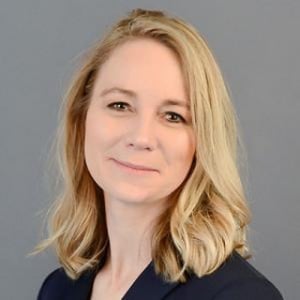
Supreme Court & Appellate Litigation Chair, Lex Politica; Of Counsel, Alliance Defending Freedom
Erin Morrow Hawley serves as Chair of Lex Politica's Supreme Court and Appellate Practice overseeing the firm’s strategic appellate litigation and critical motions practice in the trial courts. Erin is an experienced litigator who represents clients in constitutional, regulatory, and appellate matters in federal and state courts throughout the country.
Erin has represented dozens of clients before the Supreme Court of the United States, served as lead counsel in high-profile cases raising novel constitutional and statutory issues, and authored numerous successful petitions for certiorari and briefs in opposition. She has argued in state and federal appellate and trial courts throughout the country, including the Supreme Court of the United States. Erin represents diverse clients in high-stakes litigation from state governments to faith-based nonprofits to Fortune 100 companies. She possesses expertise on a wide range of subject matters including administrative law, the First Amendment, religious liberty, federal jurisdiction, federal preemption, equitable jurisdiction, tax law, the Affordable Care Act, and Title IX.
Erin represents clients in cases where public communications strategy is paramount. She is a sought-after speaker and writer, has testified multiple times before Congress, and is a frequent presenter on constitutional and administrative law issues, including at the Oxford Union, the National Federalist Society Convention, and university campuses across the country. She is a frequent commentator to media outlets, including Fox News, MSNBC, the Wall Street Journal, WORLD, USA Today, the Federalist, and the Hill.
Erin previously oversaw Alliance Defending Freedom’s--where she still serves as Of Counsel--litigation strategies to empower women and protect the dignity of life, defend pregnancy centers’ First Amendment rights from government overreach, and safeguard Americans’ freedoms from the ever-encroaching administrative state.
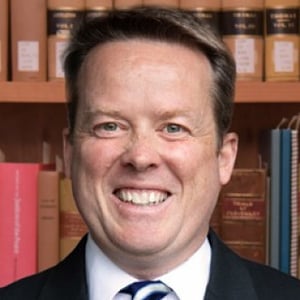
Knights of Columbus Professor of Law and the Catholic Tradition, The Catholic University of America Columbus School of Law
Kevin C. Walsh teaches and writes in the areas of federal jurisdiction, constitutional law, and the U.S. Supreme Court. His scholarship explores the doctrines that define—and delimit—the scope of federal judicial power.
Professor Walsh graduated from Harvard Law School, where he was Articles Chair for Volume 115 of the Harvard Law Review. After graduation, he clerked for Judge Paul V. Niemeyer of the United States Court of Appeals for the Fourth Circuit and Associate Justice Antonin Scalia of the Supreme Court of the United States. He then practiced law at Hunton & Williams LLP and taught as a visiting assistant professor at Villanova University School of Law. Walsh received his A.B. from Dartmouth College, and an M.A. in Theological Studies from the University of Notre Dame. He taught at the University of Richmond School of Law for thirteen years prior to joining The Catholic University of America, where he currently resides.
In early 2011, Professor Walsh filed two amicus curiae briefs addressing jurisdictional issues in the State challenges to the individual mandate in the federal healthcare reform legislation: a brief in Virginia v. Sebelius (United States Court of Appeals for the Fourth Circuit), and a brief in Florida v. HHS (United States Court of Appeals for the Eleventh Circuit).
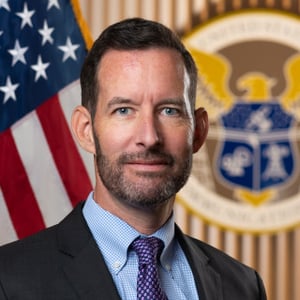
Chief of Staff, Federal Communications Commission (FCC)
Mr. Delacourt is Chief of Staff of the Federal Communications Commission. In this role, he manages the Chairman's policy agenda and strategic initiatives and serves as Chief Operating Officer for the Agency. He has a broad range of experience in telecommunications and technology law and policy spanning both the governmental and private sectors. Scott joined the FCC from Wiley Rein LLP where he served as Partner and Chair of the Wireless Practice Group. He previously served in leadership positions at the FCC, including Deputy Bureau Chief and Chief of Staff of the Wireless Bureau, Senior Counsel in the Office of General Counsel, and Legal Advisor to the Wireless Bureau Chief. Scott received his Law Degree, cum laude, from the University of Michigan Law School, and his Bachelor’s Degree, summa cum laude, from Georgetown University.
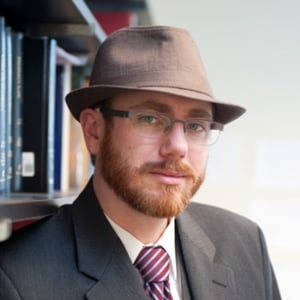
Professor of Law and Associate Dean, Boston College Law School; Nonresident Senior Fellow, American Enterprise Institute, Boston College Law School
Professor Lyons is a Professor and Associate Dean at Boston College Law School. He specializes in telecommunications and tech policy, energy, and administrative law. Before joining the faculty, he practiced at the firm of Munger, Tolles and Olson in Los Angeles. He also clerked for the Judge Cynthia Holcomb Hall of the Ninth Circuit Court of Appeals.
Professor Lyons is also a Nonresident Senior Fellow at the American Enterprise Institute, where he has written over 250 blog posts on tech policy issues, including net neutrality, telecommunications regulation, First Amendment issues with tech regulation, and generative AI.
Partner, Wiley Rein, LLP
Megan L. Brown is a partner at Wiley Rein LLP. She has significant litigation, appellate and regulatory experience before state and federal courts and agencies.
Ms. Brown helps businesses respond to federal, state and local regulation and investigations raising administrative law, statutory interpretation, and constitutional issues, including the First Amendment.
Professor of Law and Associate Dean, Boston College Law School; Nonresident Senior Fellow, American Enterprise Institute, Boston College Law School
Professor Lyons is a Professor and Associate Dean at Boston College Law School. He specializes in telecommunications and tech policy, energy, and administrative law. Before joining the faculty, he practiced at the firm of Munger, Tolles and Olson in Los Angeles. He also clerked for the Judge Cynthia Holcomb Hall of the Ninth Circuit Court of Appeals.
Professor Lyons is also a Nonresident Senior Fellow at the American Enterprise Institute, where he has written over 250 blog posts on tech policy issues, including net neutrality, telecommunications regulation, First Amendment issues with tech regulation, and generative AI.
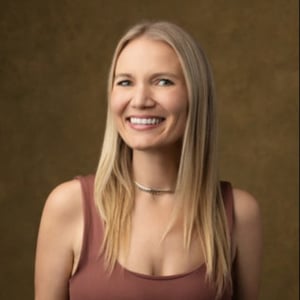
Constitutional Scholarship Director and Senior Legal Analyst, Pacific Legal Foundation
Anastasia Boden is Director of Constitutional Scholarship at Pacific Legal Foundation, where she leads the organization’s Supreme Court commentary and directs scholarly analysis in support of the firm’s litigation. She has represented entrepreneurs and small businesses nationwide in challenges to onerous licensing regimes, anti-competitive titling restrictions, Certificate of Need (“competitor’s veto”) laws, and other forms of unnecessary red tape that block economic opportunity.
Prior to this role, Anastasia developed nearly a dozen constitutional challenges to Certificate of Need laws across the country, helping spur legislative reform in Montana, Pennsylvania, and West Virginia. Her victories include a ruling invalidating Houston’s busking restrictions, multiple appellate decisions expanding access to the courts for civil rights plaintiffs, and the legislative repeal of Virginia’s happy-hour advertising ban.
Her writings on law and liberty have been featured in USA Today, The Washington Post, The Wall Street Journal, the Los Angeles Times, the Chicago Tribune, Forbes, and more, and she has appeared on Headline News, CBS News, Fox News, ReasonTV, Newsmax, and John Stossel. In 2020, she was featured on Libertarian Party presidential candidate Jo Jorgensen’s Supreme Court shortlist.
Anastasia earned her BA with dean’s honors from the University of California, Santa Barbara, and her JD from Georgetown University Law Center, where she was research assistant to Professor Randy E. Barnett—the “intellectual godfather” of the constitutional challenge to Obamacare. She is the co-creator of the podcast Dissed, about infamous Supreme Court dissents. She authors the biweekly newsletter SCOTUS Scoop and the column, “In Dissent” for SCOTUSblog.
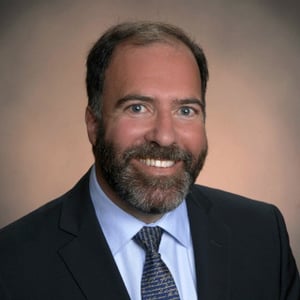
Professor of Law, Widener University Commonwealth Law School
Chief of Staff, Federal Communications Commission (FCC)
Mr. Delacourt is Chief of Staff of the Federal Communications Commission. In this role, he manages the Chairman's policy agenda and strategic initiatives and serves as Chief Operating Officer for the Agency. He has a broad range of experience in telecommunications and technology law and policy spanning both the governmental and private sectors. Scott joined the FCC from Wiley Rein LLP where he served as Partner and Chair of the Wireless Practice Group. He previously served in leadership positions at the FCC, including Deputy Bureau Chief and Chief of Staff of the Wireless Bureau, Senior Counsel in the Office of General Counsel, and Legal Advisor to the Wireless Bureau Chief. Scott received his Law Degree, cum laude, from the University of Michigan Law School, and his Bachelor’s Degree, summa cum laude, from Georgetown University.
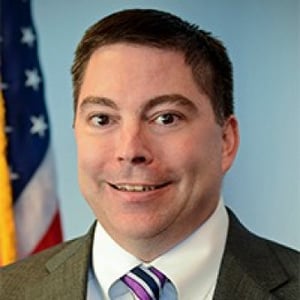
Visiting Fellow, Hudson Institute
Michael O’Rielly is a visiting fellow with Hudson Institute’s Center for the Economics of the Internet.
Comm. O'Rielly was nominated for a seat on the Federal Communications Commission by President Barack Obama on August 1, 2013 and was confirmed unanimously by the United States Senate on October 29, 2013. He was sworn into office on November 4, 2013. On January 29, 2015, he was sworn into office for a new term, following his re-nomination by the President and confirmation by the United States Senate and served through December 11, 2020.
Prior to joining the agency Commissioner O’Rielly served as a Policy Advisor in the Office of the Senate Republican Whip, led by U.S. Senator John Cornyn, since January 2013. He worked in the Republican Whip’s Office since 2010, as an Advisor from 2010 to 2012 and Deputy Chief of Staff and Policy Director from 2012 to 2013 for U.S. Senator Jon Kyl.
He previously worked for the Republican Policy Committee in the U.S. Senate as a Policy Analyst for Banking, Technology, Transportation, Trade, and Commerce issues from 2009 to 2010. Prior to this, Commissioner O’Rielly worked in the Office of U.S. Senator John Sununu, as Legislative Director from 2007 to 2009, and Senior Legislative Assistant from 2003 to 2007. Before his tenure as a Senate staffer, he served as a Professional Staff Member on the Committee on Energy and Commerce in the United States House of Representatives from 1998 to 2003, and Telecommunications Policy Analyst from 1995 to 1998.
He began his career as a Legislative Assistant to U.S. Congressman Tom Bliley from 1994 to 1995.
Commissioner O’Rielly received his B.A. from the University of Rochester.
Professor of Law, Widener University Commonwealth Law School
Chief of Staff, Federal Communications Commission (FCC)
Mr. Delacourt is Chief of Staff of the Federal Communications Commission. In this role, he manages the Chairman's policy agenda and strategic initiatives and serves as Chief Operating Officer for the Agency. He has a broad range of experience in telecommunications and technology law and policy spanning both the governmental and private sectors. Scott joined the FCC from Wiley Rein LLP where he served as Partner and Chair of the Wireless Practice Group. He previously served in leadership positions at the FCC, including Deputy Bureau Chief and Chief of Staff of the Wireless Bureau, Senior Counsel in the Office of General Counsel, and Legal Advisor to the Wireless Bureau Chief. Scott received his Law Degree, cum laude, from the University of Michigan Law School, and his Bachelor’s Degree, summa cum laude, from Georgetown University.
Visiting Fellow, Hudson Institute
Michael O’Rielly is a visiting fellow with Hudson Institute’s Center for the Economics of the Internet.
Comm. O'Rielly was nominated for a seat on the Federal Communications Commission by President Barack Obama on August 1, 2013 and was confirmed unanimously by the United States Senate on October 29, 2013. He was sworn into office on November 4, 2013. On January 29, 2015, he was sworn into office for a new term, following his re-nomination by the President and confirmation by the United States Senate and served through December 11, 2020.
Prior to joining the agency Commissioner O’Rielly served as a Policy Advisor in the Office of the Senate Republican Whip, led by U.S. Senator John Cornyn, since January 2013. He worked in the Republican Whip’s Office since 2010, as an Advisor from 2010 to 2012 and Deputy Chief of Staff and Policy Director from 2012 to 2013 for U.S. Senator Jon Kyl.
He previously worked for the Republican Policy Committee in the U.S. Senate as a Policy Analyst for Banking, Technology, Transportation, Trade, and Commerce issues from 2009 to 2010. Prior to this, Commissioner O’Rielly worked in the Office of U.S. Senator John Sununu, as Legislative Director from 2007 to 2009, and Senior Legislative Assistant from 2003 to 2007. Before his tenure as a Senate staffer, he served as a Professional Staff Member on the Committee on Energy and Commerce in the United States House of Representatives from 1998 to 2003, and Telecommunications Policy Analyst from 1995 to 1998.
He began his career as a Legislative Assistant to U.S. Congressman Tom Bliley from 1994 to 1995.
Commissioner O’Rielly received his B.A. from the University of Rochester.

Feddie Night Festivus: Shapiro vs. Everybody
Ilya Shapiro
The Federalist Society's Student Division &University of Tennessee College of Law Student Chapter present Feddie Night...
Topics
ACLU v. Clearview AI: The First Amendment Fight over Scrutiny and Governmental Interests in the Digital Privacy Space
In August, an Illinois court denied Clearview AI’s motion to dismiss the lawsuit, entitled ACLU...
Severability and Article III Powers
William Baude, Josh Blackman, Megan L. Brown, Erin M. Hawley, Kevin C. Walsh
What should the Supreme Court do when it finds one provision of a statute unconstitutional? There is a...
Courthouse Steps Decision Teleforum: Facebook v. Duguid
Scott D. Delacourt, Daniel Lyons
On April 1, 2021, the U.S. Supreme Court ruled in favor of Facebook in Facebook...
Courthouse Steps Oral Argument Teleforum: Facebook Inc. v. Duguid
Megan L. Brown, Daniel Lyons
The case of Facebook Inc. v. Duguid will have oral arguments before the Supreme Court on December...
Supreme Court Roundup: October Term 2019 [SCOTUSbrief]
Anastasia P. Boden
While the Supreme Court’s last term included a number of blockbuster decisions, the majority of...
Courthouse Steps Decision: The Limits of Robocalls, Barr v. American Association of Political Consultants, Inc.
Michael R. Dimino
In Barr v. American Association of Political Consultants, Inc., the Supreme Court held unconstitutional a...
A Conversation with FCC Commissioner Michael O’Rielly: The Telephone Consumer Protection Act Landscape after Barr v. American Association of Political Consultants
Scott D. Delacourt, Michael O'Rielly
On May 6, 2020, the Supreme Court heard oral arguments in Barr v. American Association...
Courthouse Steps Oral Argument: Barr v. American Association of Political Consultants Inc.
Michael R. Dimino
The oral argument for this case will be held on May 6, 2020. At issue...
A Conversation with FCC Commissioner Michael O’Rielly: The Telephone Consumer Protection Act Landscape after Barr v. American Association of Political Consultants
Teleforum