
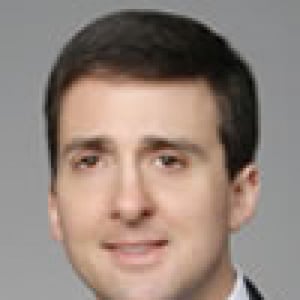
Partner, Mayer Brown LLP
Howard Waltzman focuses his practice on communications and Internet law and commercial transactions in the United States and other key international markets. He represents some of the nation's leading communications service providers, manufacturers, and trade associations in commercial transactions, as well as in regulatory and legislative matters, including with respect to Internet services, spectrum policy, privacy, video programming, wireline competition, and communications-related homeland security. He also represents investors on these and other communications-related matters.
Howard's experience includes drafting regulatory pleadings, comments and license applications; legislation, Congressional testimony, and legislative history; and commercial agreements. He appears personally before Members of Congress, Cabinet department officials, FCC Commissioners, and key Congressional and FCC staff. Howard also advises clients and assists them in presenting their positions during major FCC rulemakings, throughout the legislative process, and in the context of commercial transactions. He represents clients on matters involving the International Telecommunication Union's rules and procedures.
Prior to joining Mayer Brown in 2007, Howard served as Chief Counsel, Telecommunications and the Internet, for the U.S. House Energy and Commerce Committee (2003-2006) and as Telecommunications Counsel (2001-2003). Prior to working for the House Energy and Commerce Committee, he served as General Counsel for Senator Sam Brownback (1996-2001).
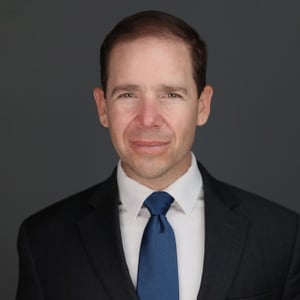
Founder and CEO, Lexpat Global Services
Adam Pearlman is the Founder and Chief Executive Officer of Lexpat Global Services. He is a National Security Law expert and a proven senior leader with experience across the U.S. Departments of Justice, Defense, and State, in the White House, and with the U.S. Federal Judiciary.
Before founding Lexpat, Mr. Pearlman served as the Senior Advisor for Legal Policy in the State Department’s Bureau of Counterterrorism. There, he counseled senior officials on matters covering the entire spectrum of programs and operations to counter terrorism and violent extremism. While participating in sensitive diplomatic engagements and helping to coordinate military operations, he also advised in the development of sanctions policy and initiatives to build legal and operational capacity in partner nations. Mr. Pearlman also managed the Bureau’s participation in federal litigation and led U.S. delegations in multilateral forums concerning criminal justice and rule of law. Separately, Mr. Pearlman supported the State Department’s Bureau of International Narcotics and Law Enforcement Affairs (INL) as the contracted Senior Justice and Rule of Law Advisor in Cabo Verde, Africa. There he was the chief implementer of a Foreign Assistance program that grew eight-fold during his tenure, building host nation capacity across the law enforcement, justice sector, rule of law, anti-money laundering, and corrections disciplines.
A former Associate Deputy General Counsel of the Department of Defense, Mr. Pearlman was agency counsel for complex civil and criminal national security matters in federal and military courts. He also led the Supreme Court and appellate unit of the team dedicated to litigating classified counterterrorism cases. His earlier service in the Department of Justice spanned four litigating divisions and the Office of the Deputy Attorney General. His diverse experience included reviewing complex international transactions and mergers, and advising on immigration removal proceedings, human rights abuses, and terrorist financing investigations. Mr. Pearlman also served with distinction in Iraq as an early advisor to the Iraqi High Tribunal’s prosecution of Saddam Hussein. He was a law clerk for The Honorable Royce C. Lamberth of the U.S. District Court for the District of Columbia, and during law school interned in the White House Counsel’s Office.
Mr. Pearlman is a Senior Fellow at the National Security Institute at George Mason University’s Antonin Scalia Law School, a member of the American Bar Association’s Advisory Committee on Law and National Security, and the Editor-in-Chief of the U.S. Intelligence Community Law Sourcebook. Previously, he has been a Term Member of the Council on Foreign Relations, National Security Fellow at the Foundation for Defense of Democracies, member of the ABA’s Africa Law Initiative Council and of the Center for Strategic & International Studies’ (CSIS) Project on Nuclear Issues, vice chairman of the ABA Section of International Law’s committees on national security, and aerospace and defense, and a liaison to the Board of Directors of the ABA’s Rule of Law Initiative. He has published articles in the Harvard National Security Journal, Stanford Law & Policy Review, Intelligence & National Security, The Foreign Service Journal, Lawfare, and many other outlets.
Mr. Pearlman earned his B.A., with honors, from UCLA, and his J.D., with honors, from The George Washington University Law School, where he was a member of the International Law Review. He also earned a Master of Science of Strategic Intelligence degree from the National Intelligence University, where he was the inaugural recipient of the Kornblum Award for national security law and ethics. Mr. Pearlman is a Certified Financial Crime Specialist and holds certificates in international human rights law from the University of Oxford and in anti-corruption law from American University’s Washington College of Law. He is admitted to the State Bars of California and Virginia, as well as to the Bar of the United States Supreme Court. He speaks and reads Portuguese at the intermediate level.
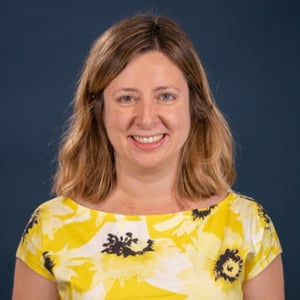
Legal Fellow, Center for the Separation of Powers, Pacific Legal Foundation
Alison Somin joined Pacific Legal Foundation in May 2020 as a legal fellow in the Center for the Separation of Powers and part of the equality before the law practice group.
Before joining the Pacific Legal Foundation team, Alison was a special assistant and counsel for over a decade to Gail Heriot, a member of the bipartisan United States Commission on Civil Rights. She also has deep roots in the liberty movement. Alison was a Koch Associate at the National Federation for Independent Business Legal Foundation and, during law school, completed summer clerkships at the Institute for Justice and the Charles G. Koch Charitable Foundation. She holds a J.D. from Emory University School of Law and an A.B. in history from Dartmouth College.
Her work has been published in the San Francisco Chronicle, the Daily Journal, Texas Journal of Law and Politics, and The Federalist Society’s Engage magazine and blog.
She lives in northern Virginia with her husband Ilya; two children; and golden retriever Willow. In her spare time, she enjoys reading, baking and cooking, children’s art projects, and training and exercising Willow.
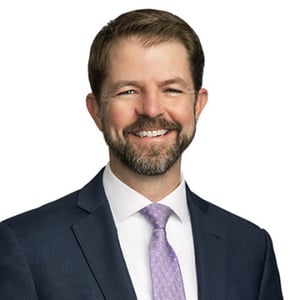
Partner, Baker Botts LLP
Drawing from two decades of experience in senior government, in-house corporate, and private law firm roles, Jeff Wood helps clients with federal enforcement, compliance, litigation, permitting, and policy challenges primarily in the energy and environmental fields.
Prior to joining Baker Botts, Mr. Wood served for almost two years as the Acting Assistant Attorney General (AAG) for the Justice Department's Environment and Natural Resources Division (ENRD). In that capacity, Mr. Wood led ENRD and its more than 600 attorneys and staff representing EPA, Departments of the Interior, Energy, and Defense, and other agencies in civil and criminal enforcement and defensive environmental, energy, and natural resources litigation.
As the top official in ENRD, Mr. Wood managed a complex organization with an annual budget exceeding $200 million and a docket of more than 6,000 cases and matters. E&E News noted that “Wood maintains a strong relationship with ENRD's career staff” (Greenwire, Oct. 31, 2018). He previously served on the staff of the United States Senate Committee on Environment and Public Works.
At the Justice Department, Mr. Wood oversaw the Division's civil and criminal enforcement programs and was responsible for developing legal strategies and approving briefs in key cases including filings before the Supreme Court and Courts of Appeals in coordination with the Office of Solicitor General. In this role, Mr. Wood held the highest level security clearance and worked closely with top leadership at DOJ, EPA, the Interior Department, USDA, the Energy Department, Transportation Department, FERC, NRC and across the Executive Branch, including the White House.
With many years of both private law firm and in-house legal experience, Mr. Wood has handled complex environmental enforcement, regulatory, policy, and litigation matters for electric utilities, energy companies, maritime companies, mining companies, real estate developers, financial institutions, industrial companies and manufacturers, business coalitions, associations, small businesses, and individual property owners. Drawing from his experiences in-house, Mr. Wood brings a common-sense, cost-effective, client-focused approach to his work every day.
With a strong national reputation, Mr. Wood is a frequent speaker on environmental law and policy matters, with recent speeches and presentations at the Environmental Law Institute, Harvard Law School, Vanderbilt Law School, American University Law School, American Bar Association Environmental Law Conferences, the Texas Environmental SuperConference, Air Force Judge Advocate General School's Advanced Environmental Law Course, Baker Institute's Center for Energy Studies (Rice University), and many other venues. He frequently appears in national news to share insights on significant environmental law and policy issues, including recent quotes in the New York Times, Washington Post, Wall Street Journal, Bloomberg, Law360, and E&E News, among others.
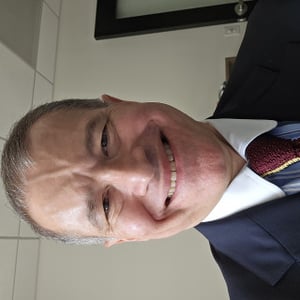
Attorney Specializing in Government Relations
Alec D. Rogers is an attorney specializing in government practice and policy in Washington, DC.
A graduate of James Madison College at Michigan State University and the University of Michigan Law School, he practiced law for several years before spending over a decade on Capitol Hill as a staffer to various Members and Committees.
He has reviewed books for the Washington Times, Hardball Times, The Journal of the American Revolution, and The Weekly Standard, and writes on legal matters in Engage, an online publication of the Federalist Society.
Mr. Mirengoff is a retired attorney in Washington, D.C. and is a blogger at powerlineblog.com.
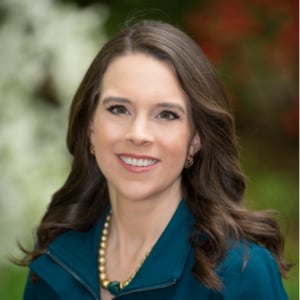
President, JCN
Carrie Campbell Severino is the president of the JCN, and co-author with Mollie Hemingway of the bestselling book Justice on Trial: The Kavanaugh Confirmation and the Future of the Court. As a go-to expert on the confirmation process, Mrs. Severino has been extensively quoted in the media. She regularly appears on television, including FOX, CNN, MSNBC, C-SPAN, and ABC’s This Week.
Severino writes and speaks on a wide range of judicial issues, including the constitutional limits on government, the federal nomination process, and state judicial selection. She has testified before Congress on constitutional questions and briefed Senators on judicial nominations, and regularly files briefs in high-profile Supreme Court cases. She was a law clerk to Supreme Court Justice Clarence Thomas and to Judge David B. Sentelle of the U.S. Court of Appeals for the D.C. Circuit, and is a graduate of Harvard Law School (J.D.), Duke University (B.A., Biology), and Michigan State University (M.A., Linguistics).
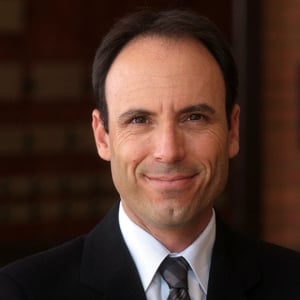
Professor of Law, UCLA School of Law
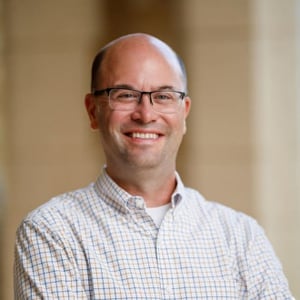
Paul J. Schierl Professor of Law, University of Notre Dame Law School
Professor Richard W. Garnett teaches and writes in the areas of constitutional law, criminal law, the First Amendment, and law and religion. He is a leading authority on questions and debates regarding religious freedom and church-state relations, and is the founding director of Notre Dame Law School’s Program on Church, State, and Society.
Garnett clerked for the late Chief Justice of the United States, William H. Rehnquist, and also for the late Chief Judge of the United States Court of Appeals for the Eighth Circuit, Richard S. Arnold. He earned his J.D. from Yale Law School in 1995 and his B.A., summa cum laude, from Duke University in 1990. He joined the faculty in 1999 after practicing law in Washington, D.C. with Miller, Cassidy, Larroca & Lewin.
Partner, Holme Roberts & Owen LLP
 Stuart Lark is a partner in the firm's Colorado Springs office. He concentrates on corporate, tax, constitutional and transactional matters for nonprofit organizations. His experience includes joint ventures, mergers and acquisitions, tax exempt financing, corporate structure, IRS rulings, private foundations, unrelated trade or business income tax, property and sales tax, international structure and transactions, planned giving, government funding for religious organizations, faith-based employment rights, immigration, church property disputes and other religious liberty issues. He has published articles and given presentations on many of these issues.
 In 2002, Mr. Lark took a one-year leave of absence during which he served as Legal Counsel for Christian Legal Society's Center for Law and Religious Freedom in Washington, D.C.
Prior to entering law school, Mr. Lark worked for AT&T as an engineer and international product manager. He also spent one year in the former Soviet Russia working on a missions project.
M.S., Stanford University, 1985
B.S., Purdue University, with distinction, 1984
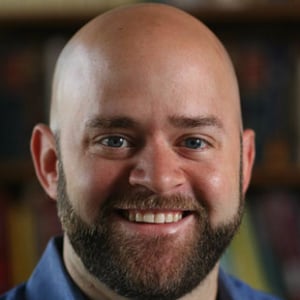
Charles E. Rice Professor of Law, Concurrent Professor of Political Science, & Director, de Nicola Center for Ethics and Culture, University of Notre Dame Law School
Professor Carter Snead is one of the world’s leading experts on public bioethics – the governance of science, medicine, and biotechnology in the name of ethical goods. His research explores issues relating to neuroethics, enhancement, human embryo research, assisted reproduction, abortion, and end-of-life decision-making.
He is the author of What It Means to be Human: The Case for the Body in Public Bioethics (Harvard University Press, October 2020), which was named by the Wall Street Journal as one of the “Ten Best Books of 2020;” in his review for the same paper, Yuval Levin called it “among the most important works of moral philosophy produced so far in this century.” In May of 2022, it was listed in The New York Times as one of “Ten Books to Understand the Abortion Debate in the United States.” Snead and the book received the 2021 “Expanded Reason Award” (given by Francisco de Vitoria University (Madrid) and the Joseph Ratzinger/Benedict XVI Vatican Foundation), and has been reviewed and discussed in such publications as the Wall Street Journal, The New York Times, New York Post, USA Today, Bloomberg Opinion, Il Foglio, Christian Post, The Review of Metaphysics, American Journal of Jurisprudence, America Magazine, First Things, The New Atlantis, Plough, The Boston Pilot, Public Discourse, Practical Ethics (Oxford University), Legal Ethics Forum, Church Life Journal, Law & Liberty, Angelus News, Mirror of Justice, Crux, Mars Hill Audio Journal, Mercator Net, BioEdge, Front Porch Republic, The National Catholic Register, The American Conservative, Fare Forward, Catholic World Report, The Gospel Coalition, Chronicles: A Magazine of American Culture, The Human Life Review, Eikon, Salvo, The Catholic Thing, The Daily Signal, and National Review.
Additionally, he has written more than 70 journal articles, book chapters, and essays. His scholarly works appear in such publications as the New York University Law Review, the Harvard Law Review Forum, the Vanderbilt Law Review, Constitutional Commentary, Quaderni Costituzionali (Italy’s premier journal of constitutional law), the Yale Journal of Health Policy, Law and Ethics, the Journal of Medicine and Philosophy, and Political Science Quarterly. He is also the editor of two book series for the University of Notre Dame Press – “Catholic Ideas for a Secular World” and “Notre Dame Studies in Bioethics and Medical Ethics.” Snead teaches Law & Bioethics, Health Law, Torts, and Constitutional Criminal Procedure.
In addition to his scholarship and teaching, Snead has provided advice on the legal and public policy dimensions of bioethical questions to officials in all three branches of the U.S. government, and in several intergovernmental fora. Prior to joining the law faculty at Notre Dame, Snead served as general counsel to The President’s Council on Bioethics (Chaired by Dr. Leon R. Kass), where he was the primary drafter of the 2004 report, “Reproduction and Responsibility: The Regulation of New Biotechnologies.” He has testified in the U.S. House of Representatives on regulatory questions concerning RU-486 (the abortion pill). In 2013, he testified in the Texas state legislature on the constitutionality of a proposed fetal pain bill. Snead led the U.S. government delegation to UNESCO and served as its chief negotiator for the Universal Declaration on Bioethics and Human Rights, adopted in October 2005. He served as the U.S. government’s Permanent Observer to the Council of Europe’s Steering Committee on Bioethics, where he assisted in its efforts to elaborate international instruments and standards for the ethical governance of science and medicine. In conjunction with the American Association for the Advancement of Science, he has lectured to state and federal judges on the uses of neuroimaging in the courtroom. He regularly serves as an expert witness on bioethical matters before federal courts.
In 2008, he was appointed by the director-general of UNESCO to a four-year term on the International Bioethics Committee, a 36-member body of independent experts that advises member states on bioethics, law, and public policy. The IBC is the only bioethics commission in the world with a global mandate. In 2016, he was appointed to the Pontifical Academy for Life, the principal bioethics advisory body to Pope Francis. He is also an elected fellow of The Hastings Center, the oldest independent bioethics research institute in the world.
Snead received his J.D., magna cum laude, from Georgetown University, where he was elected to the Order of the Coif, and his bachelor of arts from St. John’s College in Annapolis, Maryland. He clerked for Judge Paul J. Kelly Jr. of the U.S. Court of Appeals for the Tenth Circuit.
President, JCN
Carrie Campbell Severino is the president of the JCN, and co-author with Mollie Hemingway of the bestselling book Justice on Trial: The Kavanaugh Confirmation and the Future of the Court. As a go-to expert on the confirmation process, Mrs. Severino has been extensively quoted in the media. She regularly appears on television, including FOX, CNN, MSNBC, C-SPAN, and ABC’s This Week.
Severino writes and speaks on a wide range of judicial issues, including the constitutional limits on government, the federal nomination process, and state judicial selection. She has testified before Congress on constitutional questions and briefed Senators on judicial nominations, and regularly files briefs in high-profile Supreme Court cases. She was a law clerk to Supreme Court Justice Clarence Thomas and to Judge David B. Sentelle of the U.S. Court of Appeals for the D.C. Circuit, and is a graduate of Harvard Law School (J.D.), Duke University (B.A., Biology), and Michigan State University (M.A., Linguistics).
Associate Professor of Law, University of Colorado Law School
Scott Moss joined CU Law School in 2007 after six years as an attorney in New York City and three years as a professor at Marquette Law School, where he was the 2007 recipient of the James D. Ghiardi Faculty Award for Outstanding Teaching, Student Body Support, and Scholarship. In New York, Professor Moss was a law clerk to U.S. District Judge Constance Baker Motley and then a plaintiff's employment lawyer at Outten & Golden LLP, the largest plaintiff-side employment law practice in the country, where he litigated individual and class action cases of discrimination, harassment, and minimum/overtime wage violations. He also has argued and briefed appeals of employment cases and has undertaken pro bono projects such as First Amendment right-to-protest litigation with the New York Civil Liberties Union, low-income worker clinics in lower Manhattan, and court-sponsored mediations for pro se litigants. Professor Moss received his J.D. (magna cum laude) in 1998 from Harvard Law School, where he was a Senior Editor of the Harvard Civil Rights-Civil Liberties Law Review; his B.A. (Economics) and M.A. (Media Studies) are from Stanford University. Professor Moss's research interests have included employment law, discrimination, constitutional law, various civil procedure rules, and economic analysis of all of the preceding topics.
B.A., Stanford
M.A., Stanford
J.D., Harvard
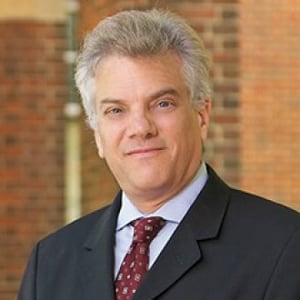
Sudler Family Professor of Constitutional Law, New York University School of Law
Richard H. Pildes is one of the nation’s leading scholars of constitutional law and a specialist in legal issues affecting democracy. He is a Member of the American Academy of Arts and Sciences and the American Law Institute, and has received recognition as a Guggenheim Fellow and a Carnegie Scholar. His acclaimed casebook, The Law of Democracy: Legal Structure of the Political Process (now in its fourth edition), helped create an entirely new field of study in the law schools. The Law of Democracy systematically explores legal and policy issues concerning the structure of democratic elections and institutions, such as the role of money in politics, the design of election districts, the regulation of political parties, the design of voting systems, the representation of minority interests in democratic institutions, and similar issues. He has written extensively on the rise of political polarization in the United States, the Voting Rights Act, the dysfunction of America’s political processes, the role of the Supreme Court in overseeing American democracy, the powers of the American President and Congress, and he has criticized excessively “romantic” understandings of democracy. In addition to his scholarship on these issues, he has written on national-security law, the design of the regulatory state, and American constitutional history and theory.
Respect for his expertise in these areas is reflected in frequent citations of his work in U.S. Supreme Court opinions, the translation of his work into many languages, and his frequent public lectures and appearances around the world, including his nomination with the NBC News Team for an Emmy Award for coverage of the 2000 Presidential election litigation.
His work has been translated and published in Chinese, French, Spanish, and Portuguese. In addition to his scholarship, Professor Pildes plays an active role litigating in these areas. He has won two cases before the United States Supreme Court, including a 2015 victory in Alabama Democratic Conference v. Alabama, a case involving race and redistricting. He served as counsel to a group of former chairmen of the Securities and Exchange Commission in litigation defending the constitutionality of the Sarbanes-Oxley Act; as counsel in election litigation to the Puerto Rico Electoral Commission; as counsel to the government of Puerto Rico; as a federal court-appointed independent expert on voting rights litigation; and as counsel in successful Supreme Court litigation that challenged the way the United States Tax Court operated. He was also a senior legal advisor to the 2008 and 2012 campaigns of President Obama.
Pildes received his A.B. in physical chemistry summa cum laude from Princeton, and his J.D. magna cum laude from Harvard, where he served as Supreme Court Note Editor on the Harvard Law Review. He clerked for Judge Abner J. Mikva of the U.S. Court of Appeals for the District of Columbia Circuit and for Justice Thurgood Marshall of the U.S. Supreme Court. After practicing law in Boston, he began his academic career at the University of Michigan Law School, before joining the NYU School of Law in 2001.

Obama's War Law
Robert J. Delahunty
Among the critics of the Bush Administration’s legal policies in the “war on terror,” few...
National Broadband Plan
Howard Waltzman
In February 2009, as part of the American Recovery and Reinvestment Act (the “Recovery Act”),...
Federal Cybersecurity Programs
Adam R. Pearlman
Brought to you by the International & National Security Law Practice GroupThe Federalist Society takes no position on...
The Healthcare Mandate: Is It Constitutional?
Title IX
Alison E. Somin
Brought to you by the Civil Rights Practice GroupThe Federalist Society takes no position on...
American Power Act: Senators Kerry and Lieberman Release “Discussion Draft” of New Climate Change Bill
Jeffrey H. Wood, Alec D. Rogers
Brought to you by the Environmental Law & Property Rights Practice GroupThe Federalist Society takes no...
Solicitor General Kagan’s Confirmation Hearing
Paul E. Mirengoff, Carrie Campbell Severino, Adam Winkler, Richard W. Garnett
UPDATED: 11 AM, July 8, 2010 On May 10, 2010 President Obama nominated Solicitor General Elena...
Does the Establishment Clause Require Broad Restrictions on Religious Expression As Recommended By President Obama’s Faith-Based Advisory Council?
Stuart J. Lark
Brought to you by the Religious Liberties Practice GroupThe Federalist Society takes no position on particular...
Embryonic Stem Cell Research
O. Carter Snead
Brought to you by the Religious Liberties Practice Group The Federalist Society takes no position on particular...
The Kagan Nomination
Carrie Campbell Severino, Scott Moss, Richard H. Pildes
Updated: 6 PM, May 13, 2010 On May 10, 2010, President Obama nominated Solicitor General Elena...