
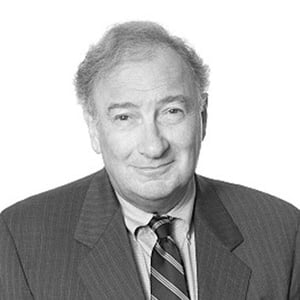
Retired, Winston & Strawn LLP
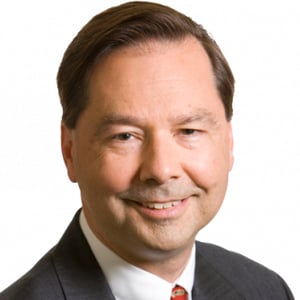
Jerry Loeser is of counsel in the Chicago office of Winston & Strawn, and his practice focuses on banking regulation. He has extensive experience in counseling financial services clients on, among other things, bank acquisitions, privacy, financial modernization, the USA PATRIOT Act, Basel II and III, lending limits, capital, trust, affiliate transactions, and Federal Reserve, OCC, FDIC, and CFPB regulations.
Prior to working at large corporate law firms, Jerry was chief regulatory and compliance counsel for Comerica Bank, where he also served as senior vice president and deputy general counsel and as general counsel of its retail bank division. Before that, he served as chief regulatory in-house counsel at Wells Fargo & Co. Jerry began his legal career advising the Board of Governors of the Federal Reserve System in Washington, D.C.
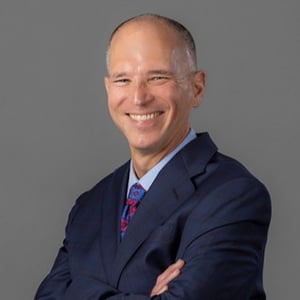
George Mason University Foundation Professor of Law, Antonin Scalia Law School, George Mason University
TODD J. ZYWICKI is George Mason University Foundation Professor of Law at Antonin Scalia Law School at George Mason University and Research Fellow of the George Mason Law and Economics Center. During the Fall 2023 semester he served as the Visiting Scholar in Conservative Thought and Policy for the Bruce Benson Center for the Study of Western Civilization at the University of Colorado-Boulder. From 2020-2021 he was Chair of the Consumer Financial Protection Bureau Taskforce on Federal Consumer Financial Law. In 2021 he was inducted to the American College of Consumer Financial Services Lawyers. He is also a Senior Fellow of the F.A. Hayek Program for the Advanced Study of Politics, Philosophy, and Economics at George Mason University and a former Senior Fellow of the Cato Institute. From 2015-2017 he was Executive Director of the George Mason Law and Economics Center. He served as Co-Editor of the Supreme Court Economic Review from 2006-2017. From 2003-2004, Professor Zywicki served as the Director of the Office of Policy Planning at the Federal Trade Commission. He has also taught at Vanderbilt University Law School, Georgetown University Law Center, Boston College Law School, Mississippi College School of Law, and China University of Political Science and Law.
Professor Zywicki clerked for Judge Jerry E. Smith of the U.S. Court of Appeals for the Fifth Circuit and worked as an associate at Alston & Bird in Atlanta, Georgia, where he practiced bankruptcy and commercial law. He received his J.D. from the University of Virginia, where he was executive editor of the Virginia Tax Review and John M. Olin Scholar in Law and Economics. Professor Zywicki also received an M.A. in Economics from Clemson University and an A.B. cum Laude with high honors in his major from Dartmouth College.
Professor Zywicki is also a Lone Mountain Fellow of the Property and Environment Research Center, a Fellow of the International Centre for Economic Research in Turin, Italy, and a former Senior Fellow of the Goldwater Institute. During the Fall 2008 Semester Professor Zywicki was the Searle Fellow of the George Mason University School of Law and was a 2008-09 W. Glenn Campbell and Rita Ricardo-Campbell National Fellow and the Arch W. Shaw National Fellow at the Hoover Institution on War, Revolution and Peace. He has lectured and consulted with government officials around the world, including Iceland, Italy, Japan, and Guatemala. In 2006 Professor Zywicki served as a Member of the United States Department of Justice Study Group on “Identifying Fraud, Abuse and Errors in the United States Bankruptcy System.”
Professor Zywicki is the author of more than 130 articles in leading law reviews and peer-reviewed economics journals. He is one of the Top 10 most-cited law professors in the field of Commercial Law and one of the Top 25 law professors on Twitter as measured by engagement levels. He is one of the Top 50 Most Downloaded Law Authors at the Social Science Research Network. He has testified multiple times before Congress on issues of consumer bankruptcy law and consumer credit and is a frequent commentator on legal issues in the print and broadcast media, including the Wall Street Journal, New York Times, The Washington Post, The Washington Times, Nightline, The Newshour with Jim Lehrer, Neil Cavuto Show, Fox & Friends, Smerconish, Fox News @ Night with Shannon Bream, Fox Business, CNN, CNBC, Bloomberg News, BBC, The Diane Rehm Show, Lou Dobbs Show, Jerry Doyle Show, and The Laura Ingraham Show.
Professor Zywicki is former Chairman and a current member of the Board of Directors of the Competitive Enterprise Institute, and is a member of the Board of Directors of the Institute for Humane Studies, Bill of Rights Institute, the Executive Committee for the Federalist Society's Financial Institutions and E-Commerce Practice Group, the Board of Trustees of the Foundation for Research on Economics and the Environment. He formerly served on the Governing Board and the Advisory Council for the Financial Services Research Program at George Washington University School of Business. He is currently the Chair of the Academic Advisory Council for the following organizations: The Bill of Rights Institute, the film “We the People in IMAX,” and the McCormick-Tribune Foundation “Freedom Museum” in Chicago, Illinois. He is a member of the Board of Visitors of Ralston College and was a member of the Board of Trustees of Yorktown University. From 2005-2009 he served as an elected Alumni Trustee of the Dartmouth College Board of Trustees.
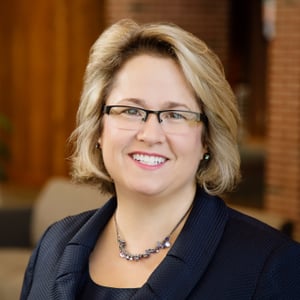
Professor, University of Illinois College of Law
Robin Fretwell Wilson is the Mildred Van Voorhis Jones Chair in Law at the University of Illinois College of Law.
A scholar in family law, bioethics and law and religion, Professor Wilson has worked extensively on behalf of state and federal law reform efforts in each realm.
Across two decades, she has worked to secure laws protecting the autonomy of patients to decide when they will be used to teach intimate exams to medical students, laws now in place in 22 states—sixteen of which have been enacted since 2019.
Professor Wilson is known for bridging differences in the culture war. In 2015, she spent a month in residence with the Utah legislature, helping Utah state lawmakers to pass anti-discrimination legislation that balances religious liberty and LGBT rights. In 2019, Professor Wilson assisted the governor of Utah to craft regulations banning gay conversion therapy. In 2019, she also aided U.S. Representative Chris Stewart with portions of the “Fairness for All” he introduced in Congress. A member of the American Law Institute and a Fulbright Specialist, Professor Wilson has served as a consultant to the United Arab Emirates’ Judicial Department as they sought to create a parallel court system for the adjudication by expatriates of family law matters using the laws of their home country or of their faith traditions.
Professor Wilson is the author of 20 books, including her 2018 book, Religious Freedom, LGBT Rights, and the Prospects for Common Ground, with Yale University Professor William Eskridge, Jr., which is now in paperback at Cambridge University Press. Her other books include: The Contested Place of Religion in Family Law (Cambridge University Press, 2018, ed.), Reconceiving the Family: Critical Reflections on the American Law Institute’s Principles of the Law of Family Dissolution (Cambridge University Press, 2006, ed.); The Handbook of Children, Culture & Violence (Sage Publications, 2006, with Nancy Dowd and Dorothy Singer, eds.); Same-Sex Marriage and Religious Liberty: Emerging Conflicts (Rowman & Littlefield, 2008, with Douglas Laycock and Anthony Picarello, eds.); Health Law and Bioethics: Cases in Context (Aspen, 2008, with Joan Krause, Sandra Johnson, and Richard Saver, eds.); Domestic Relations: Cases and Materials, 8th edition (Foundation Press, 2017, with Walter Wadlington and Raymond C. O’Brien); and Understanding Family Law, 4th edition (LexisNexis, 2013, with John DeWitt Gregory and Peter N. Swisher). Her articles have appeared in the Boston College Law Review, Cornell Law Review, Emory Law Journal, Illinois Law Review, North Carolina Law Review, San Diego Law Review, U.C. Davis Law Review, and Washington and Lee Law Review, as well as in numerous peer-reviewed journals.
In 2010 and again in 2016, Professor Wilson was ranked among the Top Ten Family Law Scholars in the United States for scholarly impact. She ranks among the Top 10% of Authors in all time downloads on the Social Science Research Network. Professor Wilson’s scholarship has been cited by the Fifth, Seventh and Tenth Circuit Court of Appeals, the Minnesota Court of Appeals, lower federal courts, and the Supreme Courts of Delaware, Illinois, Iowa, and Washington.
Professor Wilson’s work has been featured in the New York Times, Wall Street Journal, National Public Radio’s All Things Considered, Washington Post, Los Angeles Times, The Atlantic Monthly, U.S. News and World Report, ABA Journal, Chronicle of Higher Education, Chicago Tribune, CNN Headline News, Good Morning America, ABC News, CBS News, Philadelphia Inquirer, Essence Magazine, The American Prospect, People Magazine, The American Conservative, The Australian, and Al Jazeera, among others. She has presented her research across the world, including the United Nations in Geneva, Switzerland, as well as in Argentina, Brazil, Peru, Chile, China, Israel, Qatar, the Netherlands, Italy, England, Wales, Poland, Spain, Serbia, Japan, Canada, Norway, Denmark, Australia, New Zealand, South Africa, Turkey, and France.
Professor Wilson has seven times been honored for her work on innovative laws that respect all persons. In 2007, she received the Citizen’s Legislative Award for her work on changing Virginia’s informed consent law. In 2018, Professor Wilson received the Thomas L. Kane Religious Freedom Award from the J. Reuben Clark Law Society, which is presented annually to an individual who exemplifies the spirit of religious liberty for all and who has contributed in significant ways to the defense of religious freedom in the public square.
In 2018, Professor Wilson was honored as one of the 150 for 150: Celebrating the Accomplishments of Women at the University of Illinois at Urbana-Champaign for its sesquicentennial celebration. In 2020, Professor Wilson received the 2020 Larine Y. Cowan Make a Difference Award for Advocacy for LGBTQ Affairs, a university-wide honor given by the Office of Diversity, Equity and Inclusion at the University of Illinois at Urbana-Champaign.
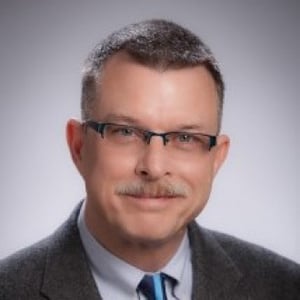
Founder and Senior Director, Institutional Religious Freedom Alliance
Stanley Carlson-Thies is the Founder and Senior Director of the Institutional Religious Freedom Alliance (IRFA), a division of the Center for Public Justice. As part of this role, he convenes the Coalition to Preserve Religious Freedom, a multi-faith alliance of social-service, education, and religious freedom organizations that advocates for the religious freedom of faith-based organizations to Congress and the federal government. In addition he is also a Senior Fellow at the Canadian think tank Cardus.
From 2009-2010 he served on a task force of President Obama’s Advisory Council on Faith-Based and Neighborhood Partnerships, helping to draft recommendations on how to clarify the church-state rules that apply to federal funding of social-service providers, and has consulted with federal departments and several states.
He served with the White House Office of Faith-Based & Community Initiatives from its inception in February 2001 until mid-May 2002. He assisted with writing “Unlevel Playing Field: Barriers to Participation by Faith-Based and Community Organizations in Federal Social Service Programs,” a report released by the White House in August 2001, and “Rallying the Armies of Compassion,” the initial blueprint for President George W. Bush’s faith and community agenda.
Previously, he was Director of Social Policy Studies for CPJ and directed CPJ’s project to track the implementation and impact of the Charitable Choice provision of the 1996 federal welfare reform law. Following his term in the White House, he returned to CPJ as the Director of Faith-based Policy Studies.
He received the William Bentley Ball Life and Religious Liberty Defense Award from the Center for Law and Religious Freedom and the Christian Legal Society in October 2004. He was named as one of 12 advocates who are “reinterpreting God and country” by the National Journal in May 2004. He holds a doctorate in political science from the University of Toronto. His dissertation is on the role of Protestants and Catholics in the development of Dutch politics in the 19th and 20th centuries. Besides the United States, he has lived in Canada, the Netherlands, and Japan, where he was born of missionary parents. He lives in Annapolis, Maryland, with his wife, Christiane. They are the proud parents of Simon.
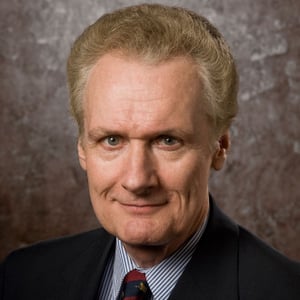
Vice President for Legal Affairs, Cato Institute
Roger Pilon is the Cato’s Institute’s vice president for legal affairs, the founding director of Cato’s Robert A. Levy Center for Constitutional Studies, the inaugural holder of Cato’s B. Kenneth Simon Chair in Constitutional Studies, and the founding publisher of the Cato Supreme Court Review.
Prior to joining Cato, Pilon held five senior posts in the Reagan administration, including at State and Justice, and was a national fellow at Stanford’s Hoover Institution. In 1989 the Bicentennial Commission presented him with its Benjamin Franklin Award for excellence in writing on the U.S. Constitution. In 2001 Columbia University’s School of General Studies awarded him its Alumni Medal of Distinction. Pilon lectures and debates at universities and law schools across the country and testifies often before Congress.
His writing has appeared in the Wall Street Journal, the Washington Post, the New York Times, the Los Angeles Times, Legal Times, National Law Journal, Harvard Journal of Law and Public Policy, Stanford Law and Policy Review, and elsewhere. He has appeared on ABC’s Nightline, CBS’s 60 Minutes II, Fox News Channel, NPR, CNN, MSNBC, CNBC, C-SPAN, and other media.
Pilon holds a BA from Columbia University, an MA and a PhD from the University of Chicago, and a JD from the George Washington University School of Law.
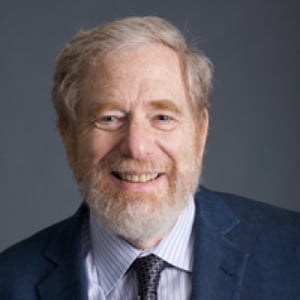
Carmack Waterhouse Professor of Constitutional Law, Georgetown Law
After graduating from Harvard Law School in 1971, Professor Seidman served as a law clerk for J. Skelly Wright of the D.C. Circuit and U.S. Supreme Court Justice Thurgood Marshall. He then was a staff attorney with the D.C. Public Defender Service until joining the Law Center faculty in 1976. He teaches a variety of courses in the fields of constitutional and criminal law. He is co-author of a constitutional law casebook and the author of many articles concerning criminal justice and constitutional law. His most recent books are Silence and Freedom (Stanford 2007), Our Unsettled Constitution: A New Defense of Constitutionalism and Judicial Review (Yale 2001) and Equal Protection of the Laws (Foundation 2002).
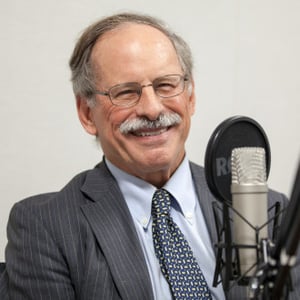
Freelance Journalist and Author
Stuart Taylor, Jr. is a Washington writer focusing on legal and policy issues and a National Journal contributing editor. He occasionally practices law.
Taylor has coauthored three books. All have been acclaimed by commentators across the ideological spectrum. In January 2017, KC Johnson and Taylor authored The Campus Rape Frenzy: The Attack on Due Process at America's Universities. In 2012, Richard Sander and Taylor authored Mismatch: How Affirmative Action Hurts Students It's Intended to Help, and Why Universities Won't Admit It. In 2007, Taylor and Johnson authored Until Proven Innocent: Political Correctness and the Shameful Injustices of the Duke Lacrosse Rape Fraud. Sander and Taylor have also filed amicus briefs in Supreme Court cases involving admissions preferences.
Since 1980, Taylor has done reporting and commentary about issues ranging from the biggest Supreme Court cases to race, voting rights, mindlessly excessive criminal penalties, guilt-presuming campus rape processes, journalistic bias, the death penalty, war powers, gerrymandering, guns, polarization, civil liberties, national security, torture, campaign finance, education, impeachment, and other issues. He has often been called one of the nation's best legal journalists and is known for challenging both liberal and conservative conventional wisdom.
Taylor was a reporter for The New York Times from 1980-1988, covering legal affairs and then the Supreme Court. He wrote commentaries and long features for The American Lawyer, Legal Times and their affiliates from 1989-1997, and for National Journal and Newsweek from 1998 through 2010. He has written (less often) on a freelance basis for numerous publications since 2010. He has written op-eds for The Washington Post, The New York Times, The Wall Street Journal, The Los Angeles Times, USA Today, and The New York Daily News and longer commentaries for RealClearPolitics, The Atlantic, The New Republic, the (late) Weekly Standard, National Review, Slate, The Daily Beast, Harper’s, Reader’s Digest, Time and other magazines. He has been interviewed on all major television and radio networks. He taught “Law and the News Media” at Stanford Law School in 2011 and 2012 and practices law on occasion.
Taylor graduated from Princeton University in 1970 with an A.B. in History. After working as a reporter for the Baltimore Evening Sun and Sun from 1971-1974, he moved to Harvard Law School, was a Harvard Law Review note editor, and graduated in 1977 at the top of his class, with high honors. He also won a Frederick Sheldon Traveling Fellowship and traveled around the world in 1977-1978 while studying freedom of the press in the United Kingdom and Kenya.
Taylor practiced law with Wilmer, Cutler & Pickering, in Washington, D.C., from 1977-1980 before returning to journalism in 1980 by joining the Washington Bureau of The New York Times.
Taylor's journalism honors include the 2009 Northern California Innocence Project Media Award for his work on the Duke lacrosse rape fraud; a 2002 National Headliner Award for best special magazine column on one subject; and a share of The American Lawyer’s National Magazine Award for a March 1990 special issue on the drug war. He was a National Magazine Award finalist in 1993 and 1997 and was nominated by The New York Times for a Pulitzer Prize in 1988.
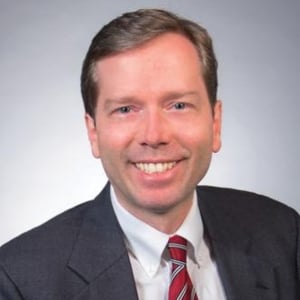
Senior Attorney and Counsel for Special Projects, Competitive Enterprise Institute
CEI’s Counsel for Special Projects is Hans Bader. Coming to CEI in 2003, Hans’s prior casework has included suits involving the First Amendment, federalism, and civil rights issues. He graduated from the University of Virginia with a B.A. in economics and history, and later earned his J.D. from Harvard Law School. Just before joining CEI, Hans was Senior Counsel at the Center for Individual Rights.
Senior Legal Fellow, Edwin Meese III Institute for the Rule of Law, Advancing American Freedom
Sandra Day O'Connor Professor of Law & Professor of Government, William & Mary Law School
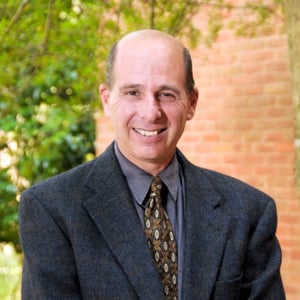
Neal Devins is the Sandra Day O’Connor Professor of Law and Professor of Government at the College of William and Mary. He is the author of several books and more than 100 articles and book chapters on courts, constitutional law, and law & politics. His books include The Company They Keep (Oxford 2019) (with Larry Baum), The Democratic Constitution (Oxford 2d ed. 2015) (with Louis Fisher), Political Dynamics of Constitutional Law (West 6th ed. 2019) (with Louis Fisher), and Shaping Constitutional Values: The Supreme Court, Elected Government, and the Abortion Dispute (Johns Hopkins University Press 1996). His articles have appeared in The Yale Law Journal, The Stanford Law Review, The Columbia Law Review, The Michigan Law Review, The California Law Review, The Virginia Law Review, The University of Pennsylvania Law Review, The University of Chicago Law Review, The New York University Law Review, and several other journals and magazines. Professor Devins is also the author of op-eds appearing in The Wall Street Journal, The New York Times, The Washington Post, The Los Angeles Times, Slate, and several other newspapers. He has testified before House and Senate committees on budget reform and the separation of powers. Professor Devins is a graduate of Georgetown University (A.B. 1978) and Vanderbilt Law School (J.D. 1982).
President, Committee for Justice
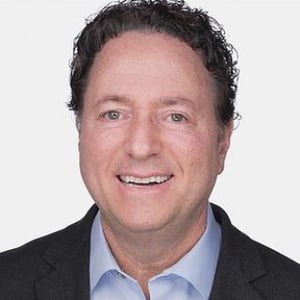
Curt Levey is President of the Committee For Justice, an organization devoted to advancing constitutionally limited government and individual liberty. He is a veteran of Supreme Court and other judicial confirmation battles and serves on the executive committee of the Federalist Society's Civil Rights Practice Group.
After graduating Harvard Law School with honors and clerking for the U.S. Court of Appeals for the Sixth Circuit, Mr. Levey served as Director of Legal & Public Affairs at the Center for Individual Rights (CIR). There he worked on landmark Supreme Court cases, including the University of Michigan affirmative action cases and the successful constitutional challenge to the Violence Against Women Act. After CIR, Mr. Levey headed the Title IX policy group at the U.S. Department of Education.
Before attending law school, Mr. Levey earned an M.S. and B.A. in computer science from Brown University and worked in the field of artificial intelligence (AI). He invented a new type of AI technology, for which he wrote a successful patent application.
Senior Legal Fellow, Edwin Meese III Institute for the Rule of Law, Advancing American Freedom

Professor of Law, South Texas College of Law Houston
Josh Blackman is a national thought leader on constitutional law and the United States Supreme Court. Josh’s work was quoted during two presidential impeachment trials. He has testified before Congress and advises federal and state lawmakers. Josh regularly appears on TV, including NBC, CBS, ABC, Fox, and the BBC. Josh is also a frequent guest on NPR and other syndicated radio programs. He has published commentaries in the New York Times, Wall Street Journal, Washington Post, and leading national publications.
Since 2012, Josh has served as a professor at the South Texas College of Law Houston. He holds the Centennial Chair of Constitutional Law. Josh is an Adjunct Fellow at the Manhattan Institute. Josh has written more than seven dozen law review articles that have been cited more than a thousand times. Josh was selected as the Jurist of the Year by the Texas Journal of Law & Public Policy, received the inaugural Meese III Originalism Award, and was awarded the Inaugural Joseph Story Award. Josh was selected by Forbes Magazine for the “30 Under 30” in Law and Policy. Josh is the President of the Harlan Institute, and founded FantasySCOTUS, the Internet’s Premier Supreme Court Fantasy League. He blogs at the Volokh Conspiracyand posts@JoshMBlackman.
National Affairs Columnist, National Review
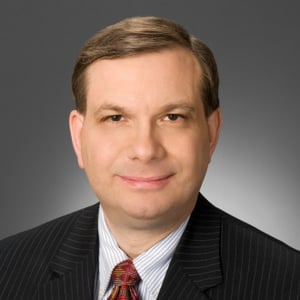
John Fund is National Affairs Columnist for National Review magazine and a on-air analyst on the Fox News Channel. He is considered a notable expert on American politics and the nexus between politics and economics.
He previously served as a columnist and editorial board member for The Wall Street Journal. He is the author of several books, including Who's Counting: Bow Fraudsters and Bureaucrats Put Your Vote At Risk (Encounter Books, 2012); Stealing Elections: How Voter Fraud Threatens Our Democracy (Encounter Books, 2008) and The Dangers of Regulation Through Litigation (ATRA Press, 2008). He worked as a research analyst for the California Legislature in Sacramento before beginning his journalism career as a reporter for the syndicated columnists Rowland Evans and Robert Novak.
Roll Call, the newspaper of Capitol Hill, called him "the Tom Paine of the modern Congressional reform movement." He has won awards from the Institute for Justice, The School Choice Aliance and the Warren Brooks award for journalistic excellence from the American Legislative Exchange Council.
Founder and Senior Director, Institutional Religious Freedom Alliance
Stanley Carlson-Thies is the Founder and Senior Director of the Institutional Religious Freedom Alliance (IRFA), a division of the Center for Public Justice. As part of this role, he convenes the Coalition to Preserve Religious Freedom, a multi-faith alliance of social-service, education, and religious freedom organizations that advocates for the religious freedom of faith-based organizations to Congress and the federal government. In addition he is also a Senior Fellow at the Canadian think tank Cardus.
From 2009-2010 he served on a task force of President Obama’s Advisory Council on Faith-Based and Neighborhood Partnerships, helping to draft recommendations on how to clarify the church-state rules that apply to federal funding of social-service providers, and has consulted with federal departments and several states.
He served with the White House Office of Faith-Based & Community Initiatives from its inception in February 2001 until mid-May 2002. He assisted with writing “Unlevel Playing Field: Barriers to Participation by Faith-Based and Community Organizations in Federal Social Service Programs,” a report released by the White House in August 2001, and “Rallying the Armies of Compassion,” the initial blueprint for President George W. Bush’s faith and community agenda.
Previously, he was Director of Social Policy Studies for CPJ and directed CPJ’s project to track the implementation and impact of the Charitable Choice provision of the 1996 federal welfare reform law. Following his term in the White House, he returned to CPJ as the Director of Faith-based Policy Studies.
He received the William Bentley Ball Life and Religious Liberty Defense Award from the Center for Law and Religious Freedom and the Christian Legal Society in October 2004. He was named as one of 12 advocates who are “reinterpreting God and country” by the National Journal in May 2004. He holds a doctorate in political science from the University of Toronto. His dissertation is on the role of Protestants and Catholics in the development of Dutch politics in the 19th and 20th centuries. Besides the United States, he has lived in Canada, the Netherlands, and Japan, where he was born of missionary parents. He lives in Annapolis, Maryland, with his wife, Christiane. They are the proud parents of Simon.
Professor, University of Illinois College of Law
Robin Fretwell Wilson is the Mildred Van Voorhis Jones Chair in Law at the University of Illinois College of Law.
A scholar in family law, bioethics and law and religion, Professor Wilson has worked extensively on behalf of state and federal law reform efforts in each realm.
Across two decades, she has worked to secure laws protecting the autonomy of patients to decide when they will be used to teach intimate exams to medical students, laws now in place in 22 states—sixteen of which have been enacted since 2019.
Professor Wilson is known for bridging differences in the culture war. In 2015, she spent a month in residence with the Utah legislature, helping Utah state lawmakers to pass anti-discrimination legislation that balances religious liberty and LGBT rights. In 2019, Professor Wilson assisted the governor of Utah to craft regulations banning gay conversion therapy. In 2019, she also aided U.S. Representative Chris Stewart with portions of the “Fairness for All” he introduced in Congress. A member of the American Law Institute and a Fulbright Specialist, Professor Wilson has served as a consultant to the United Arab Emirates’ Judicial Department as they sought to create a parallel court system for the adjudication by expatriates of family law matters using the laws of their home country or of their faith traditions.
Professor Wilson is the author of 20 books, including her 2018 book, Religious Freedom, LGBT Rights, and the Prospects for Common Ground, with Yale University Professor William Eskridge, Jr., which is now in paperback at Cambridge University Press. Her other books include: The Contested Place of Religion in Family Law (Cambridge University Press, 2018, ed.), Reconceiving the Family: Critical Reflections on the American Law Institute’s Principles of the Law of Family Dissolution (Cambridge University Press, 2006, ed.); The Handbook of Children, Culture & Violence (Sage Publications, 2006, with Nancy Dowd and Dorothy Singer, eds.); Same-Sex Marriage and Religious Liberty: Emerging Conflicts (Rowman & Littlefield, 2008, with Douglas Laycock and Anthony Picarello, eds.); Health Law and Bioethics: Cases in Context (Aspen, 2008, with Joan Krause, Sandra Johnson, and Richard Saver, eds.); Domestic Relations: Cases and Materials, 8th edition (Foundation Press, 2017, with Walter Wadlington and Raymond C. O’Brien); and Understanding Family Law, 4th edition (LexisNexis, 2013, with John DeWitt Gregory and Peter N. Swisher). Her articles have appeared in the Boston College Law Review, Cornell Law Review, Emory Law Journal, Illinois Law Review, North Carolina Law Review, San Diego Law Review, U.C. Davis Law Review, and Washington and Lee Law Review, as well as in numerous peer-reviewed journals.
In 2010 and again in 2016, Professor Wilson was ranked among the Top Ten Family Law Scholars in the United States for scholarly impact. She ranks among the Top 10% of Authors in all time downloads on the Social Science Research Network. Professor Wilson’s scholarship has been cited by the Fifth, Seventh and Tenth Circuit Court of Appeals, the Minnesota Court of Appeals, lower federal courts, and the Supreme Courts of Delaware, Illinois, Iowa, and Washington.
Professor Wilson’s work has been featured in the New York Times, Wall Street Journal, National Public Radio’s All Things Considered, Washington Post, Los Angeles Times, The Atlantic Monthly, U.S. News and World Report, ABA Journal, Chronicle of Higher Education, Chicago Tribune, CNN Headline News, Good Morning America, ABC News, CBS News, Philadelphia Inquirer, Essence Magazine, The American Prospect, People Magazine, The American Conservative, The Australian, and Al Jazeera, among others. She has presented her research across the world, including the United Nations in Geneva, Switzerland, as well as in Argentina, Brazil, Peru, Chile, China, Israel, Qatar, the Netherlands, Italy, England, Wales, Poland, Spain, Serbia, Japan, Canada, Norway, Denmark, Australia, New Zealand, South Africa, Turkey, and France.
Professor Wilson has seven times been honored for her work on innovative laws that respect all persons. In 2007, she received the Citizen’s Legislative Award for her work on changing Virginia’s informed consent law. In 2018, Professor Wilson received the Thomas L. Kane Religious Freedom Award from the J. Reuben Clark Law Society, which is presented annually to an individual who exemplifies the spirit of religious liberty for all and who has contributed in significant ways to the defense of religious freedom in the public square.
In 2018, Professor Wilson was honored as one of the 150 for 150: Celebrating the Accomplishments of Women at the University of Illinois at Urbana-Champaign for its sesquicentennial celebration. In 2020, Professor Wilson received the 2020 Larine Y. Cowan Make a Difference Award for Advocacy for LGBTQ Affairs, a university-wide honor given by the Office of Diversity, Equity and Inclusion at the University of Illinois at Urbana-Champaign.

Developments at the Consumer Financial Protection Bureau September 10, 2014 – October 14, 2014
Julius L. Loeser, Todd J. Zywicki
Developments at the Consumer Financial Protection Bureau September 10, 2014 – October 14, 2014 Julius...
Was Justice Served?
Atlanta, GeorgiaTake Care Now: Stare Decisis and the President’s Duty to Defend Acts Of Congress
TeleforumObama’s Enforcer: Eric Holder’s Justice Department
Cleveland, OhioNoel Canning and Obama on Executive Power
Obama's Enforcer: Eric Holder's Justice Department
Chicago, IllinoisA Debate: Making War in a World in Chaos
Chicago, IllinoisExecutive Order 13672: The LGBT Executive Order - Podcast
Robin Fretwell Wilson, Stanley Carlson-Thies
On July 21, 2014 President. Obama issued Executive Order 13672, amending EO 11246 which has...
Executive Order 13672: The LGBT Executive Order
TeleforumPanel II: Racial Preferences and Promoting Diversity: Are These Policies Taking Us in the Right Direction?
Roger Pilon, Louis Michael Seidman, Stuart S. Taylor, Hans Frank Bader
The Obama administration is widely perceived to be an avid proponent of racial preferences. As...