
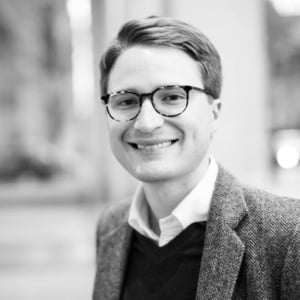
Senior Counsel, The Becket Fund for Religious Liberty
Joe Davis joined Becket in 2017 as Legal Counsel. His work at Becket has included appellate litigation in both federal and state courts, including representing religious entities and governments sued because of their openness to religious expression in precedent-setting victories before the Third, Fifth, Seventh, and Eleventh Circuits. Joe has appeared in national media to discuss religious liberty issues, including on Fox News and numerous radio and print outlets, and his academic work on topics related to religious liberty has been published at venues including the Yale Law Journal Forum and the Notre Dame Law Review Online.
Before joining Becket, Joe worked as a litigator at Jones Walker LLP in New Orleans, Louisiana, where he worked on a variety of matters from commercial and criminal litigation to bankruptcy. From 2014 to 2015, he clerked for the Honorable E. Grady Jolly of the U.S. Court of Appeals for the Fifth Circuit.
Joe graduated summa cum laude from the University of Virginia School of Law in 2014, where he served on the Virginia Law Review and was elected to the Order of the Coif. While in law school, Joe studied religious liberty law with one of the top religious liberty scholars and litigators in the nation. He also worked as a researcher for the law school’s Supreme Court Litigation Clinic. Before going to law school, Joe received his B.A. in Economics with a minor in Religion, summa cum laude, from Mississippi State University.
Joe is married to his high school sweetheart. When he’s not helping her corral their four young children, he tends to be reading the classics, watching college football, or listening to his vinyl collection.
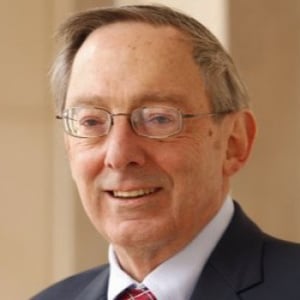
Robert E. Scott Distinguished Professor of Law Emeritus, University of Virginia School of Law; Alice McKean Young Regents Chair in Law Emeritus, University of Texas
Douglas Laycock is perhaps the nation’s leading authority on the law of religious liberty and also on the law of remedies. He has taught and written about these topics for more than four decades at the University of Chicago, the University of Texas, the University of Michigan and the University of Virginia. He retired from teaching at UVA Law School in May 2023.
Laycock has testified frequently before Congress and has argued many cases in the courts, including the U.S. Supreme Court, where he has served as lead counsel in six cases and has also filed influential amicus briefs. He is the author (co-author in the most recent edition) of the leading casebook Modern American Remedies, the award-winning monograph The Death of the Irreparable Injury Rule and many articles in leading law reviews. He co-edited a collection of essays, Same-Sex Marriage and Religious Liberty.
His many writings on religious liberty have been republished in a five-volume collection:
Laycock resigned from the council and as first vice president of the American Law Institute to become co-reporter for the Restatement (Third) of Torts: Remedies. He is a fellow of the American Academy of Arts and Sciences. He earned his B.A. from Michigan State University and his J.D. from the University of Chicago.

Richard and Frances Mallery Professor of Law and Faculty Director, Constitutional Law Center, Stanford Law School
Michael W. McConnell is the Richard and Frances Mallery Professor and Faculty Director of the Constitutional Law Center at Stanford Law School, and a Senior Fellow at the Hoover Institution. From 2002 to 2009, he served as a Circuit Judge on the United States Court of Appeals for the Tenth Circuit. He was nominated by President George W. Bush, a Republican, and confirmed by a Democratic Senate by unanimous consent. McConnell has previously held chaired professorships at the University of Chicago and the University of Utah, and visiting professorships at Harvard and NYU. He teaches courses on constitutional law, constitutional history, First Amendment, and interpretive theory. He has published widely in the fields of constitutional law and theory, especially church and state, equal protection, and separation of powers. His book, “The President Who Would Not Be King: Executive Power Under the Constitution,” was published by Princeton University Press in 2020, based on the Tanner Lectures in Human Values, which he delivered at Princeton in 2019. His latest book, co-authored with Nathan Chapman, “Agreeing to Disagree: How the Establishment Clause Protects Religious Diversity and Freedom of Conscience,” was published by Oxford University Press in mid-2023. McConnell has argued sixteen cases in the United States Supreme Court, most recently Carney v. Adams (2020). defending a provision of the Delaware Constitution requiring political balance on that state’s courts. More recently, he was co-counsel in Gonzalez v. Google. He earned his B.A. from Michigan State University and his J.D. from the University of Chicago, and has received honorary degrees from Notre Dame University and Michigan State. He served as law clerk to Supreme Court Justice William J. Brennan, Jr. and D.C. Circuit Chief Judge J. Skelly Wright. He has been Assistant General Counsel of the Office of Management & Budget, Assistant to the Solicitor General of the Department of Justice, and a member of the President’s Intelligence Oversight Board. He is Senior of Counsel to the law firm Wilson, Sonsini, Goodrich & Rosati, and is co-chair of Meta’s Oversight Review Board.
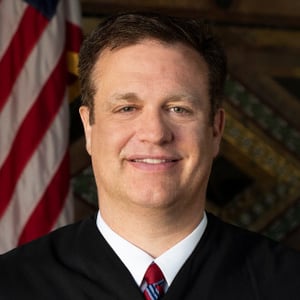
Judge, United States Court of Appeals, Ninth Circuit
Judge Nelson was confirmed to the Ninth Circuit in October 2018, as the youngest Circuit Judge to serve from Idaho and he has chambers in his hometown of Idaho Falls. Prior to his confirmation, Judge Nelson served for nine years as General Counsel of Idaho Falls-based Melaleuca, Inc., a consumer goods company. He previously worked in Washington, DC, where he served in all three branches of the federal government, including as Special Counsel for Supreme Court nominations to the Ranking Member of the Senate Judiciary Committee; Deputy General Counsel to the White House Office of Management and Budget; Deputy Assistant Attorney General in the Environment and Natural Resources Division of the United States Department of Justice; and a law clerk to Judge Henderson of the United States Court of Appeals for the D.C. Circuit. He has argued in most of the federal courts of appeals and worked on dozens of Supreme Court briefs. He started in the Washington, DC office of Sidley Austin as an appellate lawyer, after clerking for Judges Mosk and Brower of the Iran-U.S. Claims Tribunal at The Hague, and for now-Judge Tom Griffith, then-Senate Legal Counsel, during the impeachment trial of President Clinton. Judge Nelson earned his B.A. from Brigham Young University and his J.D., with honors, from BYU Law School. Judge Nelson has been a member of the Federalist Society since 1998.
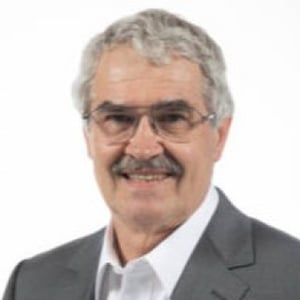
R. B. Price and Isabelle Wade & Paul C. Lyda Professor Emeritus of Law, University of Missouri School of Law
Carl H. Esbeck is R.B. Price Professor and Isabelle Wade & Paul C. Lyda Professor of Law emeritus at the University of Missouri. After attending Cornell University School of Law where he served as an editor on the Cornell Law Review, he held a judicial clerkship with the Honorable Howard C. Bratton, chief judge of the U.S. District Court in New Mexico.
Professor Esbeck publishes widely in the area of religious liberty and church-state relations. He is recognized as the progenitor of "Charitable Choice," an integral part of the 1996 Federal Welfare Reform Act, later made a part of the faith-based initiative and equal-treatment regulations under presidents George W. Bush and Barack Obama. In addition, he has taken the lead in recognizing that the modern Supreme Court has applied the Establishment Clause not as a personal right, but as a structural limit on the government's authority in disputes involving church governance. While on leave from 1999 to 2002, Professor Esbeck directed the Center for Law & Religious Freedom (CLRF) and later served as Senior Counsel to the Deputy Attorney General at the U.S. Department of Justice. While directing the CLRF, Professor Esbeck was a central part of the congressional advocacy behind the Religious Land Use and Institutionalized Persons Act of 2000 (RLUIPA). While at the Department of Justice one of his duties was to direct a task force to remove barriers to the equal-treatment of faith-based organizations applying for social service grants. He is the author of Disestablishment and Religious Dissent: Church-State Relations in the New American States, 1776 - 1833 (U. of MO Press, 2019).
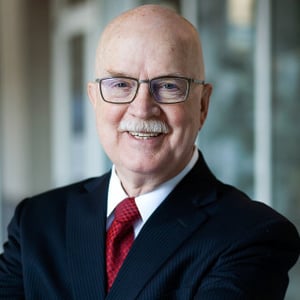
Partner, First & Fourteenth PLLC
For over 35 years, Martin Nussbaum has advised and advocated for dioceses, churches, denominations, religious hospitals, schools, monasteries, Chabad houses, ashrams, and other ministries. He is a nationally recognized expert on religious institution law and religious freedom. His advocacy and advice has been welcomed by religious leaders across the country.
Over his career, Martin has earned a national reputation for his expertise on the First Amendment and various other religious freedom protections. He employs strategic litigation that seeks to protect those rights. He has advocated for religious institutions in cases before the U.S. Supreme Court and in state and federal courts across the country. He also advocates for religious institutions before legislatures and in administrative proceedings, and serves as outside general counsel to numerous national and regional ministries.
Martin has served as a trial, appellate, and amicus counsel in landmark First Amendment and Religious Freedom Restoration Act cases in the U.S. Supreme Court and in state and federal courts.
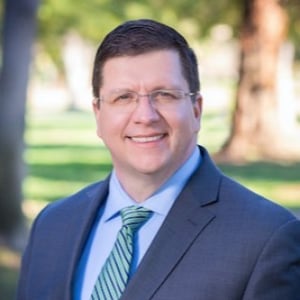
Vice President and Senior Counsel, The Becket Fund for Religious Liberty
Eric Rassbach is Vice President and Senior Counsel at the Becket Fund for Religious Liberty, where he has served since 2003. He has briefed over 90 cases at the United States Supreme Court and has led or been a part of Becket litigation teams in each of Becket’s pathbreaking victories there, including Hosanna-Tabor, Hobby Lobby, Holt v. Hobbs, Zubik v. Burwell, Agudath Israel of America v. Cuomo, and Fulton v. Philadelphia. In 2020, Eric argued Our Lady of Guadalupe School v. Morrissey-Berru to the Supreme Court, garnering a 7-2 win for his Catholic school clients. Eric has also briefed and argued cases in federal appeals courts and state supreme courts across the nation. Eric has also represented clients in appeals to the European Court of Human Rights in Strasbourg, France and in the highest courts of several other countries.
Eric believes passionately in the right of all people to the full measure of religious liberty and has represented members of almost every religious group present in the United States, including Buddhists, Christians, Hindus, Jains, Jews, Muslims, Native Americans, Santeros, and Sikhs, as well as many governmental entities targeted for accommodating religion.
Eric frequently comments on church-state issues in the media, including the New York Times, the Washington Post, the Wall Street Journal, and other major press outlets. He has published legal scholarship in the Harvard Law Review Forum, the Tennessee Law Review, the Illinois Law Review, the Cato Supreme Court Review, and other legal journals, and often speaks to law school audiences.
Before joining Becket, Eric worked at Baker Botts LLP in Houston, where he worked in international project finance. He also served as a law clerk to United States District Court Judge Lee Rosenthal in Houston, Texas.
Eric graduated from Haverford College with a degree in Comparative Literature, is a member of Fitzwilliam College, University of Cambridge, and is a graduate of Harvard Law School. Eric was a 2012-2013 Wasserstein Public Interest Fellow at Harvard Law School. He is Visiting Professor and Executive Director of The Hugh and Hazel Darling Foundation Religious Liberty Clinic at Pepperdine University Caruso School of Law in Malibu, where he leads students in litigating cases in American courts. He is also an Associated Scholar with the Centre for Religious Freedom at Jagiellonian University in Kraków, Poland. Eric is admitted in Texas, DC, California, and Ireland.
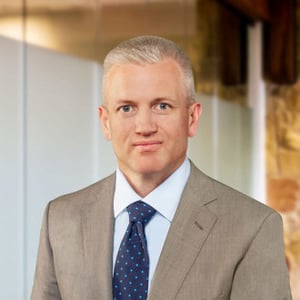
Executive General Counsel, First Liberty Institute
Hiram Sasser is Executive General Counsel for First Liberty Institute, where he oversees First Liberty’s litigation and media efforts. Sasser’s practice focuses on First Amendment and other constitutional and civil rights issues relating to religious liberty. Sasser served as co-counsel in seven victories before the United States Supreme Court, including Groff v. DeJoy (landmark case overturning the “de minimis cost” test for Title VII in place almost 50 years), Kennedy v. Bremerton (landmark case overturning 50 years of Establishment Clause precedent), Carson v. Makin (overturning 40 years of Maine’s discrimination against parents choosing faith-based schools), American Legion v. American Humanist Association (landmark case ending Establishment Clause attacks on veterans’ memorials with religious imagery), Klein v. Oregon Bureau of Labor and Industries (granted, vacated, and remanded (twice) in religious wedding service case), and Sause v. Bauer (summary reversal revoking qualified immunity for police who ordered a citizen not to pray in her own home).
In addition to his legal duties, Sasser develops, coordinates, and implements successful media strategies on behalf of his clients. This includes numerous appearances on ABC, NBC, CBS, Fox News, CNN, and the BBC as well as being heard on various radio stations throughout the United States, Asia, Africa, and Europe.
In 2016, Sasser took a leave of absence to serve a temporary assignment as the Chief of Staff for the Attorney General of Texas. He currently serves as an Adjunct Professor of Law at both The University of Texas at Austin School of Law (teaching Religious Liberty) and Oklahoma City University School of Law (teaching Civil Rights Procedure).
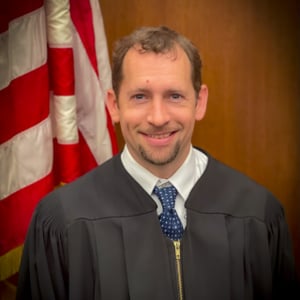
District Judge, United States District Court for the Northern District of Texas
Judge Brantley Starr was appointed to United States District Court for the Northern District of Texas in August 2019. Before his appointment, Judge Starr was the Deputy First Assistant Attorney General of Texas. Prior to that appointment, he served as Deputy Attorney General for Legal Counsel. From 2011 to 2015, Judge Starr served as career staff attorney to Texas Supreme Court Justice Eva Guzman. From 2008 to 2011, he practiced at King & Spalding, LLP. He served in the Office of the Solicitor General from 2006 to 2008. Prior to that, Judge Starr clerked for then-Justice Don Willett on the Texas Supreme Court after serving at the Office of the Attorney General. Judge Starr received his law degree from the University of Texas School of Law and his bachelor of arts degree from Abilene Christian University in 2001. Judge Starr has taught the Origins of the Constitution Class at the University of Texas law, Texas A&M law, and SMU law.
Judge, United States Court of Appeals, Ninth Circuit
Judge Nelson was confirmed to the Ninth Circuit in October 2018, as the youngest Circuit Judge to serve from Idaho and he has chambers in his hometown of Idaho Falls. Prior to his confirmation, Judge Nelson served for nine years as General Counsel of Idaho Falls-based Melaleuca, Inc., a consumer goods company. He previously worked in Washington, DC, where he served in all three branches of the federal government, including as Special Counsel for Supreme Court nominations to the Ranking Member of the Senate Judiciary Committee; Deputy General Counsel to the White House Office of Management and Budget; Deputy Assistant Attorney General in the Environment and Natural Resources Division of the United States Department of Justice; and a law clerk to Judge Henderson of the United States Court of Appeals for the D.C. Circuit. He has argued in most of the federal courts of appeals and worked on dozens of Supreme Court briefs. He started in the Washington, DC office of Sidley Austin as an appellate lawyer, after clerking for Judges Mosk and Brower of the Iran-U.S. Claims Tribunal at The Hague, and for now-Judge Tom Griffith, then-Senate Legal Counsel, during the impeachment trial of President Clinton. Judge Nelson earned his B.A. from Brigham Young University and his J.D., with honors, from BYU Law School. Judge Nelson has been a member of the Federalist Society since 1998.
Vice President and Senior Counsel, The Becket Fund for Religious Liberty
Eric Rassbach is Vice President and Senior Counsel at the Becket Fund for Religious Liberty, where he has served since 2003. He has briefed over 90 cases at the United States Supreme Court and has led or been a part of Becket litigation teams in each of Becket’s pathbreaking victories there, including Hosanna-Tabor, Hobby Lobby, Holt v. Hobbs, Zubik v. Burwell, Agudath Israel of America v. Cuomo, and Fulton v. Philadelphia. In 2020, Eric argued Our Lady of Guadalupe School v. Morrissey-Berru to the Supreme Court, garnering a 7-2 win for his Catholic school clients. Eric has also briefed and argued cases in federal appeals courts and state supreme courts across the nation. Eric has also represented clients in appeals to the European Court of Human Rights in Strasbourg, France and in the highest courts of several other countries.
Eric believes passionately in the right of all people to the full measure of religious liberty and has represented members of almost every religious group present in the United States, including Buddhists, Christians, Hindus, Jains, Jews, Muslims, Native Americans, Santeros, and Sikhs, as well as many governmental entities targeted for accommodating religion.
Eric frequently comments on church-state issues in the media, including the New York Times, the Washington Post, the Wall Street Journal, and other major press outlets. He has published legal scholarship in the Harvard Law Review Forum, the Tennessee Law Review, the Illinois Law Review, the Cato Supreme Court Review, and other legal journals, and often speaks to law school audiences.
Before joining Becket, Eric worked at Baker Botts LLP in Houston, where he worked in international project finance. He also served as a law clerk to United States District Court Judge Lee Rosenthal in Houston, Texas.
Eric graduated from Haverford College with a degree in Comparative Literature, is a member of Fitzwilliam College, University of Cambridge, and is a graduate of Harvard Law School. Eric was a 2012-2013 Wasserstein Public Interest Fellow at Harvard Law School. He is Visiting Professor and Executive Director of The Hugh and Hazel Darling Foundation Religious Liberty Clinic at Pepperdine University Caruso School of Law in Malibu, where he leads students in litigating cases in American courts. He is also an Associated Scholar with the Centre for Religious Freedom at Jagiellonian University in Kraków, Poland. Eric is admitted in Texas, DC, California, and Ireland.
James L. Oberstar Professor of Law and Public Policy, University of St. Thomas School of Law
William S. Boyd Professor of Law, University of Nevada, Las Vegas, William S. Boyd School of Law
Dr. Leslie C. Griffin is the William S. Boyd Professor of Law at the University of Nevada, Las Vegas, William S. Boyd School of Law. Professor Griffin, who teaches constitutional law, is known for her interdisciplinary work in law and religion. She holds a Ph.D. in Religious Studies from Yale University and a J.D. from Stanford Law School. She is author of the Foundation Press casebook Law and Religion: Cases and Materials (5th edition, 2022) with Andrew L. Seidel. Practicing Bioethics Law (2d ed. 2021) is co-authored with Joan H. Krause, Dan K. Moore Distinguished Professor of Law at the University of North Carolina School of Law. She and University of Pennsylvania Professor Marci Hamilton published Learning Constitutional Law (Cognella Press, 2023).
She wrote the recent book chapter, Bambi Trauma—Surviving TBI Twice, in Traumatic Brain Injury—Challenges (Dr. Ioannis Mavroudis & Alin Ciobica, eds., IntechOpen, 2024), https://www.intechopen.com/online-first/1179800#. And Catholic Sexual Abuse in Louisiana is in the University of Detroit Mercy Law Review, volume 101, p. 375 (2024).
Another article is What Did Those Sixteen Justices Say?, 58 Willamette L. Rev. 163 (2022). A book chapter entitled Rewritten Opinion, Means v. United States Conference of Catholic Bishops, is in the book Feminist Judgments: Rewritten Health Law Opinions (S. Mohapatra & L. Wiley, eds., Cambridge University Press, 2022). Other recent articles include What is Ethical Discharge?, 10:3 Narrative Inquiry in Bioethics 193 (2020); What Can We Expect of Law and Religion in 2020?, 79 SMU L. Rev. F. 73 (2020); Traumatic Brain Injury: Compassionate Care, Not Clinical Nihilism, 6:2 Journal of Hospital Ethics 87 (Fall 2019) (with Carole S. Anhalt); Conquering Brain Injury, 34:5 Journal of Head Trauma Rehabilitation 366 (2019), Religious Freedom, Human Rights, and Peaceful Coexistence, 50 Loyola University Chicago Law Journal 77 (2018), Pre-or Post Mortem?, 18 Nevada Law Journal 221 (2017). Her rewritten opinion about the abortion funding case, Harris v. McRae, 448 U.S. 297 (1980), is in Feminist Judgments: Rewritten Opinions of the United States Supreme Court (L. Berger, B. Crawford & K. Stanchi, eds., Cambridge University Press, 2016).
Griffin has written numerous amicus briefs defending children's and employees' religious freedom. She blogs for Justia's Verdict column, and posts occasionally on Petrie-Flom’s health law blog.
Other writings include Marriage Rights and Religious Exemptions in the United States, Oxford Handbooks Online (2017), Beyond the Basketball Court: How Brittney Griner’s In My Skin Illustrates Title IX’s Failure to Protect LGBT Athletes at Religious Institutions, 34 Law and Inequality 489 (2016), A Word of Warning from A Woman: Arbitrary, Categorical, and Hidden Religious Exemptions Threaten LGBT Rights, 7 Ala. C.R. & C.L.L. Rev. 97 (2015), and The Catholic Bishops vs. the Contraceptive Mandate, Religions 2015, 6, 1411–1432.
Associate Vice President & Associate Legal Director, Americans United for Separation of Church and State
Alex Luchenitser is the Associate Vice President & Associate Legal Director at Americans United for Separation of Church and State.
Alex has litigated church-state cases throughout the country for Americans United since January 2001. He has led lawsuits challenging religious proselytization of students in public schools, public funding of religious institutions, discriminatory governmental prayer practices, and government-sponsored religious displays. His successful cases include:
Alex has also authored and edited numerous friend-of-the-court briefs filed on behalf of Americans United. After the Covid-19 pandemic began, Alex led Americans United’s efforts to fight lawsuits that sought religious exemptions from public-health orders, filing fifty friend-of-the-court briefs in such cases around the country, including six in the U.S. Supreme Court.
Alex was born in Kyiv, Ukraine, in 1969 and immigrated to the United States in 1977. He received his bachelor’s degree magna cum laude in government and economics from Harvard University in 1991, and he received his Juris Doctor with distinction from Stanford Law School in 1994. After finishing law school, Alex served two one-year judicial clerkships, with Justice Warren W. Matthews Jr. of the Alaska Supreme Court and U.S. Magistrate Judge Wayne D. Brazil of the U.S. District Court for the Northern District of California. Alex then spent four years in private practice in Northern California, participating in the prosecution of class actions on behalf of investors, consumers, and trust beneficiaries.
Alex has spoken about church-state issues in many television and radio appearances and public presentations and has been quoted in numerous major newspapers. His published articles include:
Alex is an active member of the District of Columbia Bar, is an inactive member of the State Bar of California, and has been admitted to practice before the U.S. Supreme Court; the U.S. Courts of Appeals for the First, Second, Third, Fourth, Fifth, Sixth, Seventh, Eighth, Ninth, Tenth, Eleventh, Federal, and District of Columbia Circuits; and the U.S. District Courts for the District of Columbia, the Northern District of California, the District of Colorado, the Eastern District of Michigan, and the Eastern District of Wisconsin.
Associate Attorney, Gibson, Dunn & Crutcher LLP
Branton Nestor is an associate in the Orange County office of Gibson Dunn. He practices in the firm’s Litigation Department and is a member of the firm’s Appellate and Constitutional Law Practice Group.
Branton has represented clients in appellate, regulatory, and complex litigation matters across various industries. His experience spans a wide range of subject matters, including constitutional law and administrative law.
He clerked for Judge Diarmuid F. O’Scannlain on the U.S. Court of Appeals for the Ninth Circuit, and Judge Julius N. Richardson on the U.S. Court of Appeals for the Fourth Circuit. He graduated from Harvard Law School in 2019, and Westmont College in 2016. His scholarship has been cited at the U.S. Supreme Court.
Branton is a member of the California bar.
Counsel, Becket Fund for Religious Liberty
Amanda Salz is counsel at the Becket Fund for Religious Liberty, where her practice focuses on First Amendment litigation at both the trial and appellate levels. She is also a member of the Federalist Society’s Religious Liberties Executive Committee.
Before joining Becket, Amanda worked as an associate at Morgan, Lewis & Bockius LLP. As a member of the firm’s appellate group, Amanda litigated many cases involving constitutional and administrative issues. In addition to her experience in private practice, Amanda clerked for the Honorable Andrew S. Oldham of the U.S. Court of Appeals for the Fifth Circuit and the Honorable Reed C. O’Connor of the U.S. District Court for the Northern District of Texas.

Anne Fleming Research Professor and Professor of Law, Georgetown University Law Center; Faculty Director, Georgetown Center for the Constitution
Stephanie Barclay is a Professor of Law at Georgetown Law School, and the Faculty Director of the Georgetown Center for the Constitution. Her research focuses on the role our different democratic institutions play in protecting minority rights, particularly at the intersection of free speech and religious exercise. Barclay‘s work is published or is forthcoming in leading journals such as the Harvard Law Review, the Chicago Law Review, the University of Pennsylvania Law Review, and the Yale Law Journal Forum. One of her articles was also selected for the 2020 Stanford/Harvard/Yale Junior Faculty Forum. Her work has been featured in many media outlets, including The New York Times, The Wall Street Journal, The Washington Post, USA Today, Bloomberg BNA, The Hill, and Law 360. And her work has also been cited by the U.S. Supreme Court.
Prior to joining Georgetown, Barclay was twice voted Professor of the Year. Barclay has also litigated constitutional cases at both the trial and appellate level, including before the U.S. Supreme Court. Barclay served as a law clerk to Judge N. Randy Smith on the U.S. Court of Appeals for the Ninth Circuit, and to Justice Neil M. Gorsuch of the U.S. Supreme Court.
Barclay is a Faculty Affiliate at the Constitutional Law Center at Stanford Law School; and she is a Nootbaar Fellow at the Nootbaar Institute on Law, Religion, and Ethics at Pepperdine University. She currently serves as the Chair for the AALS Law and Religion Section and as a Member of the Executive Committee for the AALS Constitutional Law Section. She graduated summa cum laude from BYU Law School, where she was elected to the Order of the Coif. She is completing a Ph.D. in Law at Oxford University as a Clarendon Scholar and a Tang Scholar.
Professor of History, Southern Methodist University
Kate Carté (Ph.D., history, University of Wisconsin; B.A., Haverford College) is a Professor of History at Southern Methodist University, specializing in early American and Atlantic history. She is the author of Religion and the American Revolution: An Imperial History (UNC Press for the Omohundro Institute, 2021) and Religion and Profit: Moravians in Early America (Philadelphia: University of Pennsylvania Press, 2009, paper 2011), which was awarded the 2010 Dale W. Brown Award for Outstanding Scholarship in Anabaptist and Pietist Studies. Her articles have appeared in the William and Mary Quarterly, Church History, and Early American Studies, as well as a variety of edited collections. Carté has been a Charles A. Ryskamp Fellow of the American Council of Learned Societies, an affiliate fellow of the Center for the Study of Religion at Princeton University, a Franklin Fellow of the American Philosophical Society, and a Barra Postdoctoral Fellow at the McNeil Center for Early American Studies.
Senior Counsel, Alliance Defending Freedom's Appellate Advocacy Team
Chris Schandevel serves as senior counsel on Alliance Defending Freedom’s Appellate Advocacy Team. In that role, he represents ADF clients of all stripes at the appellate level, preserving lower-court victories and seeking to overturn unjust results.
Among other clients, he has represented a faith-based pregnancy resource center and adoption agency, a Christian photographer, a college student and conservative student group, a former Planned Parenthood clinic manager, female track-and-field athletes, and a high-school French teacher. Schandevel also was on the team of attorneys who successfully represented the Thomas More Law Center in the U.S. Supreme Court. And he regularly represents clients in friend-of-the-court briefs filed in state and federal appellate courts and in the U.S. Supreme Court.
Before joining ADF, Schandevel served as an assistant attorney general in the Criminal Appeals Section at the Office of the Attorney General of Virginia. During his five years in that office, Schandevel briefed and argued 14 appeals in the Supreme Court of Virginia and more than 60 appeals in the Court of Appeals of Virginia. Before his time at the Virginia attorney general’s office, Schandevel clerked for the Honorable Stephen R. McCullough on the Court of Appeals of Virginia.
Schandevel earned his J.D. from the University of Virginia School of Law in 2012. During law school, he founded a student organization called Advocates for Life at Virginia Law. He also completed ADF’s Blackstone Legal Fellowship and was commissioned as a Blackstone Fellow in 2010 after an internship with ADF’s Center for Life. Schandevel earned his B.A. in Social Work from Harding University in 2009.
A member of the state bar of Virginia, Schandevel is admitted to practice before the U.S. Supreme Court and various state and federal trial and appellate courts.
Senior Counsel, Storzer and Associates; Adjunct Professor at the Catholic University of America Columbus School of Law
Eric Treene is Senior Counsel at Storzer and Associates in Washington, D.C., and an Adjunct Professor at the Catholic University of America School of Canon Law. He served for 19 years in four administrations in the U.S. Department of Justice as Special Counsel for Religious Discrimination, where he provided leadership for the Department on a wide range of religious liberty issues, including developing and overseeing the Department’s enforcement program for the Religious Land Use and Institutionalized Persons Act (RLUIPA), testifying before the U.S. Senate on religious hate crimes and developing training programs to protect places of worship from violence, and leading the Department’s efforts to protect religious liberty rights during the COVID-19 epidemic. Prior to serving at the Department of Justice, Mr. Treene was Litigation Director at the Becket Fund for Religious Liberty in Washington, D.C, and was a law clerk to the Hon. John M. Walker, Jr. on the U.S. Court of Appeals for the Second Circuit. He is a graduate of Amherst College and Harvard Law School.
Partner, Jenner & Block LLP
Adam Unikowsky is a partner in Jenner & Block LLP’s Appellate & Supreme Court Practice Group, where he has worked since 2011.
Prior to his time at Jenner & Block, Mr. Unikowsky served as a Judicial Law Clerk to former Justice Antonin Scalia. He also previously clerked for Judge Douglas Ginsberg at the U.S. Courts of Appeals for the D.C. Circuit.
Mr. Unikowsky got his JD from Harvard University, following achieving his Masters of Engineering & Bachelors of Science from Massachusetts Institute of Technology.
Judge, United States Court of Appeals, Sixth Circuit
The Honorable Whitney Hermandorfer is a judge on the United States Court of Appeals for the Sixth Circuit. She was nominated to the court by President Donald Trump (R) on May 12, 2025, and confirmed by the United States Senate on July 14, 2025.
Prior to her appointment, she worked in the Office of the Tennessee Attorney General as Director of the Strategic Litigation Unit. In that role, Whitney focused on leading constitutional, statutory, and administrative-law challenges to federal agency action, as well as on defending the State in complex matters at the trial and appellate level.
Whitney previously worked at Williams & Connolly LLP in Washington, DC, where she focused on appellate and administrative-law litigation. Whitney clerked for Justice Samuel Alito in the OT 2018 Supreme Court term and for Justice Amy Coney Barrett during her inaugural OT 2020 term. Prior to that, Whitney clerked for then-Judge Kavanaugh on the D.C. Circuit, and Judge Richard Leon on the U.S. District Court for D.C. Whitney is a graduate of Princeton University and George Washington University Law School.
Vice President and Senior Counsel, The Becket Fund for Religious Liberty
Lori Windham is vice president and senior counsel at Becket, where she has represented clients on cutting-edge religious freedom issues since 2005. She has represented parties before the Supreme Court, arguing Becket’s unanimous victory on behalf of foster families in Fulton v. Philadelphia, as well as working with the Becket team on its Supreme Court victories in Hosanna-Tabor, Hobby Lobby, and Little Sisters of the Poor. She won a victory for the world’s largest religious media network in EWTN v. Azar, staving off millions of dollars in government fines under unlawful the HHS mandate. She has won more than a dozen victories in federal appellate courts, including successful defense of cities and school districts sued for accommodating religion, victories for houses of worship facing discrimination in the land use process, and overturning a multimillion-dollar judgment against a major evangelical ministry. She recently won a first-in-the-nation injunction for an adoption agency threatened with shutdown for its religious beliefs.
Recognized in Washington as an expert on religious freedom issues, Lori has testified in Congressional oversight hearings before the U.S. House of Representatives Judiciary Committee and before the U.S. Commission on Civil Rights. Outside Washington, Lori is sought-after speaker on First Amendment law, including appearances at Yale Law School, Harvard Law School, Stanford Law School, Georgetown University Law Center, Central European University, and many others.
In addition to these venues, Lori also defends her clients in the media, including television appearances on CBS This Morning, Hardball, CNN Tonight, On the Record, America’s Newsroom, Opinion Journal, and many others. Her work has been covered by the New York Times, Wall Street Journal, Washington Post, and dozens of other papers. She is also a regular guest on radio, with appearances on shows ranging from Sean Hannity to NPR.
Lori has successfully represented a wide array of clients, including a Santeria priest prohibited from making animal sacrifices, synagogues prohibited from building on their own land, and religious student organizations penalized for their religious speech. One of her most challenging cases involved travel to a remote farming community to ensure that members of the local Amish community were not jailed for using their traditional building methods.
Lori is a graduate of Harvard Law School and earned her B.A. summa cum laude at Abilene Christian University. She has served on the Board of Visitors of Abilene Christian University and received the ACU Young Alumnus of the Year award for her work at Becket. She sits on the board of Dominion Christian School and the visiting committee of the Fund for American Studies’ Summer Law Fellowship.
Judge, United States Court of Appeals, Sixth Circuit
The Honorable Whitney Hermandorfer is a judge on the United States Court of Appeals for the Sixth Circuit. She was nominated to the court by President Donald Trump (R) on May 12, 2025, and confirmed by the United States Senate on July 14, 2025.
Prior to her appointment, she worked in the Office of the Tennessee Attorney General as Director of the Strategic Litigation Unit. In that role, Whitney focused on leading constitutional, statutory, and administrative-law challenges to federal agency action, as well as on defending the State in complex matters at the trial and appellate level.
Whitney previously worked at Williams & Connolly LLP in Washington, DC, where she focused on appellate and administrative-law litigation. Whitney clerked for Justice Samuel Alito in the OT 2018 Supreme Court term and for Justice Amy Coney Barrett during her inaugural OT 2020 term. Prior to that, Whitney clerked for then-Judge Kavanaugh on the D.C. Circuit, and Judge Richard Leon on the U.S. District Court for D.C. Whitney is a graduate of Princeton University and George Washington University Law School.
Vice President and Senior Counsel, The Becket Fund for Religious Liberty
Lori Windham is vice president and senior counsel at Becket, where she has represented clients on cutting-edge religious freedom issues since 2005. She has represented parties before the Supreme Court, arguing Becket’s unanimous victory on behalf of foster families in Fulton v. Philadelphia, as well as working with the Becket team on its Supreme Court victories in Hosanna-Tabor, Hobby Lobby, and Little Sisters of the Poor. She won a victory for the world’s largest religious media network in EWTN v. Azar, staving off millions of dollars in government fines under unlawful the HHS mandate. She has won more than a dozen victories in federal appellate courts, including successful defense of cities and school districts sued for accommodating religion, victories for houses of worship facing discrimination in the land use process, and overturning a multimillion-dollar judgment against a major evangelical ministry. She recently won a first-in-the-nation injunction for an adoption agency threatened with shutdown for its religious beliefs.
Recognized in Washington as an expert on religious freedom issues, Lori has testified in Congressional oversight hearings before the U.S. House of Representatives Judiciary Committee and before the U.S. Commission on Civil Rights. Outside Washington, Lori is sought-after speaker on First Amendment law, including appearances at Yale Law School, Harvard Law School, Stanford Law School, Georgetown University Law Center, Central European University, and many others.
In addition to these venues, Lori also defends her clients in the media, including television appearances on CBS This Morning, Hardball, CNN Tonight, On the Record, America’s Newsroom, Opinion Journal, and many others. Her work has been covered by the New York Times, Wall Street Journal, Washington Post, and dozens of other papers. She is also a regular guest on radio, with appearances on shows ranging from Sean Hannity to NPR.
Lori has successfully represented a wide array of clients, including a Santeria priest prohibited from making animal sacrifices, synagogues prohibited from building on their own land, and religious student organizations penalized for their religious speech. One of her most challenging cases involved travel to a remote farming community to ensure that members of the local Amish community were not jailed for using their traditional building methods.
Lori is a graduate of Harvard Law School and earned her B.A. summa cum laude at Abilene Christian University. She has served on the Board of Visitors of Abilene Christian University and received the ACU Young Alumnus of the Year award for her work at Becket. She sits on the board of Dominion Christian School and the visiting committee of the Fund for American Studies’ Summer Law Fellowship.
Executive Director, Salmon P. Chase Center for Civics, Culture, and Society, The Ohio State University
Professor Lee J. Strang serves as the inaugural executive director of the Salmon P. Chase Center for Civics, Culture, and Society at The Ohio State University.
Initiated in 2023 by the state of Ohio, the Chase Center will be an academic home at Ohio State for teaching, research, and programing on the foundations of the American constitutional order and its impact on society. As executive director, Professor Strang is responsible for organizing the center, overseeing the hiring and appointment of the center’s faculty, developing curriculum, and delivering student and academic programming. He also holds a faculty appointment in the Moritz College of Law at Ohio State.
Professor Strang is a nationally recognized legal scholar who has published dozens of articles in leading journals in the fields of constitutional law and interpretation, property law, and religion and the First Amendment. He co-edits the textbook Federal Constitutional Law, and his most recent book, Originalism’s Promise: A Natural Law Account of the American Constitution is the first book-length, natural law justification for originalism. He currently is writing on civic thought and leadership, and he is finalizing a book on the history of American Catholic legal education (with John M. Breen).
Before joining Ohio State, Professor Strang served as the inaugural director of the University of Toledo’s Institute of American Constitutional Thought & Leadership. He joined the Toledo College of Law faculty in 2008, was granted tenure in 2010, and was named John W. Stoepler Professor of Law & Values in 2015. The University of Toledo awarded Professor Strang its Outstanding Faculty Research and Scholarship Award in 2017. Before that, he was a visiting professor at Michigan State University College of Law. A graduate of the University of Iowa, where he was articles editor of the Iowa Law Review and Order of the Coif, Professor Strang holds an LL.M. degree from Harvard Law School.
Professor Strang has been a visiting scholar at the Georgetown Center for the Constitution and a visiting fellow at the James Madison Program at Princeton University. In 2016, he was appointed to the Ohio Advisory Committee of the U.S. Commission on Civil Rights and reappointed as chair in 2023.
Prior to teaching, Professor Strang served as a judicial clerk for Judge Alice M. Batchelder of the U.S. Court of Appeals for the Sixth Circuit. He was also an associate for Jenner & Block LLP in Chicago, where he practiced in general and appellate litigation.
Professor Strang is a frequent presenter at scholarly conferences. He is the president of the Board of Trustees of Northwest Ohio Classical Academy, Ohio’s first classical charter school. He is also a regular participant in debates at law schools across the country, a contributor to the media, and a speaker to political, civic, and religious groups.
Judge, United States Court of Appeals, Sixth Circuit
The Honorable Whitney Hermandorfer is a judge on the United States Court of Appeals for the Sixth Circuit. She was nominated to the court by President Donald Trump (R) on May 12, 2025, and confirmed by the United States Senate on July 14, 2025.
Prior to her appointment, she worked in the Office of the Tennessee Attorney General as Director of the Strategic Litigation Unit. In that role, Whitney focused on leading constitutional, statutory, and administrative-law challenges to federal agency action, as well as on defending the State in complex matters at the trial and appellate level.
Whitney previously worked at Williams & Connolly LLP in Washington, DC, where she focused on appellate and administrative-law litigation. Whitney clerked for Justice Samuel Alito in the OT 2018 Supreme Court term and for Justice Amy Coney Barrett during her inaugural OT 2020 term. Prior to that, Whitney clerked for then-Judge Kavanaugh on the D.C. Circuit, and Judge Richard Leon on the U.S. District Court for D.C. Whitney is a graduate of Princeton University and George Washington University Law School.
Vice President and Senior Counsel, The Becket Fund for Religious Liberty
Lori Windham is vice president and senior counsel at Becket, where she has represented clients on cutting-edge religious freedom issues since 2005. She has represented parties before the Supreme Court, arguing Becket’s unanimous victory on behalf of foster families in Fulton v. Philadelphia, as well as working with the Becket team on its Supreme Court victories in Hosanna-Tabor, Hobby Lobby, and Little Sisters of the Poor. She won a victory for the world’s largest religious media network in EWTN v. Azar, staving off millions of dollars in government fines under unlawful the HHS mandate. She has won more than a dozen victories in federal appellate courts, including successful defense of cities and school districts sued for accommodating religion, victories for houses of worship facing discrimination in the land use process, and overturning a multimillion-dollar judgment against a major evangelical ministry. She recently won a first-in-the-nation injunction for an adoption agency threatened with shutdown for its religious beliefs.
Recognized in Washington as an expert on religious freedom issues, Lori has testified in Congressional oversight hearings before the U.S. House of Representatives Judiciary Committee and before the U.S. Commission on Civil Rights. Outside Washington, Lori is sought-after speaker on First Amendment law, including appearances at Yale Law School, Harvard Law School, Stanford Law School, Georgetown University Law Center, Central European University, and many others.
In addition to these venues, Lori also defends her clients in the media, including television appearances on CBS This Morning, Hardball, CNN Tonight, On the Record, America’s Newsroom, Opinion Journal, and many others. Her work has been covered by the New York Times, Wall Street Journal, Washington Post, and dozens of other papers. She is also a regular guest on radio, with appearances on shows ranging from Sean Hannity to NPR.
Lori has successfully represented a wide array of clients, including a Santeria priest prohibited from making animal sacrifices, synagogues prohibited from building on their own land, and religious student organizations penalized for their religious speech. One of her most challenging cases involved travel to a remote farming community to ensure that members of the local Amish community were not jailed for using their traditional building methods.
Lori is a graduate of Harvard Law School and earned her B.A. summa cum laude at Abilene Christian University. She has served on the Board of Visitors of Abilene Christian University and received the ACU Young Alumnus of the Year award for her work at Becket. She sits on the board of Dominion Christian School and the visiting committee of the Fund for American Studies’ Summer Law Fellowship.

What Was an "Establishment of Religion" at the Founding?
Joseph Davis, Douglas Laycock, Michael W. McConnell, Ryan D. Nelson
In this Federalist Society America250 series, experts analyze modern legal and policy debates through the...
Current Issues in Church Autonomy Doctrine: Categorical Immunity, Collateral Order Doctrine, and Neutral Principles of Law
Carl H. Esbeck, L. Martin Nussbaum, Eric Rassbach, Hiram Sasser, Brantley Starr
The United States Supreme Court first acknowledged what would become the church autonomy doctrine, also...
Courthouse Steps Oral Argument: Catholic Charities Bureau, Inc. v. Wisconsin Labor & Industry Review Commission
Ryan D. Nelson, Eric Rassbach
On March 31, 2025, the Supreme Court will hear oral arguments in Catholic Charities Bureau...
Daniel Webster Debate Series: Does the First Amendment Permit (or Require?) Public Funding of Religious Charter Schools?
The Federalist Society's Georgetown Law Chapter'sDaniel Webster Debate Series presents Daniel Webster Debate Series: Does...
The Roots, Applications, and Trajectory of the Church Autonomy Doctrine
Thomas C. Berg, Leslie C. Griffin, Alex J. Luchenitser, Branton J. Nestor, Amanda Salz
The First Amendment’s Religion Clauses guarantee religious entities the freedom to make certain internal governance...
Free Exercise, History and Tradition, and Preferred Pronouns: Key Takeaways from Vlaming v. West Point School Board
Stephanie Barclay, Kate Carté, Chris Schandevel, Eric W. Treene, Adam Unikowsky
High school French teacher Peter Vlaming was fired from his job in West Point, Virginia,...
Litigation Update: Roman Catholic Diocese of Albany v. Vullo
Whitney D. Hermandorfer, Lori Windham
In 2017, New York passed a law requiring employers to cover abortions in their health...
Litigation Update: Roman Catholic Diocese of Albany v. Vullo
Whitney D. Hermandorfer, Lori Windham
In 2017, New York passed a law requiring employers to cover abortions in their health...
Litigation Update: Roman Catholic Diocese of Albany v. Vullo
Challenges to Originalism IX: Originalism is Inconsistent with Natural Law
Lee J. Strang
The Federalist Society's Student Division & UNC School of Law Student Chapterpresent Challenges to Originalism IX:...