
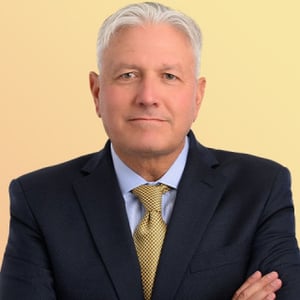
Partner, King & Spalding
A partner in the firm’s Government Advocacy and Public Policy group, J.C. helps companies and trade associations navigate legal, political and regulatory issues commonly associated with doing business in Europe and the United States. He is recognized by clients for his strong, bipartisan relationships with Members of Congress, State Attorneys General, congressional staff and senior government officials across key regulatory and executive branch agencies. He is trusted for his ability to rapidly synthesize complex information and communicate its strategic implications to policymakers and senior institutional stakeholders as well as his candid evaluation of options and potential for success.
As former counsel to the Senate Banking Committee, J.C has developed a deep expertise in financial services, fintech, and emerging technology policy. He has a proven track record of influencing federal legislation, regulatory frameworks, and agency rulemaking impacting digital assets, banking, payments, and technology platforms. J.C. regularly interfaces with financial regulators on a wide array of policy and institution-specific issues, and as co-chair of the firm’s State Attorneys General practice, delivers results on high-impact legal work at the intersection of law, policy and regulation.
J.C. is skilled in developing and executing comprehensive advocacy strategies, shaping legislative language, and positioning clients to successfully navigate complex and evolving policy environments at the federal, state and international levels. As President of the Parliamentary Intelligence-Security Forum, he has briefed policymakers throughout Europe, Africa, Latin America, and the Indo-Pacific. JC also advises international clients seeking to invest, expand, or operate in the United States.
President George W. Bush appointed J.C. to a six-year term as U.S. representative to the World Bank’s International Centre for Settlement of Investment Disputes (ICSID). Mayor Muriel Bowser also appointed J.C. to the District of Columbia; Board of Elections, in which capacity he also served on the U.S. Election Assistance Commission Standards Board. He is currently chairman of the Board of Visitors of The Catholic University Columbus School of Law and President of the Parliamentary Intelligence-Security Forum, where he is a regular speaker on cryptocurrency, artificial intelligence and critical minerals.
Earlier in his career, J.C. established the Boggs Scholarship for Public Service at the University of Delaware in honor of his grandfather and namesake, former U.S. Congressman, Senator and Governor of Delaware, J. Caleb Boggs. He has also served on numerous corporate and non-profit boards, including Jobs for Delaware Graduates (Chairman); The Reserve Trust Company (Vice Chairman), Global Center for Social Entrepreneurship Network (Secretary), Republican National Lawyers Association (President), Kimball Union Academy (Chairman of the Committee on Trustees), and AAA Mid-Atlantic.
J.C. enjoys open-water swimming and is member of U.S. Masters Swimming and the historic Serpentine Swimming Club situated in London's Hyde Park. He has competed in swimming events across all 50 states, ten Canadian provinces and around the world.
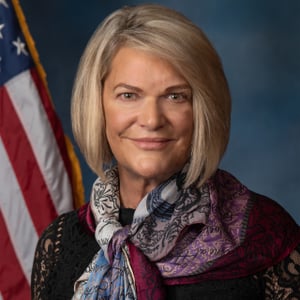
U.S. Senate, Wyoming
Cynthia Lummis was sworn into the United States Senate on January 3, 2021, becoming the first woman to serve as United States Senator from the great State of Wyoming.
Born on a cattle ranch in Laramie County, Senator Lummis has spent her entire career fighting for Wyoming families, communities, businesses and values. From the halls of the Wyoming House to the halls of the U.S. House, her time in public service has always been focused on advocating for Wyoming’s future.
First elected to the U.S. House in 2008, Senator Lummis quickly earned her reputation as a no-nonsense conservative and principled policymaker. She was a founding member of the House Freedom Caucus, a group consisting of the most unflinching conservative Members of the House of Representatives. She fought throughout her tenure in Congress to rein in spending and reduce the federal deficit, working with the bipartisan Committee for a Responsible Federal Budget and ultimately co-sponsoring several bipartisan budget proposals.
In the House of Representatives, Senator Lummis effectively elevated western issues, pushing through the first Interior and Environment (EPA) Appropriations bill to pass the House in seven years under her chairmanship. This marked a significant milestone for the Western Caucus and the rural communities across the West they represent. She also worked to keep public lands open to the public and available for multiple use. She successfully passed the National Forest System Trails Stewardship Act in 2016, a bipartisan effort led by Cynthia to maintain over 157,000 miles of trails within our national forests.
Senator Lummis is a dedicated champion of Wyoming’s mineral and energy resources. In Washington, she fought off attacks from the environmental left while advocating for market opportunities both at home and abroad. She is the proud godmother of the ANSAC Wyoming, a commercial shipping vessel transporting trona from the U.S. to Southeast Asia and is the recipient of the lifetime achievement award from the Washington Coal Club.
Prior to serving in the House of Representatives, Senator Lummis spent eight years as Wyoming State Treasurer and 14 years as a member of the Wyoming State House and Senate. She also worked as general counsel to Wyoming Governor Jim Geringer and Director of the Office of State Lands and Investments, as well as a law clerk at the Wyoming Supreme Court.
After departing U.S. House of Representatives in 2016, Senator Lummis operated her family’s cattle ranches, and the Sweetgrass development in Laramie County, with her brother and sister. She is a three-time graduate of the University of Wyoming in animal science, biology and law. She and her late-husband, Al Wiederspahn, have one daughter, Annaliese, son-in-law Will Cole and grandsons Gus and Al.
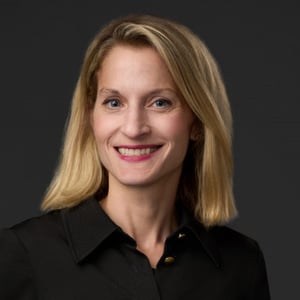
Executive Vice President & Co-Head of Regulatory Affairs, Bank Policy Institute
Paige Paridon is Executive Vice President & Co-Head of Regulatory Affairs for the Bank Policy Institute. Ms. Paridon is a member of BPI’s legal and regulatory affairs team and leads BPI’s consumer financial regulation advocacy alongside digital assets, payments and innovation regulatory policy. She also works on a number of other bank regulatory policy, strategy and advocacy issues.
Prior to joining BPI, Ms. Paridon served as Managing Director and Senior Associate General Counsel of The Clearing House. In that capacity, Ms. Paridon led the advocacy efforts of The Clearing House on a wide array of bank regulatory legal and policy issues impacting large financial institutions, including bank rating systems, national bank preemption, industry compensation limitations, brokered deposit restrictions, Community Reinvestment Act regulations and structural and activity limitations impacting banking organizations. Prior to joining The Clearing House, Ms. Paridon served as Counsel in the Legal Division of the Board of Governors of the Federal Reserve System in the Banking Regulation and Policy Group. While at the Board, Ms. Paridon drafted regulations and developed policies in connection with the Board’s implementation of the Dodd-Frank Act, including those related to the establishment of the Financial Stability Oversight Council; restrictions on transactions between banks and their affiliates; and prohibitions on management interlocks.
While at the Board, she received the Chairman’s Special Achievement Award for leading the interagency effort to implement the Financial Stability Oversight Council’s nonbank designation authority. Ms. Paridon received her J.D. magna cum laude from The Georgetown University Law Center where she was elected to membership in the Order of the Coif and holds a B.A. from Yale University.
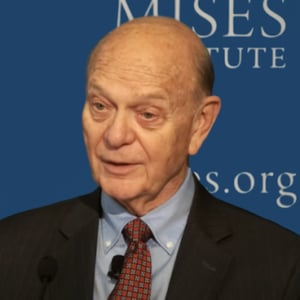
Senior Fellow, Mises Institute
Alex J. Pollock is a Senior Fellow with the Mises Institute, providing thought and policy leadership on financial issues and the study of financial systems. His work includes cycles of booms and busts, financial crises with their political responses, housing finance, government-sponsored enterprises, risk and uncertainty, central banking, banking and financial regulation, corporate governance, retirement finance, student loans, and the politics of finance.
He previously served as the Principal Deputy Director of the Office of Financial Research in the U.S. Treasury Department 2019-2021. He was a Distinguished Senior Fellow with the R Street Institute 2015-2019 and 2021, and a resident fellow at the American Enterprise Institute, 2004-2015. Among the many aspects of his AEI work, he developed the One Page Mortgage Form to give borrowers in clear form the key information they need in order to know what they are committing themselves to. He was President and CEO of the Federal Home Loan Bank of Chicago from 1991 to 2004. There he invented the Mortgage Partnership Finance program, which successfully created front-end mortgage credit risk sharing beginning in 1997. His decades of banking experience include being a Visiting Scholar at the Federal Reserve Bank of St. Louis, 1991.
Pollock was a director of the CME Group 2004-2019 and of Ascendium Education Group 1989-2019. He is a director and past-chairman of the Great Books Foundation and a past president of the International Union for Housing Finance.
He is the co-author of Surprised Again! - The COVID Crisis and the New Market Bubble (2022), and the author of Finance and Philosophy—Why We’re Always Surprised (2018) and Boom and Bust: Financial Cycles and Human Prosperity (2011), as well as numerous articles and Congressional testimony.
Pollock is a graduate of Williams College, the University of Chicago, and Princeton University.
His work is available on alexjpollock.com.
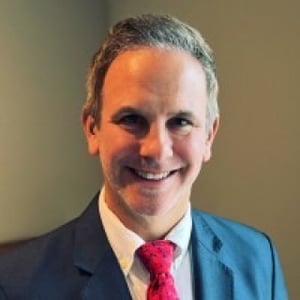
Deputy General Counsel of Regulatory Strategy and Global Policy, Circle
Corey Then is the Deputy General Counsel of Regulatory Strategy and Global Policy at Circle, where he leads U.S. policy and global regulatory strategy. Among other things, he helped lead the company’s advocacy on stablecoin legislation, which ultimately culminated in the GENIUS Act. Prior to joining Circle, Corey served in a variety of legal and leadership roles, including in the White House as an attorney, Special Assistant to the President and leader of the Economics team in Presidential Personnel, and as Deputy General Counsel of the U.S. Department of Agriculture.
He has also served as the Chief Legal Officer of Moneta, an investment adviser, as a white-collar attorney at Williams & Connolly law firm in Washington, D.C., as an adjunct professor at Washington University Law School, and as a member of the CFTC Technology Advisory Committee. He is a graduate of Duke Law School.
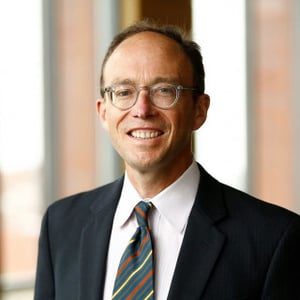
Professor of Legal Studies & Business Ethics, The Wharton School, The University of Pennsylvania
David Zaring’s scholarship addresses administrative and regulatory law from an international perspective. Professor Zaring comes to the business school from the Washington & Lee University School of Law. At Washington & Lee, he was an assistant professor and Alumni Faculty Fellow from 2005 to 2007. He had previously served as Acting Assistant Professor in the Lawyering Program at New York University School of Law from 2002 to 2005, and as a visiting professor at Vanderbilt Law School in the fall of 2007. After graduating magna cum laude from Harvard Law School, Professor Zaring clerked for Chief Judge William Matthew Byrne Jr. of the U.S. District Court for the Central District of California and then for Judge Judith Rogers on the US. Court of Appeals for the D.C. Circuit. He served as a trial attorney for the U.S. Department of Justice in the Federal Programs Branch of the Civil Division and as a special assistant to the General Counsel in the U.S. Department of Housing and Urban Development before entering the academy.
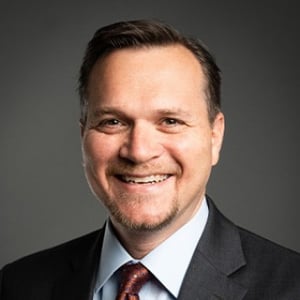
Partner, Shook, Hardy & Bacon, LLP
Phil Goldberg is the office managing partner of Shook in Washington, D.C., and co-chair of the firm’s Public Policy Practice Group. He has more than 25 years of experience advising clients on high stakes and high profile liability-related public policy, public affairs and public relations issues. He counsels businesses and their trade associations on some of the most cutting-edge liability issues of the day.
As part of this work, Phil co-chairs the firm’s National Amicus Practice, which files more than three dozen amicus briefs every year. He has filed amicus briefs for many of the most influential trade and civil justice groups with courts at every level, from the U.S. Supreme Court to the U.S. Courts of Appeals and state appellate courts. He has testified before Congress and state legislatures, has authored leading legal scholarship and is a regular speaker at judicial education conferences. He also is a resource for journalists, podcasters and others who report on and discuss pressing liability issues.
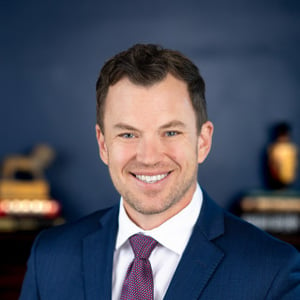
President and Co-Founder, America First Legal Foundation
Gene Hamilton is the President of America First Legal, which he co-founded, and where he was previously the Executive Director, Executive Vice President, and General Counsel. He most recently served as Deputy White House Counsel to President Donald Trump. Earlier in his career, Gene served as Counselor to Attorney General at the U.S. Department of Justice and as Senior Counselor to the Secretary of Homeland Security. He also served as General Counsel on the Senate Judiciary Committee and held several roles at the Department of Homeland Security, including with U.S. Immigration Enforcement, U.S. Customs and Border Protection and the Office of the General Counsel. He holds a B.A. from the University of Georgia and a J.D. from Washington and Lee University School of Law.

Executive Director, Alliance For Consumers; President & CEO, American Juris Link
O.H. Skinner is the President & CEO of American Juris Link, a nonprofit dedicated to accelerating nonprofit litigation to advance freedom, liberty, and the rule of law. O.H. has a long track record in facilitating strategic nonprofit litigation in his role as the Executive Director at Alliance For Consumers as well as from his time serving Arizona Attorney General Mark Brnovich in senior positions, including as Arizona Solicitor General. O.H. is a graduate of the University of Pennsylvania and Harvard Law School. Prior to joining the Arizona Attorney General's Office, O.H. practiced at WilmerHale and Ropes & Gray in Boston, and clerked for the Hon. J.L. Edmondson of the United States Court of Appeals for the Eleventh Circuit. In 2023, O.H. was a Wasserstein Public Interest Fellow at Harvard Law School, where he counseled students as a Harvard-identified “outstanding public interest attorney.”
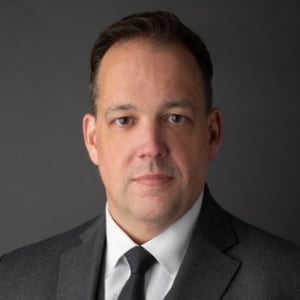
Counsel, Boyden Gray PLLC
Jim Wedeking is counsel at Boyden Gray PLLC. He has extensive experience with environmental regulations, providing compliance counseling for large industrial and agricultural companies and their related trade associations, drafting comments on proposed environmental rulemakings from a variety of federal agencies, and challenging those rules in court. For over 20 years he has helped companies obtain various permits and other authorizations for constructing major infrastructure projects, including fossil fuel-fired power plants, natural gas pipelines, and offshore wind turbines, as well as defend those permits and authorizations through litigation. Mr. Wedeking frequently writes on federal environmental law topics, including for the Washington Legal Foundation.
He has also counseled clients on several Freedom of Information Act matters, including the protection of confidential business information from disclosure to third parties and how the Supreme Court’s Food Marketing Institute v. Argus Leader Media decision increased protections for company information provided to regulatory agencies.
Before joining the firm, Mr. Wedeking was counsel in Sidley Austin’s Washington, D.C. environmental, health, and safety practice group. There, he represented industrial companies in defending against civil and criminal enforcement actions and toxic tort suits.
Mr. Wedeking received a J.D., cum laude, from the Catholic University of America Columbus School of Law and a B.A. in Criminology and Criminal Justice from the University of Maryland.
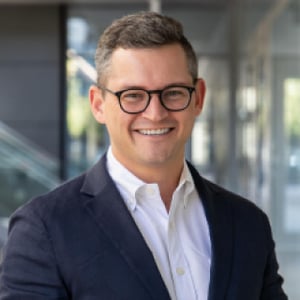
Associate Professor of Law, Sandra Day O'Connor College of Law, Arizona State University
Jonathan Green is an Associate Professor of Law at Arizona State University teaching Civil Procedure and Statutory Interpretation. His scholarship focuses on the history of political and legal thought. He is especially interested in the history of constitutionalism, theories of interpretation, and the concept of judicial power. His research has been published in the Arizona State Law Journal, the Journal of the History of Ideas, Modern Intellectual History, and the Historical Journal.
Prior to joining the ASU faculty in 2024, Professor Green was a Harry A. Bigelow Fellow at the University of Chicago. He previously clerked for Judge Neomi Rao of the U.S. Court of Appeals for the District of Columbia Circuit, and worked as a litigation associate at DLA Piper in Philadelphia.
Professor Green holds a J.D. from Yale Law School, where he was an editor of the Yale Law Journal. He received his PhD from the University of Cambridge, where he was a joint recipient of Prince Consort & Thirwall Prize, awarded annually for the best dissertation in the Cambridge History Faculty. He also received his MPhil from Cambridge, and earned his B.A., summa cum laude, from Northwestern University.
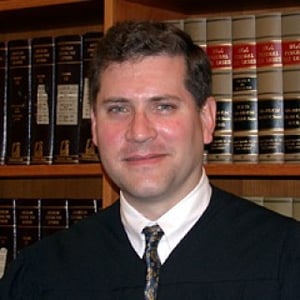
Judge, United States Tax Court
Senior Judge.. B.A. Harvard College, 1979; J.D. University of Chicago Law School, 1983. Admitted to New York and District of Columbia Bars; U.S. Supreme Court; DC, Second, Fifth and Ninth Circuits; Southern and Eastern Districts of New York, Court of Federal Claims. Practiced in New York as an Associate, Cahill Gordon & Reindel, 1983-85; Sullivan & Cromwell, 1987-1991; served as Clerk to the Hon. Alex Kozinski, Ninth Circuit, 1985-87; and in Washington as Counsel to Commissioners, United States International Trade Commission, 1991-96; Counsel, Miller & Chevalier, 1996-2001; Deputy Assistant Attorney General, Tax Division, 2001-03. Member, American Bar Association (Litigation and Tax Sections). Appointed by President George W. Bush as Judge, United States Tax Court, on June 30, 2003.

Professor, University of Minnesota Law School
Ilan Wurman is the Julius E. Davis Professor of Law at the University of Minnesota, where he teaches administrative law and constitutional law. He previously taught at Arizona State University. He writes primarily on the Fourteenth Amendment, administrative law, separation of powers, and constitutionalism. His academic writing has appeared in the Yale Law Journal, the Stanford Law Review, the University of Chicago Law Review, the University of Pennsylvania Law Review, the Virginia Law Review, the Duke Law Journal, the Minnesota Law Review, the Notre Dame Law Review, and the Texas Law Review among other journals.
Professor Wurman is the author of the new book The Constitution of 1789: A New Introduction (Cambridge 2026). His previous books include A Debt Against the Living: An Introduction to Originalism (Cambridge 2017), and The Second Founding: An Introduction to the Fourteenth Amendment (Cambridge 2020). He is also the author of the casebook, Administrative Law Theory and Fundamentals: An Integrated Approach (Foundation Press 3d ed. 2025).
Professor Wurman practices law with the firm Tully Bailey. He has litigated a variety of administrative law and constitutional law cases, including cases involving COVID-19 restrictions, transmission lines, and Appointments Clause challenges. He also devised winning public nuisance theories to force city governments to address the increasingly challenging public camping crises throughout the country.

Professor of Law, University of Notre Dame Law School
Emily Bremer teaches and writes in the areas of administrative law, regulatory process, and civil procedure. Her scholarship focuses primarily on matters of procedural design, with a recent focus on the history and interpretation of the Administrative Procedure Act (APA). She is a recipient of the AALS’s award for the year’s best administrative law scholarship by a junior scholar and the AALL’s Joseph L. Andrew’s Legal Literature Award for her contribution to the Bremer-Kovacs Collection of Historical Documents Related to the APA (HeinOnline). Bremer’s articles include a defense forthcoming in the Virginia Law Review of the constitutionality of the APA’s regime for ensuring the competence and impartiality of Administrative Law Judges; a plea in the Yale Journal on Regulation for administrative law to take greater account of the on-the-ground reality of administration; twin articles uncovering the intellectual foundation and meaning of the APA’s adjudication and rulemaking provisions; and three separate studies that served as the basis of recommendations of the Administrative Conference of the United States (ACUS) on the subjects of agency declaratory orders, incorporation by reference, and statutory limitations on the jurisdiction of the Court of Federal Claims. Bremer serves as a Senior Fellow of ACUS, a co-editor of the administrative law section of Jotwell, and a regular contributor to the Yale Journal on Regulation’s Notice & Comment blog.
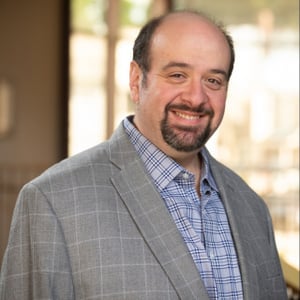
Associate Professor, UNH Franklin Pierce School of Law
Zvi S. Rosen is an Associate Professor at UNH Franklin Pierce School of Law and the Faculty Director of the Franklin Pierce Society for Intellectual Property. He has served as a Assistant Professor at the Southern Illinois University School of Law, as a Visiting Assistant Professor at the Maurice A. Deane School of Law at Hofstra University, and as a Visiting Scholar and Professorial Lecturer in Law at George Washington University School of Law.
In 2015-2016, he was the Abraham L. Kaminstein Scholar in Residence at the U.S. Copyright Office. Mr. Rosen received his J.D. from Northwestern University School of Law in 2005 and LLM in Intellectual Property in 2006 from the George Washington University Law School. He has practiced at Fried, Frank, Harris, Shriver & Jacobson LLP as well as smaller firms and his own practice, and clerked for the Hon. Thomas B. Bennett of the U.S. Bankruptcy Court for the Northern District of Alabama. He has written extensively on the development of modern copyright and trademark law, as well as on bankruptcy law.
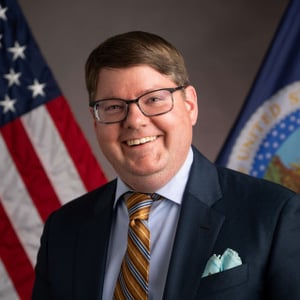
Deputy Secretary of Agriculture, U.S. Department of Agriculture
Judge Stephen Alexander Vaden was appointed as the Deputy Secretary of the U.S. Department of Agriculture on July 7, 2025. Alongside Secretary Brooke L. Rollins, Deputy Secretary Vaden leads the Department’s operations and implements policies that support America’s food and farm systems. A native of Union City, Tennessee, Deputy Secretary Vaden brings expertise in agricultural policy, law, and rural development. Previously, he served as a judge on the U.S. Court of International Trade and as General Counsel of USDA. Throughout Deputy Secretary Vaden’s time as General Counsel, he led successful Supreme Court litigation, advanced regulatory reform, and supported the implementation of the 2018 Farm Bill. He is a graduate of Yale Law School and Vanderbilt University. A public servant with strong agricultural roots, Deputy Secretary Vaden is committed to revitalizing rural America and ensuring an abundant, affordable, and safe U.S. food supply.
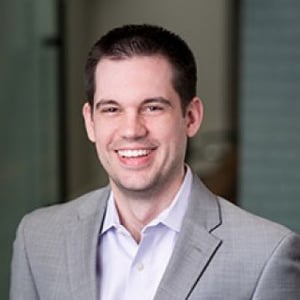
Executive Director, Consumers’ Research
Will Hild is the Executive Director of Consumers’ Research. Will has a decade of non-profit, legal and public policy experience. Prior to joining CR, Will served as the Deputy Director of the Regulatory Transparency Project. Before that, he worked at the Philanthropy Roundtable as the Director of External Affairs for the Culture of Freedom Initiative, and as the Chief Operating Officer of that Initiative when it grew to become a separate organization. He helped co-found the public interest law firm, Cause of Action, and served as the firm’s acting communications director for nearly a year.
Will received his J.D. from Georgetown University Law Center, and a B.A. in Political Science from the University of Florida. He is licensed to practice law in the Commonwealth of Virginia.
Will resides in Bethesda, MD, with his wife Cheryl, a practicing OB/GYN, and their son Liam.
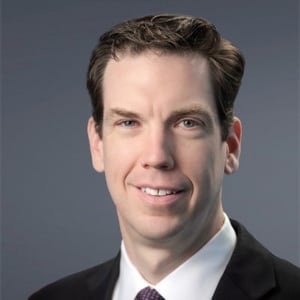
Partner, Fusion Law, PLLC
Paul is the founding partner of Fusion Law, PLLC. He has extensive experience with state, federal, and global regulators building coalitions and implementing policies to promote innovation in financial services. He is responsible for designing and implementing the first state (Arizona) and federal (CFPB) FinTech sandboxes in the United States. He also designed the CFPB no-action letter and trial disclosure policies. He helped found the first global regulatory innovation coalition (Global Financial Innovation Network) and led the founding of the first U.S. regulatory innovation coalition (American Consumer Financial Innovation Network). He served on the Financial Stability Oversight Council subcommittee on digital assets. He also has drafted state-level laws on blockchain and utility tokens.
Paul also has significant enforcement and litigation experience. He led many multi-state consumer protection enforcement matters as Civil Litigation Division Chief at the Arizona Attorney General’s Office.
Prior to his government service, Paul practiced law in the areas of securities litigation and transactional work for approximately six years at two well-known law firms. He also clerked on the U.S. Court of Appeals for the Fourth Circuit.

George Mason University Foundation Professor of Law, Antonin Scalia Law School, George Mason University
TODD J. ZYWICKI is George Mason University Foundation Professor of Law at Antonin Scalia Law School at George Mason University and Research Fellow of the George Mason Law and Economics Center. During the Fall 2023 semester he served as the Visiting Scholar in Conservative Thought and Policy for the Bruce Benson Center for the Study of Western Civilization at the University of Colorado-Boulder. From 2020-2021 he was Chair of the Consumer Financial Protection Bureau Taskforce on Federal Consumer Financial Law. In 2021 he was inducted to the American College of Consumer Financial Services Lawyers. He is also a Senior Fellow of the F.A. Hayek Program for the Advanced Study of Politics, Philosophy, and Economics at George Mason University and a former Senior Fellow of the Cato Institute. From 2015-2017 he was Executive Director of the George Mason Law and Economics Center. He served as Co-Editor of the Supreme Court Economic Review from 2006-2017. From 2003-2004, Professor Zywicki served as the Director of the Office of Policy Planning at the Federal Trade Commission. He has also taught at Vanderbilt University Law School, Georgetown University Law Center, Boston College Law School, Mississippi College School of Law, and China University of Political Science and Law.
Professor Zywicki clerked for Judge Jerry E. Smith of the U.S. Court of Appeals for the Fifth Circuit and worked as an associate at Alston & Bird in Atlanta, Georgia, where he practiced bankruptcy and commercial law. He received his J.D. from the University of Virginia, where he was executive editor of the Virginia Tax Review and John M. Olin Scholar in Law and Economics. Professor Zywicki also received an M.A. in Economics from Clemson University and an A.B. cum Laude with high honors in his major from Dartmouth College.
Professor Zywicki is also a Lone Mountain Fellow of the Property and Environment Research Center, a Fellow of the International Centre for Economic Research in Turin, Italy, and a former Senior Fellow of the Goldwater Institute. During the Fall 2008 Semester Professor Zywicki was the Searle Fellow of the George Mason University School of Law and was a 2008-09 W. Glenn Campbell and Rita Ricardo-Campbell National Fellow and the Arch W. Shaw National Fellow at the Hoover Institution on War, Revolution and Peace. He has lectured and consulted with government officials around the world, including Iceland, Italy, Japan, and Guatemala. In 2006 Professor Zywicki served as a Member of the United States Department of Justice Study Group on “Identifying Fraud, Abuse and Errors in the United States Bankruptcy System.”
Professor Zywicki is the author of more than 130 articles in leading law reviews and peer-reviewed economics journals. He is one of the Top 10 most-cited law professors in the field of Commercial Law and one of the Top 25 law professors on Twitter as measured by engagement levels. He is one of the Top 50 Most Downloaded Law Authors at the Social Science Research Network. He has testified multiple times before Congress on issues of consumer bankruptcy law and consumer credit and is a frequent commentator on legal issues in the print and broadcast media, including the Wall Street Journal, New York Times, The Washington Post, The Washington Times, Nightline, The Newshour with Jim Lehrer, Neil Cavuto Show, Fox & Friends, Smerconish, Fox News @ Night with Shannon Bream, Fox Business, CNN, CNBC, Bloomberg News, BBC, The Diane Rehm Show, Lou Dobbs Show, Jerry Doyle Show, and The Laura Ingraham Show.
Professor Zywicki is former Chairman and a current member of the Board of Directors of the Competitive Enterprise Institute, and is a member of the Board of Directors of the Institute for Humane Studies, Bill of Rights Institute, the Executive Committee for the Federalist Society's Financial Institutions and E-Commerce Practice Group, the Board of Trustees of the Foundation for Research on Economics and the Environment. He formerly served on the Governing Board and the Advisory Council for the Financial Services Research Program at George Washington University School of Business. He is currently the Chair of the Academic Advisory Council for the following organizations: The Bill of Rights Institute, the film “We the People in IMAX,” and the McCormick-Tribune Foundation “Freedom Museum” in Chicago, Illinois. He is a member of the Board of Visitors of Ralston College and was a member of the Board of Trustees of Yorktown University. From 2005-2009 he served as an elected Alumni Trustee of the Dartmouth College Board of Trustees.
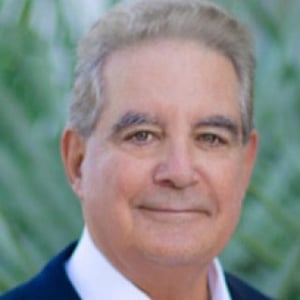
Chairman, Secura/Isaac Group
William “Bill” Isaac served as Chairman of the FDIC during one of the most important and tumultuous periods in US banking history. Some 3,000 banks and thrifts failed during the 1980s, including Continental Illinois and nine of the ten largest banks in Texas. In addition to the failures of many of the largest regional banks throughout the US, most of the money center banks in the US were on the watch list due in large part to the enormous amount of loans on their books to less developed countries.
President Carter appointed Bill Isaac to the board of the FDIC in 1978. He was confirmed by the Senate at the age of 34. President Reagan named him Chairman of the FDIC two years later, making him the youngest FDIC board member and Chairman in history. Bill Isaac also served as Chairman of the Federal Financial Institutions Examination Council (1983-85), as a member of the Depository Institutions Deregulation Committee (1981–85), and on the Vice President’s Task Group on Regulation of Financial Services (1984).
Bill Isaac is currently Chairman and principal owner of three premier consulting firms, Secura/Isaac Consulting, Blue SaaS Solutions, and Secura/Isaac Talent Advisors. He is a member of the boards of directors of Emigrant Bank and New York Private Bank & Trust and serves as Chairman of Sarasota Private Trust and Cleveland Private Trust, all of which are owned by Howard Milstein and his family.
After completing his service as Chairman of the FDIC at the end of 1985, Bill Isaac founded The Secura Group, a leading consulting firm, which he sold in 2008. He served as Chairman of the Board of Fifth Third Bancorp, one of the nation’s leading banks, and worked as Senior Managing Director at FTI Consulting from 2011 to 2019. He then joined Howard Milstein in the financial services business. Bill Isaac is a former board member at TSYS, a leading payment processing company that today is part of Global Payments. He has served on the boards of Amex Bank, The Associates (a finance company formerly owned by Ford Motor Company), credit reporting company TransUnion, and staffing firm MPS Group.
Bill Isaac is involved extensively in thought leadership relating to the financial industry. He is the author of ‘Senseless Panic: How Washington Failed America’ with a foreword by legendary former Federal Reserve Chairman Paul Volcker. ‘Senseless Panic’ provides an inside account of the banking and savings and loans crises of the 1980s and compares that period to the financial crisis of 2008/2009. Bill Isaac’s articles appear in the Wall Street Journal, the Washington Post, the New York Times, The Hill, American Banker, Forbes, the Financial Times, the Washington Times, and other leading publications. He appears regularly on television and radio, testifies before Congress, and is a speaker before audiences throughout the world (www.WilliamIsaac.com).
Bill Isaac was formerly a senior partner at Arnold & Porter, which was a founding partner of The Secura Group. He left the law firm in 1993 when Secura purchased Arnold & Porter’s interest in Secura. Before his appointment to the FDIC, Bill Isaac served as vice president, general counsel and secretary of First Kentucky National Corporation and its subsidiaries, including First National Bank of Louisville and First Kentucky Trust Company. He began his career with Foley & Lardner in Milwaukee where he practiced general corporate law specializing in banking law.
Bill Isaac received a Distinguished Achievement Medal in 1995 from Miami University and a Distinguished Alumnus Award in 2013 from The Ohio State University. He is a Life member of both the Board of Directors of the Miami University Foundation and the Board of Directors of The Ohio State University Foundation. Bill co- founded in 2016, with his former classmate, the William Isaac & Michael Oxley Center for Business Leadership at Miami University.

Partner, Simpson Thacher
Mr. Noreika leads projects related to the U.S. banking industry, as well as clients that span beyond traditional banking including financial technology and cryptocurrency companies. He is the company’s focal point for C-suite advice on compliance and regulatory requirements at all levels, domestic and international.
Prior to joining Patomak, Mr. Noreika was a partner at Simpson Thacher & Bartlett LLP and was a lead lawyer in the firm’s financial institutions regulatory practice, focusing on banking regulation and related litigation. In that role, he advised domestic and international financial institutions on regulatory issues relating to mergers and acquisitions, minority investments, capital issuances, structuring and compliance activities, and litigation matters.
Mr. Noreika’s extensive experience includes advising regional and multinational banks on the structuring of their U.S. operations, compliance with the Volcker Rule, Consumer Financial Protection Bureau and other federal agency regulations, Bank Secrecy Act and anti-money laundering rules, as well as transactional matters and related regulatory applications. He has counseled numerous private equity funds with respect to investments in banking organizations.
In 2017, Mr. Noreika served as acting Comptroller of the Currency where he led the 4,000-person independent agency responsible for chartering, regulating, and supervising all national banks and federal savings associations as well as federal branches and agencies of foreign banks in the U.S. There, he worked to make regulation more accountable, improved the efficiency of chartering and licensing decisions, and sought the enhance the value of the national bank and federal thrift charters and their ability to meet the credit and banking needs of their communities. In this role, he also served as director of the Federal Deposit Insurance Corporation and member of the Financial Stability Oversight Council.
Mr. Noreika has been recognized as a leader in his field by Chambers USA in “Financial Services Regulation: Banking Compliance” since 2014. He received his law degree from Harvard Law School, where he was editor of the Harvard Law Review. He earned his B.S. in economics with a concentration in finance from The Wharton School of the University of Pennsylvania.
Senior Fellow, Mises Institute
Alex J. Pollock is a Senior Fellow with the Mises Institute, providing thought and policy leadership on financial issues and the study of financial systems. His work includes cycles of booms and busts, financial crises with their political responses, housing finance, government-sponsored enterprises, risk and uncertainty, central banking, banking and financial regulation, corporate governance, retirement finance, student loans, and the politics of finance.
He previously served as the Principal Deputy Director of the Office of Financial Research in the U.S. Treasury Department 2019-2021. He was a Distinguished Senior Fellow with the R Street Institute 2015-2019 and 2021, and a resident fellow at the American Enterprise Institute, 2004-2015. Among the many aspects of his AEI work, he developed the One Page Mortgage Form to give borrowers in clear form the key information they need in order to know what they are committing themselves to. He was President and CEO of the Federal Home Loan Bank of Chicago from 1991 to 2004. There he invented the Mortgage Partnership Finance program, which successfully created front-end mortgage credit risk sharing beginning in 1997. His decades of banking experience include being a Visiting Scholar at the Federal Reserve Bank of St. Louis, 1991.
Pollock was a director of the CME Group 2004-2019 and of Ascendium Education Group 1989-2019. He is a director and past-chairman of the Great Books Foundation and a past president of the International Union for Housing Finance.
He is the co-author of Surprised Again! - The COVID Crisis and the New Market Bubble (2022), and the author of Finance and Philosophy—Why We’re Always Surprised (2018) and Boom and Bust: Financial Cycles and Human Prosperity (2011), as well as numerous articles and Congressional testimony.
Pollock is a graduate of Williams College, the University of Chicago, and Princeton University.
His work is available on alexjpollock.com.
Robert Kavesh Professorship in Economics, Leonard N. Stern School of Business, New York University
Lawrence J. White has been with New York University Leonard N. Stern School of Business for more than 35 years. His primary research areas of interest include financial regulation, antitrust, network industries, international banking and applied microeconomics.
Professor White has published numerous articles in the Journal of Business, Journal of Economic Perspectives, Journal of Economic Literature, Journal of Political Economy, American Economic Review, Review of Economics and Statistics, Quarterly Journal of Economics, and other leading journals in economics, finance, and law. He is the author of The S&L Debacle: Public Policy Lessons for Bank and Thrift Regulation, among other books, and he is the co-editor (with John Kwoka) of the 6th of edition of The Antitrust Revolution. He contributed chapters to both of the NYU Stern books on the financial crisis - Restoring Financial Stability and Regulating Wall Street. He is the co-author (with Stern's Viral Acharya, Matthew Richardson, and Stijn Van Nieuwerburgh) of Guaranteed to Fail: Fannie Mae, Freddie Mac, and the Debacle of Mortgage Finance.
Chairman, Secura/Isaac Group
William “Bill” Isaac served as Chairman of the FDIC during one of the most important and tumultuous periods in US banking history. Some 3,000 banks and thrifts failed during the 1980s, including Continental Illinois and nine of the ten largest banks in Texas. In addition to the failures of many of the largest regional banks throughout the US, most of the money center banks in the US were on the watch list due in large part to the enormous amount of loans on their books to less developed countries.
President Carter appointed Bill Isaac to the board of the FDIC in 1978. He was confirmed by the Senate at the age of 34. President Reagan named him Chairman of the FDIC two years later, making him the youngest FDIC board member and Chairman in history. Bill Isaac also served as Chairman of the Federal Financial Institutions Examination Council (1983-85), as a member of the Depository Institutions Deregulation Committee (1981–85), and on the Vice President’s Task Group on Regulation of Financial Services (1984).
Bill Isaac is currently Chairman and principal owner of three premier consulting firms, Secura/Isaac Consulting, Blue SaaS Solutions, and Secura/Isaac Talent Advisors. He is a member of the boards of directors of Emigrant Bank and New York Private Bank & Trust and serves as Chairman of Sarasota Private Trust and Cleveland Private Trust, all of which are owned by Howard Milstein and his family.
After completing his service as Chairman of the FDIC at the end of 1985, Bill Isaac founded The Secura Group, a leading consulting firm, which he sold in 2008. He served as Chairman of the Board of Fifth Third Bancorp, one of the nation’s leading banks, and worked as Senior Managing Director at FTI Consulting from 2011 to 2019. He then joined Howard Milstein in the financial services business. Bill Isaac is a former board member at TSYS, a leading payment processing company that today is part of Global Payments. He has served on the boards of Amex Bank, The Associates (a finance company formerly owned by Ford Motor Company), credit reporting company TransUnion, and staffing firm MPS Group.
Bill Isaac is involved extensively in thought leadership relating to the financial industry. He is the author of ‘Senseless Panic: How Washington Failed America’ with a foreword by legendary former Federal Reserve Chairman Paul Volcker. ‘Senseless Panic’ provides an inside account of the banking and savings and loans crises of the 1980s and compares that period to the financial crisis of 2008/2009. Bill Isaac’s articles appear in the Wall Street Journal, the Washington Post, the New York Times, The Hill, American Banker, Forbes, the Financial Times, the Washington Times, and other leading publications. He appears regularly on television and radio, testifies before Congress, and is a speaker before audiences throughout the world (www.WilliamIsaac.com).
Bill Isaac was formerly a senior partner at Arnold & Porter, which was a founding partner of The Secura Group. He left the law firm in 1993 when Secura purchased Arnold & Porter’s interest in Secura. Before his appointment to the FDIC, Bill Isaac served as vice president, general counsel and secretary of First Kentucky National Corporation and its subsidiaries, including First National Bank of Louisville and First Kentucky Trust Company. He began his career with Foley & Lardner in Milwaukee where he practiced general corporate law specializing in banking law.
Bill Isaac received a Distinguished Achievement Medal in 1995 from Miami University and a Distinguished Alumnus Award in 2013 from The Ohio State University. He is a Life member of both the Board of Directors of the Miami University Foundation and the Board of Directors of The Ohio State University Foundation. Bill co- founded in 2016, with his former classmate, the William Isaac & Michael Oxley Center for Business Leadership at Miami University.
Partner, Simpson Thacher
Mr. Noreika leads projects related to the U.S. banking industry, as well as clients that span beyond traditional banking including financial technology and cryptocurrency companies. He is the company’s focal point for C-suite advice on compliance and regulatory requirements at all levels, domestic and international.
Prior to joining Patomak, Mr. Noreika was a partner at Simpson Thacher & Bartlett LLP and was a lead lawyer in the firm’s financial institutions regulatory practice, focusing on banking regulation and related litigation. In that role, he advised domestic and international financial institutions on regulatory issues relating to mergers and acquisitions, minority investments, capital issuances, structuring and compliance activities, and litigation matters.
Mr. Noreika’s extensive experience includes advising regional and multinational banks on the structuring of their U.S. operations, compliance with the Volcker Rule, Consumer Financial Protection Bureau and other federal agency regulations, Bank Secrecy Act and anti-money laundering rules, as well as transactional matters and related regulatory applications. He has counseled numerous private equity funds with respect to investments in banking organizations.
In 2017, Mr. Noreika served as acting Comptroller of the Currency where he led the 4,000-person independent agency responsible for chartering, regulating, and supervising all national banks and federal savings associations as well as federal branches and agencies of foreign banks in the U.S. There, he worked to make regulation more accountable, improved the efficiency of chartering and licensing decisions, and sought the enhance the value of the national bank and federal thrift charters and their ability to meet the credit and banking needs of their communities. In this role, he also served as director of the Federal Deposit Insurance Corporation and member of the Financial Stability Oversight Council.
Mr. Noreika has been recognized as a leader in his field by Chambers USA in “Financial Services Regulation: Banking Compliance” since 2014. He received his law degree from Harvard Law School, where he was editor of the Harvard Law Review. He earned his B.S. in economics with a concentration in finance from The Wharton School of the University of Pennsylvania.
Senior Fellow, Mises Institute
Alex J. Pollock is a Senior Fellow with the Mises Institute, providing thought and policy leadership on financial issues and the study of financial systems. His work includes cycles of booms and busts, financial crises with their political responses, housing finance, government-sponsored enterprises, risk and uncertainty, central banking, banking and financial regulation, corporate governance, retirement finance, student loans, and the politics of finance.
He previously served as the Principal Deputy Director of the Office of Financial Research in the U.S. Treasury Department 2019-2021. He was a Distinguished Senior Fellow with the R Street Institute 2015-2019 and 2021, and a resident fellow at the American Enterprise Institute, 2004-2015. Among the many aspects of his AEI work, he developed the One Page Mortgage Form to give borrowers in clear form the key information they need in order to know what they are committing themselves to. He was President and CEO of the Federal Home Loan Bank of Chicago from 1991 to 2004. There he invented the Mortgage Partnership Finance program, which successfully created front-end mortgage credit risk sharing beginning in 1997. His decades of banking experience include being a Visiting Scholar at the Federal Reserve Bank of St. Louis, 1991.
Pollock was a director of the CME Group 2004-2019 and of Ascendium Education Group 1989-2019. He is a director and past-chairman of the Great Books Foundation and a past president of the International Union for Housing Finance.
He is the co-author of Surprised Again! - The COVID Crisis and the New Market Bubble (2022), and the author of Finance and Philosophy—Why We’re Always Surprised (2018) and Boom and Bust: Financial Cycles and Human Prosperity (2011), as well as numerous articles and Congressional testimony.
Pollock is a graduate of Williams College, the University of Chicago, and Princeton University.
His work is available on alexjpollock.com.
Robert Kavesh Professorship in Economics, Leonard N. Stern School of Business, New York University
Lawrence J. White has been with New York University Leonard N. Stern School of Business for more than 35 years. His primary research areas of interest include financial regulation, antitrust, network industries, international banking and applied microeconomics.
Professor White has published numerous articles in the Journal of Business, Journal of Economic Perspectives, Journal of Economic Literature, Journal of Political Economy, American Economic Review, Review of Economics and Statistics, Quarterly Journal of Economics, and other leading journals in economics, finance, and law. He is the author of The S&L Debacle: Public Policy Lessons for Bank and Thrift Regulation, among other books, and he is the co-editor (with John Kwoka) of the 6th of edition of The Antitrust Revolution. He contributed chapters to both of the NYU Stern books on the financial crisis - Restoring Financial Stability and Regulating Wall Street. He is the co-author (with Stern's Viral Acharya, Matthew Richardson, and Stijn Van Nieuwerburgh) of Guaranteed to Fail: Fannie Mae, Freddie Mac, and the Debacle of Mortgage Finance.
Chairman, Secura/Isaac Group
William “Bill” Isaac served as Chairman of the FDIC during one of the most important and tumultuous periods in US banking history. Some 3,000 banks and thrifts failed during the 1980s, including Continental Illinois and nine of the ten largest banks in Texas. In addition to the failures of many of the largest regional banks throughout the US, most of the money center banks in the US were on the watch list due in large part to the enormous amount of loans on their books to less developed countries.
President Carter appointed Bill Isaac to the board of the FDIC in 1978. He was confirmed by the Senate at the age of 34. President Reagan named him Chairman of the FDIC two years later, making him the youngest FDIC board member and Chairman in history. Bill Isaac also served as Chairman of the Federal Financial Institutions Examination Council (1983-85), as a member of the Depository Institutions Deregulation Committee (1981–85), and on the Vice President’s Task Group on Regulation of Financial Services (1984).
Bill Isaac is currently Chairman and principal owner of three premier consulting firms, Secura/Isaac Consulting, Blue SaaS Solutions, and Secura/Isaac Talent Advisors. He is a member of the boards of directors of Emigrant Bank and New York Private Bank & Trust and serves as Chairman of Sarasota Private Trust and Cleveland Private Trust, all of which are owned by Howard Milstein and his family.
After completing his service as Chairman of the FDIC at the end of 1985, Bill Isaac founded The Secura Group, a leading consulting firm, which he sold in 2008. He served as Chairman of the Board of Fifth Third Bancorp, one of the nation’s leading banks, and worked as Senior Managing Director at FTI Consulting from 2011 to 2019. He then joined Howard Milstein in the financial services business. Bill Isaac is a former board member at TSYS, a leading payment processing company that today is part of Global Payments. He has served on the boards of Amex Bank, The Associates (a finance company formerly owned by Ford Motor Company), credit reporting company TransUnion, and staffing firm MPS Group.
Bill Isaac is involved extensively in thought leadership relating to the financial industry. He is the author of ‘Senseless Panic: How Washington Failed America’ with a foreword by legendary former Federal Reserve Chairman Paul Volcker. ‘Senseless Panic’ provides an inside account of the banking and savings and loans crises of the 1980s and compares that period to the financial crisis of 2008/2009. Bill Isaac’s articles appear in the Wall Street Journal, the Washington Post, the New York Times, The Hill, American Banker, Forbes, the Financial Times, the Washington Times, and other leading publications. He appears regularly on television and radio, testifies before Congress, and is a speaker before audiences throughout the world (www.WilliamIsaac.com).
Bill Isaac was formerly a senior partner at Arnold & Porter, which was a founding partner of The Secura Group. He left the law firm in 1993 when Secura purchased Arnold & Porter’s interest in Secura. Before his appointment to the FDIC, Bill Isaac served as vice president, general counsel and secretary of First Kentucky National Corporation and its subsidiaries, including First National Bank of Louisville and First Kentucky Trust Company. He began his career with Foley & Lardner in Milwaukee where he practiced general corporate law specializing in banking law.
Bill Isaac received a Distinguished Achievement Medal in 1995 from Miami University and a Distinguished Alumnus Award in 2013 from The Ohio State University. He is a Life member of both the Board of Directors of the Miami University Foundation and the Board of Directors of The Ohio State University Foundation. Bill co- founded in 2016, with his former classmate, the William Isaac & Michael Oxley Center for Business Leadership at Miami University.
Partner, Simpson Thacher
Mr. Noreika leads projects related to the U.S. banking industry, as well as clients that span beyond traditional banking including financial technology and cryptocurrency companies. He is the company’s focal point for C-suite advice on compliance and regulatory requirements at all levels, domestic and international.
Prior to joining Patomak, Mr. Noreika was a partner at Simpson Thacher & Bartlett LLP and was a lead lawyer in the firm’s financial institutions regulatory practice, focusing on banking regulation and related litigation. In that role, he advised domestic and international financial institutions on regulatory issues relating to mergers and acquisitions, minority investments, capital issuances, structuring and compliance activities, and litigation matters.
Mr. Noreika’s extensive experience includes advising regional and multinational banks on the structuring of their U.S. operations, compliance with the Volcker Rule, Consumer Financial Protection Bureau and other federal agency regulations, Bank Secrecy Act and anti-money laundering rules, as well as transactional matters and related regulatory applications. He has counseled numerous private equity funds with respect to investments in banking organizations.
In 2017, Mr. Noreika served as acting Comptroller of the Currency where he led the 4,000-person independent agency responsible for chartering, regulating, and supervising all national banks and federal savings associations as well as federal branches and agencies of foreign banks in the U.S. There, he worked to make regulation more accountable, improved the efficiency of chartering and licensing decisions, and sought the enhance the value of the national bank and federal thrift charters and their ability to meet the credit and banking needs of their communities. In this role, he also served as director of the Federal Deposit Insurance Corporation and member of the Financial Stability Oversight Council.
Mr. Noreika has been recognized as a leader in his field by Chambers USA in “Financial Services Regulation: Banking Compliance” since 2014. He received his law degree from Harvard Law School, where he was editor of the Harvard Law Review. He earned his B.S. in economics with a concentration in finance from The Wharton School of the University of Pennsylvania.
Senior Fellow, Mises Institute
Alex J. Pollock is a Senior Fellow with the Mises Institute, providing thought and policy leadership on financial issues and the study of financial systems. His work includes cycles of booms and busts, financial crises with their political responses, housing finance, government-sponsored enterprises, risk and uncertainty, central banking, banking and financial regulation, corporate governance, retirement finance, student loans, and the politics of finance.
He previously served as the Principal Deputy Director of the Office of Financial Research in the U.S. Treasury Department 2019-2021. He was a Distinguished Senior Fellow with the R Street Institute 2015-2019 and 2021, and a resident fellow at the American Enterprise Institute, 2004-2015. Among the many aspects of his AEI work, he developed the One Page Mortgage Form to give borrowers in clear form the key information they need in order to know what they are committing themselves to. He was President and CEO of the Federal Home Loan Bank of Chicago from 1991 to 2004. There he invented the Mortgage Partnership Finance program, which successfully created front-end mortgage credit risk sharing beginning in 1997. His decades of banking experience include being a Visiting Scholar at the Federal Reserve Bank of St. Louis, 1991.
Pollock was a director of the CME Group 2004-2019 and of Ascendium Education Group 1989-2019. He is a director and past-chairman of the Great Books Foundation and a past president of the International Union for Housing Finance.
He is the co-author of Surprised Again! - The COVID Crisis and the New Market Bubble (2022), and the author of Finance and Philosophy—Why We’re Always Surprised (2018) and Boom and Bust: Financial Cycles and Human Prosperity (2011), as well as numerous articles and Congressional testimony.
Pollock is a graduate of Williams College, the University of Chicago, and Princeton University.
His work is available on alexjpollock.com.
Robert Kavesh Professorship in Economics, Leonard N. Stern School of Business, New York University
Lawrence J. White has been with New York University Leonard N. Stern School of Business for more than 35 years. His primary research areas of interest include financial regulation, antitrust, network industries, international banking and applied microeconomics.
Professor White has published numerous articles in the Journal of Business, Journal of Economic Perspectives, Journal of Economic Literature, Journal of Political Economy, American Economic Review, Review of Economics and Statistics, Quarterly Journal of Economics, and other leading journals in economics, finance, and law. He is the author of The S&L Debacle: Public Policy Lessons for Bank and Thrift Regulation, among other books, and he is the co-editor (with John Kwoka) of the 6th of edition of The Antitrust Revolution. He contributed chapters to both of the NYU Stern books on the financial crisis - Restoring Financial Stability and Regulating Wall Street. He is the co-author (with Stern's Viral Acharya, Matthew Richardson, and Stijn Van Nieuwerburgh) of Guaranteed to Fail: Fannie Mae, Freddie Mac, and the Debacle of Mortgage Finance.

The CLARITY Act and Fed Master Accounts: Defining Crypto's Place in the U.S. Financial System
J.C. Boggs, Cynthia Lummis, Paige Paridon, Alex J. Pollock, Corey Then, David Zaring
Join us for a timely discussion on two developments shaping the future of digital assets...
Litigation Finance: Access to Justice, Lawfare, and Foreign Influence
Phil Goldberg, Gene P. Hamilton, O.H. Skinner, Jim Wedeking
Third-party litigation funding has grown into a major part of modern civil litigation. Supporters argue it...
Formalism and the Fate of the Republic—Defending the Judiciary from Itself
Jonathan Green, Mark V. Holmes, Ilan Wurman
Featuring: Prof. Jonathan A. Green, Associate Professor of Law, Sandra Day O’Connor College of Law Prof....
No One Can Own the Law? The Third Circuit's Review of Whether Publishing ASTM Standards is Fair Use
Emily Bremer, Zvi Rosen, Stephen Alexander Vaden
Join us for a webinar examining the Third Circuit’s ongoing review of a decision holding...
Your Data, Your Choice? Consumer Rights and Privacy in the Open Banking Debate
Will Hild, Paul N. Watkins, Todd J. Zywicki
Who controls your financial data and who decides how it can be used? As Americans...
Topics
Torchbearer of the Republic: James Madison’s Fights for Freedom and the Constitution.
This post originally appeared at the Pacific Legal Foundation. James Madison is remembered as the...
How Risky Are the Banks Now? What Regulatory Reforms Make Sense?
William M. Isaac, Keith Noreika, Alex J. Pollock, Lawrence J. White
Six months ago, we experienced bank runs and three of the four largest bank failures...
How Risky Are the Banks Now? What Regulatory Reforms Make Sense?
William M. Isaac, Keith Noreika, Alex J. Pollock, Lawrence J. White
Six months ago, we experienced bank runs and three of the four largest bank failures...
How Risky Are the Banks Now? What Regulatory Reforms Make Sense?
A Regulatory Transparency Project Webinar
TeleforumTopics
How Much Should Courts Defer to U.S. Sentencing Guidelines Commentary?
The federal circuit courts are irreconcilably split on a weighty question: How much deference should...