

President, Cass & Associates, PC
Ronald A. Cass is Dean Emeritus of Boston University School of Law (where he was Dean from 1990-2004), President of Cass & Associates, PC, former Vice-Chairman and Commissioner of the U.S. International Trade Commission, former faculty member at Boston University School of Law and the University of Virginia Law School, and Distinguished Senior Fellow at the C. Boyden Gray Center for the Study of the Administrative State. Dean Cass also sits as an arbitrator for commercial, international, and intellectual property rights disputes, and is a former United States member of the Panel of Conciliators of the International Centre for Settlement of Investment Disputes. He is a member of the Council of the Administrative Conference of the United States and has received seven presidential appointments, spanning Presidents Ronald Reagan to Donald J. Trump.
As a law professor, lecturer, and scholar, Dean Cass has been teaching and writing about a wide array of legal issues on topics such as administrative law and regulation, antitrust, constitutional law, communications, intellectual property, international trade, separation of powers, and legal process. He has published more than 160 scholarly books, chapters, articles, and papers, including a leading casebook on administrative law. Dean Cass has taught judges as well as students in schools of law, economics, business, and public policy and has held academic appointments in the United States, Europe, and Latin America.
In addition to his academic work, Dean Cass has participated in numerous important legal cases as an amicus, consultant, or expert, and has advised businesses, law firms, investment funds, and government agencies on a range of trade, antitrust, intellectual property, and regulatory issues. He has a broad range of affiliations with professional groups, and has received numerous honors, fellowships and awards.
Dean Cass is a graduate of the University of Virginia and the University of Chicago Law School.

Professor Emeritus of Law, Antonin Scalia Law School, George Mason University
Jeremy A. Rabkin is a Professor Emeritus of Law at the Antonin Scalia Law School, George Mason University. Before joining the faculty in June 2007, he was for over two decades a professor in the Department of Government at Cornell University. Professor Rabkin serves on the board of directors of the Center for Individual Rights, a public interest law firm based in Washington, D.C. Previously he was a board member of the U.S. Institute of Peace and the board of academic advisors of the American Enterprise Institute.
Professor Rabkin’s books include Law Without Nations? (Princeton University Press, 2005). He authored “If You Need a Friend, Don’t Call a Cosmopolitan,” a chapter in Varieties of Sovereignty and Citizenship (Sigal R. Ben-Porath & Rogers M. Smith eds., University of Pennsylvania Press, 2012). His articles have appeared in major law reviews and political science journals and his journalistic contributions in a range of magazines and newspapers, including the Washington Post and the Wall Street Journal.
John C. Jeffries, Jr., Distinguished Professor of Law, University of Virginia School of Law
Paul B. Stephan is an expert on international business, international dispute resolution and comparative law, with an emphasis on Soviet and post-Soviet legal systems. In addition to writing prolifically in these fields, Stephan has advised governments and international organizations, taken part in cases in the Supreme Court of the United States, the federal courts, and various foreign judicial and arbitral proceedings, and lectured to professionals and scholarly groups around the world on issues raised by the globalization of the world economy. During 2006-07, he served as counselor on international law in the U.S. Department of State, and in 2020-21 as special counsel to the general counsel in the Department of Defense. He was a coordinating reporter for the American Law Institute’s Restatement (Fourth) of the Foreign Relations Law of the United States.
Stephan received his B.A. and M.A. from Yale University in 1973 and 1974, respectively, and his J.D. from the University of Virginia in 1977. Before returning to Virginia, he clerked for Judge Levin Campbell of the U.S. Court of Appeals for the First Circuit and for U.S. Supreme Court Justice Lewis F. Powell Jr. He has taught as a visiting professor at the Moscow State Institute for International Relations, the University of Vienna, Münster University, Lausanne University, Melbourne University, University of Pantheon-Assas (Paris II), Sciences Po, Paris I, the Interdisciplinary Centre Herzliya, Sydney University, the Peking University School of Transnational Law in Shenzhen, China, the University of Tartu’s Pärna College, and Liverpool University. He also has visited at Columbia Law School and Duke Law School, and served as a scholar in residence in the London office of Wilmer Hale.
After the collapse of the Soviet Union, Stephan took part in a variety of projects involving law reform in former socialist states. He worked in Russia, Georgia, Ukraine, Albania and Slovakia on behalf of the U.S. Treasury and in Kazakhstan and Azerbaijan on behalf of the International Monetary Fund. He also organized training programs for tax administrators and judges from all of the formerly socialist countries under the auspices of the Organization for Economic Cooperation and Development. His casebooks on international business, international trade and investment, and Doing Business in Emerging Markets are used at law schools both in the United States and abroad. He is the co-author, with Robert Scott, of The Limits of Leviathan: Contract Theory and the Enforcement of International Law (Cambridge University Press, 2006), and the author of The World Crisis and International Law: The Knowledge Economy and the Battle for the Future (2023). His current research focuses on the legal issues related to the Russian invasion of Ukraine and legal responses to the rise of big data.
Research Fellow, Robert A. Levy Center for Constitutional Studies, Cato Institute
Trevor Burrus is a research fellow in the Cato Institute’s Robert A. Levy Center for Constitutional Studies and Center for the Study of Science, as well as managing editor of the Cato Supreme Court Review. His research interests include constitutional law, civil and criminal law, legal and political philosophy, legal history, and the interface between science and public policy. His academic work has appeared in journals such as the Harvard Journal of Law and Public Policy, the New York University Journal of Law and Liberty, the New York University Annual Survey of American Law, the Syracuse Law Review, and many others. His popular writing has appeared in the Washington Post, the New York Times, USA Today, Forbes, the Huffington Post, the New York Daily News, and others.
Burrus lectures regularly on behalf of the Federalist Society, the Institute for Humane Studies, the Foundation for Economics Education, and other organizations, and he frequently appears on major media outlets. He is also the co-host of Free Thoughts, a weekly podcast that covers topics in libertarian theory, history, and philosophy.
He is the editor of A Conspiracy against Obamacare (Palgrave Macmillan, 2013) and Deep Commitments: The Past, Present, and Future of Religious Liberty (Cato, 2017), and holds a BA in philosophy from the University of Colorado at Boulder and a JD from the University of Denver Sturm College of Law.
Founder, Fire Arrow Consulting
Joe Grogan is a healthcare expert with a unique blend of private sector and government experience spanning over two decades in the Washington, D.C. healthcare arena. Joe is a trained lawyer who began his healthcare career as Executive Director of the Presidential Advisory Council on HIV and AIDS in the Administration of George W. Bush. He went on to serve as Special Assistant to Commissioner Andy Von Eschenbach at the Food and Drug Administration. In the private sector, he worked as an advisor to Wall Street and private equity investors before working for Amgen, Inc. He went on to Gilead Sciences, Inc., founding their Washington, DC office and leading Federal efforts during the three most successful drug launches in history. He capped his governmental service by serving at the Office of Management and Budget (OMB) as Associate Director of Health Programs, clearing every major regulation and guidance issued by the Department of Health and Human Services, drafting the health sections of three Presidential Budgets and managing over $1.3 trillion in health care spending. He went on to the West Wing, serving as Domestic Policy Advisor, taking the lead on health care policy development and serving as one of the original members of the President's Covid Task Force. He created Fire Arrow to help innovators navigate the pitfalls of Washington, DC and deliver their products and services to those who need them.
Partner, Phelps Dunbar LLP
Mike Hurst is a partner with Phelps Dunbar LLP where he optimizes his in-depth knowledge of the court system, investigative and prosecutorial agencies, the regulatory arena, and the public policy realm to help clients facing government investigations, enforcement actions, regulatory matters, general litigation and policy issues. Mike currently serves as the General Counsel of the Republican National Committee and as Chairman of the Mississippi Republican Party. He previously served as the U.S. Attorney for the Southern District of Mississippi from 2017-2021, and with over 20 years of experience before judges, juries and policy makers, handling some of the largest and most high-profile cases in Mississippi, he's known for untangling the most complex legal issues.
As U.S. Attorney, Mike was described as a “hard charger,” leading efforts to combat violent crime, human trafficking and public corruption, among many other issues, throughout Mississippi. He almost tripled prosecutions in the U.S. Attorney’s Office over a three-year period, resulting in the most indictments and federal defendants indicted in a one-year period in Mississippi history. He created innovative and national award-winning crime-fighting solutions, like “Project EJECT,” and he established the first statewide, multilevel and multidisciplinary human trafficking body, the Mississippi Human Trafficking Council, to comprehensively and holistically address this criminal scourge.
During his tenure as U.S. Attorney, Mike oversaw some of the biggest cases in Mississippi history: the largest health care fraud scheme (Wade Walters, et. al.), the largest Ponzi scheme (Lamar Adams), the largest False Claims Act health care fraud settlement (Region 8), and the largest nursing home False Claim Act settlement (Hyperion). In addition, as Chief Federal Law Enforcement Officer for the Southern District, Mike coordinated the largest single-state immigration worksite enforcement operation in our nation’s history, involving hundreds of federal law enforcement agents covering seven different locations operated by multiple companies.
Mike’s no show pony – he’s a work horse. Before his tenure as U.S. Attorney, Mike was an Assistant U.S. Attorney for the Southern District of Mississippi for more than eight years. He handled some of the most difficult and complex cases in that office, dealing with white collar crimes, public corruption and financial fraud, including numerous jury trials before almost every federal judge in the Southern District.
He also has experience in the private sector. He has practiced law in Washington, D.C., and has served as a litigator and general counsel for a conservative nonprofit. He also has extensive experience in public policy, having served as the Legislative Director to a U.S. Congressman and as Counsel to the House Judiciary Committee.
Mike has also testified before both the United States Senate and the U.S. House of Representatives on issues ranging from crime to Presidential pardons. He has worked on all sides of the legal, regulatory, investigative, prosecutorial and policy spectrum. The incredible insight gained from this varied experience enables him to find a path forward for clients, no matter how complicated the case.
Senior Legal Fellow, the Meese Institute for the Rule of Law, Advancing American Freedom
Paul J. Larkin is a Senior Legal Fellow in the Meese Institute for the Rule of Law at Advancing American Freedom. Paul has held various positions in the federal and state governments throughout his career, such as being an attorney in the Organized Crime and Racketeering Section of the Criminal Division at the U.S. Department of Justice, an Assistant to the Solicitor General in the Office of the Solicitor General at the U.S. Department of Justice, Special Agent-in-Charge and Acting Director of the Criminal Investigation Division at the Environmental Protection Agency, and a member of the Parole Abolition and Sentencing Reform Commission and of the Juvenile Justice Reform Commission in the Office of Virginia Governor George Allen.
He has also worked at Verizon Communications and two law firms in Washington, D.C. His current research is principally in the fields of drug policy, criminal justice policy, and administrative law and policy. He has published numerous articles in law and public policy journals, both in print and online.
United States Attorney, Eastern District of California
Mr. Grant was appointed by Attorney General Pam Bondi to serve as the United States Attorney for the Eastern District of California beginning on August 11, 2025. Pursuant to 28 U.S.C. § 546(d), he was further appointed by the district court effective December 9, 2025.
Mr. Grant is a veteran of the Department of Justice, having served twice in Washington, D.C.: from 1991 to 1993 as an Attorney-Adviser in the Office of Legal Counsel, and from 2017 to 2021 as a Deputy Assistant Attorney General in the Environment and Natural Resources Division (ENRD). During his tenure at ENRD, he supervised more than a hundred Department litigators advancing the interests of the United States and its agencies in both enforcement and defensive matters, both civil and criminal.
In addition to his service in the Department, Mr. Grant has decades of experience in private practice in Washington, D.C. and Sacramento. That experience includes arguments in the U.S. Supreme Court, the California Supreme Court, and numerous other federal and state courts.
Mr. Grant served as a law clerk to Chief Justice Warren E. Burger (retired) and Associate Justice Clarence Thomas during the Supreme Court’s October 1994 Term. Earlier he served as a law clerk to Judge Edith H. Jones of the U.S. Court of Appeals for the Fifth Circuit in Houston, Texas.
Mr. Grant grew up in Modesto, California and raised his family in Sacramento County. He attended the University of California, Berkeley, from which he earned a bachelor’s degree in economics (1986) and a law degree (1990).

Judge, United States Court of Appeals, Ninth Circuit
Judge Nelson was confirmed to the Ninth Circuit in October 2018, as the youngest Circuit Judge to serve from Idaho and he has chambers in his hometown of Idaho Falls. Prior to his confirmation, Judge Nelson served for nine years as General Counsel of Idaho Falls-based Melaleuca, Inc., a consumer goods company. He previously worked in Washington, DC, where he served in all three branches of the federal government, including as Special Counsel for Supreme Court nominations to the Ranking Member of the Senate Judiciary Committee; Deputy General Counsel to the White House Office of Management and Budget; Deputy Assistant Attorney General in the Environment and Natural Resources Division of the United States Department of Justice; and a law clerk to Judge Henderson of the United States Court of Appeals for the D.C. Circuit. He has argued in most of the federal courts of appeals and worked on dozens of Supreme Court briefs. He started in the Washington, DC office of Sidley Austin as an appellate lawyer, after clerking for Judges Mosk and Brower of the Iran-U.S. Claims Tribunal at The Hague, and for now-Judge Tom Griffith, then-Senate Legal Counsel, during the impeachment trial of President Clinton. Judge Nelson earned his B.A. from Brigham Young University and his J.D., with honors, from BYU Law School. Judge Nelson has been a member of the Federalist Society since 1998.
Executive Director & Chief Legal Counsel, Our Children's Trust
Julia Olson graduated from the University of California, Hastings College of the Law, with a J.D. in 1997. For the first part of her 22-year career, Julia represented grassroots conservation groups working to protect the environment, organic agriculture, and human health. After becoming a mother, and realizing the greatest threat to her children and children everywhere was climate change, she focused her work on representing young people and elevating their voices on the issue that will most determine the quality of their lives and the well-being of all future generations. Julia founded Our Children’s Trust in 2010 to lead this strategic legal campaign on behalf of the world’s youth against governments everywhere. Julia leads Juliana v. the United States, the constitutional climate change case brought by 21 youth against the U.S. government for violating their Fifth Amendment rights to life, liberty, property, and public trust resources. Julia and OCT are recipients of the Rose-Walters Prize for Global Environmental Activism. She received the Kerry Rydberg Award for Environmental Activism in 2017 and is a member of Rachel's Network Circle of Advisors. To rejuvenate, Julia loves being high up in the mountains with her family and her dog or playing tunes on her ukulele with friends.
President & Chief Executive Officer, Bank Policy Institute
Greg Baer is the President and Chief Executive Officer at the Bank Policy Institute. Previously, he served as President of The Clearing House Association and Executive Vice President and General Counsel of The Clearing House Payments Company, the largest private sector payments operator in the United States.
Prior to joining The Clearing House, Mr. Baer was Managing Director and Head of Regulatory Policy at JPMorgan Chase. He previously served as General Counsel for Corporate and Regulatory Law at JPMorgan Chase, supervising the company’s legal work with respect to financial reporting, global regulatory affairs, intellectual property, private equity and corporate M&A, and data protection and privacy.
Mr. Baer previously served as Deputy General Counsel for Corporate Law at Bank of America, and as a partner and co-head of the financial institutions group at Wilmer, Cutler, Pickering, Hale & Dorr. From 1999 to 2001, Mr. Baer served as Assistant Secretary for Financial Institutions at the U.S. Department of the Treasury, after serving as Deputy Assistant Secretary. Prior to working for the Treasury Department, Mr. Baer was managing senior counsel at the Board of Governors of the Federal Reserve System.
Mr. Baer received his J.D. cum laude from Harvard Law School in 1987, and served as managing editor of the Harvard Law Review. He received his A.B. with honors from the University of North Carolina at Chapel Hill in 1984.
Mr. Baer also serves as an adjunct professor at Georgetown University Law School, and is a member of the Economic Club of Washington. He currently serves on the board of Honors Carolina, and previously served on the boards of Enterprise Community Partners, the DC College Access Program, and the Appleseed Foundation. He is also the author of two books: The Great Mutual Fund Trap (Random House, 2002) and Life: The Odds (And How to Improve Them) (Penguin-Putnam, 2003).
Principal, Ely & Company, Inc.
Bert Ely has specialized in deposit insurance and banking structure issues since 1981. In 1986, he became an early predictor of the S&L crisis and a taxpayer bailout of the FSLIC. In 1991, he was the first person to correctly predict the non-crisis in commercial banking; in 1992, he predicted an eventual taxpayer bailout of the Japanese banking system.
Bert continuously monitors conditions in the banking and S&L industries, monetary policy, and the growing federalization of credit risk. He has helped to draft legislation to enact the cross-guarantee concept for privatizing banking regulation and its related deposit insurance and systemic risks. He has testified on numerous occasions before congressional committees on banking issues and he often speaks on these matters to bankers and others.
Bert first established his consulting practice in 1972. Before that, he was the chief financial officer of a public company, a consultant with Touche, Ross & Company, and an auditor with Ernst & Ernst. He received his MBA from the Harvard Business School in 1968 and his Bachelor's degree in economics in 1964 from Case Western Reserve University.
Senior Counsel, Willkie Farr & Gallagher LLP
J. Christopher “Chris” Giancarlo is senior counsel at Willkie Farr & Gallagher LLP, based in the firm’s New York office. Chris served as the thirteenth Chairman of the U.S. Commodity Futures Trading Commission (CFTC), where he oversaw regulation of the futures, options and swaps derivatives markets. Chris was also a successful entrepreneur helping GFI Group Inc. grow into a leading trading platform and technology vendor to global markets for OTC swaps and other derivatives and managing GFI’s successful private equity financing and IPO.
Chris is a renowned blockchain technology advocate and key contributor to the global discourse on cryptocurrencies and digital assets. During his tenure at the CFTC (2014-2019), Chris oversaw the first bitcoin futures products entering the marketplace and applied a “Do No Harm” regulatory approach towards blockchain technology.
Chris has testified often about financial and derivatives markets before the U.S. Congress and EU Parliament and is a frequent guest on broadcast radio and television, including BloombergTV, CNBC, Fox Business and the BBC, as well as podcasts such as “Unchained” and “CoinDesk.” Chris has written and spoken extensively on public policy, legal and other matters involving technology and the financial markets and has authored numerous white papers, articles and op-eds that have been published in The Wall Street Journal, Financial Times, Cato Journal, New York Law Journal, Les Echos and Coinbase.
Chris has over 45,000 followers on Twitter as @giancarloMKTS where he is known as “CryptoDad.”

Senior Fellow, Mises Institute
Alex J. Pollock is a Senior Fellow with the Mises Institute, providing thought and policy leadership on financial issues and the study of financial systems. His work includes cycles of booms and busts, financial crises with their political responses, housing finance, government-sponsored enterprises, risk and uncertainty, central banking, banking and financial regulation, corporate governance, retirement finance, student loans, and the politics of finance.
He previously served as the Principal Deputy Director of the Office of Financial Research in the U.S. Treasury Department 2019-2021. He was a Distinguished Senior Fellow with the R Street Institute 2015-2019 and 2021, and a resident fellow at the American Enterprise Institute, 2004-2015. Among the many aspects of his AEI work, he developed the One Page Mortgage Form to give borrowers in clear form the key information they need in order to know what they are committing themselves to. He was President and CEO of the Federal Home Loan Bank of Chicago from 1991 to 2004. There he invented the Mortgage Partnership Finance program, which successfully created front-end mortgage credit risk sharing beginning in 1997. His decades of banking experience include being a Visiting Scholar at the Federal Reserve Bank of St. Louis, 1991.
Pollock was a director of the CME Group 2004-2019 and of Ascendium Education Group 1989-2019. He is a director and past-chairman of the Great Books Foundation and a past president of the International Union for Housing Finance.
He is the co-author of Surprised Again! - The COVID Crisis and the New Market Bubble (2022), and the author of Finance and Philosophy—Why We’re Always Surprised (2018) and Boom and Bust: Financial Cycles and Human Prosperity (2011), as well as numerous articles and Congressional testimony.
Pollock is a graduate of Williams College, the University of Chicago, and Princeton University.
His work is available on alexjpollock.com.
Associate Justice, California Supreme Court
Justice Goodwin Liu is an Associate Justice of the California Supreme Court. He was confirmed to office by a unanimous vote of the California Commission on Judicial Appointments on August 31, 2011, following his appointment by Governor Edmund G. Brown, Jr. on July 26, 2011. The Governor administered the oath of office to Justice Liu in a public ceremony in Sacramento, California on September 1, 2011.
Before joining the state’s highest court, Justice Liu was Professor of Law at the UC Berkeley School of Law (Boalt Hall). His primary areas of expertise are constitutional law, education law and policy, and the U.S. Supreme Court. He has published widely on these subjects in books, law reviews, and the general media.
The son of Taiwanese immigrants, Justice Liu grew up in Sacramento, where he attended public schools. He went to Stanford University and earned a bachelor’s degree in biology in 1991. He attended Oxford University on a Rhodes Scholarship and earned a masters degree in philosophy and physiology. Upon returning to the United States, he went to Washington D.C. to help launch the AmeriCorps national service program and worked for two years as a senior program officer at the Corporation for National Service.
Justice Liu graduated from Yale Law School in 1998, becoming the first in his family to earn a law degree. He clerked for Judge David Tatel on the U.S. Court of Appeals for the D.C. Circuit and then worked as Special Assistant to the Deputy Secretary of the U.S. Department of Education, where he developed and coordinated K-12 education policy. He went on to clerk at the U.S. Supreme Court for Justice Ruth Bader Ginsburg during the October 2000 Term. In 2001, he joined the appellate litigation practice of O’Melveny & Myers in Washington, D.C., and worked on an array of antitrust, white collar, insurance, product liability, and pro bono matters.
Justice Liu is a prolific and influential scholar. He has published articles on constitutional law and education policy in the California Law Review, Michigan Law Review, NYU Law Review, Stanford Law Review, and Yale Law Journal, among others. His 2006 article, “Education, Equality, and National Citizenship,” won the Steven S. Goldberg Award for Distinguished Scholarship in Education Law, conferred by the Education Law Association. Justice Liu is also a popular and acclaimed teacher. In 2009, he received UC Berkeley’s Distinguished Teaching Award, the university’s most prestigious honor for individual excellence in teaching. He earned tenure at Boalt Hall in 2008 and was promoted to Associate Dean. The Boalt Hall Class of 2009 selected him as the faculty commencement speaker.
Justice Liu serves on the Council of the American Law Institute, on the Board of Directors of the James Irvine Foundation, and on the National Academy of Sciences Committee on Science, Technology, and Law. He has previously served on the Board of Trustees of Stanford University and the board of directors of the American Constitution Society, the National Women’s Law Center, and the Public Welfare Foundation. In 2008, he was elected to the American Law Institute. He has also served as a faculty advisor to the California College Prep Academy, a public charter school co-founded by UC Berkeley and Aspire Public Schools.
John S. Battle Professor of Law, University of Virginia School of Law
Julia D. Mahoney teaches courses in property, government finance, constitutional law and nonprofit organizations. A graduate of Yale Law School, she joined the University of Virginia faculty as an associate professor in 1999 and is now John S. Battle Professor of Law. She has also taught at the University of Southern California Law School and the University of Chicago Law School, and before entering the legal academy, practiced law at the New York firm Wachtell, Lipton, Rosen & Katz. Her scholarly articles include works on land preservation, eminent domain, health care reform and property rights in human biological materials.

Judge, United States Court of Appeals, District of Columbia Circuit
Judge Rao was appointed to the United States Court of Appeals for the District of Columbia Circuit in March 2019. She graduated from Yale College in 1995 and the University of Chicago Law School in 1999. Following graduation, she served as a law clerk to Judge J. Harvie Wilkinson III of the U.S. Court of Appeals for the Fourth Circuit and, in the 2001 October Term, as law clerk to Justice Clarence Thomas of the U.S. Supreme Court. Between her clerkships, Judge Rao served as counsel for nominations and constitutional law to the U.S. Senate Committee on the Judiciary. In 2002, she joined the international arbitration group of Clifford Chance LLP in London, England. From 2005-2006, she served as Special Assistant and Associate White House Counsel to President George W. Bush. From 2006 to 2017, Judge Rao was a professor at the Antonin Scalia Law School at George Mason University, where she taught constitutional law, legislation and statutory interpretation, and the history and foundations of the administrative state. In 2014, she founded the Center for the Study of the Administrative State, a non-profit Center that promotes academic scholarship and public policy debates about administrative law. In July 2017, she was appointed to serve as the Administrator of the Office of Information and Regulatory Affairs in the Office of Management and Budget. She served in this position until her appointment to the D.C. Circuit.

Chief Judge, United States Court of Appeals, Sixth Circuit
JEFFREY S. SUTTON is the Chief Judge of the United States Court of Appeals for the Sixth Circuit. He has served as Chair of the Federal Judicial Conference Committee on Rules of Practice and Procedure, Chair of the Advisory Committee on Appellate Rules, and Chair of the Supreme Court Fellows Commission. He currently serves as Chair of the Executive Committee of the Judicial Conference of the United States. Since 1993, Chief Judge Sutton has been an adjunct professor at The Ohio State University College of Law, where he teaches seminars on State Constitutional Law, the United States Supreme Court, and Appellate Advocacy. He also teaches a class on State Constitutional Law at Harvard Law School. Among other publications, he is the author of Who Decides? States as Laboratories of Constitutional Experimentation and 51 Imperfect Solutions: States and the Making of American Constitutional Law. He is the co-author of a casebook, State Constitutional Law: The Modern Experience, as well as The Law of Judicial Precedent. He is also the co-editor of The Essential Scalia: On the Constitution, the Courts, and the Rule of Law. In 2006, Chief Judge Sutton was elected to the American Law Institute, and in 2017 he was elected to its Council.
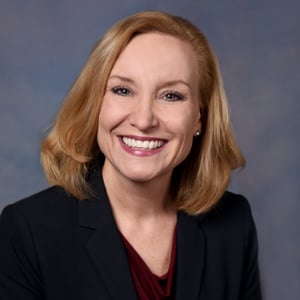
Judge, United States Court of Appeals, Sixth Circuit
The Honorable Joan L. Larsen is a judge of the United States Court of Appeals for the Sixth Circuit. She was nominated by the President on May 8, 2017 and confirmed by the Senate on November 1, 2017. Before her appointment to the federal bench, Judge Larsen served two terms as a Justice of the Michigan Supreme Court, where she was the court’s liaison to Michigan’s drug, sobriety, mental health and veteran’s courts.
Before becoming a judge, Judge Larsen was a faculty member at the University of Michigan Law School, where she was also Special Counsel to the Dean and received the L. Hart Wright Award for Excellence in Teaching. Judge Larsen's research and teaching interests included constitutional law, criminal procedure, statutory interpretation, and presidential power. Judge Larsen continues to assist the law school as the adviser to the Henry M. Campbell Moot Court Competition.
Judge Larsen began her legal career as a law clerk to the Hon. David B. Sentelle of the United States Court of Appeals for the D.C. Circuit and to Justice Antonin Scalia of the Supreme Court of the United States. Following her clerkships, she joined the law firm of Sidley Austin, where she was a member of the Constitutional, Criminal, and Civil Litigation Section. She later served as Deputy Assistant Attorney General in the United States Department of Justice, Office of Legal Counsel.
Judge Larsen graduated first in her class from Northwestern University School of Law, where she served as articles editor of the Northwestern University Law Review and earned the John Paul Stevens Award for Academic Excellence. She received her B.A., with highest honors, from the University of Northern Iowa.

Judge, U.S. Court of Appeals for the Third Circuit
Hon. Jennifer Mascott served as Associate Professor of Law and Director of the Separation of Powers Institute at The Catholic University of America’s Columbus School of Law before her appointment to the federal bench. On July 16, 2025, President Donald J. Trump nominated her to the U.S. Court of Appeals for the Third Circuit (Delaware), and she was confirmed on October 9, 2025.
Prior to her confirmation, Judge Mascott wrote extensively in administrative and constitutional law, statutory interpretation, and the separation of powers. Her scholarship—published in leading journals including the Stanford Law Review, Notre Dame Law Review, and Supreme Court Review—was cited by the U.S. Supreme Court and multiple federal courts. She also contributed Supreme Court commentary for NBC Universal.
Before joining Catholic Law, she was an Assistant Professor and Co-Director of The C. Boyden Gray Center at George Mason University’s Antonin Scalia Law School. In 2022 she became co-author of Beermann, Cass & Diver’s Administrative Law: Cases and Materials (9th ed.). In 2023 she received the Justice Joseph Story Award for excellence in scholarship, teaching, and advancing the rule of law.
Judge Mascott also served as a Council Member of the ABA’s Administrative Law Section and as a Public Member of the Administrative Conference of the United States. She frequently testified before Congress on executive power, regulatory reform, and judicial jurisdiction, and participated in multiple Supreme Court confirmation hearings.
From 2019 to 2021, she took leave from academia to serve as Deputy Assistant Attorney General in the Department of Justice’s Office of Legal Counsel and later as Associate Deputy Attorney General, where she argued federal cases and assisted with Justice Amy Coney Barrett’s confirmation. Earlier in her career, she clerked for Justice Clarence Thomas and for then-Judge Brett M. Kavanaugh on the D.C. Circuit.
Judge Mascott earned her J.D. summa cum laude from the George Washington University Law School and her B.A. from the same institution.

Chief Judge, United States Court of Appeals, Eleventh Circuit
William H. Pryor Jr. serves as Chief Circuit Judge on the United States Court of Appeals for the Eleventh Circuit.
In 2013–18, he served on the United States Sentencing Commission and, in 2017–18, served as Acting Chair.
He has taught as a visiting professor at the University of Alabama School of Law and previously taught as an adjunct professor at the Cumberland School of Law of Samford University.
He served as the 45th Attorney General of Alabama from 1997 to 2004. When he took office, he was the youngest attorney general in the nation. In his reelection, he received the highest percentage of votes of any statewide candidate.
He graduated magna cum laude from Tulane Law School where he finished first in the common-law curriculum and was editor in chief of the Tulane Law Review. He then served as a law clerk for Judge John Minor Wisdom of the U.S. Court of Appeals for the Fifth Circuit.
He is a member of The American Law Institute and an Adviser for the RESTATEMENT OF THE LAW THIRD, CONFLICT OF LAWS. He is a coauthor with Bryan Garner, Justices Gorsuch and Kavanaugh, and several other judges of a treatise, THE LAW OF JUDICIAL PRECEDENT. He has published in the Yale Law Journal, Columbia Law Review, Virginia Law Review, Notre Dame Law Review, Harvard Journal of Law & Public Policy, Yale Law & Policy Review, George Mason Law Review, Florida Law Review, Alabama Law Review, Case Western Reserve Law Review, and Tulane Law Review. He has published op-eds in The Wall Street Journal, The New York Times, National Review, and USA Today. He has debated at National Lawyers’ Conventions of the Federalist Society (including on National Public Radio) and at the Oxford Union in the United Kingdom. And he is listed among several “widely admired judicial writers” in Bryan Garner’s The Redbook: A Manual on Legal Style.
He is a member of the Tulane Law School Hall of Fame and has received the Defender of the Constitution Award from the Heritage Foundation, the Jurist of the Year Award from the Texas Review of Law & Politics, and the St. Thomas More Award from the St. Thomas More Society of Atlanta. Judge Pryor is also a proud member of the National Society of the Sons of the American Revolution.
Chief Judge, United States Court of Appeals, Sixth Circuit
JEFFREY S. SUTTON is the Chief Judge of the United States Court of Appeals for the Sixth Circuit. He has served as Chair of the Federal Judicial Conference Committee on Rules of Practice and Procedure, Chair of the Advisory Committee on Appellate Rules, and Chair of the Supreme Court Fellows Commission. He currently serves as Chair of the Executive Committee of the Judicial Conference of the United States. Since 1993, Chief Judge Sutton has been an adjunct professor at The Ohio State University College of Law, where he teaches seminars on State Constitutional Law, the United States Supreme Court, and Appellate Advocacy. He also teaches a class on State Constitutional Law at Harvard Law School. Among other publications, he is the author of Who Decides? States as Laboratories of Constitutional Experimentation and 51 Imperfect Solutions: States and the Making of American Constitutional Law. He is the co-author of a casebook, State Constitutional Law: The Modern Experience, as well as The Law of Judicial Precedent. He is also the co-editor of The Essential Scalia: On the Constitution, the Courts, and the Rule of Law. In 2006, Chief Judge Sutton was elected to the American Law Institute, and in 2017 he was elected to its Council.
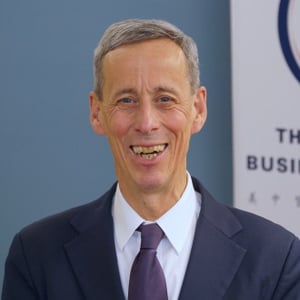
President, US-China Business Council
On July 26, 2018, Craig Allen began his tenure in Washington, DC as the president of the US-China Business Council (USCBC), a private, nonpartisan, nonprofit organization representing over 200 American companies doing business with China. Prior to joining USCBC, Craig had a long, distinguished career in US public service.
Craig began his government career in 1985 at the Department of Commerce’s International Trade Administration (ITA). He entered government as a Presidential Management Intern, rotating through the four branches of ITA. From 1986 to 1988, he was an international economist in ITA’s China Office.
In 1988, Craig transferred to the American Institute in Taiwan, where he served as Director of the American Trade Center in Taipei. He held this position until 1992, when he returned to the Department of Commerce for a three-year posting at the US Embassy in Beijing as Commercial Attaché.
In 1995, Craig was assigned to the US Embassy in Tokyo, where he served as a Commercial Attaché. In 1998, he was promoted to Deputy Senior Commercial Officer. In 1999, Craig became a member of the Senior Foreign Service.
From 2000, Craig served a two-year tour at the National Center for APEC in Seattle. While there, he worked on the APEC Summits in Brunei, China, and Mexico. In 2002, it was back to Beijing, where Craig served as the Senior Commercial Officer. In Beijing, Craig was promoted to the Minister Counselor rank of the Senior Foreign Service.
After a four-year tour in South Africa, Craig became Deputy Assistant Secretary for Asia at the US Department of Commerce’s International Trade Administration. He later became Deputy Assistant Secretary for China. Craig was sworn in as the United States ambassador to Brunei Darussalam on December 19, 2014. He served there until July 2018, when he transitioned to President of the US-China Business Council.
Craig received a B.A. from the University of Michigan in Political Science and Asian Studies in 1979. He received a Master of Science in Foreign Service from Georgetown University in 1985.

Judge, United States Court of Appeals, Ninth Circuit
Judge Carlos Bea serves as a judge on the United States Court of Appeals for the Ninth Circuit. He received his Bachelor's Degree from Stanford University in 1956 and his J.D. from Stanford Law School in 1958. Judge Bea was born in San Sebastian, Spain, and immigrated with his family to Cuba in 1939. In 1952, he represented Cuba on the Cuban National basketball team in the Helsinki Olympics. Judge Bea became a naturalized citizen of the United States in 1958. He engaged in private practice in San Francisco, principally in the area of civil trials (jury and non-jury), from 1959-75 at Dunne, Phelps & Mills and from 1975-90 at Carlos Bea, A Law Corporation. He taught courses in civil litigation advocacy at Hastings College of Law and Stanford Law School. From 1990 to 2003, Judge Bea served as a judge of the San Francisco Superior Court. He was nominated by President George W. Bush to the United States Court of Appeals for the Ninth Circuit and was confirmed in 2003.
Judge Bea and his wife Louise reside in San Francisco, where they raised their four sons, Sebastian, Alexander, Nicholas, and Dominic.
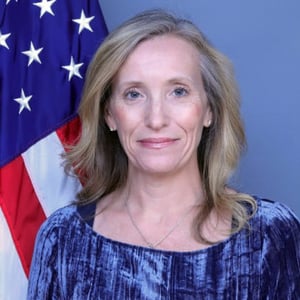
Adjunct Senior Fellow, Indo-Pacific Security Program, Center for New American Security; Senior Advisor, Krach Institute for Tech Diplomacy, Purdue University
Throughout her career in foreign policy, Ambassador Kelley E. Currie has specialized in human rights, political reform, development, and humanitarian issues, with a focus on the Indo-Pacific region. Ambassador Currie is currently an Adjunct Senior Fellow at the Center for a New American Security, a Washington D.C. think tank, and a Senior Advisor to the Krach Institute for Tech Diplomacy at Purdue University. She is a member of the board of directors of the National Endowment for Democray; the board of governors of the East-West Center; and the advisory boards of Spirit of America and the Vandenberg Coalition.
Ambassador Currie was unanimously confirmed in December 2019 as Ambassador-at-Large for Global Women's Issues and the U.S. Representative at the United Nations Commission on the Status of Women and served in that position until January 2021. Prior to that appointment, she served under Ambassador Nikki Haley as the U.S. Representative to the UN Economic and Social Council and Alternative Representative to the UN General Assembly (2017-2018). While awaiting confirmation between ambassadorial appointments, she was appointed interim senior official in the Department of State's Office of Global Criminal Justice. From 2009 until her appointment to the USUN leadership, she was a Senior Fellow with the Project 2049 Institute and the founding Director of the Institute's Burma Transition Initiative. Ambassador Currie also held senior policy positions with the U.S. Congress, international organizatons, and non-governmental organizations.
Ambassador Currie received a Juris Doctor from Georgetown University Law Center with a focus on International Human Rights Law, and an undergraduate degree cum laude in Political Science from the University of Georgia's School of Public and International Affairs.
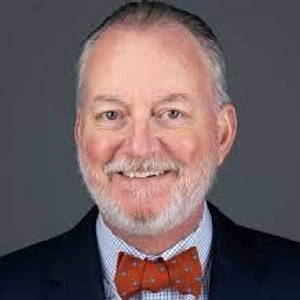
Executive Vice President and General Counsel, TE Connectivity
John S. Jenkins Jr. is the Executive Vice President, General Counsel of TE Connectivity. John is responsible for the company’s global legal, compliance, corporate governance, government affairs, intellectual property, security and risk management, and corporate social responsibility activities. He is also responsible for bringing TE’s industry-leading connectivity solutions, engineering, and operations expertise to the emerging markets with focus on India, China, and South America. He joined TE Connectivity in October 2012.
Prior to joining TE Connectivity, John was with Tyco International for ten years and was the Vice President, Corporate Secretary, and International General Counsel. John was responsible for the Board of Directors activities, securities and capital markets transactions and reporting, mergers and acquisitions, executive compensation, global procurement, real estate, and tax planning. Prior to 2003, John worked as a litigator with McGuireWoods, LLP. John began his career in 1987 as an Officer in the United States Navy, and served as a judge advocate both as Military Prosecutor and Senior Defense Counsel, and finally as Legislative Counsel to the Secretary of the Navy.
John earned his law degree from George Washington University with high honors and his Bachelor’s degree from the University of Virginia.
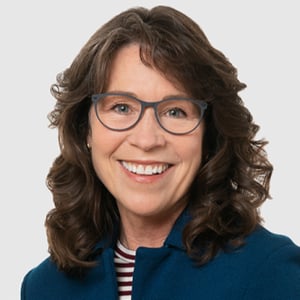
Director of Foreign and Defense Policy Studies, American Enterprise Institute
Kori Schake leads foreign and defense policy studies at the American Enterprise Institute. She is the author of Safe Passage: the Transition from British to American Hegemony, and with Jim Mattis the editor of Warriors and Citizens: American Views on Our Military. Dr. Schake has taught at Stanford, Johns Hopkins SAIS, and West Point. She has also had a distinguished career in government, working at the US State Department, the US Department of Defense, and the National Security Council.
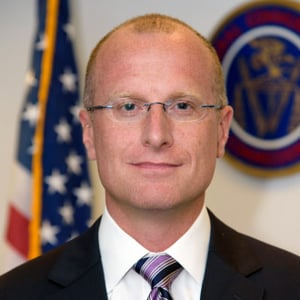
Chairman, Federal Communications Commission
Brendan Carr is the Chairman of the Federal Communications Commission. He previously served as the senior Republican Commissioner and as the FCC’s General Counsel. Nominated by both President Trump and President Biden, Carr has been confirmed unanimously by the Senate three times.
Described by Axios as “the FCC’s 5G crusader,” Carr has led the FCC’s work to modernize its infrastructure rules and accelerate the buildout of high-speed networks. His reforms cut billions of dollars in red tape, enabled the private sector to construct high-speed networks in communities across the country, and extended America’s global leadership in 5G.
Chairman Carr is also focused on expanding America’s skilled workforce—the tower climbers and construction crews needed to build next-gen networks. His jobs initiative promotes community colleges and apprenticeships as a pipeline for good-paying 5G jobs. He is recognizing America’s talented tower crews through a series of “5G Ready” Hard Hat presentations.
Chairman Carr leads a groundbreaking telehealth initiative at the FCC. The Connected Care Pilot Program supports the delivery of high-quality care to low-income Americans and veterans.
Chairman Carr’s time outside of Washington helps inform his approach to the job. He regularly hits the road to hear directly from community members and learn how changes in federal policies could help improve their lives.
Chairman Carr brings nearly 20 years of private and public sector experience in communications and tech policy to his position. Before joining the FCC as a staffer back in 2012, he worked as an attorney at Wiley Rein LLP in the firm’s appellate, litigation, and telecom practices. Previously, Chairman Carr clerked on the U.S. Court of Appeals for the Fourth Circuit for Judge Dennis Shedd. After attending Georgetown University for his undergrad, Chairman Carr earned his J.D. magna cum laude from the Catholic University of America’s Columbus School of Law where he served as an editor of the Catholic University Law Review.
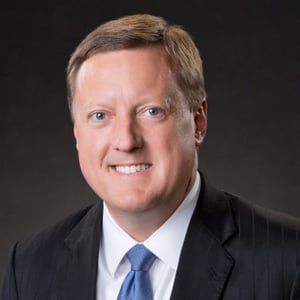
Senator and Chairman, Indiana Senate Utilities Committee, Indiana State Senate
An 8th generation Hoosier, Eric grew up on a grain and livestock farm, where he learned the value of hard work and experienced the risk and rewards of the commodity markets.
He earned a Bachelor’s Degree from Georgetown University and worked on President Ronald Reagan’s re-election campaign in the Office of Political Affairs at the Reagan-Bush ’84 Committee.
While earning his Juris Doctorate at the Indiana University School of Law, he clerked at the Bloomington law firm of McDonald, Barrett & Dakich.
He has been engaged in the private practice of law with offices in Bloomington since 1989 and Bedford since 2003. He is a member of the Monroe and Lawrence County Bar Associations, the Indiana State Bar Association, the Million Dollar Advocates Forum, the Multi-Million Dollar Advocates Forum, and founded and served as the first President of the Indiana Creditors Bar Association.
In 2002, he was elected to the Indiana House of Representatives, where he served until being elected to the Indiana State Senate in 2016. His legislative service has been recognized by, among others, the Indiana Judges Association (Champion of Justice Award), the Indiana Trial Lawyers Association (Legislator of the Year 2008 and 2015), the Indiana Pro Bono Commission (Randall T. Shepard Award), Kentucky Governor Ernie Fletcher (Kentucky Colonel), and Indiana Governor Mike Pence (Sagamore of the Wabash).
He currently serves as Chairman of the Senate Utilities Committee, Ranking Member of the Senate Judiciary and Commerce & Technology Committees, and as a member of the Senate Corrections & Criminal Law, Elections, and Family & Children Committees.
A nationally-recognized leader in energy policy, he serves as co-chairman of the Energy Supply Task Force of the National Conference of State Legislatures, as a member of the Executive Committee of the National Council on Electricity Policy, and holds a graduate certificate in Energy Policy Planning from the University of Idaho. He also serves as a member of the Federal Communication Commission Consumer Advisory Committee. He focuses on energy, telecommunications, and water policy interactions in Indiana and nationally.
He has served as a member of the Indiana Commission on Courts (2007—2011), the Indiana Probate Code Study Commission (2005—2007, 2013—2014, 2019—present), the Indiana Military Base Planning Council (2005—2019), the Board of Trustees of the Indiana Criminal Justice Institute (2006—2011), and the Indiana Public Defender Commission (2017—present). He represents Indiana as a Commissioner on The National Conference of Commissioners on Uniform State Laws (2018—present). As a member of the Indiana Supreme Court's Commercial Courts Committee (2019—present), he provides guidance to Indiana's Commercial Courts. He was appointed by the Indiana Supreme Court to serve on its Innovation Initiative (2019—present) to advise the Supreme Court on opportunities to increase efficiency and accessibility through innovative technology and case management, analysis of court reform, and development and testing of pilot programs related to court reform.
Eric frequently serves as a faculty member teaching continuing legal education courses, including for the Indiana State Bar Association and the Indiana Continuing Legal Education Forum. He enjoys teaching lawyers about new developments in the law and sharing his insights into the legislative process.
He is a registered civil mediator, having earned a civil mediation certificate from the Indiana University McKinney School of Law, studying under ADR expert John Krauss. Eric enjoys using the combination of his mediation skills and litigation experience to help parties settle cases and resolve disputes.
Eric is frequently appointed by judges to serve as a court-appointed fiduciary with responsibilities such as a trustee, federal multidistrict litigation plaintiffs’ steering committee member, special administrator, and personal representative.
A licensed Indiana title insurance producer, he founded Indiana Title Insurance Company in 2015 and serves as its President. His business experience also includes real estate, as President of White River Properties, Inc.; agriculture, as a partner in Koch Farms; and healthcare, as a former board member and Chairman of the Board of Dunn Memorial Hospital and St. Vincent Dunn Hospital.
He is a member of the Boards of Directors of Mid-Southern Savings Bank, FSB and its holding company Mid-Southern Bancorp, Inc. (NASDAQ: MSVB).
His leadership in the non-profit sector has included service as a member of the Board of Governors of the Society of Indiana Pioneers, as a member of the Executive Board of the Hoosier Trails Council of the Boy Scouts of America, as a member of the Mitchell Urban Enterprise Association Board, and as a member of the Georgetown University Alumni Admissions Committee.
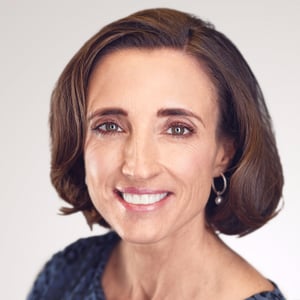
Senior Vice President, Strand Consult
Roslyn Layton, PhD is a leading international expert on technology policy. She is Senior Vice President of Strand Consult, an independent consultancy serving the global mobile telecom industry. She is also a Visiting Researcher at Aalborg University Copenhagen where she earned a doctoral thesis on network neutrality by measuring the outcome of the policy across 53 countries over 5 years. She served on the Presidential Transition Team for the Federal Communications Commission (FCC), and her work was critical to the FCC’s defense for the Restoring Internet Freedom Order. She has testified to the United States Senate and House on multiple topics including spectrum, broadband, mobile mergers, competition, and privacy. She founded the think tank China Tech Threat to study the problems of technology produced by the People’s Republic of China. She serves as the Program Chair for the Telecom Policy Research Conference, the leading interdisciplinary academic gathering. Her recent paper on rural broadband describes the empirical case for policy reform to recover network infrastructure costs from streaming video entertainment providers. She is a Senior Contributor to Forbes.

Judge, United States Court of Appeals, Second Circuit
Judge Menashi was appointed to the U.S. Court of Appeals for the Second Circuit on November 14, 2019. Previously, he served as special assistant and associate counsel to the President in the White House and as acting general counsel at the U.S. Department of Education. He was assistant professor of law at Scalia Law School, George Mason University, where he taught administrative law and civil procedure, and a research fellow at New York University School of Law and Georgetown University Law Center. He was also a partner at Kirkland & Ellis LLP in New York, where he practiced appellate and commercial litigation, and served as a law clerk to Justice Samuel Alito on the Supreme Court of the United States and to Judge Douglas Ginsburg on the U.S. Court of Appeals for the District of Columbia Circuit. He graduated from Stanford Law School, where he was elected to Order of the Coif and served as senior articles editor of the Stanford Law Review, and from Dartmouth College, where he was elected to Phi Beta Kappa.

Do Russian Oligarchs Retain Property Rights in the West?
Ronald A. Cass, Jeremy A. Rabkin, Paul B. Stephan
In response to Russia’s invasion of Ukraine, assets of Russian oligarchs have been frozen in...
Opioids: The Crisis in 2022 and Beyond
Trevor Burrus, Joseph James Grogan, Mike Hurst, Paul James Larkin
After years of tragic deaths and through a global pandemic, some experts contend that the...
From Russia Without Love: U.S. Energy Policy, Environmental Goals, Foreign Wars, and the Administrative State
Tristan Abbey, Eric Grant, Ryan D. Nelson, Julia Olson
The United States is – perhaps now more than ever before – a global energy...
Central Bank Digital Currency--Efficient Innovation or the End of the Private Banking System?
Greg Baer, Bert Ely, J. Christopher Giancarlo, Alex J. Pollock
Central Bank Digital Currencies (CBDC) are the subject of a global debate. In one version,...
Topics
The Legal Status of Decentralized Autonomous Organizations: Do DAOs Require New Business Structures? Some States Think So.
Decentralized Autonomous Organizations (DAOs) sound like something out of the future. And in a way,...
III: 21st Century Federalism: A View from the States (Roundtable)
Goodwin H. Liu, Julia D. Mahoney, Neomi Rao, Jeffrey S. Sutton, Joan Larsen
This panel will center discussion on the role of the states in our constitutional order—by...
Talks with Authors: Who Decides? States as Laboratories of Constitutional Experimentation
Jenn L. Mascott, William H. Pryor, Jeffrey S. Sutton
As federalism becomes an increasingly important principle of our constitutional structure, Chief Judge Jeffrey Sutton...
Topics
Do Androids Dream of Patent Protections? American Patent Law and AI-Generated Inventions
The incredible ability of artificial intelligence (AI) has captured the minds of inventors, writers, scientists,...
China, Global Companies, and Human Rights
Craig B. Allen, Carlos T. Bea, Kelley Currie, John S. Jenkins, Kori Schake
The 2021 National Lawyers Convention took place November 11-13, 2021 at the Mayflower Hotel in...
Federalism and Broadband Spending: Finding the Right Approach
Brendan Carr, Eric Allan Koch, Roslyn Layton, Steven J. Menashi
The 2021 National Lawyers Convention took place November 11-13, 2021 at the Mayflower Hotel in...