

Judge, United States Court of Appeals, Third Circuit
Stephanos Bibas is a judge on the U.S. Court of Appeals for the Third Circuit. Judge Bibas was previously a professor of law and criminology at the University of Pennsylvania Law School. As director of the Penn Law Supreme Court Clinic, he argued six cases before the Supreme Court of the United States and filed briefs in dozens of others. He graduated summa cum laude and Phi Beta Kappa from Columbia University in 1989 with a B.A. in political theory and from Oxford University in 1991 with a B.A. in jurisprudence. He then earned his J.D. from Yale Law School in 1994.
After graduating from Yale Law, Judge Bibas clerked for Judge Patrick Higginbotham of the U.S. Court of Appeals for the Fifth Circuit and Justice Anthony Kennedy on the Supreme Court and was a litigation associate at Covington & Burling LLP in Washington, D.C. Thereafter, Judge Bibas served as an Assistant U.S. Attorney in the Southern District of New York, where he successfully prosecuted the world’s leading expert in Tiffany stained glass for hiring a grave robber to steal priceless Tiffany windows from cemeteries. Before his tenure at Penn Law, Judge Bibas taught at the University of Chicago Law School and the University of Iowa College of Law and was a research fellow at Yale Law School. He has published two books and seventy scholarly articles.
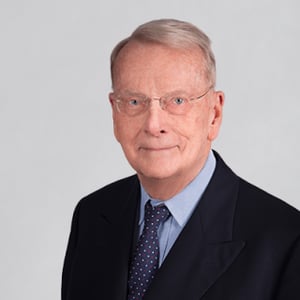
Judge, Iran-United States Claims Tribunal and Arbitrator Member, Twenty Essex Chambers
Charles’s 55-year career in the law has combined extensive practice at the bar with distinguished public service, both national and international. For nearly 40 years he has focused on public international law and international dispute resolution.
As counsel or arbitrator he has handled cases on all six continents, principally under the rules of the ICC, UNCITRAL, LCIA, AAA, United Nations Compensation Commission, ICSID, Stockholm Chamber of Commerce, Insurance and Reinsurance Arbitration Society and LMAA. These cases have involved a wide variety of commercial disputes as well as issues of public international law, particularly involving the oil and gas sector, major infrastructural projects, expropriations, and other investment disputes, including ones arising under both bilateral and multilateral investment treaties.
Charles started his career with White & Case LLP in New York, before serving for four years in the United States Department of State in Washington, DC, concluding as its Acting Legal Adviser. He then rejoined White & Case LLP, co-founding its Washington, DC office, where his practice came to be comprised almost exclusively of substantial international arbitrations.
He has served continuously since 1983 as a judge of the Iran-United States Claims Tribunal in The Hague, The Netherlands. That service was interrupted for some months in 1987 by White House service as Deputy Special Counsellor to President Reagan. Charles resumed partnership in White & Case LLP from 1988 until joining 20 Essex Street in 2001. Since 2014 he has also served as a Judge ad hoc at the International Court of Justice.
In 2015 Charles was only the fourth ever recipient of the Global Arbitration Review Lifetime Achievement Award.
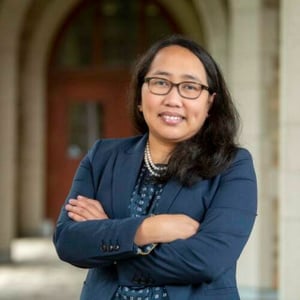
Professor of Law and Global Affairs Faculty Director, LL.M. in International Human Rights Law; Global Director, Notre Dame Law School Global Human Rights Clinic, Notre Dame Law School
Diane A. Desierto joined the Law School in January 2021 as Professor of Law and LL.M. Faculty Director, with a joint appointment at the Keough School of Global Affairs. Desierto teaches, publishes, and practices in the areas of international law and human rights, international economic law and development, international arbitration, maritime security, Association of Southeast Asian Nations (ASEAN) Law, and comparative public law. At Notre Dame, Desierto is a Faculty Fellow at the Klau Institute for Civil Human Rights, Kellogg Institute of International Studies, Liu Institute for Asia and Asian Studies, Pulte Institute for Global Development, and Nanovic Institute of European Studies. She is also Co-Principal Investigator of the Notre Dame Reparations Design and Compliance Lab.
Desierto is a Member and former Chair-Rapporteur of the Expert Group of the United Nations Working Group on the Right to Development, Resource Expert for the Association of Southeast Asian Nations (ASEAN), former Director of Studies and Faculty of the Hague Academy of International Law, President of the Friends of the Hague Academy Foundation, and the Philippines Focal Point for the International Criminal Court Bar Association. She is active as international counsel at matters successfully litigated at the Permanent Court of Arbitration, the UN Human Rights Committee, the Philippine Supreme Court and Southeast Asian agencies, and was appointed by the Philippine Supreme Court as Professor of International Law and Human Rights at the Philippines Judicial Academy. Desierto is a Member of the Editorial Boards of the European Journal of International Law (and Editor of its leading international law blog EJIL:Talk!), Journal of World Investment and Trade, and the Global Community Yearbook of International Law and Jurisprudence, and the Kluwer Law monograph series on Human Society and International Law, and also serves on the Scientific Advisory Boards of international journals such as International Law Studies, the Revista Chilena de Derecho, and the Indonesian Journal of International and Comparative Law. Desierto previously taught as tenure-track/tenured law faculty at the University of the Philippines, Peking University School of Transnational Law in China, and the University of Hawaii Richardson School of Law. She is a recipient of faculty fellowships awarded by Stanford University's Center for Advanced Studies in the Behavioral Sciences (CASBS) and the Stanford Center for Human Rights and International Justice, the Max Planck Institute for Comparative Public Law and International Law in Heidelberg, the Humboldt-Potsdam-Berlin Senior Fellowship, the East-West Center in Honolulu, the Grotius Fellowship at University of Michigan Law School, and the National University of Singapore's Asian Law Institute Fellowship. Desierto has served Visiting Professor appointments at the University of Paris-Nanterre X Faculty of Law, University of the Philippines College of Law Graduate Program at Bonifacio Global City, the University of Navarre Faculty of Law in Spain, and Universidad Panamericana Faculty of Law in Mexico City.
Desierto holds JSD and LLM degrees from Yale Law School, as well as JD cum laude class salutatorian and BSc Economics summa cum laude class valedictorian degrees from the University of the Philippines, and was a former Yale Law clerk at the International Court of Justice for H.E. Judges Bruno Simma and Bernardo Sepulveda-Amor. She authored and/or edited several books, such as Necessity and National Emergency Clauses: Sovereignty in Modern Treaty Interpretation (Martinus Nijhoff, 2012, recipient of the Ambrose Gherini Prize in International Law at Yale Law), Public Policy in International Economic Law: The ICESCR in Trade, Investment and Finance (Oxford University Press, 2015), ASEAN Law and Regional Integration: Governance and the Rule of Law in Southeast Asia's Single Market (with D. Cohen, Routledge, 2020), The International Legal System: Cases and Materials (8th Edition, with M.E. O'Connell, N. Roht-Arriaza, and D. Bradlow, 2022), as well as, to date, around 180 law review articles, book chapters, essays, and book reviews with leading international law journals and publishers in the United States, Europe, and Asia. She is a member of the Institute of Transnational Arbitration Academic Council, the UNCITRAL Academic Forum on Investor-State Dispute Settlement Reform, the 2019 Hague Rules on Business and Human Rights Arbitration Drafting Team, Co-Chair of the Oxford Investment Claims Summer Academy, and has been recognized repeatedly by Who's Who Legal as one of the Future Leaders in Arbitration. The 2020 ND Women Lead featured Desierto here.

Laurence A. Tisch Professor of Law and Director, Classical Liberal Institute, New York University School of Law; Senior Fellow, The Civitas Institute, University of Texas at Austin
Richard A. Epstein is the inaugural Laurence A. Tisch Professor of Law at NYU School of Law. Prior to his joining the faculty, he was a visiting law professor at NYU from 2007 through 2009. He served as the Peter and Kirstin Bedford Senior Fellow at the Hoover Institution from 2000 to 2024. Since 2024 to the present he is a senior lecturer at the Civitas Institute at the University of Texas—Austin. Epstein is also the James Parker Hall Distinguished Service Professor of Law Emeritus and a senior lecturer at the University of Chicago. His initial law school appointment was at the University of Southern California from 1968 to 1972. Epstein received an LL.D., h.c. from the University of Ghent, 2003. He has been a member of the American Academy of Arts and Sciences since 1985 and was a Senior Fellow of the Center for Clinical Medical Ethics at the University of Chicago Division of Biological Sciences, also from 1983. to 2022 He served as editor of the Journal of Legal Studies from 1981 to 1991, and of the Journal of Law and Economics from 1991-2001. From 2001 to 2010 he was a director of the John M. Olin Program in Law and Economics at the University of Chicago.
His newest book, The Myth of Birthright Citizenship: What the Fourteenth Amendment Really Says was published in 2026 (Encounter Books). Prior to that he has published many books including, The Dubious Morality of the Modern Administrative State (Roman & Littlefield 2020).Earlier he published th Classical Liberal Constitution: The Uncertain Quest for Limited Government (Harvard 2014) iHis previous books include Design for Liberty: Private Property, Public Administration and the Rule of Law (Harvard 2011); The Case Against the Employee Free Choice Act (Hoover 2009); Supreme Neglect: How to Revive the Constitutional Protection of Property Rights (Oxford 2008); Antitrust Decrees in Theory and Practice: Why Less is More (AEI 2007); Overdose: How Excessive Government Regulation Stifles Pharmaceutical Innovation (Yale University Press. 2006); How Progressives Rewrote the Constitution (Cato 2006); Cases and Materials on Torts (Aspen Law & Business; 8th ed. 2004); Skepticism and Freedom: A Modern Case for Classical Liberalism (University of Chicago, 2003); Torts (Aspen Law & Business 1999); Principles for a Free Society: Reconciling Individual Liberty with the Common Good (Perseus Books, 1998): Mortal Peril: Our Inalienable Rights to Health Care (Addison-Wesley, 1997); Simple Rules for a Complex World (Harvard, 1995); Bargaining With the State (Princeton, 1993); Forbidden Grounds: The Case Against Employment Discrimination Laws (Harvard , 1992); Takings: Private Property and the Power of Eminent Domain (Harvard, 1985); and Modern Products Liability Law (Greenwood Press, 1980). He has also edited(with Catherine M. Sharkey) Cases and Materials on the Law of Torts (10th edition 2012).
Professor Epstein has written numerous articles on a wide range of legal and interdisciplinary subjects. He has taught courses in administrative law, antitrust law, civil procedure, communications, constitutional law, contracts, corporations, criminal law, employment discrimination law, environmental law, food and drug law health law and policy, legal history, labor law, property, real estate development and finance, jurisprudence, labor law; land use planning, patents, individual, estate and corporate taxation, Roman Law; torts, and workers' compensation.
Professor Epstein also writes a regular column for Civitas Institute, which also sponsors his podcast, The Libertarian with Charles C.W. Cooke, and Law Talk, with Cooke and John Yoo. He also does a podcast with John Batchelor. And appears regularly on the Freedom File with Judge Andrew Napolitano.
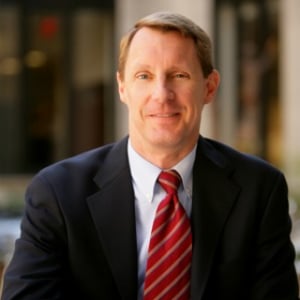
Director, International Legal Studies Program, Vanderbilt Law School
Michael Newton is an expert on terrorism, accountability, transnational justice, and conduct of hostilities issues. Over the course of his career, he has published more than 90 books, articles, op-eds and book chapters. He has been an expert witness in terrorism related trials and is admitted to the counsel list of the International Criminal Court, where, in 2018, he helped prepare the appeal of Jean-Pierre Bemba and participated in oral arguments in the Appeals Chamber. At Vanderbilt, he developed and teaches the innovative International Law Practice Lab, which provides expert assistance to judges, lawyers, legislatures, governments, and policy makers around the world. Professor Newton is most recently the editor of The United States Department of Defense Law of War Manual: Commentary and Critique, forthcoming from Cambridge University Press.
An authority on the law of armed conflict, Professor Newton served as the senior adviser to the Ambassador-at-Large for War Crimes Issues in the U.S. State Department from January 1999 to August 2002, during which he implemented a wide range of policy positions, including U.S. support to accountability mechanisms worldwide. He negotiated the “Elements of Crimes” for the International Criminal Court, and was the senior member of the team teaching international law to the first group of Iraqis who began to think about accountability mechanisms and a constitutional structure in November 2000. He shuttled to Baghdad repeatedly to aid international and Iraqi lawyers and jurists in drafting the Statute of the Iraqi High Tribunal while serving as the International Law Adviser to the Judicial Chambers from 2006 to 2008. He began assisting Iraqi officials, victims and civil society groups on legal issues associated with documentation and investigation of crimes committed by Da’esh on Iraqi soil days after Yazidi victims fled towards Mount Sinjar. He was the U.S. representative on the U.N. Planning Mission for the Sierra Leone Special Court and a founding member of its academic consortium. He is an elected member of the International Institute of Humanitarian Law and on the expert roster of Justice Rapid Response. In addition to teaching the Practice Lab, he develops and coordinates externships and educational opportunities for students interested in international legal issues, having supervised more than 150 such opportunities.
Professor Newton has served on the executive council of the American Society of International Law and as an invited expert for the Genocide Prevention Task Force established by the U.S. Holocaust Memorial Museum and the U.S. Institute of Peace. He is currently on the Advisory Board of the ABA International Criminal Court Project.
Professor Newton served in the U.S. Army more than 21 years, beginning with his commission from the U.S. Military Academy in May 1984 as an armor officer in the 4th Battalion, 68th Armor at Fort Carson, Colorado. After his selection for the Funded Legal Education Program, Newton served as chief of operational law with the Army Special Forces Command (Airborne) during Operation Desert Storm, and as the group judge advocate for the 7th Special Forces Group (Airborne). His deployments include Northern Iraq on Operation Provide Comfort to assist Kurdish civilians, and Haiti with 194th Armored Brigade (Separate), where he organized and led human rights and rules of engagement education for multinational forces, including police. He has taught international and operational law at the Judge Advocate General's School and Center in Charlottesville, Virginia, and taught international law at the United States Military Academy at West Point.
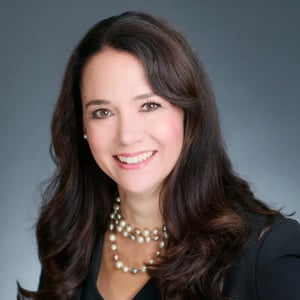
Principal, BGR Group
Robin Colwell is a Principal with BGR’s Commerce and Infrastructure Practice. She provides clients with strategic insights and skillful advocacy on complex telecommunications, technology, and cybersecurity policy issues. Robin’s wide-ranging experience includes key roles in the Executive, Legislative, and Judicial branches of government as well as the private sector.
A Florida native and Florida State University alumna, Robin received her law degree from the College of William & Mary School of Law, and first came to Washington as a law clerk to Chief Judge H. Robert Mayer of the Court of Appeals for the Federal Circuit. After several years representing mass media, communications, and technology clients in Wiley, Rein & Fielding LLP’s corporate practice, she developed deep expertise and passion for the public policy framework underlying these industries as Legislative Counsel for Senate Commerce Committee members including Senators Tim Scott, Jim DeMint, and Peter G. Fitzgerald, and as Counsel to the Senate Commerce Committee for Tourism, Competitiveness, and Innovation.
Robin next served as Chief of Staff to Commissioner Michael O’Rielly at the Federal Communications Commission, and later returned to the Hill as Chief Counsel to the House Energy & Commerce Committee for Communications and Technology. As Chief Counsel, Robin collaborated with majority and minority House and Senate Committee members and staff to secure enactment of major legislation including FOSTA/SESTA, protecting victims of online trafficking, and RAY BAUM’s Act, which funded repacking of spectrum following the broadcast incentive auction and included bicameral, bipartisan priorities such as MOBILE NOW and DIG ONCE.
Most recently, Robin served at the White House National Economic Council under former President Trump as a senior advisor to Director Larry Kudlow, developing Administration policy and leading interagency implementation of priorities including 5G deployment, security, and innovative network architecture; spectrum allocation; rural broadband deployment; data privacy and security; and domestic supply chain security. She was a key White House leader in the successful 2020 initiative to make a significant allocation of prime mid-band spectrum available to be auctioned in December 2021 for rapid U.S. deployment of commercial 5G networks.
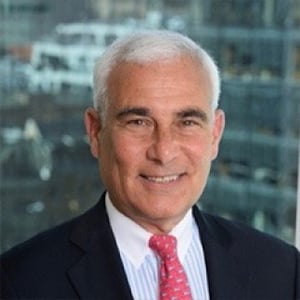
Managing Partner, Crest Hill Advisors
The founder and Managing Partner of Crest Hill Advisors, Scott Blake Harris has been a legal and policy professional in Washington, D.C. for forty-eight years, primarily focused on telecommunications, technology, and energy issues. He has deep experience both in government and in the private sector.
Prior to founding Crest Hill Advisors, Scott served as the Senior Spectrum Advisor and Director of the National Spectrum Strategy at the National Telecommunications and Information Administration (NTIA) in the U.S. Department of Commerce. He previously served in government as General Counsel of the Department of Energy, as the first Chief of the International Bureau at the Federal Communications Commission, and as Chief Counsel for Export Administration at the Department of Commerce. While at DOE, Scott also served as Co-Chair of the Broadband Subcommittee of the White House National Science and Technology Council.
In 1998, Scott co-founded the law firm of Harris, Wiltshire & Grannis LLP (now HWG LLP) and served as its first Managing Partner and later its first Chairman. Scott has also served as General Counsel of Neustar, Inc. and as Co-Managing Partner of Wilkinson Barker Knauer LLP. Earlier in his career, he was a partner at Gibson Dunn & Crutcher, where he was Chair of the Communications practice, and at Williams & Connolly, where began his career in private practice as a litigator in 1977. Scott served as a law clerk to the Hon. Gerhard A. Gesell on the U.S. District Court for the District of Columbia upon graduation from law school. He is a magna cum laude graduate of both Brown University and Harvard Law School.
Scott has received many honors during his career. He was named both as a “Visionary” and as one of the Top Ten Communications Lawyers by the Legal Times. He has been honored as a “Dean of the Bar” by, and received an award for Distinguished Service from, the Federal Communications Bar Association. He has also received awards for Outstanding Service from the National Association of State Energy Officials and for Special Achievement from the Chairman of the FCC. The National Association of Radio and Telecommunications Engineers presented Scott with the Marconi-Bell Award for his private sector work on unlicensed spectrum. He has also been deemed an “Eminent Practitioner” and “Senior Statesperson” by Chambers USA for his work in the telecommunications sector.
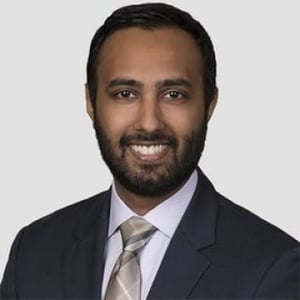
Senior Vice President & General Counsel, CTIA
Umair Javed serves as Senior Vice President and General Counsel. He joined CTIA in 2023 as Senior Vice President, Spectrum, where he was responsible for advancing the wireless industry’s spectrum priorities both domestically and internationally.
Prior to joining CTIA, Umair influenced global and domestic law and policy as Chief Counsel to FCC Chairwoman Jessica Rosenworcel. He served as the FCC designee on President Biden’s Competition Council, led the FCC’s National Security Policy Council, and represented the agency at international treaty-writing conferences. During his time at the FCC, Umair also crafted the FCC’s Spectrum Coordination Initiative, oversaw the third-highest grossing spectrum auction in FCC history, coordinated the deployment of 5G services in the C-band, and partnered with Congress on passage and FCC implementation of the Infrastructure Investment and Jobs Act, Secure and Trusted Communications Networks Act, and Secure Equipment Act.
From October 2017 to January 2019, Umair served as Legal Advisor, Wireless and International in the Office of FCC Commissioner Rosenworcel. He joined the FCC from Wiley Rein LLP, where he was an attorney in the firm’s Telecom, Media, and Technology Group.
Umair was named to the inaugural Lawyers of Color Hot List. He is also a 2021 HTTP “Tech Innovadores” recipient and the 2023 Public Safety Communications Leadership in Regulatory Service award recipient for his service at the FCC.
Umair has a Juris Doctor from the University of Virginia School of Law and a bachelor of arts in Political Philosophy, Policy, and Law from the University of Virginia. He is a member of the bar in the District of Columbia and Virginia. Umair also is a volunteer firefighter in Loudoun County, Virginia.
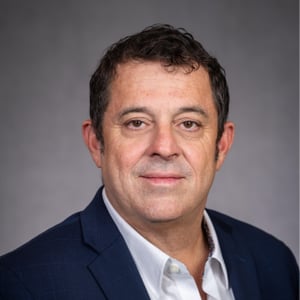
Senior Fellow for Law, Economics, and Technology, The Heritage Foundation; Professor, Florida International University
Mario Loyola is a Senior Fellow for Law, Economics, and Technology at The Heritage Foundation.
Loyola served in the Trump Administration as Associate Director for Regulatory Reform at the White House Council on Environmental Quality. In that role, he was one of the principal drafters of the One Federal Decision policy, which helped to streamline the permitting and environmental review of large infrastructure projects. While at CEQ, he was a member of the U.S. delegation to the USMCA free trade negotiations with Mexico and Canada, as well as the United Nations conference on biodiversity on the high seas. Loyola initially joined the White House in February 2017 as a Presidential Speechwriter, employing his expertise in many areas of foreign and domestic policy.
After beginning his career in M&A and corporate finance law, Loyola served in the Bush 43 Administration as a special assistant to the Undersecretary of Defense for Policy. He left that position to start writing on national defense issues in magazines such as National Review and The Weekly Standard, reporting from the front lines of the war on terrorism in Lebanon, Israel, and Iraq. He finished the Bush Administration as Foreign and Defense Counsel to the U.S. Senate Republican Policy Committee, then under the chairmanship of Senator Kay Bailey Hutchison of Texas. He subsequently moved to Texas and joined the Texas Public Policy Foundation, where he specialized in energy, environment, and federalism.
Loyola is a frequent contributor to The Wall Street Journal, National Review, and The Atlantic, among others. He teaches environmental and administrative law at Florida International University, where he is Founding Director of the Environmental Finance and Risk Management program in FIU’s prestigious Institute of Environment. He received a bachelor’s degree in European history from the University of Wisconsin–Madison and a J.D. from Washington University School of Law.
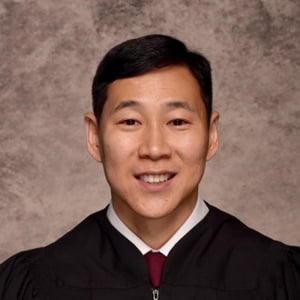
Circuit Judge, United States Court of Appeals for the Second Circuit
Michael H. Park was appointed to the U.S. Court of Appeals for the Second Circuit in May 2019. He earned his A.B. magna cum laude from Princeton University and his J.D. from Yale Law School, where he served as Managing Editor of the Yale Law Journal. Upon graduation from law school in 2001, Judge Park served as a law clerk to then-Judge Samuel A. Alito, Jr. on the Third Circuit, for whom he also clerked on the Supreme Court during the 2008 Term. Judge Park was an associate in the New York office of the Wilmer Hale law firm from 2002 to 2006, and he served as an Attorney-Adviser in the U.S. Department of Justice, Office of Legal Counsel from 2006 to 2008. Judge Park worked in the New York office of the Dechert law firm, first as counsel (2009-2011) and then as a partner (2012-2015). In 2015, Judge Park joined the law firm Consovoy McCarthy Park as a name partner, where he specialized in appellate and complex civil litigation. During that time, he also served as an adjunct professor at the Antonin Scalia Law School at George Mason University.

Founder, Law Office of Eileen J. O'Connor PLLC
After nearly 30 years as a national tax specialist with the IRS and major accounting firms, Eileen J. O’Connor, now an attorney in private practice, was Assistant Attorney General for the Justice Department’s Tax Division for six years during the administration of President George W. Bush and a member of then-President-elect Trump’s Treasury Department Transition Team. She focuses on federal administrative and tax law.
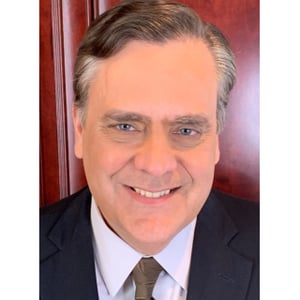
J.B. and Maurice C. Shapiro Professor of Public Interest Law, The George Washington University Law School
Jonathan Turley is a nationally recognized legal scholar who has written extensively in areas ranging from constitutional law to legal theory to tort law. After a stint at Tulane Law School, Professor Turley joined the GW Law faculty in 1990, and in 1998, became the youngest chaired professor in the university's history.
He is the founder and executive director of the Project for Older Prisoners (POPS). He has written more than three dozen academic articles that have appeared in a variety of leading law journals including those of Cornell, Duke, Georgetown, Harvard, and Northwestern Universities, among others. He most recently completed a three-part study of the historical and constitutional evolution of the military system.
Professor Turley has served as counsel in some of the most notable cases in the last two decades, including his representation of the Area 51 workers at a secret air base in Nevada; the nuclear couriers at Oak Ridge, Tennessee; the Rocky Flats grand jury in Colorado; Dr. Eric Foretich, the husband in the Elizabeth Morgan custody controversy; and four former U.S. Attorney Generals during the Clinton impeachment litigation. Professor Turley also has served as counsel in a variety of national security and terrorism cases, and has been ranked as one of the top 10 lawyers handling military cases.
He has served as a consultant on statutory and constitutional issues, and he has been a witness in over 100 hearings before the House and Senate, including the impeachments of Presidents Bill Clinton and Donald Trump. He also is a nationally recognized legal commentator; he ranked 38th in the top 100 most cited ‘public intellectuals’ in a recent study by Judge Richard Posner and was found to be the second most cited law professor in the country.
He is a member of the USA Today board of contributors and the recipient of the “2005 Single Issue Advocate of the Year” – the annual opinion award for the Aspen Institute and The Week magazine. Hundreds of his articles on legal and policy issues regularly appear in national newspapers. He also has worked as the legal analyst for four networks, CBS, NBC, BBC, and Fox. After 30 years as a columnist and commentator, the Washington Post called him the "Dean of Legal Analysts."
He is a best-selling author, including his latest New York Times bestseller "Rage and the Republic: The Unfinished Story of the American Revolution." (Simon & Schuster 2026). Turley's blog, Res Ipsa (www.jonathanturley.org), is one of the most read legal sites in the country.
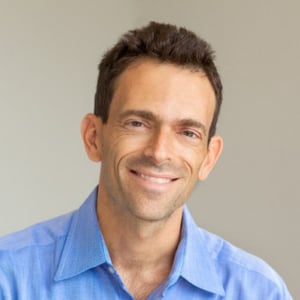
Professor, University of Southern California Gould School of Law
Jonathan Barnett is the Torrey H. Webb Professor of Law at the Gould School of Law, University of Southern California. He founded and currently directs the USC Media, Entertainment and Technology Law Program. Barnett specializes in intellectual property, contracts, antitrust, and corporate law. Barnett has published in the Harvard Law Review, Yale Law Journal, Journal of Legal Studies, Review of Law & Economics, Journal of Corporation Law and other scholarly journals.
He joined USC Law in fall 2006 and was a visiting professor at New York University School of Law in fall 2010. Prior to academia, Barnett practiced corporate law as a senior associate at Cleary Gottlieb Steen & Hamilton in New York, specializing in private equity and mergers and acquisitions transactions. He was also a visiting assistant professor at Fordham University School of Law in New York. A magna cum laude graduate of University of Pennsylvania, Barnett received a MPhil from Cambridge University and a JD from Yale Law School.
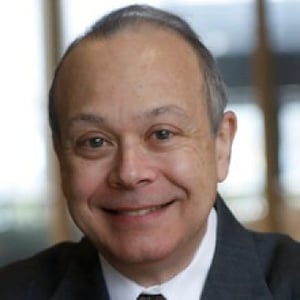
Taft, Stettinius & Hollister Professor of Law, University of Minnesota Law School
Professor Thomas F. Cotter joined the University of Minnesota Law School faculty in 2006. He received his B.S. and M.S. degrees in economics from the University of Wisconsin-Madison, and in 1987 graduated magna cum laude from the University of Wisconsin Law School, where he served as Senior Articles Editor of the Wisconsin Law Review and was elected to the Order of the Coif.
From 1987-89, Professor Cotter clerked for the Honorable Lawrence W. Pierce, United States Court of Appeals for the Second Circuit. He practiced law at Cravath, Swaine & Moore in New York City from 1988-90, and at Jenner & Block in Chicago from 1990-94. From 1994-2005, he taught at the University of Florida College of Law, where he held a University of Florida Research Foundation Professorship and directed the school’s Intellectual Property Law Program. From 2005-06, he was a Professor of Law at Washington and Lee University School of Law. In 2007, he was named to a two-year Solly Robins Distinguished Research Fellowship at the University of Minnesota Law School, and in 2008 was named to the Taft, Stettinius & Hollister Chair in Law.
Professor Cotter’s principal research and teaching interests are in the fields of domestic and international intellectual property law, antitrust, and law and economics. He is the author of six books—Patent Wars: How Patents Impact Our Daily Lives (Oxford Univ. Press, 2018); Trademarks, Unfair Competition, and Business Torts (with Barton Beebe, Mark A. Lemley, Peter S. Menell, and Robert P. Merges) (Wolters Kluwer 2d ed., 2016; 1st ed., 2011); Law and Economics: Positive, Normative, and Behavioral Perspectives (with Jeffrey L. Harrison) (3d ed., Thomson West, 2013); Comparative Patent Remedies: A Legal and Economic Analysis (Oxford University Press, 2013); and Intellectual Property: Economic and Legal Dimensions of Rights and Remedies (with Roger D. Blair) (Cambridge University Press 2005).
Altogether he has authored or coauthored over 60 other scholarly works, including articles in the California Law Review, the Georgetown Law Journal, the Iowa Law Review, the Minnesota Law Review, and the University of Illinois Law Review. He also publishes a blog, ComparativePatentRemedies.com, on the law (both foreign and domestic) and economics of patent remedies. Most recently, the Innovators Network Foundation, in partnership with ACT|The App Association, appointed Professor Cotter to a one-year Intellectual Property Fellowship.
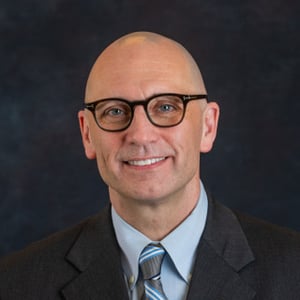
Senior Counsel for Law and Policy, Committee for Justice
Jeff is a registered patent attorney and an intellectual property and innovation policy professional with a unique combination of training and real-world experience. Jeff is also currently a PhD candidate at the University of Pittsburgh Graduate School of Public and International Affairs (GSPIA). His dissertation is entitled “An Inquiry into the Nature and Causes of American Innovation: An Austrian Economics Perspective.”
Jeff maintains an active intellectual property law practice in the life sciences space. While counseling clients and working on his dissertation and other scholarship, Jeff remains active in the policy analysis and advocacy space. He currently serves as the President of the Association for American Innovation and a member and former Chair of the Public Policy Legal Task Force (PPLTF) for the Association of University of Technology Managers (AUTM).
Jeff has a bachelor’s degree chemical and biomedical engineering with concentrations in molecular biology and fermentation technology and from Carnegie Mellon. He also has a master’s degree in industrial administration (business) from Carnegie Mellon where he concentrated on international management, marketing and finance. He earned his law degree from the Duquesne University School of Law with a focus on intellectual property law.
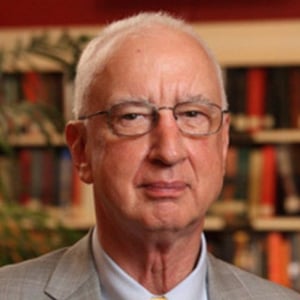
Former Chief Judge, United States Court of Appeals for the Federal Circuit
Judge Michel served for more than 22 years on the Federal Circuit, retiring on May 31, 2010. From December 25, 2004 until his retirement, he also discharged the duties of Chief Judge of this national court, serving simultaneously on the U.S. Judicial Conference -- the Judiciary's governing body -- and by appointment of the Chief Justice on its seven-judge Executive Committee.
He judged several thousand appeals and authored more than 800 opinions, one third concerning intellectual property law. Intellectual Asset Management magazine inducted him into its Hall of Fame and he was designated one of the 50 most influential leaders in intellectual property law in the world. His contributions were also recognized by lifetime achievement and similar awards by the American Intellectual Property Law Association (AIPLA); Intellectual Property Owners Education Foundation (IPO); the American Bar Association's Intellectual Property Section; Managing Intellectual Property magazine; the Sedona Conference; the Patent and Trademark Office Society (PTOS); the New York, Chicago, Philadelphia, and Los Angeles Intellectual Property Law Associations; and the William C. Connor, the Giles S. Rich, and the Richard Linn Intellectual Property American Inns of Court. In 2010 the Los Angeles IP Inn was renamed in his honor as the Paul R. Michel IP Inn.
Judge Michel received the Jefferson Medal, the Eli Whitney Award, and the Katz-Kiley Prize as well as Honorary Doctor of Law degrees from the Catholic University of America and the John Marshall Law School. He is a lifetime Member of Honore of FICPI, the international association of private practitioners of intellectual property law. Williams College granted him the Kellogg Award for "outstanding leadership in law and public service."
Judge Michel has written numerous articles on patent law and advocacy, taught related courses and master classes at George Washington University, the University of Akron, and John Marshall law schools, serving as well on their IP advisory boards and on counterpart boards at the universities of California (Berkley), Washington, and Maryland. He co-authored a casebook, Patent Litigation and Strategy (West, 1999) and an August 2010 editorial in the New York Times on strengthening the patent system to promote prosperity and create new jobs.
A frequent speaker at conferences and law schools during his judicial tenure and since, he retired from a lifetime appointment to be free to speak out on the national need for better patent policy and protection of intellectual property and the vital, unmet resource needs of the courts, the PTO, the International Trade Commission, and other IP-related agencies. He was appointed Distinguished Scholar in Residence by IPO, following his retirement. Judge Michel also consults for law firms and their clients in intellectual property litigations, conducting moot courts, mock trials, case evaluations, editing briefs, advising on strategy and providing mediation and arbitration services.
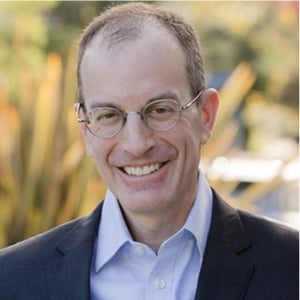
Managing Director, Achieve Partners
Ryan is a Managing Director at Achieve Partners and was formerly an MD at University Ventures. Ryan’s commentary on where the puck is going in education and workforce regularly appears in the biweekly Gap Letter, Forbes, and Inside Higher Education. He is the author of the book Apprentice Nation: How the "Earn and Learn" Alternative to Higher Education Will Create a Stronger and Fairer America (2023). He is also author of A New U: Faster + Cheaper Alternatives to College (2018), which describes the critical importance of last-mile training and the emergence of bootcamps, income share programs, staffing and apprenticeship models as preferred pathways to good first digital jobs and was named in the Wall Street Journal as one the Books of the Year for 2018. Ryan’s first book was College Disrupted: The Great Unbundling of Higher Education (2015), which profiles the coming shift toward competency-based education and hiring. Ryan is a co-founder of Apprenticeships for America, a national nonprofit dedicated to scaling apprenticeships across the U.S. economy and is a senior fellow at the Progressive Policy Institute.
Previously, Ryan led the Education & Training sector at Warburg Pincus. His prior experience in higher education was at Columbia University. Ryan also founded and built Wellspring, a national network of boarding schools and summer camps for overweight and obese children, adolescents, and young adults. He began his career at McKinsey & Co.
Ryan received bachelor's degrees summa cum laude and Phi Beta Kappa from Yale University, and his law degree from the Yale Law School.
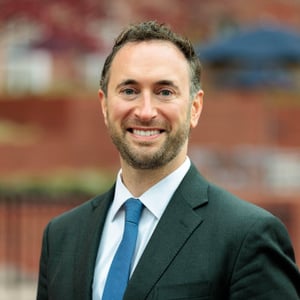
Associate Dean for Academic Affairs, The George Washington University Law School
Aram A. Gavoor is the Associate Dean for Academic Affairs and an internationally recognized scholar in American administrative law, national security, and federal courts. His co-authored work was cited by the U.S. Supreme Court in Department of Commerce v. New York (2019). His scholarship has earned placement in the Florida Law Review, Indiana Law Journal, Ohio State Law Journal, and other law journals. He has briefed and argued over a dozen high-profile public law cases before a majority of the U.S. Courts of Appeals and numerous cases before almost a third of the 94 U.S. District Courts. Associate Dean Gavoor frequently shares his national security, artificial intelligence policy, and federal courts expertise with international news media, including CNN, BBC World News, Wall Street Journal, NBC News, and ABC (Australia) World News. In 2021, the National Law Journal named Associate Dean Gavoor a Rising Star (top 40 under 40) honoree.
Earlier in his career, Associate Dean Gavoor served as Senior Counsel for National Security in the Civil Division of the U.S. Department of Justice, as third-in-rank Counselor to the Administrator of the Office of Information and Regulatory Affairs in the White House Office of Management and Budget, and in private practice. He received the Attorney General's Award for Distinguished Service in 2019, the Civil Division Special Commendation Award in 2020, 2019, and 2018, and a Commendation from the Human Rights and Special Prosecutions Section of the Criminal Division in 2018.
Associate Dean Gavoor previously served on the law school’s part-time faculty from 2008-2017 before accepting a term-limited position as Visiting Associate Professor from 2017-2019. He received GW Law’s Distinguished Adjunct Faculty Teaching Award from the 2020 and 2017 graduating classes. He currently teaches Constitutional Law II, Administrative Law, National Security Law, and Federal Courts.
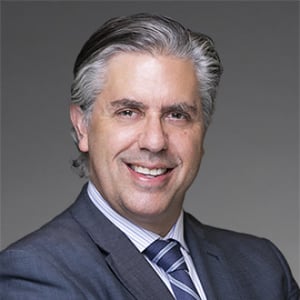
Associate Judge, Superior Court of the District of Columbia and President of the Bar Association of the District of Columbia
Craig E. Leen is an Associate Judge of the Superior Court of the District of Columbia. He also serves as the 139th President of the Bar Association of the District of Columbia and a Professorial Lecturer in Law at George Washington University School of Law.
Prior to being sworn in, Judge Leen was a partner at K&L Gates in the Washington, DC office focused on labor & employment, litigation, government contracts, and administrative & regulatory law. He was also the pro bono coordinator for the DC office.
Judge Leen was formerly a federal agency head, serving as Director of the Office of Federal Contract Compliance Programs (OFCCP) at the U.S. Department of Labor.
Prior to his federal service at OFCCP, Judge Leen was the City Attorney of the City of Coral Gables, and before that was Chief of the Appeals Section and then Chief of the Federal Litigation Section at the Miami-Dade County Attorney's Office. Earlier in his career, Judge Leen served as a law clerk to the Honorable Robert E. Keeton, United States District Judge, District of Massachusetts.
In recognition of his public service, Judge Leen received the Secretary's Exceptional Achievement Award - Professional while at the U.S. Department of Labor, and the Paul S. Buchman Award for Outstanding Contribution in the Area of Legal Public Service while in local government.
Judge Leen received his Juris Doctor from Columbia Law School, graduating as a Harlan Fiske Stone Scholar, and having served as a teaching fellow in both Contracts and Torts. Judge Leen received his Bachelor of Arts, cum laude, from Georgetown University, where he majored in both Government and Economics.

Founder and CEO, One Workforce Solutions
John Pallasch is Founder and CEO of One Workforce Solutions. He was previously the Senate-confirmed Assistant Secretary for Employment and Training at the U.S. Labor Department.
Assistant Secretary Pallasch’s appointment marked his return to the Department where he previously served as Special Assistant to the Assistant Secretary for Administration and Management and the Deputy Assistant Secretary in the Mine Safety and Health Administration (MSHA).
Prior to his return to DOL, Pallasch served as the Executive Director of the Commonwealth of Kentucky’s Office of Employment and Training where he led initiatives to improve outcomes for workforce education programs, increase accountability and performance of the unemployment insurance program, and consolidate job training and workforce development programs in a single cabinet agency.
An Illinois native, Pallasch earned a Bachelor of Science degree from The Ohio State University and a Juris Doctor from Pepperdine University
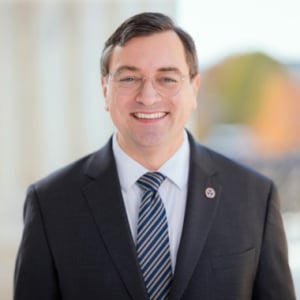
Attorney General of Tennessee
Jonathan Skrmetti was sworn in to an eight-year term as Tennessee’s Attorney General and Reporter on September 1, 2022.
Prior to his current role, General Skrmetti served as Chief Counsel to Governor Bill Lee and as Chief Deputy Attorney General to his predecessor, Tennessee Attorney General Herbert Slatery.
Before working for the State of Tennessee, General Skrmetti was a partner at Butler Snow LLP in Memphis. His legal career began with nearly a decade as a federal prosecutor. He worked at the Civil Rights Division at Main Justice and then at the Memphis U.S. Attorney’s Office and prosecuted sex traffickers, corrupt government officials, and violent white supremacists. In addition, General Skrmetti taught cyberlaw as an adjunct professor at the University of Memphis.
General Skrmetti earned honors degrees from George Washington University, the University of Oxford, and Harvard Law School, where he was editor-in-chief of the Harvard Journal of Law & Public Policy. Following law school, Jonathan clerked for Judge Steven Colloton on the U.S. Court of Appeals for the Eighth Circuit. He lives in Franklin, Tennessee, with his wife and four children.

Executive Vice President, Chief Legal Officer, Gates Corporation
Matthew R. A. Heiman joined the Company in May 2026 and has served as the Company’s Chief Legal Officer and Corporate Secretary since June 2026. As Chief Legal Officer, Mr. Heiman is responsible for all legal functions for Gates, including securities and corporate governance, M&A, litigation, commercial, regulatory, compliance, patents and trademarks, real estate, employment and labor, sustainability and environmental matters. Prior to joining Gates, Mr. Heiman held senior legal leadership roles at Waystar, where he served as Chief Legal & Administrative Officer from 2023 to 2025 and as General Counsel and Corporate Secretary from 2020 to 2023. Prior to that, he was with Johnson Controls, where he served as Vice President, Corporate Secretary, and Associate General Counsel. Mr. Heiman has been a Senior Fellow for the National Security Institute at George Mason University’s Antonin Scalia School of Law since 2018.
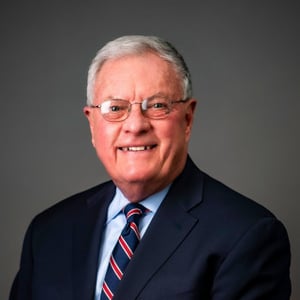
Co-Chair, Center for American Security
General Keith Kellogg was born in Dayton, Ohio, grew up in California, and 23 global and stateside military moves later, settled in Virginia, where he serves as co-Chair of the Center for American Security at AFPI. Kellogg is a highly decorated, retired three-star Army General and has extensive experience in the military and international business. Most recently, he was the National Security Advisor to former Vice President Mike Pence. He also served as the Chief of Staff and Executive Secretary of the National Security Council. Kellogg has wide-ranging experience in Europe, the Pacific, the Middle East, and Africa. He has served as an author and contributor on Fox News and CNN. Kellogg graduated from Santa Clara University with a degree in Political Science and went on to receive his master’s degree in International Studies from Kansas University. Kellogg and his wife, Paige, have three children, and love nothing more than having their four grandchildren stay with them and spoil them with anything they want. It drives their parents nuts.

Director of Foreign and Defense Policy Studies, American Enterprise Institute
Kori Schake leads foreign and defense policy studies at the American Enterprise Institute. She is the author of Safe Passage: the Transition from British to American Hegemony, and with Jim Mattis the editor of Warriors and Citizens: American Views on Our Military. Dr. Schake has taught at Stanford, Johns Hopkins SAIS, and West Point. She has also had a distinguished career in government, working at the US State Department, the US Department of Defense, and the National Security Council.
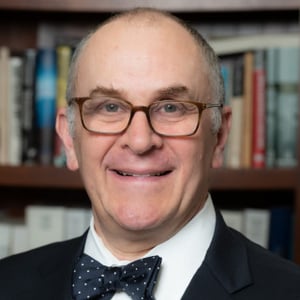
Robert E. Osgood Professor, School of Advanced International Studies, Johns Hopkins University
Eliot Cohen is the Robert E. Osgood Professor at the Johns Hopkins University’s School of Advanced International Studies (SAIS) where he has taught since 1990. He served as Dean of SAIS from 2019 to 2021. Cohen received his BA and PhD degrees from Harvard University and after teaching there and at the Naval War College founded the Strategic Studies program at SAIS. His books include The Big Stick (2017), Conquered into Liberty (2011), and Supreme Command (2002). In addition to public service in the Department of Defense he served as Counselor of the Department of State from 2007 to 2009. He writes frequently for major newspapers and is a contributing writer at The Atlantic.
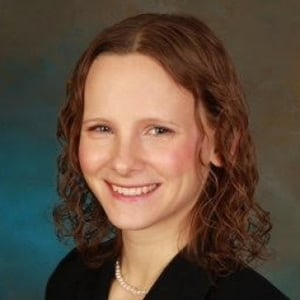
Executive Director, Center for Election Confidence
Lisa L. Dixon serves as the Executive Director of the Center for Election Confidence (formerly known as Lawyers Democracy Fund). Lisa is also a consultant for the Republican National Lawyers Association, serving as their Legal Counsel. Previously, Lisa practiced at Holtzman Vogel, where she specialized in tax-exempt organizations, campaign finance and election law, and lobbying compliance.
During law school, she interned for the Office of Chief Counsel, Procedure and Administration, at the Internal Revenue Service and at the Center for Law and Religious Freedom. Before law school, she served as the Assistant Student Division Director at The Federalist Society for Law and Public Policy Studies and interned at The Heritage Foundation’s Center for Legal and Judicial Studies.
Lisa earned a J.D. from the University of Virginia School of Law, an M.A. in History from the University of Virginia, and a B.A. in History from Hillsdale College. After 18 years on the East Coast, mostly in northern Virginia, she recently returned to her native Michigan, where she lives with her husband and three sons.
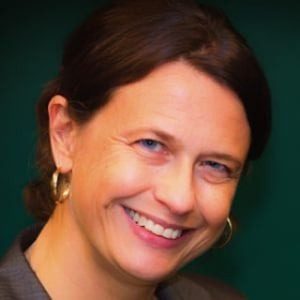
Professor, Political Science and Public Administration, University of North Carolina at Charlotte
Dr. Martha Kropf is Professor of Political Science & Public Administration at the University of North Carolina at Charlotte. Her Ph.D. is from American University in Washington, DC in Political Science (fields: American Politics, Public Policy and Public Economics). She worked two years at the University of Maryland Survey Research Center (Project Coordinator) and taught at the University of Missouri-Kansas City before coming to UNC Charlotte. Her areas of research include the study of elections and election reform, voting and political mobilization. She has published in the Journal of Politics, Political Research Quarterly and Public Opinion Quarterly. Her work has been funded by the National Science Foundation and the Aspen Institute.
Attorney
Maya M. Noronha is a civil rights attorney.
As special counsel for external affairs at First Liberty Institute, Maya worked for the largest legal organization in the United States dedicated exclusively to defending religious liberty for all Americans.
Previously, Maya worked at the U.S. Department of Health and Human Services, as acting chief of staff of the Administration for Children and Families; principal advisor to the Commissioner of the Administration on Children, Youth, and Families; and senior advisor to the Director of the Office for Civil Rights and regulatory reform officer. She provided advice on federal civil rights laws that prohibit discrimination on the basis of conscience, religion, race, color, national origin, limited English proficiency, sex, disability, age, and health information in both health care and human services.
In the area of election law, Maya has advised officials elected to or candidates for President, U.S. Senate, U.S. House of Representatives, Governor, state legislature, city council, and magisterial district judge. She practiced law at Baker Hostetler LLP, where she was on the Political Law and Federal Advocacy Teams, advising clients on voting rights, redistricting, election integrity, campaign finance, financial reporting, ethics compliance, as well as conducting trial and appellate litigation. She also has delivered legislative testimony, planned continuing legal education conferences on election law, and published about voting rights and election administration.
In addition to addressing the Federalist Society, she has delivered remarks to the White House Initiative on Asian American Pacific Islanders, United States Senate, Women in Government Relations, Georgetown University, George Mason University School of Law, the Columbus School of Law at the Catholic University of America, and Arizona State University Cronkite School of Journalism.
Maya is in Phi Beta Kappa, a member of the Alpha Sigma Nu Jesuit Honor Society, and a John Carroll Scholar. Forbes Magazine recognized Maya as one of its 30 under 30 in Law and Public Policy.
She serves concurrently on the Federalist Society’s Free Speech & Election Law Executive Committee and the American Bar Association’s Standing Committee on Election Law.
Education
· J.D., Georgetown University Law Center, 2011
· A.B., Georgetown University, 2005
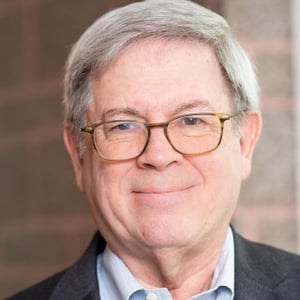
Senior Fellow, Cato Institute
Walter Olson is a senior fellow at the Cato Institute’s Robert A. Levy Center for Constitutional Studies and is known for his writing on the American legal system. His books include The Rule of Lawyers, on mass litigation, The Excuse Factory, on lawsuits in the workplace, and most recently Schools for Misrule, on the state of the law schools. His first book, The Litigation Explosion, was one of the most widely discussed general-audience books on law of its time. It led the Washington Post to dub him “intellectual guru of tort reform.” Active on social media, he is known as the founder and principal writer of what is generally considered the oldest blog on law as well as one of the most popular, Overlawyered.com. He has advised many public officials from the White House to town councils and in 2015 was named by Gov. Larry Hogan to be co-chair of the Maryland Redistricting Reform Commission, which issued its report recommendations later that year to acclaim across the state.
Before joining Cato, Olson was a senior fellow at the Manhattan Institute and an editor at the magazine Regulation, then edited by future Supreme Court Justice Antonin Scalia. Olson’s more than 400 broadcast appearances include all the major networks, NPR, the BBC, The Diane Rehm Show, and Oprah.

International and National Security Law: Engage or Disengage: How Should the Next United States Administration Interact with the International Criminal Court and International Court of Justice?
Stephanos Bibas, Charles Nelson Brower, Diane A. Desierto, Richard A. Epstein, Michael A. Newton
As international courts have addressed issues arising from the Ukraine-Russia and Israel-Hamas wars, we will...
Telecommunications & Electronic Media Practice Group: Administration in Review and What Lies Ahead: Communications and Technology Policy Challenges in Times of Transformational Change
Robin Colwell, Scott Blake Harris, Umair Javed, Mario Loyola, Michael H. Park
Featuring a conversation addressing regulation of artificial intelligence, cybersecurity, tech platform regulation, privacy, spectrum policy,...
Topics
Free Speech Coalition v. Paxton: Age Verification for Porn Sites Is Commonsense Policy and Constitutionally Sound
Age verification mandates are among society’s most widespread and prosaic legal obligations. States require age...
Talks with Authors: The Indispensable Right
Eileen J. O'Connor, Jonathan R. Turley
In his new book The Indispensable Right: Free Speech in an Age of Rage, Professor...
Patent Owners in the Soup... No Injunction for You!
Jonathan Barnett, Thomas F. Cotter, Jeffrey E. Depp, Paul Redmond Michel
Some Intellectual Property experts contend that American patent reliability has been in decline for 20...
What’s Happening with Apprenticeship? – Recent Regulatory and Subregulatory Actions
Ryan Craig, Aram A. Gavoor, Craig E. Leen, John Pallasch, Jonathan Skrmetti
Apprenticeship has been a significant focus of the Biden administration, and previously the Trump administration,...
Topics
AUKUS Nuclear Information Safeguards – More Than Just Export Controls
The Australia-United Kingdom-United States (AUKUS) trilateral agreement has real potential to be a force multiplier...
Panel II: The Future of Foreign Policy: What Should be the US’s Grand Strategy Going Forward
Matthew R. A. Heiman, Lt. General Keith Kellogg, Kori Schake
With conflict rising across the globe and a presidential election this year, the United States...
Lunch & Keynote Address - Can America Remain a Global Power?
Eliot A. Cohen
Lunch will be served at 12:00 p.m. with remarks from Prof. Eliot A. Cohen to...
Does Ranked Choice Voting Help or Hurt?
Lisa L. Dixon, Martha Kropf, Maya Noronha, Walter K. Olson
Ranked choice voting, also known as instant runoff voting, is a voting method where voters...