

Partner, Orrick, Herrington & Sutcliffe LLP
The former chief of the U.S. Justice Department’s Networks and Technology Enforcement Section (Net Tech), Jim focuses his practice on antitrust and competition law at Orrick, advocating before federal agencies on behalf of the firm’s global clients in the technology, energy & infrastructure and finance sectors.
As Net Tech chief, Jim oversaw all civil antitrust enforcement in the tech and financial services sectors, reviewing, investigating and, when necessary, litigating, every major strategic technology transaction and conduct issue in the past decade. He oversaw civil antitrust enforcement, competition advocacy, and competition policy in the areas of computer hardware and software, high-technology component manufacturing, financial services, securities industries, and professional associations. Jim also led the agency’s cooperation with antitrust and competition authorities worldwide.
Jim is a five-time recipient of the Assistant Attorney General Award of Distinction, and also received the prestigious Roberts Award in 2011 for excellence, leadership and dedication in the enforcement of antitrust laws. Prior to becoming Net Tech’s chief, he served for three years as assistant chief of the Antitrust Division’s Litigation 2 section and was a trial attorney in the agency from 1994 to 2003. He also served in the Antitrust Division’s Professions and Intellectual Property section. He clerked for Washington State Supreme Court Justices James A. Andersen and Fred H. Dore.

Laurence A. Tisch Professor of Law and Director, Classical Liberal Institute, New York University School of Law; Senior Fellow, The Civitas Institute, University of Texas at Austin
Richard A. Epstein is the inaugural Laurence A. Tisch Professor of Law at NYU School of Law. Prior to his joining the faculty, he was a visiting law professor at NYU from 2007 through 2009. He served as the Peter and Kirstin Bedford Senior Fellow at the Hoover Institution from 2000 to 2024. Since 2024 to the present he is a senior lecturer at the Civitas Institute at the University of Texas—Austin. Epstein is also the James Parker Hall Distinguished Service Professor of Law Emeritus and a senior lecturer at the University of Chicago. His initial law school appointment was at the University of Southern California from 1968 to 1972. Epstein received an LL.D., h.c. from the University of Ghent, 2003. He has been a member of the American Academy of Arts and Sciences since 1985 and was a Senior Fellow of the Center for Clinical Medical Ethics at the University of Chicago Division of Biological Sciences, also from 1983. to 2022 He served as editor of the Journal of Legal Studies from 1981 to 1991, and of the Journal of Law and Economics from 1991-2001. From 2001 to 2010 he was a director of the John M. Olin Program in Law and Economics at the University of Chicago.
His newest book, The Myth of Birthright Citizenship: What the Fourteenth Amendment Really Says was published in 2026 (Encounter Books). Prior to that he has published many books including, The Dubious Morality of the Modern Administrative State (Roman & Littlefield 2020).Earlier he published th Classical Liberal Constitution: The Uncertain Quest for Limited Government (Harvard 2014) iHis previous books include Design for Liberty: Private Property, Public Administration and the Rule of Law (Harvard 2011); The Case Against the Employee Free Choice Act (Hoover 2009); Supreme Neglect: How to Revive the Constitutional Protection of Property Rights (Oxford 2008); Antitrust Decrees in Theory and Practice: Why Less is More (AEI 2007); Overdose: How Excessive Government Regulation Stifles Pharmaceutical Innovation (Yale University Press. 2006); How Progressives Rewrote the Constitution (Cato 2006); Cases and Materials on Torts (Aspen Law & Business; 8th ed. 2004); Skepticism and Freedom: A Modern Case for Classical Liberalism (University of Chicago, 2003); Torts (Aspen Law & Business 1999); Principles for a Free Society: Reconciling Individual Liberty with the Common Good (Perseus Books, 1998): Mortal Peril: Our Inalienable Rights to Health Care (Addison-Wesley, 1997); Simple Rules for a Complex World (Harvard, 1995); Bargaining With the State (Princeton, 1993); Forbidden Grounds: The Case Against Employment Discrimination Laws (Harvard , 1992); Takings: Private Property and the Power of Eminent Domain (Harvard, 1985); and Modern Products Liability Law (Greenwood Press, 1980). He has also edited(with Catherine M. Sharkey) Cases and Materials on the Law of Torts (10th edition 2012).
Professor Epstein has written numerous articles on a wide range of legal and interdisciplinary subjects. He has taught courses in administrative law, antitrust law, civil procedure, communications, constitutional law, contracts, corporations, criminal law, employment discrimination law, environmental law, food and drug law health law and policy, legal history, labor law, property, real estate development and finance, jurisprudence, labor law; land use planning, patents, individual, estate and corporate taxation, Roman Law; torts, and workers' compensation.
Professor Epstein also writes a regular column for Civitas Institute, which also sponsors his podcast, The Libertarian with Charles C.W. Cooke, and Law Talk, with Cooke and John Yoo. He also does a podcast with John Batchelor. And appears regularly on the Freedom File with Judge Andrew Napolitano.
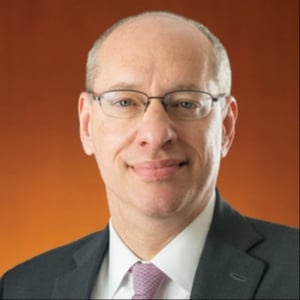
Former Chairman, Federal Trade Commission; Former Partner, Davis Polk & Wardwell
Mr. Leibowitz is a former partner in Davis Polk’s Washington DC and New York offices. His practice focuses on the complex antitrust aspects of mergers and acquisitions, as well as government and private antitrust investigations and litigation. He also provides counsel in the developing area of privacy law and with respect to advocacy involving Congress.
Mr. Leibowitz was Chairman of the Federal Trade Commission from 2009 through 2013, and was noted for his bipartisanship. He served as a Commissioner from 2004 to 2009. While at the FTC, his priorities included health care and high-tech competition.
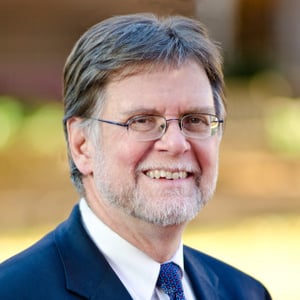
Global Competition Professor of Law and Policy, George Washington University Law School
Before joining the law school in 1999, William E. Kovacic was the George Mason University Foundation Professor at the George Mason University School of Law. From January 2006 to October 2011, he was a member of the Federal Trade Commission and chaired the agency from March 2008 to March 2009. He was the FTC’s General Counsel from June 2001 to December 2004. In 2011 he received the FTC’s Miles W. Kirkpatrick Award for Lifetime Achievement.
Since August 2013, Professor Kovacic has served as a Non-Executive Director with the United Kingdom’s Competition and Markets Authority. From January 2009 to September 2011, he was Vice-Chair for Outreach for the International Competition Network. He has advised many countries and international organizations on antitrust, consumer protection, government contracts, and the design of regulatory institutions.
At GW, Professor Kovacic has taught antitrust, contracts, and government contracts. He is co-editor (with Ariel Ezrachi) of the Journal of Antitrust Enforcement. His publications since returning to GW in 2011 include “Good Agency Practice and the Implementation of Competition Law” in European Yearbook of International Economic Law (Christoph Hermann ed. 2013); “Antitrust in High-Tech Industries: Improving the Federal Antitrust Joint Venture” in George Mason Law Review (2012); “Behavioral Economics: Implications for Regulatory Agency Behavior” in Journal of Regulatory Economics (2012) (with James Cooper); “Competition Agency Design: What’s on the Menu?” in European Competition Journal (2012) (with David Hyman); “Plus Factors and Agreement in Antitrust Law” in Michigan Law Review (2011) (with Robert Marshall, Leslie Marx & Halbert White); “Ensuring Integrity and Competition and Public Procurement Markets: A Dual Challenge for Good Governance” in The WTO Regime on Government Procurement: Challenge and Reform (Sue Arrowsmith & Robert Anderson, eds. 2011) (with Robert Anderson & Anna Caroline Mueller); “The International Competition Network: Its Past, Current, and Future Role” inMinnesota Journal of International Law (2011) (with Hugh Hollman); “The William Humphrey and Abram Myers Years: The FTC from 1925 to 1929” in Antitrust Law Journal (2011) (with Marc Winerman); Professor Kovacic also is co-author (with Andrew Gavil & Jonathan Baker) of Antitrust Law in Perspective: Cases, Concepts and Problems in Competition Policy (2d ed. 2008) and Antitrust Law & Economics in a Nutshell (5th ed. 2004) (with Ernest Gellhorn & Stephen Calkins).
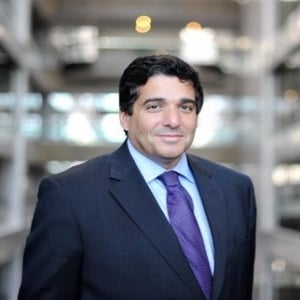
President and Founder, Bloom Strategic Counsel PLLC
Seth Bloom is the President and Founder of Bloom Strategic Counsel PLLC. Mr. Bloom, the former long-time General Counsel of the U.S. Senate Antitrust Subcommittee, is an attorney with extensive governmental and private sector experience in antitrust and competition law. He possesses substantial experience with the critical regulatory and competition issues facing key industries including telecommunications, media, Internet, and high tech; transportation and aviation; and health care.
Mr. Bloom has represented leading companies in these and other vital industries. These clients have included Comcast, Amazon, Aetna, MillerCoors LLC, Microsoft, Sprint, Masimo, Yelp, the American Association of Independent Music (A2IM), and the American Hotel and Lodging Association. Since founding his firm in 2013, Mr. Bloom has quickly become one of the leading Washington attorneys representing companies in large and complex merger transaction, particularly before Congress. He has represented MillerCoors LCC in connection with the AB InBev/SABMiller merger; Aetna in connection with its proposed merger with Humana; Pfizer in connection with its proposed merger with Allergan; and Comcast in connection with its proposed merger with Time Warner Cable. Beyond his work for major companies involved in mergers and acquisitions, Mr. Bloom has represented Yelp on Internet competition issues, the medical device manufacturer Masimo with respect to its efforts to bring greater competition to hospital purchasing of medical devices; Microsoft on competition, and patent reform issues; Sprint on competition and telecom regulatory issues; and A2IM on copyright reform, music licensing and competition issues, among other matters. In July 2013, Mr. Bloom was named to the Advisory Board of the American Antitrust Institute.
Prior to founding Bloom Strategic Counsel in March 2013, Mr. Bloom spent nearly 14 years working in the U.S. Senate on the Judiciary Committee’s Antitrust Subcommittee. He began as a counsel on the Antitrust Subcommittee staff of Sen. Kohl in 1999, who served as Chairman and Ranking Member of the Subcommittee during Mr. Bloom’s tenure. From 2008 to January 2013, Mr. Bloom served as General Counsel of the Senate Antitrust Subcommittee. In August 2012, Mr. Bloom was named to the “Hill Hot List” by National Law Journal/Legal Times as one of the top 15 lawyers working in Congress.
Mr. Bloom was responsible for numerous critical antitrust and competition issues that came before the Antitrust Subcommittee during his tenure, from the AOL/Time Warner merger in 2000 to the Comcast/NBC Universal merger in 2010 and the proposed AT&T/T-Mobile merger in 2011. Antitrust Subcommittee Chairman Kohl’s opposition to the proposed AT&T/T-Mobile merger was a key factor leading to the merger being blocked by the Justice Department and the FCC. Mr. Bloom was also the senior staffer on several landmark Antitrust Subcommittee investigations, including its 2011 investigation of allegations that Google was engaged in antitrust competitive conduct with respect to Internet search and its 2002-2004 of allegations of anticompetitive conduct in hospital purchasing of medical supplies. During his time on the antitrust subcommittee, Mr. Bloom investigated competitive conditions in numerous key industries, including telecom, high tech, media, aviation, health care, energy, and agriculture.
Mr. Bloom also was the staffer responsible for a number of significant legislative efforts sponsored by Senator Kohl, including the Railroad Antitrust Enforcement Act, the Preserve Affordable Access to Generic Drugs Act, the Discount Pricing Consumer Protection Act, and the No Oil Producing and Exporting Cartels Act (NOPEC). Each of these legislative efforts passed the Senate Judiciary Committee in several different Congresses.
Mr. Bloom has also been frequently been called on to serve as an expert speaker on critical issues of antitrust, competition, telecom, high tech, and health care policy to numerous trade, industry and legal groups, including the American Bar Association Antitrust Section, the American Antitrust Institute, the National Cable and Telecommunications Association, the Georgetown University Law Center, and the conference of Western Attorneys General, among other organizations. He has also been quoted frequently in the press regarding critical antitrust and competition policy issues, including in the Wall Street Journal, Washington Post, CNBC, Reuters, FTC Watch, and National Public Radio.
Prior to beginning his service at the Senate in 1999, Mr. Bloom spent three years as a trial attorney at the Justice Department’s Antitrust Division. During his time at the Justice Department, he investigated numerous corporate mergers, and participated in litigation directed at the enforcement of the antitrust laws. Prior to that, Mr. Bloom spent eleven years as an attorney with Washington, DC law firms, practicing in the area of complex commercial litigation. He holds a J.D. degree from the University of Pennsylvania Law School and a B.A. magna cum laude from the University of Rochester.
Co-Chair of the International Task Force, American Bar Association Section of Antitrust Law
From 1981-83 Mr. Lipsky served as Deputy Assistant Attorney General under William F. Baxter, President Reagan's first chief antitrust enforcement official, who sparked profound antitrust-law changes. In that position Mr. Lipsky supervised Supreme Court litigation in a series of groundbreaking antitrust cases. He also supervised preparation of the 1982 Department of Justice Merger Guidelines, which profoundly altered and have since become the dominant model for antitrust analysis of mergers, acquisitions and other structural transactions throughout the world. He also organized and supervised the Antitrust Division's review of United States v. IBM Corp., which culminated in a joint stipulation of dismissal without prejudice of the marathon case in 1982. He served as co-chair of the Transition Team for the Federal Trade Commission following the election of President Donald Trump, and following his retirement in February, 2017 after fifteen years of partnership at Latham & Watkins, LLP, served as the Acting Director of FTC’s Bureau of Competition until July, 2017.
Mr. Lipsky served as chief antitrust lawyer for The Coca-Cola Company from 1992-2002 and has incomparable experience with antitrust in the US, EU, Canada, Japan and other established antitrust law regimes throughout the world, as well as in new and emerging antitrust law systems in scores of jurisdictions that adopted free-market institutions following the 1991 collapse of the Soviet Union. For several decades he has participated in a variety of efforts to streamline antitrust enforcement around the world, improve the quality of antitrust analysis, harmonize international views on the fundamental objective of antitrust law, and assure that antitrust procedures are accurate, efficient and impartial both in reality and as perceived.
Mr. Lipsky served as the first International Officer of the American Bar Association Section of Antitrust Law from 2001-03. He served on the Editorial Board of Competition Laws Outside the United States (2001), the most ambitious annotated compilation of non-US competition laws yet produced. He has held a variety of senior positions among the officers and governing Council of the Section of Antitrust Law and continues to serve as a co-chair of the Section's International Task Force. He has written, spoken and testified frequently on subjects in antitrust law, economics and policy. He has served as a co-chair of the International Competition Policy Working Group of the US Chamber of Commerce, and participated as a member of the International Competition Policy Expert’s Group that recently published its Report and Recommendations (March 2017) on needed reforms of international antitrust-law enforcement.
Mr. Lipsky is admitted to practice before the US Supreme Court and various federal appellate courts. Mr. Lipsky holds a J.D. (Stanford Law School, 1976) and an M.A. in Economics (Stanford University, 1976).

Richard M. Steuer is an antitrust practitioner, author, teacher, and former Chair of both the ABA Section of Antitrust Law and the New York City Bar Association’s Antitrust Committee. He is Senior Counsel at Mayer Brown LLP in New York City, where his practice includes litigation, mergers & acquisitions, intellectual property licensing, and e-commerce. Mr. Steuer has litigated at all levels of federal and state courts, on behalf of defendants and plaintiffs, in private suits and against government entities. He represents clients in government investigations and regularly advises leading companies on structuring their business practices.
Mr. Steuer served as Chair of the ABA Section of Antitrust Law from 2011-2012. Previously, he served as the Section’s Delegate to the ABA House of Delegates and as Editorial Chair of the Section’s Antitrust magazine. For three years he also served as Chair of the Antitrust Committee of the New York City Bar Association.
Mr. Steuer has written a book and dozens of articles on antitrust law appearing in the Cornell Law Review, University of Pennsylvania Law Review, Columbia Journal of Transnational Law, St. John’s Law Review, Antitrust Law Journal, and others. He lectures frequently, including presentations at workshops conducted by the Federal Trade Commission and Department of Justice, and at programs sponsored by the International Competition Network, the ABA, the American Corporate Counsel Association, PLI, the International Franchise Association, the Conference Board and other organizations. His commentary has appeared in The New York Times and the National Law Journal. He has been quoted in the Wall Street Journal, The New York Times, USA Today, Business Week and other publications, and has appeared on CNN and CNBC television.
Mr. Steuer has taught Antitrust Law as an adjunct associate professor at N.Y.U. School of Law and an adjunct professor at St. John’s School of Law. He also served as a member of the Advisory Board of BNA’s Antitrust & Trade Regulation Report and is listed in the directories of leading competition and antitrust lawyers.
Mr. Steuer is a graduate of Columbia Law School and is admitted to practice in New York State, in the federal district courts of New York, in the Second, Third, Fifth, Tenth and Federal Circuits, and in the United States Supreme Court.

Founding Partner, Lodestar Law and Economics PLLC
Josh is the founder of Lodestar Law and Economics, PLLC. On January 1, 2013, the U.S. Senate unanimously confirmed Wright as a Commissioner of the Federal Trade Commission (FTC). He is a leading scholar in antitrust law, economics, intellectual property, regulation, and consumer protection, and has published more than 100 articles and book chapters, co-authored a leading antitrust casebook, and edited several book volumes focusing on these issues. Commentators have recognized Wright as “widely considered his generation’s greatest mind on antitrust law,” and his academic work ranks him as one of the most cited antitrust academics in the world. Wright was also awarded the Paul M. Bator Award by the Federalist Society in 2014 to “an academic who demonstrated excellence in legal scholarship, a commitment to teaching, a concern for students, and who has made a significant public impact.” Wright also served as the Executive Director of the Global Antitrust Institute, the world’s premiere academic institute focused upon antitrust education for judges and regulators and has taught hundreds of judges and thousands of regulators from dozens of countries.
Wright’s practice focuses upon helping clients solve complex competition, consumer protection, and regulatory problems by providing legal and economic analysis, strategic advice and counseling, and economic expert testimony.

Head of AI Policy, Abundance Institute
Neil Chilson is the Head of AI Policy at the Abundance Institute. Prior to this position, he served as a Senior Research Fellow at the Center for Growth and Opportunity. Chilson is a lawyer, computer scientist, and author of the book “Getting Out of Control: Emergent Leadership in a Complex World.”
Chilson was previously the senior research fellow for Technology and Innovation at Stand Together, where he guided efforts to understand and promote the legal and cultural paradigms that best enable people to discover, innovate, and improve all our lives.
Before Stand Together, Chilson was the Chief Technologist at the Federal Trade Commission, where he focused on the economics of privacy and blockchain-related issues. Previously, he was an attorney advisor to Acting FTC Chairman Maureen K. Ohlhausen. In both roles he advised Chairman Ohlhausen and worked with staff on nearly every major technology-related case, report, workshop, or other FTC proceeding since January 2014. Neil joined the FTC from telecom firm Wilkinson Barker Knauer. Neil is frequently quoted by the press and his work has appeared in numerous news outlets, including The Wall Street Journal, The Washington Post, USAToday, and Newsweek. Neil has a J.D. from The George Washington Law School, a M.S. in computer science from University of Illinois, Urbana-Champaign, and a B.S. in computer science from Harding University.

Policy Fellow, Public Knowledge
Dallas is a Policy Fellow at Public Knowledge, where she focuses on Lifeline modernization and technology transition issues.
Prior to joining Public Knowledge, Dallas was a law clerk for the firm Utrecht, Kleinfeld, Fiori, Partners. Throughout her 3 years in Washington, DC, she has interned with Public Citizen’s Congress Watch, DC City Council Member Mary Cheh, and was a summer law clerk at the Federal Trade Commission’s Bureau of Consumer Protection. In her last year of law school, she spent a semester as a Policy Extern at Facebook.
Dallas received her J.D. from The George Washington University Law School. She was born and raised in Las Vegas, Nevada and is an avid tennis player.
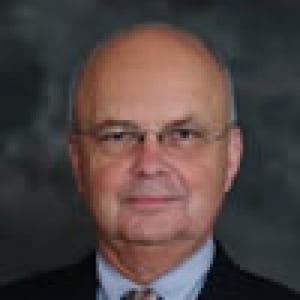
Principal, The Chertoff Group, Former NSA and CIA Director
As Director of the Central Intelligence Agency, General Michael V. Hayden was responsible for overseeing the collection of information concerning the plans, intentions and capabilities of America’s adversaries; producing timely analysis for decision makers; and conducting covert operations to thwart terrorists and other enemies of the US.
At Chertoff Group, General Hayden will uses his broad geographic and political knowledge to brief clients on intelligence matters worldwide – including developments in cybersecurity – that may affect their businesses.
Before becoming Director of the CIA, General Hayden served as the country’s first Principal Deputy Director of National Intelligence and was the highest-ranking intelligence officer in the armed forces. Earlier, he served as Commander of the Air Intelligence Agency, Director of the Joint Command and Control Warfare Center, Director of the National Security Agency and Chief of the Central Security Service.
General Hayden graduated from Duquesne University with a bachelor’s degree in history in 1967 and a master’s degree in modern American history in 1969. He also did postgraduate work at the Defense Intelligence School conducted by the Defense Intelligence Agency. He is currently a Distinguished Visiting Professor at George Mason University.

Founder and Executive Director, National Security Institute; Assistant Professor of Law, Antonin Scalia Law School, George Mason University
Jamil N. Jaffer is the Founder and Executive Director of the National Security Institute at the Antonin Scalia Law School at George Mason University where he also serves as an Assistant Professor of Law, Director of the National Security Law and Policy Program, and Director of the Cyber, Intelligence, and National Security LLM Program. Jamil also teaches classes on counterterrorism, intelligence, surveillance, cybersecurity, and other national security matters, as well as a summer course held abroad with U.S. Supreme Court Justice Neil M. Gorsuch. Jamil is also affiliated with Stanford University’s Center for International Security and Cooperation and previously served as a Visiting Fellow at the Hoover Institution from 2016 to 2019.
Jamil is also a Venture Partner with Paladin Capital Group, where he assists the firm with investments across the full range of its themes and theses, including a focus on dual-use national security technologies. Jamil also serves on the board of directors of RangeForce, a cybersecurity training and readiness platform startup and Tozny, a digital identity startup, and on the advisory boards of U.S. Strategic Metals, North America’s largest primary producer of cobalt, a critical mineral used in EV batteries, aerospace, and other national security applications; and Constella Intelligence, a deep and dark web intelligence startup. Jamil also serves as an advisor to Beacon Global Strategies, a strategic advisory firm and Duco, a technology platform startup that connects corporations with geopolitical and international business experts. Jamil is also the managing director of Trigraph Caveat Capital, a private investment vehicle.
Among other things, Jamil currently serves on the Board of Directors for the Greater Washington Board of Trade, the Board of Advisors for the Global Cyber Alliance, and the Advisory Board of the Foundation for the Defense of Democracies’ Center on Cyber and Tech Innovation, the Executive Committee of the Reagan Institute Strategy Group. Jamil is also a Fellow at the Academy for Judaic, Christian, and Islamic Studies, an advisor to the Concordia Summit, and is a member of the Board of Directors for the Center for Intelligence Policy, the Board of Directors of Speech First, and the Executive Committee of the International Law and National Security Practice Group of the Federalist Society.
Immediately prior to his current positions, from 2015-2021, Jamil served as a senior business leader at IronNet Cybersecurity, helping take the company from a bootstrapped first-year technology products startup through two rounds of venture capital fundraising, growing from 40 employees to over 300, and through its listing on New York Stock Exchange. In his role as IronNet's Senior Vice President for Strategy, Partnerships & Corporate Development, Jamil worked directly for the co-CEOs of the company, Gen (ret.) Keith B. Alexander, the former Director of the National Security Agency and Founding Commander of U.S. Cyber Command, and Bill Welch, the former COO of Zscaler and Duo; in that role, Jamil led all of the company’s strategic and technology partnership efforts, including developing go-to-market and technology integration plans with some of the largest cloud platforms and cybersecurity companies in the market, evaluating potential acquisition targets, and developing overall corporate strategy and thought leadership around collective security and collaborative defense in the cyber arena.
Prior to his time at IronNet, Jamil served on the leadership team of the Senate Foreign Relations Committee as Chief Counsel and Senior Advisor under Chairman Bob Corker (R-TN), where he worked on key national security and foreign policy issues, including leading the drafting of the proposed Authorization for the Use of Military Force against ISIS in 2014 and 2015, the AUMF against Syria in 2013, and revisions to the 9/11 AUMF against al Qaeda. Jamil was also the lead architect of the Iran Nuclear Agreement Review Act and two sanctions laws against Russia for its first intervention in Ukraine.
Prior to joining SFRC, Jamil served as Senior Counsel to the House Permanent Select Committee on Intelligence under Chairman Mike Rogers (R-MI) where he led the committee’s oversight of NSA surveillance, NRO intelligence issues, and NGA analytic and collection matters, as well as intelligence community-wide counterterrorism issues. Jamil was also the lead architect of the Cyber Intelligence Sharing and Protection Act, the nation’s first cyber threat intelligence sharing legislation that was signed into law in 2015.
In the Bush Administration, Jamil served in the White House as an Associate Counsel to the President, handling Defense Department, State Department, and intelligence community matters, and serving as one of the White House Counsel’s primary representatives to the National Security Council Deputies Committee.
Prior to the White House, Jamil served on the leadership team of the Justice Department’s National Security Division as Counsel to the Assistant Attorney General for National Security, where he focused on counterterrorism and intelligence matters. At NSD, Jamil helped lead the division’s work on In re: Directives, the first ever two-party litigated matter in the FISA Court and the second case before the FISA Court of Review in its 30-year history. Jamil also led NSD’s efforts on the President’s Comprehensive National Cybersecurity Initiative (CNCI), including the drafting of NSPD-54/HSPD-23, and related classified matters, and advised the National Security Agency (NSA) and U.S. Cyber Command’s predecessor organization, the Joint Function Component Command for Network Warfare (JFCC-NW), on matters related to cyber intelligence collection and offensive cyber activities. For his work on these matters, Jamil was awarded the Assistant Attorney General’s Award for Special Initiative and was among the group of lawyers awarded the Director of National Intelligence’s 2008 Legal Award (Team of the Year – Cyber Legal).
Jamil also served in other positions in the Justice Department, including in the Office of Legal Policy, where he worked on the confirmations of Chief Justice John G. Roberts, Jr. and Justice Samuel A. Alito, Jr. to the United States Supreme Court.
Jamil also served as a lawyer in private practice at Kellogg Huber, a Washington, DC-based litigation boutique, as a policy advisor to Congressman Bob Goodlatte (R-VA), and as a staff member or senior advisor on a number of political campaigns, including two presidential campaigns and a presidential transition team. While in law school, Jamil was a member of the University of Chicago Law Review, managing editor of the Chicago Journal of International Law, and National Symposium Editor of the Harvard Journal of Law & Public Policy. Following law school, Jamil served as a law clerk to Judge Edith H. Jones of the United States Court of Appeals for the Fifth Circuit and, later in his career, as a law clerk to then-Judge Neil M. Gorsuch when he first joined the United States Court of Appeals for the Tenth Circuit as well as a law clerk to Justice Neil Gorsuch when he joined the U.S. Supreme Court.
Jamil has published multiple op-eds and academic articles on national security, foreign policy, cybersecurity, counterterrorism, encryption, and intelligence matters, and is the co-author of a book chapter with former NSA Director Gen. (Ret.) Keith B. Alexander on national security and the press in National Security, Leaks, and the Freedom of the Press: The Pentagon Papers Fifty Years On (2021) and a book chapter with former CIA Director Gen. (ret.) Mike Hayden on ISIS, al Qaeda, and other international terrorist groups in Choosing to Lead: American Foreign Policy for a Disordered World (2015). Jamil has also written book chapters on cybersecurity and surveillance, as well as op-eds and policy papers with former Attorney General Michael B. Mukasey, former National Counterterrorism Center Director Matt Olsen, and Congressman Mike Waltz (R-FL), among others.
Jamil has previously taught graduate-level courses in intelligence law and policy at George Washington University’s Elliott School of International Affairs and the National Intelligence University, served an outside advisor to the Cyberspace Solarium Commission, and has recently testified before committees of the U.S. Senate and House of Representatives on China, cybersecurity, counterterrorism, and other national security matters. Jamil has also recently appeared on a range of national television and radio outlets including CNN, Fox News, Fox Business, MSNBC, Bloomberg, PBS, Voice of America, and National Public Radio, and in various print and online publications, including the Wall Street Journal, New York Times, and the Washington Post on a range of national security matters including cybersecurity, counterterrorism, surveillance, encryption, privacy, and foreign policy issues.
Jamil holds degrees from UCLA (BA, cum laude), the University of Chicago Law School (JD, with honors), and the United States Naval War College (MA, with distinction).

Director of Policy Studies & Senior Fellow, The Free State Foundation
Seth L. Cooper is Director of Policy Studies & Senior Fellow at The Free State Foundation. His work on federal communications and technology policy at the Free State Foundation began in 2009.
With Randolph May, Mr. Cooper is the co-author of Modernizing Copyright Law for the Digital Age: Constitutional Foundations for Reform (2020) and Constitutional Foundations of Intellectual Property: A Natural Rights Perspective (2015), both published by Carolina Academic Press. Along with Mr. May, Mr. Cooper also co-authored A Reader on Net Neutrality and Restoring Internet Freedom (2018) and #CommActUpdate: A Communications Law Fit for the Digital Age (2017), both published by Free State Foundation Press. He previously contributed to two chapters in Communications Law and Policy in the Digital Age (2012), published by Carolina Academic Press. Mr. Cooper's work has also appeared in such publications as CommLaw Conspectus, the San Jose Mercury News, Forbes.com, the Des Moines Register, the Baltimore Sun, the Washington Examiner, and the Washington Times.
Mr. Cooper previously served as Director to the Telecommunications and Information Technology Task Force at the American Legislative Exchange Council (ALEC). Mr. Cooper served as judicial clerk to the Honorable James Johnson at the Washington State Supreme Court. His co-writings about the Washington Supreme Court have appeared in the Gonzaga Law Review and in Federalist Society publications. He has worked in law and policy staff positions at the Washington State Senate and at the Discovery Institute's Center for Science & Culture. Mr. Cooper is a 2009 Lincoln Fellow at the Claremont Institute. He also has worked in private practice in the State of Washington, handling civil legal matters involving personal injuries, small business, contracts, and wills, trusts, and estates.
Mr. Cooper earned his B.A. degree in Political Science from Pacific Lutheran University and received his J.D. from Seattle University School of Law.

President, The Free State Foundation
Randolph J. May is Founder and President of The Free State Foundation. The Free State Foundation is an independent, non-profit free market-oriented think tank founded in 2006.
From October 1999-May 2006, May was a Senior Fellow and Director of Communications Policy Studies at The Progress & Freedom Foundation, a Washington, DC-based think tank. Prior to joining PFF, he practiced communications, administrative, and regulatory law as a partner at major national law firms. From 1978 to 1981, May served as Assistant General Counsel and Associate General Counsel at the Federal Communication Commission.
May has held numerous leadership positions in bar associations. He is a past Chair of the American Bar Association’s Section of Administrative Law and Regulatory Practice. He is a Fellow of the National Academy of Public Administration. Mr. May also has served as a Public Member of the Administrative Conference of the United States and currently is a Senior Fellow at ACUS.
Mr. May has published more than two hundred articles and essays on communications, administrative and constitutional law topics. He is author of A Call for a Radical New Communications Policy: Proposals for Free Market Reform, and co-author of #CommActUpdate: A Communications Law Fit for the Digital Age and The Constitutional Foundations of Intellectual Property. Mr. May is editor of two books, Communications Law and Policy in the Digital Age: The Next Five Years and New Directions in Communications Policy. In addition, he is the co-editor of two other books, Net Neutrality or Net Neutering: Should Broadband Internet Services Be Regulated? and Communications Deregulation and FCC Reform. In the past, Mr. May has written regular columns on legal and regulatory affairs for Legal Times and the National Law Journal, leading national legal periodicals.
He received his A.B. from Duke University and his J.D. from Duke Law School, where he serves as a member of the Board of Visitors.
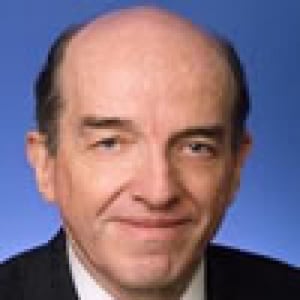
Special Adviser, Media and Democracy Reform Initiative, Common Cause
Michael Copps is special adviser for Common Cause's Media and Democracy Reform Initiative.
From 2001-11, he served as a member of the Federal Communications Commission, where his tenure was marked by a consistent embrace of the public interest. As a strong voice in opposition to consolidation in the media, he dissented in the FCC vote on the Comcast-NBC Universal merger. He has been a consistent proponent of localism in programming and diversity in media ownership. Though retired from the Commission, he has maintained a commitment to an inclusive, informative media landscape. In addition to his work at Common Causes, Mr. Copps sits on the boards of Free Press and Public Knowledge.
Before joining the FCC, Mr. Copps served as assistant secretary of commerce for trade development at the Department of Commerce and chief of staff to U.S. Sen. Fritz Hollings from the early 1970s to 1983. He has a Ph.D. in History from the University of North Carolina at Chapel Hill.

Senior Research Fellow, Center for Growth and Opportunity
William Rinehart is a Senior Research Fellow at the Center for Growth and Opportunity at Utah State University.
He specializes in telecommunication, Internet, and data policy, with a focus on emerging technologies and innovation. His work has appeared in The Wall Street Journal, Bloomberg, Wired, Morning Consult, The Hill, Forbes, Reason, Marginal Revolution, Overlawyered, and on BBC Radio and NPR, just to name a few. Rinehart speaks regularly on topics related to tech policy and has been cited in regulatory orders from the FCC as well as Supreme Court petitions.
Rinehart came to the Center from the American Action Forum, where he served as Director of Technology and Innovation Policy. He was also previously a Research Fellow at TechFreedom and the Director of Operations at the International Center for Law & Economics. Additionally, he worked for the Institute for Policy and Civic Engagement as the Research Assistant in Technology and Civic Engagement. Rinehart is currently a Frédéric Bastiat Fellow at the Mercatus Center and previously a Fellow at the Internet Law & Policy Foundry. Additionally, he served on the Federal Communications Commission’s Broadband Deployment Committee and Consumer Advocacy Committee.
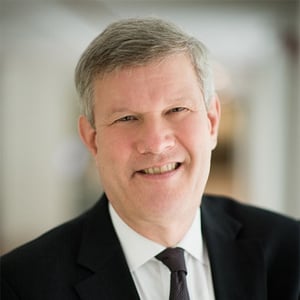
Senior Fellow and Director, Center for the Economics of the Internet, Hudson Institute
Harold Furchtgott-Roth is a senior fellow and director of the Center for the Economics of the Internet at Hudson Institute.
Mr. Furchtgott-Roth founded Furchtgott-Roth Economic Enterprises in 2003. He frequently comments on issues related to the communications sector of the economy. From 2001 to 2003, he was a visiting fellow at the American Enterprise Institute where he published A Tough Act to Follow, chronicling the difficulties implementing the Telecommunications Act of 1996.
From 1997 through 2001, Mr. Furchtgott-Roth served as a commissioner of the Federal Communications Commission. In that capacity, he served on the Joint Board on Universal Service. He is one of the few economists to have served as a federal regulatory commissioner, and the only one to have served on the Federal Communications Commission.
Before his appointment to the FCC, he was chief economist for the House Committee on Commerce and a principal staff member on the Telecommunications Act of 1996. Earlier in his career, he was a senior economist with Economists Incorporated and a research analyst with the Center for Naval Analyses.
Mr. Furchtgott-Roth is a member of the Washington Legal Foundation’s Legal Policy Advisory Board. He is the coauthor of three books: Cable TV: Regulation or Competition, with R.W. Crandall; Economics of A Disaster: The Exxon Valdez Oil Spill, with B.M. Owen et al; and International Trade in Computer Software, with S.E. Siwek.

The Justice Department's Challenge of the AT&T-Time Warner Merger
TeleforumRecent Developments in Corporate Mergers
Richard A. Epstein
In what some see as a surprise move, the Department of Justice filed suit to...
Topics
The DOJ Should Keep Its Hands Off the AT&T Acquisition of Time Warner
The antitrust world is abuzz with the surprising decision of the Department of Justice to...
Topics
The Justice Department’s Case Against the AT&T/Time Warner Merger
On Monday, November 20, the Department of Justice filed suit in the U.S. District Court...
Politics and Federal Antitrust Enforcement: Strangers or Bedfellows? - Podcast
Jon Leibowitz, William Kovacic, Seth Bloom, Tad Lipsky, Richard M. Steuer
Some antitrust lawyers often say the federal government’s decisions about which mergers to challenge, which...
Antitrust Enforcement in the Modern Era - Podcast
Joshua D. Wright
With a change in administration, businesses and consumers alike are searching the tea leaves for...
Broadband Privacy: FCC vs. FTC - Podcast
Neil Chilson, Dallas Harris
On October 27th, 2016, on a 3-2 party line vote, the Federal Communications Commission adopted...
Former NSA and CIA Director General Michael V. Hayden - Podcast
Michael V. Hayden, Jamil N. Jaffer
General Michael V. Hayden, former Director of the National Security Agency and the Central Intelligence...
The FCC Threatens the Rule of Law: A Focus on Agency Enforcement and Merger Review Abuses
Seth L. Cooper, Randolph May
Note from the Editor: This article discusses enforcement and merger review activities of the Federal...
Telecommunications Transactions and the Public Interest - Podcast
Michael J. Copps, William Rinehart, Harold W. Furchtgott-Roth
Mergers and other transactions between large telecommunications companies are always the subject of vigorous public...