
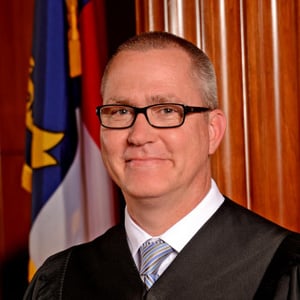
Curtis "Trey" Allen was born in Robeson County to Curtis and Elaine Allen. He obtained a bachelor's degree from UNC Pembroke and a law degree from UNC Chapel Hill.
Trey began his legal career as a judge advocate in the United States Marine Corps. He spent most of his time in the USMC overseas, and his military service included a deployment to Iraq during Operation Iraqi Freedom. As a judge advocate, Trey advised commanding generals and subordinate commanders on military justice and operational law matters, prosecuted violations of the Uniform Code of Military Justice, and helped fellow Marines resolve personal legal issues.
After being honorably discharged, Trey completed a clerkship with Justice (now Chief Justice) Paul Newby of the NC Supreme Court. He then practiced education law and became a partner at Tharrington Smith LLP in Raleigh. While in private practice, Trey successfully litigated cases involving constitutional and other claims before administrative agencies, federal and state trial courts, and appellate courts, including the NC Supreme Court. In 2013 he joined the faculty at UNC Chapel Hill, where his research, writing, and teaching focused on local government law. Trey was named Coates Distinguished Term Associate Professor of Public Law and Government for 2020-2022.
Following Paul Newby's installation as Chief Justice in January 2021, Trey was appointed General Counsel for the NC Administrative Office of the Courts. In that capacity, he provides legal guidance on a broad range of subjects to court officials across the state.
Trey is married to Teryn Melissa Smith Allen, another Robeson County native. Together they have five (awesome) children, all of whom they homeschool. Church activities, sports, and Scouting take up much of the family's free time.
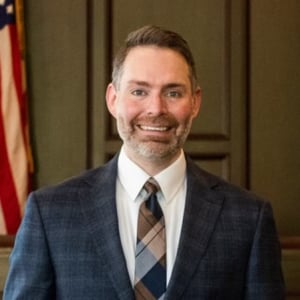
Judge, North Carolina Court of Appeals
Richard Dietz has served as a judge on the North Carolina Court of Appeals for eight years.
Judge Dietz comes from a mountain family of railroad and telephone workers. From an early age, his parents encouraged him to study hard and to get an education. He succeeded, becoming the first in his family to attend college. He went on to graduate first in his class from Wake Forest University School of Law and later earned a master’s degree from Duke University School of Law.
As a lawyer, Judge Dietz became one of the most accomplished appellate advocates in North Carolina. He has personally argued in the U.S. Supreme Court—something only a handful of lawyers in the State have ever done—and is a board-certified specialist in appellate practice. He handled cases in a wide range of constitutional areas including gun rights, religious liberty, and the free speech rights of students.
Before joining the Court of Appeals, Judge Dietz was a partner at Kilpatrick Townsend & Stockton LLP, a 650-lawyer international law firm with its roots in North Carolina. He also served as a law clerk for two highly regarded federal judges—Judge Emory Widener on the U.S. Court of Appeals for the Fourth Circuit and Judge Samuel Wilson on the U.S. District Court in Virginia—and served as a research fellow in international law at Kyushu University in Japan.
Judge Dietz joined the Court of Appeals in 2014 and is now the third-most senior judge on the 15-member court. He has distinguished himself on the Court by writing thoughtful opinions that are concise and easy for the public to read and understand.
Judge Dietz is happily married to Kelley Dietz, who is both the love of his life and his most trusted advisor. Kelley is a former Capitol Hill staffer and political appointee of President George W. Bush who now works in higher education.
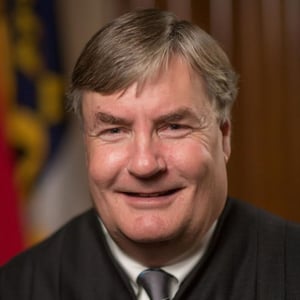
North Carolina Court of Appeals
Sam J. Ervin, IV, was born in Morganton, North Carolina, on November 18, 1955. He attended the public schools in Burke County, North Carolina, graduating from Freedom High School in 1974. In 1978, Judge Ervin was awarded an A.B., magna cum laude, from Davidson College. After graduating from Davidson, he attended Harvard Law School, from which he received a J.D., cum laude, in 1981.
From 1981 until 1999, Judge Ervin practiced law with the Morganton, North Carolina firm of Byrd, Byrd, Ervin, Whisnant, McMahon, P.A., and its predecessors. While in private practice, Judge Ervin handled a wide variety of civil, criminal, and administrative matters, including many appeals to the North Carolina Court of Appeals and the Supreme Court of North Carolina.
In 1999, Judge Ervin was nominated for a seat on the North Carolina Utilities Commission by Governor James B. Hunt, Jr. He was nominated for a second term on the Utilities Commission by Governor Michael F. Easley in 2007. Both appointments were confirmed by the General Assembly. The Utilities Commission is a quasi-judicial body that is responsible for regulating electric, natural gas, telecommunications, water and sewer, and certain types of transportation service provided to retail customers in North Carolina by privately-owned entities. During his service as a member of the Utilities Commission, Judge Ervin was involved in deciding many important regulatory matters, including, but not limited to, electric and natural gas rate proceedings, electric and natural gas business combination proceedings, proceedings involving applications by electric utilities for authority to construct new generation and transmission facilities, proceedings involving the approval of telecommunications price regulation plans, proceedings arbitrating or otherwise examining the terms and conditions under which competitive telecommunications providers were allowed to interconnect with incumbents, and proceedings addressing issues relating to the adequacy of water and sewer service in certain specific locations.
In addition, Judge Ervin was extensively involved in the activities of the National Association of Regulatory Utility Commissioners (NARUC), having served as Chairman of that organization's Subcommittee on Nuclear Issues and Waste Disposal from 2002 until 2005; as Chairman of that organization's Committee on Electricity from 2004 until 2007; and as a member of its Task Force on Climate Policy from 2007 through 2008. As part of his involvement in NARUC, Judge Ervin supervised its participation in the process that led to the implementation of the Energy Policy Act of 2005. While a member of the Utilities Commission, Judge Ervin testified on two different occasions before the Subcommittee on Energy and Air Quality of the Committee on Commerce of the United States House of Representatives. Judge Ervin was a regular speaker at energy-related conferences and seminars during his service as a Utilities Commissioner.
Judge Ervin has also been, at various times, involved in a wide variety of church-related, bar-related, and charitable activities. He is married to Mary Temple Ervin and has two children and two step-children.
Judge Ervin was elected to the North Carolina Court of Appeals at the November 4, 2008, general election. His term as a member of the Court of Appeals commenced on January 1, 2009, and extends until December 31, 2017.
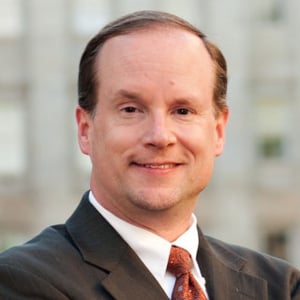
President, John William Pope Foundation
John Hood is president of the John William Pope Foundation. Hood also serves on the board of the John Locke Foundation, the state policy think tank he helped found in 1989 and led as its president for more than two decades.
Since 1986, Hood has written a syndicated column on politics and public policy for North Carolina newspapers. It appears regularly in more than 50 papers across the state. A frequent radio and television commentator, Hood is the author of seven nonfiction books on such subjects as business, advertising, public policy, and political history. His latest three books — Mountain Folk, Forest Folk, and Water Folk — are historical-fantasy novels set in early America.
A former Bradley Fellow at the Heritage Foundation, Hood teaches at Duke University’s Sanford School of Public Policy. His articles have appeared in magazines such as Readers’ Digest, The New Republic, National Review, Military History, and Reason as well as newspapers such as The Wall Street Journal and USA Today. His broadcast appearances include CNN, NBC News, National Public Radio, and Fox News.
At Locke, Hood created the E.A. Morris Fellowship for Emerging Leaders, which prepares young North Carolinians for leadership roles in the public and private sectors. He also serves on the faculty and as board chair of the NC Institute of Public Leadership; as co-chair of the North Carolina Leadership Forum, based at Duke University; as vice-chair of the James G. Martin Center for Academic Renewal, State Policy Network, and the Carolina Liberty Foundation; and on the board the Student Free Press Association.
Hood received his BA in journalism from the University of North Carolina at Chapel Hill, where he serves as vice chair of North Carolina Public Radio-WUNC and on the foundation board of the Hussman School of Journalism and Media. He earned a MA in liberal studies and a graduate certificate in nonprofit management from UNC-Greensboro.
A native of Mecklenburg County, Hood now resides in Wake County with his wife, two sons, and a stepdaughter.
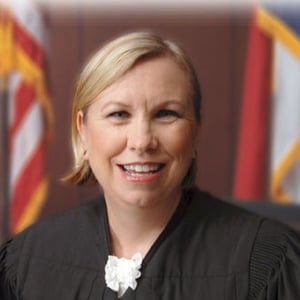
Judge, North Carolina Court of Appeals
Lucy Inman, a judge on the North Carolina Court of Appeals, is a candidate for the North Carolina Supreme Court in 2020. Judge Inman was elected statewide to the Court of Appeals in 2014.
Judge Inman was raised in Raleigh by parents who taught her the value of hard work and respect for people of all races, faiths, and walks of life. She graduated from Sanderson High School and earned a degree in English from N.C. State University.
Judge Inman’s first career was as a newspaper reporter. While covering court proceedings, she was inspired to participate in the justice system. She then moved to Chapel Hill and earned her law degree from UNC School of Law in 1990. Her first job after law school was working as a law clerk for North Carolina Supreme Court Chief Justice Jim Exum.
Judge Inman went on to practice civil litigation for 18 years, first in Los Angeles and then back home in Raleigh. Her clients included small business owners, large corporations, famous individuals, and lesser known -- but no less important -- survivors of negligence, fraud, and sexual abuse.
In 2010, Judge Inman was appointed by Governor Beverly Perdue to serve as a special superior court judge. She served in that role for four years, presiding in hearings and jury trials across North Carolina. Since her election to the Court of Appeals, Judge Inman has authored over 400 appellate decisions in a wide variety of cases, including criminal, civil, and constitutional disputes. She has presided in thousands of other cases.
Judge Inman brings hard work and respect for all others to her personal and professional life every day. She hopes to bring these values, and equal justice for all, to the North Carolina Supreme Court.
Judge Inman and her husband Billy Warden live in Raleigh. They have two college-age children and a black lab rescue who keeps their nest from ever being empty.
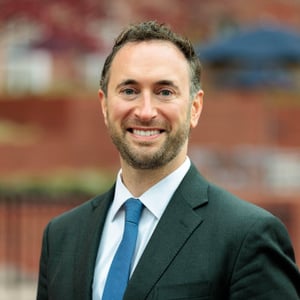
Associate Dean for Academic Affairs, The George Washington University Law School
Aram A. Gavoor is the Associate Dean for Academic Affairs and an internationally recognized scholar in American administrative law, national security, and federal courts. His co-authored work was cited by the U.S. Supreme Court in Department of Commerce v. New York (2019). His scholarship has earned placement in the Florida Law Review, Indiana Law Journal, Ohio State Law Journal, and other law journals. He has briefed and argued over a dozen high-profile public law cases before a majority of the U.S. Courts of Appeals and numerous cases before almost a third of the 94 U.S. District Courts. Associate Dean Gavoor frequently shares his national security, artificial intelligence policy, and federal courts expertise with international news media, including CNN, BBC World News, Wall Street Journal, NBC News, and ABC (Australia) World News. In 2021, the National Law Journal named Associate Dean Gavoor a Rising Star (top 40 under 40) honoree.
Earlier in his career, Associate Dean Gavoor served as Senior Counsel for National Security in the Civil Division of the U.S. Department of Justice, as third-in-rank Counselor to the Administrator of the Office of Information and Regulatory Affairs in the White House Office of Management and Budget, and in private practice. He received the Attorney General's Award for Distinguished Service in 2019, the Civil Division Special Commendation Award in 2020, 2019, and 2018, and a Commendation from the Human Rights and Special Prosecutions Section of the Criminal Division in 2018.
Associate Dean Gavoor previously served on the law school’s part-time faculty from 2008-2017 before accepting a term-limited position as Visiting Associate Professor from 2017-2019. He received GW Law’s Distinguished Adjunct Faculty Teaching Award from the 2020 and 2017 graduating classes. He currently teaches Constitutional Law II, Administrative Law, National Security Law, and Federal Courts.
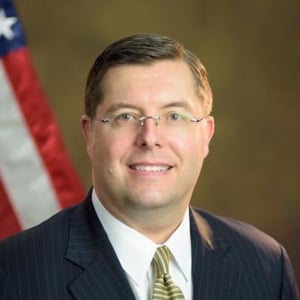
Chief Deputy Attorney General
Ryan Newman is currently Chief Deputy Attorney General for Florida Office of the Attorney General.
During the first Trump Administration, he served as Counselor to the United States Attorney General for national security and international affairs, Deputy General Counsel (Legal Counsel) for the Department of Defense, and Acting Assistant Attorney General for the Office of Legal Policy at the Department of Justice. Prior to serving in the Executive Branch, Ryan was Chief Counsel to United States Senator Ted Cruz during the 114th Congress.
Ryan served as a law clerk to the Honorable Samuel A. Alito, Jr. on the United States Supreme Court, the Honorable Richard J. Leon on the United States District Court for the District of Columbia, and the Honorable J.L. Edmondson on the United States Court of Appeals for the Eleventh Circuit.
Prior to law school, Ryan was an armor officer in the United States Army assigned to the 1st Squadron, 10th U.S. Cavalry Regiment (Buffalo Soldiers). He deployed to Iraq in 2003 for Operation Iraqi Freedom.
Ryan graduated from the United States Military Academy at West Point in 1998. He earned his law degree with high honors from The University of Texas School of Law in 2007.
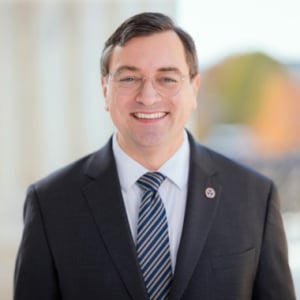
Attorney General of Tennessee
Jonathan Skrmetti was sworn in to an eight-year term as Tennessee’s Attorney General and Reporter on September 1, 2022.
Prior to his current role, General Skrmetti served as Chief Counsel to Governor Bill Lee and as Chief Deputy Attorney General to his predecessor, Tennessee Attorney General Herbert Slatery.
Before working for the State of Tennessee, General Skrmetti was a partner at Butler Snow LLP in Memphis. His legal career began with nearly a decade as a federal prosecutor. He worked at the Civil Rights Division at Main Justice and then at the Memphis U.S. Attorney’s Office and prosecuted sex traffickers, corrupt government officials, and violent white supremacists. In addition, General Skrmetti taught cyberlaw as an adjunct professor at the University of Memphis.
General Skrmetti earned honors degrees from George Washington University, the University of Oxford, and Harvard Law School, where he was editor-in-chief of the Harvard Journal of Law & Public Policy. Following law school, Jonathan clerked for Judge Steven Colloton on the U.S. Court of Appeals for the Eighth Circuit. He lives in Franklin, Tennessee, with his wife and four children.
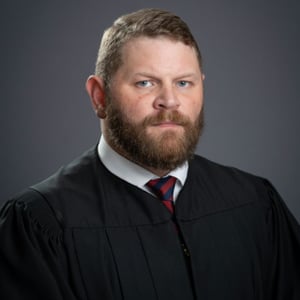
Justice, Texas Supreme Court
James P. Sullivan was appointed to the Texas Supreme Court by Governor Greg Abbott on January 7, 2025, after serving as his General Counsel. He is the proud husband of Alithea and father of Conan. Growing up in Austin, Judge Sully was an extra in the movie "Dazed & Confused." He was a highly unrecruited walk-on at Rice University, until an injury turned him into a debater. Once in law school, he met his wife, Alithea, on the Harvard Law Review. After graduating, he clerked on the D.C. Circuit for Judge Thomas B. Griffith. He also worked under then-Attorney General Abbott in the Office of the Solicitor General, in addition to stints as an adjunct professor at George Mason University and an appellate litigator in private practice.
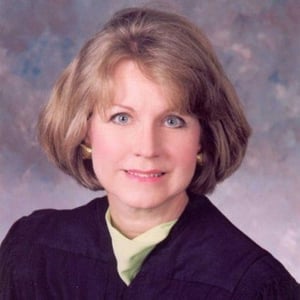
Judge, United States Court of Appeals, Fifth Circuit
Judge Edith Clement sits on the United States Court of Appeals for the Fifth Circuit. Judge Clement worked in a private practice as a maritime attorney in New Orleans, Louisiana, before being appointed in 1991 to the United States District Court for the Eastern District of Louisiana by President George H. W. Bush. In 2001, she was appointed by President George W. Bush to the United States Court of Appeals for the Fifth Circuit. Judge Clement is a member of the Maritime Law Association of the United States, the Federal Bar Association, the American Law Institute, the Federalist Society, the Tulane Law Schools Inn of Court, and the Committee on the Administrative Office of the Judicial Conference of the United States. She is a graduate of the University of Alabama and received her JD from Tulane Law School.
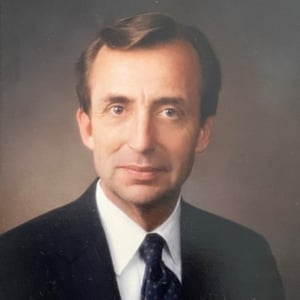
Partner, Montgomery Barnett
Harvey Charles Koch, Jr, a native of Hammond La. and a resident of New Orleans for 80 years, was born on August 15, 1934, and died peacefully on July 13, 2020, from cancer at age 85.
Mr. Koch's practice included complex commercial litigation, litigation management, insurance coverage and extra-contractual defense litigation, the construction process, construction litigation and arbitration, contract interpretation, sports and entertainment law, fidelity, surety and financial institution bonds, lawyer's malpractice, errors and omissions, life and long term care and fine arts coverages.
Mr. Koch participated in negotiations in Egypt after the Yom Kippur War leading to removal of ships sunk in the Suez Canal; represented a consortium of companies involved in reconstructing Kuwait and its oil fields after Operation Desert Storm; represented a major international insurance company in developing indemnity agreements, construction bonds, and guarantees for use with contractors in twelve foreign countries; represented the lead insurer in the adjustment of the business interruption claims of the Titan IV rockets manufacturer when the solid rocket fuel manufacturing plant supplying that missile program was destroyed in an explosion. And Mr. Koch has defended parties in complex litigation involving nuclear power and fossil fuel plants; the shipping industry; the former Louisiana Sunday Closing laws; and the resurfacing of both runways of the New Orleans International Airport (MSY) in the 1980's. Mr. Koch currently represents the international construction management firm managing all construction at the New Orleans Louis Armstrong International Airport (MSY).
As an appellate practitioner, Mr. Koch briefed the United States Supreme Court on the Insurance Industry's position on coverage issues regarding the Security Dealer's Blanket Bond, and the New Zealand Supreme Court on the interpretation by United States Courts on coverage issues related to the Financial Institution Bond.
Mr. Koch was listed in Best Lawyers in America (Construction), was a Fellow of the American College of Construction Lawyers (Founder and Former Chair of its Insurance Industry Committee and a former member of its Board of Governors), and was a consultative member of the American Law Institute. Mr. Koch chaired the American Bar Association's Fidelity and Surety Law Committee, Co-Chaired the ABA's first three National Institutes of the Forum on the Construction Industry, chaired six ABA National Law Institutes, founded and served as first Chair of the Louisiana Bar Association's Section on Construction, Fidelity and Surety Law, served as a Vice Chair of the Fidelity and Surety Law Committee of the International Association of Defense Counsel, served on both the Surety Claims Institute Board of Governors and the Advisory Council of the Chief Judge of the Court of Federal Claims in Washington, D.C., was a Trustee of the Federalist Society, was a member of the National Bond Claims Association, was one of the four Advisors Emeritus of the Fidelity Law Association and was a Life Fellow of both the American and Louisiana Bar Foundations.
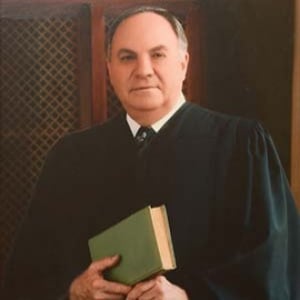
Justice, Louisiana Supreme Court
Harry Thomas Lemmon was a Justice of the Louisiana Supreme Court from May 16, 1980 to May 16, 2001. Born in Morgan City, Louisiana, Lemmon graduated from Morgan City High School in 1948, and from the University of Southwestern Louisiana in 1952. After briefly working as a chemist for American Oil Company, he served in the United States Army Chemical Corps in the Korean War. He graduated from Loyola University New Orleans College of Law in 1963, and was in private practice from then until 1970.

Ronald Reagan Distinguished Fellow Emeritus, The Heritage Foundation
Edwin Meese III, the prominent conservative leader, thinker and elder statesman, continues a quarter-century formal association with The Heritage Foundation as the leading think tank’s Ronald Reagan Distinguished Fellow Emeritus.
In that capacity, Meese oversees special projects and acts as an ambassador for Heritage within the conservative movement.
Meese was chairman of Heritage’s Center for Legal and Judicial Studies from its founding in 2001 until what he calls his “semi-retirement” on Feb. 1, 2013.
He joined Heritage in 1988 as the think tank's first Ronald Reagan Distinguished Fellow -- the only policy chair in the country to be officially named for the 40th president. His work focused on keeping President Reagan’s legacy of conservative principles alive in public debate and discourse.
The legal center now bears his name, in recognition of Meese’s contributions to the rule of law and the nation’s understanding of constitutional law. Its mission is to educate government officials, the media and the public about the Constitution and legal principles -- and how they affect public policy.
Perhaps best known as U.S. attorney general during Reagan’s second term, Meese’s service to the conservative icon stretched from the California governor’s mansion in 1966 to the White House in 1981 before he went to the Department of Justice four years later.
His Heritage “hats” kept Meese among the major conservative voices in national policy debates at an age when most men and women enjoyed quiet retirements.
In 2006, for example, Meese was named to the Iraq Study Group, a special presidential commission dedicated to examining the best resolutions for America's involvement in Iraq. In the past few years he wrote and spoke about constitutional topics ranging from religious liberty to the responsibility of Supreme Court justices.
Immediately after Reagan's death in 2004, and in the years since, Meese often agreed to major media appearances to discuss the lasting impact of his old friend, mentor and boss. He has summarized the Reagan legacy in three accomplishments: Reagan cut taxes and kept them low. He worked to defeat and end the Soviet Union and its worldwide push for communism. And he restored America's faith in itself after years of failure and "malaise."
"I admired him as a leader and cherish his friendship," Meese wrote in a 2004 essay for Heritage members and supporters. "Ronald Reagan had strong convictions. He was committed to the principles that had led to the founding of our nation. And he had the courage to follow his convictions against all odds." <[>Edwin Meese III was born Dec. 2, 1931, to Edwin Jr. and Leone Meese in Oakland, Calif. He graduated from Yale University in 1953 and holds a law degree from the University of California-Berkeley.
Meese spent much of his adult life working for Reagan, first after the former actor, sports announcer and athlete was elected as California’s governor in 1966 and then when he sought and won the presidency in 1980.
Reagan never forgot Meese's loyalty and hard work. During a press conference at which reporters questioned Meese's actions at the Justice Department, Reagan replied: "If Ed Meese is not a good man, there are no good men."
During the Reagan governorship, Meese served as executive assistant and chief of staff from 1969 through 1974 and as legal affairs secretary from 1967 through 1968. He previously was deputy district attorney in Alameda County, Calif.
From January 1981 to February 1985, Meese held the position of counsellor to the president -- the senior job on the White House staff -- and functioned as Reagan's chief policy adviser. In 1985, he received Government Executive magazine's annual award for excellence in management.
Meese served as the 75th attorney general of the United States from February 1985 to August 1988. As the nation's chief law enforcement officer, he directed the Justice Department and led international efforts to combat terrorism, drug trafficking and organized crime.
Meese’s relationship with Heritage began when he met with senior management to discuss the think tank's landmark policy guide, Mandate for Leadership, prepared for the incoming administration. Meese later recalled that Reagan personally handed out copies of the 1,093-page book to members of his Cabinet and asked them to read it. Nearly two-thirds of Mandate's 2,000 recommendations would be adopted or attempted by the Reagan administration.
More than a decade after joining Heritage, Meese assumed the chairmanship of its Center for Legal and Judicial Studies. Under his guidance, the center counseled White House staffers, Justice Department officials and Senate Judiciary Committee members on the importance of filling judicial vacancies with qualified men and women who are committed to interpreting the Constitution according to the founding document's original meaning.
The center became known for hosting "moot court" practice sessions to sharpen the arguments of attorneys slated to bring important cases before the Supreme Court. Those cases addressed constitutional issues ranging from property rights to racial preferences in primary and secondary schools to restrictions on free speech in campaign finance law.
Meese headed the legal center's Advisory Board for the writing and editing of the best-selling book, The Heritage Guide to the Constitution (Regnery, 2005). In it, 109 experts walked readers through a clause-by-clause analysis of the Constitution. Sen. Tom Coburn (R-Okla.) was among those keeping the reference work handy during Judiciary Committee hearings on Supreme Court nominees.
Meese's other books include “Leadership, Ethics and Policing” (Prentice Hall, 2004); “Making America Safer” (Heritage, 1997); and “With Reagan: The Inside Story” (Regnery Gateway, 1992).He wrote the Introduction to a well-received 2010 book on the “overcriminalization” trend, “One Nation Under Arrest,” by Heritage veterans Paul Rosenzweig and Brian W. Walsh.
He also is a distinguished visiting fellow at the Hoover Institution at Stanford University in California and lectures, writes and consults throughout the United States on a variety of subjects.
As both attorney general and counsellor to Reagan, Meese was a member of the Cabinet and the National Security Council. He served as chairman of the Domestic Policy Council and the National Drug Policy Board. After Reagan won the White House in the 1980 election, Meese headed the transition team. During the campaign, he was the Reagan-Bush Committee's senior official.
Meese had a career outside government and politics. From 1977 to 1981, he was a law professor at the University of San Diego, where he also directed the Center for Criminal Justice Policy and Management.
He was an executive in the aerospace and transportation industry as vice president for administration of Rohr Industries Inc. in Chula Vista, Calif. He left Rohr to return to the practice of law, doing corporate and general work in San Diego County.
A retired colonel in the Army Reserve, Meese remains active in numerous civic and educational organizations.
He and his wife, Ursula, have two grown children and reside in McLean, Va.
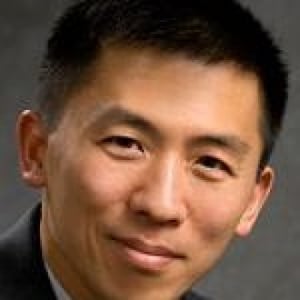
Associate Justice, California Supreme Court
Justice Goodwin Liu is an Associate Justice of the California Supreme Court. He was confirmed to office by a unanimous vote of the California Commission on Judicial Appointments on August 31, 2011, following his appointment by Governor Edmund G. Brown, Jr. on July 26, 2011. The Governor administered the oath of office to Justice Liu in a public ceremony in Sacramento, California on September 1, 2011.
Before joining the state’s highest court, Justice Liu was Professor of Law at the UC Berkeley School of Law (Boalt Hall). His primary areas of expertise are constitutional law, education law and policy, and the U.S. Supreme Court. He has published widely on these subjects in books, law reviews, and the general media.
The son of Taiwanese immigrants, Justice Liu grew up in Sacramento, where he attended public schools. He went to Stanford University and earned a bachelor’s degree in biology in 1991. He attended Oxford University on a Rhodes Scholarship and earned a masters degree in philosophy and physiology. Upon returning to the United States, he went to Washington D.C. to help launch the AmeriCorps national service program and worked for two years as a senior program officer at the Corporation for National Service.
Justice Liu graduated from Yale Law School in 1998, becoming the first in his family to earn a law degree. He clerked for Judge David Tatel on the U.S. Court of Appeals for the D.C. Circuit and then worked as Special Assistant to the Deputy Secretary of the U.S. Department of Education, where he developed and coordinated K-12 education policy. He went on to clerk at the U.S. Supreme Court for Justice Ruth Bader Ginsburg during the October 2000 Term. In 2001, he joined the appellate litigation practice of O’Melveny & Myers in Washington, D.C., and worked on an array of antitrust, white collar, insurance, product liability, and pro bono matters.
Justice Liu is a prolific and influential scholar. He has published articles on constitutional law and education policy in the California Law Review, Michigan Law Review, NYU Law Review, Stanford Law Review, and Yale Law Journal, among others. His 2006 article, “Education, Equality, and National Citizenship,” won the Steven S. Goldberg Award for Distinguished Scholarship in Education Law, conferred by the Education Law Association. Justice Liu is also a popular and acclaimed teacher. In 2009, he received UC Berkeley’s Distinguished Teaching Award, the university’s most prestigious honor for individual excellence in teaching. He earned tenure at Boalt Hall in 2008 and was promoted to Associate Dean. The Boalt Hall Class of 2009 selected him as the faculty commencement speaker.
Justice Liu serves on the Council of the American Law Institute, on the Board of Directors of the James Irvine Foundation, and on the National Academy of Sciences Committee on Science, Technology, and Law. He has previously served on the Board of Trustees of Stanford University and the board of directors of the American Constitution Society, the National Women’s Law Center, and the Public Welfare Foundation. In 2008, he was elected to the American Law Institute. He has also served as a faculty advisor to the California College Prep Academy, a public charter school co-founded by UC Berkeley and Aspire Public Schools.
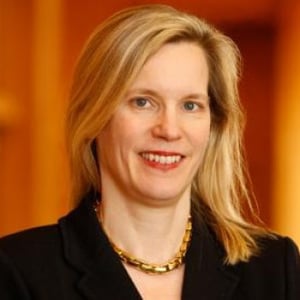
John S. Battle Professor of Law, University of Virginia School of Law
Julia D. Mahoney teaches courses in property, government finance, constitutional law and nonprofit organizations. A graduate of Yale Law School, she joined the University of Virginia faculty as an associate professor in 1999 and is now John S. Battle Professor of Law. She has also taught at the University of Southern California Law School and the University of Chicago Law School, and before entering the legal academy, practiced law at the New York firm Wachtell, Lipton, Rosen & Katz. Her scholarly articles include works on land preservation, eminent domain, health care reform and property rights in human biological materials.

Judge, United States Court of Appeals, District of Columbia Circuit
Judge Rao was appointed to the United States Court of Appeals for the District of Columbia Circuit in March 2019. She graduated from Yale College in 1995 and the University of Chicago Law School in 1999. Following graduation, she served as a law clerk to Judge J. Harvie Wilkinson III of the U.S. Court of Appeals for the Fourth Circuit and, in the 2001 October Term, as law clerk to Justice Clarence Thomas of the U.S. Supreme Court. Between her clerkships, Judge Rao served as counsel for nominations and constitutional law to the U.S. Senate Committee on the Judiciary. In 2002, she joined the international arbitration group of Clifford Chance LLP in London, England. From 2005-2006, she served as Special Assistant and Associate White House Counsel to President George W. Bush. From 2006 to 2017, Judge Rao was a professor at the Antonin Scalia Law School at George Mason University, where she taught constitutional law, legislation and statutory interpretation, and the history and foundations of the administrative state. In 2014, she founded the Center for the Study of the Administrative State, a non-profit Center that promotes academic scholarship and public policy debates about administrative law. In July 2017, she was appointed to serve as the Administrator of the Office of Information and Regulatory Affairs in the Office of Management and Budget. She served in this position until her appointment to the D.C. Circuit.

Chief Judge, United States Court of Appeals, Sixth Circuit
JEFFREY S. SUTTON is the Chief Judge of the United States Court of Appeals for the Sixth Circuit. He has served as Chair of the Federal Judicial Conference Committee on Rules of Practice and Procedure, Chair of the Advisory Committee on Appellate Rules, and Chair of the Supreme Court Fellows Commission. He currently serves as Chair of the Executive Committee of the Judicial Conference of the United States. Since 1993, Chief Judge Sutton has been an adjunct professor at The Ohio State University College of Law, where he teaches seminars on State Constitutional Law, the United States Supreme Court, and Appellate Advocacy. He also teaches a class on State Constitutional Law at Harvard Law School. Among other publications, he is the author of Who Decides? States as Laboratories of Constitutional Experimentation and 51 Imperfect Solutions: States and the Making of American Constitutional Law. He is the co-author of a casebook, State Constitutional Law: The Modern Experience, as well as The Law of Judicial Precedent. He is also the co-editor of The Essential Scalia: On the Constitution, the Courts, and the Rule of Law. In 2006, Chief Judge Sutton was elected to the American Law Institute, and in 2017 he was elected to its Council.
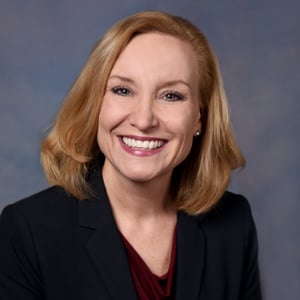
Judge, United States Court of Appeals, Sixth Circuit
The Honorable Joan L. Larsen is a judge of the United States Court of Appeals for the Sixth Circuit. She was nominated by the President on May 8, 2017 and confirmed by the Senate on November 1, 2017. Before her appointment to the federal bench, Judge Larsen served two terms as a Justice of the Michigan Supreme Court, where she was the court’s liaison to Michigan’s drug, sobriety, mental health and veteran’s courts.
Before becoming a judge, Judge Larsen was a faculty member at the University of Michigan Law School, where she was also Special Counsel to the Dean and received the L. Hart Wright Award for Excellence in Teaching. Judge Larsen's research and teaching interests included constitutional law, criminal procedure, statutory interpretation, and presidential power. Judge Larsen continues to assist the law school as the adviser to the Henry M. Campbell Moot Court Competition.
Judge Larsen began her legal career as a law clerk to the Hon. David B. Sentelle of the United States Court of Appeals for the D.C. Circuit and to Justice Antonin Scalia of the Supreme Court of the United States. Following her clerkships, she joined the law firm of Sidley Austin, where she was a member of the Constitutional, Criminal, and Civil Litigation Section. She later served as Deputy Assistant Attorney General in the United States Department of Justice, Office of Legal Counsel.
Judge Larsen graduated first in her class from Northwestern University School of Law, where she served as articles editor of the Northwestern University Law Review and earned the John Paul Stevens Award for Academic Excellence. She received her B.A., with highest honors, from the University of Northern Iowa.
Associate Justice, California Supreme Court
Justice Goodwin Liu is an Associate Justice of the California Supreme Court. He was confirmed to office by a unanimous vote of the California Commission on Judicial Appointments on August 31, 2011, following his appointment by Governor Edmund G. Brown, Jr. on July 26, 2011. The Governor administered the oath of office to Justice Liu in a public ceremony in Sacramento, California on September 1, 2011.
Before joining the state’s highest court, Justice Liu was Professor of Law at the UC Berkeley School of Law (Boalt Hall). His primary areas of expertise are constitutional law, education law and policy, and the U.S. Supreme Court. He has published widely on these subjects in books, law reviews, and the general media.
The son of Taiwanese immigrants, Justice Liu grew up in Sacramento, where he attended public schools. He went to Stanford University and earned a bachelor’s degree in biology in 1991. He attended Oxford University on a Rhodes Scholarship and earned a masters degree in philosophy and physiology. Upon returning to the United States, he went to Washington D.C. to help launch the AmeriCorps national service program and worked for two years as a senior program officer at the Corporation for National Service.
Justice Liu graduated from Yale Law School in 1998, becoming the first in his family to earn a law degree. He clerked for Judge David Tatel on the U.S. Court of Appeals for the D.C. Circuit and then worked as Special Assistant to the Deputy Secretary of the U.S. Department of Education, where he developed and coordinated K-12 education policy. He went on to clerk at the U.S. Supreme Court for Justice Ruth Bader Ginsburg during the October 2000 Term. In 2001, he joined the appellate litigation practice of O’Melveny & Myers in Washington, D.C., and worked on an array of antitrust, white collar, insurance, product liability, and pro bono matters.
Justice Liu is a prolific and influential scholar. He has published articles on constitutional law and education policy in the California Law Review, Michigan Law Review, NYU Law Review, Stanford Law Review, and Yale Law Journal, among others. His 2006 article, “Education, Equality, and National Citizenship,” won the Steven S. Goldberg Award for Distinguished Scholarship in Education Law, conferred by the Education Law Association. Justice Liu is also a popular and acclaimed teacher. In 2009, he received UC Berkeley’s Distinguished Teaching Award, the university’s most prestigious honor for individual excellence in teaching. He earned tenure at Boalt Hall in 2008 and was promoted to Associate Dean. The Boalt Hall Class of 2009 selected him as the faculty commencement speaker.
Justice Liu serves on the Council of the American Law Institute, on the Board of Directors of the James Irvine Foundation, and on the National Academy of Sciences Committee on Science, Technology, and Law. He has previously served on the Board of Trustees of Stanford University and the board of directors of the American Constitution Society, the National Women’s Law Center, and the Public Welfare Foundation. In 2008, he was elected to the American Law Institute. He has also served as a faculty advisor to the California College Prep Academy, a public charter school co-founded by UC Berkeley and Aspire Public Schools.
John S. Battle Professor of Law, University of Virginia School of Law
Julia D. Mahoney teaches courses in property, government finance, constitutional law and nonprofit organizations. A graduate of Yale Law School, she joined the University of Virginia faculty as an associate professor in 1999 and is now John S. Battle Professor of Law. She has also taught at the University of Southern California Law School and the University of Chicago Law School, and before entering the legal academy, practiced law at the New York firm Wachtell, Lipton, Rosen & Katz. Her scholarly articles include works on land preservation, eminent domain, health care reform and property rights in human biological materials.
Judge, United States Court of Appeals, District of Columbia Circuit
Judge Rao was appointed to the United States Court of Appeals for the District of Columbia Circuit in March 2019. She graduated from Yale College in 1995 and the University of Chicago Law School in 1999. Following graduation, she served as a law clerk to Judge J. Harvie Wilkinson III of the U.S. Court of Appeals for the Fourth Circuit and, in the 2001 October Term, as law clerk to Justice Clarence Thomas of the U.S. Supreme Court. Between her clerkships, Judge Rao served as counsel for nominations and constitutional law to the U.S. Senate Committee on the Judiciary. In 2002, she joined the international arbitration group of Clifford Chance LLP in London, England. From 2005-2006, she served as Special Assistant and Associate White House Counsel to President George W. Bush. From 2006 to 2017, Judge Rao was a professor at the Antonin Scalia Law School at George Mason University, where she taught constitutional law, legislation and statutory interpretation, and the history and foundations of the administrative state. In 2014, she founded the Center for the Study of the Administrative State, a non-profit Center that promotes academic scholarship and public policy debates about administrative law. In July 2017, she was appointed to serve as the Administrator of the Office of Information and Regulatory Affairs in the Office of Management and Budget. She served in this position until her appointment to the D.C. Circuit.
Chief Judge, United States Court of Appeals, Sixth Circuit
JEFFREY S. SUTTON is the Chief Judge of the United States Court of Appeals for the Sixth Circuit. He has served as Chair of the Federal Judicial Conference Committee on Rules of Practice and Procedure, Chair of the Advisory Committee on Appellate Rules, and Chair of the Supreme Court Fellows Commission. He currently serves as Chair of the Executive Committee of the Judicial Conference of the United States. Since 1993, Chief Judge Sutton has been an adjunct professor at The Ohio State University College of Law, where he teaches seminars on State Constitutional Law, the United States Supreme Court, and Appellate Advocacy. He also teaches a class on State Constitutional Law at Harvard Law School. Among other publications, he is the author of Who Decides? States as Laboratories of Constitutional Experimentation and 51 Imperfect Solutions: States and the Making of American Constitutional Law. He is the co-author of a casebook, State Constitutional Law: The Modern Experience, as well as The Law of Judicial Precedent. He is also the co-editor of The Essential Scalia: On the Constitution, the Courts, and the Rule of Law. In 2006, Chief Judge Sutton was elected to the American Law Institute, and in 2017 he was elected to its Council.
Judge, United States Court of Appeals, Sixth Circuit
The Honorable Joan L. Larsen is a judge of the United States Court of Appeals for the Sixth Circuit. She was nominated by the President on May 8, 2017 and confirmed by the Senate on November 1, 2017. Before her appointment to the federal bench, Judge Larsen served two terms as a Justice of the Michigan Supreme Court, where she was the court’s liaison to Michigan’s drug, sobriety, mental health and veteran’s courts.
Before becoming a judge, Judge Larsen was a faculty member at the University of Michigan Law School, where she was also Special Counsel to the Dean and received the L. Hart Wright Award for Excellence in Teaching. Judge Larsen's research and teaching interests included constitutional law, criminal procedure, statutory interpretation, and presidential power. Judge Larsen continues to assist the law school as the adviser to the Henry M. Campbell Moot Court Competition.
Judge Larsen began her legal career as a law clerk to the Hon. David B. Sentelle of the United States Court of Appeals for the D.C. Circuit and to Justice Antonin Scalia of the Supreme Court of the United States. Following her clerkships, she joined the law firm of Sidley Austin, where she was a member of the Constitutional, Criminal, and Civil Litigation Section. She later served as Deputy Assistant Attorney General in the United States Department of Justice, Office of Legal Counsel.
Judge Larsen graduated first in her class from Northwestern University School of Law, where she served as articles editor of the Northwestern University Law Review and earned the John Paul Stevens Award for Academic Excellence. She received her B.A., with highest honors, from the University of Northern Iowa.
UC Foundation Assistant Professor, U.T. Chattanooga
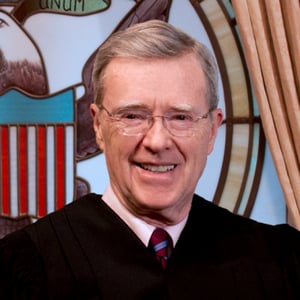
Judge, United States Court of Appeals, Ninth Circuit
Judge O’Scannlain was appointed United States Circuit Judge for the Ninth Circuit by President Reagan on September 26, 1986. He received a J.D. degree in 1963 from Harvard Law School and a B.A. in 1957 from St. John’s University. He also earned the LL.M. (Judicial Process) degree at University of Virginia Law School in 1992. He was awarded the LL.D. (honoris causa) degree by the University of Notre Dame in 2002, the LL.D. (honoris causa) degree by Lewis & Clark College in 2003 and the LL.D. (honoris causa) degree by the University of Portland in 2011.
As a judge on the U.S. Court of Appeals for the Ninth Circuit, Judge O’Scannlain has participated in over 6,000 federal cases and has written hundreds of published opinions on a broad range of subjects including constitutional law, international law, securities law, administrative law, and criminal law. He hears appeals in San Francisco (court headquarters), as well as in Los Angeles (Pasadena), Portland, Seattle, Anchorage and Honolulu. The late Chief Justice Rehnquist appointed Judge O'Scannlain to the Federal Judicial Center's Advisory Committee on Appellate Judge Education. In 2009, Chief Justice Roberts appointed Judge O’Scannlain to the International Judicial Relations Committee of the U.S. Judicial Conference and subsequently appointed him Chairman in 2010.
President George W. Bush appointed Judge O’Scannlain to the Board of Trustees of the James Madison Memorial Fellowship Foundation in 2004. Pope Benedict XVI conferred the Order of Saint Gregory the Great on Judge and Mrs. O’Scannlain in 2007.
Judge O’Scannlain’s professional interests also include judicial administration and reform, and continuing legal education. Judge O’Scannlain is former Chair of the Judicial Division of the American Bar Association and has previously chaired the ABA’s Appellate Judges Conference, its Committee on Appellate Practice, and its 9th Appellate Practice Institute. He has testified before the Senate Judiciary Committee on several occasions, the House Judiciary Subcommittee on Courts and Intellectual Property, and the Commission on Structural Alternatives for the Federal Courts of Appeals on the subject of court reorganization. In addition to serving as a faculty member at numerous federal appellate practice seminars for judges and attorneys, including New York University Law School’s Institute for Judicial Administration, Judge O’Scannlain is an Adjunct Professor at Lewis & Clark Law School where he teaches a seminar on the Supreme Court. He has served as a Moot Court Judge at distinguished law schools across the United States including Harvard, Yale Stanford, Boalt Hall (Berkeley Law), Virginia, Cornell, Notre Dame, Fordham, Alabama, University of Southern California, King Hall (U.C. Davis) and Loyola Marymount University and in China at Xiamen and Renmin Universities.
Between graduation from Harvard and investiture as a federal judge, Judge O’Scannlain was primarily engaged in private law practice. Between 1969 and 1974, he was consecutively the Deputy Attorney General of Oregon, the Public Utility Commissioner of Oregon, and Director of the Oregon Department of Environmental Quality. He retired from the U.S. Army Reserve in 1978 as a Major after 23 years Reserve and National Guard service, including four years as an enlisted man.
A first generation Irish-American son of immigrant parents from Sligo and Derry, Judge O’Scannlain is married to the former Maura Nolan and has eight children: Sean, Jane, Brendan, Kevin, Megan, Christopher, Anne, and Kate, and nineteen grandchildren. His chambers are in the Pioneer Courthouse in Portland, Oregon.
Judge, United States Court of Appeals, Sixth Circuit
The Honorable Joan L. Larsen is a judge of the United States Court of Appeals for the Sixth Circuit. She was nominated by the President on May 8, 2017 and confirmed by the Senate on November 1, 2017. Before her appointment to the federal bench, Judge Larsen served two terms as a Justice of the Michigan Supreme Court, where she was the court’s liaison to Michigan’s drug, sobriety, mental health and veteran’s courts.
Before becoming a judge, Judge Larsen was a faculty member at the University of Michigan Law School, where she was also Special Counsel to the Dean and received the L. Hart Wright Award for Excellence in Teaching. Judge Larsen's research and teaching interests included constitutional law, criminal procedure, statutory interpretation, and presidential power. Judge Larsen continues to assist the law school as the adviser to the Henry M. Campbell Moot Court Competition.
Judge Larsen began her legal career as a law clerk to the Hon. David B. Sentelle of the United States Court of Appeals for the D.C. Circuit and to Justice Antonin Scalia of the Supreme Court of the United States. Following her clerkships, she joined the law firm of Sidley Austin, where she was a member of the Constitutional, Criminal, and Civil Litigation Section. She later served as Deputy Assistant Attorney General in the United States Department of Justice, Office of Legal Counsel.
Judge Larsen graduated first in her class from Northwestern University School of Law, where she served as articles editor of the Northwestern University Law Review and earned the John Paul Stevens Award for Academic Excellence. She received her B.A., with highest honors, from the University of Northern Iowa.
Associate Justice, California Supreme Court
Justice Goodwin Liu is an Associate Justice of the California Supreme Court. He was confirmed to office by a unanimous vote of the California Commission on Judicial Appointments on August 31, 2011, following his appointment by Governor Edmund G. Brown, Jr. on July 26, 2011. The Governor administered the oath of office to Justice Liu in a public ceremony in Sacramento, California on September 1, 2011.
Before joining the state’s highest court, Justice Liu was Professor of Law at the UC Berkeley School of Law (Boalt Hall). His primary areas of expertise are constitutional law, education law and policy, and the U.S. Supreme Court. He has published widely on these subjects in books, law reviews, and the general media.
The son of Taiwanese immigrants, Justice Liu grew up in Sacramento, where he attended public schools. He went to Stanford University and earned a bachelor’s degree in biology in 1991. He attended Oxford University on a Rhodes Scholarship and earned a masters degree in philosophy and physiology. Upon returning to the United States, he went to Washington D.C. to help launch the AmeriCorps national service program and worked for two years as a senior program officer at the Corporation for National Service.
Justice Liu graduated from Yale Law School in 1998, becoming the first in his family to earn a law degree. He clerked for Judge David Tatel on the U.S. Court of Appeals for the D.C. Circuit and then worked as Special Assistant to the Deputy Secretary of the U.S. Department of Education, where he developed and coordinated K-12 education policy. He went on to clerk at the U.S. Supreme Court for Justice Ruth Bader Ginsburg during the October 2000 Term. In 2001, he joined the appellate litigation practice of O’Melveny & Myers in Washington, D.C., and worked on an array of antitrust, white collar, insurance, product liability, and pro bono matters.
Justice Liu is a prolific and influential scholar. He has published articles on constitutional law and education policy in the California Law Review, Michigan Law Review, NYU Law Review, Stanford Law Review, and Yale Law Journal, among others. His 2006 article, “Education, Equality, and National Citizenship,” won the Steven S. Goldberg Award for Distinguished Scholarship in Education Law, conferred by the Education Law Association. Justice Liu is also a popular and acclaimed teacher. In 2009, he received UC Berkeley’s Distinguished Teaching Award, the university’s most prestigious honor for individual excellence in teaching. He earned tenure at Boalt Hall in 2008 and was promoted to Associate Dean. The Boalt Hall Class of 2009 selected him as the faculty commencement speaker.
Justice Liu serves on the Council of the American Law Institute, on the Board of Directors of the James Irvine Foundation, and on the National Academy of Sciences Committee on Science, Technology, and Law. He has previously served on the Board of Trustees of Stanford University and the board of directors of the American Constitution Society, the National Women’s Law Center, and the Public Welfare Foundation. In 2008, he was elected to the American Law Institute. He has also served as a faculty advisor to the California College Prep Academy, a public charter school co-founded by UC Berkeley and Aspire Public Schools.
John S. Battle Professor of Law, University of Virginia School of Law
Julia D. Mahoney teaches courses in property, government finance, constitutional law and nonprofit organizations. A graduate of Yale Law School, she joined the University of Virginia faculty as an associate professor in 1999 and is now John S. Battle Professor of Law. She has also taught at the University of Southern California Law School and the University of Chicago Law School, and before entering the legal academy, practiced law at the New York firm Wachtell, Lipton, Rosen & Katz. Her scholarly articles include works on land preservation, eminent domain, health care reform and property rights in human biological materials.
Judge, United States Court of Appeals, District of Columbia Circuit
Judge Rao was appointed to the United States Court of Appeals for the District of Columbia Circuit in March 2019. She graduated from Yale College in 1995 and the University of Chicago Law School in 1999. Following graduation, she served as a law clerk to Judge J. Harvie Wilkinson III of the U.S. Court of Appeals for the Fourth Circuit and, in the 2001 October Term, as law clerk to Justice Clarence Thomas of the U.S. Supreme Court. Between her clerkships, Judge Rao served as counsel for nominations and constitutional law to the U.S. Senate Committee on the Judiciary. In 2002, she joined the international arbitration group of Clifford Chance LLP in London, England. From 2005-2006, she served as Special Assistant and Associate White House Counsel to President George W. Bush. From 2006 to 2017, Judge Rao was a professor at the Antonin Scalia Law School at George Mason University, where she taught constitutional law, legislation and statutory interpretation, and the history and foundations of the administrative state. In 2014, she founded the Center for the Study of the Administrative State, a non-profit Center that promotes academic scholarship and public policy debates about administrative law. In July 2017, she was appointed to serve as the Administrator of the Office of Information and Regulatory Affairs in the Office of Management and Budget. She served in this position until her appointment to the D.C. Circuit.
Chief Judge, United States Court of Appeals, Sixth Circuit
JEFFREY S. SUTTON is the Chief Judge of the United States Court of Appeals for the Sixth Circuit. He has served as Chair of the Federal Judicial Conference Committee on Rules of Practice and Procedure, Chair of the Advisory Committee on Appellate Rules, and Chair of the Supreme Court Fellows Commission. He currently serves as Chair of the Executive Committee of the Judicial Conference of the United States. Since 1993, Chief Judge Sutton has been an adjunct professor at The Ohio State University College of Law, where he teaches seminars on State Constitutional Law, the United States Supreme Court, and Appellate Advocacy. He also teaches a class on State Constitutional Law at Harvard Law School. Among other publications, he is the author of Who Decides? States as Laboratories of Constitutional Experimentation and 51 Imperfect Solutions: States and the Making of American Constitutional Law. He is the co-author of a casebook, State Constitutional Law: The Modern Experience, as well as The Law of Judicial Precedent. He is also the co-editor of The Essential Scalia: On the Constitution, the Courts, and the Rule of Law. In 2006, Chief Judge Sutton was elected to the American Law Institute, and in 2017 he was elected to its Council.
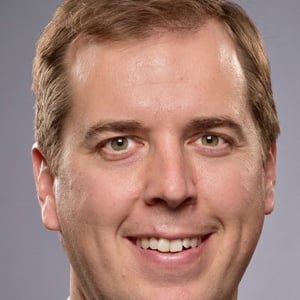
Texas Supreme Court
Justice Jimmy Blacklock was appointed to the Texas Supreme Court in January 2018 by Governor Greg Abbott. Before that, Jimmy served as Governor Abbott’s General Counsel and in the Attorney General’s Office under then-AG Abbott. While at the AG’s Office, he handled appeals and trials of constitutional cases in state and federal court involving matters such as federalism, religious liberty, and the separation of powers. As Deputy Attorney General for Legal Counsel, he oversaw the Open Records and Opinions divisions of the AG’s Office. Earlier in his career, Jimmy was appointed by President George W. Bush to serve in the Civil Rights Division of the U.S. Department of Justice, and he worked in private practice in Houston and Austin. He clerked for Judge Jerry Smith on the U.S. Court of Appeals for the 5th Circuit after graduating from U.T.-Austin (B.A., Plan II/History) and Yale Law School. He was born in Houston and now lives in Austin with his wife and three daughters.

Supreme Court Candidate Forum
Trey Allen, Richard Dietz, Samuel J. Ervin, John Hood, Lucy Inman
Featuring: Trey Allen, General Counsel, Administrative Office of the Courts Hon. Richard Dietz, Judge, North Carolina...
Chevron and the States: A Conversation with Governors' General Counsel about Judicial Deference to State Administrative Agency Interpretations of State Laws
Aram A. Gavoor, Ryan Dean Newman, Jonathan Skrmetti, James P. Sullivan
Deference doctrines utilized by the federal Judiciary when federal agencies act is the subject of...
1996 James Madison Lecture [Archive Collection]
Edith Brown Clement, Martin Feldman, Harvey C. Koch, Harry T. Lemmon, Edwin Meese
On October 9, 1996, the Federalist Society's student chapter at Loyola University School of Law...
III: 21st Century Federalism: A View from the States (Roundtable)
Goodwin H. Liu, Julia D. Mahoney, Neomi Rao, Jeffrey S. Sutton, Joan Larsen
This panel will center discussion on the role of the states in our constitutional order—by...
III: 21st Century Federalism: A View from the States (Roundtable)
Goodwin H. Liu, Julia D. Mahoney, Neomi Rao, Jeffrey S. Sutton, Joan Larsen
This panel will center discussion on the role of the states in our constitutional order—by...
III: 21st Century Federalism: A View from the States (Roundtable)
2022 National Student Symposium
Charlottesville, VAWhat Happened to Natural Law in American Jurisprudence?
Kody Cooper
A Review of The Decline of Natural Law: How American Lawyers Once Used Natural Law and...
Thirty-Five Years of Vindicating the Rule of Law
Birmingham, ALThe Future of the Federal Judiciary
Diarmuid F. O'Scannlain
Note from the Editor: The Federalist Society takes no positions on particular legal and public...
Justice Blacklock Shares His Perspective After One Year on the Texas Supreme Court
Tyler, TX