
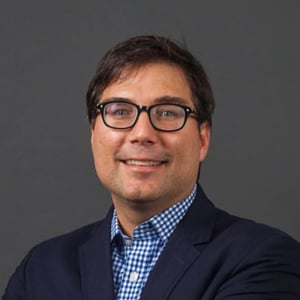
Associate Professor of Law and Director, Program on Economics & Privacy, Antonin Scalia Law School, George Mason University
Associate Professor of Law James C. Cooper brings over a decade of public and private sector experience to his research and teaching. He served as Deputy and Acting Director of the Federal Trade Commission’s Office of Policy Planning, Advisor to Federal Trade Commissioner William Kovacic, and an associate in the antitrust group of Crowell and Moring, LLP. His research on vertical restraints, price discrimination, behavioral economics and antitrust, and privacy policy have appeared in top journals and are widely cited.
Professor Cooper has a BA from the University of South Carolina, received his PhD in economics from Emory University, and his law degree (magna cum laude) from Antonin Scalia Law School, George Mason University, where he was a Levy Fellow and a member of the George Mason Law Review.
He teaches Economics for Lawyers, Advanced Seminar on Law & Economics, and Digital Information Policy Seminar.

Nonresident Senior Fellow, Sowcroft Center for Strategy and Security
Michael served over 37 years in the U.S. Marine Corps, culminating his career as the Director of the Joint Artificial Intelligence Center, and the senior executive for AI in the Department of Defense. He previously served at the National Security Agency, overseeing global network operations and as the Director of Intelligence for the Chairman and the Joint Staff. In that position he worked closely with the Chairman of the Joint Chiefs, Secretary of Defense and Senior Leaders across the Department. Groen is an experienced Marine commander and multi-tour combat veteran. He was the Intelligence Officer for the 1st Marine Division in Operation Iraqi Freedom for both OIF I and II. He is the author of With the First Marine Division in Iraq, No Greater Friend, No Worse Enemy. His awards include the Defense Distinguished Service Award, the Legion of Merit, the Bronze Star and the Combat Action Ribbon.
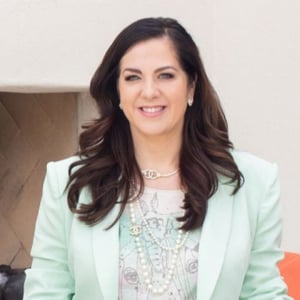
President, Rainey Center
Sarah E. Hunt is a globally focused leader in climate advocacy, technology, and democracy. Her expertise is regularly sought by national publications such as The Wall Street Journal and The New York Times. As President of the Joseph Rainey Center for Public Policy, a think tank and leadership community in Washington D.C., Ms. Hunt leads her team to generate new solutions to some of our nation’s most critical challenges and then cultivates a new generation of leaders to actually implement them.
Prior to founding the Rainey Center, much of Hunt’s background centered in the areas of climate change and election law. She launched a clean energy program at the American Legislative Exchange Council and a climate change program at the Niskanen Center. Before that, she managed state issues and ethics for a political consulting firm and practiced political law at a boutique law firm in the Pacific Northwest.
She currently also serves as Director, Policy & Strategy at the Rob and Melani Walton Sustainability Solutions Service at Arizona State University.
Ms. Hunt holds a BA in political science from the University of New Mexico, a JD from Willamette University College of Law, an LLM in international environmental law from Georgetown University Law Center, and an MPS in global advocacy from the George Washington University Graduate School of Political Management. She is admitted to the bar in Washington, DC, Oregon, and the 9th Circuit.

Senior Fellow, R Street Institute
Prior to R Street, Adam spent 12 years as a senior fellow at the Mercatus Center at George Mason University. Before the Mercatus Center, he served as the president of the Progress and Freedom Foundation. Adam has also worked for the Adam Smith Institute, the Heritage Foundation and the Cato Institute.
Adam has published 10 books on a wide range of topics, including online child safety, internet governance, intellectual property, telecommunications policy, media regulation and federalism.
In 2008, Adam received the Family Online Safety Institute’s “Award for Outstanding Achievement.”
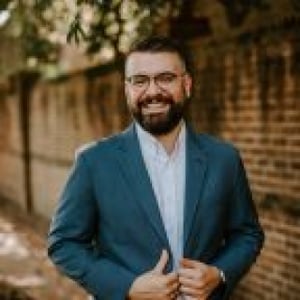
Senior Manager of Public Policy, Workday
Evangelos Razis is Senior Manager of Public Policy at Workday, where he leads U.S. artificial intelligence and data privacy policy. Since joining the company, Evangelos has grown Workday’s engagement on emerging AI laws and frameworks at the federal and state level, helping it become a leading proponent for workable safeguards on high-risk AI.
He regularly advises Workday’s responsible AI, privacy, and product legal teams on emerging legal and policy developments.
Before joining Workday, Evangelos led digital trade and global data policy at the U.S. Chamber of Commerce, the world’s largest business association. While at the Chamber, Evangelos spearheaded the U.S. business community’s engagement on the U.S.-EU Privacy Shield and advocated for open data governance frameworks in key U.S. export markets on six continents. He co-authored the Chamber’s AI policy principles, released in 2019. Previously, Evangelos worked as a trade and technology policy analyst at Fujitsu and as a fellow at the Information Technology Industry Council.
Evangelos holds a B.A. in Political Science from Fordham University, a M.S. in Foreign Service from Georgetown University, and is a Certified Information Privacy Professional (CIPP/E). He is pursuing a J.D. at George Mason University’s Scalia Law School.
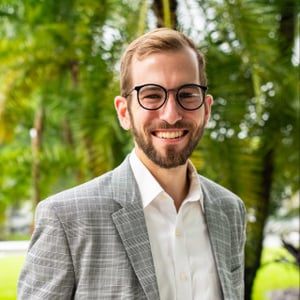
AI Innovation and Law Fellow, University of Texas School of Law
Kevin Frazier is an AI Innovation and Law Fellow with University of Texas School of Law.
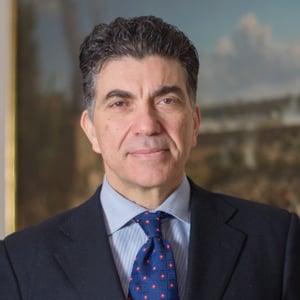
University of Florence, Professor of Constitutional Law
Distinguished Research Affiliate Andrea Simoncini is a professor of constitutional law at the University of Florence. As a constitutional scholar whose work is internationally well known, Simoncini focuses his research on Italian and European constitutional law, developmental dynamics of the sources of law, social rights, and the study of the interrelations between natural law and positive legal systems. He also studies the nexus of environmental politics with constitutional law and human rights.
Simoncini spent fall semester 2013 at the Kellogg Institute as a visiting fellow working on a joint project with Mauro Magatti: Europe: An Institution without a Society? His Kellogg collaboration with Magatti examined the changes over time in the meaning of civil society in Europe, looking particularly on how it evolved from a communally oriented to a more individualistic concept. Using a multidisciplinary approach, the pair study the relationship between the multiple civil societies of Europe and the future of the EU's institutional framework.
Twice a visiting professor at Notre Dame Law School, Simoncini was also the University's 2009 Fulbright Italian Scholar, serving as research fellow at the Nanovic Institute for European Studies.

Legal Fellow, Center for Constitutional Studies, Cato Institute
Brent Skorup is a legal fellow in the Cato Institute’s Robert A. Levy Center for Constitutional Studies.
Before joining Cato, he was a senior research fellow at the Mercatus Center at the George Mason University. His research areas include free speech, technology law, Fourth Amendment protections, regulation, and property law. Skorup has published pieces in economics and law journals and in popular media, including The Wall Street Journal, The New York Times, Bloomberg Law, Reuters, and Wired. He’s appeared as a TV and radio interview guest for news outlets like C‑SPAN, NPR, CBS News, ABC News, and CNBC Asia.
The Pennsylvania Supreme Court, a dissenting opinion at the Illinois Supreme Court, and the ALI's Restatement of the Law of Property have cited his legal research and he has testified as a technology and legal expert in legislative hearings in several states. Skorup has been appointed to several federal and state advisory bodies and he is currently a member of the Texas Advanced Air Mobility Advisory Committee.
Skorup has a BA in economics from Wheaton College and a law degree from the George Mason University School of Law, where he was articles editor for the Civil Rights Law Journal. He was a legal clerk at the FCC’s wireless bureau and Office of General Counsel and at the Energy and Commerce Committee in the U.S. House of Representatives.

Laurence H. Silberman Chair in Constitutional Governance, American Enterprise Institute; Executive Director, Antonin Scalia Law School’s C. Boyden Gray Center for the Study of the Administrative State
Adam J. White is the Laurence H. Silberman Chair in Constitutional Governance and senior fellow at the American Enterprise Institute, where he focuses on the Supreme Court and the administrative state. He also directs the Antonin Scalia Law School’s C. Boyden Gray Center for the Study of the Administrative State.
He writes on regulation and constitutional government for a variety of publications. He practiced law in Washington, D.C., after clerking for the D.C. Circuit's Judge David Sentelle. He also has been chairman of the ABA's Administrative Law Section.
In 2021, he served on the Presidential Commission on the Supreme Court of the United States, where he criticized “Court packing” and other efforts to restructure the Supreme Court.
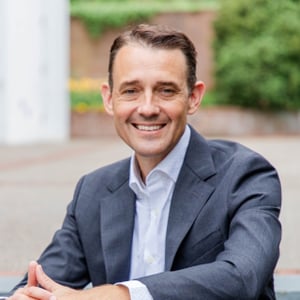
Senior Vice President, Strategic Initiatives & Special Counsel to the President, Alliance Defending Freedom
Ryan Bangert serves as senior vice president for strategic initiatives and special counsel to the president at Alliance Defending Freedom. He oversees ADF’s Blackstone Legal Fellowship and Research & Innovation Team. He also advises executive leadership on strategic initiatives.
Before joining ADF, Bangert served as deputy first assistant attorney general and deputy for legal counsel in the office of the Texas attorney general, and as deputy for civil litigation for Missouri Attorney General Josh Hawley. Prior to his government service, Bangert was a litigation partner at Baker Botts L.L.P., where he was a member of the firm’s commercial litigation and appellate practice sections.
Bangert has been published at First Things, Civitas Outlook, Law & Liberty, National Review, Daily Wire, The Hill, Washington Examiner, The Federalist, Fox News, and the American Reformer. He speaks nationally on constitutional, cultural, and religious liberty issues. He also serves as Visiting Faculty in Law at the University of Austin.
He earned his J.D. from Southern Methodist University, where he was a Hatton Sumners scholar and graduated first in his class. Following law school, he clerked for the Honorable Patrick E. Higginbotham on the Fifth Circuit Court of Appeals.
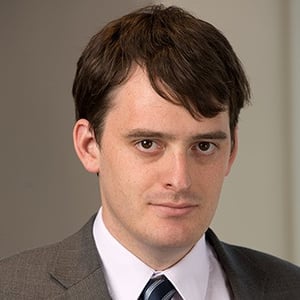
Head of Tech & Innovation, Centre for Policy Studies
Matthew Feeney is Head of Tech & Innovation at Centre for Policy Studies. Before joining CPS, Matthew was the director of Cato Institute’s Project on Emerging Technologies. His writing has appeared in The New York Times, The Washington Post, City A.M., and others. He received both his BA and MA in philosophy from the University of Reading.

Senior Fellow, Technology Policy, Cato Institute
Jennifer’s research focuses on the intersection of emerging technology and law with a particular interest in the interactions between technology and the administrative state. Her work covers topics including judicial deference, liability protection for Internet platforms, autonomous vehicles and other disruptive transportation technologies, the regulation of data privacy, and the benefits of technology and innovation. Her work has appeared in USA Today, the Chicago Tribune, the New York Daily News, the Sacramento Bee, the Washington Times, Real Clear Policy, and U.S. News and World Report. Jennifer has a JD from the University of Alabama School of Law and a BA in political science at Wellesley College.

Judge, United States Court of Appeals, Sixth Circuit
Amul R. Thapar serves as a judge on the United States Court of Appeals for the Sixth Circuit. His judicial career began in 2007 when President George W. Bush nominated him to serve on the Eastern District of Kentucky, making him the first South Asian Article III judge in American history. In 2017, he became President Donald J. Trump’s first appellate court nominee.
Before joining the bench, Judge Thapar served as the United States Attorney for the Eastern District of Kentucky. While United States Attorney, Judge Thapar worked on the Attorney General’s Advisory Committee (“AGAC”) and chaired the AGAC’s Controlled Substances and Asset Forfeiture subcommittee. He also served on the Terrorism and National Security subcommittee, the Violent Crime subcommittee, and the Child Exploitation working group.
Judge Thapar has worked in private practice, at Williams & Connolly in Washington, D.C., and Squire, Sanders & Dempsey in Cincinnati, Ohio. He also served as an Assistant United States Attorney in both the Southern District of Ohio and the District of Columbia.
Judge Thapar received his undergraduate degree from Boston College and his law degree from the University of California, Berkeley. After graduating, Judge Thapar worked as a law clerk to the Honorable S. Arthur Spiegel of the United States District Court for the Southern District of Ohio, and the Honorable Nathaniel R. Jones of the United States Court of Appeals for the Sixth Circuit.
Judge Thapar has also published in the Yale Law Journal, Michigan Law Review, and Catholic University Law Review. He teaches courses on originalism, the Federalists and Anti-Federalists, and legal writing at Notre Dame Law School, the University of Virginia School of Law, and Vanderbilt Law School.
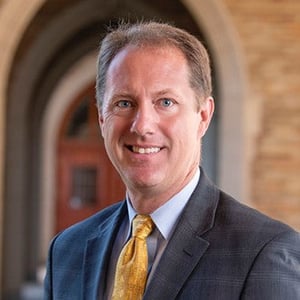
Professor of Law, Notre Dame University
Roger P. Alford joined the Notre Dame Law faculty in January 2012. Alford teaches and writes in a wide range of subject-matter areas, including international trade, international arbitration, international antitrust, and comparative law.
Alford earned his B.A. with Honors from Baylor in 1985, his J.D. with Honors from New York University, and his LL.M. from Edinburgh University. Before entering the legal academy, he served as a law clerk to Judge James Buckley of the United States Court of Appeals for the D.C. Circuit, and Judge Richard Allison of the Iran-United States Claims Tribunal in The Hague, Netherlands. He practiced law with Hogan & Hartson (now Hogan Lovells) in Washington, D.C., and was also a senior legal advisor to the Claims Resolution Tribunal for Dormant Activities in Zurich, Switzerland.
In addition to publishing widely in leading law reviews and journals, Alford is the general editor of Kluwer Arbitration Blog and on the Executive Committee of the Institute for Transnational Arbitration.
He is Concurrent Professor at the Keough School of Global Affairs, a Faculty Fellow at the Kellogg Institute for International Studies, and a Faculty Fellow at the Nanovic Institute for European Studies. He was the Academic Director of the London Global Gateway from 2016-2017 and Associate Dean for Graduate and International Programs from 2013-2017.
He served as the Deputy Assistant Attorney General for International Affairs with the Antitrust Division of the U.S. Department of Justice from 2017-2019.
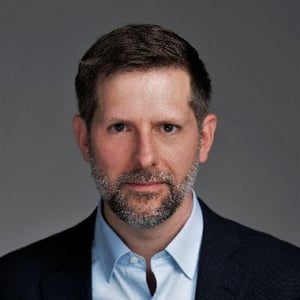
Head of AI Policy, Abundance Institute
Neil Chilson is the Head of AI Policy at the Abundance Institute. Prior to this position, he served as a Senior Research Fellow at the Center for Growth and Opportunity. Chilson is a lawyer, computer scientist, and author of the book “Getting Out of Control: Emergent Leadership in a Complex World.”
Chilson was previously the senior research fellow for Technology and Innovation at Stand Together, where he guided efforts to understand and promote the legal and cultural paradigms that best enable people to discover, innovate, and improve all our lives.
Before Stand Together, Chilson was the Chief Technologist at the Federal Trade Commission, where he focused on the economics of privacy and blockchain-related issues. Previously, he was an attorney advisor to Acting FTC Chairman Maureen K. Ohlhausen. In both roles he advised Chairman Ohlhausen and worked with staff on nearly every major technology-related case, report, workshop, or other FTC proceeding since January 2014. Neil joined the FTC from telecom firm Wilkinson Barker Knauer. Neil is frequently quoted by the press and his work has appeared in numerous news outlets, including The Wall Street Journal, The Washington Post, USAToday, and Newsweek. Neil has a J.D. from The George Washington Law School, a M.S. in computer science from University of Illinois, Urbana-Champaign, and a B.S. in computer science from Harding University.
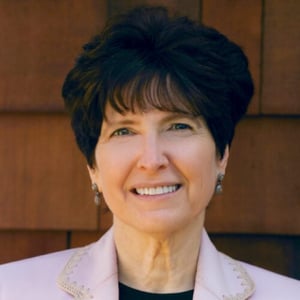
Assistant Professor of Law, Simmons Law School, Southern Illinois University
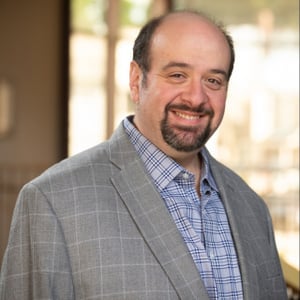
Associate Professor, UNH Franklin Pierce School of Law
Zvi S. Rosen is an Associate Professor at UNH Franklin Pierce School of Law and the Faculty Director of the Franklin Pierce Society for Intellectual Property. He has served as a Assistant Professor at the Southern Illinois University School of Law, as a Visiting Assistant Professor at the Maurice A. Deane School of Law at Hofstra University, and as a Visiting Scholar and Professorial Lecturer in Law at George Washington University School of Law.
In 2015-2016, he was the Abraham L. Kaminstein Scholar in Residence at the U.S. Copyright Office. Mr. Rosen received his J.D. from Northwestern University School of Law in 2005 and LLM in Intellectual Property in 2006 from the George Washington University Law School. He has practiced at Fried, Frank, Harris, Shriver & Jacobson LLP as well as smaller firms and his own practice, and clerked for the Hon. Thomas B. Bennett of the U.S. Bankruptcy Court for the Northern District of Alabama. He has written extensively on the development of modern copyright and trademark law, as well as on bankruptcy law.
Senior Vice President, Strategic Initiatives & Special Counsel to the President, Alliance Defending Freedom
Ryan Bangert serves as senior vice president for strategic initiatives and special counsel to the president at Alliance Defending Freedom. He oversees ADF’s Blackstone Legal Fellowship and Research & Innovation Team. He also advises executive leadership on strategic initiatives.
Before joining ADF, Bangert served as deputy first assistant attorney general and deputy for legal counsel in the office of the Texas attorney general, and as deputy for civil litigation for Missouri Attorney General Josh Hawley. Prior to his government service, Bangert was a litigation partner at Baker Botts L.L.P., where he was a member of the firm’s commercial litigation and appellate practice sections.
Bangert has been published at First Things, Civitas Outlook, Law & Liberty, National Review, Daily Wire, The Hill, Washington Examiner, The Federalist, Fox News, and the American Reformer. He speaks nationally on constitutional, cultural, and religious liberty issues. He also serves as Visiting Faculty in Law at the University of Austin.
He earned his J.D. from Southern Methodist University, where he was a Hatton Sumners scholar and graduated first in his class. Following law school, he clerked for the Honorable Patrick E. Higginbotham on the Fifth Circuit Court of Appeals.
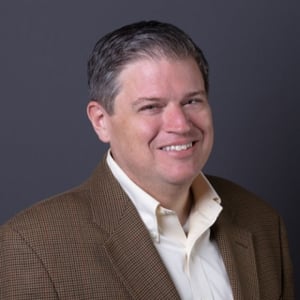
Vice President, Policy and Fellow, Innovation and Technology, Rainey Center
Bartlett D. Cleland serves as the executive director of Rainey Center’s Leadership Alliance for a More Perfect Union (LAMP) program. In this role, he interfaces with legislators from across the country, as well as runs LAMP programs and seminars, including a program for leadership training. He also is a research fellow with the Institute for Policy Innovation in Texas, and Senior fellow, Tech and Innovation for the Pacific Research Institute in California. He serves as a member of the US Stakeholder Council, a member of the Federal Communications Commission’s Consumer Advisory Council and a member of the ISO 279 (Innovation Management) Technical Advisory Group.
Before joining Rainey Center, Cleland served on the Internet Education Foundation Board of Directors, where he worked closely with the Internet Caucus on Capitol Hill. He served two terms as the Chair of the Technology and Communications Taskforce of the American Legislative Exchange Council. He also was a member of the Internet Safety Technical Taskforce, a group comprised of leading Internet businesses and organizations and formed by 49 state attorneys general to focus on identifying effective online safety tools and technologies.
Previously, Cleland worked for Americans for Tax Reform as technology and policy counsel, and advised Commissioner Grover G. Norquist on the Advisory Committee on Electronic Commerce. He has also represented the software industry handling a variety of copyright issues including open source and proprietary challenges, and a variety of tax and finance issues particular to the software industry, serving as tax and associate general counsel at ITAA, and later as Regional VP of Texas for TechAmerica.
Cleland graduated from Millikin University with a bachelor of science degree in philosophy and business administration. He received his master of business administration degree, as well as his law degree with a specialization in international and comparative law, from St. Louis University. He is admitted to the Missouri bar.
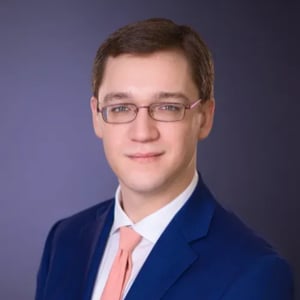
Director, Election Policy, Rainey Center
Andy Craig is director of election policy at the Rainey Center and an adjunct scholar at the Cato Institute. His work is focused on election law, electoral reform, and political incentives, with the goal of reducing polarization and improving representative government. His analysis and recommendations have been cited by members of both parties on the floor of the House of Representatives and in the Senate Rules Committee, in addition to working with state legislators across the country to craft electoral reform proposals and adopt best practices for election administration. His commentary has appeared in outlets including the Washington Post, Fox News, The Nation, and Politico, and he writes regularly for The Daily Beast and The UnPopulist.
Andy previously worked as staff writer for the Cato Institute, and before that as a campaign staffer and consultant, including for Gov. Gary Johnson's 2016 presidential campaign. He grew up in White Hall, Arkansas and studied political science at Hendrix College. He and his husband, Brian, currently live in Maryland.
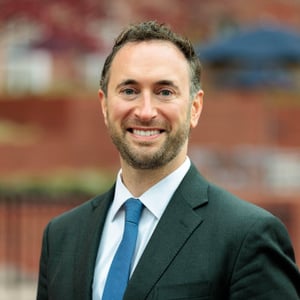
Associate Dean for Academic Affairs, The George Washington University Law School
Aram A. Gavoor is the Associate Dean for Academic Affairs and an internationally recognized scholar in American administrative law, national security, and federal courts. His co-authored work was cited by the U.S. Supreme Court in Department of Commerce v. New York (2019). His scholarship has earned placement in the Florida Law Review, Indiana Law Journal, Ohio State Law Journal, and other law journals. He has briefed and argued over a dozen high-profile public law cases before a majority of the U.S. Courts of Appeals and numerous cases before almost a third of the 94 U.S. District Courts. Associate Dean Gavoor frequently shares his national security, artificial intelligence policy, and federal courts expertise with international news media, including CNN, BBC World News, Wall Street Journal, NBC News, and ABC (Australia) World News. In 2021, the National Law Journal named Associate Dean Gavoor a Rising Star (top 40 under 40) honoree.
Earlier in his career, Associate Dean Gavoor served as Senior Counsel for National Security in the Civil Division of the U.S. Department of Justice, as third-in-rank Counselor to the Administrator of the Office of Information and Regulatory Affairs in the White House Office of Management and Budget, and in private practice. He received the Attorney General's Award for Distinguished Service in 2019, the Civil Division Special Commendation Award in 2020, 2019, and 2018, and a Commendation from the Human Rights and Special Prosecutions Section of the Criminal Division in 2018.
Associate Dean Gavoor previously served on the law school’s part-time faculty from 2008-2017 before accepting a term-limited position as Visiting Associate Professor from 2017-2019. He received GW Law’s Distinguished Adjunct Faculty Teaching Award from the 2020 and 2017 graduating classes. He currently teaches Constitutional Law II, Administrative Law, National Security Law, and Federal Courts.
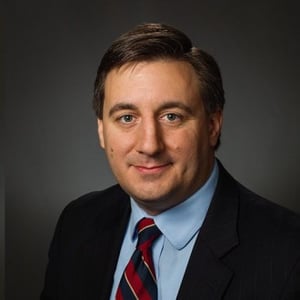
Senior Counsel, Senior Vice President of Corporate Engagement, Alliance Defending Freedom
Jeremy Tedesco serves as senior counsel and senior vice president of corporate engagement for Alliance Defending Freedom. In this role, Tedesco leads ADF’s efforts to combat corporate cancel culture and build a business ethic that respects free speech, religious freedom, and human dignity.
Immediately preceding his current role, Tedesco served as senior vice president for communications, during which time he was a lead convener of the Philadelphia Statement, a movement dedicated to restoring free speech and civil discourse. Tedesco also launched a regular video series called Freedom Matters, profiling ADF clients, cases, and issues. The program included 24 videos in its first year, which more than 31 million people viewed.
Previously, Tedesco litigated First Amendment cases at the highest levels. He was part of the legal team that represented cake artist Jack Phillips in Masterpiece Cakeshop v. Colorado Civil Rights Commission before the U.S. Supreme Court and argued Phillips’ case at the Colorado Court of Appeals. He was also the lead brief writer in two other U.S. Supreme Court wins, Reed v. Town of Gilbert and Arizona Christian School Tuition Organization v. Winn. Tedesco has also argued six times before five different federal appellate courts and founded and directed the ADF Center for Conscience Initiatives, where he led efforts to protect individuals from government-coerced speech.
Numerous media outlets, including The Wall Street Journal, Fox News, CNN, The New York Times, USA Today, PBS, NPR, and National Review, have interviewed Tedesco or published his comments.
Tedesco earned his Juris Doctor in 2004 from the Regent University School of Law.

Deputy Secretary of Agriculture, U.S. Department of Agriculture
Judge Stephen Alexander Vaden was appointed as the Deputy Secretary of the U.S. Department of Agriculture on July 7, 2025. Alongside Secretary Brooke L. Rollins, Deputy Secretary Vaden leads the Department’s operations and implements policies that support America’s food and farm systems. A native of Union City, Tennessee, Deputy Secretary Vaden brings expertise in agricultural policy, law, and rural development. Previously, he served as a judge on the U.S. Court of International Trade and as General Counsel of USDA. Throughout Deputy Secretary Vaden’s time as General Counsel, he led successful Supreme Court litigation, advanced regulatory reform, and supported the implementation of the 2018 Farm Bill. He is a graduate of Yale Law School and Vanderbilt University. A public servant with strong agricultural roots, Deputy Secretary Vaden is committed to revitalizing rural America and ensuring an abundant, affordable, and safe U.S. food supply.
Associate Professor of Law and Director, Program on Economics & Privacy, Antonin Scalia Law School, George Mason University
Associate Professor of Law James C. Cooper brings over a decade of public and private sector experience to his research and teaching. He served as Deputy and Acting Director of the Federal Trade Commission’s Office of Policy Planning, Advisor to Federal Trade Commissioner William Kovacic, and an associate in the antitrust group of Crowell and Moring, LLP. His research on vertical restraints, price discrimination, behavioral economics and antitrust, and privacy policy have appeared in top journals and are widely cited.
Professor Cooper has a BA from the University of South Carolina, received his PhD in economics from Emory University, and his law degree (magna cum laude) from Antonin Scalia Law School, George Mason University, where he was a Levy Fellow and a member of the George Mason Law Review.
He teaches Economics for Lawyers, Advanced Seminar on Law & Economics, and Digital Information Policy Seminar.
Nonresident Senior Fellow, Sowcroft Center for Strategy and Security
Michael served over 37 years in the U.S. Marine Corps, culminating his career as the Director of the Joint Artificial Intelligence Center, and the senior executive for AI in the Department of Defense. He previously served at the National Security Agency, overseeing global network operations and as the Director of Intelligence for the Chairman and the Joint Staff. In that position he worked closely with the Chairman of the Joint Chiefs, Secretary of Defense and Senior Leaders across the Department. Groen is an experienced Marine commander and multi-tour combat veteran. He was the Intelligence Officer for the 1st Marine Division in Operation Iraqi Freedom for both OIF I and II. He is the author of With the First Marine Division in Iraq, No Greater Friend, No Worse Enemy. His awards include the Defense Distinguished Service Award, the Legion of Merit, the Bronze Star and the Combat Action Ribbon.
President, Rainey Center
Sarah E. Hunt is a globally focused leader in climate advocacy, technology, and democracy. Her expertise is regularly sought by national publications such as The Wall Street Journal and The New York Times. As President of the Joseph Rainey Center for Public Policy, a think tank and leadership community in Washington D.C., Ms. Hunt leads her team to generate new solutions to some of our nation’s most critical challenges and then cultivates a new generation of leaders to actually implement them.
Prior to founding the Rainey Center, much of Hunt’s background centered in the areas of climate change and election law. She launched a clean energy program at the American Legislative Exchange Council and a climate change program at the Niskanen Center. Before that, she managed state issues and ethics for a political consulting firm and practiced political law at a boutique law firm in the Pacific Northwest.
She currently also serves as Director, Policy & Strategy at the Rob and Melani Walton Sustainability Solutions Service at Arizona State University.
Ms. Hunt holds a BA in political science from the University of New Mexico, a JD from Willamette University College of Law, an LLM in international environmental law from Georgetown University Law Center, and an MPS in global advocacy from the George Washington University Graduate School of Political Management. She is admitted to the bar in Washington, DC, Oregon, and the 9th Circuit.
Senior Manager of Public Policy, Workday
Evangelos Razis is Senior Manager of Public Policy at Workday, where he leads U.S. artificial intelligence and data privacy policy. Since joining the company, Evangelos has grown Workday’s engagement on emerging AI laws and frameworks at the federal and state level, helping it become a leading proponent for workable safeguards on high-risk AI.
He regularly advises Workday’s responsible AI, privacy, and product legal teams on emerging legal and policy developments.
Before joining Workday, Evangelos led digital trade and global data policy at the U.S. Chamber of Commerce, the world’s largest business association. While at the Chamber, Evangelos spearheaded the U.S. business community’s engagement on the U.S.-EU Privacy Shield and advocated for open data governance frameworks in key U.S. export markets on six continents. He co-authored the Chamber’s AI policy principles, released in 2019. Previously, Evangelos worked as a trade and technology policy analyst at Fujitsu and as a fellow at the Information Technology Industry Council.
Evangelos holds a B.A. in Political Science from Fordham University, a M.S. in Foreign Service from Georgetown University, and is a Certified Information Privacy Professional (CIPP/E). He is pursuing a J.D. at George Mason University’s Scalia Law School.
Senior Fellow, R Street Institute
Prior to R Street, Adam spent 12 years as a senior fellow at the Mercatus Center at George Mason University. Before the Mercatus Center, he served as the president of the Progress and Freedom Foundation. Adam has also worked for the Adam Smith Institute, the Heritage Foundation and the Cato Institute.
Adam has published 10 books on a wide range of topics, including online child safety, internet governance, intellectual property, telecommunications policy, media regulation and federalism.
In 2008, Adam received the Family Online Safety Institute’s “Award for Outstanding Achievement.”
AI Innovation and Law Fellow, University of Texas School of Law
Kevin Frazier is an AI Innovation and Law Fellow with University of Texas School of Law.
University of Florence, Professor of Constitutional Law
Distinguished Research Affiliate Andrea Simoncini is a professor of constitutional law at the University of Florence. As a constitutional scholar whose work is internationally well known, Simoncini focuses his research on Italian and European constitutional law, developmental dynamics of the sources of law, social rights, and the study of the interrelations between natural law and positive legal systems. He also studies the nexus of environmental politics with constitutional law and human rights.
Simoncini spent fall semester 2013 at the Kellogg Institute as a visiting fellow working on a joint project with Mauro Magatti: Europe: An Institution without a Society? His Kellogg collaboration with Magatti examined the changes over time in the meaning of civil society in Europe, looking particularly on how it evolved from a communally oriented to a more individualistic concept. Using a multidisciplinary approach, the pair study the relationship between the multiple civil societies of Europe and the future of the EU's institutional framework.
Twice a visiting professor at Notre Dame Law School, Simoncini was also the University's 2009 Fulbright Italian Scholar, serving as research fellow at the Nanovic Institute for European Studies.
Legal Fellow, Center for Constitutional Studies, Cato Institute
Brent Skorup is a legal fellow in the Cato Institute’s Robert A. Levy Center for Constitutional Studies.
Before joining Cato, he was a senior research fellow at the Mercatus Center at the George Mason University. His research areas include free speech, technology law, Fourth Amendment protections, regulation, and property law. Skorup has published pieces in economics and law journals and in popular media, including The Wall Street Journal, The New York Times, Bloomberg Law, Reuters, and Wired. He’s appeared as a TV and radio interview guest for news outlets like C‑SPAN, NPR, CBS News, ABC News, and CNBC Asia.
The Pennsylvania Supreme Court, a dissenting opinion at the Illinois Supreme Court, and the ALI's Restatement of the Law of Property have cited his legal research and he has testified as a technology and legal expert in legislative hearings in several states. Skorup has been appointed to several federal and state advisory bodies and he is currently a member of the Texas Advanced Air Mobility Advisory Committee.
Skorup has a BA in economics from Wheaton College and a law degree from the George Mason University School of Law, where he was articles editor for the Civil Rights Law Journal. He was a legal clerk at the FCC’s wireless bureau and Office of General Counsel and at the Energy and Commerce Committee in the U.S. House of Representatives.
Laurence H. Silberman Chair in Constitutional Governance, American Enterprise Institute; Executive Director, Antonin Scalia Law School’s C. Boyden Gray Center for the Study of the Administrative State
Adam J. White is the Laurence H. Silberman Chair in Constitutional Governance and senior fellow at the American Enterprise Institute, where he focuses on the Supreme Court and the administrative state. He also directs the Antonin Scalia Law School’s C. Boyden Gray Center for the Study of the Administrative State.
He writes on regulation and constitutional government for a variety of publications. He practiced law in Washington, D.C., after clerking for the D.C. Circuit's Judge David Sentelle. He also has been chairman of the ABA's Administrative Law Section.
In 2021, he served on the Presidential Commission on the Supreme Court of the United States, where he criticized “Court packing” and other efforts to restructure the Supreme Court.
Senior Vice President, Strategic Initiatives & Special Counsel to the President, Alliance Defending Freedom
Ryan Bangert serves as senior vice president for strategic initiatives and special counsel to the president at Alliance Defending Freedom. He oversees ADF’s Blackstone Legal Fellowship and Research & Innovation Team. He also advises executive leadership on strategic initiatives.
Before joining ADF, Bangert served as deputy first assistant attorney general and deputy for legal counsel in the office of the Texas attorney general, and as deputy for civil litigation for Missouri Attorney General Josh Hawley. Prior to his government service, Bangert was a litigation partner at Baker Botts L.L.P., where he was a member of the firm’s commercial litigation and appellate practice sections.
Bangert has been published at First Things, Civitas Outlook, Law & Liberty, National Review, Daily Wire, The Hill, Washington Examiner, The Federalist, Fox News, and the American Reformer. He speaks nationally on constitutional, cultural, and religious liberty issues. He also serves as Visiting Faculty in Law at the University of Austin.
He earned his J.D. from Southern Methodist University, where he was a Hatton Sumners scholar and graduated first in his class. Following law school, he clerked for the Honorable Patrick E. Higginbotham on the Fifth Circuit Court of Appeals.
Vice President, Policy and Fellow, Innovation and Technology, Rainey Center
Bartlett D. Cleland serves as the executive director of Rainey Center’s Leadership Alliance for a More Perfect Union (LAMP) program. In this role, he interfaces with legislators from across the country, as well as runs LAMP programs and seminars, including a program for leadership training. He also is a research fellow with the Institute for Policy Innovation in Texas, and Senior fellow, Tech and Innovation for the Pacific Research Institute in California. He serves as a member of the US Stakeholder Council, a member of the Federal Communications Commission’s Consumer Advisory Council and a member of the ISO 279 (Innovation Management) Technical Advisory Group.
Before joining Rainey Center, Cleland served on the Internet Education Foundation Board of Directors, where he worked closely with the Internet Caucus on Capitol Hill. He served two terms as the Chair of the Technology and Communications Taskforce of the American Legislative Exchange Council. He also was a member of the Internet Safety Technical Taskforce, a group comprised of leading Internet businesses and organizations and formed by 49 state attorneys general to focus on identifying effective online safety tools and technologies.
Previously, Cleland worked for Americans for Tax Reform as technology and policy counsel, and advised Commissioner Grover G. Norquist on the Advisory Committee on Electronic Commerce. He has also represented the software industry handling a variety of copyright issues including open source and proprietary challenges, and a variety of tax and finance issues particular to the software industry, serving as tax and associate general counsel at ITAA, and later as Regional VP of Texas for TechAmerica.
Cleland graduated from Millikin University with a bachelor of science degree in philosophy and business administration. He received his master of business administration degree, as well as his law degree with a specialization in international and comparative law, from St. Louis University. He is admitted to the Missouri bar.
Director, Election Policy, Rainey Center
Andy Craig is director of election policy at the Rainey Center and an adjunct scholar at the Cato Institute. His work is focused on election law, electoral reform, and political incentives, with the goal of reducing polarization and improving representative government. His analysis and recommendations have been cited by members of both parties on the floor of the House of Representatives and in the Senate Rules Committee, in addition to working with state legislators across the country to craft electoral reform proposals and adopt best practices for election administration. His commentary has appeared in outlets including the Washington Post, Fox News, The Nation, and Politico, and he writes regularly for The Daily Beast and The UnPopulist.
Andy previously worked as staff writer for the Cato Institute, and before that as a campaign staffer and consultant, including for Gov. Gary Johnson's 2016 presidential campaign. He grew up in White Hall, Arkansas and studied political science at Hendrix College. He and his husband, Brian, currently live in Maryland.
Associate Dean for Academic Affairs, The George Washington University Law School
Aram A. Gavoor is the Associate Dean for Academic Affairs and an internationally recognized scholar in American administrative law, national security, and federal courts. His co-authored work was cited by the U.S. Supreme Court in Department of Commerce v. New York (2019). His scholarship has earned placement in the Florida Law Review, Indiana Law Journal, Ohio State Law Journal, and other law journals. He has briefed and argued over a dozen high-profile public law cases before a majority of the U.S. Courts of Appeals and numerous cases before almost a third of the 94 U.S. District Courts. Associate Dean Gavoor frequently shares his national security, artificial intelligence policy, and federal courts expertise with international news media, including CNN, BBC World News, Wall Street Journal, NBC News, and ABC (Australia) World News. In 2021, the National Law Journal named Associate Dean Gavoor a Rising Star (top 40 under 40) honoree.
Earlier in his career, Associate Dean Gavoor served as Senior Counsel for National Security in the Civil Division of the U.S. Department of Justice, as third-in-rank Counselor to the Administrator of the Office of Information and Regulatory Affairs in the White House Office of Management and Budget, and in private practice. He received the Attorney General's Award for Distinguished Service in 2019, the Civil Division Special Commendation Award in 2020, 2019, and 2018, and a Commendation from the Human Rights and Special Prosecutions Section of the Criminal Division in 2018.
Associate Dean Gavoor previously served on the law school’s part-time faculty from 2008-2017 before accepting a term-limited position as Visiting Associate Professor from 2017-2019. He received GW Law’s Distinguished Adjunct Faculty Teaching Award from the 2020 and 2017 graduating classes. He currently teaches Constitutional Law II, Administrative Law, National Security Law, and Federal Courts.
Senior Counsel, Senior Vice President of Corporate Engagement, Alliance Defending Freedom
Jeremy Tedesco serves as senior counsel and senior vice president of corporate engagement for Alliance Defending Freedom. In this role, Tedesco leads ADF’s efforts to combat corporate cancel culture and build a business ethic that respects free speech, religious freedom, and human dignity.
Immediately preceding his current role, Tedesco served as senior vice president for communications, during which time he was a lead convener of the Philadelphia Statement, a movement dedicated to restoring free speech and civil discourse. Tedesco also launched a regular video series called Freedom Matters, profiling ADF clients, cases, and issues. The program included 24 videos in its first year, which more than 31 million people viewed.
Previously, Tedesco litigated First Amendment cases at the highest levels. He was part of the legal team that represented cake artist Jack Phillips in Masterpiece Cakeshop v. Colorado Civil Rights Commission before the U.S. Supreme Court and argued Phillips’ case at the Colorado Court of Appeals. He was also the lead brief writer in two other U.S. Supreme Court wins, Reed v. Town of Gilbert and Arizona Christian School Tuition Organization v. Winn. Tedesco has also argued six times before five different federal appellate courts and founded and directed the ADF Center for Conscience Initiatives, where he led efforts to protect individuals from government-coerced speech.
Numerous media outlets, including The Wall Street Journal, Fox News, CNN, The New York Times, USA Today, PBS, NPR, and National Review, have interviewed Tedesco or published his comments.
Tedesco earned his Juris Doctor in 2004 from the Regent University School of Law.

Panel IV: Is the Hour Getting Late? Will Federalism Guide AI and Meet the Demands of Global Opportunities and Threats?
James C. Cooper, Michael Groen, Sarah E. Hunt, Adam Thierer, Evangelos Razis
This panel will discuss James Cooper and Evangelos Razis’s piece, “The Federalist’s Dilemma: State AI Regulation...
Panel IV: Is the Hour Getting Late? Will Federalism Guide AI and Meet the Demands of Global Opportunities and Threats?
The Future of Law in an AI World
Washington, DCPanel III: Let Slip the AI Overlords? Justice and Federal Regulators
Kevin Frazier, Andrea Simoncini, Brent Skorup, Adam White
Panel 3 will tackle Anastasia Boden and Brent Skorup’s paper, “Welcoming Our AI Overlords and...
Panel III: Let Slip the AI Overlords? Justice and Federal Regulators
The Future of Law in an AI World
Washington, DCLuncheon Panel: It's the End of the World as we Know it?
Ryan L. Bangert, Matthew Feeney, Jennifer Huddleston, Amul R. Thapar
Featuring: Matthew Feeney, Head of Tech & Innovation, Centre for Policy Studies Jennifer Huddleston, Senior Technology Policy...
Panel II: Past as Prologue? How will Generative AI Disrupt Our Approaches to Competition Policy and Our Copyright System?
Roger P. Alford, Neil Chilson, Robin Feldman, Zvi Rosen
This panel will look at Roger Alford’s article, “The Competitive Landscape of Generative Artificial Intelligence”...
Panel I: Ghosts in the Machine? What Does AI Mean for Election Integrity?
Ryan L. Bangert, Paolo Carozza, Bartlett D. Cleland, Andy Craig, Aram A. Gavoor, Jeremy Tedesco
The panel will focus on Ryan Bangert and Jeremy Tedesco’s paper, “The Ghost in the Machine:...
Panel I: Ghosts in the Machine? What Does AI Mean for Election Integrity?
The Future of Law in an AI World
WashingtonWelcome & Opening Remarks
Stephen Alexander Vaden
Featuring Hon. Stephen Vaden, United States judge of the United States Court of International Trade
The Future of Law in an AI World
Washington, DC