
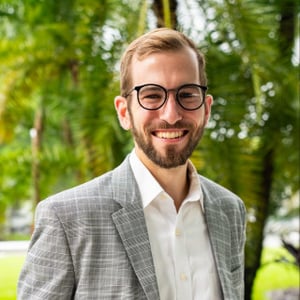
AI Innovation and Law Fellow, University of Texas School of Law
Kevin Frazier is an AI Innovation and Law Fellow with University of Texas School of Law.
AI Innovation and Law Fellow, University of Texas School of Law
Kevin Frazier is an AI Innovation and Law Fellow with University of Texas School of Law.
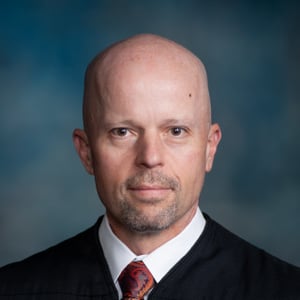
Justice, North Dakota Supreme Court
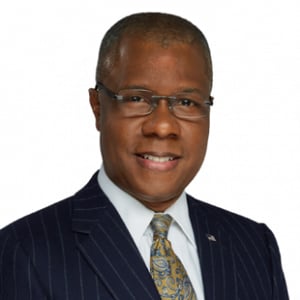
Syndicated Columnist
New York political commentor Deroy Murdock is a Fox News Contributor, a Contributing Editor with National Review Online, an emeritus Media Fellow with the Hoover Institution on War, Revolution and Peace at Stanford University; and a Senior Fellow with the Atlas Network, which supports and connects some 500 free-market think tanks in the USA and some 95 countries world-wide. Mr. Murdock’s weekly column — “This Opinion Just In…” — appears in the New York Post, the Washington Times, the New Hampshire Union-Leader, and other newspapers across America. He has appeared on radio shows across America and presents commentaries on Fox News Radio’s podcast, The Rundown. He is a veteran of the 1980 and 1984 Reagan for President campaigns and Steve Forbes’ 2000 White House bid.
As a popular public speaker, he has lectured or debated at the Cato Institute, the Council on Foreign Relations; Harvard Medical School, the Heritage Foundation; the National Academy of Sciences; Dartmouth, Stanford, and Tulane universities; and various fora, from Bogotá to Buenos Aires to Budapest. He is a native of Los Angeles, a graduate of Georgetown University, and a resident of Manhattan, where he earned an MBA from New York University. His program included a semester of study at the Chinese University of Hong Kong.
Deroy Murdock hopes that someday the free society will bring him — and every American — more leisure time to experience fine dining, motion pictures, skiing, live music, and the priceless joys of family, friends, and loved ones.
CEO & Founder, Learned Hand
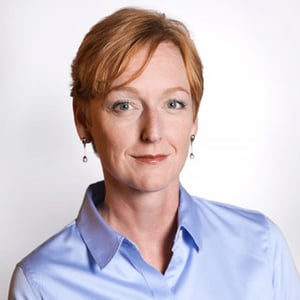
Raymond & Miriam Ehrlich Eminent Scholar Chair in US Constitutional Law, University of Florida Levin College of Law
Lyrissa Lidsky is the Raymond & Miriam Ehrlich Eminent Scholar Chair in U.S. Constitutional Law at Florida Law. She previously served as Dean of the University of Missouri School of Law from 2017-2022. The focus of her research and teaching is the intersection of Tort Law and the First Amendment, with an emphasis on defamation and free speech issues in social media. Missouri Lawyers Media named Lidsky its 2020 Woman of the Year based on her scholarship, passion for law, mentorship of students, and engagement of constituencies supporting the school of law.
Before becoming dean at Missouri, Lidsky served in a variety of leadership roles at UF Law, including as associate dean for graduate and international programs and associate dean for faculty development. She also held the Stephen C. O’Connell Chair in Law and received a number of teaching awards during her 23-year tenure at UF, including student-selected awards such as Teacher of the Year (twice) and Faculty Graduation Speaker (three times), as well as Teacher of the Year, which was selected by a faculty committee.
Lidsky is co-reporter on the Restatement of Defamation and Privacy, which is now in progress. She is co-author of a leading Media Law casebook, a First Amendment casebook, and a reference book on press freedom and has published dozens of articles, culminating in a forthcoming article in the Virginia Law Review, co-authored with Professor Christina Koningisor, called First Amendment Disequilibrium. Her work on anonymous speech has been cited by a number of state supreme courts and the highest courts of Canada and Hong Kong.
Before becoming a law professor, Lidsky served as a clerk for the Honorable Joseph T. Sneed of the United States Court of Appeals for the Ninth Circuit in San Francisco, Calif. Lidsky received her law degree from the University of Texas School of Law with high honors. She was initiated into Order of the Coif in recognition of her scholastic achievement and served as articles editor of the Texas Law Review. Before law school, she was a Fulbright Scholar at Cambridge University in England, studying medieval legal history and early development of the Common Law. She received her bachelor’s degree, summa cum laude, in English and political science from Texas A&M University.

Thomas M. Siebel Senior Fellow, The Hoover Institution, Stanford University; Gary T. Schwartz Distinguished Professor of Law Emeritus, UCLA School of Law
Eugene Volokh is the Thomas M. Siebel Senior Fellow at the Hoover Institution (Stanford), as well as the Gary T. Schwartz Distinguished Professor of Law Emeritus and Distinguished Research Professor at UCLA School of Law. He recently retired from teaching at UCLA, after 30 years there, and is now focusing on research.
Volokh is the author of the textbooks The First Amendment and Related Statutes (8th ed. 2023), and Academic Legal Writing (5th ed. 2016), as well as over 100 academic law journal articles, mostly on First Amendment law. He is a member of The American Law Institute; the editor-in-chief of the Journal of Free Speech Law; and the creator and coauthor of The Volokh Conspiracy, a leading legal blog founded in 2002 (hosted at the Washington Post from 2014 to 2017 and now at Reason Magazine).
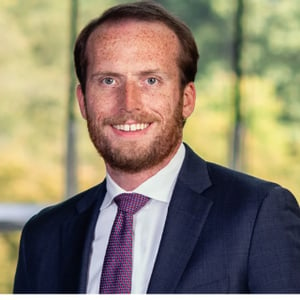
Associate, Jones Day
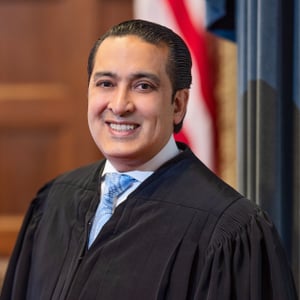
Judge, United States Court of Appeals, Sixth Circuit
John B. Nalbandian serves as a United States Circuit Judge from Kentucky on the U.S. Court of Appeals for the Sixth Circuit. He was nominated and confirmed to that position in 2018. Prior to that, Judge Nalbandian was a partner in the litigation practice group of Taft Stettinius & Hollister LLP in Cincinnati, where he served as the firm’s lead appellate lawyer and also practiced complex litigation in state and federal courts. Judge Nalbandian was board certified by the Ohio State Bar Association as a specialist in appellate law. Prior to joining Taft, Judge Nalbandian practiced for five years in the appellate section of Jones Day in Washington, DC. Upon graduation from law school, Judge Nalbandian clerked for the Honorable Jerry E. Smith of the U.S. Court of Appeals for the Fifth Circuit in Houston. While in private practice, he also served as a board member of the State Justice Institute, a nonprofit organization established by the federal government to improve the administration of justice in state courts. He served as President of the Cincinnati Lawyers Chapter of the Federalist Society. He has also been involved in his community as a board member of the Greater Cincinnati Minority Counsel Program, and as a board member of the Asian Pacific Bar Association of Southwest Ohio. Judge Nalbandian earned his B.S., magna cum laude, from the Wharton School at the University of Pennsylvania and his J.D. from the University of Virginia School of Law, where he was inducted into the Order of the Coif and served as managing editor of the Virginia Law Review.
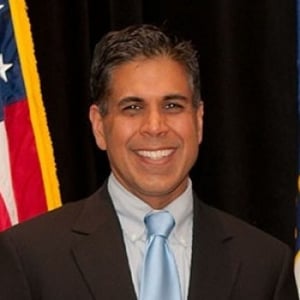
Judge, United States Court of Appeals, Sixth Circuit
Amul R. Thapar serves as a judge on the United States Court of Appeals for the Sixth Circuit. His judicial career began in 2007 when President George W. Bush nominated him to serve on the Eastern District of Kentucky, making him the first South Asian Article III judge in American history. In 2017, he became President Donald J. Trump’s first appellate court nominee.
Before joining the bench, Judge Thapar served as the United States Attorney for the Eastern District of Kentucky. While United States Attorney, Judge Thapar worked on the Attorney General’s Advisory Committee (“AGAC”) and chaired the AGAC’s Controlled Substances and Asset Forfeiture subcommittee. He also served on the Terrorism and National Security subcommittee, the Violent Crime subcommittee, and the Child Exploitation working group.
Judge Thapar has worked in private practice, at Williams & Connolly in Washington, D.C., and Squire, Sanders & Dempsey in Cincinnati, Ohio. He also served as an Assistant United States Attorney in both the Southern District of Ohio and the District of Columbia.
Judge Thapar received his undergraduate degree from Boston College and his law degree from the University of California, Berkeley. After graduating, Judge Thapar worked as a law clerk to the Honorable S. Arthur Spiegel of the United States District Court for the Southern District of Ohio, and the Honorable Nathaniel R. Jones of the United States Court of Appeals for the Sixth Circuit.
Judge Thapar has also published in the Yale Law Journal, Michigan Law Review, and Catholic University Law Review. He teaches courses on originalism, the Federalists and Anti-Federalists, and legal writing at Notre Dame Law School, the University of Virginia School of Law, and Vanderbilt Law School.
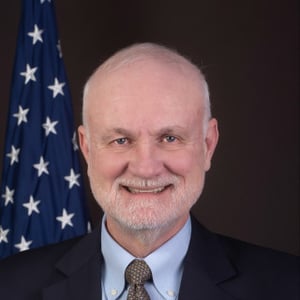
Founding Director of the Center for Energy Law and Policy, William & Mary Law School; Former Chairman, Federal Energy Regulatory Commission; Former Chairman, Virginia State Corporation Commission
Mark Christie is the Founding Director of the Center for Energy Law and Policy at William & Mary Law School. He also teaches courses on energy law at the law school as a visiting professor from practice.
Christie is a former Chairman of the Federal Energy Regulatory Commission (FERC). He served as a FERC commissioner from January 2021 to August 2025, the final seven months as Chairman.
Prior to serving on FERC, Christie was the Chairman of the Virginia State Corporation Commission (Virginia SCC), on which he served as a commissioner for nearly 17 years. He was elected to the Virginia SCC, which regulates utilities, insurance and banking, three times by the Virginia legislature on bipartisan votes.
During Christie’s service as a state regulator, he was elected president of the Organization of PJM States, Inc. (OPSI), an organization of utility regulators representing the 13 states and the District of Columbia which participate in the PJM transmission and markets organization. He served for more than a decade on the OPSI governing board. Christie also served as president of the Mid-Atlantic Conference of Regulatory Utilities Commissioners (MACRUC), a regional chapter of the National Association of Regulatory Utility Commissioners (NARUC).
Former Chairman Christie taught regulatory law for a decade as an adjunct faculty member at the University of Virginia School of Law and constitutional law and government for 20 years in a doctoral program at Virginia Commonwealth University.
Christie received his law degree from Georgetown University and his undergraduate degree from Wake Forest University, where he graduated Magna cum Laude and earned Phi Beta Kappa honors. To help pay for college, he worked as an underground coal miner during summers.
He served as an officer in the U. S. Marine Corps. Semper fi.
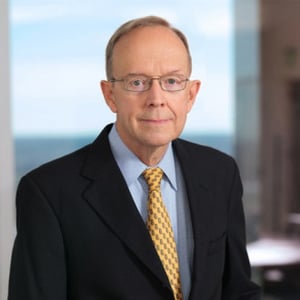
Former Deputy Attorney General for Virginia
Kennerly Davis has over forty years of experience in corporate management, public service, and the private practice of law. He has held senior executive positions in a Fortune 500 electric and gas company. He has served as Deputy Attorney General for the Commonwealth of Virginia, and as a legislative aide to a U.S. Senator and a U.S. Congressman. He practiced law for 25 years with Hunton Andrews Kurth LLP.
Davis is active in the Federalist Society as a member of the Regulatory Process Working Group of the Regulatory Transparency Project, and as a member of the Execuitve Committee of the Administrative Law and Regulation Practice Group. He is active in the national Alumni Free Speech Alliance, and involved in AFSA-chapter initiatives, including litigation, to publicize and correct the serious legal problems created by university Diversity, Equity, and Inclusion programs and the anonymous bias reporting systems used to enforce those DEI programs.
Davis writes and speaks on a wide variety of topics, including those related to the Founding of America, the natural rights foundation of our Republic, the constitutional rule of law, equal protection and free speech, DEI programs and bias reporting systems, capitalism, regulation and regulatory reform, and economic development. His articles have appeared in The Wall Street Journal, the Washington Examiner, the Richmond Times-Dispatch, The Federalist Society Review, the FedSoc Blog, Real Clear Energy, Townhall, the Daily Caller, reports of the Center for Strategic & International Studies, and other publications. He appears frequently on radio, podcasts, and television.
Davis graduated with honors from Cornell University with an A.B. degree in Government. He earned an M.A. degree from Pembroke College, Oxford, in Philosophy, Politics, and Economics. He was awarded a J.D. degree from Harvard Law School, and an M.B.A. degree from Virginia Commonwealth University.
Davis lives in Richmond, Virginia. He can be contacted by email: j.kendavis@verizon.net, and by phone: (804) 624-8525.
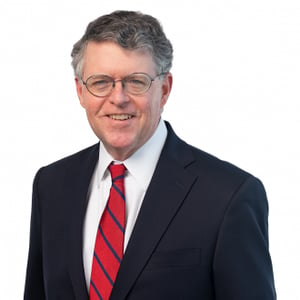
Former Commissioner, Federal Energy Regulatory Commission
Bernard L. McNamee is a former FERC commissioner and currently a partner at McGuireWoods LLP and a senior advisor at McGuireWoods Consulting. His practice focuses on providing clients with strategic legal and policy advice on a wide range of energy and environmental issues. During his time on the Commission, he participated in more than 1,700 published orders on a wide range of issues, including numerous important orders relating to wholesale electricity markets and natural gas pipelines.
Before his appointment by the president and confirmation by the Senate as a commissioner on FERC, McNamee served in the U.S. Department of Energy as executive director of the Office of Policy and deputy general counsel for energy policy. His career in public service includes key leadership positions under Attorneys General in Virginia and Texas, and policy advisor roles for a U.S. Senator from Texas and a Governor of Virginia. In private practice, McNamee has a long career representing energy clients before state public utility commissions in rate cases, certificate proceedings, and integrated resource planning.
CEO & Founder, Learned Hand
Raymond & Miriam Ehrlich Eminent Scholar Chair in US Constitutional Law, University of Florida Levin College of Law
Lyrissa Lidsky is the Raymond & Miriam Ehrlich Eminent Scholar Chair in U.S. Constitutional Law at Florida Law. She previously served as Dean of the University of Missouri School of Law from 2017-2022. The focus of her research and teaching is the intersection of Tort Law and the First Amendment, with an emphasis on defamation and free speech issues in social media. Missouri Lawyers Media named Lidsky its 2020 Woman of the Year based on her scholarship, passion for law, mentorship of students, and engagement of constituencies supporting the school of law.
Before becoming dean at Missouri, Lidsky served in a variety of leadership roles at UF Law, including as associate dean for graduate and international programs and associate dean for faculty development. She also held the Stephen C. O’Connell Chair in Law and received a number of teaching awards during her 23-year tenure at UF, including student-selected awards such as Teacher of the Year (twice) and Faculty Graduation Speaker (three times), as well as Teacher of the Year, which was selected by a faculty committee.
Lidsky is co-reporter on the Restatement of Defamation and Privacy, which is now in progress. She is co-author of a leading Media Law casebook, a First Amendment casebook, and a reference book on press freedom and has published dozens of articles, culminating in a forthcoming article in the Virginia Law Review, co-authored with Professor Christina Koningisor, called First Amendment Disequilibrium. Her work on anonymous speech has been cited by a number of state supreme courts and the highest courts of Canada and Hong Kong.
Before becoming a law professor, Lidsky served as a clerk for the Honorable Joseph T. Sneed of the United States Court of Appeals for the Ninth Circuit in San Francisco, Calif. Lidsky received her law degree from the University of Texas School of Law with high honors. She was initiated into Order of the Coif in recognition of her scholastic achievement and served as articles editor of the Texas Law Review. Before law school, she was a Fulbright Scholar at Cambridge University in England, studying medieval legal history and early development of the Common Law. She received her bachelor’s degree, summa cum laude, in English and political science from Texas A&M University.
Thomas M. Siebel Senior Fellow, The Hoover Institution, Stanford University; Gary T. Schwartz Distinguished Professor of Law Emeritus, UCLA School of Law
Eugene Volokh is the Thomas M. Siebel Senior Fellow at the Hoover Institution (Stanford), as well as the Gary T. Schwartz Distinguished Professor of Law Emeritus and Distinguished Research Professor at UCLA School of Law. He recently retired from teaching at UCLA, after 30 years there, and is now focusing on research.
Volokh is the author of the textbooks The First Amendment and Related Statutes (8th ed. 2023), and Academic Legal Writing (5th ed. 2016), as well as over 100 academic law journal articles, mostly on First Amendment law. He is a member of The American Law Institute; the editor-in-chief of the Journal of Free Speech Law; and the creator and coauthor of The Volokh Conspiracy, a leading legal blog founded in 2002 (hosted at the Washington Post from 2014 to 2017 and now at Reason Magazine).
CEO & Founder, Learned Hand
Raymond & Miriam Ehrlich Eminent Scholar Chair in US Constitutional Law, University of Florida Levin College of Law
Lyrissa Lidsky is the Raymond & Miriam Ehrlich Eminent Scholar Chair in U.S. Constitutional Law at Florida Law. She previously served as Dean of the University of Missouri School of Law from 2017-2022. The focus of her research and teaching is the intersection of Tort Law and the First Amendment, with an emphasis on defamation and free speech issues in social media. Missouri Lawyers Media named Lidsky its 2020 Woman of the Year based on her scholarship, passion for law, mentorship of students, and engagement of constituencies supporting the school of law.
Before becoming dean at Missouri, Lidsky served in a variety of leadership roles at UF Law, including as associate dean for graduate and international programs and associate dean for faculty development. She also held the Stephen C. O’Connell Chair in Law and received a number of teaching awards during her 23-year tenure at UF, including student-selected awards such as Teacher of the Year (twice) and Faculty Graduation Speaker (three times), as well as Teacher of the Year, which was selected by a faculty committee.
Lidsky is co-reporter on the Restatement of Defamation and Privacy, which is now in progress. She is co-author of a leading Media Law casebook, a First Amendment casebook, and a reference book on press freedom and has published dozens of articles, culminating in a forthcoming article in the Virginia Law Review, co-authored with Professor Christina Koningisor, called First Amendment Disequilibrium. Her work on anonymous speech has been cited by a number of state supreme courts and the highest courts of Canada and Hong Kong.
Before becoming a law professor, Lidsky served as a clerk for the Honorable Joseph T. Sneed of the United States Court of Appeals for the Ninth Circuit in San Francisco, Calif. Lidsky received her law degree from the University of Texas School of Law with high honors. She was initiated into Order of the Coif in recognition of her scholastic achievement and served as articles editor of the Texas Law Review. Before law school, she was a Fulbright Scholar at Cambridge University in England, studying medieval legal history and early development of the Common Law. She received her bachelor’s degree, summa cum laude, in English and political science from Texas A&M University.
Thomas M. Siebel Senior Fellow, The Hoover Institution, Stanford University; Gary T. Schwartz Distinguished Professor of Law Emeritus, UCLA School of Law
Eugene Volokh is the Thomas M. Siebel Senior Fellow at the Hoover Institution (Stanford), as well as the Gary T. Schwartz Distinguished Professor of Law Emeritus and Distinguished Research Professor at UCLA School of Law. He recently retired from teaching at UCLA, after 30 years there, and is now focusing on research.
Volokh is the author of the textbooks The First Amendment and Related Statutes (8th ed. 2023), and Academic Legal Writing (5th ed. 2016), as well as over 100 academic law journal articles, mostly on First Amendment law. He is a member of The American Law Institute; the editor-in-chief of the Journal of Free Speech Law; and the creator and coauthor of The Volokh Conspiracy, a leading legal blog founded in 2002 (hosted at the Washington Post from 2014 to 2017 and now at Reason Magazine).
CEO & Founder, Learned Hand
Raymond & Miriam Ehrlich Eminent Scholar Chair in US Constitutional Law, University of Florida Levin College of Law
Lyrissa Lidsky is the Raymond & Miriam Ehrlich Eminent Scholar Chair in U.S. Constitutional Law at Florida Law. She previously served as Dean of the University of Missouri School of Law from 2017-2022. The focus of her research and teaching is the intersection of Tort Law and the First Amendment, with an emphasis on defamation and free speech issues in social media. Missouri Lawyers Media named Lidsky its 2020 Woman of the Year based on her scholarship, passion for law, mentorship of students, and engagement of constituencies supporting the school of law.
Before becoming dean at Missouri, Lidsky served in a variety of leadership roles at UF Law, including as associate dean for graduate and international programs and associate dean for faculty development. She also held the Stephen C. O’Connell Chair in Law and received a number of teaching awards during her 23-year tenure at UF, including student-selected awards such as Teacher of the Year (twice) and Faculty Graduation Speaker (three times), as well as Teacher of the Year, which was selected by a faculty committee.
Lidsky is co-reporter on the Restatement of Defamation and Privacy, which is now in progress. She is co-author of a leading Media Law casebook, a First Amendment casebook, and a reference book on press freedom and has published dozens of articles, culminating in a forthcoming article in the Virginia Law Review, co-authored with Professor Christina Koningisor, called First Amendment Disequilibrium. Her work on anonymous speech has been cited by a number of state supreme courts and the highest courts of Canada and Hong Kong.
Before becoming a law professor, Lidsky served as a clerk for the Honorable Joseph T. Sneed of the United States Court of Appeals for the Ninth Circuit in San Francisco, Calif. Lidsky received her law degree from the University of Texas School of Law with high honors. She was initiated into Order of the Coif in recognition of her scholastic achievement and served as articles editor of the Texas Law Review. Before law school, she was a Fulbright Scholar at Cambridge University in England, studying medieval legal history and early development of the Common Law. She received her bachelor’s degree, summa cum laude, in English and political science from Texas A&M University.
Thomas M. Siebel Senior Fellow, The Hoover Institution, Stanford University; Gary T. Schwartz Distinguished Professor of Law Emeritus, UCLA School of Law
Eugene Volokh is the Thomas M. Siebel Senior Fellow at the Hoover Institution (Stanford), as well as the Gary T. Schwartz Distinguished Professor of Law Emeritus and Distinguished Research Professor at UCLA School of Law. He recently retired from teaching at UCLA, after 30 years there, and is now focusing on research.
Volokh is the author of the textbooks The First Amendment and Related Statutes (8th ed. 2023), and Academic Legal Writing (5th ed. 2016), as well as over 100 academic law journal articles, mostly on First Amendment law. He is a member of The American Law Institute; the editor-in-chief of the Journal of Free Speech Law; and the creator and coauthor of The Volokh Conspiracy, a leading legal blog founded in 2002 (hosted at the Washington Post from 2014 to 2017 and now at Reason Magazine).
CEO & Founder, Learned Hand
Raymond & Miriam Ehrlich Eminent Scholar Chair in US Constitutional Law, University of Florida Levin College of Law
Lyrissa Lidsky is the Raymond & Miriam Ehrlich Eminent Scholar Chair in U.S. Constitutional Law at Florida Law. She previously served as Dean of the University of Missouri School of Law from 2017-2022. The focus of her research and teaching is the intersection of Tort Law and the First Amendment, with an emphasis on defamation and free speech issues in social media. Missouri Lawyers Media named Lidsky its 2020 Woman of the Year based on her scholarship, passion for law, mentorship of students, and engagement of constituencies supporting the school of law.
Before becoming dean at Missouri, Lidsky served in a variety of leadership roles at UF Law, including as associate dean for graduate and international programs and associate dean for faculty development. She also held the Stephen C. O’Connell Chair in Law and received a number of teaching awards during her 23-year tenure at UF, including student-selected awards such as Teacher of the Year (twice) and Faculty Graduation Speaker (three times), as well as Teacher of the Year, which was selected by a faculty committee.
Lidsky is co-reporter on the Restatement of Defamation and Privacy, which is now in progress. She is co-author of a leading Media Law casebook, a First Amendment casebook, and a reference book on press freedom and has published dozens of articles, culminating in a forthcoming article in the Virginia Law Review, co-authored with Professor Christina Koningisor, called First Amendment Disequilibrium. Her work on anonymous speech has been cited by a number of state supreme courts and the highest courts of Canada and Hong Kong.
Before becoming a law professor, Lidsky served as a clerk for the Honorable Joseph T. Sneed of the United States Court of Appeals for the Ninth Circuit in San Francisco, Calif. Lidsky received her law degree from the University of Texas School of Law with high honors. She was initiated into Order of the Coif in recognition of her scholastic achievement and served as articles editor of the Texas Law Review. Before law school, she was a Fulbright Scholar at Cambridge University in England, studying medieval legal history and early development of the Common Law. She received her bachelor’s degree, summa cum laude, in English and political science from Texas A&M University.
Thomas M. Siebel Senior Fellow, The Hoover Institution, Stanford University; Gary T. Schwartz Distinguished Professor of Law Emeritus, UCLA School of Law
Eugene Volokh is the Thomas M. Siebel Senior Fellow at the Hoover Institution (Stanford), as well as the Gary T. Schwartz Distinguished Professor of Law Emeritus and Distinguished Research Professor at UCLA School of Law. He recently retired from teaching at UCLA, after 30 years there, and is now focusing on research.
Volokh is the author of the textbooks The First Amendment and Related Statutes (8th ed. 2023), and Academic Legal Writing (5th ed. 2016), as well as over 100 academic law journal articles, mostly on First Amendment law. He is a member of The American Law Institute; the editor-in-chief of the Journal of Free Speech Law; and the creator and coauthor of The Volokh Conspiracy, a leading legal blog founded in 2002 (hosted at the Washington Post from 2014 to 2017 and now at Reason Magazine).

AI-Induced Constitutional Disequilibrium
North Dakota Lawyer Chapter
Fargo, NDLive Recording of Scaling Laws Podcast with Kevin Frazier and North Dakota Supreme Court Justice Jerod Tufte
North Dakota Lawyer Chapter & UND Student Chapter
Grand Forks, NDAI and Data Centers: Refute the Critics or Risk Oblivion
Silicon Valley Lawyer Chapter
Mountain View, CALarge Libel Models? When Do AI Hallucinations Become Defamation?
Shlomo Klapper, Lyrissa Lidsky, Eugene Volokh
When an AI system fabricates damaging claims about a real person, is the AI company...
Large Libel Models? When Do AI Hallucinations Become Defamation?
Shlomo Klapper, Lyrissa Lidsky, Eugene Volokh
When an AI system fabricates damaging claims about a real person, is the AI company...
Large Libel Models? When Do AI Hallucinations Become Defamation?
Shlomo Klapper, Lyrissa Lidsky, Eugene Volokh
When an AI system fabricates damaging claims about a real person, is the AI company...
Large Libel Models? When Do AI Hallucinations Become Defamation?
Shlomo Klapper, Lyrissa Lidsky, Eugene Volokh
When an AI system fabricates damaging claims about a real person, is the AI company...
Large Libel Models? When Do AI Hallucinations Become Defamation?
The Judiciary in the Age of AI
Washington, DCWhat Can State and Federal Regulators Do to Control the Cost and Maintain the Reliability of Our Electric Service?