
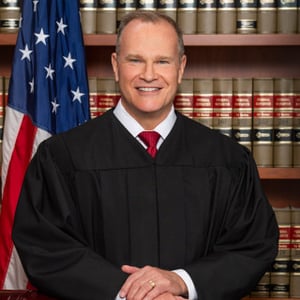
Judge, U.S. District Court for the Central District of California
John W. Holcomb is a U.S. District Judge for the Central District of California, Southern Division, in Santa Ana, California. Judge Holcomb was nominated for that position by President Donald J. Trump in November 2019 and was confirmed by the U.S. Senate in September 2020.
Judge Holcomb earned his S.B. in civil engineering from the Massachusetts Institute of Technology in 1984. For the next five years, Judge Holcomb served as a commissioned officer in the United States Navy, including assignments aboard the battleship U.S.S. New Jersey (BB62) and with the Joint Staff at the Pentagon. In 1993, Judge Holcomb received his M.B.A. from Harvard Business School and his J.D., cum laude, from Harvard Law School. Judge Holcomb then served as a law clerk for Judge Ronald Barliant of the U.S. Bankruptcy Court for the Northern District of Illinois.
Thereafter, Judge Holcomb joined Irell & Manella LLP as an associate, practicing bankruptcy law and general civil litigation. In 1997, Judge Holcomb joined the intellectual property law firm of Knobbe, Martens, Olson & Bear, LLP, and he was elevated to partner in 2002. As a partner at Knobbe Martens, Judge Holcomb participated in several speaking engagements regarding the intersection of intellectual property and bankruptcy law. In 2014, Judge Holcomb co-authored the chapter on U.S. Law in Licenses and Insolvency, A Practical Guide to the Effects of Insolvency on IP License Agreements, which was published by the International Bar Association. Judge Holcomb retired from Knobbe Martens in 2018, and he briefly practiced as a bankruptcy and litigation sole-practitioner before joining the firm Greenberg Gross LLP as a partner in 2019.
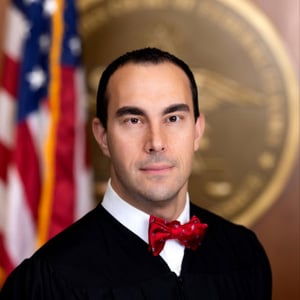
U.S. Court of Federal Claims and Jurist-In-Residence Professor of Law, The University of Akron School of Law
Judge Ryan T. Holte was sworn in as a judge on the United States Court of Federal Claims in July 2019. Prior to confirmation he served as the David L. Brennan Professor of Law and Director of the Center for Intellectual Property Law and Technology at The University of Akron School of Law (2017-2019) and an assistant professor of law at Southern Illinois University School of Law (2013-2017). Judge Holte has written and presented widely on patent law subjects and empirical legal studies of Federal Circuit and district court patent law cases. His most recent articles were published in the Iowa Law Review (2019), George Mason Law Review (2018), and Washington Law Review (2017).
In practice, Judge Holte served for six years as general counsel and partner of an electrical engineering technology company and is co-inventor of multiple patents related to Systems and Methods for Countering Satellite-Navigated Munitions. Prior to entering academia, Judge Holte practiced as a litigation attorney at the Federal Trade Commission and an associate in the Intellectual Property Practice Group at Jones Day. Prior to practice, he served as a law clerk to Judge Stanley F. Birch, Jr. on the United States Court of Appeals for the Eleventh Circuit and as a law clerk to Judge Loren A. Smith on the United States Court of Federal Claims.
Judge Holte received his JD from the University of California Davis School of Law and his BS, magna cum laude, in engineering from the California Maritime Academy where he was a First Class graduate of the Corps of Cadets Third Engineering Division and sailed as a U.S. Merchant Marine oiler.
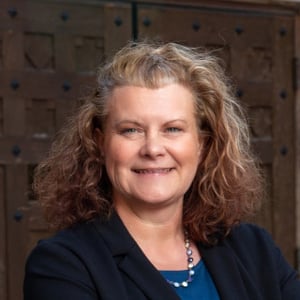
Associate Dean for Academic Affairs, Austin E. Owen Research Scholar & Professor of Law, The University of Richmond School of Law
Dean Kristen Jakobsen Osenga teaches and writes in the areas of patent law, antitrust, and legislation and regulation. Some of her recent scholarship focuses on standard development organizations, patent eligible subject matter, patent licensing firms, litigation and remedies for patent infringement, and patent law reform. She has written numerous law review articles on these and other topics, as well as book chapters and op eds on various aspects of patent law. Additionally, she has spoken on these issues at many academic conferences and bar events. Dean Osenga is Chief Policy Counselor for the Inventors Defense Alliance, as well as an active member of the Federal Circuit Bar Association and the American Intellectual Property Law Association.
Dean Osenga received a B.S. degree in Biomedical Engineering from the University of Iowa, an M.S. degree in Electrical Engineering from Southern Illinois University – Carbondale, and a J.D. from the University of Illinois College of Law, where she graduated magna cum laude. After law school, she practiced at the law firm of Finnegan, Henderson, Farabow, Garrett, & Dunner LLP, (now Finnegan) where she did patent prosecution and litigation. She then clerked for the Judge Richard Linn of the U.S. Court of Appeals for the Federal Circuit. After clerking, she entered academia, teaching first at Chicago-Kent College of Law and then at the University of Richmond, where she has been since 2006. She has also been a Visiting Professor at Emory University School of Law and at William & Mary School of Law.

Vice President and Counsel of Government Affairs, QUALCOMM Incorporated
Laurie Self is Vice President and Counsel of Government Affairs at Qualcomm Incorporated, where she specializes in U.S. patent policy matters at the federal and state level. Based in Washington, D.C., Ms. Self also supports Qualcomm’s government affairs initiatives to promote strong intellectual property rights in emerging markets. Ms. Self’s particular focus is to ensure that U.S. intellectual property laws and policies provide the necessary protections and incentives to support the Company’s R&D-driven business model. Prior to her arrival at Qualcomm in July 2012, Ms. Self was a partner at the law firm Covington & Burling where she chaired the firm’s intellectual property practice group.

Head of Patent Policy, Google
Laura Sheridan is Head of Patent Policy at Google, advocating for an effective patent examination process, a patent litigation system that operates fairly for all participants, and transparency in these areas. She has shared her views on patent issues in numerous policy dialogues, including testifying before Congress on the intersection of AI and patents. Her patent policy work is shaped by years of private practice experience in patent prosecution, litigation, due diligence, and post-grant practice before the Patent Office.
An active member of the IP community, Laura is part of the Intellectual Property Owners Association delegation to IP5 Industry, a group which engages on procedural harmonization matters with the IP5 Offices (the Offices of China, Europe, Japan, Korea, and the US). Laura also helped to form the New York chapter of ChIPs and is a member of the Advisory Board for the NYU Law Engelberg Center on Innovation Law & Policy. Laura studied mechanical engineering at Cornell University and received her J.D. from Fordham Law School.
Judge, U.S. District Court for the Central District of California
John W. Holcomb is a U.S. District Judge for the Central District of California, Southern Division, in Santa Ana, California. Judge Holcomb was nominated for that position by President Donald J. Trump in November 2019 and was confirmed by the U.S. Senate in September 2020.
Judge Holcomb earned his S.B. in civil engineering from the Massachusetts Institute of Technology in 1984. For the next five years, Judge Holcomb served as a commissioned officer in the United States Navy, including assignments aboard the battleship U.S.S. New Jersey (BB62) and with the Joint Staff at the Pentagon. In 1993, Judge Holcomb received his M.B.A. from Harvard Business School and his J.D., cum laude, from Harvard Law School. Judge Holcomb then served as a law clerk for Judge Ronald Barliant of the U.S. Bankruptcy Court for the Northern District of Illinois.
Thereafter, Judge Holcomb joined Irell & Manella LLP as an associate, practicing bankruptcy law and general civil litigation. In 1997, Judge Holcomb joined the intellectual property law firm of Knobbe, Martens, Olson & Bear, LLP, and he was elevated to partner in 2002. As a partner at Knobbe Martens, Judge Holcomb participated in several speaking engagements regarding the intersection of intellectual property and bankruptcy law. In 2014, Judge Holcomb co-authored the chapter on U.S. Law in Licenses and Insolvency, A Practical Guide to the Effects of Insolvency on IP License Agreements, which was published by the International Bar Association. Judge Holcomb retired from Knobbe Martens in 2018, and he briefly practiced as a bankruptcy and litigation sole-practitioner before joining the firm Greenberg Gross LLP as a partner in 2019.
U.S. Court of Federal Claims and Jurist-In-Residence Professor of Law, The University of Akron School of Law
Judge Ryan T. Holte was sworn in as a judge on the United States Court of Federal Claims in July 2019. Prior to confirmation he served as the David L. Brennan Professor of Law and Director of the Center for Intellectual Property Law and Technology at The University of Akron School of Law (2017-2019) and an assistant professor of law at Southern Illinois University School of Law (2013-2017). Judge Holte has written and presented widely on patent law subjects and empirical legal studies of Federal Circuit and district court patent law cases. His most recent articles were published in the Iowa Law Review (2019), George Mason Law Review (2018), and Washington Law Review (2017).
In practice, Judge Holte served for six years as general counsel and partner of an electrical engineering technology company and is co-inventor of multiple patents related to Systems and Methods for Countering Satellite-Navigated Munitions. Prior to entering academia, Judge Holte practiced as a litigation attorney at the Federal Trade Commission and an associate in the Intellectual Property Practice Group at Jones Day. Prior to practice, he served as a law clerk to Judge Stanley F. Birch, Jr. on the United States Court of Appeals for the Eleventh Circuit and as a law clerk to Judge Loren A. Smith on the United States Court of Federal Claims.
Judge Holte received his JD from the University of California Davis School of Law and his BS, magna cum laude, in engineering from the California Maritime Academy where he was a First Class graduate of the Corps of Cadets Third Engineering Division and sailed as a U.S. Merchant Marine oiler.
Associate Dean for Academic Affairs, Austin E. Owen Research Scholar & Professor of Law, The University of Richmond School of Law
Dean Kristen Jakobsen Osenga teaches and writes in the areas of patent law, antitrust, and legislation and regulation. Some of her recent scholarship focuses on standard development organizations, patent eligible subject matter, patent licensing firms, litigation and remedies for patent infringement, and patent law reform. She has written numerous law review articles on these and other topics, as well as book chapters and op eds on various aspects of patent law. Additionally, she has spoken on these issues at many academic conferences and bar events. Dean Osenga is Chief Policy Counselor for the Inventors Defense Alliance, as well as an active member of the Federal Circuit Bar Association and the American Intellectual Property Law Association.
Dean Osenga received a B.S. degree in Biomedical Engineering from the University of Iowa, an M.S. degree in Electrical Engineering from Southern Illinois University – Carbondale, and a J.D. from the University of Illinois College of Law, where she graduated magna cum laude. After law school, she practiced at the law firm of Finnegan, Henderson, Farabow, Garrett, & Dunner LLP, (now Finnegan) where she did patent prosecution and litigation. She then clerked for the Judge Richard Linn of the U.S. Court of Appeals for the Federal Circuit. After clerking, she entered academia, teaching first at Chicago-Kent College of Law and then at the University of Richmond, where she has been since 2006. She has also been a Visiting Professor at Emory University School of Law and at William & Mary School of Law.
Vice President and Counsel of Government Affairs, QUALCOMM Incorporated
Laurie Self is Vice President and Counsel of Government Affairs at Qualcomm Incorporated, where she specializes in U.S. patent policy matters at the federal and state level. Based in Washington, D.C., Ms. Self also supports Qualcomm’s government affairs initiatives to promote strong intellectual property rights in emerging markets. Ms. Self’s particular focus is to ensure that U.S. intellectual property laws and policies provide the necessary protections and incentives to support the Company’s R&D-driven business model. Prior to her arrival at Qualcomm in July 2012, Ms. Self was a partner at the law firm Covington & Burling where she chaired the firm’s intellectual property practice group.
Head of Patent Policy, Google
Laura Sheridan is Head of Patent Policy at Google, advocating for an effective patent examination process, a patent litigation system that operates fairly for all participants, and transparency in these areas. She has shared her views on patent issues in numerous policy dialogues, including testifying before Congress on the intersection of AI and patents. Her patent policy work is shaped by years of private practice experience in patent prosecution, litigation, due diligence, and post-grant practice before the Patent Office.
An active member of the IP community, Laura is part of the Intellectual Property Owners Association delegation to IP5 Industry, a group which engages on procedural harmonization matters with the IP5 Offices (the Offices of China, Europe, Japan, Korea, and the US). Laura also helped to form the New York chapter of ChIPs and is a member of the Advisory Board for the NYU Law Engelberg Center on Innovation Law & Policy. Laura studied mechanical engineering at Cornell University and received her J.D. from Fordham Law School.
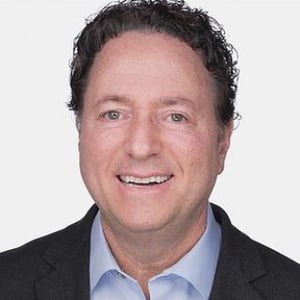
President, Committee for Justice
Curt Levey is President of the Committee For Justice, an organization devoted to advancing constitutionally limited government and individual liberty. He is a veteran of Supreme Court and other judicial confirmation battles and serves on the executive committee of the Federalist Society's Civil Rights Practice Group.
After graduating Harvard Law School with honors and clerking for the U.S. Court of Appeals for the Sixth Circuit, Mr. Levey served as Director of Legal & Public Affairs at the Center for Individual Rights (CIR). There he worked on landmark Supreme Court cases, including the University of Michigan affirmative action cases and the successful constitutional challenge to the Violence Against Women Act. After CIR, Mr. Levey headed the Title IX policy group at the U.S. Department of Education.
Before attending law school, Mr. Levey earned an M.S. and B.A. in computer science from Brown University and worked in the field of artificial intelligence (AI). He invented a new type of AI technology, for which he wrote a successful patent application.

Professor Emeritus, New York University
GARY MARCUS is a leading voice in artificial intelligence. He is a scientist, best-selling author, and serial entrepreneur (Founder of Robust.AI and Geometric.AI, acquired by Uber). He is well-known for his challenges to contemporary AI, anticipating many of the current limitations decades in advance, and for his research in human language development and cognitive neuroscience.
An Emeritus Professor of Psychology and Neural Science at NYU, he is the author of five books, including, The Algebraic Mind, Kluge, The Birth of the Mind, and the New York Times Bestseller Guitar Zero. He has often contributed to The New Yorker, Wired, and The New York Times. His most recent book, Rebooting AI, with Ernest Davis, is one of Forbes’s 7 Must Read Books in AI.
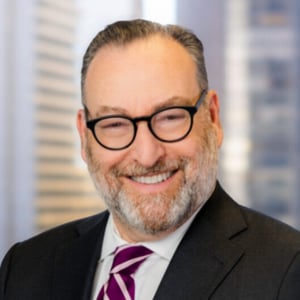
Founder, Chairman, and CEO, Louis D. Brandeis Center for Human Rights Under Law
Hon. Kenneth L. Marcus is an internationally recognized expert in civil and human rights, as well as a leader in the fight against anti-Semitism on and off university campuses. He is the Founder, Chairman, and CEO of The Louis D. Brandeis Center for Human Rights Under Law, the leading civil rights legal organization fighting against anti-Semitism. The New York Times has called him “The Man Who Helped Redefine Campus Anti-Semitism.” He been described, in that paper, as “the single most effective and respected force” to combat anti-Semitism.
During his public service career, Marcus served as Assistant U.S. Secretary of Education for Civil Rights; Staff Director at the U.S. Commission on Civil Rights; and General Deputy Assistant U.S. Secretary of Housing and Urban Development for Fair Housing and Equal Opportunity.
In academia, he serves as Professorial Lecturer in Law at George Washington University. He formerly held the Lillie and Nathan Ackerman Chair in Equality and Justice in America at the City University of New York’s Bernard M. Baruch College, served as Visiting Research Professor of Political Science at Yeshiva University, and was a Board of Visitors member George Mason University and Distinguished Senior Fellow at that university’s law school. He is a member of the editorial board of the Journal of Contemporary Antisemitism and previously served as Associate Editor of the Journal for the Study of Anti-Semitism.
Marcus is also author of The Definition of Anti-Semitism (Oxford University Press) and Jewish Identity and Civil Rights in America (Cambridge University Press). He has published widely in academic journals as well as in more popular venues such as The Wall Street Journal, Washington Post, Newsweek, USA Today, and Politico. He is a graduate of Williams College and the University of California at Berkeley School of Law.
Earlier in his career, he was a litigation partner in two major law firms, where he conducted complex commercial and constitutional litigation. He also serves as Chairman emeritus of the Executive Committee of the Federalist Society for Law & Public Policy Civil Rights Practice Group.
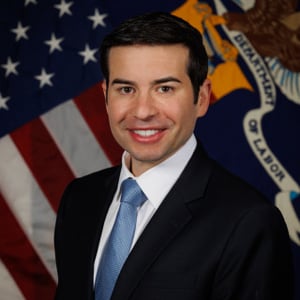
Deputy Secretary of Labor, U.S. Department of Labor
Keith E. Sonderling was confirmed by the U.S. Senate on March 12, 2025 to be the 38th United States Deputy Secretary of Labor.
As the United States Deputy Secretary of Labor, Sonderling is the second-highest-ranking official and serves as the Department's Chief Operating Officer, overseeing the agency’s $14 billion dollar budget and 16,000 employees. The Deputy Secretary oversees key operational functions such as: strategic planning; budget formulation; financial management; information technology; and human resource management. Additionally, the Deputy Secretary provides the leadership and management of DOL’s agencies necessary to support the Secretary and the Department’s mission.
Prior to becoming Deputy Secretary, he was previously confirmed by the United States Senate to serve as the Commissioner of the U.S. Equal Employment Opportunity Commission (EEOC) from September 2020 until August 2024. He also served as the Commission’s Vice-Chair from 2020-2021.
During his tenure at the EEOC, one of Sonderling’s highest priorities was ensuring that artificial intelligence and workplace technologies are designed and deployed consistent with long-standing laws. He published numerous articles on the benefits and potential harms of using artificial intelligence-based technology in the workplace and spoke globally on artificial intelligence’s impact on the workplace.
Sonderling previously served at the US Department of Labor as the Acting and Deputy Administrator of the U.S. Department of Labor’s Wage and Hour Division from 2017-2020. During his tenure, the Division accomplished back-to-back record-breaking enforcement collections and educational outreach events. Sonderling also oversaw the development and publication of large-scale deregulatory rules and authored numerous Opinion Letters, Field Assistance Bulletins, and All Agency Memorandums. Additionally, he was instrumental in developing the Division’s first comprehensive self-audit program, which collected more than $7 million for nearly eleven thousand workers.
Before his government service, Sonderling was a partner at one of Florida’s oldest and largest law firms, Gunster. At Gunster, he counseled employers and litigated labor and employment disputes. In 2012, then-Governor Rick Scott appointed Sonderling to serve as the Chair of the Judicial Nominating Committee for appellate courts in South Florida. Sonderling was also active in the community, serving on the Board of Directors for Morse Life Health System, the Boca Raton Chamber of Commerce, and Leadership Florida.
Sonderling also serves as a Professional Lecturer in the Law (Adjunct Professor) at George Washington University Law School, teaching employment discrimination.
Sonderling received his B.S., magna cum laude, from the University of Florida and his J.D., magna cum laude, from Nova Southeastern University.
President, Committee for Justice
Curt Levey is President of the Committee For Justice, an organization devoted to advancing constitutionally limited government and individual liberty. He is a veteran of Supreme Court and other judicial confirmation battles and serves on the executive committee of the Federalist Society's Civil Rights Practice Group.
After graduating Harvard Law School with honors and clerking for the U.S. Court of Appeals for the Sixth Circuit, Mr. Levey served as Director of Legal & Public Affairs at the Center for Individual Rights (CIR). There he worked on landmark Supreme Court cases, including the University of Michigan affirmative action cases and the successful constitutional challenge to the Violence Against Women Act. After CIR, Mr. Levey headed the Title IX policy group at the U.S. Department of Education.
Before attending law school, Mr. Levey earned an M.S. and B.A. in computer science from Brown University and worked in the field of artificial intelligence (AI). He invented a new type of AI technology, for which he wrote a successful patent application.
Professor Emeritus, New York University
GARY MARCUS is a leading voice in artificial intelligence. He is a scientist, best-selling author, and serial entrepreneur (Founder of Robust.AI and Geometric.AI, acquired by Uber). He is well-known for his challenges to contemporary AI, anticipating many of the current limitations decades in advance, and for his research in human language development and cognitive neuroscience.
An Emeritus Professor of Psychology and Neural Science at NYU, he is the author of five books, including, The Algebraic Mind, Kluge, The Birth of the Mind, and the New York Times Bestseller Guitar Zero. He has often contributed to The New Yorker, Wired, and The New York Times. His most recent book, Rebooting AI, with Ernest Davis, is one of Forbes’s 7 Must Read Books in AI.
Founder, Chairman, and CEO, Louis D. Brandeis Center for Human Rights Under Law
Hon. Kenneth L. Marcus is an internationally recognized expert in civil and human rights, as well as a leader in the fight against anti-Semitism on and off university campuses. He is the Founder, Chairman, and CEO of The Louis D. Brandeis Center for Human Rights Under Law, the leading civil rights legal organization fighting against anti-Semitism. The New York Times has called him “The Man Who Helped Redefine Campus Anti-Semitism.” He been described, in that paper, as “the single most effective and respected force” to combat anti-Semitism.
During his public service career, Marcus served as Assistant U.S. Secretary of Education for Civil Rights; Staff Director at the U.S. Commission on Civil Rights; and General Deputy Assistant U.S. Secretary of Housing and Urban Development for Fair Housing and Equal Opportunity.
In academia, he serves as Professorial Lecturer in Law at George Washington University. He formerly held the Lillie and Nathan Ackerman Chair in Equality and Justice in America at the City University of New York’s Bernard M. Baruch College, served as Visiting Research Professor of Political Science at Yeshiva University, and was a Board of Visitors member George Mason University and Distinguished Senior Fellow at that university’s law school. He is a member of the editorial board of the Journal of Contemporary Antisemitism and previously served as Associate Editor of the Journal for the Study of Anti-Semitism.
Marcus is also author of The Definition of Anti-Semitism (Oxford University Press) and Jewish Identity and Civil Rights in America (Cambridge University Press). He has published widely in academic journals as well as in more popular venues such as The Wall Street Journal, Washington Post, Newsweek, USA Today, and Politico. He is a graduate of Williams College and the University of California at Berkeley School of Law.
Earlier in his career, he was a litigation partner in two major law firms, where he conducted complex commercial and constitutional litigation. He also serves as Chairman emeritus of the Executive Committee of the Federalist Society for Law & Public Policy Civil Rights Practice Group.
Deputy Secretary of Labor, U.S. Department of Labor
Keith E. Sonderling was confirmed by the U.S. Senate on March 12, 2025 to be the 38th United States Deputy Secretary of Labor.
As the United States Deputy Secretary of Labor, Sonderling is the second-highest-ranking official and serves as the Department's Chief Operating Officer, overseeing the agency’s $14 billion dollar budget and 16,000 employees. The Deputy Secretary oversees key operational functions such as: strategic planning; budget formulation; financial management; information technology; and human resource management. Additionally, the Deputy Secretary provides the leadership and management of DOL’s agencies necessary to support the Secretary and the Department’s mission.
Prior to becoming Deputy Secretary, he was previously confirmed by the United States Senate to serve as the Commissioner of the U.S. Equal Employment Opportunity Commission (EEOC) from September 2020 until August 2024. He also served as the Commission’s Vice-Chair from 2020-2021.
During his tenure at the EEOC, one of Sonderling’s highest priorities was ensuring that artificial intelligence and workplace technologies are designed and deployed consistent with long-standing laws. He published numerous articles on the benefits and potential harms of using artificial intelligence-based technology in the workplace and spoke globally on artificial intelligence’s impact on the workplace.
Sonderling previously served at the US Department of Labor as the Acting and Deputy Administrator of the U.S. Department of Labor’s Wage and Hour Division from 2017-2020. During his tenure, the Division accomplished back-to-back record-breaking enforcement collections and educational outreach events. Sonderling also oversaw the development and publication of large-scale deregulatory rules and authored numerous Opinion Letters, Field Assistance Bulletins, and All Agency Memorandums. Additionally, he was instrumental in developing the Division’s first comprehensive self-audit program, which collected more than $7 million for nearly eleven thousand workers.
Before his government service, Sonderling was a partner at one of Florida’s oldest and largest law firms, Gunster. At Gunster, he counseled employers and litigated labor and employment disputes. In 2012, then-Governor Rick Scott appointed Sonderling to serve as the Chair of the Judicial Nominating Committee for appellate courts in South Florida. Sonderling was also active in the community, serving on the Board of Directors for Morse Life Health System, the Boca Raton Chamber of Commerce, and Leadership Florida.
Sonderling also serves as a Professional Lecturer in the Law (Adjunct Professor) at George Washington University Law School, teaching employment discrimination.
Sonderling received his B.S., magna cum laude, from the University of Florida and his J.D., magna cum laude, from Nova Southeastern University.
Judge, U.S. District Court for the Central District of California
John W. Holcomb is a U.S. District Judge for the Central District of California, Southern Division, in Santa Ana, California. Judge Holcomb was nominated for that position by President Donald J. Trump in November 2019 and was confirmed by the U.S. Senate in September 2020.
Judge Holcomb earned his S.B. in civil engineering from the Massachusetts Institute of Technology in 1984. For the next five years, Judge Holcomb served as a commissioned officer in the United States Navy, including assignments aboard the battleship U.S.S. New Jersey (BB62) and with the Joint Staff at the Pentagon. In 1993, Judge Holcomb received his M.B.A. from Harvard Business School and his J.D., cum laude, from Harvard Law School. Judge Holcomb then served as a law clerk for Judge Ronald Barliant of the U.S. Bankruptcy Court for the Northern District of Illinois.
Thereafter, Judge Holcomb joined Irell & Manella LLP as an associate, practicing bankruptcy law and general civil litigation. In 1997, Judge Holcomb joined the intellectual property law firm of Knobbe, Martens, Olson & Bear, LLP, and he was elevated to partner in 2002. As a partner at Knobbe Martens, Judge Holcomb participated in several speaking engagements regarding the intersection of intellectual property and bankruptcy law. In 2014, Judge Holcomb co-authored the chapter on U.S. Law in Licenses and Insolvency, A Practical Guide to the Effects of Insolvency on IP License Agreements, which was published by the International Bar Association. Judge Holcomb retired from Knobbe Martens in 2018, and he briefly practiced as a bankruptcy and litigation sole-practitioner before joining the firm Greenberg Gross LLP as a partner in 2019.
U.S. Court of Federal Claims and Jurist-In-Residence Professor of Law, The University of Akron School of Law
Judge Ryan T. Holte was sworn in as a judge on the United States Court of Federal Claims in July 2019. Prior to confirmation he served as the David L. Brennan Professor of Law and Director of the Center for Intellectual Property Law and Technology at The University of Akron School of Law (2017-2019) and an assistant professor of law at Southern Illinois University School of Law (2013-2017). Judge Holte has written and presented widely on patent law subjects and empirical legal studies of Federal Circuit and district court patent law cases. His most recent articles were published in the Iowa Law Review (2019), George Mason Law Review (2018), and Washington Law Review (2017).
In practice, Judge Holte served for six years as general counsel and partner of an electrical engineering technology company and is co-inventor of multiple patents related to Systems and Methods for Countering Satellite-Navigated Munitions. Prior to entering academia, Judge Holte practiced as a litigation attorney at the Federal Trade Commission and an associate in the Intellectual Property Practice Group at Jones Day. Prior to practice, he served as a law clerk to Judge Stanley F. Birch, Jr. on the United States Court of Appeals for the Eleventh Circuit and as a law clerk to Judge Loren A. Smith on the United States Court of Federal Claims.
Judge Holte received his JD from the University of California Davis School of Law and his BS, magna cum laude, in engineering from the California Maritime Academy where he was a First Class graduate of the Corps of Cadets Third Engineering Division and sailed as a U.S. Merchant Marine oiler.
Associate Dean for Academic Affairs, Austin E. Owen Research Scholar & Professor of Law, The University of Richmond School of Law
Dean Kristen Jakobsen Osenga teaches and writes in the areas of patent law, antitrust, and legislation and regulation. Some of her recent scholarship focuses on standard development organizations, patent eligible subject matter, patent licensing firms, litigation and remedies for patent infringement, and patent law reform. She has written numerous law review articles on these and other topics, as well as book chapters and op eds on various aspects of patent law. Additionally, she has spoken on these issues at many academic conferences and bar events. Dean Osenga is Chief Policy Counselor for the Inventors Defense Alliance, as well as an active member of the Federal Circuit Bar Association and the American Intellectual Property Law Association.
Dean Osenga received a B.S. degree in Biomedical Engineering from the University of Iowa, an M.S. degree in Electrical Engineering from Southern Illinois University – Carbondale, and a J.D. from the University of Illinois College of Law, where she graduated magna cum laude. After law school, she practiced at the law firm of Finnegan, Henderson, Farabow, Garrett, & Dunner LLP, (now Finnegan) where she did patent prosecution and litigation. She then clerked for the Judge Richard Linn of the U.S. Court of Appeals for the Federal Circuit. After clerking, she entered academia, teaching first at Chicago-Kent College of Law and then at the University of Richmond, where she has been since 2006. She has also been a Visiting Professor at Emory University School of Law and at William & Mary School of Law.
Vice President and Counsel of Government Affairs, QUALCOMM Incorporated
Laurie Self is Vice President and Counsel of Government Affairs at Qualcomm Incorporated, where she specializes in U.S. patent policy matters at the federal and state level. Based in Washington, D.C., Ms. Self also supports Qualcomm’s government affairs initiatives to promote strong intellectual property rights in emerging markets. Ms. Self’s particular focus is to ensure that U.S. intellectual property laws and policies provide the necessary protections and incentives to support the Company’s R&D-driven business model. Prior to her arrival at Qualcomm in July 2012, Ms. Self was a partner at the law firm Covington & Burling where she chaired the firm’s intellectual property practice group.
Head of Patent Policy, Google
Laura Sheridan is Head of Patent Policy at Google, advocating for an effective patent examination process, a patent litigation system that operates fairly for all participants, and transparency in these areas. She has shared her views on patent issues in numerous policy dialogues, including testifying before Congress on the intersection of AI and patents. Her patent policy work is shaped by years of private practice experience in patent prosecution, litigation, due diligence, and post-grant practice before the Patent Office.
An active member of the IP community, Laura is part of the Intellectual Property Owners Association delegation to IP5 Industry, a group which engages on procedural harmonization matters with the IP5 Offices (the Offices of China, Europe, Japan, Korea, and the US). Laura also helped to form the New York chapter of ChIPs and is a member of the Advisory Board for the NYU Law Engelberg Center on Innovation Law & Policy. Laura studied mechanical engineering at Cornell University and received her J.D. from Fordham Law School.
President, Committee for Justice
Curt Levey is President of the Committee For Justice, an organization devoted to advancing constitutionally limited government and individual liberty. He is a veteran of Supreme Court and other judicial confirmation battles and serves on the executive committee of the Federalist Society's Civil Rights Practice Group.
After graduating Harvard Law School with honors and clerking for the U.S. Court of Appeals for the Sixth Circuit, Mr. Levey served as Director of Legal & Public Affairs at the Center for Individual Rights (CIR). There he worked on landmark Supreme Court cases, including the University of Michigan affirmative action cases and the successful constitutional challenge to the Violence Against Women Act. After CIR, Mr. Levey headed the Title IX policy group at the U.S. Department of Education.
Before attending law school, Mr. Levey earned an M.S. and B.A. in computer science from Brown University and worked in the field of artificial intelligence (AI). He invented a new type of AI technology, for which he wrote a successful patent application.
Professor Emeritus, New York University
GARY MARCUS is a leading voice in artificial intelligence. He is a scientist, best-selling author, and serial entrepreneur (Founder of Robust.AI and Geometric.AI, acquired by Uber). He is well-known for his challenges to contemporary AI, anticipating many of the current limitations decades in advance, and for his research in human language development and cognitive neuroscience.
An Emeritus Professor of Psychology and Neural Science at NYU, he is the author of five books, including, The Algebraic Mind, Kluge, The Birth of the Mind, and the New York Times Bestseller Guitar Zero. He has often contributed to The New Yorker, Wired, and The New York Times. His most recent book, Rebooting AI, with Ernest Davis, is one of Forbes’s 7 Must Read Books in AI.
Founder, Chairman, and CEO, Louis D. Brandeis Center for Human Rights Under Law
Hon. Kenneth L. Marcus is an internationally recognized expert in civil and human rights, as well as a leader in the fight against anti-Semitism on and off university campuses. He is the Founder, Chairman, and CEO of The Louis D. Brandeis Center for Human Rights Under Law, the leading civil rights legal organization fighting against anti-Semitism. The New York Times has called him “The Man Who Helped Redefine Campus Anti-Semitism.” He been described, in that paper, as “the single most effective and respected force” to combat anti-Semitism.
During his public service career, Marcus served as Assistant U.S. Secretary of Education for Civil Rights; Staff Director at the U.S. Commission on Civil Rights; and General Deputy Assistant U.S. Secretary of Housing and Urban Development for Fair Housing and Equal Opportunity.
In academia, he serves as Professorial Lecturer in Law at George Washington University. He formerly held the Lillie and Nathan Ackerman Chair in Equality and Justice in America at the City University of New York’s Bernard M. Baruch College, served as Visiting Research Professor of Political Science at Yeshiva University, and was a Board of Visitors member George Mason University and Distinguished Senior Fellow at that university’s law school. He is a member of the editorial board of the Journal of Contemporary Antisemitism and previously served as Associate Editor of the Journal for the Study of Anti-Semitism.
Marcus is also author of The Definition of Anti-Semitism (Oxford University Press) and Jewish Identity and Civil Rights in America (Cambridge University Press). He has published widely in academic journals as well as in more popular venues such as The Wall Street Journal, Washington Post, Newsweek, USA Today, and Politico. He is a graduate of Williams College and the University of California at Berkeley School of Law.
Earlier in his career, he was a litigation partner in two major law firms, where he conducted complex commercial and constitutional litigation. He also serves as Chairman emeritus of the Executive Committee of the Federalist Society for Law & Public Policy Civil Rights Practice Group.
Deputy Secretary of Labor, U.S. Department of Labor
Keith E. Sonderling was confirmed by the U.S. Senate on March 12, 2025 to be the 38th United States Deputy Secretary of Labor.
As the United States Deputy Secretary of Labor, Sonderling is the second-highest-ranking official and serves as the Department's Chief Operating Officer, overseeing the agency’s $14 billion dollar budget and 16,000 employees. The Deputy Secretary oversees key operational functions such as: strategic planning; budget formulation; financial management; information technology; and human resource management. Additionally, the Deputy Secretary provides the leadership and management of DOL’s agencies necessary to support the Secretary and the Department’s mission.
Prior to becoming Deputy Secretary, he was previously confirmed by the United States Senate to serve as the Commissioner of the U.S. Equal Employment Opportunity Commission (EEOC) from September 2020 until August 2024. He also served as the Commission’s Vice-Chair from 2020-2021.
During his tenure at the EEOC, one of Sonderling’s highest priorities was ensuring that artificial intelligence and workplace technologies are designed and deployed consistent with long-standing laws. He published numerous articles on the benefits and potential harms of using artificial intelligence-based technology in the workplace and spoke globally on artificial intelligence’s impact on the workplace.
Sonderling previously served at the US Department of Labor as the Acting and Deputy Administrator of the U.S. Department of Labor’s Wage and Hour Division from 2017-2020. During his tenure, the Division accomplished back-to-back record-breaking enforcement collections and educational outreach events. Sonderling also oversaw the development and publication of large-scale deregulatory rules and authored numerous Opinion Letters, Field Assistance Bulletins, and All Agency Memorandums. Additionally, he was instrumental in developing the Division’s first comprehensive self-audit program, which collected more than $7 million for nearly eleven thousand workers.
Before his government service, Sonderling was a partner at one of Florida’s oldest and largest law firms, Gunster. At Gunster, he counseled employers and litigated labor and employment disputes. In 2012, then-Governor Rick Scott appointed Sonderling to serve as the Chair of the Judicial Nominating Committee for appellate courts in South Florida. Sonderling was also active in the community, serving on the Board of Directors for Morse Life Health System, the Boca Raton Chamber of Commerce, and Leadership Florida.
Sonderling also serves as a Professional Lecturer in the Law (Adjunct Professor) at George Washington University Law School, teaching employment discrimination.
Sonderling received his B.S., magna cum laude, from the University of Florida and his J.D., magna cum laude, from Nova Southeastern University.

Developments in Artificial Intelligence and the Law
Minnesota Lawyers Chapter
Eagan, MNThe Injunction Function: Is IP Law Promoting Markets for Innovators and Creators?
John W. Holcomb, Ryan T. Holte, Kristen Osenga, Laurie Self, Laura Sheridan
In patent and copyright law, injunctions are now a subject of significant policy debate. Innovators...
The Injunction Function: Is IP Law Promoting Markets for Innovators and Creators?
John W. Holcomb, Ryan T. Holte, Kristen Osenga, Laurie Self, Laura Sheridan
In patent and copyright law, injunctions are now a subject of significant policy debate. Innovators...
Topics
Biden's EO on AI Regulation Could Birth Monopolists
In the wake of President Biden’s October 30, 2023, Executive Order on “Safe, Secure, and...
The Injunction Function: Is IP Law Promoting Markets for Innovators and Creators?
2023 National Lawyers Convention
Washington, DCTopics
Biden’s Executive Order on Artificial Intelligence: An Ill-Advised Departure from Light-Touch Regulation
As promised, just in time for Halloween, late on October 30, the Biden White House...
Topics
ABA Creates Artificial Intelligence Task Force
Last month, we highlighted the fact that the ABA adopted Resolution 604—which includes guidelines for...
Artificial Intelligence, Anti-Discrimination & Bias
Curt Levey, Gary Marcus, Kenneth L. Marcus, Keith E. Sonderling
Artificial intelligence (AI) technologies are not new, but they have made rapid advances in recent...
Artificial Intelligence, Anti-Discrimination & Bias
Curt Levey, Gary Marcus, Kenneth L. Marcus, Keith E. Sonderling
Artificial intelligence (AI) technologies are not new, but they have made rapid advances in recent...
Artificial Intelligence, Anti-Discrimination & Bias