
Judge, Fourteenth Court of Appeals of Texas
Judge, Fourteenth Court of Appeals of Texas
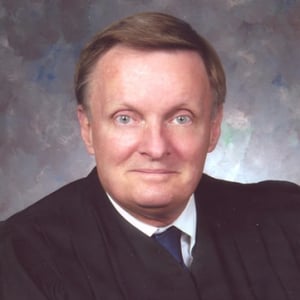
Judge, United States Court of Appeals, Fifth Circuit
Judge Smith was appointed U.S. Circuit Judge for the Fifth Circuit by President Reagan and entered on duty in January 1988. He attended public schools in Lubbock, Texas, and graduated from Yale University, receiving a B.A. in 1969 and a J.D. in 1972.
Judge Smith was a Law Clerk to U.S. District Judge Halbert Woodward, Northern District of Texas, 1972-1973; with the Houston law firm of Fulbright & Jaworski as an Associate, 1973-1981, and as Partner, 1981-1984; and as City Attorney, City of Houston, 1984-1988. He was Chairman, Civil Service Commission, City of Houston, 1982-1984; and a Director, Harris County Housing Authority, 1978-1980.
Judge Smith lives in Houston and is married to Mary Jane Smith and has four children: Ruth Ann, Clark, J.J., and Brandon. He formerly was Chair of the Advisory Committee on Federal Rules of Evidence of the Judicial Conference of the United States. He assists LexisNexis/Matthew Bender & Co. in periodic revisions of several chapters of Moore’s Federal Practice.
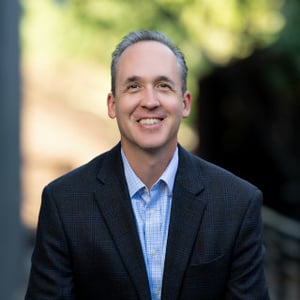
Legal Director, The Center for the Rights of Abused Children
Tim Keller is a lawyer who works to ensure all abused and abandoned children are safe and have access to their constitutionally guaranteed rights.
As senior vice president and legal director at the Center for the Rights of Abused Children, Tim’s public interest legal work seeks to defend the constitutional rights of children to be safe from abuse, to prompt timely placement with permanent parents, and to assure a child’s representation by legal counsel. In addition to constitutional litigation, Tim oversees the lawyers in the Center for the Rights of Abused Children’s one-of-a-kind pro bono Children’s Law Clinic and guides its policy initiatives.
When he and his wife, Lisa, hosted a teenage exchange student from Brazil several years ago, they realized how much they enjoyed helping a child thrive. The two felt called to help more kids. Over the following years, Tim and Lisa would become foster parents. Today, they enjoy offering respite care for children in foster care.
Intensely motivated by his time fostering children who’d been abused and neglected, Tim sees his work to ensure children have a constitutional right to counsel as a matter of life and death. As such, he’s particularly proud that in 2021 the Center for the Rights of Abused Children secured the rights of all children in Arizona’s foster system to be represented by legal counsel.
Before joining the Center for the Rights of Abused Children, Tim worked for nearly 20 years at the Institute for Justice. He served as lead counsel in Arizona Christian School Tuition Organization v. Winn, a U.S. Supreme Court victory that protected Arizona’s pioneering school scholarship program. Tim also led the team that secured a U.S. Supreme Court victory in Espinoza v. Montana Department of Revenue, which prevents states from discriminating against religious families and schools in educational choice programs. He has also litigated economic liberty and property rights cases in state and federal courts.
Tim earned his bachelor’s and law degrees from Arizona State University. He clerked for Robert D. Myers, at the time the presiding judge of the Maricopa County Superior Court, and for Ann A. Scott Timmer on the Arizona Court of Appeals.
Tim and Lisa live in Chandler, Ariz., with their four sons, Daniel, Benjamin, Ethan and Noah, and a miniature schnauzer named Gus who has more than 12,000 Instagram followers. The Kellers have traveled to 49 of the 50 United States, and are always looking for recommendations for new card or board games for family game nights.
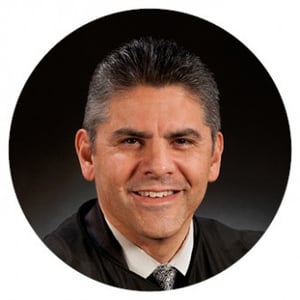
Justice, Washington State Supreme Court
Attorney General, Kansas
Attorney General Kris Kobach was raised in Topeka, Kansas where he graduated from Washburn Rural High School. He completed his undergraduate studies in government at Harvard University, graduating first in his department and summa cum laude. A Marshall Scholarship recipient, he received his Ph.D. in politics from the University of Oxford. Kobach received his J.D. from Yale Law School, serving as notes development editor of the Yale Law Journal.
Kobach clerked for the Tenth Circuit Court of Appeals and shortly thereafter became a professor of constitutional law at the University of Missouri - Kansas City School of Law. Kobach received a White House Fellowship from President George W. Bush. He served in the United States Department of Justice under Attorney General John Ashcroft as Counsel to the Attorney General.
He has litigated some of the most high-profile cases in the country, including defending statutes and ordinances against the ACLU on multiple occasions. In 2012, Kobach brought the first challenge to President Obama’s DACA amnesty on behalf of 10 ICE agents. His victory in federal district court paved the way for Texas to defeat the Obama Justice Department in its litigation.
Kobach served as the 31st Kansas Secretary of State, 2011-2019. He lives near Lecompton with his wife, Heather, and their five children.
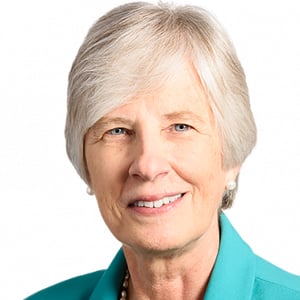
Ronald Reagan Distinguished Fellow, The Heritage Foundation
Becky Norton Dunlop, a prominent leader, strategist, and counselor in the conservative movement, is The Heritage Foundation’s Ronald Reagan Distinguished Fellow.
Dunlop, who joined the leading think tank in 1998, holds the only policy chair in the country to be officially named for the 40th president. She succeeds Ed Meese, the U.S. attorney general under Reagan, who assumed emeritus status.
Dunlop oversees special projects, travels as an ambassador for Heritage, and works tirelessly to assure that the legacy of principles, policies, and practices represented by the life and service of Ronald Reagan remain in the hearts and minds of Americans.
Previously, Dunlop was Heritage’s vice president for external relations from 1998 until May 2016. She served on the Trump Transition team.
Dunlop was a senior official in the Reagan administration from 1981-1989 inside the White House, at the Justice Department, and at the Interior Department.
She served from 1994-1998 as Secretary of Natural Resources for the Commonwealth of Virginia in the Cabinet of then-Virginia Gov. George Allen.
As political director for the American Conservative Union from 1973- 1977, she was instrumental in organizing grass-roots activists for Reagan’s unsuccessful 1976 race for the Republican nomination and advised his successful 1980 nomination and general election campaigns.
From Reagan’s first inauguration in 1981 to 1985, her White House posts included Deputy Assistant to the President for Presidential Personnel and Special Assistant to the President and Director of his Cabinet office. During Reagan’s second term, Dunlop served as senior special assistant to Meese, then attorney general, in charge of managing Cabinet-level domestic policy issues. She oversaw major policy reports on the environment, the family, federalism, tort reform, privatization, and welfare reform.
She completed her service in the Reagan administration as deputy undersecretary of the Interior Department and as assistant interior secretary for fish, wildlife, and parks.
Dunlop is one of the few of the insiders from the beginnings of the Reagan era who remain active in public policy leadership.
As Virginia’s natural resources chief, Dunlop worked to streamline, decentralize, and down-size agencies while protecting and improving the environment. She is one of the few “free-market environmentalists” to have headed a state agency and put ideas into action. Her book, “Clearing the Air” (Alexis de Tocqueville Institute, 2000), chronicles some of her experiences in advancing those principles.
In 2002, President George W. Bush appointed her to a part-time post as chairwoman of the Federal Service Impasses Panel. The seven-member panel resolves disputes between federal agencies management and labor unions. Under her leadership, it took on several hundred cases and eliminated backlogs.
Other current leadership roles include the boards of the Virginia Institute for Public Policy, the Reagan Ranch Board of Governors, the Reagan Alumni Association, the Association for American Educators and the AAE Foundation, the Council for National Policy and the American Conservative Union.
In addition to topics addressing conservative principles and their roots in the nation’s founding, Dunlop is a sought-after public speaker on the idea that personnel is policy; on energy, natural resources and the environment (including free market environmentalism); on federalism as a former member of a governor’s Cabinet; Capitalism and the Rule of Law, and on the Reagan administration (including the 40th president’s effective leadership style).
A graduate of Miami University in Ohio, she currently resides in Arlington, Virginia, with her husband, George S. Dunlop. The Dunlops are members of Oakland Baptist Church in Alexandria, Virginia.
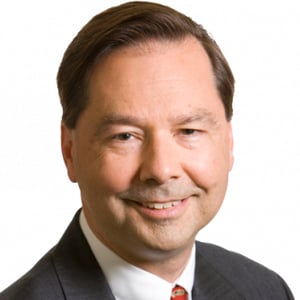
Senior Legal Fellow, Edwin Meese III Institute for the Rule of Law, Advancing American Freedom
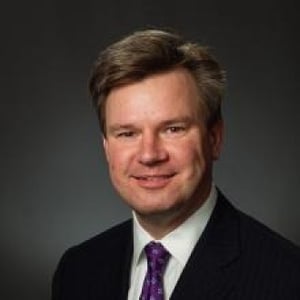
Senior Counsel & Director of the Center for Religious Schools, Alliance Defending Freedom
Gregory S. Baylor serves as senior counsel with Alliance Defending Freedom, where he is the director of the Center for Religious Schools and senior counsel with the Center for Public Policy.
Since joining ADF in 2009, Baylor has focused on defending and advancing the religious freedom of faith-based educational institutions through advice, education, legislative and public advocacy, and representation in disputes. He has testified about religious liberty issues three times before congressional committees and numerous times before state legislative committees.
Greg serves on the board of directors of the International Alliance for Christian Education, the board of directors of the Association for Biblical Higher Education, the board of directors of the Association for Christian Schools International, the board of advisors of the Museum of the Bible, and advisory board of the Center for Academic Faithfulness and Flourishing.
Greg earned his Juris Doctor in 1990 from Duke University School of Law, where he graduated Order of the Coif, with high honors, and served on the editorial board of the Duke Law Journal. He received his bachelor’s degree in Honors English in 1987 from Dartmouth College. Following graduation from law school, he served as law clerk to the Hon. Jerry E. Smith on the U.S. Court of Appeals for the Fifth Circuit. He practiced labor and employment law at two large international law firms for three years before joining the staff of Christian Legal Society’s Center for Law and Religious Freedom, where he served for 15 years prior to joining ADF. He lives in Northern Virginia with his wife (a medical doctor) and two daughters.
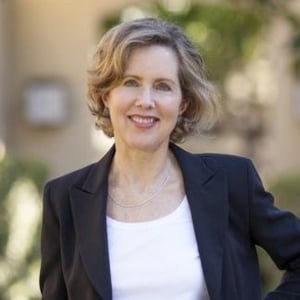
Thomas W. Smith Fellow; Contributing Editor, City Journal, Manhattan Institute
Heather Mac Donald is the Thomas W. Smith Fellow at the Manhattan Institute, a contributing editor of City Journal, and a New York Times bestselling author. She is a recipient of the 2005 Bradley Prize. Mac Donald’s work at City Journal has covered a range of topics, including higher education, immigration, policing, homelessness and homeless advocacy, criminal-justice reform, and race relations. Her writing has appeared in the Wall Street Journal, Washington Post, New York Times, Los Angeles Times, The New Republic, and The New Criterion. Mac Donald's newest book, The Diversity Delusion: How Race and Gender Pandering Corrupt the University and Undermine Our Culture (2018), argues that toxic ideas first spread by higher education have undermined humanistic values, fueled intolerance, and widened divisions in our larger culture.
Mac Donald’s The War on Cops (2016), a New York Times bestseller, warns that raced-based attacks on the criminal-justice system, from the White House on down, are eroding the authority of law and putting lives at risk. Other previous works include The Burden of Bad Ideas (2001), a collection of Mac Donald’s City Journal essays, details the effects of the 1960s counterculture’s destructive march through America’s institutions. In The Immigration Solution: A Better Plan than Today’s (2007), coauthored with Victor Davis Hanson and Steven Malanga, she chronicles the effects of broken immigration laws and proposes a practical solution to securing the country’s porous borders. In Are Cops Racist? (2010), another City Journal anthology, Mac Donald investigates the workings of the police, the controversy over so-called racial profiling, and the anti-profiling lobby’s harmful effects on black Americans.
A nonpracticing lawyer, Mac Donald clerked for the Honorable Stephen Reinhardt, U.S. Court of Appeals for the Ninth Circuit, and was an attorney-advisor in the Office of the General Counsel of the U.S. Environmental Protection Agency and a volunteer with the Natural Resources Defense Council. She has frequently testified before U.S. House and Senate Committees. In 1998, Mac Donald was appointed to Mayor Rudolph Giuliani’s task force on the City University of New York. She has received numerous awards for her writing:
A frequent guest on Fox News and other TV and radio programs, Mac Donald holds a B.A. in English from Yale University, graduating with a Mellon Fellowship to Cambridge University, where she earned an M.A. in English and studied in Italy through a Clare College study grant. She holds a J.D. from Stanford University Law School.
At the Criminal Justice Legal Foundation's 2018 annual meeting in downtown Los Angeles, U.S. Attorney General Jeff Sessions called Mac Donald, “the greatest thinker on criminal justice in America today.”

Dr. John Eastman is the former Henry Salvatori Professor of Law & Community Service and former Dean at Chapman University's Dale E. Fowler School of Law, where he had been a member of the faculty since 1999, specializing in Constitutional Law, Legal History, and Property. He is a founding director of the Center for Constitutional Jurisprudence, a public interest law firm affiliated with the Claremont Institute that he founded in 1999. He has a Ph.D. in Government from the Claremont Graduate School and a J.D. from the University of Chicago Law School, and a B.A. in Politics and Economics from the University of Dallas. He serves as the Chairman of the Board of the National Organization for Marriage.
Prior to joining the Chapman law faculty, Dr. Eastman served as a law clerk to the Honorable Clarence Thomas, Associate Justice, Supreme Court of the United States, and to the Honorable J. Michael Luttig, Judge, United States Court of Appeals for the Fourth Circuit and practiced law with the national law firm of Kirkland & Ellis. Dr. Eastman has also represented numerous clients in important constitutional law matters and has argued before the Supreme Court. On behalf of the Claremont Institute Center for Constitutional Jurisprudence, he has participated as amicus curiae before the Supreme Court of the United States, U.S. Courts of Appeals, and State Supreme Courts in more than one hundred cases of constitutional significance, including Boy Scouts of America v. Dale, Zelman v. Simmons-Harris (the school vouchers case), Kelo v. New London, Ct. (eminent domain), and Van Orden v. Perry (the 10 Commandments case). He has also appeared as an expert legal commentator on numerous television and radio programs, including C-SPAN, Fox News, PBS, NewsHour, and The O'Reilly Factor.
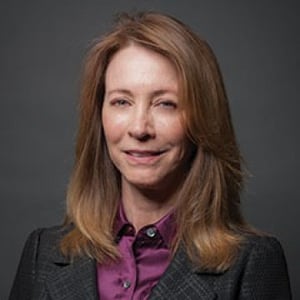
Founder, Libertas-West Project
Karen Lugo is a constitutional law consultant and national security analyst. She was Director of the Center for Tenth Amendment at Texas Public Policy Foundation from 2013 to 2015. When living in California, she was Co-Director of the Center for Constitutional Jurisprudence Center. From 2005 – 2012, she was a clinical visiting and adjunct professor at Chapman University School of Law where she co-taught the advanced Constitutional Law Clinic. Karen has co-authored and written circuit-level and Supreme Court amicus briefs on such issues as FISA Surveillance, Healthcare Reform, Arizona’s Border Security, Gay Marriage, The Ten Commandments, Eminent Domain, Christian Clubs on University Campuses, and Material Support for Terrorists.
Karen is the founder of the Libertas-West Project, a center for study Islamic integration and radicalization issues. In this capacity, she consulted with the Center for Security Policy to write a book on local over-watch of mosque construction and community engagement called: Mosques in America: A Guide to Accountable Permit Hearings and Continuing Citizen Oversight.
Karen writes and speaks for European and American groups on the importance of basing assimilation efforts on principles of Western exceptionalism. She presented a policy brief to the French Conseil d’Etat analyzing the legal implications of banning the burqa. Ms. Lugo has written one of the most comprehensive overviews of sharia law in American courts, American Family Law and Sharia-Compliant Marriages, for the Federalist Society law journal, Engage. She has written several white papers on the American Law for American Courts legislation and sharia tribunals in America.
Ms. Lugo was an appointee to the California Advisory Committee to the U.S. Commission on Civil Rights. She also taught a Human Rights law course on the contrast between French and English Enlightenment theories in Strasbourg, France.
Until moving from California, Ms. Lugo was a member of the David Horowitz Freedom Center Board of Directors. She was also a regular guest on the Orange County PBS local issues debate program, Inside OC, and she is a contributor to Pajamas Media, National Review Online, City Journal, American Spectator, American Greatness, Townhall.com, American Thinker, Daily Caller, and Family Security Matters. She has been interviewed by dozens of radio hosts and has spoken for civic groups on constitutional and cultural concerns.
 Kellyanne Elizabeth Conway is Founder and President of the polling companyTM, inc./WomanTrend a privately-held, woman-owned corporation founded in 1995. The firm is headquartered in Washington, DC and maintains an office in New York City.
 Kellyanne is one of the most quoted and noted pollsters on the national scene, having provided commentary on over 1,200 television shows on ABC, CBS, NBC, PBS, CNN, CNBC, MSNBC, HBO, Comedy Central, MTV and the Fox News Channel, and numerous radio shows and print stories.
Throughout her two decades in market research, Kellyanne has provided primary research and advice for clients in 46 of the 50 states and has directed hundreds of demographic and attitudinal survey projects for statewide and congressional political races, trade associations, and Fortune 100 companies. A professionally trained moderator, Kellyanne has personally directed more than 300 focus groups and other qualitative discussions. Clients have included Lifetime Television, The Heritage Foundation, Major League Baseball, The Federalist Society, Coalition of Community Pharmacists Association, the U.S. Office of Personnel Management, Mass Connections, American Express, ABC News, Ladies Home Journal, and the U.S. Department of Labor.
Kellyanne has worked for leaders such as the late Congressman Jack Kemp; former Vice President Dan Quayle; Speaker of the House Newt Gingrich; Senator Fred Thompson and Congressman Mike Pence, the Chairman of the House Republican Conference and the third-highest ranking Republican in the House.
A "fully-recovered" attorney, Kellyanne is admitted to practice law in four jurisdictions (Maryland, New Jersey, Pennsylvania, and the District of Columbia). She has practiced law, clerked for a judge in Washington, DC and for four years, was an adjunct professor at George Washington University Law Center. Kellyanne is a magna cum laude graduate of Trinity College, Washington, D.C., where she earned a B.A. in Political Science, studied at Oxford University, and was elected to Phi Beta Kappa. She holds a law degree, with honors, from George Washington University Law Center.

United States Supreme Court Term in Review
Arizona's Immigration Storm
John C. Eastman, Karen J. Lugo
This article serves as a counterpoint to Margaret D. Stock’s article Arizona’s Attempt to Enforce...
A “Winn” for School Choice: Implications of the Recent U.S. Supreme Court Case of Garriott v. Winn
Charlotte, North CarolinaEngage Volume 11, Issue 3, December 2010
*Online-Only Issue* Special Edition: Templeton Debates Eminent Domain after Kelo Ilya Somin & Saul Levmore...
SB 1070: The Impact on Arizona Employers
Phoenix, ArizonaAZ Christian School Tuition Organization v. Winn
Arizona's Controversial Immigration Enforcement Law
AZ Christian School Tuition Organization v. Winn
Arizona's Immigration Law
Columbia Student Chapter
New York, NYKey Findings: Statewide Survey of 600 Registered Voters in California
Kellyanne Conway
TO: Interested PartiesFROM: Kellyanne Conway, President & CEO the polling company™, inc./WomenTrendDATE: October 13, 2010RE: Key Findings: Statewide Survey of...