
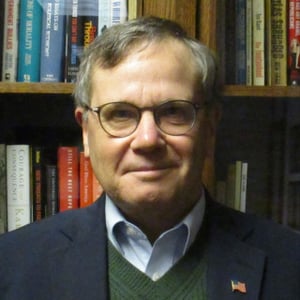
Senior Fellow in Constitutional Jurisprudence, Independence Institute
Professor Robert G. Natelson is a constitutional scholar and author.
Rob’s constitutional scholarship has been cited repeatedly by justices and parties at the U.S. Supreme Court—as well as by federal appeals courts, and at least 18 state supreme courts.
Rob’s research into the Constitution’s original meaning has carried him to libraries throughout the United States and in Britain, including four months at Oxford University. His books and articles span many different parts of the Constitution, including groundbreaking studies of the Necessary and Proper Clause, the Indian Commerce Clause, federalism, Founding-Era interpretation, regulation of elections, and the amendment process of Article V. He created the first-ever online bibliography for 18th century materials used in constitutional research. He is a contributing author to the Encyclopedia of the Supreme Court of the United States (on Magna Carta). He contributed eight essays to the third edition of the Heritage Guide to the Constitution: five on the amendment procedure and one each on the Guarantee Clause, the Postal Clause, and the Recess Appointments Clause.
U.S. Supreme Court justices have relied explicitly on Rob’s research in 41 citations in 13 separate cases.
Partner, Hollingsworth LLP, Washington, DC.
Mr. Lasker litigates a wide variety of complex civil matters, with a current focus on toxic torts, environmental litigation, Alien Tort Statute litigation, and pharmaceutical products liability. Mr. Lasker has also represented clients in a variety of civil and criminal government investigation-related matters involving bank regulatory compliance, False Claims Act claims, and alleged price fixing, and he served as lead counsel in successfully defending a foreign client against a Foreign Corrupt Practices claim in a jury trial that was featured in the Legal Times. He represents clients in jury and bench trials, before arbitral panels and administrative courts, and both at trial and on appeal.
Mr. Lasker has significant experience defending against all matter of legal claims involving FDA- and EPA-regulated products and alleged toxins and environmental contaminants. He has represented clients in pharmaceutical products liability claims involving antipsychotic medications, obstetrical drugs, antifungals, antiepileptics, and cough/cold medicines, and in toxics/environmental matters involving herbicides, asbestos, lead paint, nonionizing radiation, and chemical solvents. He has represented clients in matters arising both in the United States and abroad, and in matters arising under both domestic and international law. Mr. Lasker's practice also includes matters involving sensitive national security issues, and he has represented his clients’ interests in meetings with both U.S. and foreign government officials. He has extensive expertise in developing and implementing sophisticated medical causation and science-based defenses, and he has successfully litigated issues involving Daubert, the federal preemption defense, and natural resource damages claims. He also assists clients in due diligence investigations as relates to environmental and toxics liabilities and through amicus briefing on key legal issues.
Mr. Lasker played a prominent role in helping to establish asbestos defendants’ rights to insurance non-products coverage through a successful amicus effort that secured one of the seminal judicial opinions recognizing the existence of such coverage, litigation efforts resulting in securing several hundreds of millions of dollars in asbestos non-products insurance recoveries, and oral presentations and publications on issues involving non-products coverage. He has also defended personal injury claims in asbestos litigation, advancing medical causation defenses as the asbestos litigation has extended to tertiary and even more remotely-situated corporate defendants.
Mr. Lasker is frequently requested to speak and publish on issues of interest to his clients, and he has been interviewed on such topics in numerous fora, including the AMA's American Medical News, Bloomberg News, the National Law Journal, and thePhiladelphia Inquirer. Mr. Lasker serves on the Board of Editors of LJN's Product Liability Law & Strategy newsletter and he is the Chair of the Toxics & Hazardous Substances Committee of the International Association of Defense Counsel (IADC), an invitation-only professional association for corporate and insurance defense attorneys around the world. He also serves as a member of the Defense Research Institute (DRI).
Partner, Hollingsworth LLP, Washington, DC.
Ms. Womeldorf joined the Hollingsworth LLP following clerkships with the Honorable Lewis F. Powell, Jr. and the Honorable Anthony M. Kennedy of the United States Supreme Court. She previously served as a law clerk to the Honorable Robert R. Merhige, Jr. of the United States District Court for the Eastern District of Virginia.
Ms. Womeldorf concentrates her practice on complex civil litigation. She has substantial experience in the defense of high-stakes mass torts, including serving as a member of the defense steering committee in the substantial welding fume Multidistrict Litigation (“MDL”) pending in Cleveland. She also represents pharmaceutical manufacturers in the defense of personal injury claims involving prescription drugs.
Ms. Womeldorf counsels clients on a wide range of issues designed to minimize potential liability, including issues related to workplace practices, Sunshine in Litigation legislation and class action treatment of medical monitoring claims. She is a member of the Sedona Conference Working Group on Protective Orders, Confidentiality and Public Access, and she actively participates with Lawyers for Civil Justice (“LCJ”). Her practice extends into general complex commercial litigation and employment law issues, and she previously served as counsel in the Office of the Senate Chief Counsel for Employment of the United States Senate.
Ms. Womeldorf participates in the Georgetown University Law Center’s Supreme Court Institute, which conducts moot courts for approximately 50 percent of the cases argued before the United States Supreme Court in any given term. She served as Lead Articles Editor for the Washington & Lee Law Review, and is a member of the Defense Research Institute (DRI).
Ms. Womeldorf is recognized in the Washington, DC edition of Super Lawyers for 2013 as she was in 2012.
Counsel to the Firm, Cascadia Cross-Border Law
Margaret Stock focuses her practice on immigration and citizenship law. She is a nationally known expert on immigration and national security laws, and has testified regularly before Congressional committees on immigration, homeland security, and military matters. As a retired Lieutenant Colonel in the Military Police, U.S. Army Reserve, Margaret has extensive experience with U.S. military issues. She has also worked as a professor at the United States Military Academy at West Point, and she has served as an adjunct instructor at the University of Alaska. Margaret served as a member of the American Bar Association Commission on Immigration from 2008-2012. She regularly authors articles on military-related immigration issues, and is well-versed on “parole in place” for military family members and the Military Accessions Vital to the National Interest (“MAVNI”) Program. Margaret authored the book Immigration Law & the Military, which was published by the American Immigration Lawyers Association in 2012.

Dr. John Eastman is the former Henry Salvatori Professor of Law & Community Service and former Dean at Chapman University's Dale E. Fowler School of Law, where he had been a member of the faculty since 1999, specializing in Constitutional Law, Legal History, and Property. He is a founding director of the Center for Constitutional Jurisprudence, a public interest law firm affiliated with the Claremont Institute that he founded in 1999. He has a Ph.D. in Government from the Claremont Graduate School and a J.D. from the University of Chicago Law School, and a B.A. in Politics and Economics from the University of Dallas. He serves as the Chairman of the Board of the National Organization for Marriage.
Prior to joining the Chapman law faculty, Dr. Eastman served as a law clerk to the Honorable Clarence Thomas, Associate Justice, Supreme Court of the United States, and to the Honorable J. Michael Luttig, Judge, United States Court of Appeals for the Fourth Circuit and practiced law with the national law firm of Kirkland & Ellis. Dr. Eastman has also represented numerous clients in important constitutional law matters and has argued before the Supreme Court. On behalf of the Claremont Institute Center for Constitutional Jurisprudence, he has participated as amicus curiae before the Supreme Court of the United States, U.S. Courts of Appeals, and State Supreme Courts in more than one hundred cases of constitutional significance, including Boy Scouts of America v. Dale, Zelman v. Simmons-Harris (the school vouchers case), Kelo v. New London, Ct. (eminent domain), and Van Orden v. Perry (the 10 Commandments case). He has also appeared as an expert legal commentator on numerous television and radio programs, including C-SPAN, Fox News, PBS, NewsHour, and The O'Reilly Factor.
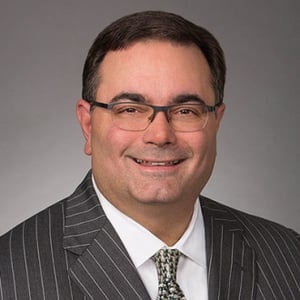
Partner, Kirkland & Ellis LLP
H. Christopher Bartolomucci is a partner in the Washington, D.C., office of Kirkland & Ellis LLP. Chris’ practice focuses on appellate litigation, products liability litigation, and litigation in the higher education space. He presented oral argument in the U.S. Supreme Court in South Carolina v. North Carolina, 558 U.S. 256 (2010) and prevailed in the case. He served as lead trial counsel and presented the closing oral argument before a three-judge federal court in a high profile preclearance action under Section 5 of the Voting Rights Act. See South Carolina v. United States, 898 F. Supp. 2d 30 (D.D.C. 2012). In 2007, as a short-listed candidate for nomination to the U.S. Court of Appeals for the Fourth Circuit, the Virginia State Bar gave Chris its highest rating of “Highly Qualified.”
Chris’ government service includes experience in every branch of the federal government. He served in the White House as associate counsel to President George W. Bush. He also served in the Solicitor General’s Office, as associate special counsel to the U.S. Senate Whitewater Committee, and as counsel to the D.C. Inspector General. He clerked for Judge William L. Garwood of the U.S. Court of Appeals for the Fifth Circuit in Austin, Texas.
Alston & Bird Professor of Law, Duke University School of Law
Professor Young teaches constitutional law, federal courts, and foreign relations law. He is one of the nation's leading authorities on the constitutional law of federalism, having written extensively on the Rehnquist Court's "Federalist Revival" and the difficulties confronting courts as they seek to draw lines between national and state authority. He also is an active commentator on foreign relations law, where he focuses on the interaction between domestic and supranational courts and the application of international law by domestic courts. Professor Young also writes on constitutional interpretation and constitutional theory. He has been known to dabble in maritime law and comparative constitutional law.
A native of Abilene, Texas, Professor Young joined the Duke Law faculty in 2008, after serving as the Charles Alan Wright Chair in Federal Courts at the University of Texas at Austin School of Law, where he had taught since 1999. He graduated from Dartmouth College in 1990 and Harvard Law School in 1993. After law school, he served as a law clerk to Judge Michael Boudin of the 1st U.S. Circuit Court of Appeals (1993-94) and to Justice David Souter of the U.S. Supreme Court (1995-96). Professor Young practiced law at Cohan, Simpson, Cowlishaw, & Wulff in Dallas, Texas (1994-95) and at Covington & Burling in Washington, D.C. (1996-98), where he specialized in appellate litigation. He has also been a visiting professor at Harvard Law School (2004-05) and Villanova University School of Law (1998-99), as well as an adjunct professor at Georgetown University Law Center (1997).
Elected to the American Law Institute in 2006, Professor Young is an active participant in both public and private litigation in his areas of interest. He has been the principal author of amicus briefs on behalf of leading constitutional scholars in several recent Supreme Court cases, including Medellin v. Texas(concerning presidential power and the authority of the International Court of Justice over domestic courts) and Gonzales v. Raich (concerning federal power to regulate medical marijuana).
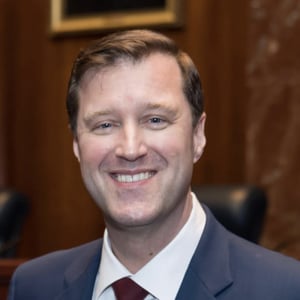
Justice, Texas Supreme Court
Evan Young is a Justice of the Supreme Court of Texas. Governor Greg Abbott, who appointed Young to fill an unexpired term, swore him into office on November 10, 2021. Justice Young was elected to a full term in November 2022.
Young graduated summa cum laude from Duke University in 1999, where he was inducted into Phi Beta Kappa. He was a British Marshall Scholar at Oxford University, where he completed his studies in 2001 and earned a First Class Honours degree in Modern History, focusing on British constitutional history. He earned his law degree from Yale Law School in 2004.
Young then worked as a lawyer in the judicial and executive branches of the federal government. He first served as a law clerk to Judge J. Harvie Wilkinson III of the U.S. Court of Appeals for the Fourth Circuit, and then to Justice Antonin Scalia at the U.S. Supreme Court. In 2006, after his clerkship with Justice Scalia ended, Justice Young became Counsel to the Attorney General at the U.S. Department of Justice, serving in the Office of the Attorney General under Attorneys General Alberto R. Gonzales and Michael B. Mukasey. While on the Attorney General’s staff, he accepted a detail to the U.S. Embassy in Baghdad, Iraq, where he was the Deputy Rule of Law Coordinator. In that position he worked to assist the Iraqi government in its efforts to strengthen its legal regime, including, for example, its courts and prison system.
Young returned to Texas and joined the Austin office of Baker Botts L.L.P. in 2009. His practice focused on trial and appellate litigation. He argued cases before both the Supreme Court of the United States and the Supreme Court of Texas, as well as many federal and state appellate courts. He represented clients across the country before every level of the state and federal judiciary.
Before joining the Texas Supreme Court, Young was appointed in 2017 by Governor Abbott and confirmed by the Texas Senate to serve as a member of the Texas Judicial Council, which is the policy-making body for the Texas Judiciary. In 2015, the Texas Supreme Court appointed him to the Supreme Court Advisory Committee, which assists the Court in drafting the rules that govern litigation in Texas courts. He served on both until his elevation to the bench.
Justice Young is an elected member of the American Law Institute and a member of the Texas Philosophical Society. He has been an adjunct law professor for many years at the University of Texas School of Law, where he has frequently taught the Federal Courts and Religious Liberty courses. He also has been an adjunct professor at the University of Mississippi School of Law, where he has taught multiple courses involving U.S. Supreme Court history. He served as Chair of the State Bar of Texas Business Law Section, Chair of the National Center for Missing and Exploited Children's Texas Regional Office, and Trustee of the Texas Supreme Court Historical Society.
Justice Young and his wife, Tobi, live in Austin with their daughter.
Dr. John Eastman is the former Henry Salvatori Professor of Law & Community Service and former Dean at Chapman University's Dale E. Fowler School of Law, where he had been a member of the faculty since 1999, specializing in Constitutional Law, Legal History, and Property. He is a founding director of the Center for Constitutional Jurisprudence, a public interest law firm affiliated with the Claremont Institute that he founded in 1999. He has a Ph.D. in Government from the Claremont Graduate School and a J.D. from the University of Chicago Law School, and a B.A. in Politics and Economics from the University of Dallas. He serves as the Chairman of the Board of the National Organization for Marriage.
Prior to joining the Chapman law faculty, Dr. Eastman served as a law clerk to the Honorable Clarence Thomas, Associate Justice, Supreme Court of the United States, and to the Honorable J. Michael Luttig, Judge, United States Court of Appeals for the Fourth Circuit and practiced law with the national law firm of Kirkland & Ellis. Dr. Eastman has also represented numerous clients in important constitutional law matters and has argued before the Supreme Court. On behalf of the Claremont Institute Center for Constitutional Jurisprudence, he has participated as amicus curiae before the Supreme Court of the United States, U.S. Courts of Appeals, and State Supreme Courts in more than one hundred cases of constitutional significance, including Boy Scouts of America v. Dale, Zelman v. Simmons-Harris (the school vouchers case), Kelo v. New London, Ct. (eminent domain), and Van Orden v. Perry (the 10 Commandments case). He has also appeared as an expert legal commentator on numerous television and radio programs, including C-SPAN, Fox News, PBS, NewsHour, and The O'Reilly Factor.
Dr. John Eastman is the former Henry Salvatori Professor of Law & Community Service and former Dean at Chapman University's Dale E. Fowler School of Law, where he had been a member of the faculty since 1999, specializing in Constitutional Law, Legal History, and Property. He is a founding director of the Center for Constitutional Jurisprudence, a public interest law firm affiliated with the Claremont Institute that he founded in 1999. He has a Ph.D. in Government from the Claremont Graduate School and a J.D. from the University of Chicago Law School, and a B.A. in Politics and Economics from the University of Dallas. He serves as the Chairman of the Board of the National Organization for Marriage.
Prior to joining the Chapman law faculty, Dr. Eastman served as a law clerk to the Honorable Clarence Thomas, Associate Justice, Supreme Court of the United States, and to the Honorable J. Michael Luttig, Judge, United States Court of Appeals for the Fourth Circuit and practiced law with the national law firm of Kirkland & Ellis. Dr. Eastman has also represented numerous clients in important constitutional law matters and has argued before the Supreme Court. On behalf of the Claremont Institute Center for Constitutional Jurisprudence, he has participated as amicus curiae before the Supreme Court of the United States, U.S. Courts of Appeals, and State Supreme Courts in more than one hundred cases of constitutional significance, including Boy Scouts of America v. Dale, Zelman v. Simmons-Harris (the school vouchers case), Kelo v. New London, Ct. (eminent domain), and Van Orden v. Perry (the 10 Commandments case). He has also appeared as an expert legal commentator on numerous television and radio programs, including C-SPAN, Fox News, PBS, NewsHour, and The O'Reilly Factor.
Counsel to the Firm, Cascadia Cross-Border Law
Margaret Stock focuses her practice on immigration and citizenship law. She is a nationally known expert on immigration and national security laws, and has testified regularly before Congressional committees on immigration, homeland security, and military matters. As a retired Lieutenant Colonel in the Military Police, U.S. Army Reserve, Margaret has extensive experience with U.S. military issues. She has also worked as a professor at the United States Military Academy at West Point, and she has served as an adjunct instructor at the University of Alaska. Margaret served as a member of the American Bar Association Commission on Immigration from 2008-2012. She regularly authors articles on military-related immigration issues, and is well-versed on “parole in place” for military family members and the Military Accessions Vital to the National Interest (“MAVNI”) Program. Margaret authored the book Immigration Law & the Military, which was published by the American Immigration Lawyers Association in 2012.

Topics
Does Texas Have The Right to Defend Its Border?
The state of Texas has taken bold steps to secure its southern border and stem...
The False Doctrine of Inherent Sovereign Authority
Robert G. Natelson
This essay examines the hypothesis that the federal government and its departments and officials hold...
Preemption of Punitive Damages in Prescription Drug Litigation
Eric Lasker, Rebecca A. Womeldorf
Over the past 16 years, the United States Supreme Court has repeatedly addressed the question...
Arizona v. United States
Yale Student Chapter
New Haven, CTABA Watch August 2012
The ABA and Executive Power in the Obama Administration ABA House of Delegates Considers Policies...
ABA Praises Decision in Arizona v. United States
ABA President Bill Robinson praised the United States Supreme Court’s decision in Arizona v. United...
United States Supreme Court Term in Review
Arizona v. United States - Post-Decision SCOTUScast
Margaret D. Stock, John C. Eastman
On June 25, 2012, the Supreme Court announced its decision in Arizona v. United States. The...
Arizona v. United States: Presidential Preemption v. State Law
Las Vegas, NevadaArizona v. United States Litigation Update