

Judge, United States Court of Appeals, Eleventh Circuit
On March 20, 2018, Judge Elizabeth L. Branch (Lisa) was sworn in as a United States Circuit Judge for the Eleventh Circuit.
Judge Branch attended and graduated from Davidson College in North Carolina (B.A., cum laude, 1990), and Emory University School of Law (J.D., with distinction, 1994).
After graduating from law school, Judge Branch served as a federal law clerk to The Honorable J. Owen Forrester of the U.S. District Court for the Northern District of Georgia from 1994 to 1996. Following her clerkship, Judge Branch joined the litigation department of Smith, Gambrell & Russell, LLP in Atlanta as an associate and then a partner.
From 2004 to 2008, Judge Branch was a senior official in the Administration of President George W. Bush in Washington, D.C. She served first as the Associate General Counsel for Rules and Legislation at the U.S. Department of Homeland Security and then as the Counselor to the Administrator of the Office of Information and Regulatory Affairs at the U. S. Office of Management and Budget.
She returned to Smith Gambrell in 2008 as a litigation partner. Judge Branch then was appointed to the Court of Appeals of Georgia by Governor Nathan Deal, taking office on September 4, 2012, where she served until March 19, 2018.
Judge Branch is a member of the Board of Advisors of the Atlanta Lawyers Chapter for the Federalist Society for Law and Public Policy Studies.
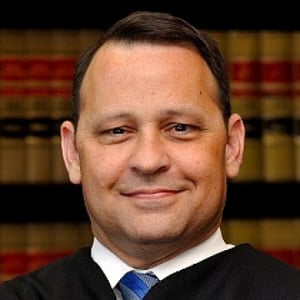
Arizona Supreme Court
Justice John Lopez IV serves on the Arizona Supreme Court. Before his appointment to the Supreme Court, Justice Lopez served as Arizona’s Solicitor General. Before that, he served in the U.S. Attorney’s Office as Executive assistant U.S. attorney; Chief assistant, U.S. Attorney's office in Phoenix; Chief of the Financial Crimes and Public Integrity Section; and Deputy appellate chief. Previous to that, Lopez worked as a legal advisor in the Regime Crimes Liaison Office of the Department of Justice, as an attorney with Bryan Cave, and a law clerk to Justice Charles Jones of the Arizona Supreme Court.

Judge, Arizona Court of Appeals, Division One
The Honorable Jennifer M. Perkins began service on the Arizona Court of Appeals, Division One, on October 30, 2017. At the time of her appointment by Governor Douglas Ducey, Judge Perkins was Assistant Solicitor General for the State of Arizona.
Judge Perkins was born in Portales, New Mexico, and primarily raised in Albuquerque. She attended the prestigious Albuquerque Academy from 1988-1995, before moving to Washington D.C. to attend the Elliott School of International Affairs at the George Washington University as a National Merit Scholar. Therafter, she relocated again to Dallas, Texas, and earned her juris doctor from the SMU Dedman School of Law, graduating cum laude in 2002.
Judge Perkins started her career at the law firm of Browning & Peifer (now Peifer, Hanson, Mullins, and Baker) in Albuquerque, New Mexico. While there, she litigated complex commercial matters including class action plaintiff and defense work, and assisted with employment and contract litigation. In 2003, the judge accompanied the Honorable James O. Browning in transitioning to the federal district court bench, serving as his first law clerk.
After her clerkship, Judge Perkins moved to Arizona to work for the Institute for Justice, Arizona Chapter, a public interest law firm. She spent five years with IJ-AZ litigating civil rights cases in Arizona and across the country. In 2009, the judge became Disciplinary Counsel for the Arizona Commission on Judicial Conduct, where she reviewed and prosecuted ethics complaints against state court judges throughout Arizona. After five years serving the state in this capacity, Judge Perkins entered private practice by joining an appellate law firm in Phoenix. While there, she worked on state and federal appeals involving a wide range of legal subjects, including complex business disputes, property rights, judicial ethics, and personal injury matters.
In January 2015, Judge Perkins joined the Office of the Arizona Attorney General to serve as the first Assistant Solicitor General; in that capacity, she was responsible for oversight of Attorney General Opinions and served as ethics counsel to the entire office. In addition to these two primary roles, the judge assisted on a variety of matters including trial and appellate litigation of election-related matters; federal appellate litigation with the Federalism Unit; state criminal appeals; and drafting amicus briefs on behalf of Arizona in state and federal courts.

Justice, Supreme Court of Arizona
Clint Bolick was appointed by Governor Doug Ducey in January 2016 to serve on the Arizona Supreme Court and was retained by the voters in 2018 and 2024.
Prior to joining the Court, Justice Bolick litigated constitutional cases in state and federal courts from coast to coast, including the U.S. Supreme Court. Among other positions, he served as Vice President for Litigation at the Goldwater Institute and as Co-founder and Vice President for Litigation at the Institute for Justice. He has litigated in support of school choice, freedom of enterprise, private property rights, freedom of speech, and federalism, and against racial classifications and government subsidies.
Justice Bolick received his Juris Doctor degree from the University of California at Davis, where he has been recognized as a distinguished alumnus, and his Bachelor of Arts degree magna cum laude from Drew University. He serves as a research fellow with the Hoover Institution. Among other honors, he was named one of the 90 Greatest DC Lawyers in the Last 30 Years by Legal Times in 2008, received a Bradley Prize in 2006, and was recognized as one of the nation’s three lawyers of the year by American Lawyer in 2002 for his successful defense of school vouchers in Zelman v. Simmons-Harris.
Justice Bolick is a prolific author of a dozen books and hundreds of articles. Among his most recent books are Unshackled: Freeing America’s K-12 Education System: Immigration Wars: Forging an American Solution, co-authored with former Florida Governor Jeb Bush; and David’s Hammer: The Case for an Activist Judiciary. Bolick serves as an adjunct professor of constitutional law at Arizona State University’s Sandra Day O’Connor School of Law and has served as a lecturer at Harvard University’s John F. Kennedy School of Government.
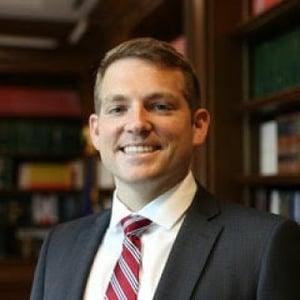
Chief Counsel, Arizona Chamber Law Center
Prior to joining the Chamber, Nate was an Attorney at the Texas Public Policy Foundation (TPPF) and an Assistant Attorney General for the State of Arizona. At TPPF, he brought cases seeking to limit federal government overreach. As an Assistant AG, he practiced criminal appeals in Arizona appellate courts, the Ninth Circuit Court of Appeals, and the U.S. Supreme Court. He began his legal career as a clerk at the Arizona Supreme Court for Justices Clint Bolick and John Lopez before going on to clerk at the U.S. District Court for Judge Susan Brnovich.
Nate earned his J.D. from the University of Arizona, where he was an Articles Editor for the Arizona Law Review and President of the Federalist Society. He is licensed to practice law in Arizona and the United States Court of Appeals for the Fifth, Sixth, Ninth, and DC Circuits.
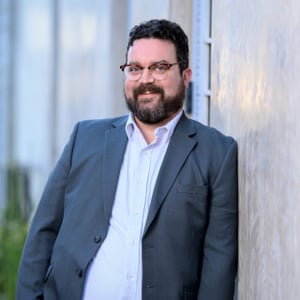
Director, Children's Law Clinic, Center for the Rights of Abused Children
Tom Jose is a lawyer who protects the rights of abused children throughout the foster care process and beyond.
Tom heads up our one-of-a-kind pro bono Children’s Law Clinic, where he represents abused children, foster parents, kinship placements, and biological parents in dependency and severance proceedings to ensure that the state respects their rights. He litigates to protect the rights of abused children throughout the foster process and beyond. Tom also represents transition-aged youth in a variety of matters to give them their best chance at starting adult lives.
Tom’s passion for protecting abused children was ignited while working for an appeals court, shortly after he graduated from law school. He was shocked at the sheer volume of abused children who passed through—and remained in—the foster system every year and how little was being done to protect the rights of these innocent children. Since then, he has spent his legal career helping abused children in Arizona.
Before joining the Center for the Rights of Abused Children, Tom worked for the Arizona Attorney General’s Office in its Child and Family Protection Appeals Unit. He handled hundreds of appeals, filed over 75 substantive briefs, and had five oral arguments before the Arizona Supreme Court and the Arizona Court of Appeals. In 2020, the Attorney General’s Office presented Tom with an award for Outstanding Appellate Advocacy.
Tom holds a bachelor’s degree in philosophy and a law degree from Arizona State University. He lives in Mesa, Arizona, with his son Eric, where he enjoys collecting (and playing) vintage video games and going camping around our beautiful state.

Vice President for Litigation & General Counsel, Goldwater Institute
Jon Riches is the Vice President for Litigation for the Goldwater Institute’s Scharf-Norton Center for Constitutional Litigation and General Counsel for the Institute. He litigates in federal and state trial and appellate courts in the areas of economic liberty, regulatory reform, free speech, taxpayer protections, public labor issues, government transparency, and school choice, among others.
Jon has developed and authored several pieces of legislation, including the landmark Right to Earn a Living Act, which provides some of the greatest protections in the country to job-seekers and entrepreneurs facing arbitrary licensing regulations. He also developed legislation eliminating deference to administrative agencies in Arizona—a first-of-its-kind regulatory reform that can serve as a model for the rest of the country.
His work at the Institute has been covered by national media, including the Wall Street Journal, New York Times, CBS This Morning, Bloomberg News, and Politico. Jon is also a member of the Federalist Society’s Regulatory Transparency Project: State and Local Working Group.
Prior to joining the Goldwater Institute, Jon served on active duty in the U.S. Navy Judge Advocate General’s (JAG) Corps. While on active duty, Jon represented hundreds of clients, litigated dozens of court-martial cases, and advised commanders on a vast array of legal issues.
He previously clerked for Sen. Jon Kyl on the U.S. Senate Judiciary Committee, worked for the Rules Committee in the Arizona State Senate, and clerked in the Office of Counsel to the President at the White House. Jon received his B.A. from Boston College, where he graduated magna cum laude and Phi Beta Kappa. He earned his J.D. from the University of Arizona, James E. Rogers College of Law.
Jon served as a presidentially appointed Panel Member on the Federal Service Impasses Panel. He is an officer in the U.S. Navy Reserve and an Adjunct Professor at Arizona State University School of Law. Jon is a native of Phoenix.
Justice, Supreme Court of Arizona
Clint Bolick was appointed by Governor Doug Ducey in January 2016 to serve on the Arizona Supreme Court and was retained by the voters in 2018 and 2024.
Prior to joining the Court, Justice Bolick litigated constitutional cases in state and federal courts from coast to coast, including the U.S. Supreme Court. Among other positions, he served as Vice President for Litigation at the Goldwater Institute and as Co-founder and Vice President for Litigation at the Institute for Justice. He has litigated in support of school choice, freedom of enterprise, private property rights, freedom of speech, and federalism, and against racial classifications and government subsidies.
Justice Bolick received his Juris Doctor degree from the University of California at Davis, where he has been recognized as a distinguished alumnus, and his Bachelor of Arts degree magna cum laude from Drew University. He serves as a research fellow with the Hoover Institution. Among other honors, he was named one of the 90 Greatest DC Lawyers in the Last 30 Years by Legal Times in 2008, received a Bradley Prize in 2006, and was recognized as one of the nation’s three lawyers of the year by American Lawyer in 2002 for his successful defense of school vouchers in Zelman v. Simmons-Harris.
Justice Bolick is a prolific author of a dozen books and hundreds of articles. Among his most recent books are Unshackled: Freeing America’s K-12 Education System: Immigration Wars: Forging an American Solution, co-authored with former Florida Governor Jeb Bush; and David’s Hammer: The Case for an Activist Judiciary. Bolick serves as an adjunct professor of constitutional law at Arizona State University’s Sandra Day O’Connor School of Law and has served as a lecturer at Harvard University’s John F. Kennedy School of Government.
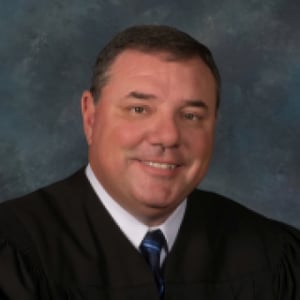
United States District Judge, Southern District of Ohio
Judge Matthew W. McFarland was born in Portsmouth, Scioto County, Ohio, and raised in Wheelersburg. He graduated from Wheelersburg High School in 1985, from Capital University in 1989 with a Bachelor of Arts degree in Political Science, and from the Capital University Law School in 1992, where he was inducted in the Order of the Barristers. He also served as a research assistant for Dean Rodney K. Smith. Judge McFarland first took the bench in 1999 as a Magistrate in the Scioto County Common Pleas Court. He was first elected to the Ohio Fourth District Court of Appeals in 2004 serving fourteen southeast Ohio counties. In 2010 and 2016 he was re-elected, and in 2016 by winning all fourteen counties. As an appellate judge, Judge McFarland authored over 1,000 opinions and made over 2,900 panel votes and served as the Presiding and Administrative Judge for multiple years. He has served as a visiting Judge on the Supreme Court of Ohio on four separate occasions allowing him to sit on each level of the Ohio Judiciary including the trial, appellate, and supreme court bench. The Ohio Chief Justice also appointed him to serve as a Commissioner on the Board of Grievances and Discipline and the Advisory Committee on Court Security and Emergency.
On October 10, 2018, President Donald J. Trump announced his intent to nominate Judge McFarland to a seat on the United States District Court for the Southern District of Ohio after being recommended by the Portman/Brown Bipartisan Federal Judicial Search Commission. The United States Senate received Judge McFarland’s nomination on November 13, 2018. At the sine die adjournment of the 115th Congress on January 3, 2019, the Senate returned Judge McFarland’s nomination to President Trump. President Trump then re-nominated Judge McFarland on January 23, 2019. The Senate Judiciary Committee held Judge McFarland’s confirmation hearing on June 26, 2019, and favorably voted his nomination to the full United States Senate on July 18, 2019. The United States Senate then confirmed Judge McFarland on December 18, 2019, and President Trump signed Judge McFarland’s Commission on December 31, 2019. With Judge McFarland’s confirmation, he is now only the second federal judge to serve the Southern District of Ohio from Scioto County. The first being Judge Albert Thompson, who served from 1898-1910. Judge McFarland succeeded Judge Thomas M. Rose who took senior status on June 30, 2017.
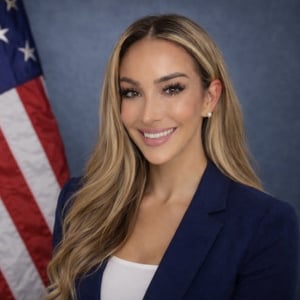
Senior Appellate Counsel, U.S. Navy
Stephanie Fisher recently completed six years as an active-duty Navy Judge Advocate and now serves in the Reserves. She will begin as a Trial Attorney in the Department of Justice’s National Security Division, Counterintelligence and Export Control Section, this summer (2026).
As a Judge Advocate, Stephanie served in numerous roles, including Senior Appellate Government Counsel, Legal Advisor to the Convening Authority for Military Commissions, Adjunct Professor of Law at the United States Naval Academy, and Trial Defense Counsel. She also completed temporary duty assignments with Naval Special Warfare Group 4, Submarine Squadron 6, and Commander, Navy Region Mid-Atlantic.
In her most recent role as Senior Appellate Government Counsel, she briefed and argued cases before the Navy-Marine Corps Court of Criminal Appeals and the Court of Appeals for the Armed Forces, where the courts affirmed more than 95% of the convictions she defended.
Before joining the JAG Corps, Stephanie clerked on the Arizona Supreme Court for the Honorable Justice William Montgomery. She earned her J.D. from Arizona State University’s Sandra Day O’Connor College of Law, where she served as a two-time Vice President of the Federalist Society student chapter. She earned her dual bachelor’s degree from the University of Michigan, where she was a four-year member of the varsity cheerleading team.
Stephanie currently serves on the DC Young Lawyer Chapter Board and the Armed Services Legal Network Executive Committee. In her free time, she enjoys skydiving, weightlifting, hiking, and traveling.
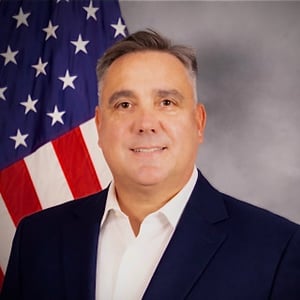
Deputy General Counsel, Office of the General Counsel, National Guard Bureau
Colonel Michael Mark Majors serves as Deputy General Counsel for the Office of the General Counsel, National Guard Bureau, with more than 27 years of military legal experience advising senior military leaders and government officials on military justice, administrative law, operational law, national security, and strategic policy. Throughout his career, he has served as a trusted legal advisor on complex issues spanning governance, risk management, compliance, homeland defense, and military operations.
As Deputy General Counsel, Colonel Majors advises senior National Guard leadership on legal and policy matters affecting more than 430,000 Soldiers and Airmen serving across the 54 states, territories, and the District of Columbia. In his primary role as Chief of the Strategic Engagement Division, he directs nationwide military legal professional development, accessions, and strategic engagement for more than 1,100 National Guard Judge Advocates and Legal Advisors. He develops and teaches National Guard legal education programs, authoring policy and regulatory guidance, and works closely with the Judge Advocate General's Corps, State Judge Advocates, and military legal organizations to strengthen legal readiness throughout the National Guard.
Colonel Majors has deployed in support of multinational operations in Bosnia-Herzegovina, Iraq, Bahrain, and Kosovo. His operational assignments include serving as Chief Deputy Legal Advisor for the NATO-led Kosovo Force (KFOR), advising senior commanders on the law of armed conflict, rules of engagement, international agreements, fiscal law, claims, and operational legal issues during a period of heightened regional instability following Russia's expanded invasion of Ukraine.
Colonel Majors is currently pursuing a Master of Laws (LL.M.) in Air and Space Law at the University of Mississippi School of Law, with a concentration in national security, space operations, commercial remote sensing, and international space law. He holds Master of Arts degrees in Defense and Strategic Studies from both the U.S. Army War College and the U.S. Naval War College, a Juris Doctor from Mississippi College School of Law, and a Bachelor of Science in Public Administration from Samford University.
He is admitted to practice law in the District of Columbia, Mississippi, and Alabama, as well as before the U.S. Court of Appeals for the Armed Forces and multiple federal courts. Colonel Majors serves on the Board of Directors of the Judge Advocate Association, is a Fellow of the Mississippi Bar, and is a frequent lecturer on military law, national security law, operational law, leadership, and emerging issues in air and space law. His military decorations include the Legion of Merit, the Defense Meritorious Service Medal (two awards), the Meritorious Service Medal (four awards), and the Combat Action Badge.
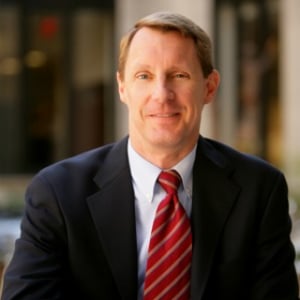
Director, International Legal Studies Program, Vanderbilt Law School
Michael Newton is an expert on terrorism, accountability, transnational justice, and conduct of hostilities issues. Over the course of his career, he has published more than 90 books, articles, op-eds and book chapters. He has been an expert witness in terrorism related trials and is admitted to the counsel list of the International Criminal Court, where, in 2018, he helped prepare the appeal of Jean-Pierre Bemba and participated in oral arguments in the Appeals Chamber. At Vanderbilt, he developed and teaches the innovative International Law Practice Lab, which provides expert assistance to judges, lawyers, legislatures, governments, and policy makers around the world. Professor Newton is most recently the editor of The United States Department of Defense Law of War Manual: Commentary and Critique, forthcoming from Cambridge University Press.
An authority on the law of armed conflict, Professor Newton served as the senior adviser to the Ambassador-at-Large for War Crimes Issues in the U.S. State Department from January 1999 to August 2002, during which he implemented a wide range of policy positions, including U.S. support to accountability mechanisms worldwide. He negotiated the “Elements of Crimes” for the International Criminal Court, and was the senior member of the team teaching international law to the first group of Iraqis who began to think about accountability mechanisms and a constitutional structure in November 2000. He shuttled to Baghdad repeatedly to aid international and Iraqi lawyers and jurists in drafting the Statute of the Iraqi High Tribunal while serving as the International Law Adviser to the Judicial Chambers from 2006 to 2008. He began assisting Iraqi officials, victims and civil society groups on legal issues associated with documentation and investigation of crimes committed by Da’esh on Iraqi soil days after Yazidi victims fled towards Mount Sinjar. He was the U.S. representative on the U.N. Planning Mission for the Sierra Leone Special Court and a founding member of its academic consortium. He is an elected member of the International Institute of Humanitarian Law and on the expert roster of Justice Rapid Response. In addition to teaching the Practice Lab, he develops and coordinates externships and educational opportunities for students interested in international legal issues, having supervised more than 150 such opportunities.
Professor Newton has served on the executive council of the American Society of International Law and as an invited expert for the Genocide Prevention Task Force established by the U.S. Holocaust Memorial Museum and the U.S. Institute of Peace. He is currently on the Advisory Board of the ABA International Criminal Court Project.
Professor Newton served in the U.S. Army more than 21 years, beginning with his commission from the U.S. Military Academy in May 1984 as an armor officer in the 4th Battalion, 68th Armor at Fort Carson, Colorado. After his selection for the Funded Legal Education Program, Newton served as chief of operational law with the Army Special Forces Command (Airborne) during Operation Desert Storm, and as the group judge advocate for the 7th Special Forces Group (Airborne). His deployments include Northern Iraq on Operation Provide Comfort to assist Kurdish civilians, and Haiti with 194th Armored Brigade (Separate), where he organized and led human rights and rules of engagement education for multinational forces, including police. He has taught international and operational law at the Judge Advocate General's School and Center in Charlottesville, Virginia, and taught international law at the United States Military Academy at West Point.
Judge, Arizona Court of Appeals, Division One
The Honorable Jennifer M. Perkins began service on the Arizona Court of Appeals, Division One, on October 30, 2017. At the time of her appointment by Governor Douglas Ducey, Judge Perkins was Assistant Solicitor General for the State of Arizona.
Judge Perkins was born in Portales, New Mexico, and primarily raised in Albuquerque. She attended the prestigious Albuquerque Academy from 1988-1995, before moving to Washington D.C. to attend the Elliott School of International Affairs at the George Washington University as a National Merit Scholar. Therafter, she relocated again to Dallas, Texas, and earned her juris doctor from the SMU Dedman School of Law, graduating cum laude in 2002.
Judge Perkins started her career at the law firm of Browning & Peifer (now Peifer, Hanson, Mullins, and Baker) in Albuquerque, New Mexico. While there, she litigated complex commercial matters including class action plaintiff and defense work, and assisted with employment and contract litigation. In 2003, the judge accompanied the Honorable James O. Browning in transitioning to the federal district court bench, serving as his first law clerk.
After her clerkship, Judge Perkins moved to Arizona to work for the Institute for Justice, Arizona Chapter, a public interest law firm. She spent five years with IJ-AZ litigating civil rights cases in Arizona and across the country. In 2009, the judge became Disciplinary Counsel for the Arizona Commission on Judicial Conduct, where she reviewed and prosecuted ethics complaints against state court judges throughout Arizona. After five years serving the state in this capacity, Judge Perkins entered private practice by joining an appellate law firm in Phoenix. While there, she worked on state and federal appeals involving a wide range of legal subjects, including complex business disputes, property rights, judicial ethics, and personal injury matters.
In January 2015, Judge Perkins joined the Office of the Arizona Attorney General to serve as the first Assistant Solicitor General; in that capacity, she was responsible for oversight of Attorney General Opinions and served as ethics counsel to the entire office. In addition to these two primary roles, the judge assisted on a variety of matters including trial and appellate litigation of election-related matters; federal appellate litigation with the Federalism Unit; state criminal appeals; and drafting amicus briefs on behalf of Arizona in state and federal courts.
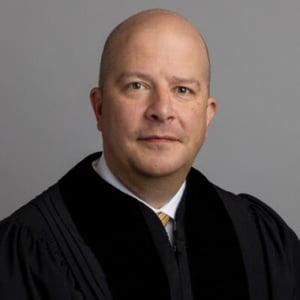
Chief Justice, Supreme Court of Georgia
Chief Justice Nels Peterson was appointed to the Georgia Supreme Court in 2016, and was elected to full six-year terms in 2018 and 2024. He previously served in a variety of other roles in Georgia state government, including as judge on the Georgia Court of Appeals, general counsel for the University System of Georgia, Georgia’s first solicitor general in the Attorney General’s Office, and executive counsel to the Governor.
Before entering state government, Nels practiced at King & Spalding LLP in Atlanta and clerked for Chief Judge William H. Pryor Jr. of the United States Court of Appeals for the Eleventh Circuit. He is a graduate of Kennesaw State University and Harvard Law School. Nels and his wife Jennifer have two children and live in Cobb County, where they teach adult Sunday school at Johnson Ferry Baptist Church.

Vice President for Legal Affairs, Goldwater Institute

Chief Judge, United States Court of Appeals, Sixth Circuit
JEFFREY S. SUTTON is the Chief Judge of the United States Court of Appeals for the Sixth Circuit. He has served as Chair of the Federal Judicial Conference Committee on Rules of Practice and Procedure, Chair of the Advisory Committee on Appellate Rules, and Chair of the Supreme Court Fellows Commission. He currently serves as Chair of the Executive Committee of the Judicial Conference of the United States. Since 1993, Chief Judge Sutton has been an adjunct professor at The Ohio State University College of Law, where he teaches seminars on State Constitutional Law, the United States Supreme Court, and Appellate Advocacy. He also teaches a class on State Constitutional Law at Harvard Law School. Among other publications, he is the author of Who Decides? States as Laboratories of Constitutional Experimentation and 51 Imperfect Solutions: States and the Making of American Constitutional Law. He is the co-author of a casebook, State Constitutional Law: The Modern Experience, as well as The Law of Judicial Precedent. He is also the co-editor of The Essential Scalia: On the Constitution, the Courts, and the Rule of Law. In 2006, Chief Judge Sutton was elected to the American Law Institute, and in 2017 he was elected to its Council.

Senior Attorney, Institute for Justice
Paul Avelar is the Managing Attorney of the Institute for Justice Arizona Office. He joined the Institute in March 2010 and litigates free speech, property rights, economic liberty, school choice and other constitutional cases in federal and state courts.
As the head of IJ’s national Braiding Freedom Initiative, Paul represents natural hair braiders across the country to protect their right to earn an honest living. The Initiative uses lawsuits, activism and research to remove laws that require potential braiders to undergo hundreds of costly training hours just to braid hair. Since IJ launched the Braiding Freedom Initiative in 2014, 12 additional states have freed braiders from unnecessary licensing burdens. Paul drafted the model Natural Hair Braiding Protection Act, which has been adopted in Arkansas, Indiana, Iowa, Kentucky, Nebraska, New Hampshire, Texas and South Dakota. He is currently representing braiders in Missouri, where state laws infringe upon their right to earn an honest living.
In his free speech work, Paul has challenged numerous laws that trample First Amendment rights. In Arizona Freedom Club PAC v. Bennett, he represented candidates and independent groups in a successful U.S. Supreme Court challenge to the “matching funds” provision of Arizona’s publicly financed elections system. He represented grassroots groups and individuals in Arizona, Mississippi and Washington, where state laws burdened their political speech by requiring them to register with the government, to navigate complex regulations and to face fines and possible criminal penalties merely because they talked about political issues. In Washington, Paul protected a lawyer’s right to defend, pro-bono, the First Amendment rights of political speakers. Through litigation and legislation, Paul leads the fight against abusive civil forfeiture laws in Arizona and elsewhere.
Paul also co-authored the most comprehensive published study of economic liberty protections in the Arizona Constitution. The Chief Justice of the Arizona Supreme Court appointed Paul to the Task Force on the Review of the Role and Governance Structure of the State Bar of Arizona, where he dissented from the majority report and called on leaders to substantially reform the Bar and state regulation of the practice of law. He often speaks at law schools across the country about constitutional issues and his work at IJ.
Prior to joining IJ-AZ, Paul worked as an attorney in Philadelphia. He clerked for Judge Roger Miner on the 2nd U.S. Circuit Court of Appeals, Justice Andrew Hurwitz on the Arizona Supreme Court, and Judge Daniel Barker on the Arizona Court of Appeals.
Paul graduated manga cum laude from the Arizona State University College of Law in 2004 and was elected to the Order of the Coif. He received his undergraduate degree from Princeton University in 2000.
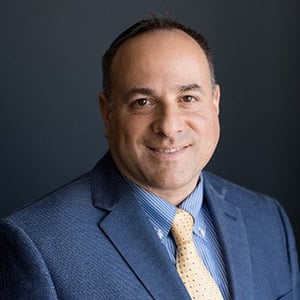
Policy Advisor, Heartland Institute
Jeff Stier is a policy advisor to the Heartland Institute.
He is widely quoted in the media and has written health policy op-eds for The Wall Street Journal, the Los Angeles Times, USA Today, The New York Post, The Washington Examiner, and Foxnews.com. The New York Times, the Associated Press, Reuters, CNN, Fox News, CNBC, MSNBC, NPR and other major outlets have interviewed and quoted Stier on a wide range of topics.
Stier has testified at state and local legislatures throughout the U.S., at FDA scientific hearings and at the Office of Management and Budget. He has also been a voice for freedom at hearings at the United Nations and in Israel’s Knesset. During more than two decades of advancing public health and defending liberty, Stier has been a speaker at CPAC, policy retreats for elected officials and medical and legal conferences.
Stier advises leading investment firms on regulatory and legal risk.
Earlier, Mr. Stier crafted health and environmental policy in the Office of the Mayor during the Giuliani administration in New York City.
Mr. Stier serves on the boards of the non-profit Jewish International Connections and Park City Jewish Collective. While earning his law degree at the Benjamin N. Cardozo School of Law, Mr. Stier served two terms as Editor-In-Chief of the Cardozo Law Forum. Jeff and his canine, BB, served as a Certified Crisis Response Strike Team with NATIONAL Crisis Response Canines, supporting survivors and first-responders.
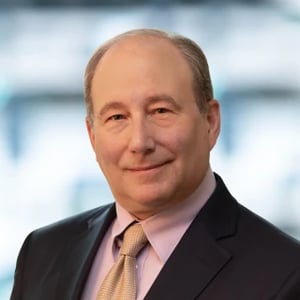
Managing Director, Berkeley Research Group
Dan Troy is the Managing Director at Berkeley Research Group.
Prior to that, he was the Chief Business Officer, Chief Administrative Officer, and General Counsel of Valo in Boston, Massachusetts.
Prior to joining Valo, he served as the Senior Vice President & General Counsel of GlaxoSmithKline and was a member of its Corporate Executive Team. Dan joined GSK in September 2008 and was responsible for leading the company’s legal department in protecting GSK’s intellectual property; managing litigation; supporting business development transactions; and business compliance and risk management. In 2012, Dan led the integration team following the acquisition of Human Genome Sciences, which later resulted in the launch of Benlysta, the first lupus treatment in 50 years. Dan led GSK’s Contributions Committee in the US and also led the Government Affairs, Public Policy and Patient Advocacy team from 2012 until 2014.
Prior to joining GSK, he was a Partner at the Washington law firm Sidley Austin LLP, where he principally represented pharmaceutical companies and trade associations on matters related to the US Food and Drug Administration (FDA) and government regulations. Dan was formerly Chief Counsel for the FDA, where he served as a primary liaison to the White House and the US Department of Health and Human Services.
Dan has chaired the American Bar Association's Section of Administrative Law and is a member of the American Law Institute. He currently chairs the US Chamber of Commerce Litigation Center. He has also chaired the Civil Justice Reform Group, as well as the PhRMA Law Section Executive Committee. He was the 2012 CPR Corporate Leadership Award recipient and, in 2013, was named a 'Legend in the Law' at the Burton Awards.
Dan holds a B.S. in Industrial and Labor Relations from Cornell University and a J.D. from Columbia University School of Law, where he was a member of the Law Review and a Kent Scholar. After graduation from law school, he was a law clerk for the US Circuit Court of Appeals for the District of Columbia Circuit.
Justice, Supreme Court of Arizona
Clint Bolick was appointed by Governor Doug Ducey in January 2016 to serve on the Arizona Supreme Court and was retained by the voters in 2018 and 2024.
Prior to joining the Court, Justice Bolick litigated constitutional cases in state and federal courts from coast to coast, including the U.S. Supreme Court. Among other positions, he served as Vice President for Litigation at the Goldwater Institute and as Co-founder and Vice President for Litigation at the Institute for Justice. He has litigated in support of school choice, freedom of enterprise, private property rights, freedom of speech, and federalism, and against racial classifications and government subsidies.
Justice Bolick received his Juris Doctor degree from the University of California at Davis, where he has been recognized as a distinguished alumnus, and his Bachelor of Arts degree magna cum laude from Drew University. He serves as a research fellow with the Hoover Institution. Among other honors, he was named one of the 90 Greatest DC Lawyers in the Last 30 Years by Legal Times in 2008, received a Bradley Prize in 2006, and was recognized as one of the nation’s three lawyers of the year by American Lawyer in 2002 for his successful defense of school vouchers in Zelman v. Simmons-Harris.
Justice Bolick is a prolific author of a dozen books and hundreds of articles. Among his most recent books are Unshackled: Freeing America’s K-12 Education System: Immigration Wars: Forging an American Solution, co-authored with former Florida Governor Jeb Bush; and David’s Hammer: The Case for an Activist Judiciary. Bolick serves as an adjunct professor of constitutional law at Arizona State University’s Sandra Day O’Connor School of Law and has served as a lecturer at Harvard University’s John F. Kennedy School of Government.
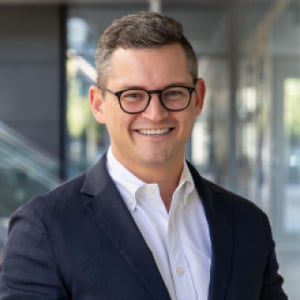
Associate Professor of Law, Sandra Day O'Connor College of Law, Arizona State University
Jonathan Green is an Associate Professor of Law at Arizona State University teaching Civil Procedure and Statutory Interpretation. His scholarship focuses on the history of political and legal thought. He is especially interested in the history of constitutionalism, theories of interpretation, and the concept of judicial power. His research has been published in the Arizona State Law Journal, the Journal of the History of Ideas, Modern Intellectual History, and the Historical Journal.
Prior to joining the ASU faculty in 2024, Professor Green was a Harry A. Bigelow Fellow at the University of Chicago. He previously clerked for Judge Neomi Rao of the U.S. Court of Appeals for the District of Columbia Circuit, and worked as a litigation associate at DLA Piper in Philadelphia.
Professor Green holds a J.D. from Yale Law School, where he was an editor of the Yale Law Journal. He received his PhD from the University of Cambridge, where he was a joint recipient of Prince Consort & Thirwall Prize, awarded annually for the best dissertation in the Cambridge History Faculty. He also received his MPhil from Cambridge, and earned his B.A., summa cum laude, from Northwestern University.
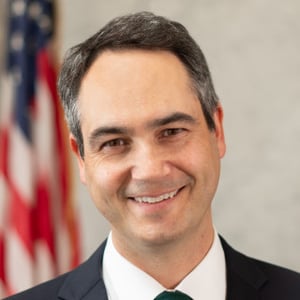
Judge, United States Court of Appeals for the Ninth Circuit
Anthony Johnstone serves as a judge on the United States Court of Appeals for the Ninth Circuit. Judge Johnstone previously served as the Helen and David Mason Professor of Law and an affiliated Professor of Public Administration at the University of Montana, Alexander Blewett III School of Law in Missoula since 2011. As a professor he taught federal and state constitutional law and legislation, as well as a federal judicial clinic. Johnstone also has served as trial and appellate counsel in federal and state courts, including the Ninth Circuit and the Supreme Court of the United States, most recently with Johnstone PLLC. He served the Montana Department of Justice as state solicitor from 2008 to 2011 and assistant attorney general from 2004 to 2008. Johnstone entered practice as an associate at Cravath, Swaine & Moore in New York from 2000 to 2003. Born to Montanans in Minneapolis, Minnesota, Johnstone received his Bachelor of Arts from Yale University in 1995 and his Juris Doctor, with honors, from the University of Chicago Law School in 1999. Following law school, he clerked for Ninth Circuit Judge Sidney R. Thomas in Billings, Montana from 1999 to 2000.
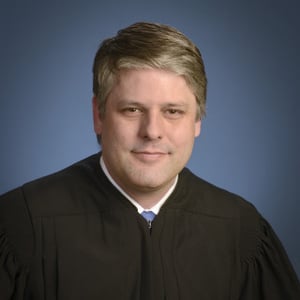
Judge, U.S. Court of Appeals, District of Columbia Circuit
Judge Walker was appointed to the United States Court of Appeals in September 2020. A graduate of Duke University and Harvard Law School, he clerked for then-Judge Brett Kavanaugh and Justice Anthony Kennedy. In 2019, he was appointed to the U.S. District Court for the Western District of Kentucky. Prior to that, he practiced at Gibson Dunn & Crutcher (D.C.) and Dinsmore & Shohl (Louisville). He has taught law in several states and foreign countries.
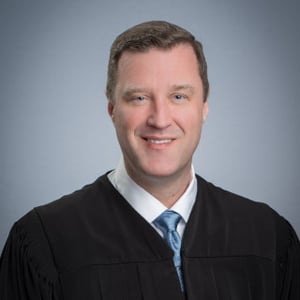
Justice, Texas Supreme Court
Evan Young is a Justice of the Supreme Court of Texas. Governor Greg Abbott, who appointed Young to fill an unexpired term, swore him into office on November 10, 2021. Justice Young was elected to a full term in November 2022.
Young graduated summa cum laude from Duke University in 1999, where he was inducted into Phi Beta Kappa. He was a British Marshall Scholar at Oxford University, where he completed his studies in 2001 and earned a First Class Honours degree in Modern History, focusing on British constitutional history. He earned his law degree from Yale Law School in 2004.
Young then worked as a lawyer in the judicial and executive branches of the federal government. He first served as a law clerk to Judge J. Harvie Wilkinson III of the U.S. Court of Appeals for the Fourth Circuit, and then to Justice Antonin Scalia at the U.S. Supreme Court. In 2006, after his clerkship with Justice Scalia ended, Justice Young became Counsel to the Attorney General at the U.S. Department of Justice, serving in the Office of the Attorney General under Attorneys General Alberto R. Gonzales and Michael B. Mukasey. While on the Attorney General’s staff, he accepted a detail to the U.S. Embassy in Baghdad, Iraq, where he was the Deputy Rule of Law Coordinator. In that position he worked to assist the Iraqi government in its efforts to strengthen its legal regime, including, for example, its courts and prison system.
Young returned to Texas and joined the Austin office of Baker Botts L.L.P. in 2009. His practice focused on trial and appellate litigation. He argued cases before both the Supreme Court of the United States and the Supreme Court of Texas, as well as many federal and state appellate courts. He represented clients across the country before every level of the state and federal judiciary.
Before joining the Texas Supreme Court, Young was appointed in 2017 by Governor Abbott and confirmed by the Texas Senate to serve as a member of the Texas Judicial Council, which is the policy-making body for the Texas Judiciary. In 2015, the Texas Supreme Court appointed him to the Supreme Court Advisory Committee, which assists the Court in drafting the rules that govern litigation in Texas courts. He served on both until his elevation to the bench.
Justice Young is an elected member of the American Law Institute and a member of the Texas Philosophical Society. He has been an adjunct law professor for many years at the University of Texas School of Law, where he has frequently taught the Federal Courts and Religious Liberty courses. He also has been an adjunct professor at the Unversity of Austin (UATX) and at the University of Mississippi School of Law. He served as Chair of the State Bar of Texas Business Law Section, Chair of the National Center for Missing and Exploited Children's Texas Regional Office, and Trustee of the Texas Supreme Court Historical Society.
Justice Young and his wife, Tobi, live in Austin with their daughter.
Senior Attorney, Institute for Justice
Paul Avelar is the Managing Attorney of the Institute for Justice Arizona Office. He joined the Institute in March 2010 and litigates free speech, property rights, economic liberty, school choice and other constitutional cases in federal and state courts.
As the head of IJ’s national Braiding Freedom Initiative, Paul represents natural hair braiders across the country to protect their right to earn an honest living. The Initiative uses lawsuits, activism and research to remove laws that require potential braiders to undergo hundreds of costly training hours just to braid hair. Since IJ launched the Braiding Freedom Initiative in 2014, 12 additional states have freed braiders from unnecessary licensing burdens. Paul drafted the model Natural Hair Braiding Protection Act, which has been adopted in Arkansas, Indiana, Iowa, Kentucky, Nebraska, New Hampshire, Texas and South Dakota. He is currently representing braiders in Missouri, where state laws infringe upon their right to earn an honest living.
In his free speech work, Paul has challenged numerous laws that trample First Amendment rights. In Arizona Freedom Club PAC v. Bennett, he represented candidates and independent groups in a successful U.S. Supreme Court challenge to the “matching funds” provision of Arizona’s publicly financed elections system. He represented grassroots groups and individuals in Arizona, Mississippi and Washington, where state laws burdened their political speech by requiring them to register with the government, to navigate complex regulations and to face fines and possible criminal penalties merely because they talked about political issues. In Washington, Paul protected a lawyer’s right to defend, pro-bono, the First Amendment rights of political speakers. Through litigation and legislation, Paul leads the fight against abusive civil forfeiture laws in Arizona and elsewhere.
Paul also co-authored the most comprehensive published study of economic liberty protections in the Arizona Constitution. The Chief Justice of the Arizona Supreme Court appointed Paul to the Task Force on the Review of the Role and Governance Structure of the State Bar of Arizona, where he dissented from the majority report and called on leaders to substantially reform the Bar and state regulation of the practice of law. He often speaks at law schools across the country about constitutional issues and his work at IJ.
Prior to joining IJ-AZ, Paul worked as an attorney in Philadelphia. He clerked for Judge Roger Miner on the 2nd U.S. Circuit Court of Appeals, Justice Andrew Hurwitz on the Arizona Supreme Court, and Judge Daniel Barker on the Arizona Court of Appeals.
Paul graduated manga cum laude from the Arizona State University College of Law in 2004 and was elected to the Order of the Coif. He received his undergraduate degree from Princeton University in 2000.
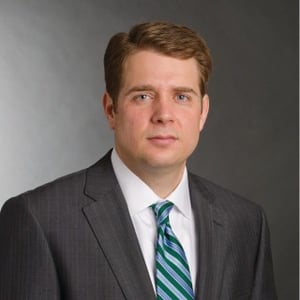
Judge, United States District Court for the District of Arizona
United States District Judge Michael T. Liburdi began his legal career as a law clerk to the Honorable Ruth V. McGregor of the Arizona Supreme Court.
He entered private practice with the law firm of Brown & Bain P.A., which became the Phoenix office of Perkins Coie LLP. He later practiced at Snell & Wilmer L.L.P.
From 2015-2018, Judge Liburdi served as General Counsel to Arizona Governor Douglas A. Ducey. Judge Liburdi provided legal advice to the Governor, advised on appointments to the state judiciary, directed litigation involving the state agencies, and worked with Arizona’s Congressional delegation on legal policy issues.
Immediately prior to his judicial appointment, Judge Liburdi was a shareholder at the international law firm of Greenberg Traurig, LLP.
Judge Liburdi’s private sector practice included complex commercial litigation, antitrust, constitutional law, and political and election law.
Judge Liburdi has served as an adjunct professor of law at the Sandra Day O’Connor College of Law at Arizona State University.
Judge Liburdi earned his Juris Doctorate from the Sandra Day O’Connor College of Law and a Bachelor of Science degree from Arizona State University.
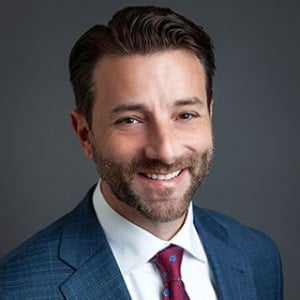
President & CEO, Arizona Chamber of Commerce & Industry
Danny brings more than 16 years of experience in global public affairs and government relations, as well as handling complex legal matters in private practice and public sector service. Prior to joining the Arizona Chamber of Commerce & Industry, Danny was general counsel to the Valor Global leadership team. He focused on helping achieve growth objectives as well as providing continued public affairs guidance in AZ, WA and other States.
Danny worked at Intel, was a shareholder at Greenberg Traurig where he chaired the Phoenix office government law and policy practice. Danny served as Deputy Chief of Staff for Arizona Governor Doug Ducey from 2014 to 2018 where he assisted in the passage of landmark legislation including the Arizona Opioid Epidemic Act and K–12 education funding ballot referral.
Danny was recently named among 2020 Leaders of the Year in Public Policy by Arizona Capitol Times for his contributions in the field of law and public policy. Danny earned his Juris Doctor (cum laude) from Sandra Day O’Connor College of Law at Arizona State University and Bachelor of Arts (cum laude) from Pepperdine University. Danny serves as an adjunct professor at Sandra Day O’Connor College of Law at Arizona State University, is a board member of numerous community organizations. Danny is passionate about orphan care and volunteers with Orphan Outreach for orphaned and vulnerable children in Mathare, Nairobi and Bungoma, Kenya. He and his wife Ann, live in Phoenix with their three children.
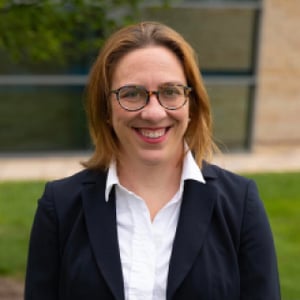
Associate Professor of Law, Sandra Day O'Connor College of Law at Arizona State University
Jennifer L. Selin is an associate professor at the Arizona State University Sandra Day O'Connor College of Law. Her published and ongoing scholarship explores legal institutions and how they work. Using both legal analysis and empirical tools, she demonstrates the structure of the administrative decision-making environment has important consequences for policy implementation.
Prior to joining ASU in 2024, Professor Selin served as senior attorney advisor at the Administrative Conference of the United States. Before working in the federal executive branch, she was a professor at the Universities of Illinois and Missouri.
Selin's scholarship has been published in political science, public administration, and law journals and has been utilized by the Obama, Trump and Biden Administrations, Congress, the Supreme Court, and the media. A proud graduate of Lebanon Valley College, Selin holds a J.D. from Wake Forest University and a Ph.D. from Vanderbilt University. Before first joining academia, she practiced administrative law and specialized in federal electricity market regulation and alternative energy development, licensing and regulation.
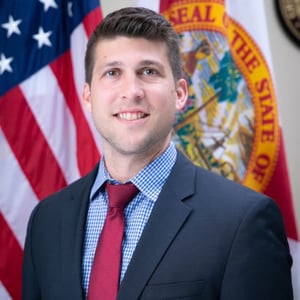
Attorney General, Florida
James Uthmeier is the Attorney General of the State of Florida. Before this, he served as Chief of Staff to Governor Ron DeSantis. Previously, he was General Counsel to the Governor, overseeing litigation and judicial nominations. He also served as a senior advisor at the U.S. Department of Commerce. A Georgetown Law graduate, Uthmeier is an adjunct professor at Florida State University College of Law and co-teaches religious education in Tallahassee.

2026 Annual Arizona Dinner - Promises of 1776: Perspectives from the Bench
Phoenix, AZExploring the Landscape of Military Law and Best Practices for JAGs
Jesse Burbank, Stephanie Fisher, Mark Majors, Michael A. Newton
Military law encompasses a wide range of legal disciplines, including criminal law, national security, government...
How Did State Constitutions Shape the American Founding?
Jennifer Perkins, Nels S.D. Peterson, Timothy Sandefur, Jeffrey S. Sutton
In this Federalist Society America 250 series, experts analyze modern legal and policy debates through...
Federalism and State Constitutionalism
Las Vegas Lawyer Chapter
Las Vegas, NV2026 SCOAZ Review
Phoenix Lawyer Chapter
Phoenix, AZIs the FDA Trying to Ban Direct-to-Consumer Drug Ads?
Paul Avelar, Jeff Stier, Dan Troy
The Trump Administration has been exploring new ways to tighten requirements for direct-to-consumer advertisements for...
Panel II: Federalism and Subsidiarity: Decentralizing Decisions and Balancing Power from Nation to Neighborhood
Clint Bolick, Jonathan Green, Anthony Johnstone, Justin Reed Walker, Evan A. Young
Featuring: Hon. Clint Bolick, Justice, Arizona Supreme Court Hon. Anthony Johnstone, United States Court of Appeals...
Panel I: Laboratories of Liberty: State Deregulation and Economic Freedom
Paul Avelar, Michael T. Liburdi, Danny B. Seiden, Jennifer Selin, James William Uthmeier
Featuring: Mr. Paul Avelar, Arizona Office Managing Attorney, Institute for Justice Mr. Danny Seiden, President...
2025 SCOAZ Review
Phoenix Lawyers Chapter
Phoenix, AZWhat Should We Want in a Judge?
Dayton Lawyers Chapter
Dayton, OH