
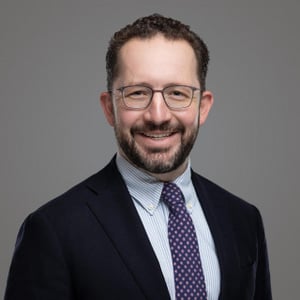
Executive Director, Alliance For Consumers
O.H. leads Alliance For Consumers, which fights to ensure that consumer protection efforts, class action lawsuits, and attorney general enforcement actions are consistent with the rule of law and benefit everyday consumers, not just class action lawyers and career bureaucrats.
His work with AFC builds off his time with the Arizona Attorney General's Office under Attorney General Mark Brnovich, where he not only defended constitutional questions and served as the State's lead counsel in the U.S. Supreme Court, but also had the privilege of leading Arizona's consumer protection lawsuit against Google over the tracking of consumers' location, and the successful case against Volkswagen over well-publicized diesel-related consumer deception.
O.H. is a 2010 graduate of Harvard Law School. Before joining Attorney General Brnovich in 2016, O.H. practiced at WilmerHale and Ropes & Gray in Boston and clerked for the Hon. J.L. Edmondson of the United States Court of Appeals for the Eleventh Circuit in Atlanta, Georgia.

Associate Professor, Indiana University Maurer School of Law
Professor Scott joined the Indiana University Maurer School of Law faculty in 2009. He teaches and writes on criminal law and procedure, statutory interpretation, and federal courts. Professor Scott's research examines structural and procedural interactions between the judicial branch and other branches of government, particularly in the criminal context. He has written on efforts to control the composition of the judiciary, including the judicial appointments process, legislative strategies for encouraging judicial retirements, and the semi-retirement program of senior judges. Professor Scott also studies efforts to influence judicial decision making directly by placing constraints on judicial discretion. His current project examines changes in inter-judge sentencing disparity under the United States Sentencing Guidelines, one of Congress's most ambitious efforts to restrict judges in the performance of a historically discretionary function.After graduating from law school, Professor Scott clerked for Judge Michael W. McConnell of the United States Court of Appeals for the Tenth Circuit. He then served as a Bristow Fellow in the Office of the Solicitor General of the United States. Before joining the faculty, he worked for two years as an associate in the Supreme Court and appellate practice at O'Melveny & Myers LLP in Washington, D.C.
Former Adjunct Professor of Law; former Special Counsel to the President; former federal prosecutor, Georgetown Law (ret.)
Bill Otis is a former Adjunct Professor of Law at Georgetown University, a one-time federal prosecutor, and a former Special White House Counsel for President George H. W. Bush. After graduating from Stanford Law School, he started his career in the Criminal Division of the Justice Department, then became chief of appeals for the US Attorney's Office for the Eastern District of Virginia. In the 1980's he served on the Department's "Train the Trainer" team, which taught US Attorneys Offices across the county how to implement the then-new Sentencing Reform Act. He has held several posts in the federal government, including Special Assistant to the Secretary of Energy and Counselor to the head of the Drug Enforcement Administration, in addition to the White House post. He has testified before Congress on issues in criminal procedure, illegal drugs, the US Sentencing Commission, and the death penalty, and has given numerous media interviews on those and other subjects. He currently teaches a seminar at Georgetown Law titled "Conservatism in Law in America" with his wife, Federalist Society co-founder Lee Liberman Otis.

Roger Williams University School of Law
Professor Bogus has achieved national prominence in two areas -- (1) tort law, and especially, products liability; and (2) gun control, including issues involving the Second Amendment.
His work in the first area includes Why Lawsuits Are Good for America: Disciplined Democracy, Big Business and the Common Law (NYU Press). His Constitutional Law research proposes the thesis that James Madison wrote the Second Amendment to ensure that the federal government could not subvert the slave system by disarming the militia, on which the South relied for slave control. Professor Bogus has testified before Congress and spoken about and debated these subjects at many venues across the country, including at Harvard, Columbia, Chicago, Stanford, and Vanderbilt law schools, and his writings on these subjects have been published by law reviews, as well as opinion journals such as The Nation and The American Prospect, and newspapers including USA Today, Boston Globe, Washington Times, and the Providence Journal. Most recently, he was interviewed by National Public Radio. One of his interests is how ideology influences the law, and he is presently at work on a biography of William F. Buckley, Jr. and the conservative movement.
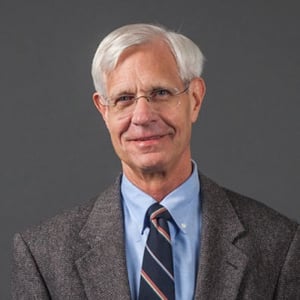
Distinguished University Professor, Antonin Scalia Law School, George Mason University
University Professor Nelson Lund is the author of Rousseau’s Rejuvenation of Political Philosophy: A New Introduction. He has also written widely in the field of constitutional law, including articles on constitutional interpretation, federalism, separation of powers, the Second Amendment, the Commerce Clause, the Speech or Debate Clause, the Equal Protection Clause, and the Uniformity Clause. In addition, he has published articles in the fields of employment discrimination and civil rights, the legal regulation of medical ethics, and the application of economic analysis to legal institutions and legal ethics.
Professor Lund graduated from St. John's College in Annapolis, Maryland, after which he received an MA in philosophy from the Catholic University of America and a PhD in political science from Harvard University. He left the faculty of the University of Chicago to attend its law school, where he served as executive editor of the University of Chicago Law Review and chapter chairman of the Federalist Society for Law and Public Policy Studies. After law school, he held positions at the United States Department of Justice in the Office of the Solicitor General and the Office of Legal Counsel. He also served as a law clerk to the Honorable Patrick E. Higginbotham of the United States Court of Appeals for the Fifth Circuit and to the Honorable Sandra Day O'Connor of the United States Supreme Court. Following his clerkship with Justice O'Connor, Professor Lund served in the White House as associate counsel to the president from 1989 to 1992.
Since joining the faculty at George Mason University's Antonin Scalia Law School, Professor Lund has taught Constitutional Law, Legislation, Federal Election Law, Employment Discrimination, State and Local Government, and seminars on the Second Amendment and on a variety of topics in Jurisprudence.
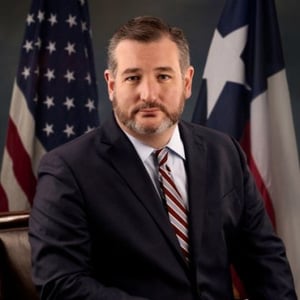
United States Senator, Texas
Ted Cruz represents 28 million Texans in the U.S. Senate as a passionate fighter for limited government and economic growth. He has authored 39 legislative measures signed into law. Recent victories include expanding 529 college savings accounts to allow parents to save for K–12 public, private, and religious education, leading the effort to repeal Obamacare’s individual mandate, imposing sanctions on terrorists who use civilians as human shields, designating North Korea as a state sponsor of terrorism, reauthorizing and reforming NASA, ensuring the availability of additional records to help solve civil rights cold cases, supporting thousands of Texas jobs, and leading the fight to confirm principled constitutionalists to our courts.
Senator Cruz is a graduate of Princeton University and Harvard Law School, a former law clerk to Chief Justice William Rehnquist, and former solicitor general of Texas. He has argued nine cases before the Supreme Court. In November of 2018, he was re-elected to the Senate by the people of Texas.
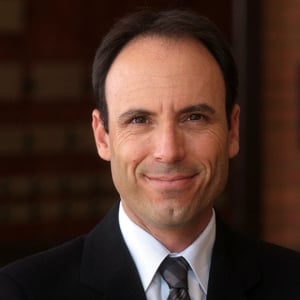
Professor of Law, UCLA School of Law
Executive Director, Alliance For Consumers
O.H. leads Alliance For Consumers, which fights to ensure that consumer protection efforts, class action lawsuits, and attorney general enforcement actions are consistent with the rule of law and benefit everyday consumers, not just class action lawyers and career bureaucrats.
His work with AFC builds off his time with the Arizona Attorney General's Office under Attorney General Mark Brnovich, where he not only defended constitutional questions and served as the State's lead counsel in the U.S. Supreme Court, but also had the privilege of leading Arizona's consumer protection lawsuit against Google over the tracking of consumers' location, and the successful case against Volkswagen over well-publicized diesel-related consumer deception.
O.H. is a 2010 graduate of Harvard Law School. Before joining Attorney General Brnovich in 2016, O.H. practiced at WilmerHale and Ropes & Gray in Boston and clerked for the Hon. J.L. Edmondson of the United States Court of Appeals for the Eleventh Circuit in Atlanta, Georgia.

Courthouse Steps Decision Teleforum: McKinney v. Arizona - And the Future of Capital Sentencing
Oramel H. Skinner
On Tuesday, in a 5-4 decision in McKinney v. Arizona, the Supreme Court of the...
Courthouse Steps Decision Teleforum: McKinney v. Arizona - And the Future of Capital Sentencing
TeleforumTopics
Supreme Court Preview: Criminal Law
The U.S. Supreme Court returns to begin its new term on the first Monday in...
Southern Union Company v. United States - Post-Decision SCOTUScast
Ryan Scott
On June 21, 2012 the Supreme Court announced its decision in Southern Union Company v. United...
SCOTUScast 12-4-08 featuring William Otis
William G. Otis
On Tuesday, October 14, the Supreme Court heard oral argument in Oregon v. Ice. In...
Engage Volume 9, Issue 2, June 2008
ADMINISTRATIVE LAW & REGULATION Swallows Holding Ltd. v. Commissioner: Limited Progress in Rejecting Tax Exceptionalism...
District of Columbia v. Heller
Carl T. Bogus, Nelson Lund, Ted Cruz, Adam Winkler
The Court has decided the District of Columbia v. Heller case. The decision, in striking down...